
Subscribe now for full access and no adverts
It was a moment whose significance was immediately apparent – when, on the morning of 25 April 1945, members of a US Army forward patrol came across officers and soldiers of the Soviet 175th Rifle Regiment near the small town of Torgau, about 85 miles from Berlin. Toasts were drunk and photographs taken of jubilant comrades to celebrate the first meeting of the two Allied armies, which had been advancing from opposite directions (see MHM 145, April/May 2025), and which had now cut Germany in two as they converged on Hitler’s capital.
To the American and Russian troops shaking hands and sipping vodka on the banks of the Elbe, it was clear that the deadliest conflict in human history would soon now be over, raising hopes that a new era of brotherhood and peace between nations might finally be dawning. But, though the war in Europe would indeed be wrapped up in days – with the Fuhrer’s suicide on 30 April followed quickly by Germany’s unconditional surrender – any sense of a harmonious future would, of course, prove short-lived.
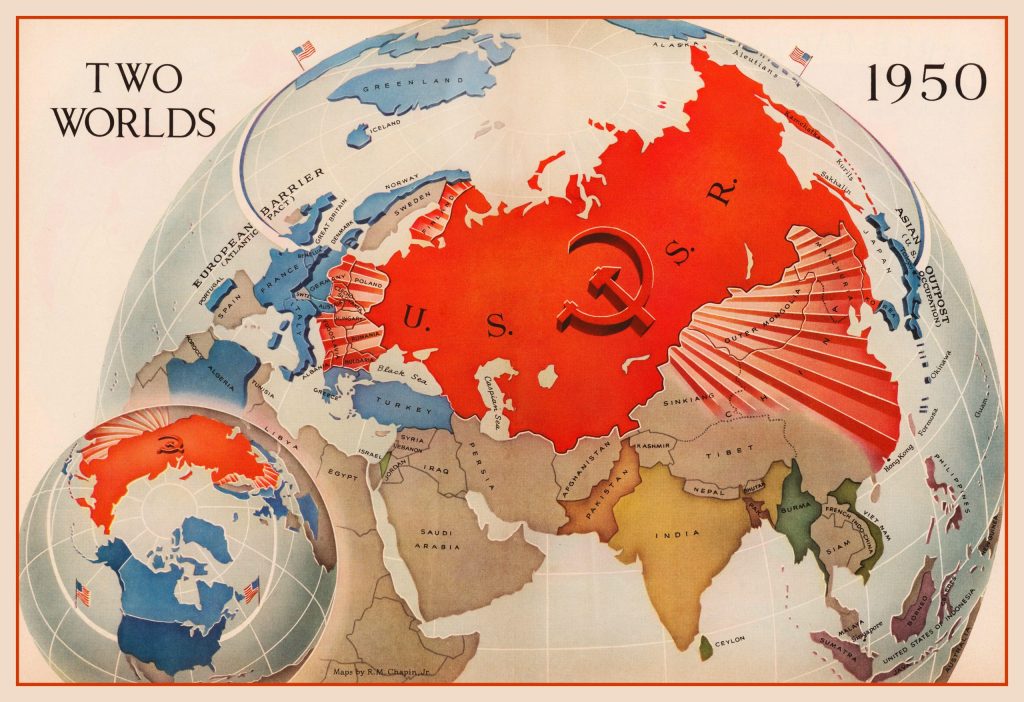
In our new four-part series to mark the 80th anniversary of the advent of the Cold War, MHM examines how the triumphs of 1945 were so rapidly replaced by mistrust and political and ideological disagreement, as the leaders of the Allied ‘Big Three’ pursued very different post-war agendas. It was a rift that within a year of VE Day would lead Winston Churchill to declare in a famous speech that ‘from Stettin in the Baltic, to Trieste in the Adriatic, an iron curtain has descended across the continent.’
As we shall see, Churchill’s words would prove prophetic, framing the military and geopolitical landscape for the next 50 years. They set the tone for a new ‘bipolar’ struggle between the West, led by the USA, and the East, led by the USSR – one that would spread division around the world, and end only with the fall of the Berlin Wall in 1989. Though the conflict is remembered as the Cold War, because it never quite erupted into open hostilities between the nuclear-armed principals, it would also give rise to a range of decidedly ‘hot’ proxy conflicts – from Korea to Cuba, and from Vietnam to the Middle East – as the two sides vied for global supremacy.
In the first part of our series, Taylor Downing looks at how the end of the fighting in 1945 sowed the seeds of the conflict to come; while in the second part (see here), we travel to Vienna to see how the defeat of the Nazis brought new division to the Austrian capital.
An armed truce: The Iron Curtain falls – Part 1: 1945
In a famous encounter on 9 October 1944, Prime Minister Winston Churchill met Soviet leader Joseph Stalin in Moscow to discuss the shape of post-war Europe. Rather than being a ‘Big Three’ summit (as the key wartime conferences between the British, Russian, and American allies were known), it was the result of one of the many long and dangerous journeys Churchill made during the war to meet other political leaders or military figures.
As the PM and the Soviet chief talked late into the night in the Kremlin, Churchill made it clear that he wanted to avoid civil wars in the countries of Europe over who should be in power after the war. The conversation was frank and was going well. Churchill liked these face-to-face encounters and was sure he could get along with the Soviet leader. So – sensing that this was a good moment for business – he suggested the two leaders try to settle their affairs in the Balkans.
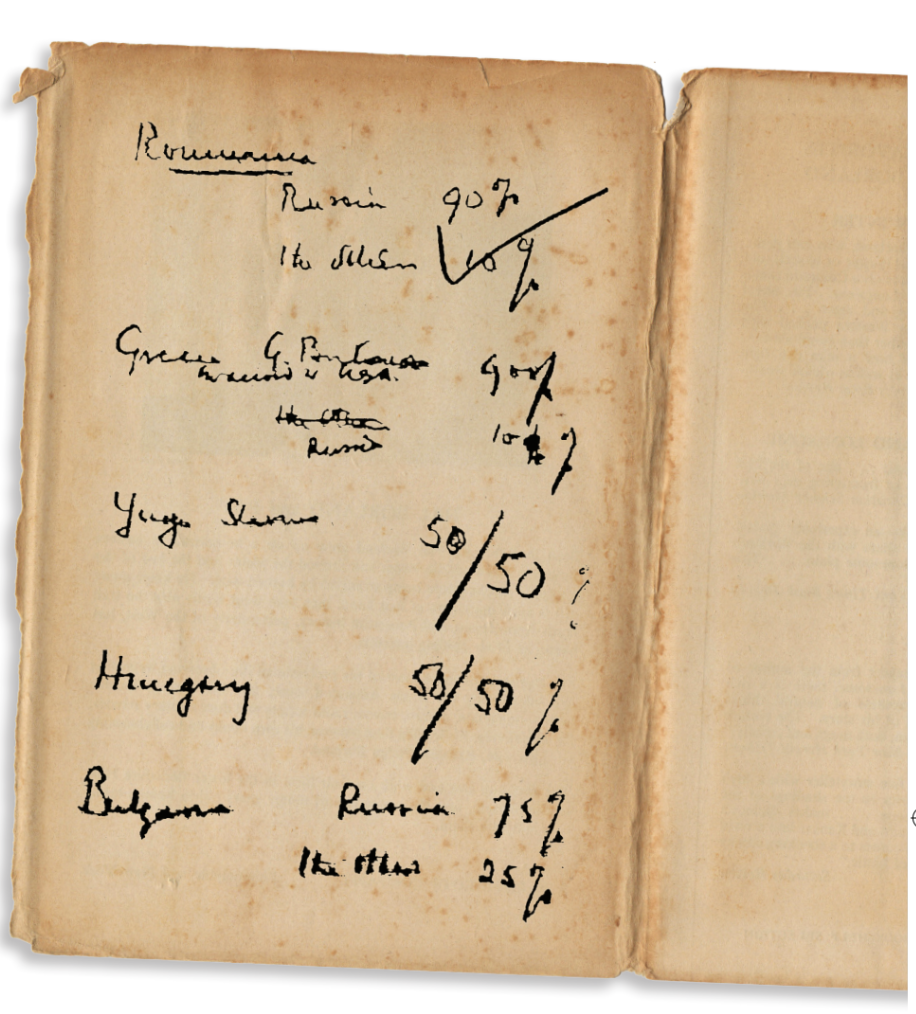
Churchill had a ‘naughty document’, he said. He suggested a simple breakdown of spheres of interest: that Romania should be 90% Soviet and 10% British; and that Greece should be 90% British-American and 10% Soviet. Yugoslavia and Hungary would be split 50/50; and Bulgaria would be 75% to the Soviets and 25% to the others. While this was being translated, Churchill wrote it out on a piece of paper. There was a pause. Then Stalin reached for a blue pencil and put a big tick on the piece of paper. A long silence followed, then Churchill spoke. ‘Might it not be thought rather cynical,’ he asked, ‘if it seemed we had disposed of these issues, so fateful to millions of people, in such an offhand manner? Let us burn the paper.’ ‘No,’ Stalin replied. ‘You keep it.’
Although Churchill’s account of this meeting appeared in the last volume of his wartime memoir-history (published in 1954 after the death of Stalin) and might well have been embellished somewhat, it captures the spirit of the meeting. The piece of paper with Stalin’s large blue tick still exists as a record of what was discussed. But did it mean anything to the Russian leader? Did he ever intend to honour it? And did it in any way resemble how the war ended and where the different armies were when Victory in Europe was celebrated in early May 1945?
Germany surrenders
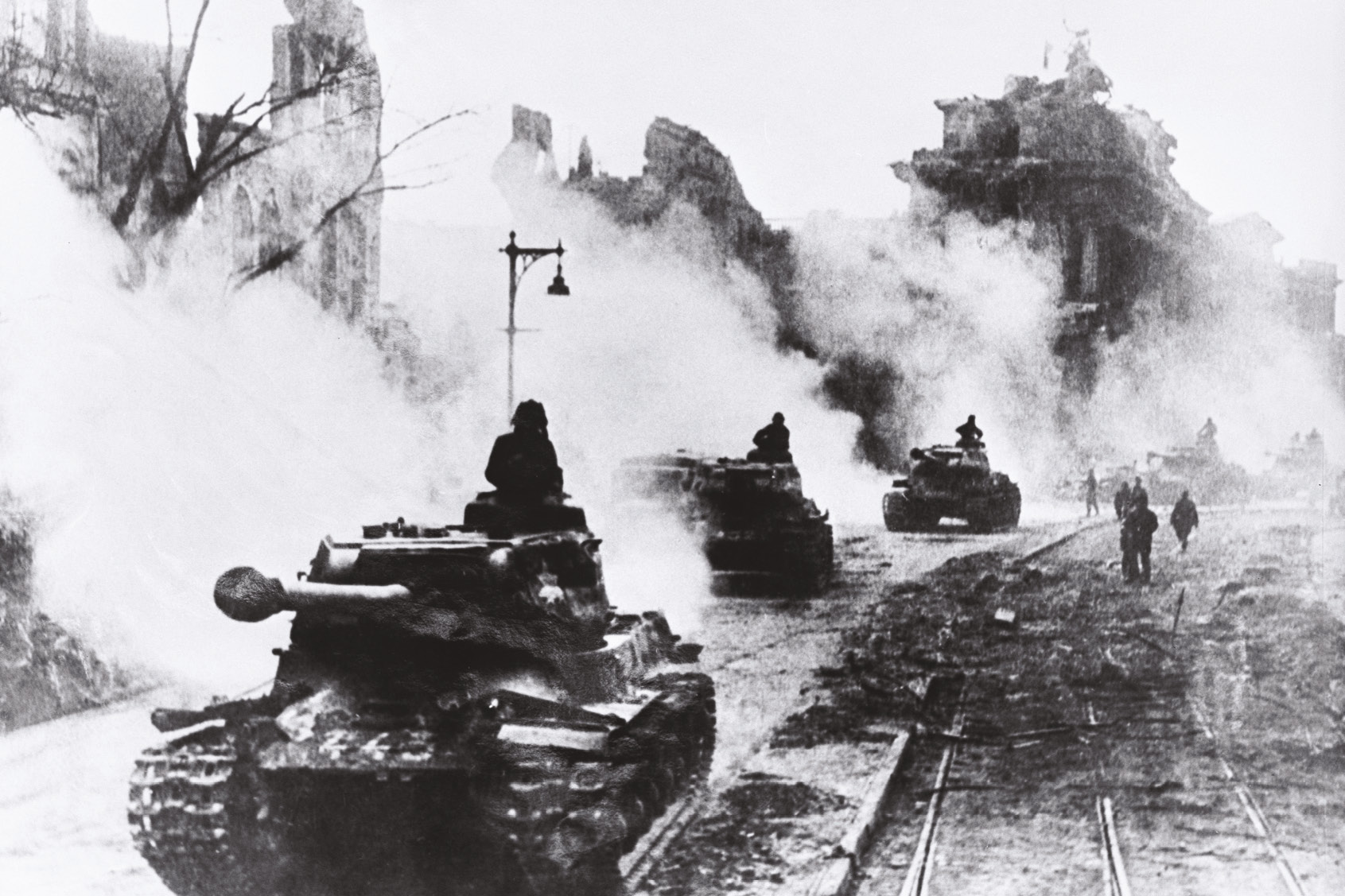
In the West, the best-known battle fought at the end of the war on the Eastern Front is the Battle of Berlin – ahead of which the Supreme Allied Commander General Dwight D Eisenhower had agreed that Stalin should use Soviet forces to capture the German capital (see MHM 145, April/May 2025). The final onslaught began on 16 April, with a massive Red Army assault along the Seelow Heights, 45 miles from the German capital. Two mighty Soviet Army groups led by Marshals Konev and Zhukov surrounded Berlin and then, in desperate street-by-street, house-by-house combat, fought their way into the centre of the city. With Red Army troops only a few hundred yards away, Hitler shot himself in the head in his underground bunker near the Reich Chancellery on the afternoon of 30 April. On the following day Soviet troops captured the Reichstag and the Red Flag was launched over the German Parliament on May Day.
But German forces still tried to hold the line. To the south, most of Czechoslovakia had been liberated by the Red Army in January and February of 1945. But General Ferdinand Schörner commanded about one million men to the east of Prague. The last actions of the war were when Marshal Konev’s forces swept south from Berlin and overwhelmed the last German pockets of resistance. Although German forces had signed a document of unconditional surrender at Eisenhower’s headquarters on 8 May and at Zhukov’s base on the following day, the last desultory fighting continued to the east of Prague until the final surrender of Schörner’s troops on 11 May. The Second World War in Europe was at last at an end.
At this point, the Red Army was in control of the eastern zone of Germany, with a line roughly north to south and along the Elbe to the city of Magdeburg, then south near Leipzig into Czechoslovakia. This approximately marked out the area that would become East Germany.
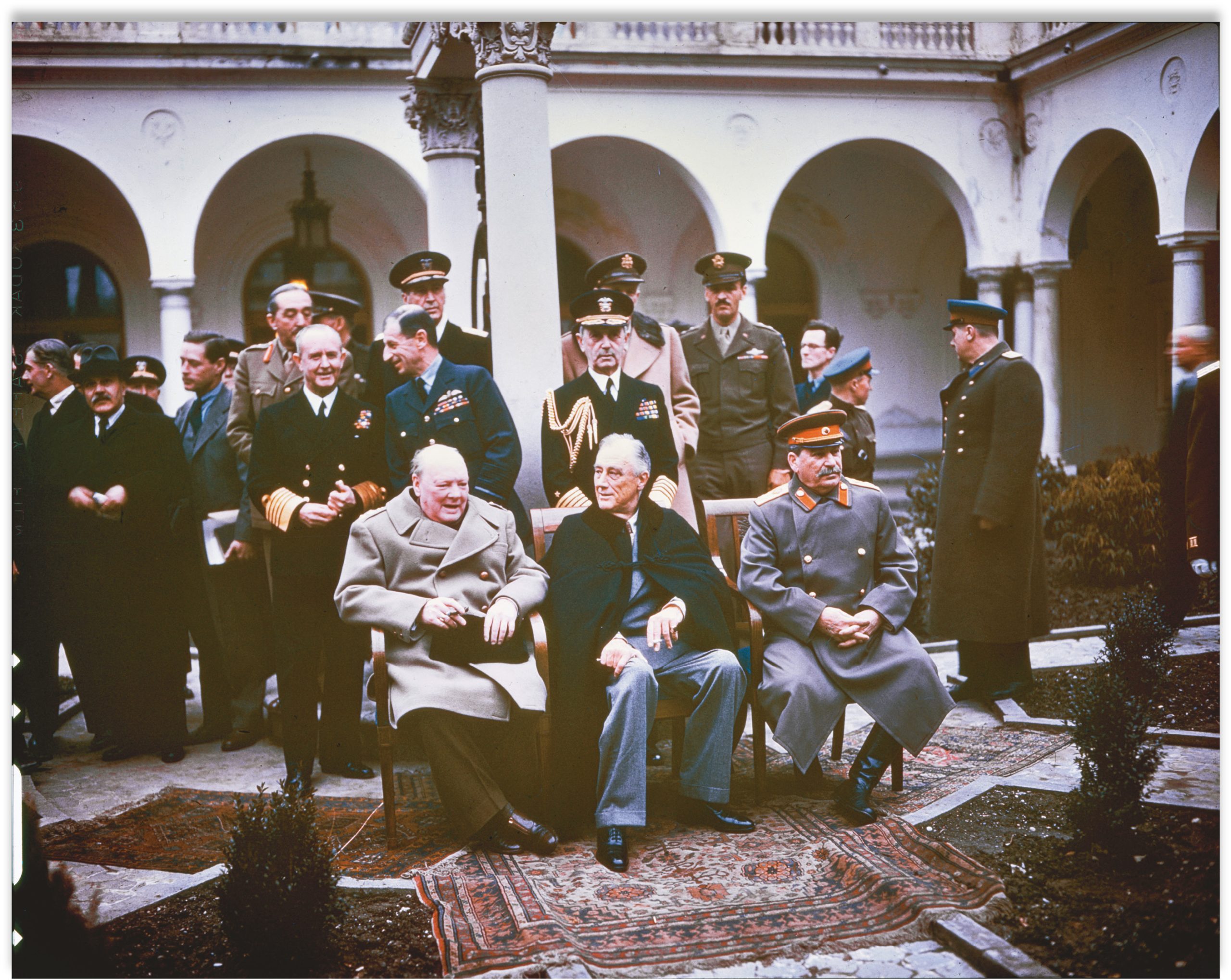
Most controversially, Soviet troops had completely overrun Poland. Despite their earlier accord over the division of Europe, the question of Poland proved a considerable bone of contention between Churchill and Stalin. They had argued intensely about Poland at the Yalta Conference in February 1945. ‘You must understand,’ the British Prime Minister had told Stalin, ‘that Britain entered the war to defend the freedom and integrity of Poland.’ For Britain, he said, the independence of Poland was a matter of ‘honour’. ‘You must understand,’ Stalin replied, ‘that for us it is about security.’
Russia had been invaded from the west three times in the previous 150 years.
The country had suffered appalling losses and massive destruction during the Nazi invasion. It is estimated that 27 million Soviet men and women had been killed, while 32,000 factories were in ruin, 1,710 townships and 100,000 collective farms had been ravaged – many of them burnt to the ground. About one-third of Russia’s pre-war wealth had been destroyed. Not surprisingly, perhaps, Stalin was now obsessed with security, but had no concept of collective security. For the Russian leader, security came from eliminating opponents and imposing his own loyal party apparatchiks on defeated nations.
There had been a Polish government in exile in London since 1940. General Vladislav Sikorski had been its leader, or Prime Minster, until his death in an air crash in 1943. Many Polish soldiers, sailors, and airmen who had escaped the Nazi–Soviet occupation of their country fought heroically for the Allies from the Battle of Britain onwards to Monte Cassino and the landings at Arnhem. But there had also been a group of Polish Communists, known as the Polish Committee of National Liberation, who had spent the war in Moscow. In 1945, Stalin decided that this group should provide the government for the new Poland under the heel of Moscow’s boot. Initially, they were installed in the city of Lublin.
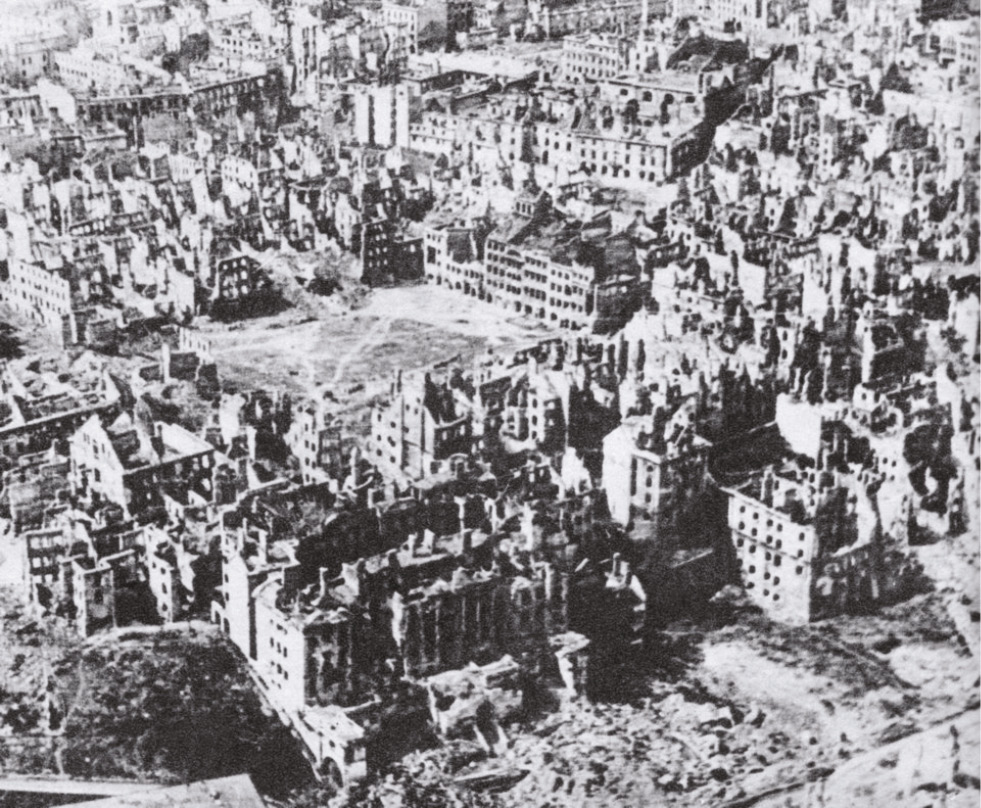
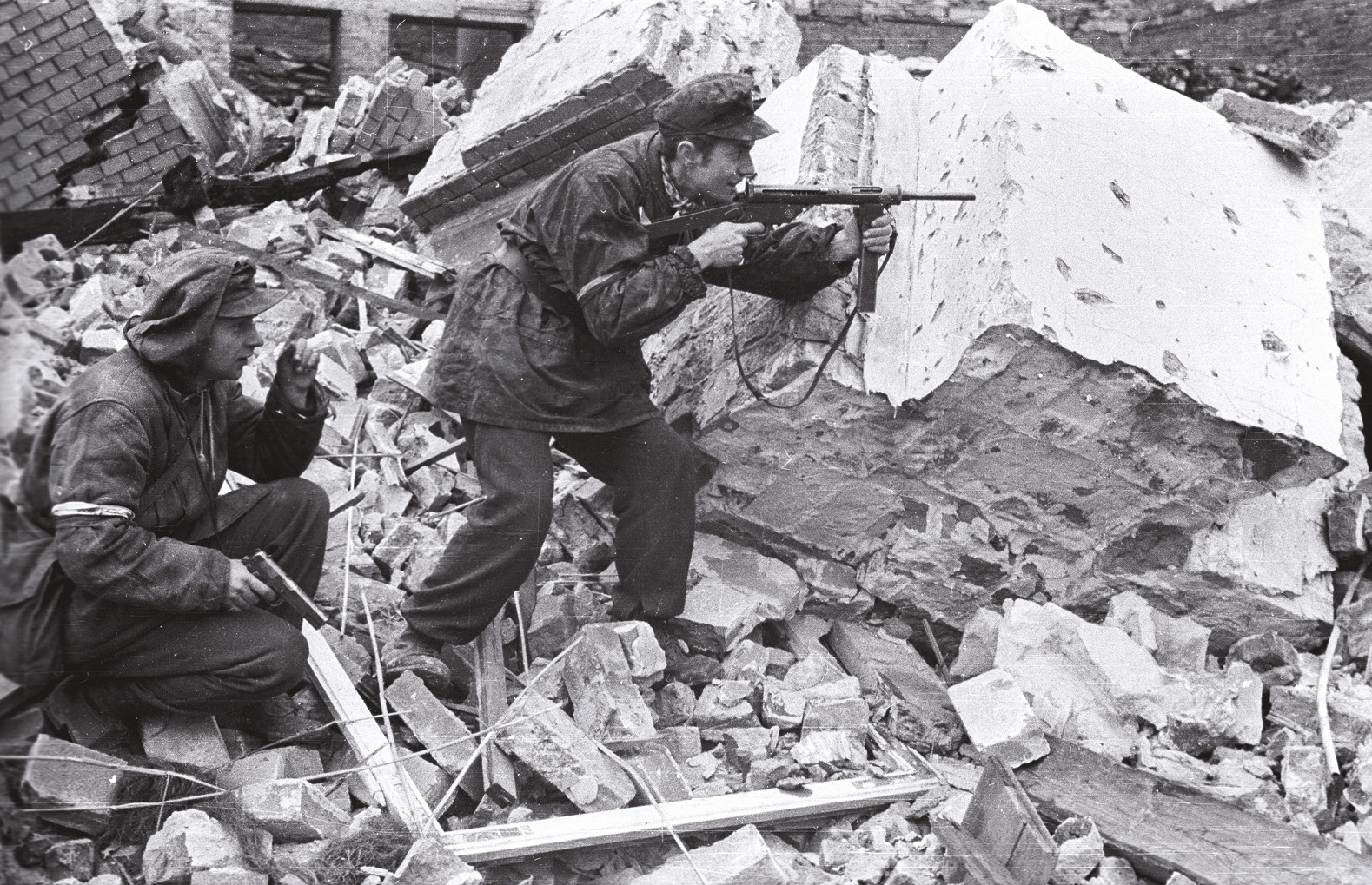
In the spring of the previous year, as the Red Army had advanced west out of the Soviet Union and into Polish territory, it had paused at the Vistula river to the east of Warsaw. The free Polish resistance chose this moment to rise up and proclaim an independent Poland. The Nazis responded with great force to smash what became known as the Warsaw Rising. Churchill pleaded with Stalin to intervene. But the Russian leader ordered the Red Army troops to do nothing. The Allies asked whether their planes could fly in supplies to drop over Warsaw, and then use Soviet airbases to refuel before returning. Again Stalin refused. With only rifles and small arms, the Poles held out for 63 days until they were entirely crushed by the Nazis. About 100,000 Poles were killed in an orgy of violence, and the centre of Warsaw was flattened. The few survivors had to flee through the sewers.
For the Soviet leader, security came from eliminating opponents.
By the time the Red Army continued its advance westwards across Poland, the free Polish resistance had been entirely destroyed. Stalin brushed aside Churchill’s protests and in June 1945 established a Provisional Government of National Unity in Warsaw. This was just a façade to cover what was a Moscow-controlled government. Churchill felt he had been betrayed by Stalin. He even spoke of a new war against the Soviet Union. Sure enough, two years later, in an entirely rigged election, the Communists took full control of the Polish government claiming 80% of the popular vote. Poland would remain unhappily under Soviet control for four decades, until the end of the Cold War.
Hitler’s last gamble
Along the Western Front, the US 1st and 9th Armies had advanced to the Elbe and the Mulde rivers, where they had met Soviet troops and halted, about 100 miles west of Berlin. The US 6th Army had advanced south into Bavaria, capturing Munich on 30 April. It was here on that day that American photographer Lee Miller was photographed taking a bath in what had been Hitler’s apartment in the city. US troops then moved further south and linked up with their Allied counterparts in Italy, where German forces surrendered on 2 May. American troops captured Innsbruck and Salzburg, along with Hitler’s mountain headquarters outside Berchtesgaden on 4 May. Soldiers of the US 3rd Army reached Linz in Austria on 5 May.
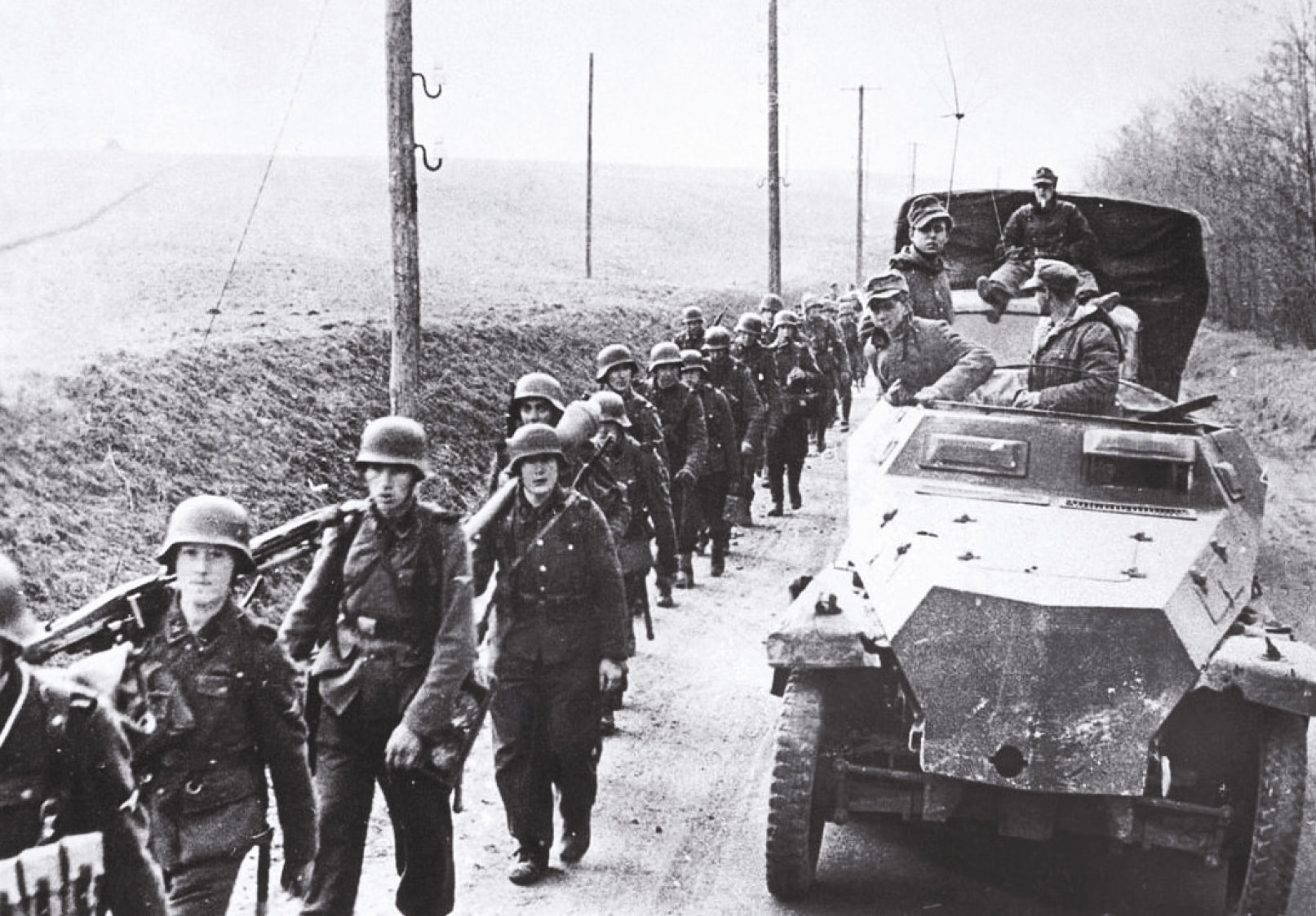
In the West, we are familiar with the Battle for the Ardennes in December 1944 and January 1945 – the so-called Battle of the Bulge, often described as Hitler’s last strategic gamble. But it was not. Hitler tried another gamble after this in Hungary, Operation Spring Awakening (Unternehmen Frühlingserwachen). There had been intense fighting around Budapest since the end of December 1944, resulting in heavy losses on both sides, but leading to the final capture of the Hungarian capital in February 1945. Then on 6 March, to the surprise of the Soviets, the VI SS Panzer Army that had fought in the Ardennes and had been secretly transferred to the Eastern Front launched the final German offensive of the war near Lake Balaton to the west of Budapest. Its objective was to secure the Nagykanizsa oilfields in southern Hungary, which Hitler regarded as vital for the continuing Axis war effort, and to prevent the Soviet Army from marching on Vienna.
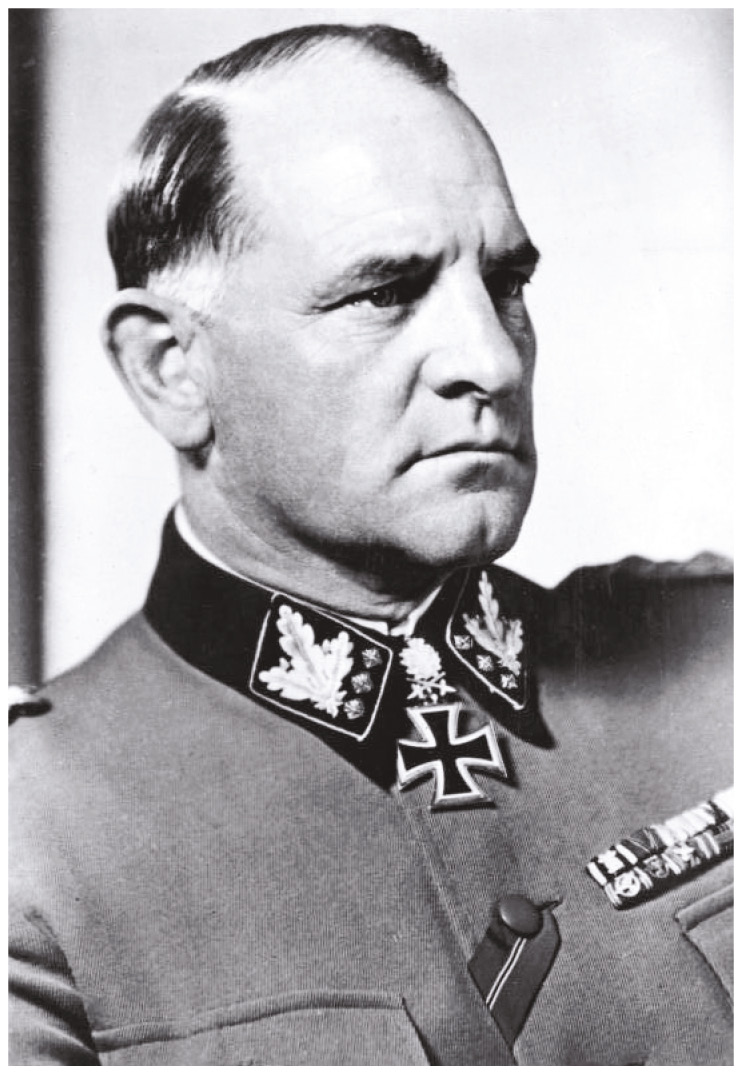
The Soviet 3rd Ukrainian Front under Marshal Fyodor Tolbukhin got wind of the planned German assault and began to prepare trench networks and anti-tank defences. No fewer than 11 Panzer divisions launched the German offensive on 6 March – but by this point of the war most of these units, exhausted by years of frontline combat and severe losses, only presented a fraction of the strength they once would have had. Within ten days, the German offensive had stalled, having encountered heavy Soviet defences. The remnants of the VI SS Panzer Army withdrew to the north of Vienna. However, the Red Army rolled relentlessly westwards and captured the remaining Hungarian oilfields in mid-April 1945. Sepp Dietrich, commander of the VI SS Panzer Army, tasked with defending the last supplies of oil and petrol available to the Third Reich, joked that ‘VIth Panzer Army is well named – we have just six tanks left!’ Hitler’s last offensive of the war was over.
The struggle for Yugoslavia
Yugoslavia had been occupied by German troops in 1941. This occupation had been resisted in some intensely bitter fighting. There were also massacres of Serbs by Croats and other Yugoslavs, and equally violent reprisals. The brutal Nazi suppression of the resistance worked on the principle that for every German soldier killed, 100 locals would die.
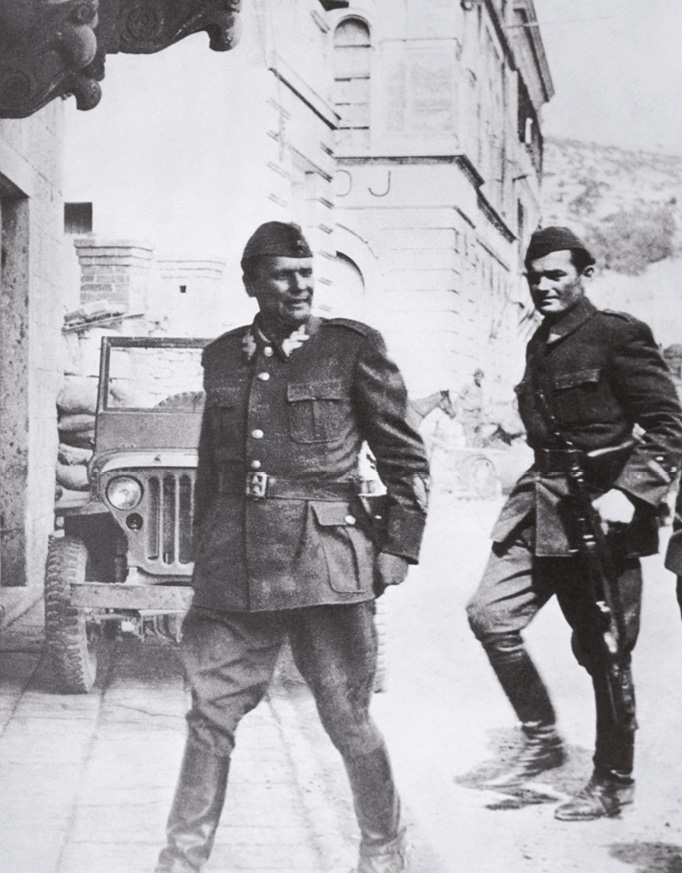
In 1945, Yugoslavia was the one nation where a Communist leader came to power at the end of the war without Soviet help, as Red Army troops had not liberated the country. Throughout the long war years, the partisan Marshal Josip Broz Tito had led one of the most powerful resistance movements to Nazi occupation anywhere in Europe. By 1945, his partisans numbered about a quarter of a million tough and experienced fighting men. At the end of the war, Tito took power with Allied support, and through the force of his own personality managed to hold together the provinces of Montenegro, Serbia, Slovenia, Croatia, Macedonia, and Bosnia Herzegovina.
Tito ran Yugoslavia as a socialist state, but maintained his distance from Moscow. This led to much tension with Stalin, who expected nothing less than total obedience from his satellites. The Kremlin frequently criticised Tito for misbehaviour, prompting Tito to claim in 1948 that: ‘We are not pawns on a chessboard.’ When in that same year Moscow expelled Yugoslavia from the Communist international Cominform, Tito turned to the US for aid. Although not technically a member of the Marshall Plan, Yugoslavia was the one Communist state that received US aid in the late 1940s. The country survived as an independent socialist state and as a buffer between East and West for nearly 50 years, until it broke up in violent civil war in the 1990s, a decade or so after Tito’s own death.
The guns fall silent
When the fighting stopped, Allied soldiers were in occupation of much of western Europe, and the Red Army in much of the east. The Allied armies in the west under Eisenhower totalled four million men. France and Italy had been liberated by Allied troops. Both countries had powerful Communist parties that looked at times as though they would take control through the ballot box – especially in Italy in 1948, that country’s first free elections since before the Fascist era. But both remained in the Western orbit. German forces in Norway, Denmark, and the Netherlands had surrendered to the Western Allies and those nations, too, remained as Western-styled democracies.
At the Yalta Conference of February 1945, the Big Three of Britain, Russia, and America had agreed that Germany would be divided roughly along the lines of where the different armies ended up into four zones of military occupation. Inside the eastern, Soviet sphere, Berlin would itself be divided into four occupation zones. Meanwhile, Greece had been liberated by British troops after four years of hunger and near starvation – but a Communist-inspired uprising started a civil war there in December 1944. Churchill backed a pro-Western monarchy in Greece. Stalin, for once honouring his agreement on the piece of paper signed with Churchill, did not support the Communists. The civil war continued for three years, adding further chaos and destruction to a country already devastated by the Nazi occupation.
The Potsdam Conference held in July 1945 at the Cecilienhof Palace in the suburbs of devastated Berlin was the last wartime conference of the victorious wartime powers. It was clear to all the political leaders that most of Eastern Europe lay under Soviet domination. The Red Army controlled by Stalin now consisted of about 11.3 million men – probably the most formidable army that Europe had ever known. There was no will among the Western powers to fight a new war against the Soviet Union, and so Russia’s domination of the East was accepted as a fait accompli. Romania, Bulgaria, Hungary, and – most contentiously – Poland all fell within the Soviet zone of control. The Allies reluctantly agreed to the Soviet Union taking a slice of Polish territory in the east of the country. In compensation, the Polish western border was moved westwards to the Oder and Neisse rivers. Approximately six million German civilians left their homes and trekked westwards to remain inside German borders. Today it would be called ethnic cleansing. In 1945, it was termed ‘population transfer’. Major German cities like Breslau now found themselves in Poland, renamed as Wrocław. The Baltic port of Danzig, a bone of contention between Germany and Poland before the war, became the Polish city of Gdansk.
Czechoslovakia maintained a fragile independence until February 1947, when the Communist party of Klement Gottwald took control in nothing less than an organised political coup. Stalin had another vassal to add to his list of satellites. Only Yugoslavia remained outside Stalin’s rigid grip.
Europe was left totally divided in 1945. Because Soviet forces under Stalin’s control had liberated so much of eastern Europe and advanced as far west as Berlin itself, there is no question that the final dividing lines between the Western armies and the Red Army determined the fate of the countries on each side of this new political line. It would be four and a half decades, almost two generations, before the countries of eastern Europe could break out from the shackles imposed on them by Stalin’s Kremlin in those immediate post-war years.
All images: Wikimedia Commons, unless otherwise stated
You can read the second part by Taylor Downing on how the defeat of the Nazis brought new division to Vienna here and find our infographics here