
Subscribe now for full access and no adverts
No military conflict has ever generated more incredible ideas, more technical advances, and more scientific leaps than the Second World War. In the cauldron of ideas that bubbled away between 1939 and 1945, new inventions ranged from jet engines to roll-on roll-off ferries, from flying wings to floating tanks, from miniature radios to guided missiles. Prime Minister Winston Churchill immersed himself in the work of his engineers and inventors, his soldiers, sailors, and airmen, imprinting his own personality on the machines that were created in his name. He called this the ‘Wizard War’, and the scientists who contributed so many new and original ideas were often affectionately referred to as ‘boffins’. Like no other British leader at a time of war, Churchill relished military debate and immersed himself in the work of the mavericks who were needed to get the best out of Britain’s sometimes very low-key war effort.
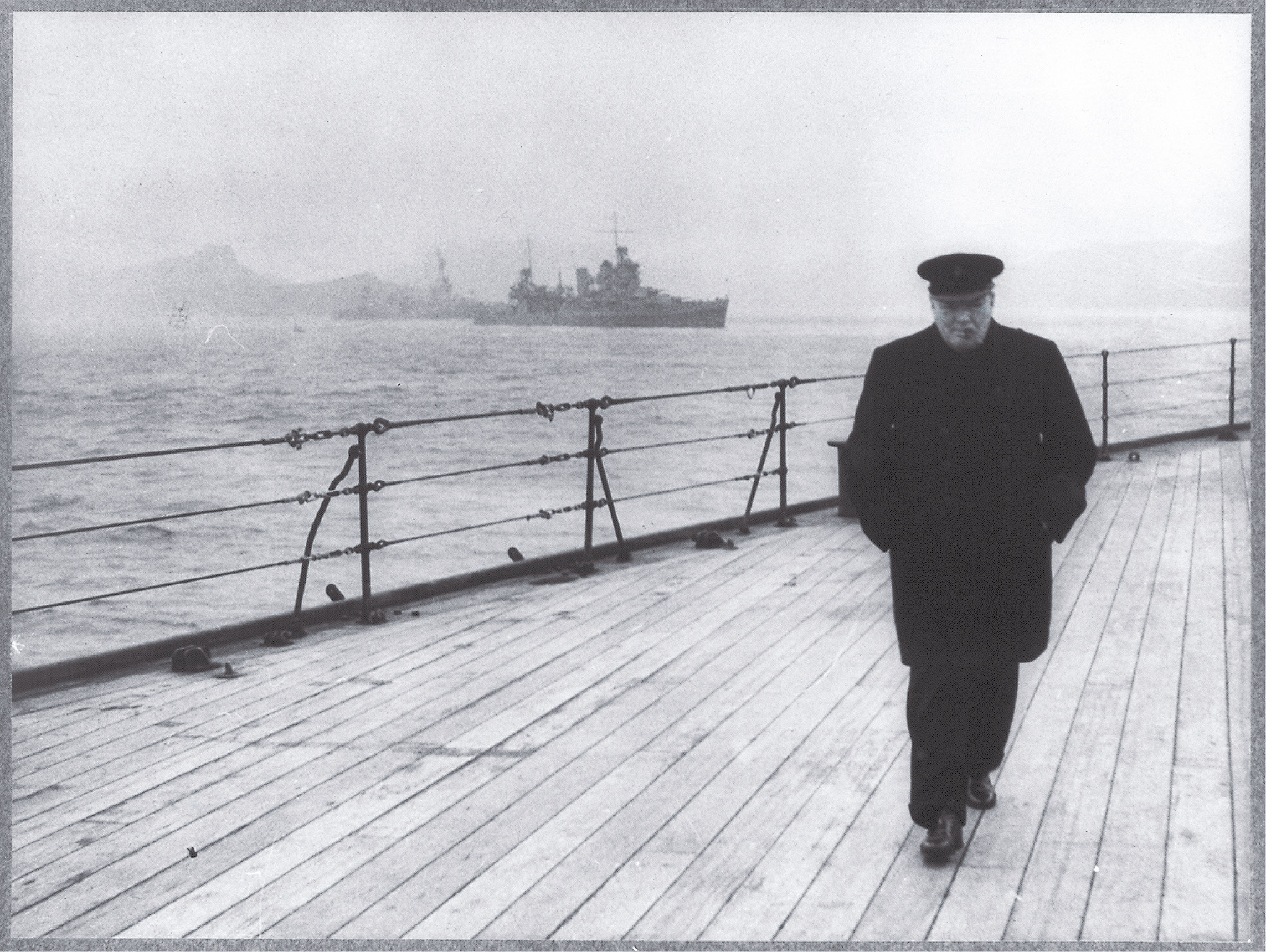
Churchill had a lifetime of experience of the military. He had trained at Sandhurst, and served in the cavalry in India and Sudan in the 1890s. He worked as a war reporter during the Boer War in South Africa, where he was captured and escaped. He was First Lord of the Admiralty from 1911 to 1915 and, in the first half of 1916, he commanded a battalion of the Royal Scots Fusiliers on the Western Front. He wrote literally millions of words in the 1930s as a military historian and biographer of his ancestor, the Duke of Marlborough. Military affairs were, almost, embedded in his DNA. This enabled him to say, when appointed Prime Minister in May 1940, as war ravaged France and the Low Countries, and his own country faced its biggest threat in centuries, that his ‘whole life had been a preparation for this hour and this trial’.

But Churchill was no great respecter of senior Army or Navy officers. He thought many of them were unimaginative, too reliant on repeating standard tactics and procedures, and had their minds closed to new ideas. As we saw earlier in this series (see MHM 140, June/July 2024), he had played a significant part during the First World War in the invention of the tank – a machine intended to break the stalemate of trench warfare on the Western Front. He remembered for years how negative and dismissive senior Army figures initially were of this revolutionary new piece of military hardware. Churchill really valued unorthodox thinking – thinking ‘outside the box’, as it would be called today.
Churchill was always looking for new and radical solutions to military problems, and in the 1940s this inevitably meant some sort of marriage between the scientist and the soldier. If scientists could provide his generals, his admirals, or his airmen with an advantage over the other side, then Churchill wanted to know about it. On many occasions during his leadership in World War II, he would argue, cajole, push, and even bully his generals and admirals to take up new scientific ideas, even when they were reluctant to do so. At one point, the head of Bomber Command, Sir Arthur ‘Bomber’ Harris, remonstrated with Churchill about some new approach he was insisting on. ‘Are we fighting this war with weapons or slide rules?’ Harris asked. Churchill replied, ‘That’s a good idea; let’s try the slide rule for a change.’ Indeed, ‘slide-rule strategy’ became a generic phrase to describe the application of scientific method to war.

Breaking the code
One area of huge importance in the science war was the work of the code-breakers based at Bletchley Park in Buckinghamshire. During the First World War and his time at the Admiralty, Churchill had become fascinated by code-breaking and the tantalising possibility of reading the enemy’s coded messages: Room 40 (known by the number the Admiralty had given the office) became the centre of naval code-breaking in that war.
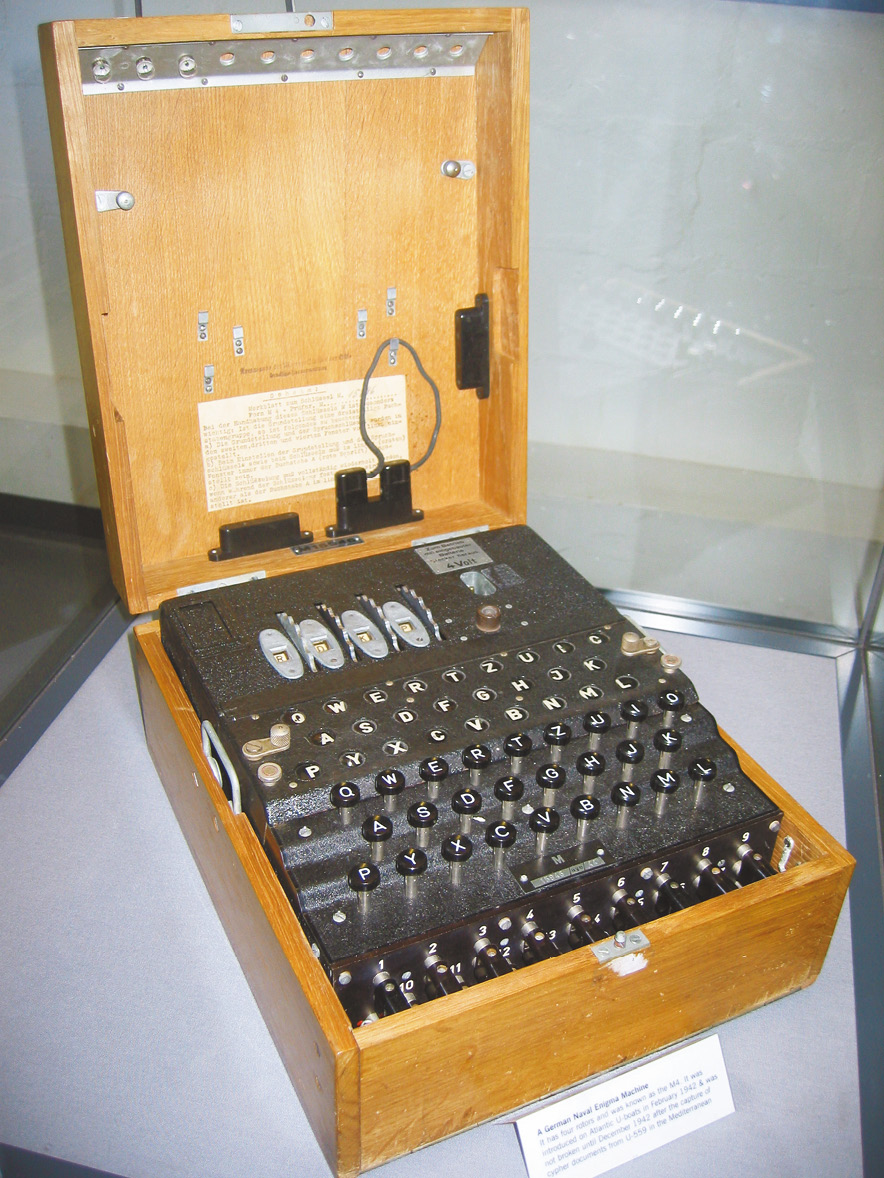
In the Second World War, the information gleaned from breaking the German codes, and by listening in on communication between field units and their headquarters sent via the ‘Enigma’ cipher machine, was known generically as ‘Ultra’. It began to come on stream at the end of May 1940, within weeks of Churchill becoming Prime Minister. The excitement of reading deciphered messages direct from the enemy appealed greatly to Churchill, just as it had in World War I. He really enjoyed the magic and the mystery of it. Every day, wherever he was, a special box in faded yellow leather was delivered to the Prime Minister by a messenger from the Secret Intelligence Service with the latest ‘decrypts’, the decoded messages. Only Churchill held the key to this box, on his key ring – and only a tiny number of senior ministers and the chiefs of staff and their deputies knew of the existence of this highly valuable top-secret intelligence.


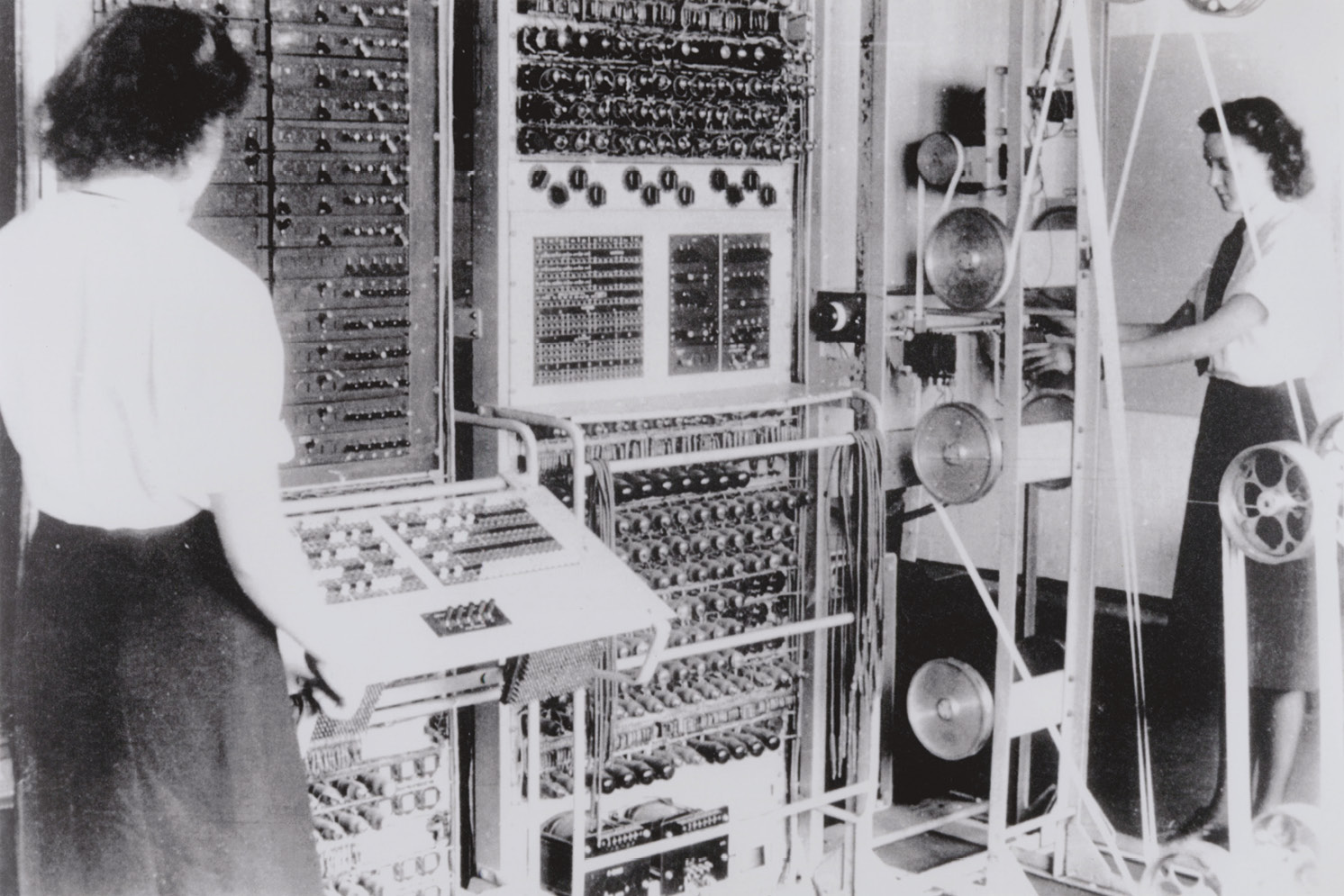
Some of Britain’s most brilliant mathematical brains were drawn in to work at Bletchley Park. Of all the many extraordinary personalities who worked here, Alan Turing was surely one of the most exceptional. A top-level mathematician and mechanical engineer, he was a Fellow of King’s College, Cambridge, who was recruited to Bletchley, where he ran the famous section known as Hut 8. He was only in his late 20s when he arrived, with boyish looks but a totally dishevelled and eccentric air. His trousers were often held up with an old tie, and he often went for several days without shaving. Scruffy and painfully shy, he developed the habit of working continuously for days at a time before collapsing in exhaustion. But though Turing’s Security Service masters never really understood him, he helped design the first ‘bombes’ – huge electrical machines consisting of 30 rotating drums that ran through thousands of letter possibilities at high speed to find the correct match of plain text with encrypted letters.
Out of this, later in the war, came Colossus, the first ever operational computer, which could run through the tens of millions of computations necessary to decode an Enigma message. It was a stunning breakthrough, and Turing went on to help found the post-war computer industry. As is well known, however, his later career was tragic. Hounded for being gay, he committed suicide in 1954 by biting on a poisoned apple.
In September 1941, Churchill made a personal visit to Bletchley Park to see what was going on there for himself – though even he was surprised at the casual dress and eccentric behaviour he saw. ‘I know I told you to leave no stone unturned to get staff but I didn’t expect you to take me literally,’ he said to Stewart Menzies, the head of Secret Intelligence Service.
While at Bletchley, Churchill made a short and emotional speech to the code-breakers telling them how important their work was. But because so few people in senior government positions were allowed to know about the work going on there, they were constantly being turned down in their bid for more resources. And by this time, to meet the volume of work coming through, there was need for a major expansion. So a month after Churchill’s visit, Turing and three of the other leading code-breakers wrote directly to him, telling him: ‘We think you should know that this work is being held up, and in some cases not being done at all, principally because we cannot get sufficient staff to deal with it.’ They asked for additional typists, more clerks, and for the removal of various bottlenecks. When he received the letter, Churchill sent a minute to General Ismay, his military chief of staff, in which he wrote: ‘Make sure they have everything they want as extreme priority and report to me that this has been done.’ Then he stamped the minute with one of his famous red stickers bearing the words ‘Action this day’.
Within a month, the much needed expansion at Bletchley Park had begun. The Ministry of Works started an urgent building-expansion project and a recruitment programme for 2,000 extra staff was launched. Once again in the ‘Wizard War’, Churchill’s direct intervention had made the key difference. He called the men and women who deciphered the German codes ‘the geese that laid the golden eggs and never cackled’.
Churchill’s Toy Shop
There were many other ways in which Churchill supported the sort of mavericks who could help bring military success. The Ministry of Defence also ran a weapons and explosives research establishment at Whitchurch, a few miles south of Bletchley Park. Churchill loved to visit this top-secret establishment and o see what the boffins there were coming up with. It soon became known as ‘Churchill’s Toy Shop’.

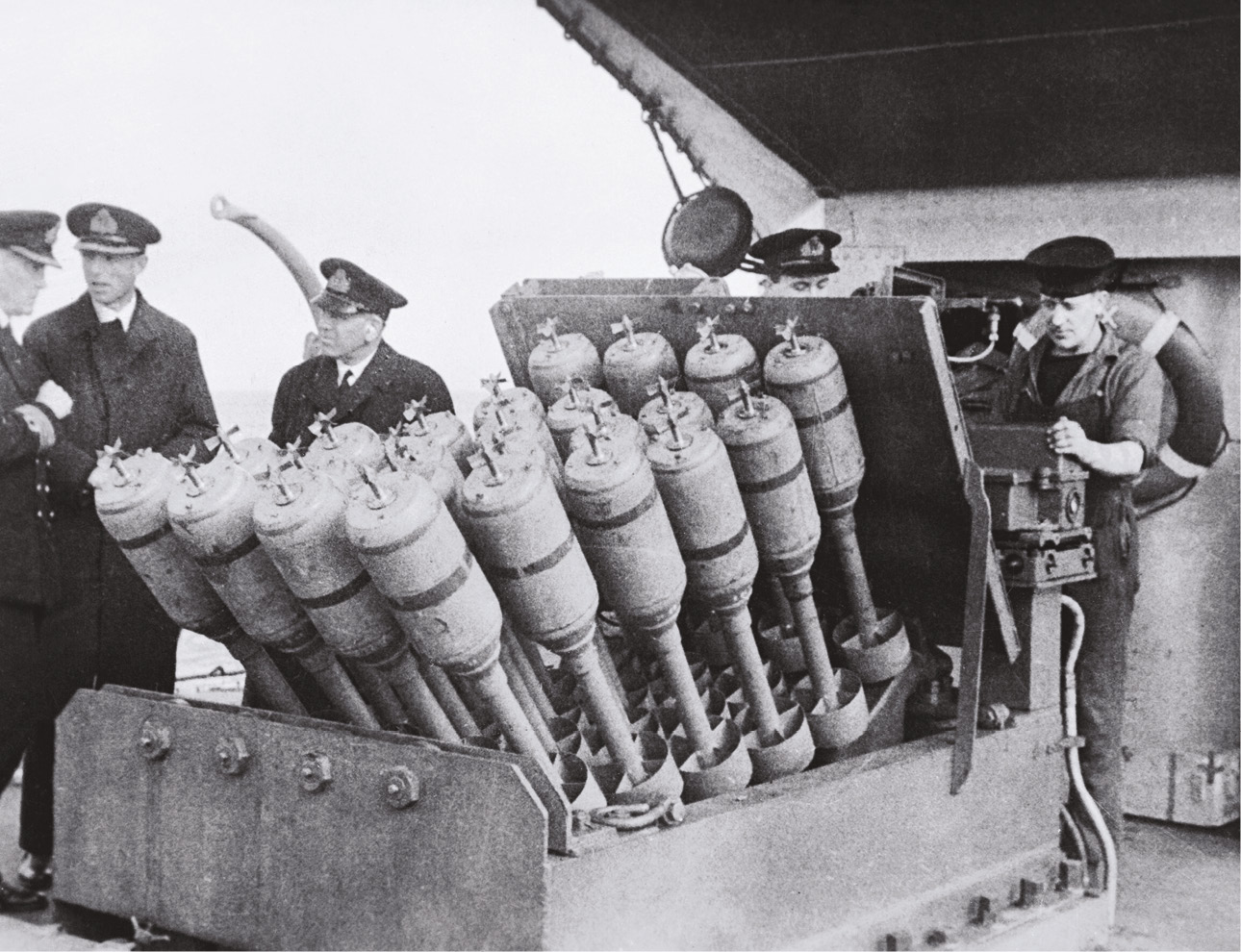
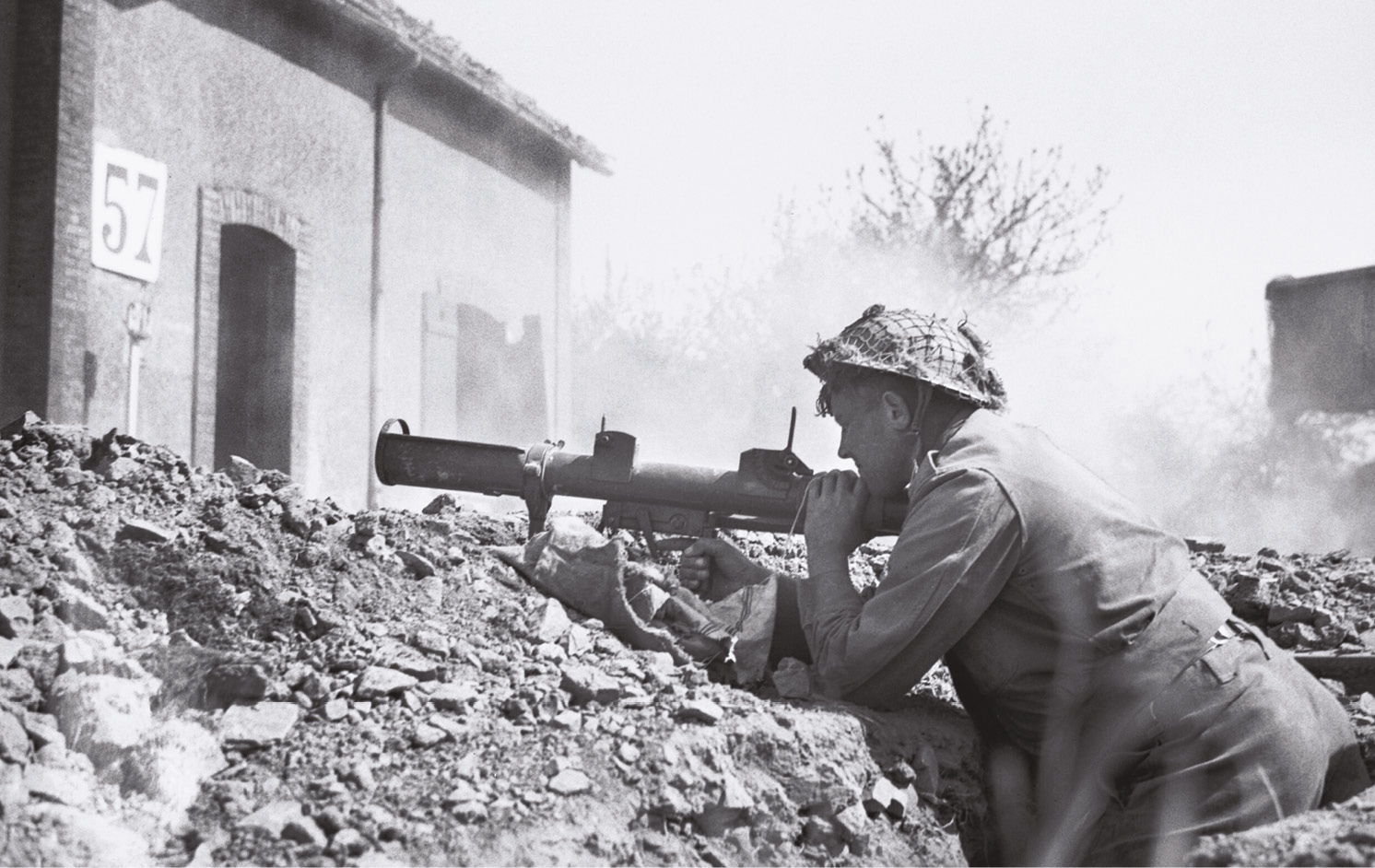
Top, above & below: Nicknamed ‘Churchill’s Toy Shop’, the MoD weapons and explosives research establishment at Whitchurch produced a range of innovative and sometimes wacky new weapons, including the ‘sticky bomb’ (top), the anti-submarine mortar known as the ‘Hedgehog’ (above), and the infantry-operated PIAT anti-tank weapon (below).
The men in charge were two brilliant and radical thinkers, Major Millis Jefferis and Stuart Macrae, a former editor of Armchair Science magazine. Under their leadership, the team there came up with a variety of remarkable and slightly wacky devices, ranging from tiny booby traps to heavy guns, most of which had improbable names like the ‘Kangaroo Bomb’ or the ‘Beehive’. They devised a magnetic naval limpet mine that was used in several commando raids; a ‘sticky bomb’ that would adhere to armour before exploding; and a form of anti-submarine mortar, known as the ‘Hedgehog’, that could fire a whole ring of depth charges against a U-boat. Thirty-seven U-boats were later confirmed as having been sunk using the device.
Jefferis invented a shoulder-fired anti-tank gun that eventually went into production as the PIAT gun and became the Army’s most effective infantry-operated anti-tank weapon. But sometimes the work they did at the establishment went wrong, and on at least one occasion there was an explosion that destroyed a part of their armoury. Needless to say, the War Office and the Ministry of Supply were opposed to such unorthodox experiments, and on several occasions tried to close the unit down. But Churchill insisted its work should continue. On one visit to his Toy Shop, Churchill was described as being ‘like a small boy on holiday’. It was just the sort of unconventional, out-of-the-box thinking that he loved to encourage.
Hobart’s Funnies
Another innovative figure to win Churchill’s support was Percy Hobart. He had been the commander of an armoured unit in the 1930s, when Churchill had got to know him and had come to admire his fertile mind. In the summer of 1940, Churchill was appalled to discover that Hobart had been pensioned off by the Army high command and was serving his country only as a Lance-Corporal in the Home Guard. Churchill immediately called for his reinstatement as a Major-General and, in a memo, praised Hobart’s ‘strong personality and original view’.

Hobart returned to the Army and, in April 1943, was put in charge of the newly formed 79th Armoured Division, which became known as the ‘Zoo’ or ‘Menagerie’. His task now was to come up with a range of armoured devices designed to assist landing troops in getting through beach obstacles and in capturing the beachhead. Hobart turned his new division into a sort of think tank for armoured warfare. Floating tanks, known as ‘Duplex Drive (or DD) tanks’, were launched at sea, with floating canvas skirts around them so they could ‘swim’ in with the landing craft carrying the infantry. Hundreds were built for D-Day.
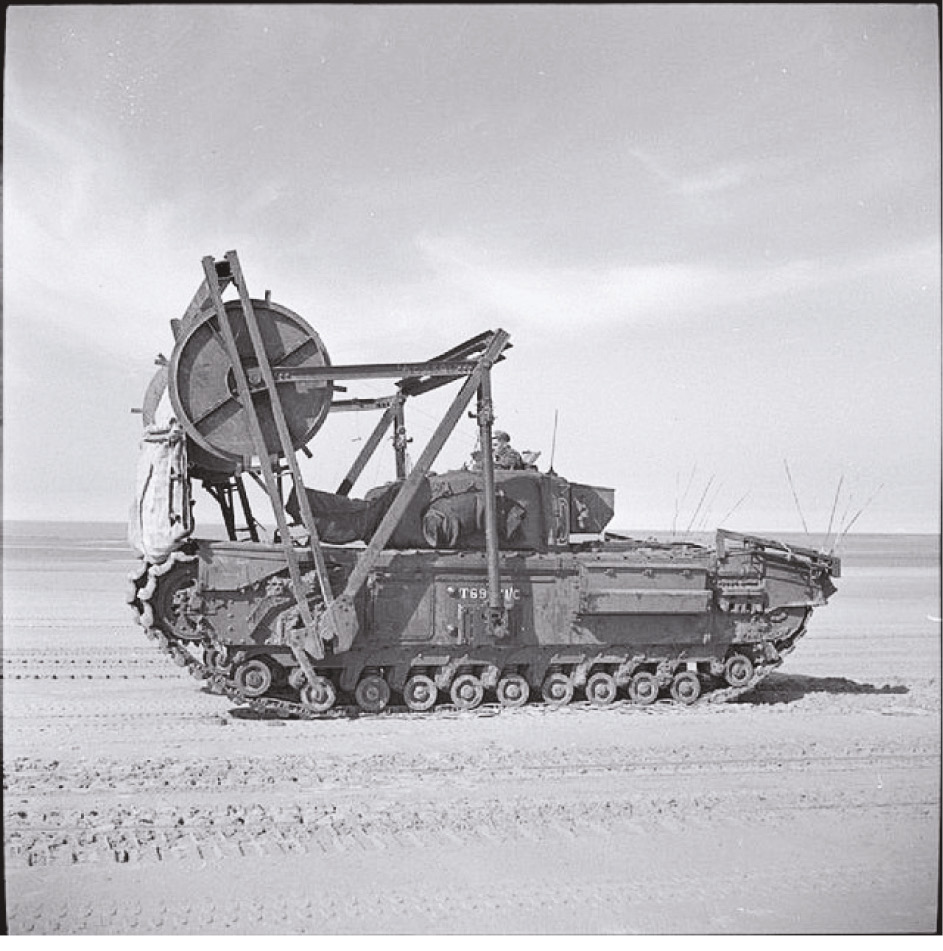
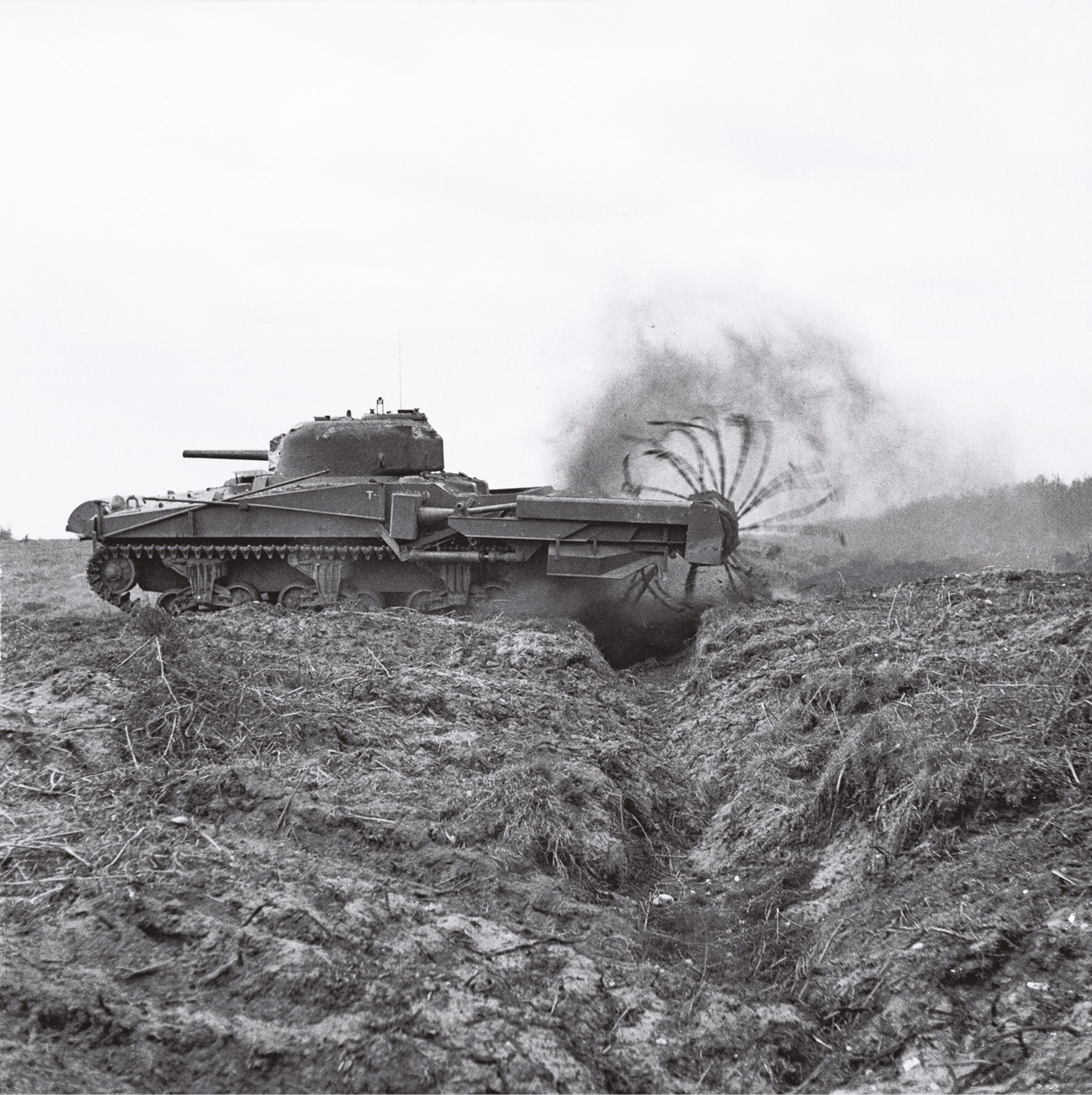
Hobart and his men devised mine-sweeping ‘Flail tanks’, each with a giant rotor that spun a heavy set of whirling chains to detonate mines in its path. There were ‘Bobbin tanks’, which could lay reinforced matting on soft surfaces (such as beaches), allowing heavy armoured vehicles to cross terrain that would otherwise be impassable. There were tanks known as ‘Crocodiles’, with flame-throwers to flush out the enemy from well-defended bunkers. There were tanks adapted to lay bridges, and others equipped with bulldozer blades to remove obstacles. Hobart’s inventiveness turned his division into pioneers of specialised armour, and the range of weird and wonderful machines that he helped to devise would become known as ‘Hobart’s Funnies’.
Churchill perfectly summed up his own view on the use of such unorthodox tactics in a letter to the war office in support of Hobart: ‘We are now at war, fighting for our lives, and we cannot afford to confine Army appointments to persons who have excited no hostile comment in their career,’ he wrote. ‘This is a time to try men of force and vision and not to be exclusively confined to those who are judged thoroughly safe by conventional standards.’ More prosaically, he was overheard saying: ‘Remember it isn’t only the good boys who help to win wars; it’s the sneaks and stinkers as well.’
‘Boffin’
The term ‘boffin’ became widely used during the Second World War in Britain as an affectionate shorthand for the scientists who worked quietly in the background developing new military technologies that many people did not understand but which they knew might help to win the war. The word had associations of eccentricity and weirdness, but its origins are not clear.
There was a strange-looking character in Dickens’ Our Mutual Friend called Nicodemus Boffin. A post war film, School for Secrets (dir: Peter Ustinov, 1946), suggests humorously that the name was derived from the mating of a Puffin with a Baffin (‘an obsolete service aircraft’) to produce a bird that ‘bursts with weird and sometimes inopportune ideas’ of ‘staggering inventiveness’. Less remarkably, it is likely the word actually is some sort of acronym of the term ‘back office intern’, implying a relatively junior back room researcher.
Whatever the word’s origins, the Second World War in Britain could in some ways be described as the ‘Boffin’s War’.
Strength and resolution
Of course, much of the scientific work during the war went on without the direct involvement of Churchill. But his support for men of science, his enthusiasm for change and new thinking, his desire for the military to keep up with the work of the ‘wizards’, all created the climate in which scientists, or ‘boffins’, could flourish.
Churchill had the ability to galvanise large groups of people. His words inspired a generation living through the war. No matter how old-fashioned he seemed in 1940, he said what people wanted to hear in those extreme circumstances, making them feel that their lives were linked to a long and great history that was worth fighting for, and that resisting an evil foe was not only possible but the right thing to do.
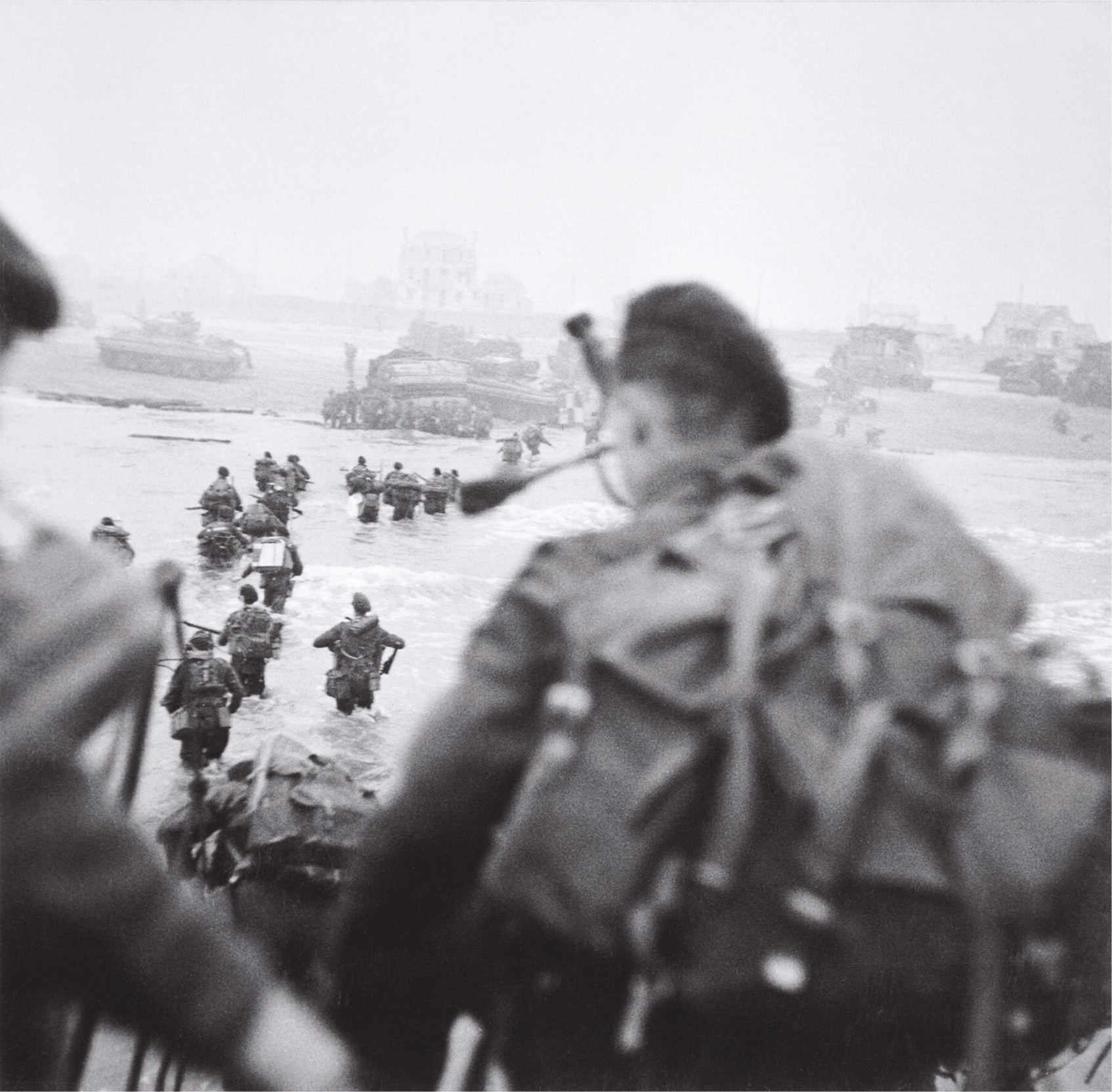
But he was also good at inspiring individuals. He had the ability to push those around him, sometimes beyond what they thought they were capable of doing. Many men and women wrote about their sense of being ‘lit up’ in his presence – and others, of course, wrote about him as a bully and a tyrant.
R V Jones was one of the young scientists who came into contact with Churchill many times during WWII – first in the 1940 air war in what was known as the ‘Battle of the Beams’, and later in the debate about the secret ‘V’ weapons being developed by the Germans at Peenemünde in the Baltic. Reflecting on being with Churchill, 30 years later, he wrote: ‘I had the feeling of being recharged by contact with a source of living power. Here was strength, resolution, humour, readiness to listen, to ask the searching question and, when convinced, to act.’
Even accounting for the impression an elder statesman would naturally make on a younger man, this describes a rare quality in leadership. Churchill had led a team of scientists and military chiefs, he had cut through red tape, and encouraged innovation and fresh thinking. He helped Britain to survive and did much to contribute to final victory. As we prepare to mark his 150th birthday on 30 November, we can say that this was indeed his Finest Hour.
All images: Wikimedia Commons, unless otherwise stated