
Subscribe now for full access and no adverts
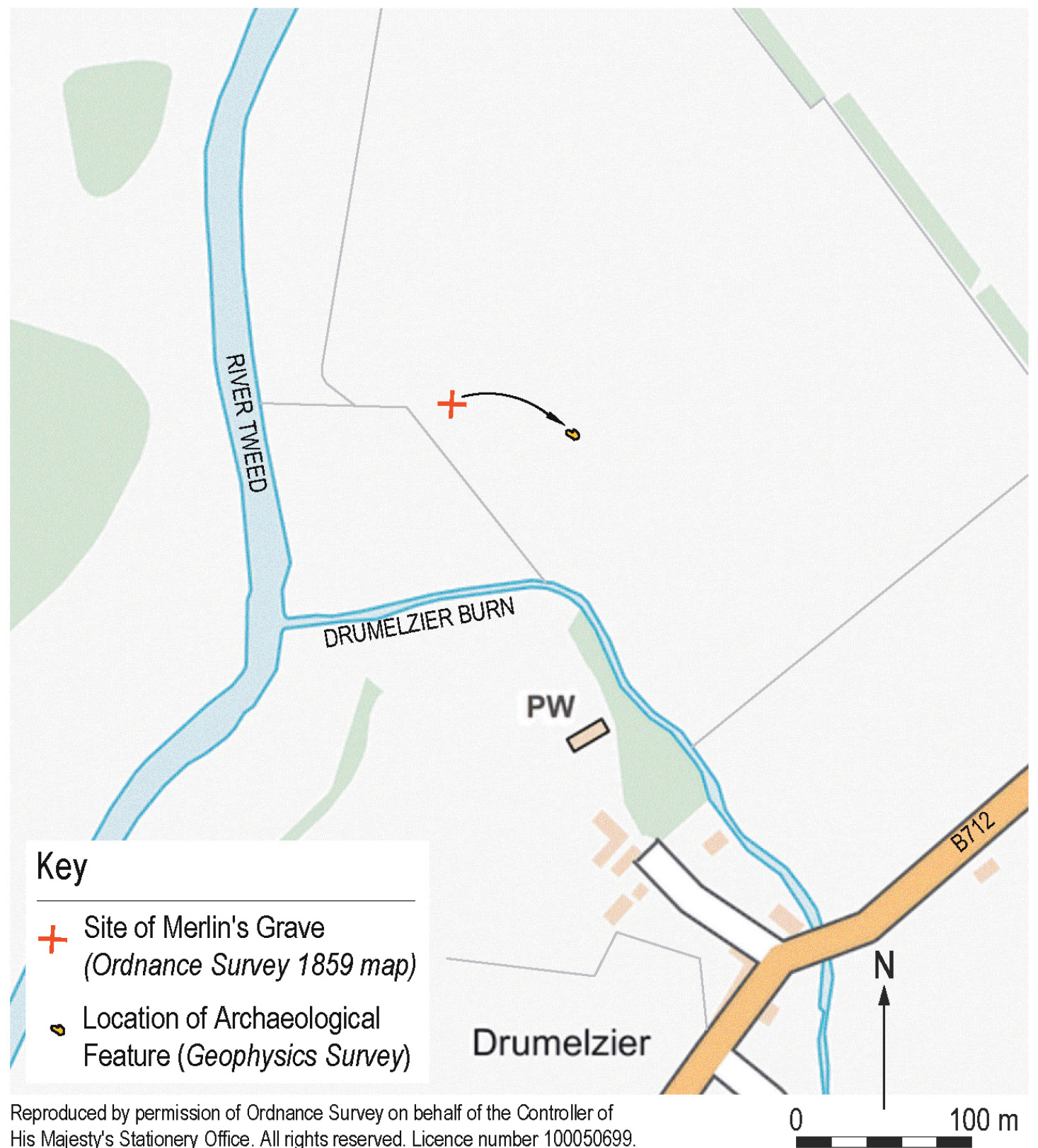
Merlin’s Grave at Drumelzier (pronounced druh-MEL-yur) is formally documented in Scotland’s National Record of the Historic Environment, but despite its evocative name this site is little more than a nondescript corner of a field, etched on to the map by local tradition. In 1689, Alexander Pennecuik noted in the draft of his Geographical Historical Description of the Shire of Tweeddale that: ‘a little below the church yeard, the famous prophet Merlin is said to be buried. The particular place of his grave… was shewn me many years ago, by the Old and Reverend Minister of the place…’. The origins of this tradition, the RCAHMS Peeblesshire Inventory speculates, could lie in the discovery of a Bronze Age grave – but, if so, no record of this find survives. While Merlin’s Grave has been marked on maps since the 18th century, no archaeological remains have ever been documented there.
How, then, did Drumelzier come to be associated with Merlin? Our story begins with an old medieval tale, the Vita Merlini Silvestris (‘The Life of Merlin of the Forest’), which tells of a wild man of the woods who was banished to the wilderness because of the terrible slaughter he had provoked at a great battle in northern Cumbria: ‘qui Lailoken vocabatur quem quidam dicunt fuisse Merlynum qui erat Britonibus quasi propheta singularis sed nescitur…’ (‘his name was Lailoken. Certain people say that he was Merlin who was regarded amongst the Britons as unique in his powers of prophecy…’)
The Vita actually contains two stories about Lailoken. In the first, he presses St Kentigern for absolution for his misdeeds. Three times Lailoken asks for forgiveness, and each time he prophesises a different way he will die – crushed by stones and cudgels; pierced by a sharp wooden stake; and drowned. On receiving St Kentigern’s blessing, Lailoken offers a further prophecy that the greatest of the kings of Britain, the holiest of the bishops, and the noblest of the lords will follow him in death that same year.
The second story finds Lailoken as a prisoner of an under-king or sub-king called Meldred, held beside his ‘lofty throne’ at Dunmeller. After three days, Lailoken offers Meldred a trio of nonsensical riddles, and the perplexed ruler promises him his freedom in return for an explanation. Lailoken first foretells his imminent threefold death and asks that he be buried on the east side of the Tweed near where it meets the Powsail Burn. The king agrees, but flies into a rage when the riddles are revealed to tell of the queen’s adultery. Lailoken makes a hasty escape, but the queen exacts her revenge years later when her shepherds attack Lailoken while on his way past Dunmeller, stoning and beating him. In his death throes, Lailoken falls into the Tweed, landing on the sharp stake of a fish trap where, impaled face down, he drowns. Thus, his prophecy became true, and Meldred had him buried at his chosen spot.

Where did this curious tale come from? The Vita Merlini Silvestris survives in only one 15th-century manuscript (held in the British Library). A truncated version of the same legend was also included in the Scotichronicon, written in the 1440s by Walter Bower, Abbot of Inchcolm Abbey, but the story was probably composed centuries earlier, most likely in the 12th century, when the Life of St Kentigern was being written. The Drumelzier tale appears to have much in common with early medieval Welsh poetry about ‘Myrddin Wyllt’, who was renowned for his gift of prophecy – and, interestingly, this same Myrddin was also called ‘Llallawc’ and ‘Llallogan’ in one of these poems, Cyfoesi Myrddin a Gwenddydd ei Chwaer (‘Conversation of Myrddin and his Sister Gwenddydd’). In turn, Myrddin became the wizard Merlin in the 12th century, when Geoffrey of Monmouth drew various Welsh stories together into his Historia Regum Britanniae (‘History of the Kings of Britain’), from which stemmed the Arthurian legends easily recognised today – and Geoffrey included yet another variant of the Drumelzier story in his own Vita Merlini.
There are no doubts, then, as to the medieval credentials of the Drumelzier legend – but could it have had even earlier origins? The name Lailoken derives from Cumbric, a now-extinct Celtic language that was spoken in southern Scotland during the early medieval period. His gift of prophecy recalls the divination skills attributed to druids by ancient Classical writers such as Dio Chrysostom, Cicero, and Hippolytus, and his triple death reflects the overkill observed among Iron Age sacrificial bog bodies such as Lindow Man (see CA 233 and 375). But was the story simply brought to Drumelzier by a wandering medieval minstrel, or did the Merlin legend actually originate here in Tweeddale? These were the questions that a community project, Drumelzier’s Hidden Heritage, sought to answer. By investigating sites in the landscape associated with the tale, the project (led by GUARD Archaeology) sought to examine the Drumelzier tale’s archaeological roots.
Historical clues
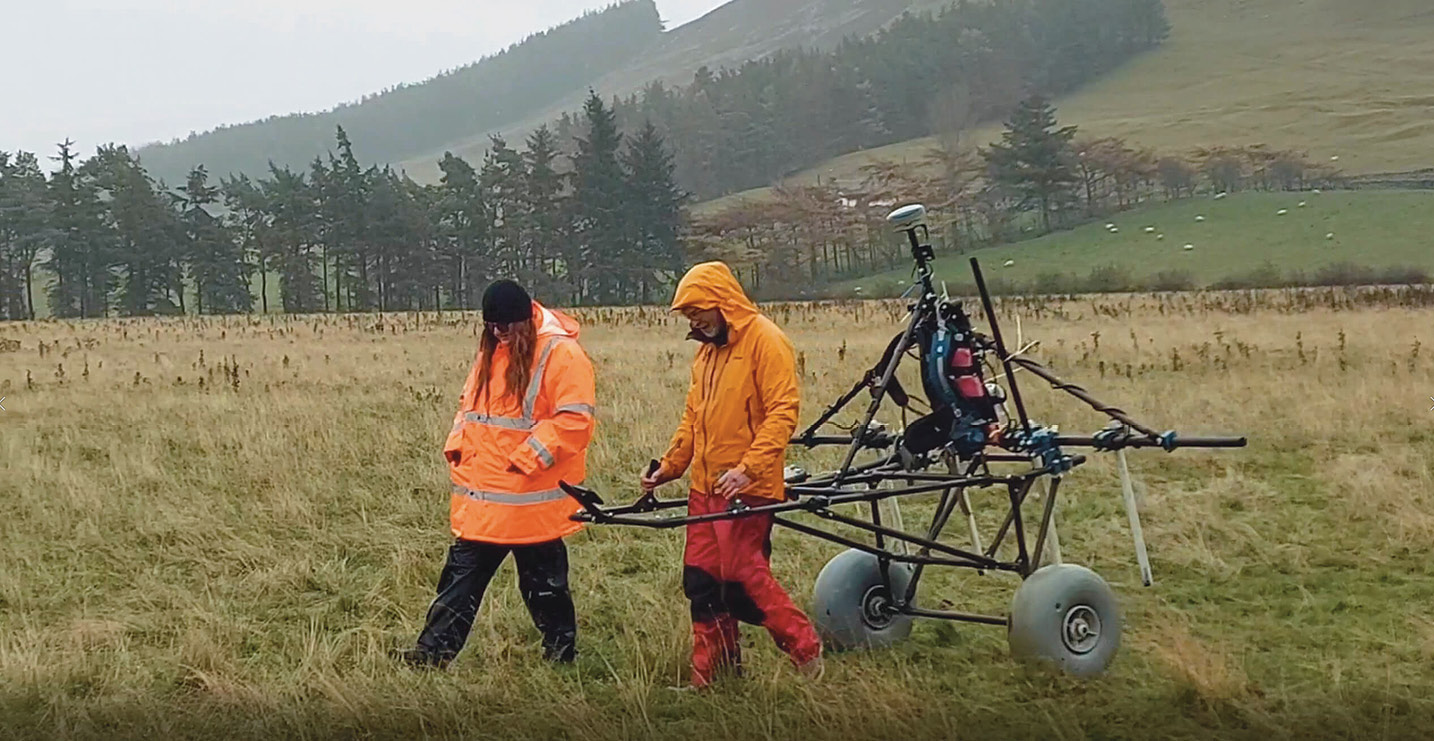
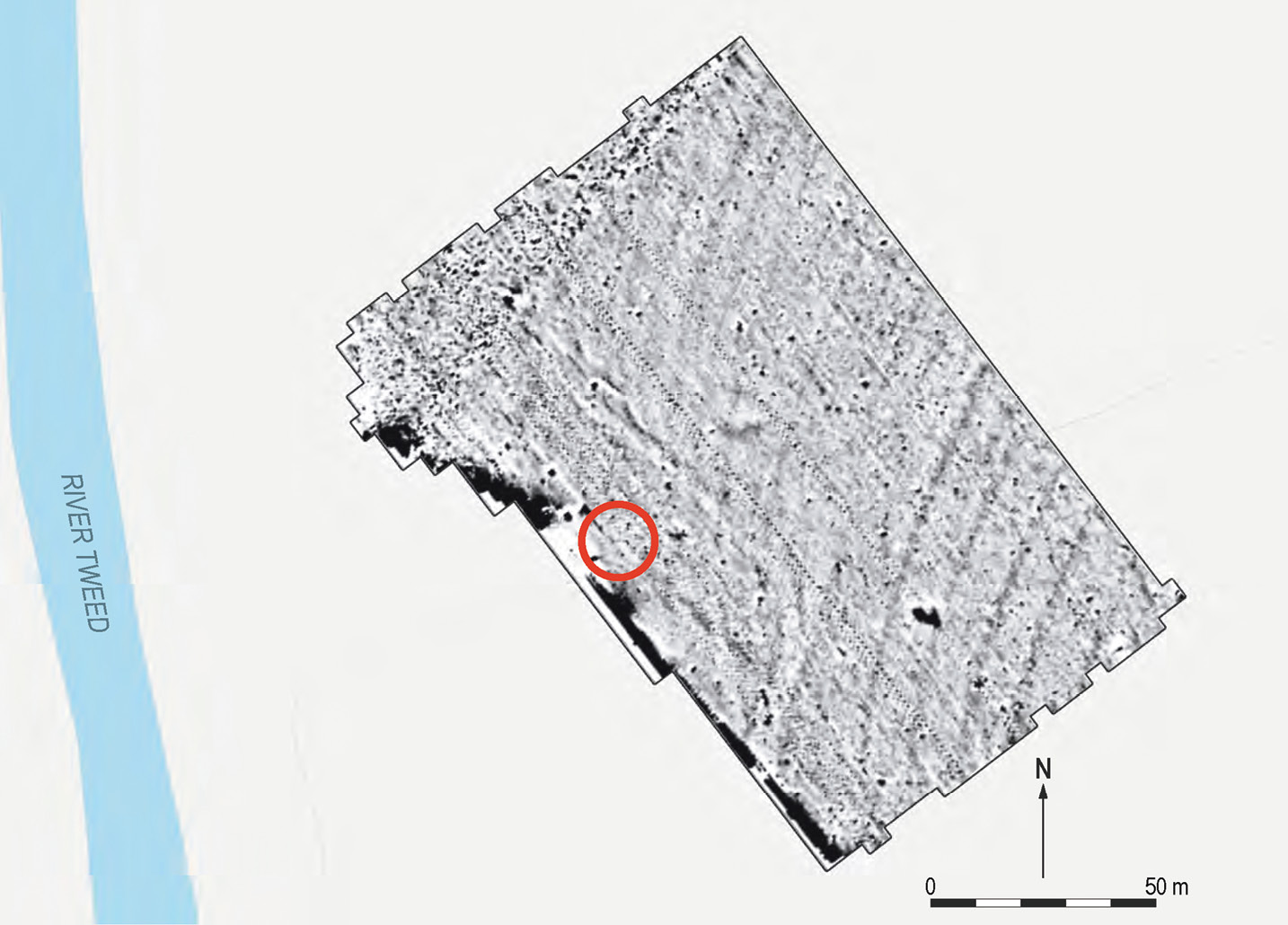
On a very soggy, dreich day in November 2022, a team of 11 volunteers and three archaeologists undertook a geophysical survey of a field to the north of Drumelzier. Led by Magnitude Surveys, the investigation aimed to see what lay beneath the surface on the spot marked as Merlin’s Grave – but unfortunately the answer proved to be ‘nothing’. What the survey did detect, though, was a large pit in the same field, a short distance to the south-east. Was it this that gave rise to the association of this location with Merlin’s Grave? There did appear to be some form of buried archaeological remains there, but only excavation would determine if the pit was indeed a grave, if it contained human remains, and what period it belonged to – and unfortunately we were not given permission to dig. It would have been a very short and inconclusive project if this was all the team had to go on – but luckily there were a couple of other sites that we had investigated over the preceding months, which had yielded rather more tangible evidence.
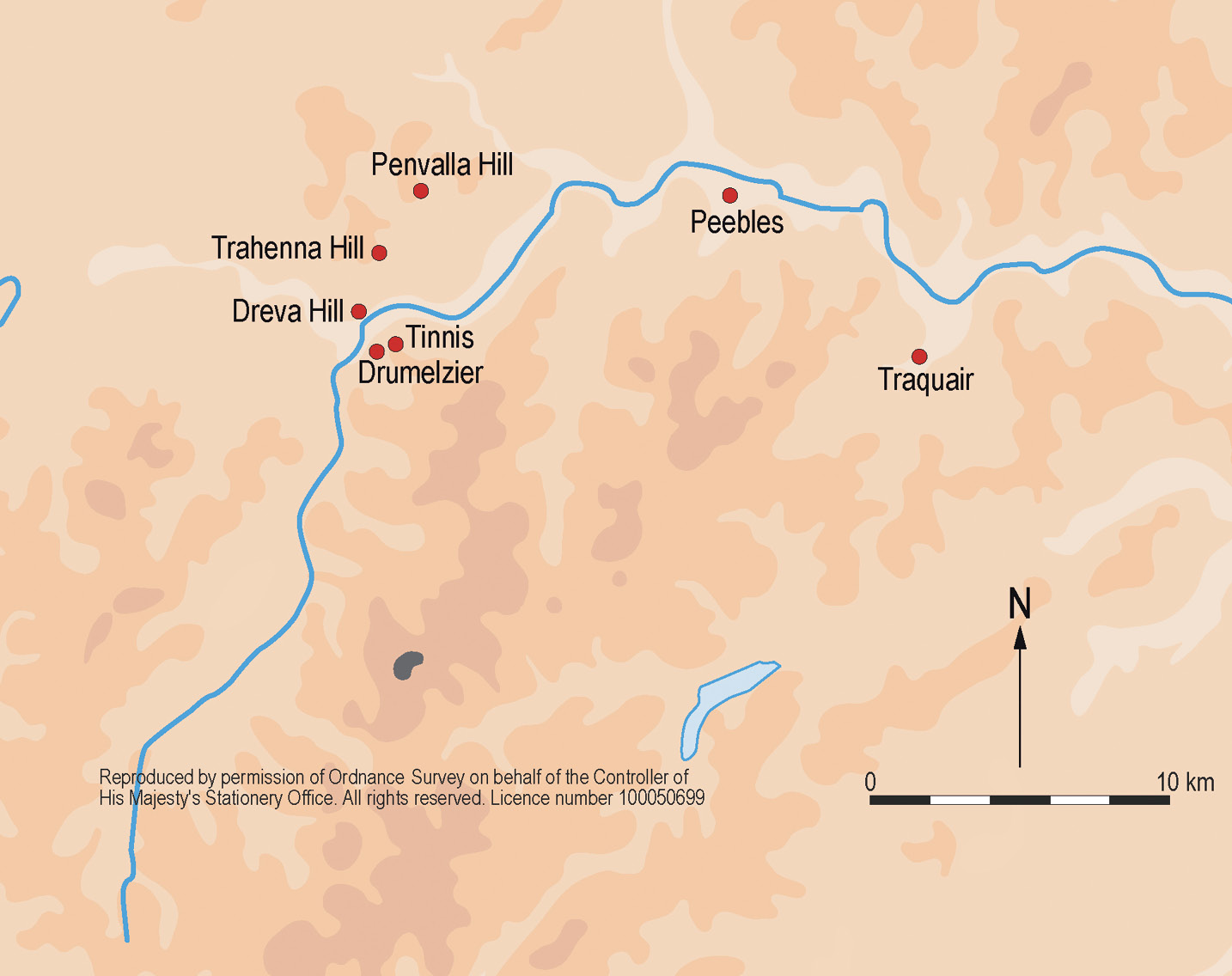
Place-names in Peeblesshire derived from the Cumbric language formerly spoken across southern Scotland.
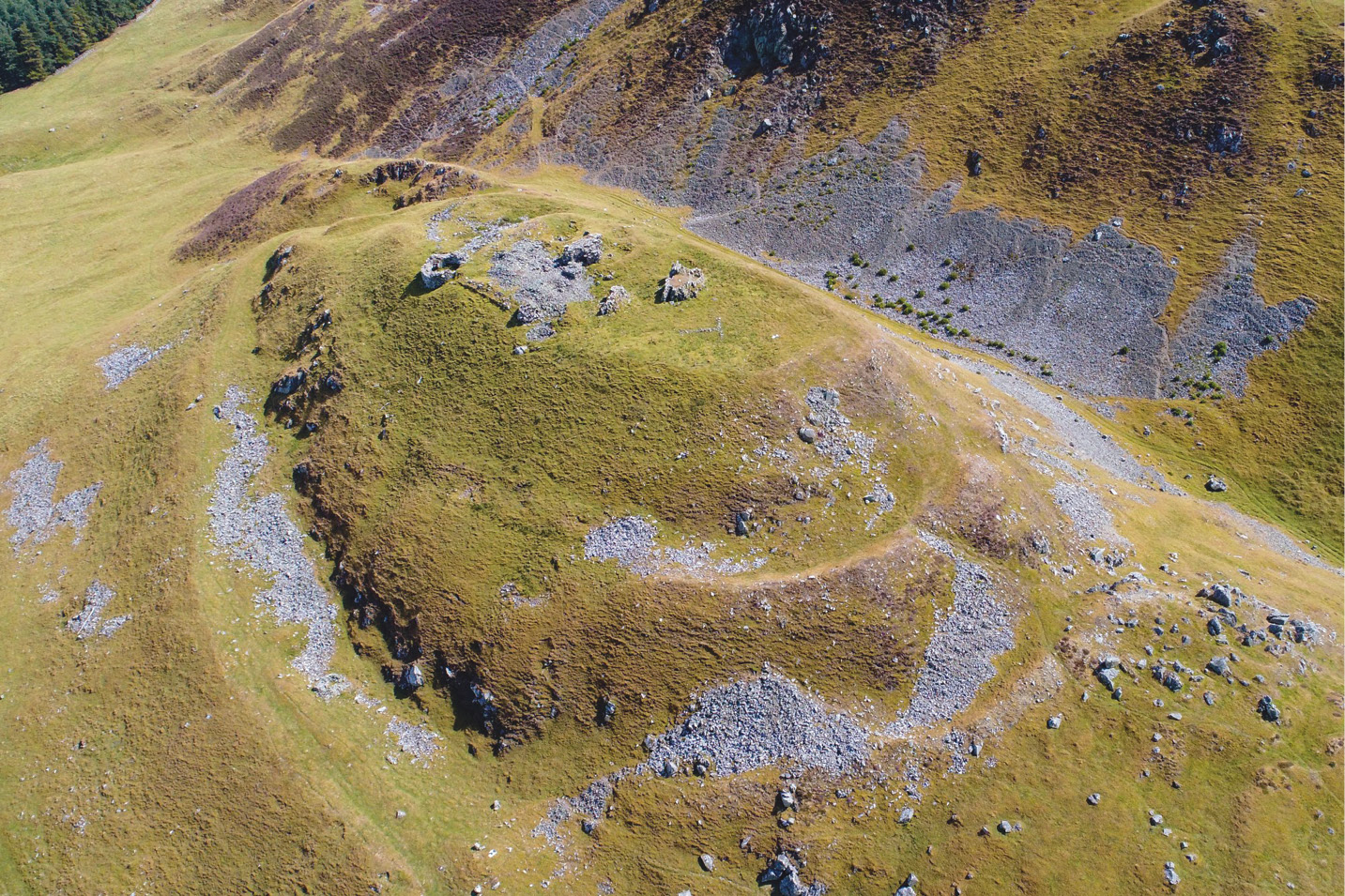
The Vita Merlini Silvestris contained several clues to guide our search. Much of the action takes place in and around Dunmeller, from which the place-name Drumelzier derives, and the Powsail Burn and the Tweed do indeed converge at this location. The modern village is also still overlooked by the prominent ruins of Tinnis Castle, which are commonly thought to represent the remains of Meldred’s ‘lofty throne’ where Lailoken was held captive. Meldred himself is mentioned nowhere outside the Vita Merlini Silvestris, but his description as a sub-king suggests that he was considered to rule a small area under the dominance of another ruler. This high-king may have been considered to be Rhydderch, a known contemporary of St Kentigern in the years around AD 600, who was the king of Alt Clud, the Rock of the Clyde.
St Kentigern, too, is a historically attested person: a 6th-century bishop of Glasgow, whose death was recorded in the Annales Cambriae (‘Welsh Annals’) around AD 614. Meanwhile, the terrible bloodshed for which Lailoken sought forgiveness in the Vita’s first story appears to have been the Battle of Arthuret, which the Annales Cambriae place in AD 573. It is thought to have been fought on the plain between Liddel and Carwannok (Liddel and Carwhinley in northern Cumbria).
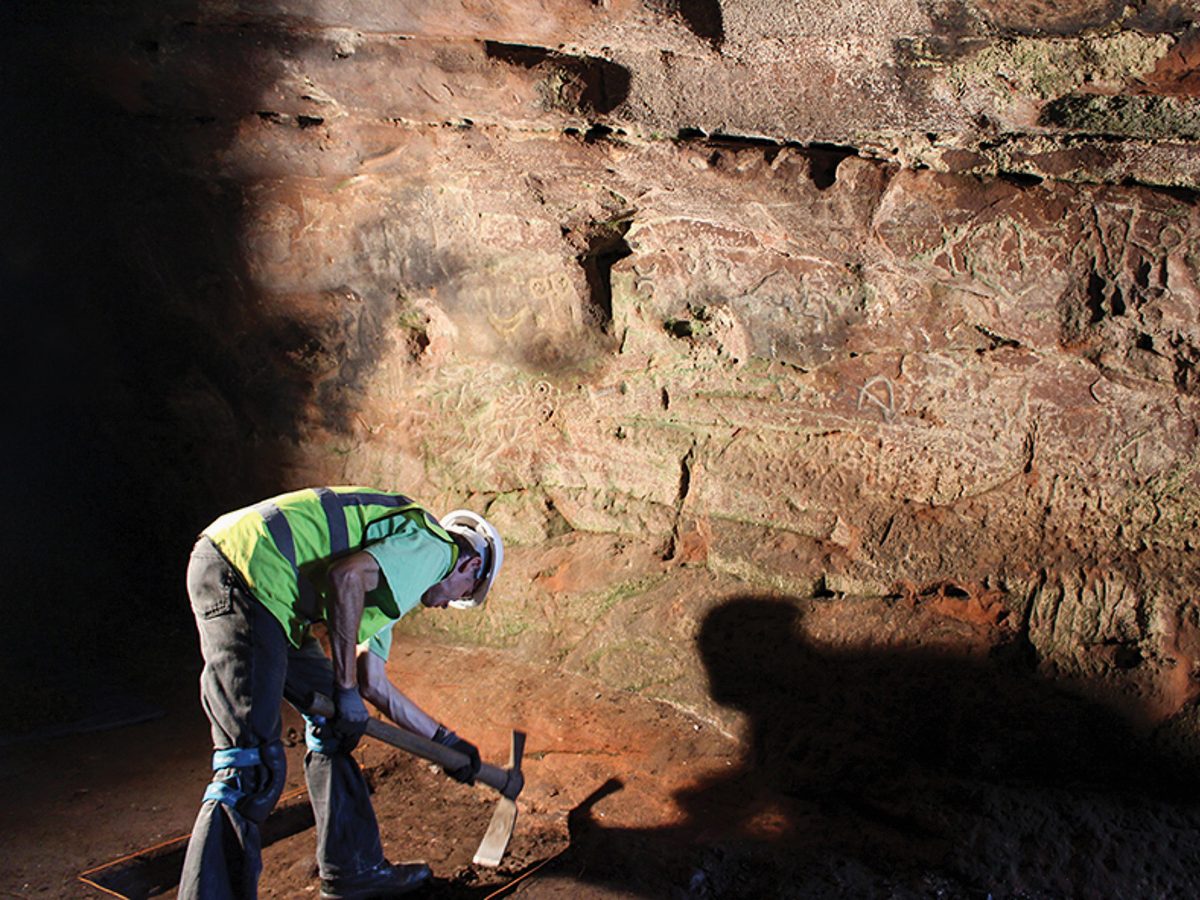
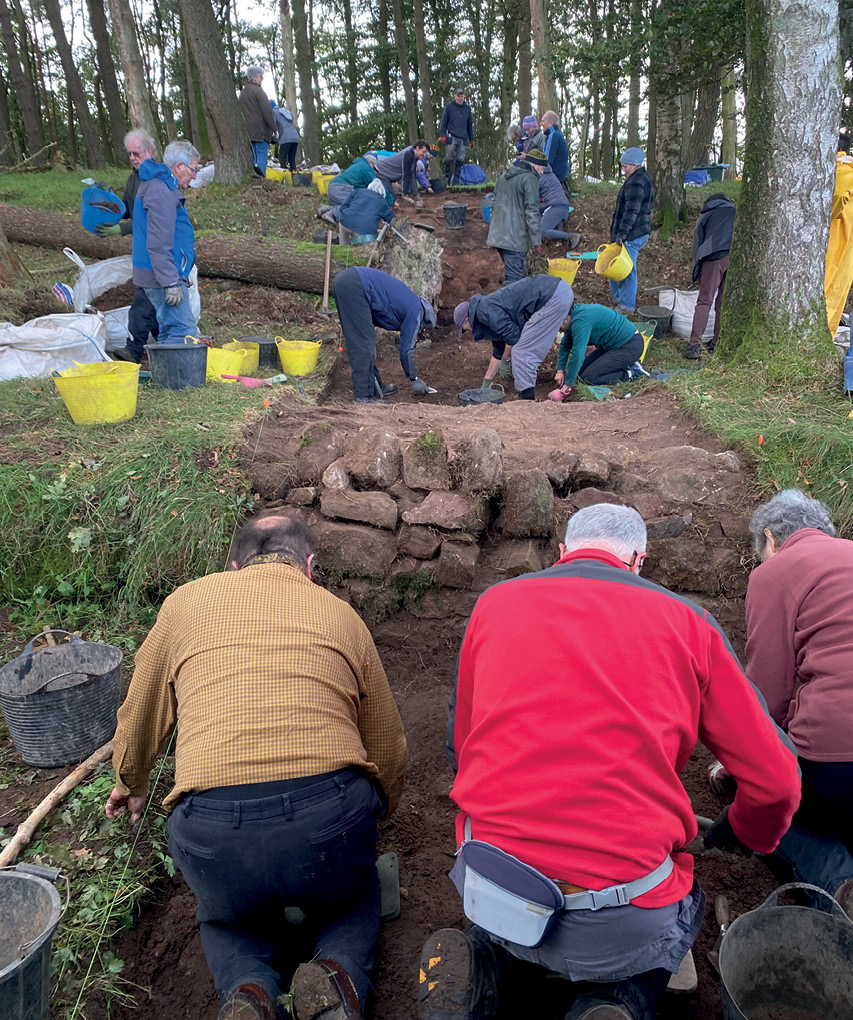
What the Lailoken story therefore offered us was: a period (AD 573-614), a place (Drumelzier), and a context (an early medieval kingdom in Peeblesshire) to investigate – and a key part of this research saw a team of GUARD Archaeologists and 35 volunteers excavating at Tinnis Castle in August 2022, hoping to recover archaeological evidence that might shed light on the origins of the Drumelzier legend.
Tinnis Castle
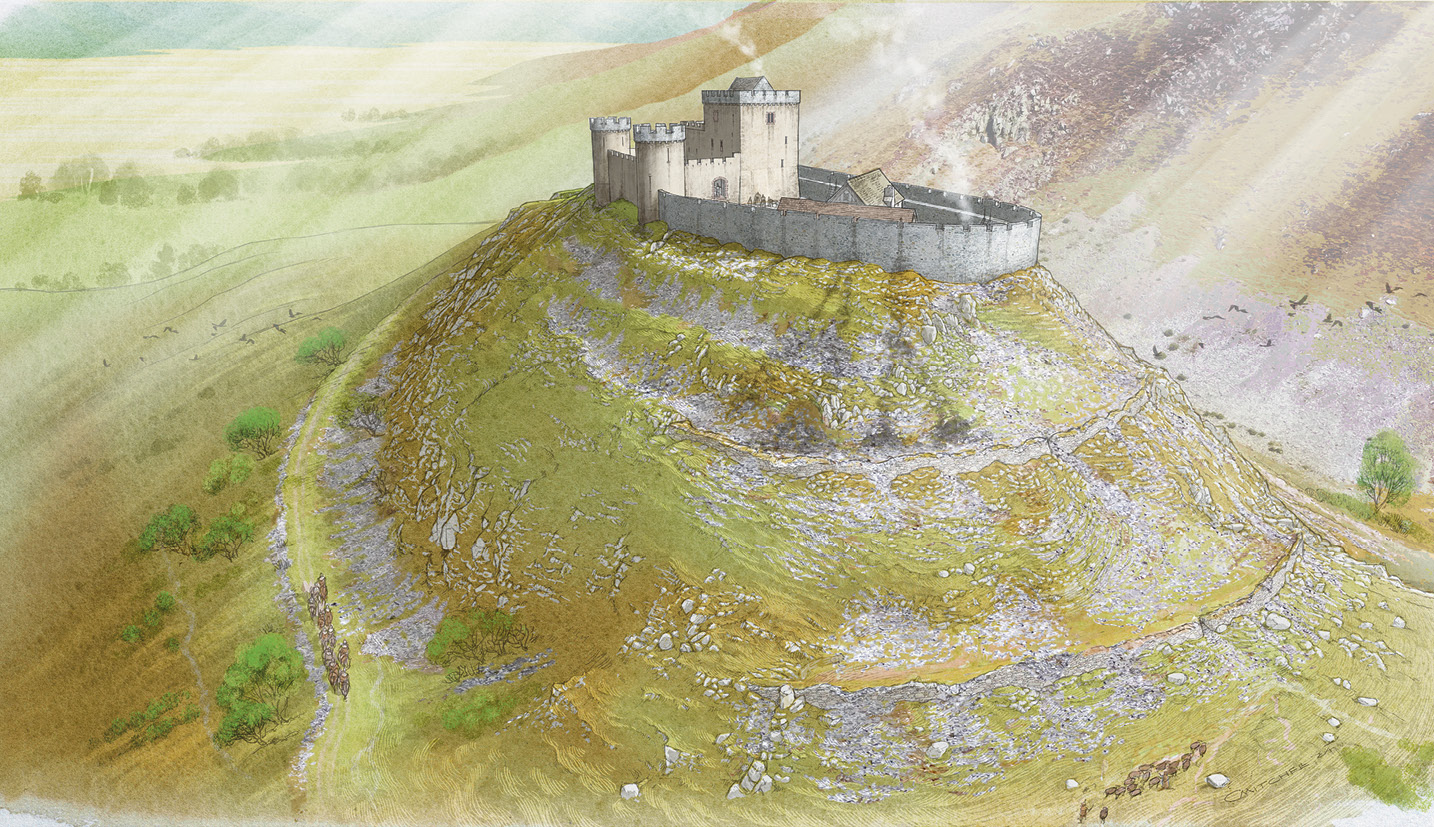
Although now reduced to fragments of broken walls, Tinnis Castle once stood as a sturdy bulwark against English raids from the south. It had served as the seat of the fearsome Tweedies of Drumelzier, who held this stronghold for the Kings of Scotland. It was long thought that the fortifications had met their demise when they were blown up with gunpowder by the Flemings of Biggar, with whom the Tweedies had a bitter feud during the 16th century. Detailed research by one of our volunteers together with the project team’s historian, however, revealed that this myth had arisen through confusion with another Tinnis, a towerhouse located in a different part of the Scottish Borders, the Yarrow Valley, which was ordered to be destroyed by James VI in 1592. By that time, the Tweedies had long abandoned the Drumelzier site in favour of a new castle to the south, closer to the Tweed.
Other insights more specific to our site also emerged during the research, evoking a well-ordered farming economy and field-scape in the early 14th century prior to the castle’s construction, and a turbulent and vicious feud-riven landscape after the site had been abandoned in the mid-16th century. We found little, however, to illuminate the occupation of Tinnis Castle itself, making the archaeological evidence that we excavated all the more important. Particularly significant was the discovery of the collapsed remains of a mortared stone wall; this had been built around the edge of the summit, demarcating part of the castle’s bailey and demonstrating that medieval occupation had extended across the entirety of the summit, not just the northern part of the hill where the ruins are visible today.
Analysis of the mortar used to bind this wall, along with samples from the castle masonry, revealed that the limestone used in its creation came from the same source, Carlops, some 17 miles to the north. Further structural clues were provided by a fragment of lead window flashing, which attested that the castle had had glazed windows: isotope analysis of the lead revealed that it had come from south of the border, in the Pennines. Most of the finds recovered during our dig, however, were entirely in keeping with everyday life in a medieval Scottish castle. These included sherds from a smashed jug made from Scottish medieval redware, a kind of pottery seen in many contemporary settlements across the country, as well as iron knives, nails, and a horseshoe.
The discovery of sheep bones was not surprising, given that wool was the principal export from burghs across southern Scotland during this period, but oyster shells were a more unexpected element given that their nearest source is the Firth of Forth, some 30 miles north of the site, hinting at expensive tastes for the castle’s inhabitants. The shells provoked much discussion among the excavation team, wondering how oysters could have been brought to this inland location: it is likely that they arrived at Tinnis in barrels of seaweed and saltwater to keep them fresh.
Tinnis Fort
Given the early 15th-century date for the surviving manuscript of the Vita Merlini Silvestris and the wider knowledge of the legend’s local association (as evidenced by its inclusion in the Scotichronicon), it seems inconceivable that the Tweedies of Drumelzier were unaware of the area’s association with Merlin. Might Tinnis’ illustrious mythical past have played a part in the choice of site for their castle? If so, the Tweedies were clearly not the first people to take advantage of this prominent knoll, as the excavation team soon discovered that the bailey walls had been built on the foundations of a thick drystone rampart.
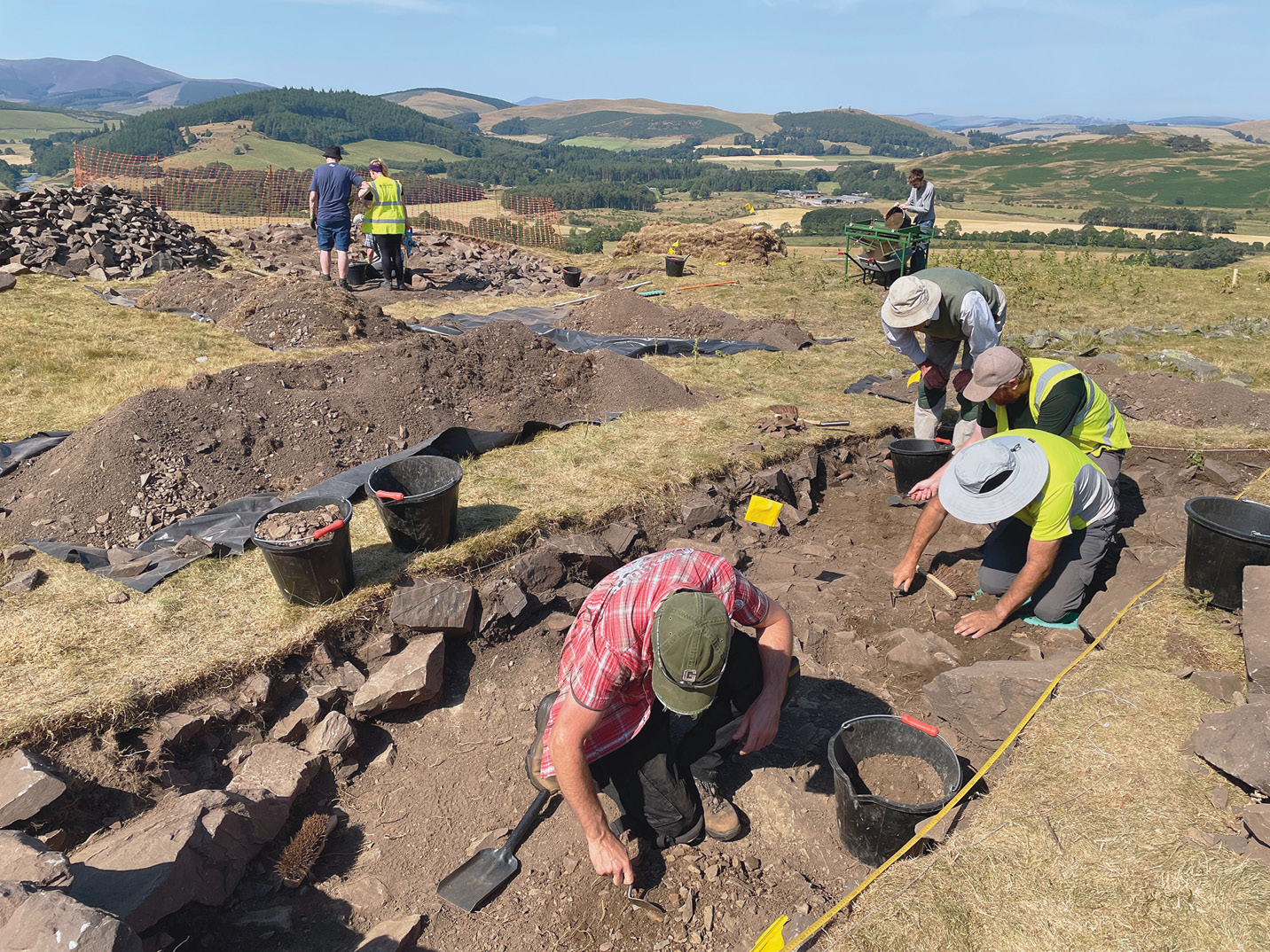
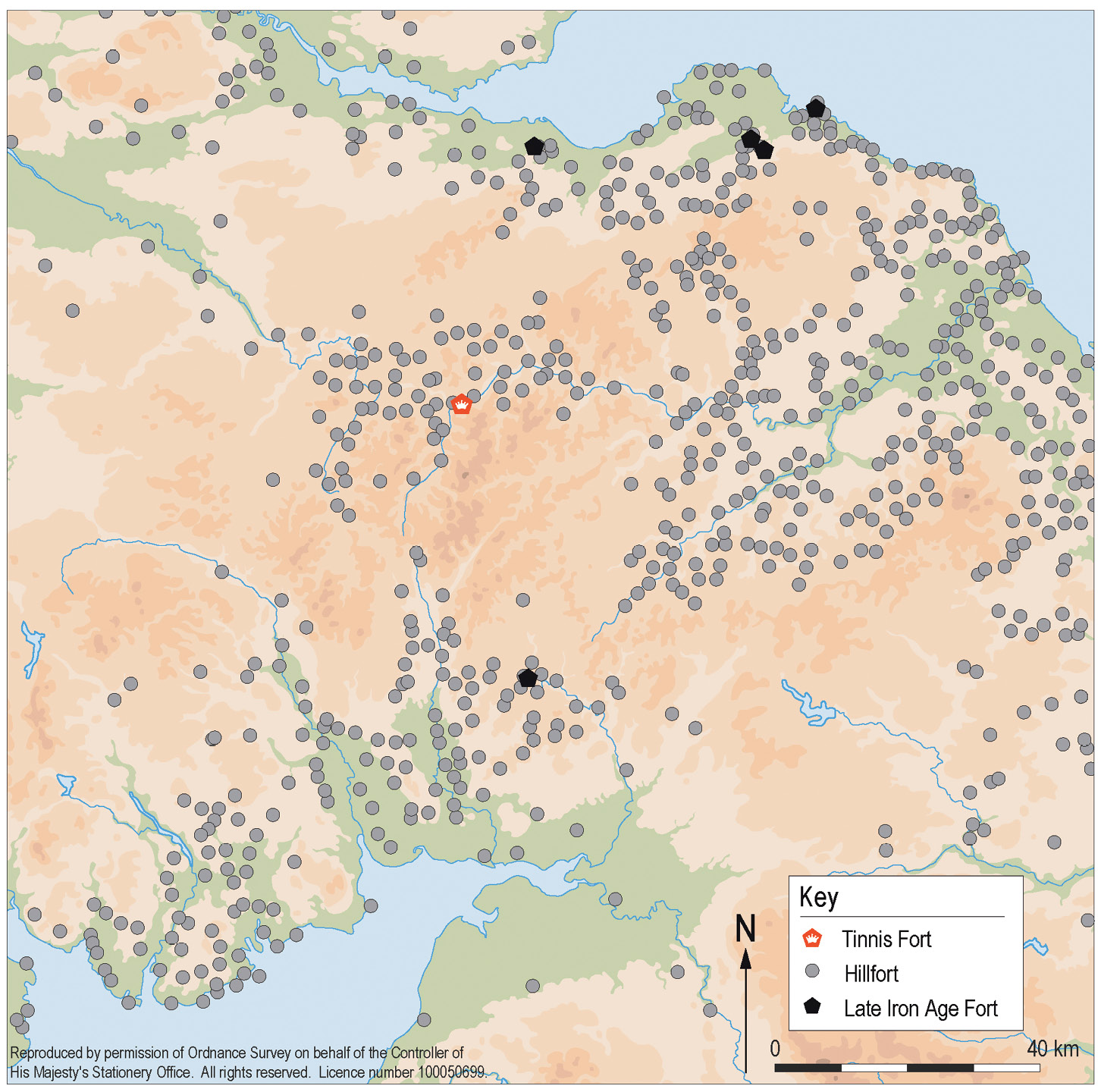
It was already known that Tinnis Castle stood within the footprint of an earlier hillfort, and radiocarbon dating of charcoal (from within the newly uncovered rampart and elsewhere on the summit) by the project team confirmed that the underlying fort had been occupied in the mid-late 6th/early 7th century, tallying with the period when Drumelzier’s Merlin legend was set. Further early medieval evidence was found within an enclosed lower precinct of the hill. The hillfort’s layout, with its defended summit surrounded by a series of enclosures on lower-lying ground, is typical of nucleated forts, which were built in Scotland in c.AD 600-900, and are associated with very powerful households (CA 385).
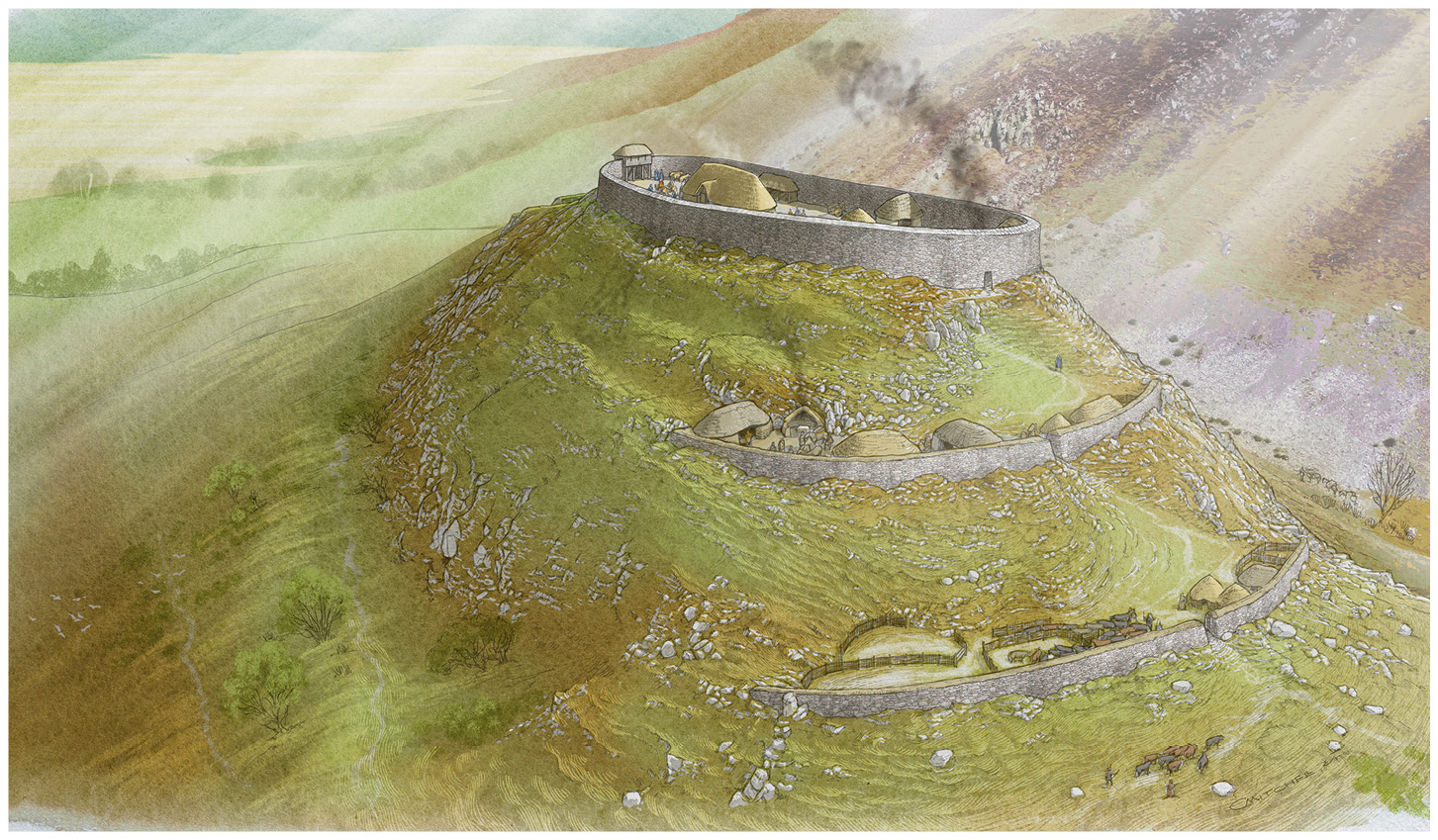
Adding to this picture was evidence for possible iron-smelting and definite working of lead which, isotope analysis revealed, had been mined in the southern uplands – perhaps over the hills in the Manor Valley, where evidence for contemporary lead-mining has previously been discovered. The discovery of evidence for metalworking is significant because one of the ways that elite households exerted power in early medieval Scotland was by controlling this production. In an age when there were no coins, wealth was measured by what could be grown and raised (grain, cattle, sheep) and what could be made (clothes, weapons, tools, and jewellery). Leaders of such prominent households had the power to decide on whom to bestow gifts such as these, and from whom to withhold them.
Contrasting with the more widely sourced materials recovered from the medieval castle, though, the earlier fort yielded only locally acquired materials. There was no evidence that Tinnis’ hillfort had enjoyed the same access to foreign imports as more prominent royal households identified at Trusty’s Hill, Dunadd, and Rhynie (CA 289). Nonetheless, Tinnis Fort lay within a cluster of other nucleated forts and early Christian sites in Peeblesshire that looks very similar to the archaeological evidence for kingdoms elsewhere in early medieval Scotland, such as Rheged in Galloway (CA 327) and Dál Riata in Argyll and Bute. If Tweeddale was also home to a small sub-kingdom, its name is unknown, but the archaeological evidence revealed at Tinnis is consistent with the household of a local ruler.
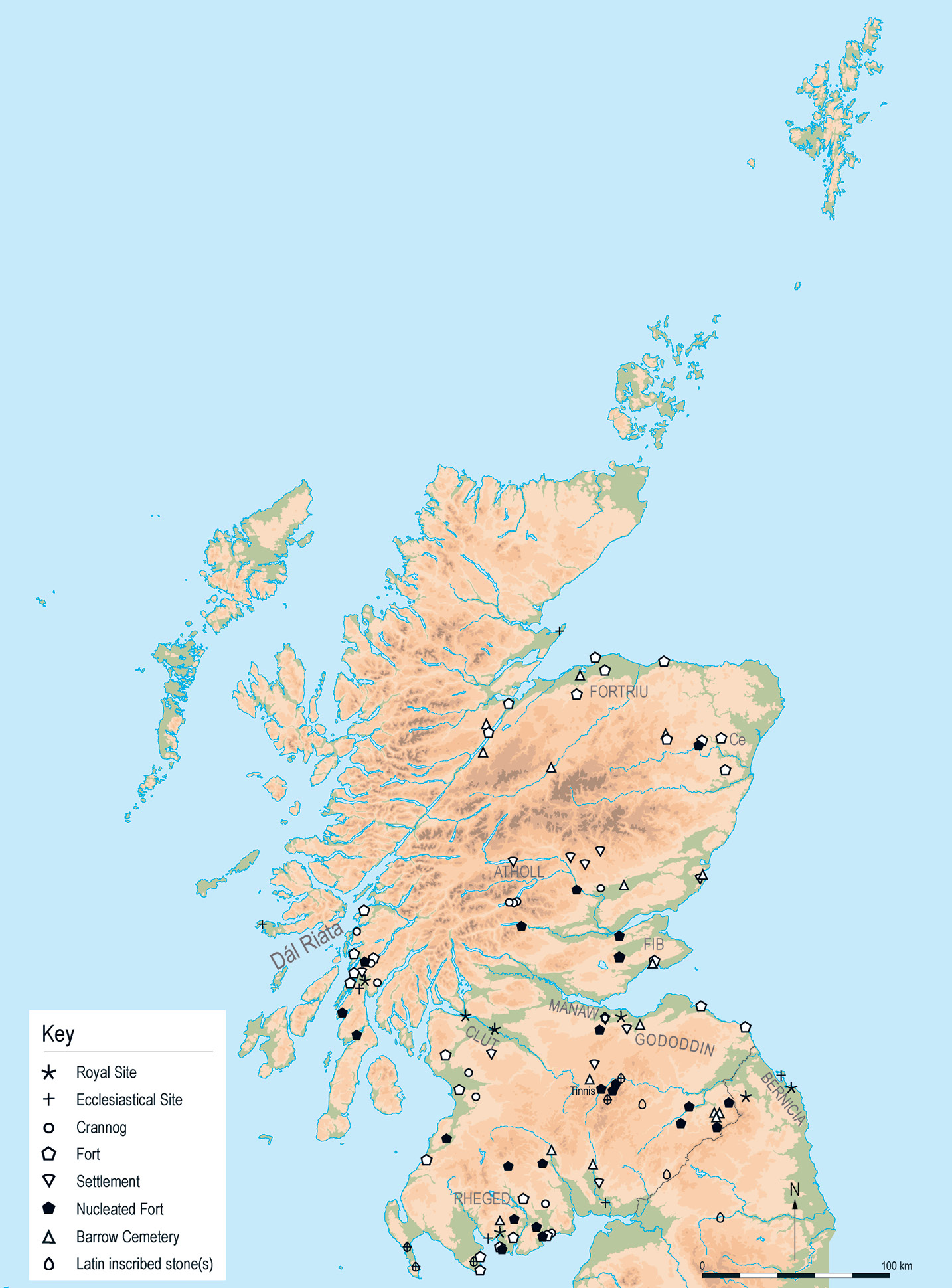
Given that the Drumelzier story contains pre-Christian customs and ancient Cumbric names, and was located at local sites which, archaeological evidence now shows, could credibly have given rise to the story, it does appear that the Merlin legend associated with the site had originated in Drumelzier itself. This is a startling survival of the early medieval cultural heritage of the Britons of southern Scotland – though whether the story was true is another matter.
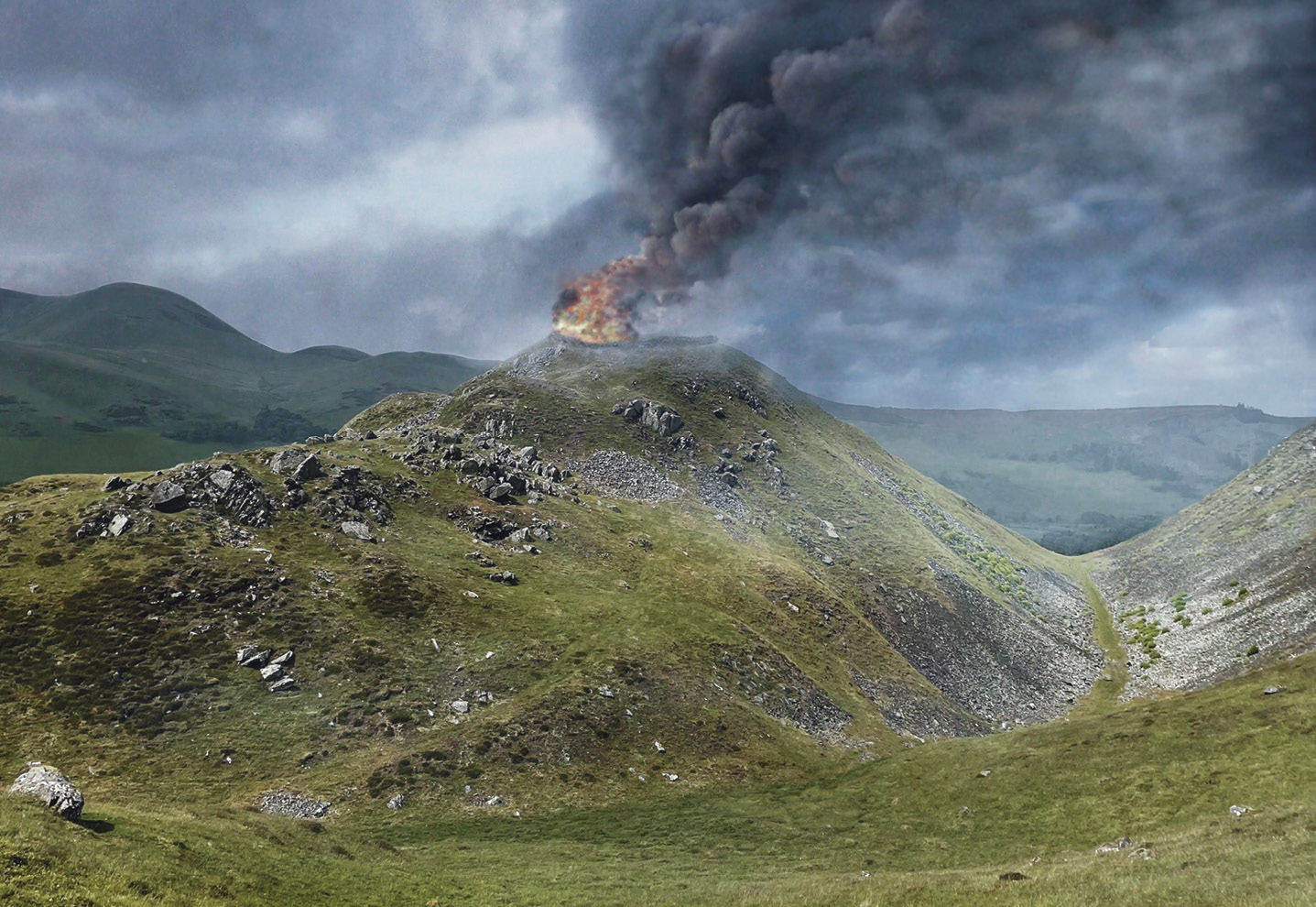
Tinnis had not finished giving up its secrets: as our excavation continued, the team found that the early medieval fort covered the rampart of an even earlier one, radiocarbon-dated to between AD 250 and AD 405. It had been deliberately set alight, burning to such a degree that the rubble core of the wall had melted and turned glassy, a process called vitrification. Hillforts from this period, around the end of the Roman era, are quite rare in Scotland – excavations have found that the majority of Scottish hillforts were occupied at various times from around 600 BC to around AD 100, with very few post-dating this, and vitrified forts are even rarer during the 3rd and 4th centuries AD.
Further into prehistory
The third site excavated by the project team, about two miles west of Drumelzier, produced further possible evidence of Tinnis’ Iron Age inhabitants. Located near Broughton, the Thirlestane Barrows have long been ploughed flat, but aerial photographs attest to cropmarks preserving ditches dug around four grave mounds. Three of these outlines are circular, but one is square – something that drew attention, as square barrows are more commonly found north of the Forth and, when excavated, are commonly late Iron Age or early medieval in date. We were intrigued to find out if the Thirlestane example also dated to this period, and so in October 2022 a team of 23 volunteers led by GUARD archaeologists set out to excavate the monument.
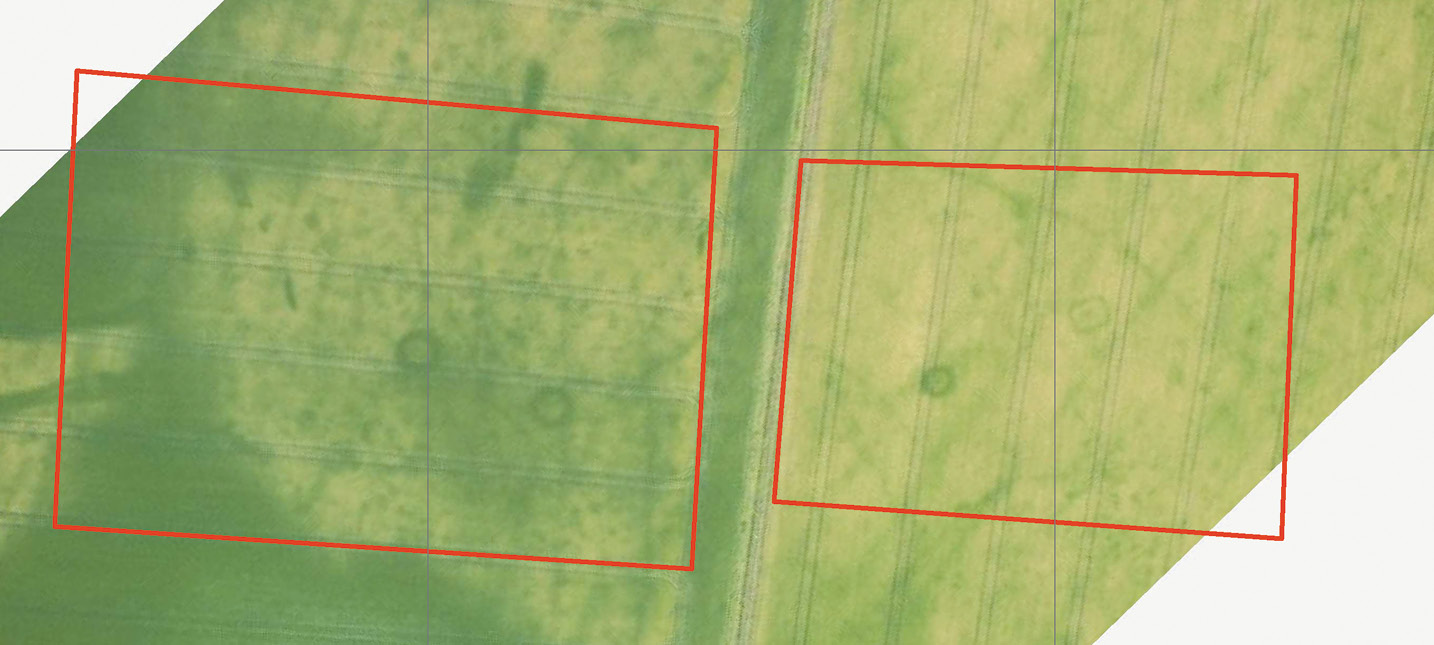
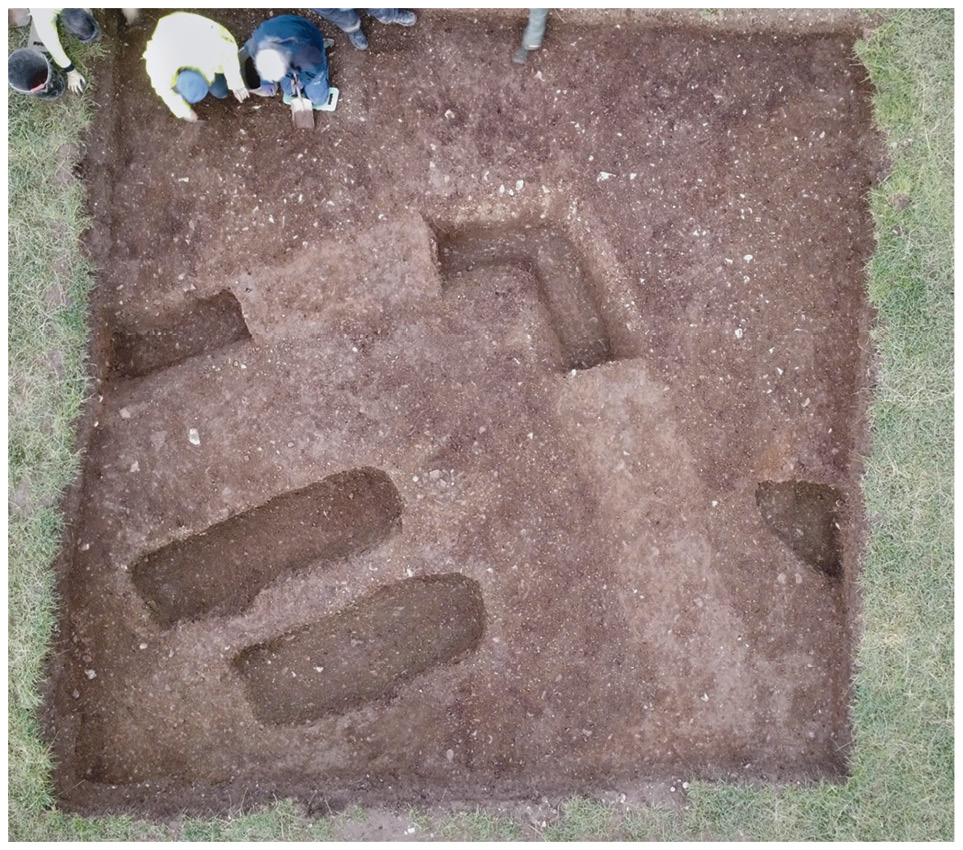
Two graves were identified within the square barrow. Although no skeletons had survived, chemical analyses revealed enhanced concentration of phosphorus and other elements typical of necrosols (potassium, calcium, and magnesium), consistent with human remains decomposing and leaching into the surrounding soil. As to when these burials may have taken place, Optically Stimulated Luminescence (OSL) dating of the face of the square ditch produced results of c.AD 430 (plus or minus 150 years), around the time when the late Iron Age Fort at Tinnis was inhabited.
To the team’s surprise, they also discovered that the square barrow was in fact a later addition to a cluster of Bronze Age burial mounds. Excavation of one of the round barrows revealed three burials of pottery urns, each containing cremated bones radiocarbon dated to 1400-1200 BC. Further analysis found that each burial comprised the mingled remains of an adult and a child; where the sex of the adult could be determined (in two cases), they were female, and isotope analysis of one of the cremated bones revealed that the individual to whom it belonged was local to the area.
What drew the people of late Iron Age Tweeddale to raise a mound over their dead beside these much older barrows? The round mounds evidently held some meaning in the landscape, for the square barrow to be sited so close to them – and, in a pre-literate society, one can only imagine that this significance was conveyed in oral traditions and stories that clung to the group of Bronze Age monuments over the intervening two millennia. The people of ancient Tweeddale were evidently aware of the people that had come before them, and it was through local folklore that stories about the past were passed on – but, whatever tales were told about these barrows, they have long since been lost. So, too, has any memory of the events that led to the vitrification of the ramparts at Tinnis, whose remains testify to the fall of a late Iron Age hillfort, and the forgotten victims of a forgotten conflict when prominent households vied for power and the foundations for petty kingdoms were being laid.
Given the prominent location of Tinnis Castle, it is not surprising that it became associated in local lore with the brutal feud between the Tweedies of Drumelzier and the Flemings of Biggar – even if our research has now suggested that the end of the site’s life was rather less dramatic than previously thought. If nothing else, the Drumelzier’s Hidden Heritage project has demonstrated that while careful examination of archaeological evidence and historical records can validate some stories, it can invalidate others, and even find echoes of some stories that were not being looked for in the first place.
Acknowledgements:
The Drumelzier’s Hidden Heritage project was a collaboration between GUARD Archaeology Ltd and the Arthur Trail Association, local heritage groups, volunteers, Magnitude Surveys, and various post-excavation specialists, funded by SSE Renewables Clyde Borders Community Fund, Fallago Environment Fund, Society of Antiquaries of Scotland Dr Euan MacKie Legacy Fund, Glenkerie Community Fund, the National Lottery Heritage Fund, the Hunter Archaeological and Historical Trust, and the Strathmartine Trust.
Further information:
• Ronan Toolis, Amanda Gilmore, Thomas Muir, Laura Muser, and Alun Woodward’s report ARO56: Unearthing Ancient Tweeddale – Tinnis Castle, Thirlestane Barrows and Merlin’s Grave is freely available to download from http://www.archaeologyreportsonline.com.
• You can read more about the project on the Drumelzier’s Hidden Heritage website
at https://dark-age-digs.com.
All images: GUARD Archaeology Ltd, unless otherwise stated