Subscribe now for full access and no adverts
French Egyptologist Christiane Desroches Noblecourt was renowned in Egyptology circles. The author of many books on Egyptian art and history, she was instrumental in the international campaign to save the monuments of Nubia from the flooding caused by the creation of the Aswan High Dam.
Born in 1913 into an upper-class family, Christiane’s intellect was fuelled by boundless curiosity and an insatiable hunger for knowledge. Her love of ancient Egypt began at the age of six, when she dressed up in a mummy costume. She began reading books on the daily life and funerary customs of the inhabitants of the Nile Valley, as she ‘never knew enough about this subject’. At home, she orchestrated themed balls, meticulously crafting costumes inspired by the people of the ‘Land of Pharaohs’. Then, in 1922, when flicking through the glossy pages of L’Illustration, she read about the groundbreaking discoveries of Carter within Tutankhamun’s tomb. From that moment, Christiane had an overwhelming passion for Egyptian civilisation, although she could not then foresee how this would evolve into a tangible career path.

Early career
At 17, Christiane made the bold decision to enroll in classes at the prestigious École du Louvre, where she delved into the intricate world of hieroglyphs, and immersed herself in ancient Egyptian art and archaeology. She continued her educational journey at other esteemed institutes in Paris, under the mentorship of Abbot Étienne Drioton, deputy curator at the Egyptian Department of the Louvre. An eminent expert in the ancient Egyptian language, Drioton recognised Desroches’ remarkable talent and unwavering determination. Several years later, at the age of 21, she secured her first post as a project manager at the Louvre – the first woman to rise to such a prestigious position. In this new capacity, she assumed responsibility for cataloguing countless pharaonic artefacts stowed away in storage, many of which had remained untouched in their cases since their initial discovery.

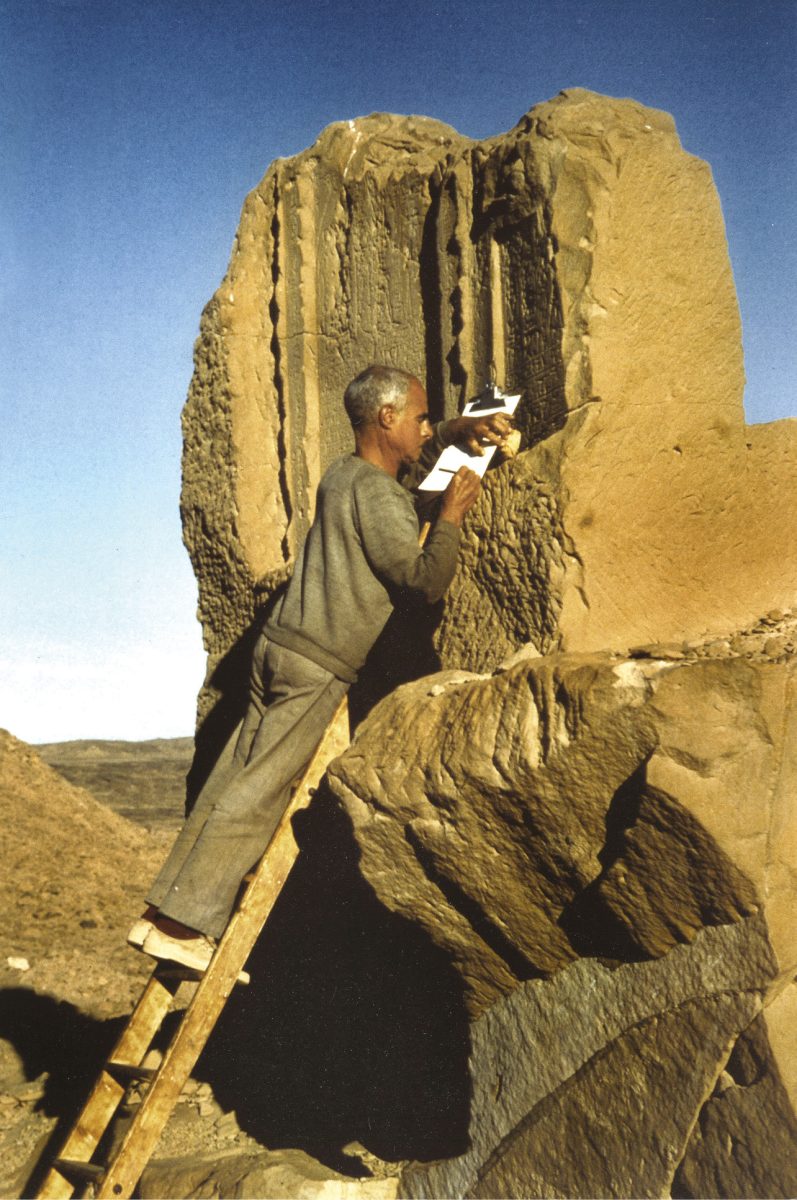
Three years thereafter, through the French National Centre for Scientific Research (CNRS), Christiane made her first visit to Egypt, sponsored by Drioton. She took part in fieldwork at el-Tod, in southern Luxor, and continued her research in the library and archives of one of the most significant French cultural institutions abroad: the French Institute for Oriental Archaeology (IFAO). Later, she spent time working at Deir el-Medina under the guidance of the French mission director Bernard Bruyère. It must have been difficult being amid a sea of male labourers, inspectors, and scholars, but as she recorded in her memoir, La Grande Nubiade (‘The Great Nubian’), Christiane found solace in the opportunity she had been given to unearth archaeology’s secrets directly in the field.
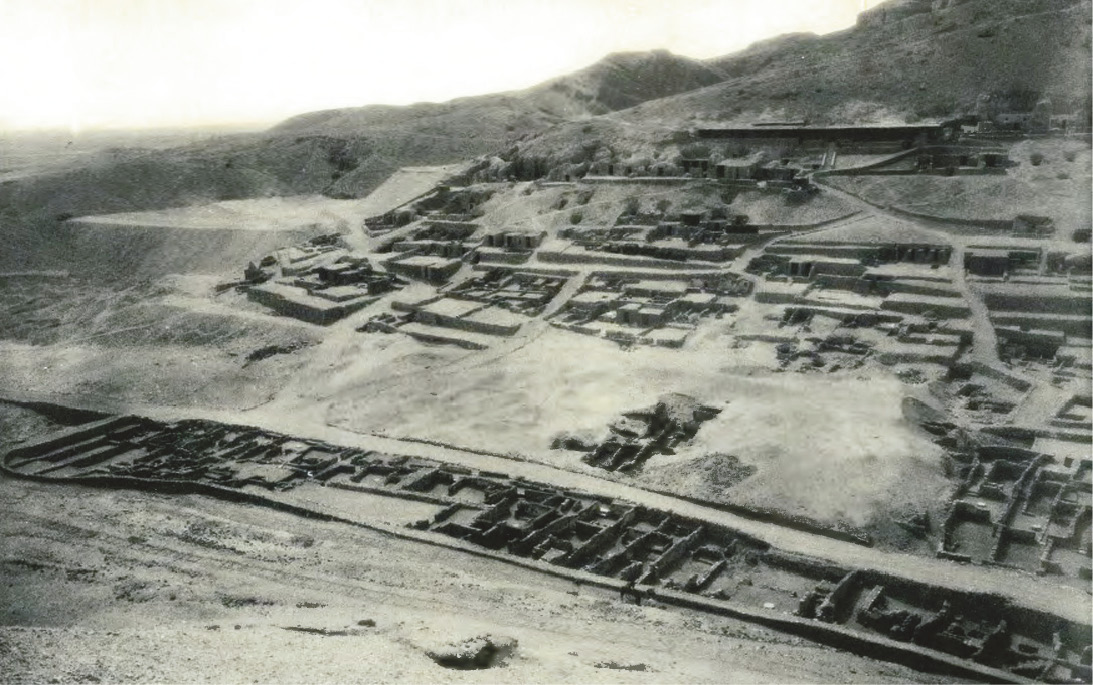
In 1938, she won a three-year fellowship at the IFAO, leaving an indelible mark as its first female resident. However, here she encountered the entrenched conservatism and machismo of her male counterparts, who deemed a woman incapable of fieldwork and ill-suited for cohabitation in their male-dominated quarters. They attempted to boycott Desroches by isolating her, even daring to ask for her immediate dismissal, albeit without success.
Discoveries
In a remarkable display of fortitude and dedication, she quickly proved her mettle to her colleagues during her involvement in the Franco-Polish expedition at Edfu, under the guidance of Kazimierz Michałowski. Despite the harsh and primitive living conditions (far removed from the ‘comforts’ of Deir el-Medina), Christiane toiled tirelessly from chilly dawn to sweltering dusk. Not content with merely excavating, she assumed the roles of assistant chef, procurement manager, and makeshift nurse, tending to the needs of her colleagues, and even the local Egyptian population in times of sickness or childbirth.
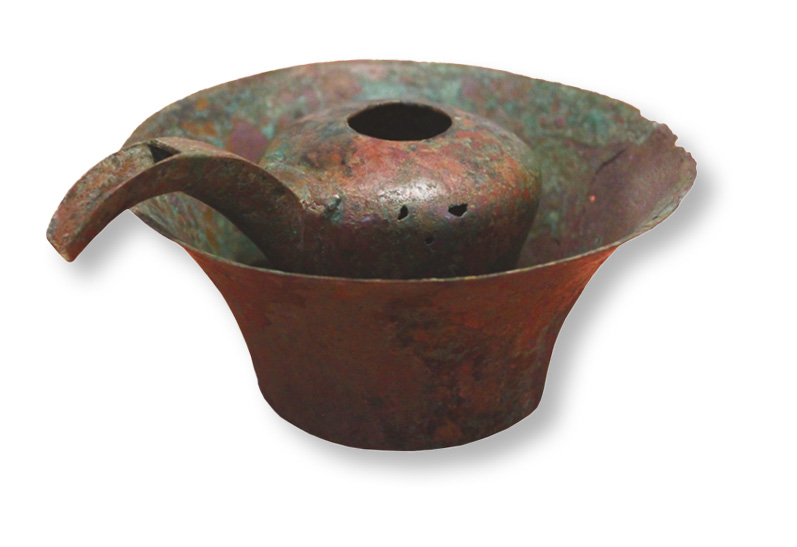
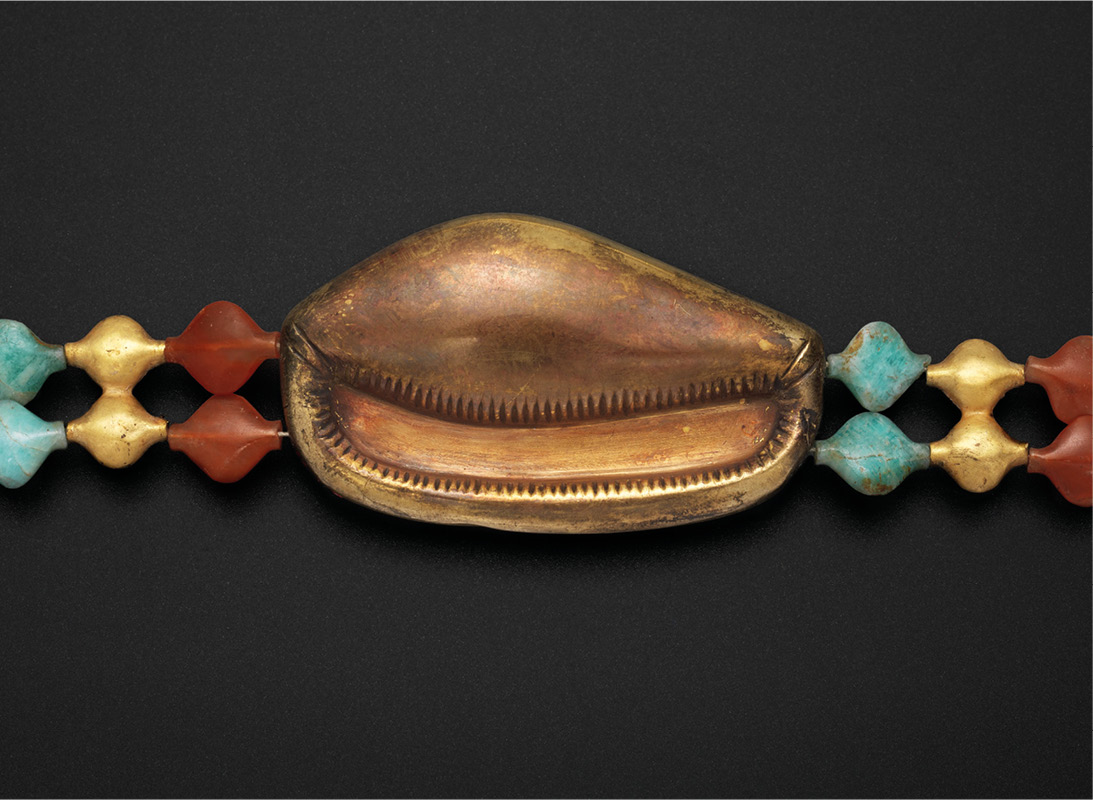
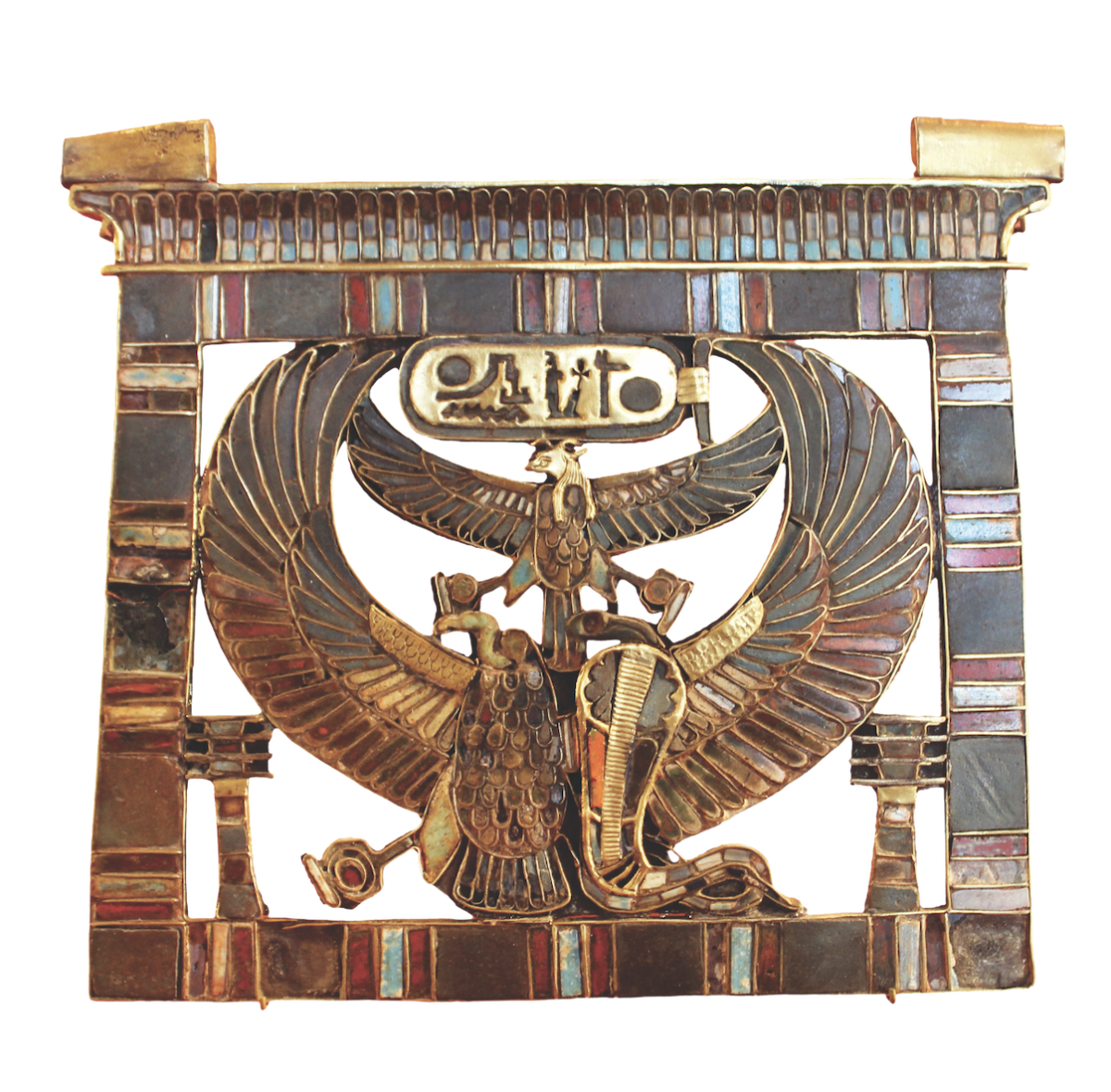
Desroches’ keen eye led to her uncovering significant findings at the site. Now she seemed blessed by fortune, as she would often recount in later years, stumbling on a previously undiscovered tomb adjacent to the burial site of the Sixth Dynasty vizier Isi – an area previously excavated by a French colleague without success. Within this new-found treasure trove belonging to Isi’s wife Seshseshet lay a wealth of gold jewellery, precious stones, ornate toiletry items, and ancient vessels. Edfu was also the starting point of her first trip to Abu Simbel, a site that would leave a lasting impression. She recalled being overwhelmed by the sight of the four colossal statues adorning the façade of the largest temple, their gaze fixed unblinkingly over the river.
Wartime work
After a short period at Karnak, at the outbreak of the Second World War, Christiane returned to her family and wasted no time in offering her expertise to the newly appointed director of the Louvre. Jacques Jaujard was a visionary leader, deeply committed to a top-secret mission: safeguarding the museum’s priceless treasures. In a daring move, Jaujard orchestrated the evacuation of thousands of objects and artworks from Parisian museums which, with the help of Christiane and her team, were secured in eight trucks and taken to the safety of castles in the Loire Valley within a very short time, thwarting the looming threat of plunder by the Nazis. Back in occupied Paris, Desroches found herself as the lone curator at the Egyptian department. Despite being appointed as the chief of this office aged only 26, she often remembered it as a sombre time, describing herself as a ‘queen without a kingdom’, walking in galleries empty apart from the few artefacts that were too fragile to move.
In 1940, Desroches joined the Resistance. Armed with an ID card issued by the Nazi regime for internal travel, she embarked on a series of perilous journeys from the northern to the southern reaches of the country. Her mission was to convey clandestine messages for Resistance operatives and the Allies. Once she was arrested by Gestapo and strip-searched. Fortunately, the soldiers did not inspect her leather gloves, which were where she had concealed messages from Resistance partisans.
The Aswan high dam
In July 1952, Gamal Abdel Nasser took over all of Egypt. His vision was to propel the country forward through industrialisation, with the nationalisation of the Suez Canal planned to finance his projects. Desroches, now married to engineer André Noblecourt, came to Egypt during this political turmoil. One of Nasser’s projects, the building of a new high dam at Awan, would submerge and erase 32 Nubian temples and chapels. Despite encountering widespread apathy, even from the Egyptian authorities tasked with safeguarding their heritage, Christiane tirelessly pursued every avenue in order to save these monuments. In 1954, Mustafa Amer, then head of Egyptian Antiquities, dispatched a team of experts including engineers and Egyptologists to Nubia. Their mission was to compile a preliminary report pinpointing sites in urgent need of fieldwork, highlighting those vulnerable to impending threats, and identifying temples that could potentially be rescued from destruction.
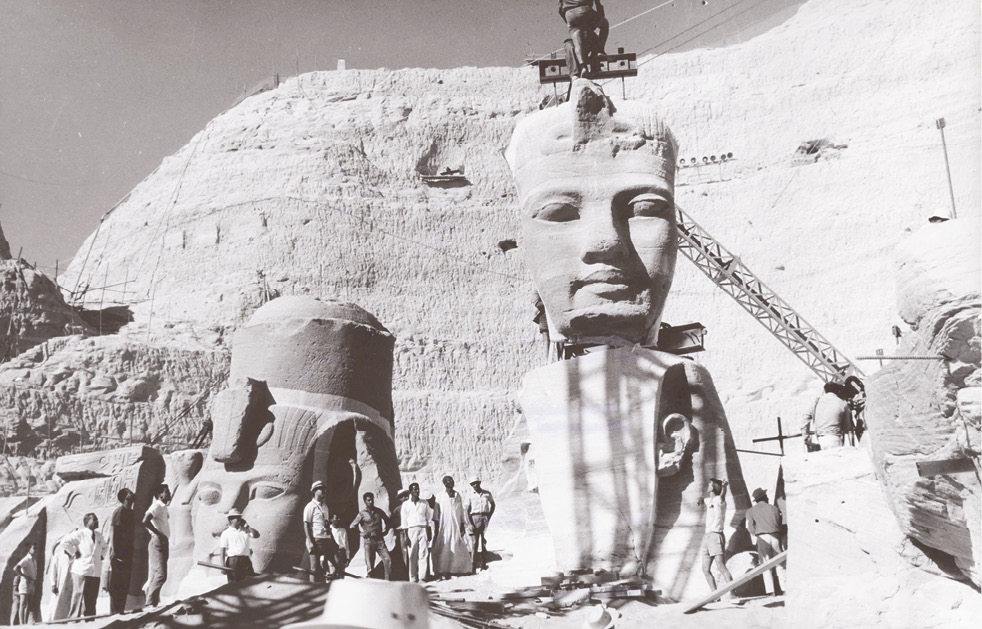
Between 1955 and 1959, with the assistance of the National Geographic Institute of France, as adviser to UNESCO Christiane initiated a photogrammetric survey of the temples and crafted a rescue plan. Bolstered by the proactive stance of Culture Minister Saroite Okacha, a pivotal figure in ensuring the project’s success, and the support of Vittorino Veronese, the newly appointed UNESCO Director, UNESCO unveiled the project to the world a year later. Participant nations were presented with an opportunity to share antiquities, and select temples intended for display in their respective foreign museums. Although initially Christiane was against the idea, the temples were carefully disassembled into several blocks and reconstructed at alternative secure locations. Amada temple underwent a meticulous process of being lifted, placed on rails, and transported to the summit of a mound. This extraordinary engineering feat came with a hefty price tag, shouldered by sponsorship from France, notably secured with the personal involvement of General de Gaulle himself. Similar efforts were undertaken for Abu Simbel, which underwent a meticulous dissection and reassembly process to elevate it 60 metres above the anticipated water level of the future lake, atop an artificial mound made of concrete. This operation was carried out by handsaw under the supervision of expert Carrara marble workers.
Exhibitions
Returning to Paris, Christiane realised a long-held dream: curating a blockbuster exhibition, Toutankhamon et son temps, at the Petit Palais in 1967. The exhibition swiftly became a triumph, attracting more than 1 million visitors. In 1976, she had another resounding success with a monumental exhibition honouring Ramesses II, showing 72 artefacts spread across eight rooms of the prestigious Grand Palais in Paris.

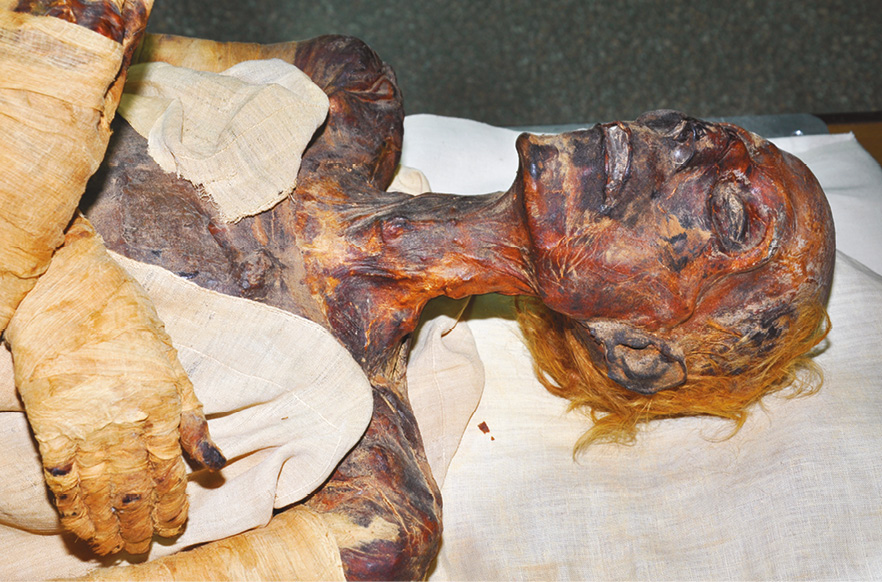
Moreover, the exhibition provided an opportune moment to restore the pharaoh’s mummy, which had fallen into disrepair. A dedicated air detachment was mobilised to transport the mummy from Cairo to the laboratories of Paris and Grenoble. On arrival at Paris airport, Ramesses’ body was greeted with full state honours, including a band playing the national anthem, a red-carpet reception, and a reverential crowd of institutional figures bowing as the coffin passed by.
Legacy
Christiane Desroches Noblecourt passed away in 2011, at the age of 97. An enigmatic figure, she was both revered and reviled. Her unorthodox Egyptological methods sparked a tempest of conflicting opinions, as her instinct-driven approach diverged from traditional practices. Nevertheless, this atypical scholar ardently championed Egypt’s cultural heritage, earning enduring gratitude. Through her tireless efforts, pharaonic culture has left an indelible mark on the global stage, testament to her profound influence on Egyptology and heritage preservation.
Simone Petacchi is currently a scientific collaborator with the Museum of Mediterranean Archaeology in Marseille (find out more about the collection there in Simone’s article in AE 145). He is also a consultant curator for Egyptian antiquities at the Stibbert Museum (Florence), and a member of the Nuri Archaeological Expedition, Sudan. He is the author of three books and numerous academic papers.
Further reading:
• C Desroches Noblecourt (1992) La Grande Nubiade ou le parcours d’une égyptologue (Stock/Pernoud).
• C le Tourneur d’Ison (2022) Christiane Desroches Noblecourt: la reine de l’égyptologie (Tallandier).
• L Olsonn (2023) Empress of the Nile: the daredevil archaeologist who saved Egypt’s temples from destruction (Random House).