
Subscribe now for full access and no adverts
The Assassins, a breakaway Shiite religious sect of the 11th to 13th centuries, were the most implacable group of killers in a region already notorious for its violence and lawlessness. They were famous throughout the medieval world – but, over time, they have become even larger than life, entering the language as a byword for the targeted murder of political or religious leaders, and morphing into the legendary heroes of modern conspiracy theories and video games (including the bestselling Assassin’s Creed). In 1114, however, the real-life Assassins met their match – in the unlikely form of a group of middle-aged women who decided they were not going to be pushed around any more.
More formally known as Nizari Ismailis, the Assassins were famously mysterious, and deliberately so. But we are fortunate that one very intimate account of a large-scale Nizari attack has survived. It was based on conversations with survivors who were lucky enough to make it through the ordeal. And it was recorded by one of their relatives.
Audacity was a vital ingredient in the Assassins’ success – their actions were often so outrageous that they took their opponents completely by surprise. Normally their operations were focused on just one or two individuals, but on rare occasions, they could be far more ambitious – even, in one memorable instance, attempting to take over an entire principality in an elaborate coup de main.
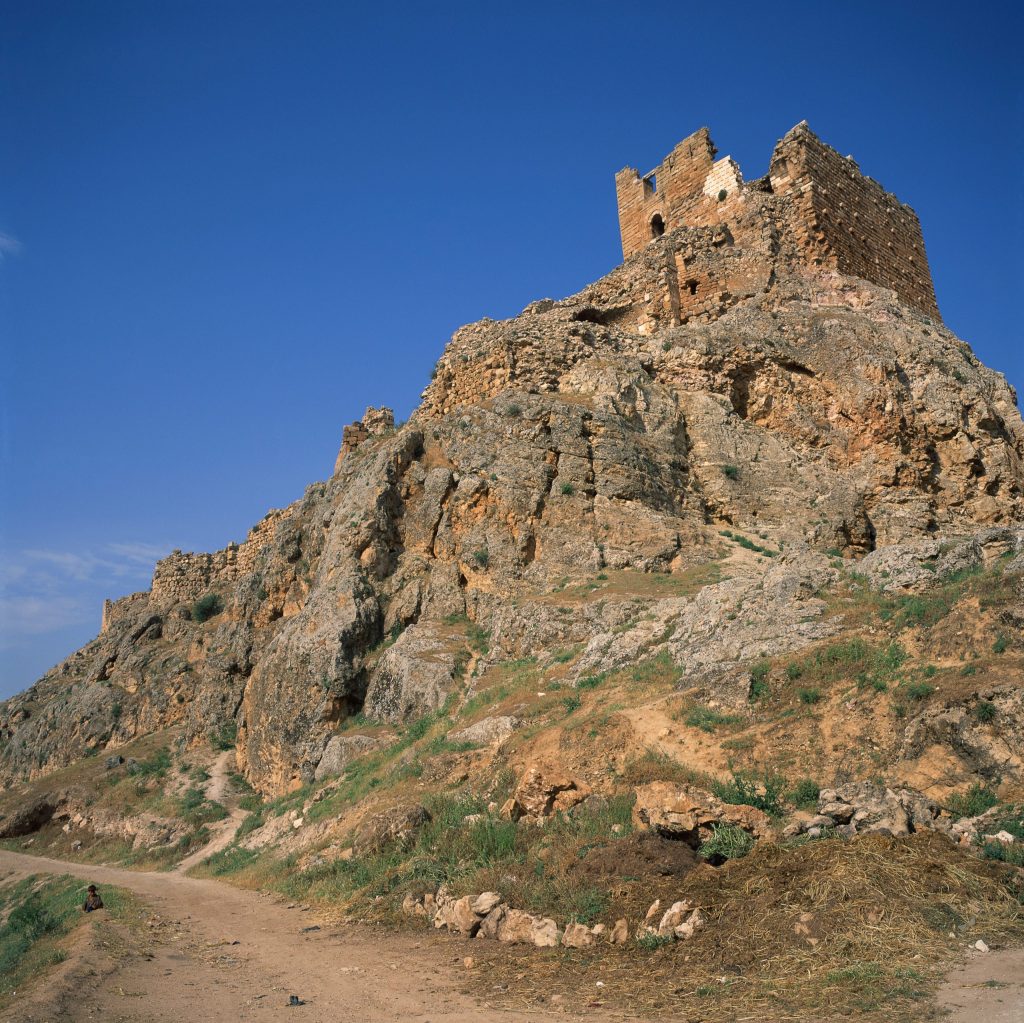
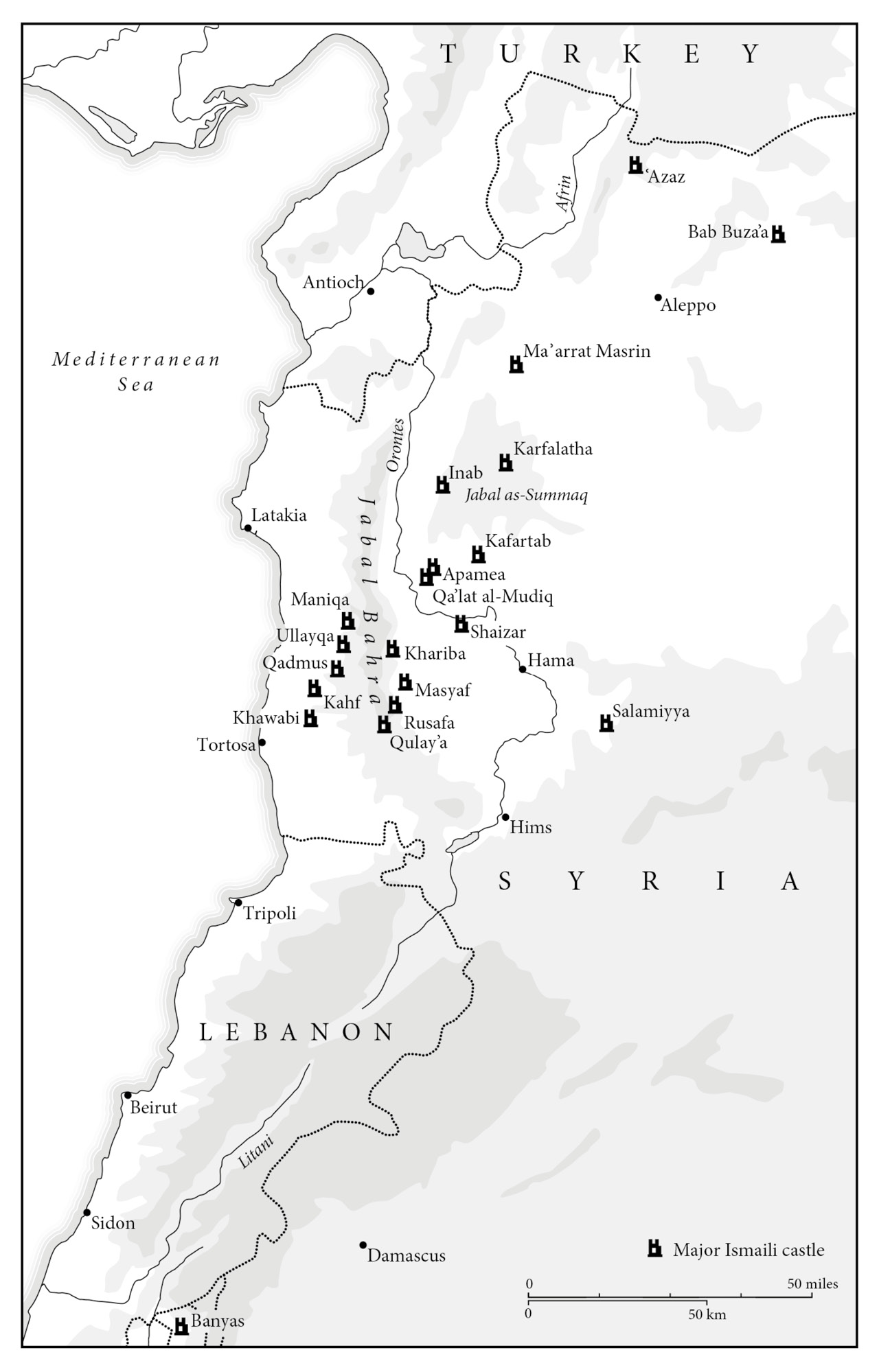
In the aftermath of anti-Nizari pogroms in the ancient Syrian city of Aleppo in 1114, most of the survivors took the hint and fled. Ibrahim al-Ajami, commander of the castle at nearby Balis, was among those who ran. He and his followers took refuge in the Arab principality of Shaizar, in central Syria. The town of Shaizar itself was on an important crossing point of the Orontes, the major river of the Northern Levant. Even more usefully, it had an extremely formidable citadel. Relaxing in the safety provided by his unsuspecting hosts – Sultan, the lord of Shaizar, and the Banu Munqidh clan – Ibrahim sent word to the scattered Nizari communities of the region. He told them that the town was ripe for the taking: it would, he suggested, make an excellent base for their activities in Syria.
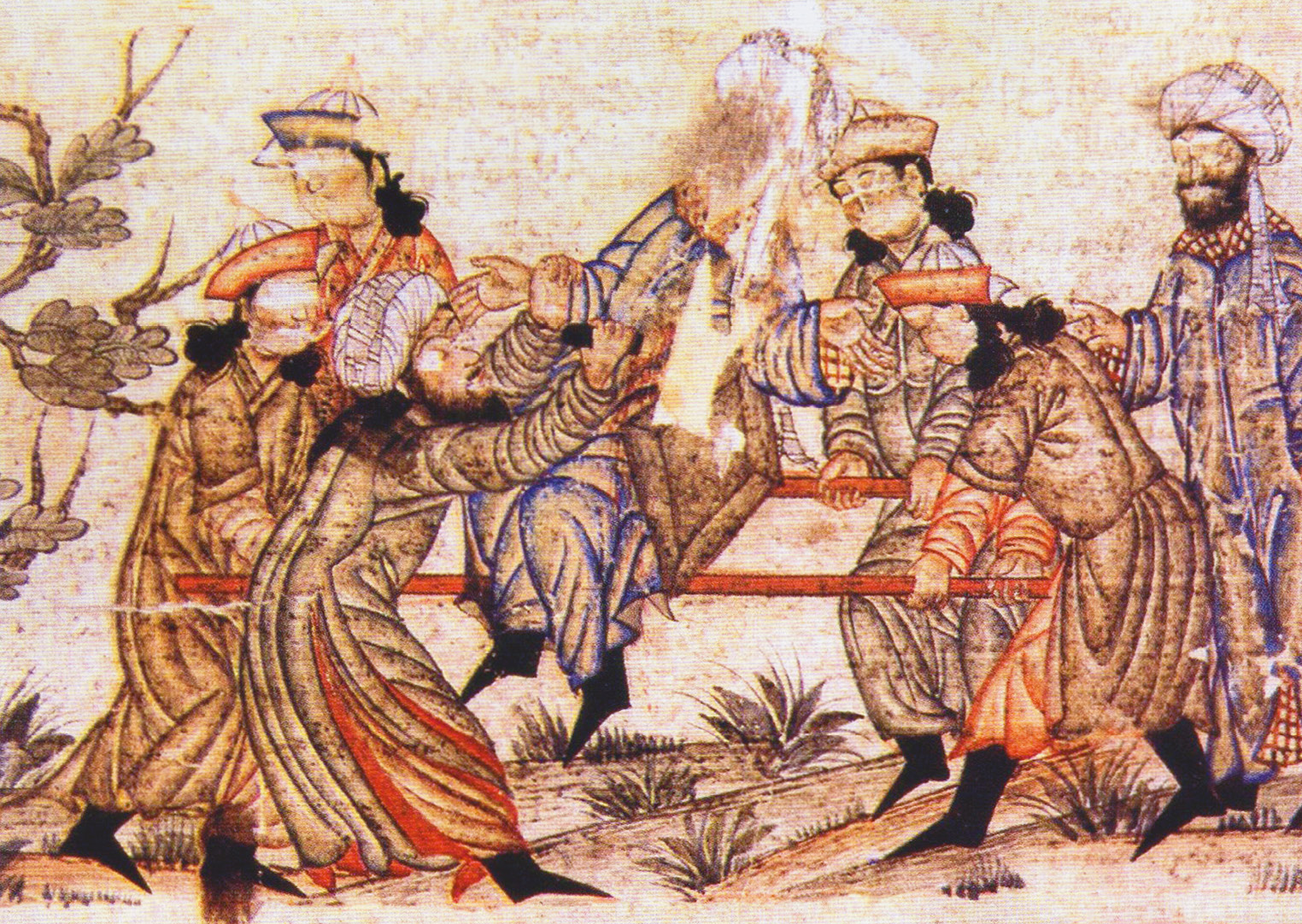
Ibrahim’s plan was to launch a surprise attack in the middle of the Easter holidays. He would kill his Sunni hosts and capture both the town and the castle. The Assassins’ assault squads moved surreptitiously to Shaizar to prepare for the assault. They pretended to integrate into the local community, but quickly began to finalise their secret coup.
Attack on Shaizar
We have an extraordinary account of the 1114 attack on the town, written by one of the local princes, Usama ibn-Munqidh, and based on eye-witness testimony. Usama was born in Shaizar on 4 July 1095, coincidentally just a few months before Christian troops in Europe started to gather for the First Crusade.
Ownership of Shaizar changed many times after the Muslim invasions of the 7th century. When Usama was born, Shaizar had been in Muslim hands for less than 15 years. Consequently, in the early 12th century, the population was very mixed. A large number of the peasants – probably the majority, particularly in the outlying villages – were still Christian. But there were many Muslims in the area, both Shiite and Sunni. The different communities seem to have rubbed along together relatively harmoniously – but the fault lines were always there. In an emergency, in a battle or in a siege perhaps, on whom could one really rely?
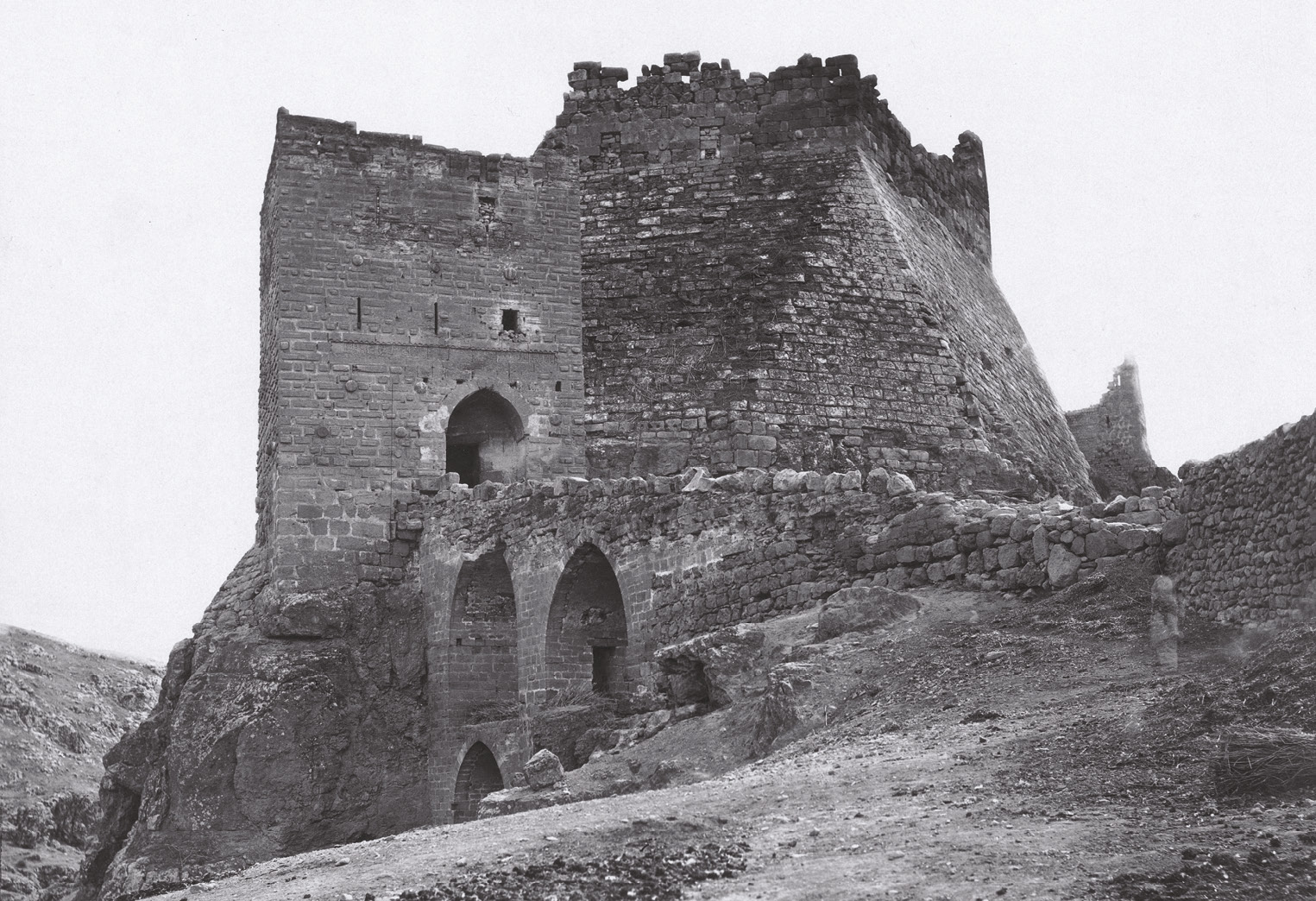
The walled town of Shaizar was imposing enough in itself, but its fortress was particularly formidable. Strong Byzantine and Frankish armies, lavishly equipped with catapults, siege equipment and cadres of miners, tried and failed to capture it on several occasions during the 12th century. The Assassins, bold as ever, with a tiny force and no siege equipment, thought they could do better.
In March 1114, the Easter celebrations of the local Arab Christians were taking place in one of Shaizar’s neighbouring villages. The Christians of the town left to participate in the festivities. Perhaps not coincidentally – given that the celebrations would probably have included alcohol – they were joined by most of the other men of Shaizar, including the Muslim garrison and the male members of the ruling Munqidh family. Only the old men who were unable to travel and the town’s women were left behind. The Assassins were never going to get a better chance – and they took it.
A force of about a hundred Assassins rushed the citadel. According to the chronicler Ibn al-Qalanisi: ‘on the Easter day of the Christians a company of the [Assassins]… made an assault on the castle of Shaizar when its garrison were off their guard, and having seized it and driven out many of its defenders, they closed the gate of the fortress, mounted to the citadel and captured it together with its towers.’
The initial assault was wildly successful: the Assassins could relax a little and start to negotiate a formal handover of power. Only one male member of the ruling family remained behind to negotiate with Sultan’s son (and Usama’s cousin) Shabib. With the Assassins now in control of the town and much of the castle, Shabib felt he had no option other than to start surrender talks with their leader – so a meeting was held outside the citadel.
A fatal miscalculation
The leader of the Nizari assault teams, Alwan ibn Harar, was surprisingly magnanimous, certainly by the standards of the sect. This was partly, perhaps, because the Munqidh family had been so accommodating to the Assassin refugees – but, more pragmatically, it was also because he wanted to conclude the mopping-up operations before the regular garrison had time to return. He made it clear that he was prepared to offer good terms in order to get the last remaining Munqidhs and their few household servants out of the castle quickly.
But the Assassin leadership had misjudged the situation and overplayed its hand. Pausing to negotiate had broken the momentum of the assault. And, although Sultan’s son was prepared to talk, his aunt (Usama’s mother) was not. When Shabib showed his willingness to surrender, she persuaded him not to. She deliberately shamed him by putting on the male combat kit of a ‘mail hauberk and a helmet, with a sword and shield’. The matron was prepared to fight for the family’s honour, she said, even if her nephew would not. ‘And so,’ Usama wrote caustically, ‘she prevented him from running away.’
The only male of the dynasty in the castle was clearly lacking in backbone. The rest of the men were out partying: Usama, although he does not emphasise it, was one of the absentees. He tried to imply that they had been out on patrol, or raiding – in his memoirs he merely wrote, in the blandest way he could contrive, that the Nizaris had ‘gained possession of the fortress of Shaizar while our bravest fighting men [himself included, of course] were out riding beyond the town’. Other sources make it clear that they were, in fact, enjoying the Christian festivities and accompanying entertainments.
Armed only with a knife, the Assassin had little chance of getting out alive.
The women stepped in to take control – and they were calmer, braver, and more determined than the men in the face of the Assassins’ assault. Much later, when Usama got back, he searched for his swords and his armoured tunics, only to find them gone. His mother, it transpired, had used them to arm an impromptu female militia within the citadel, proudly saying that she ‘gave the weapons to whoever would use them to fight for us’. In a homely but telling aside, we also know that Usama’s mother gave her new troops the blades, but not the scabbards: always a careful leader of the household, she had decided that those were too richly decorated for mere retainers to be trusted with.
Even old women went into the breach. An aged servant named Funun ‘covered herself with her veil, took up a sword and went into battle’. Usama later wrote that this brave old lady ‘kept at it until we were able to climb up and overpower the enemy’.
And if that female militia had failed to stop the attack, the women were prepared to make even more extreme sacrifices. As the Assassins approached, Usama’s sister was placed on the balcony of their house, teetering over the sheer drop to the Orontes below. After the event, Usama’s mother proudly said that ‘I made her sit here on the balcony while I took my seat just outside. That way, if I should see that the [Assassins] had reached us, I could push her off, throwing her down to the valley.’ The explanation offered by the splendidly haughty Munqidh matron was that ‘I would rather see her dead than see her a prisoner of peasants.’
The Assassins had made the mistake of not rushing on to capture the few remaining chambers in the castle – the women were still fighting and time was running out. The Munqidh cavalry had been summoned back ‘when the alarm was sounded in the fortress’ and the shamefaced garrison eventually returned from the Easter partying. Later chronicles tried to put a braver gloss on things, claiming that ‘the Banu Munqidh, lords of the castle… climbed up to them, and shouting Allahu Akbar engaged the [Assassins] until they forced them back into the citadel’. But the reality was far more embarrassing.
Instead, they arrived at the foot of the citadel and called up to those trapped in the chambers above them. Once again, however, the men were ineffectual. Usama’s tutor, the scholar Ibn al-Munira, was up in the citadel’s mosque, and had a panic attack on a scale that outshone even the poor performance of Sultan’s son. The Munqidh troops shouted to him: ‘Dangle a rope down to us!’ But in his confused state, he was too flustered to do anything. Seeing that he was wearing a turban, the increasingly frustrated troops called up: ‘Well, dangle down your turban-cloth!’ But even this proved too complicated for the shocked old man.
After a while, the relief forces gave up trying to communicate with him. They went instead to find someone who had their wits about them, and who could lower some ropes. When the troops eventually recaptured the castle, they found the tutor wandering around naked, and more confused than ever. The defenders who had the sense to let down the ropes proved, once again, to be the women of the household. They helped pull the relief forces up into the citadel and showed them where the enemy forces were.
Usama, normally boastful and bullish, was forced to acknowledge that it was only the resolute actions of the Munqidh females that saved the day. One had to admit, he wrote rather patronisingly, that ‘courage for the sake of honour is more intense [among women] than such courage among men’. Proving that mansplaining is not a modern invention, he also pointed out, as if events had not already made it obvious, that women could ‘possess disdain for danger’.
Once the Munqidh household troops began to enter the castle, their superior numbers and heavier equipment inevitably began to tell – the Nizaris were hunted down and destroyed. Killing cornered fanatics was never going to be easy, however. With nothing left to lose, they fought with extraordinary and desperate bravery. Even Usama, a teenager at the time, was nearly killed in the vicious room-to-room fighting that ensued. ‘One of them came at me with a long knife in his hand,’ he later wrote, ‘while I had one of my swords. He charged at me with his knife, but I struck him in the middle of his forearm as he grasped the handle of the knife, its blade held back close to his raised arm. A length of four finger-widths was cut from the blade of the knife and his forearm was cut in half, clear [sic] off.’
A badge of honour
The Assassin was dead, but it had been a close-run thing. As usual, the Nizari warrior had been brave – outnumbered and armed only with a dagger, he still attacked first, rather than trying to back off or escape. From that day on, Usama carried his chipped sword blade with him as a badge of honour. ‘The traces of that knife-blade remained ever afterwards on the edge of my sword,’ he later wrote. ‘An artisan in our town saw it and said, “I can get rid of that dent there.” But I said, “Leave it as it is. It’s the best thing about the sword.” Even today, when someone looks at that sword they know it is the mark of that knife.’
Similar stories were unfolding throughout the citadel, as the Munqidh troops spread out in search of the intruders. The fighting was grim and deeply shocking in its violence. A cavalryman named Hammam the Pilgrim ‘encountered one of the Ismailis in a portico in the residence of [Usama’s] uncle’. The Assassin had a knife in his hand and Hammam had a sword. ‘The [Assassin] charged at him with his knife, but Hammam struck him with his sword above the eyes. He cut through the top of his skull and his brains fell out, spattering and spreading out on the ground. Hammam then threw the sword from his hand and vomited up everything in his stomach, stricken with nausea at seeing those brains.’
The Assassins ignored the women, but met their match.
Like Usama’s opponent, this Assassin was brave and desperate; but, armed only with a knife, he had almost no chance of getting out alive – he just wanted to take one of the Munqidhs with him. Even when completely trapped, and far beyond hope, the Nizaris refused to give up. Another of Usama’s cousins, Abu Abdallah ibn Hashim, saw an Assassin ‘in a tower of my father’s home, wielding a sword and shield. The door was open and a great crowd of our comrades stood outside it, but no one dared to go in.’ It took a foolish man to be the first to go against an Assassin. One soldier was ordered to go in, ‘but the [Assassin] did not waste any time and struck the man, injuring him, and the man came back out, wounded’.
Another soldier entered the room and was likewise wounded. Hashim ordered yet another man to go in, but the Assassin had the courage to say what everyone else must have been thinking. ‘Hey hang-behind!’, he shouted. ‘How come you don’t come in here? You send everybody else in, but you just stand there. Get in here so’s you can get a look!’ Despite the embarrassment and dishonour, Hashim still declined the kind offer. The Assassin eventually had to be brought down by another member of the garrison.
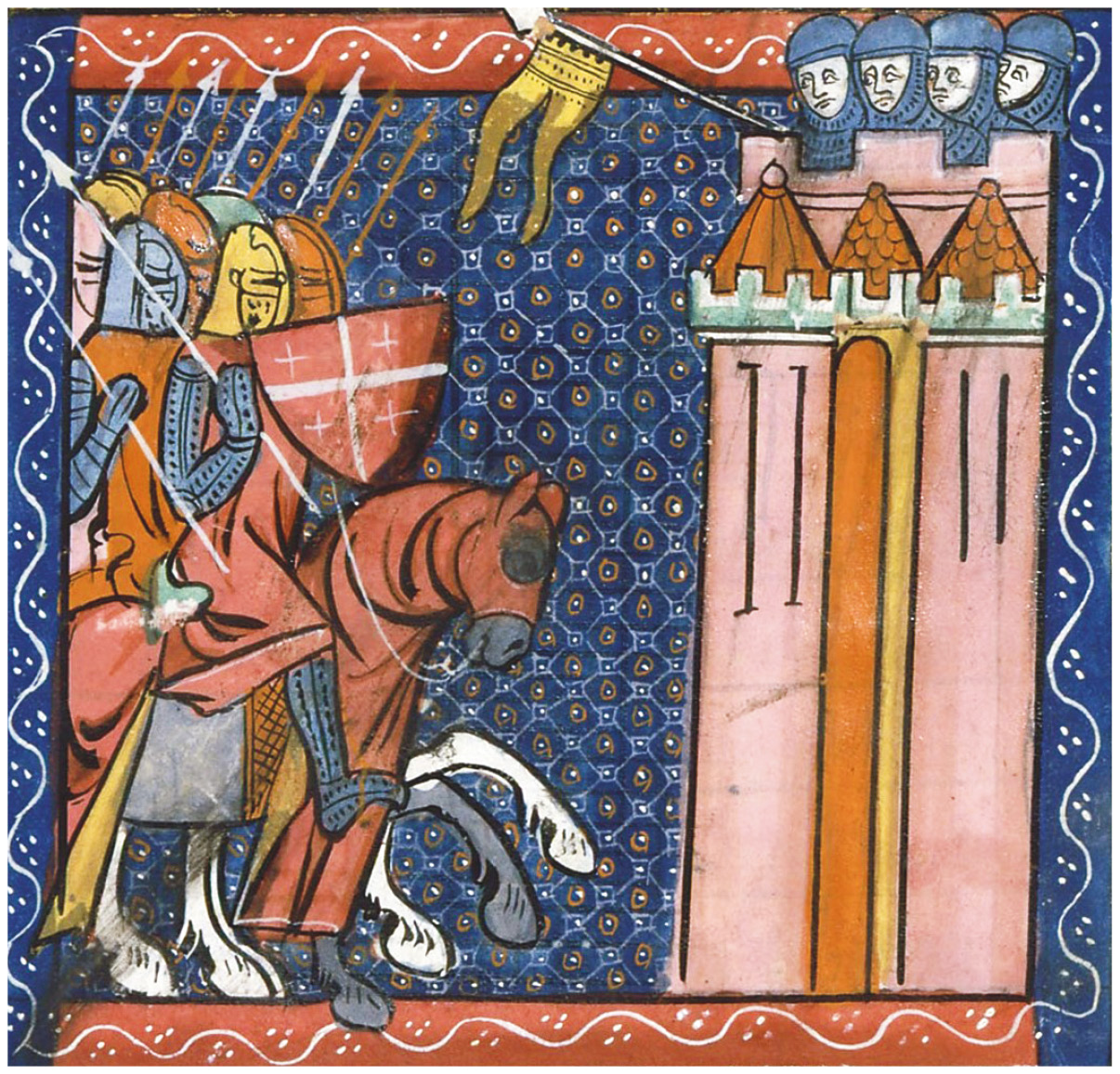
The Shaizari soldiers were understandably cautious, and should have finished him off by archery – presumably, as Shaizar was primarily recaptured by hand-to-hand fighting, they had no bows to hand at that moment. One of the few instances in which we have archaeological data for a comparable situation (a room in the fortress of Chastellet, on the upper Jordan River, where Templar troops were cornered by Saladin’s men) shows that the defenders were eventually picked off by short-range archery fire – the attackers, very wisely, decided to keep their distance from such desperate and fanatical fighters.
Most of the Nizaris were dead at this point, but rumours circulated that there might be some Assassins still alive in the lower buildings of Shaizar. After the attackers in the citadel had been killed, the Munqidh troops went in groups through the town to hunt down any remaining stragglers. Usama and some of his men tentatively ‘crossed over to an empty, darkened stable and went inside’. They discovered that ‘there were two armed men there and killed them both. We also found one of our own comrades who had been killed, but he was lying on top of something.’ Usama’s soldiers lifted up the body, only to find that underneath was another Assassin ‘who had wrapped himself up in a cloth like a shroud and covered himself with the dead body of our comrade. So we lifted off the body of our comrade, and killed the man hiding underneath him.’
In a further twist to this strange war story, it transpired that the ‘dead’ Munqidh soldier under whom the Assassin was hiding was only wounded. The Assassins had ‘stabbed him with their knives until they thought he was dead’, but the stab wounds on his neck and on his body eventually healed and, against all the odds, the man survived.
The citadel and town were thoroughly scoured. The ‘men of Shaizar attacked [the Assassins] in increasing numbers, put them to the sword, and killed them to the last man’. Harshly, but perhaps understandably given the Nizaris’ track record and reputation, the rest of the Ismaili population in the surrounding villages was deemed guilty by association. They ‘were put to death, and a strict watch was kept against a repetition of this attempt’. The Nizaris must have known that betrayal of hospitality on such a scale could have only one punishment.
The aftermath
The self-serving and violent Usama, who by his own admission had committed his first murder while still a child (knifing an unarmed family servant to death for irritating him), did not last long in Shaizar. He was soon thought to be too dangerous to be allowed to remain in close proximity to the ruling family, and he and his brothers were exiled.
Thus Usama began his long and often precarious career as an itinerant diplomat, international fixer, and, luckily for us, wheedling memoirist. The Assassins in Syria always played a high-stakes game. With them, it was all or nothing. Death or defeat. Victory or rout. And that mesmerising, binary commitment resonates through the ages.
But it is the Munqidh women who come across most forcefully in the incident at Shaizar – strong women seem to have been the norm in Usama’s family. And it was not just Usama’s mother: his grandmother, too, was a powerful character. Even when she was a hundred years old, the strong-willed matron refused to sit during prayers (a robust constitution seems to have run in the Munqidh family, as Usama himself lived well into his nineties).
One day, Usama later wrote, she gave him a massive dressing-down for his grandstanding and braggadocio. She was forthright (and entirely correct) in warning Usama that he should be more careful, and that his insensitive, violent behaviour was going to alienate his uncle, the clan leader. Her grandson ignored her advice and duly suffered the consequences of exile.
The Assassins also ignored the women – and, as a result, they met their match at Shaizar. In storming the Munqidh citadel, some of the world’s most fearsome and fanatical killers were outwitted by a small group of middle-aged matrons.
Steve Tibble is the author of a new book, Assassins and Templars: a battle in myth and blood (Yale University Press, £20). A regular contributor to MHM, his earlier books include The Crusader Armies (2018), The Crusader Strategy (2020), and Crusader Criminals: the knights who went rogue in the Holy Land (2024).