
Subscribe now for full access and no adverts
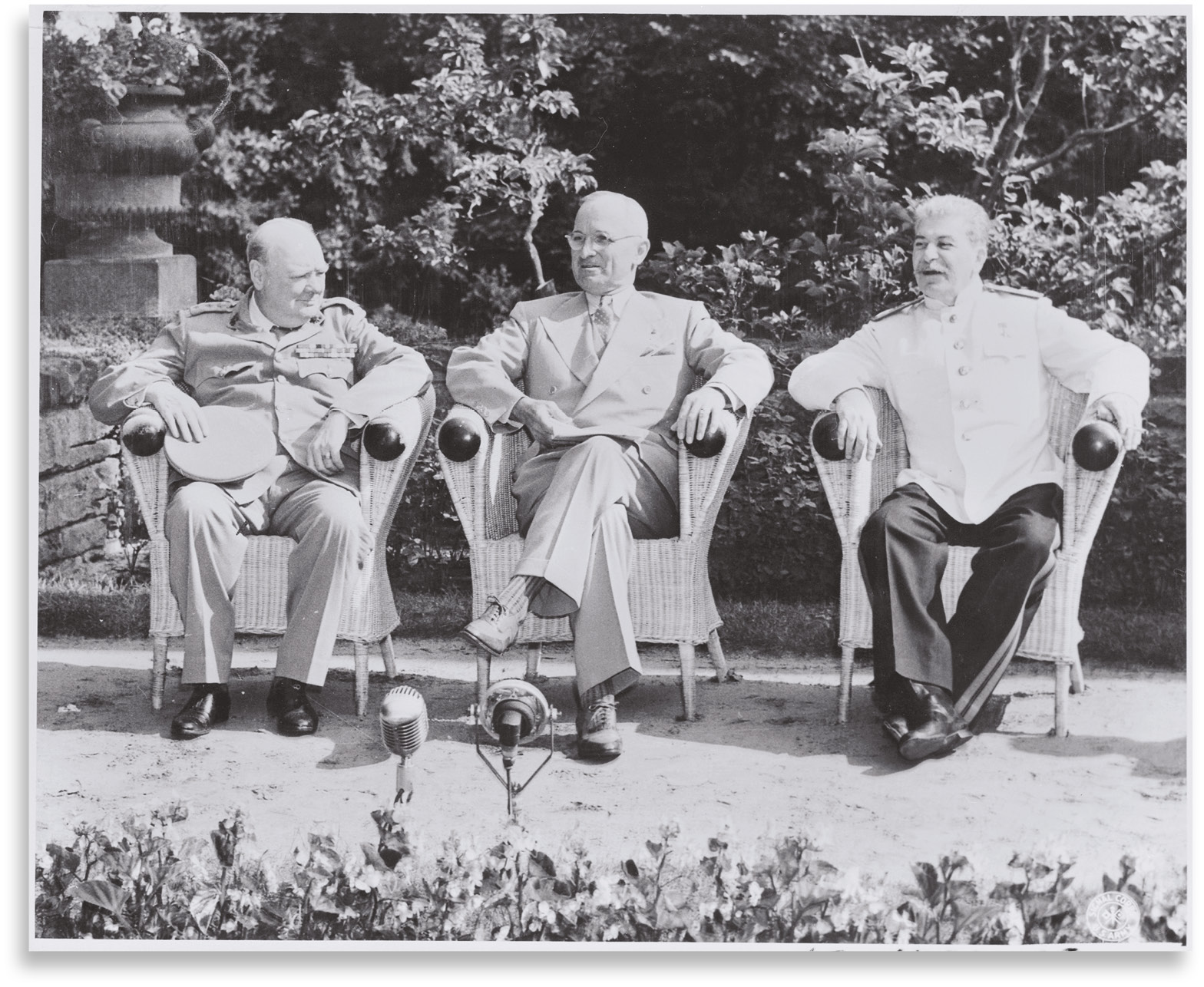
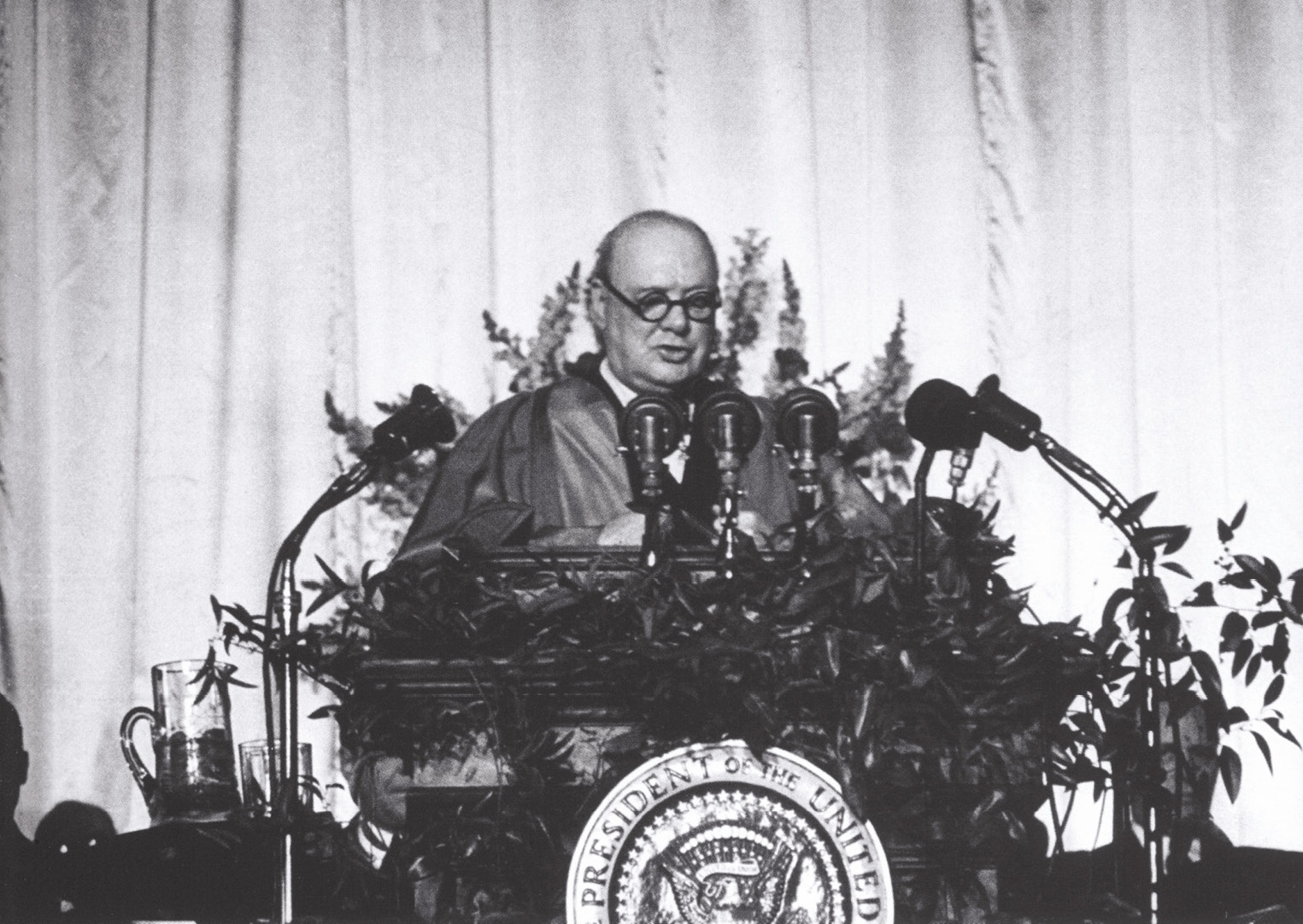
On 5 March 1946, barely eight months after being ousted in the General Election, Winston Churchill travelled to Missouri, the home state of the President who had succeeded the great American wartime leader, Franklin D Roosevelt. President Truman had invited the former British Prime Minister, whom he barely knew when he entered the White House, to take a short tour with him, and Churchill was delighted to accept the honour. Truman had brought a new broom to Washington. Whereas Roosevelt had been keen to get along with the Soviet leader Marshal Stalin, confident that the two post-war superpowers could work well together, Truman was more hostile. Everywhere he looked, he saw the Soviets breaching their wartime agreements. Churchill, too, was deeply troubled and upset by what he saw as Soviet aggression and the failure of Stalin to compromise over the question of Poland.
So when Truman asked Churchill to deliver a speech about the prospects of peace in the post-war world at a little-known college in Fulton, Churchill eagerly accepted the invitation. The speech he prepared began by expressing great faith in the new United Nations Organisation, which had only just come into being. Churchill anticipated the debate that would last for decades by insisting that the UN would need to have its own armed forces, made up of soldiers, sailors, and airmen recruited from its member states, in order to enforce its decisions and guarantee the peace. He also put great faith in the ‘special relationship’ between Britain and America, and in how the ‘English-speaking peoples’ were standing at the ‘pinnacle of world power’.
But the speech is best remembered for one section that contained a major warning about the future. Churchill said he understood Stalin’s desire for a barrier with the West – but went on to condemn this in some of his finest rhetoric. ‘From Stettin in the Baltic to Trieste in the Adriatic,’ he declared, ‘an Iron Curtain has descended across the Continent. Behind that line lie all the capitals of the ancient states of Central and Eastern Europe. Warsaw, Berlin, Prague, Vienna, Budapest, Belgrade, Bucharest, and Sofia… all are subject in one form or another, not only to Soviet influence but to a very high and, in many cases, increasing measure of control from Moscow.’
Everywhere he looked, Truman saw the Soviets breaching wartime agreements.
The speech had an explosive effect. The American press seized on it, and painted Churchill as a pessimistic warmonger. Support for the Russian ally, alongside whom they had just fought, and whose land forces had largely contributed to the defeat of the Nazi Reich, was still considerable in America. Stalin was referred to by many Americans in friendly terms as ‘Uncle Joe’. Indeed, the hostility to Churchill’s speech was so strong that Truman himself was forced to distance himself from the warning it contained. Although both he and his Secretary of State James Byrnes had seen and approved the speech beforehand, they denied this. When pressed for his thoughts on the speech, the President declined to comment.
The official American reaction was curious in the circumstances, because their Soviet policy adviser in the Moscow Embassy, George Kennan, had only two weeks before sent a severe warning that has gone down in history as ‘the Long Telegram’. Kennan had been asked what he thought long-term relations with Russia might look like, and he predicted that there would be no post-war rapprochement between the US and the Soviet Union. Added to the long tradition of Tsarist Russia being fearful of the West, he wrote, there was now the added ideology of Communism. ‘We have here a political force committed fanatically to the belief that with the US there can be no permanent modus vivendi,’ he concluded. The Long Telegram was read in secret by dozens of senior officials in the State Department, and acted as an internal policy alert of the Cold War to come. But it was way beyond what the American public felt at the time – hence the White House’s distancing itself from Churchill’s very public warning about Soviet aggression.
In Moscow, Churchill’s Iron Curtain speech confirmed Stalin’s view of the hostility of the West. He decried the former PM’s words and said they were a call to arms against the Soviet Union.
Many since have seen the speech as the opening declaration of the Cold War. But what was the reality of the claim Churchill made?
Demobilisation
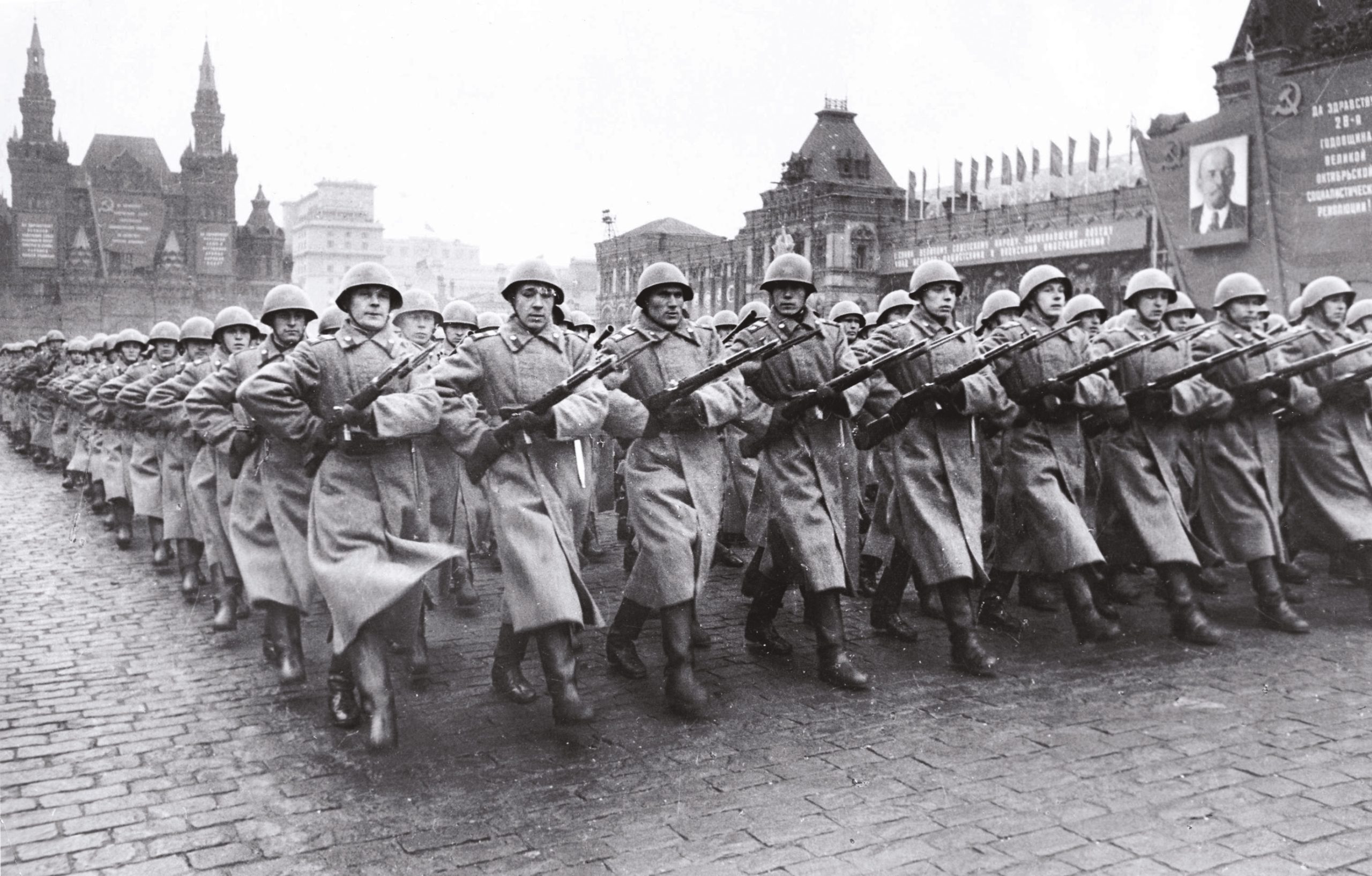
At the end of the Second World War, the US had approximately 12.21 million military personnel – including 5.87 million in the Army, 2.4 million in the Army Air Forces, 3.38 million in the Navy, 475,000 in the Marines, and 86,000 in the Coast Guard. Of these, approximately 4 million were in Europe, 4 million in the Pacific, and the rest in the US. By June 1947, the total figure had dropped to 1.566 million – an 87 per cent decrease in about two years. Numbers for the Soviet forces are harder to verify, but Soviet land forces, the Red Army, dropped from around 9.8 million to 2.8 million over the same two-year period – a reduction of about 70 per cent. This left Soviet troops well outnumbering US and Allied troops in Europe – an advantage in military strength that enabled Moscow to exert political control over the regions it had occupied. Churchill had been absolutely right in seeing that an Iron Curtain had divided Europe.
Soviet Control
In May 1945, the US had more than 12 million men and women in the armed forces, of whom roughly two-thirds were serving overseas, with about 4 million in Europe. Despite all the political anxieties that remained at the end of the fighting, when the war in Europe was over, a rapid demobilisation began which further speeded up after Japan’s surrender and the end of the Pacific War. The American public demanded their husbands, sons, and brothers should return home as soon as possible. The troops themselves wanted to get home, and protests were staged if the process seemed slow and inefficient.
By the middle of 1947, more than 10 million soldiers, sailors, airmen, and marines had been demobilised. There were just over 1.5 million left serving in the armed forces. This rapid demobilisation created a challenge for the US when it came to supplying troops for the occupation of Germany and Austria in Europe and Japan in the Pacific. Moreover, it left the United States in a position where it would be impossible to return to any sort of combat or confrontation with the Soviet Union. Eastern Europe was left open and at the mercy of Moscow.

As the still vast Red Army advanced westwards into Eastern Europe, Stalin and his supporters used the same tactics in each country they liberated (or ‘occupied’). Communist exiles who had spent the war years in the relative comfort of Moscow returned to their homelands totally dedicated to the Soviet Union and its leader. Initially, they would agree to participate in coalition governments with social democratic parties. But, as the first stages of forming provisional governments all took place under Soviet military rule, Stalin insisted that his supporters were appointed to key ministries. These included those of Economic Planning, of Justice, and, most importantly of all, of the Interior, as this brought control over internal security and the police. As the few elections that were allowed revealed relatively low levels of support for Communist parties, it was clear that Stalin’s henchmen needed to use less-than-democratic tactics to impose their rule.
In countries such as Romania and Bulgaria, leading members of non-Communist parties began to disappear. Some were kidnapped in the dead of night; others were beaten up or threatened with violence. Never were the perpetrators of this violence brought to justice or prosecuted. Slowly, the parties that were in opposition to the Communists broke up, and their disintegration allowed the Communists to take power.

In Poland, the situation was different – but a similar sequence of events unfolded. The country was in total chaos. One in five Poles had been killed in the war. Millions of displaced persons were roaming the countryside trying to find family members and return home. Polish Jews had been murdered in huge numbers in the extermination camps, which slowly revealed their dreadful secrets though 1945. The Warsaw Uprising in the summer of 1944 had led to the deaths of roughly 15,000 young resistance fighters and as many as 200,000 Polish civilians.
Of the 25 members of the provisional post-war Polish government, 16 were Communists supported from Moscow. Władysław Gomułka, secretary of the Polish Workers Party (the Communists), wasted no time in acting against Stanisław Mikołajczyk, leader of the Peasant Party (also known as the Polish People’s Party), and against the non-Communist alliance supported by Britain and the West. Meetings of the Peasant Party were broken up with violence by mobs organised by the Communists. Peasant Party members were beaten up, taken hostage, or even murdered. By the time elections came in January 1947, thousands were in prison and unable to organise or run a campaign. Not surprisingly, the Workers Party claimed 80 per cent of the votes. The Western powers could do nothing but watch Poland fall under Moscow’s heel.
Budapest had been captured by Soviet troops after bitter fighting in February 1945. Hitler tried to recapture Hungary in his last military gamble of the war, Unternehmen Frühlingserwachen (Operation Spring Awakening; see MHM 148, October/November 2025), near Lake Balaton. When this was crushed, the rest of Hungary was occupied by Soviet troops in April 1945. Despite Soviet domination, the Communists took only 17 per cent of the vote in the election of November 1945. Nevertheless, using the same tactics of terror and intimidation, the Communists slowly won political control of the country – which, despite a major uprising in 1956, was maintained until the late 1980s.
In Austria, Soviet troops of the 3rd Ukrainian Front led by Marshal Fyodor Tolbukhin had captured the country in a series of battles around Vienna in April 1945 (see also MHM 148). But Austria was different to Romania, Bulgaria, Poland, and Hungary, because American and British troops had advanced into the west and the south of the country before the fighting stopped in May 1945. Consequently, the division of the country into four zones of occupation prevented Moscow from gaining control over the whole. Ten years after the war, the government in Vienna signed a Treaty with the Soviets and the West that kept the country out of Russia’s grasp.

Stasi Land
In eastern Germany, the Soviet military occupation zone was run on very different lines from the British, American, and French zones in the west of the country. Whereas the Western powers wanted to build up German economic muscle, the Soviet Union wanted to exact retribution from the Eastern zone and to ensure that Germany would never be a threat again. Trainloads of goods from factories and farms were shipped east in massive reparations demanded by Moscow. Led by Walter Ulbricht, who had spent the war in Moscow, the Communists again used kidnapping and violence to take total control of what would become the German Democratic Republic.
Over the ensuing years, the DDR became a model Communist state, run on Stalinist lines. There was total centralisation of the means of production, with the emphasis on heavy industry and very little on consumer products. Civil and political rights were suppressed. The Stasi or secret police maintained a tight control over the population. No dissent from the party line was allowed. And the Red Army maintained a strong garrison in the country to provide a backup for the civilian government when needed. Berlin, occupied by all four powers, became a focus for tension between East and West.
The state newspaper Pravda went even further, comparing Churchill to Hitler.
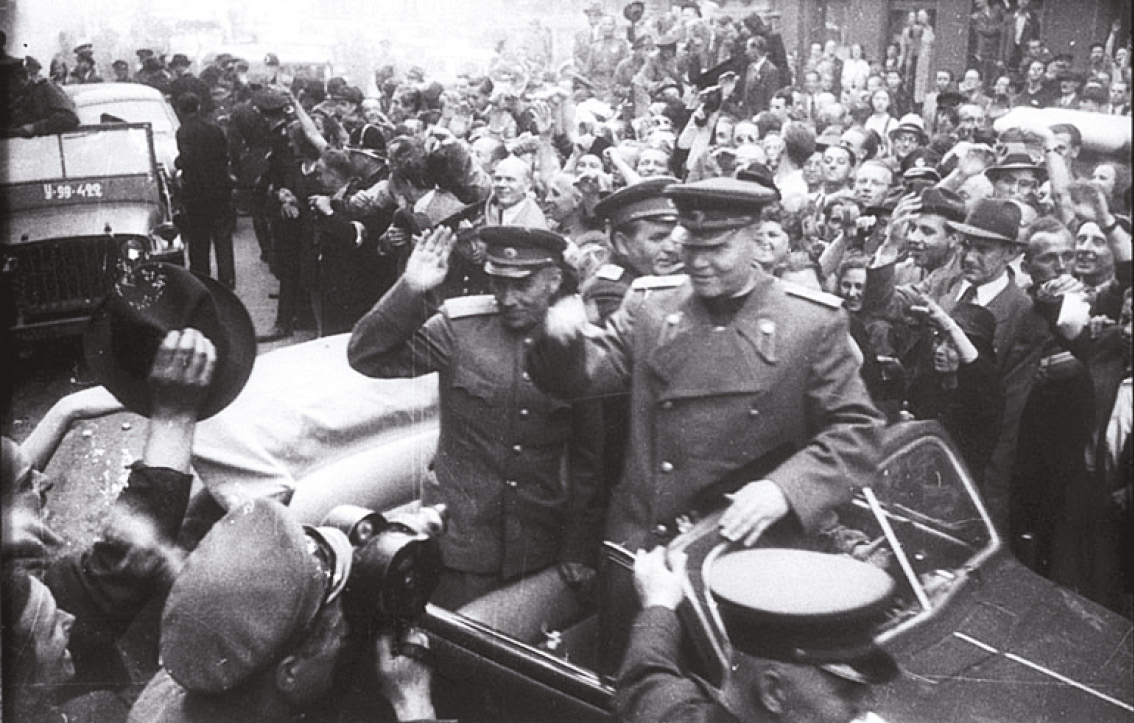
Czechoslovakia tells yet another story. Soviet troops of the 1st and 4th Ukrainian Fronts had moved into eastern Czechoslovakia in May 1945, and the last fighting with Nazi forces took place in the country. US troops had reached Plzen (Pilsen) in the west. On 9 May, the first Soviet tanks advanced into Prague. When the fighting ceased, a few days after VE Day, Soviet forces dominated the country. But the Prague government just about managed to remain independent of Moscow, despite the fact that one-third of ministers in the new coalition government were Communists.
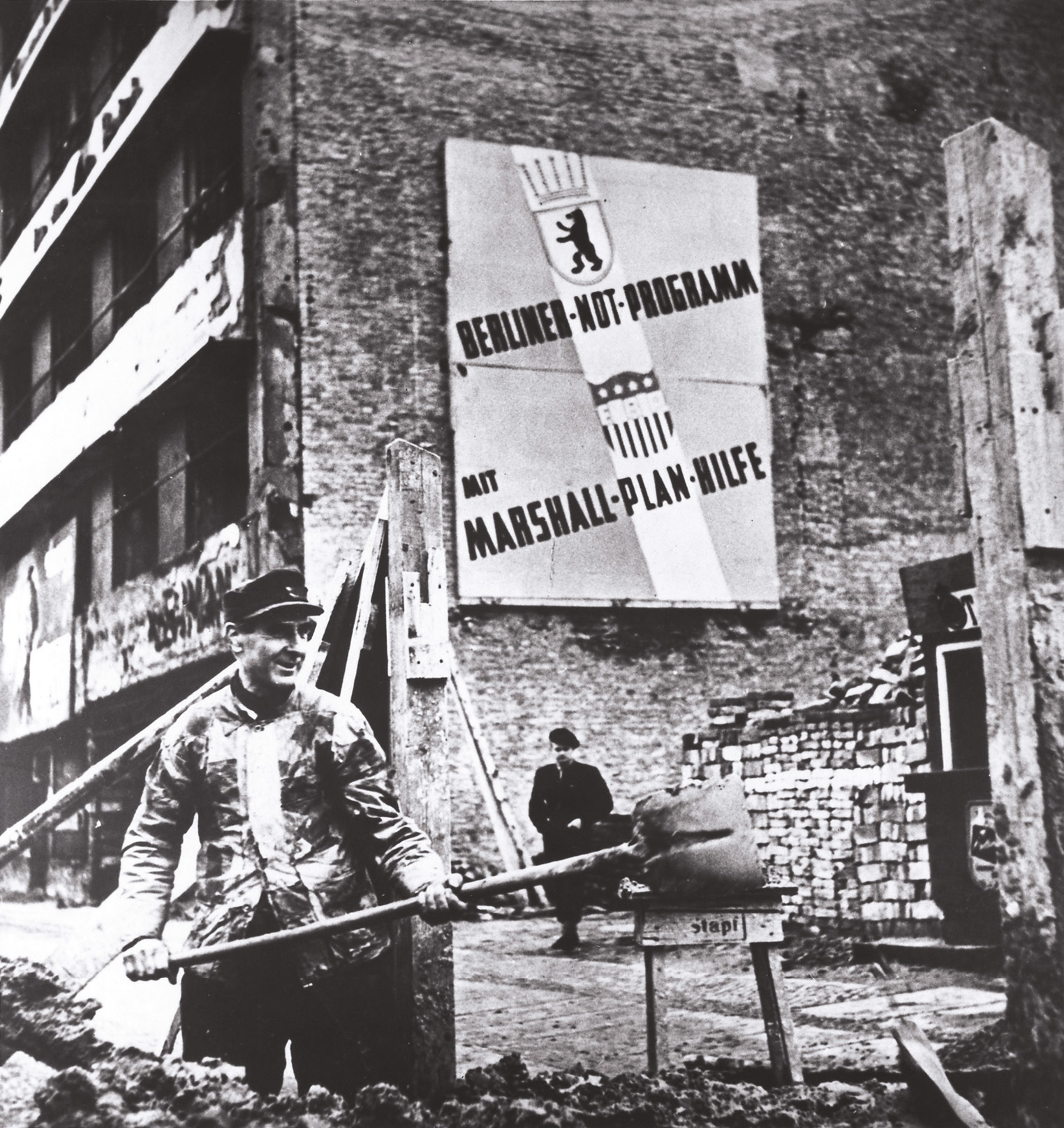
Jan Masaryk, as Foreign Minister, looked to both West and East for support in the country’s recovery. He was the son of Tomáš Masaryk, the founder and first President of Czechoslovakia, when it was created out of the remains of the Austro-Hungarian empire in 1919. More than any other individual, Jan Masaryk represented the freedom and independence of his country post-war. When the government decided to ask to join the Marshall Plan, Stalin was furious. The move threatened to split Moscow’s control of Eastern European governments.
In July 1947, Stalin summoned the Prime Minister Klement Gottwald and Jan Masaryk to Moscow, where he berated them for betraying the Soviet Union. He instructed them to pull out of all negotiations to receive American aid. He would listen to no argument. When they returned to Prague, Masaryk was distraught. ‘I went to Moscow as the foreign minister of a sovereign independent state,’ he told a friend. ‘I returned as a Soviet slave.’
Six months later, in February 1948, the Czech Communists led an uprising. Giant rallies were held in Prague. Workers’ assemblies were formed at factories across the country. The police were used to arrest and imprison non-Communist leaders. It took just five days for the government to collapse, and for the Communists to seize power. Masaryk remained as foreign minister, but he was a broken man. Two weeks after the Communist coup, he fell to his death mysteriously from the window of his bedroom, high in the Czech Foreign Ministry. No one knew if he jumped or was pushed. The most recent review seems to suggest he was murdered by agents working for Moscow – but, 80 years later, the evidence is still not clear. Huge crowds lined the streets for his funeral, but his death marked the end of free Czechoslovakia.
Situation critical
The fall of Czechoslovakia to the ‘Reds’ sent shock waves through the West. In Washington in March 1948, Truman addressed a joint session of Congress with a fighting speech. He declared that ‘the Soviet Union and its agents have destroyed the independence and democratic character of a whole series of nations in Eastern and Central Europe’, bringing about what he called a ‘critical situation in Europe today.’ His war cry prompted Congress just a week later to approve spending $5.3 billion of Marshall Aid in Europe.
It was just two years since Churchill had declared his warning in Fulton, Missouri. He is now remembered for predicting the Cold War long before others came to realise that the threat of conflict between East and West would dominate the post-war scene. But being ahead of your time doesn’t always bring applause. It took those two years for Truman and American opinion to catch up with the reality of what was happening in Eastern Europe. By 1948, Europe and the world were set for what would be four decades of confrontation.
Taylor Downing’s latest book The Army that Never Was: D-Day and the Great Deception is out now in paperback (Icon Books, £10.99).
In the next issue of MHM: The occupation of Berlin and growing tension between the Western Allies and the Soviets.
All images: Wikimedia Commons, unless otherwise stated; Alamy