

Subscribe now for full access and no adverts
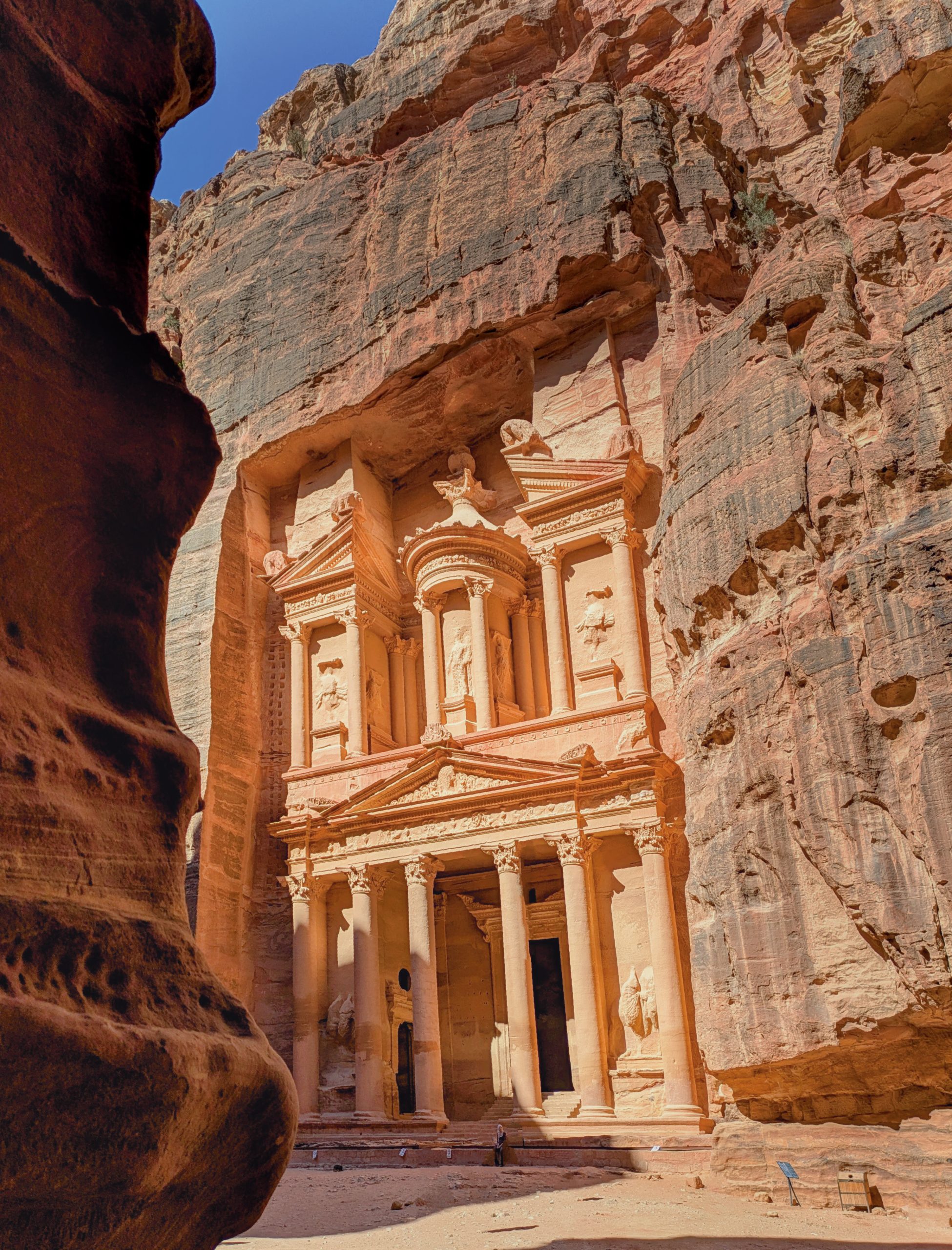
When imagining the ancient city of Petra, it is the awe-inspiring façade of the monument known today as the Treasury (Al-Khazneh) that first captures the eye and imagination – its ornate classical carvings and grand proportions etched into rose-red sandstone. But this iconic image is only a fragment of a much larger and more complex archaeological wonder.

Petra and the Nabataean world
Petra is set within a rugged valley in western Jordan, and home to hundreds of rock-cut tombs and mausolea that vary dramatically in size, style, and decoration. These differences probably reflect the social hierarchies of the time, with the more elaborate monuments reserved for the elite. Beyond the city’s famed necropolis, traces of earlier, pre-Nabataean settlements and an extensive zone of ancient quarrying speak to the long history and industrial capabilities of the region. It is within this monumental landscape that the authors and their research partners, the Jordanian Department of Antiquities and the American Center of Research (ACOR), explored the building infrastructure that enabled Petra’s rise to become one of the ancient world’s most celebrated urban centres.
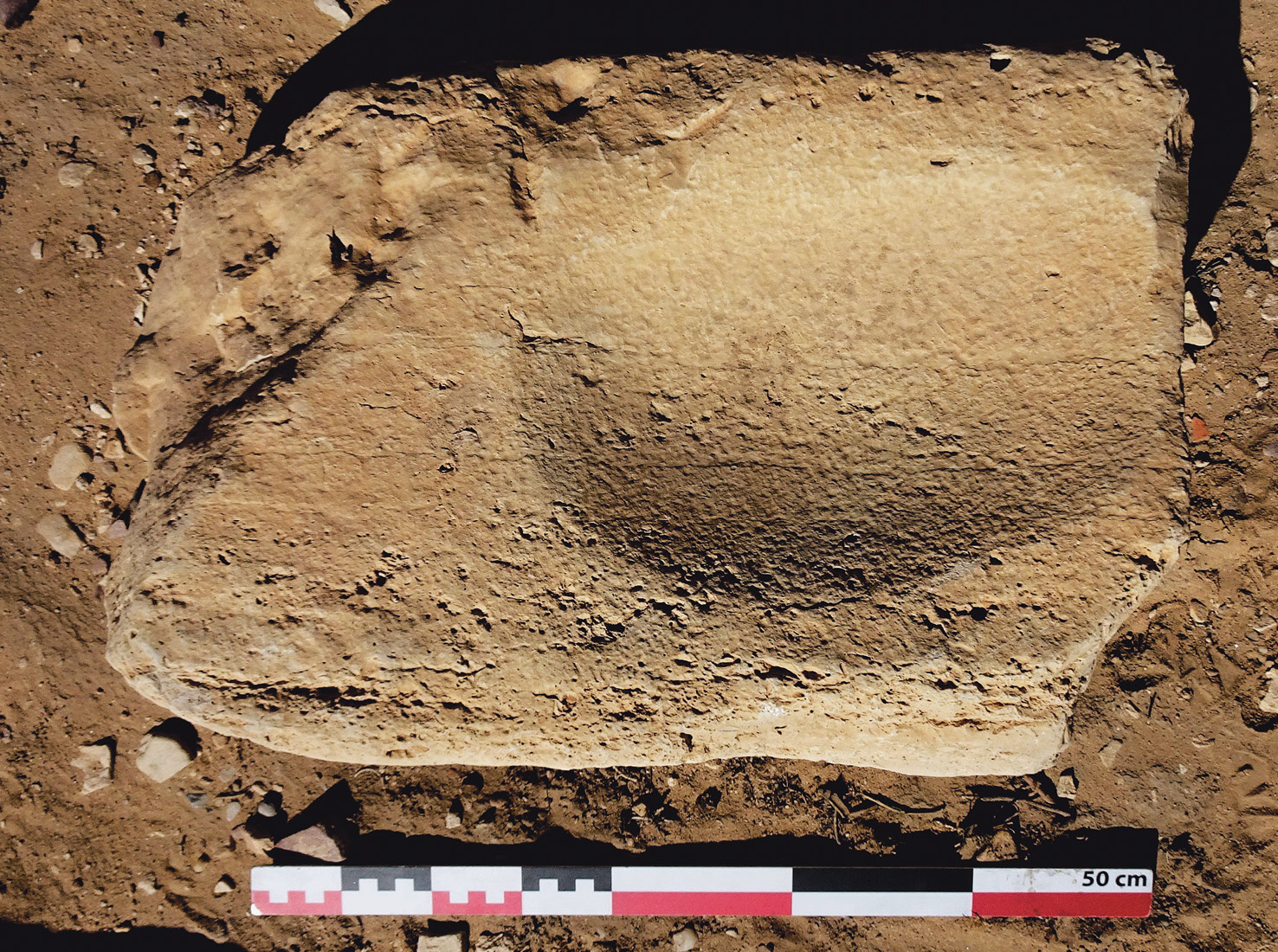
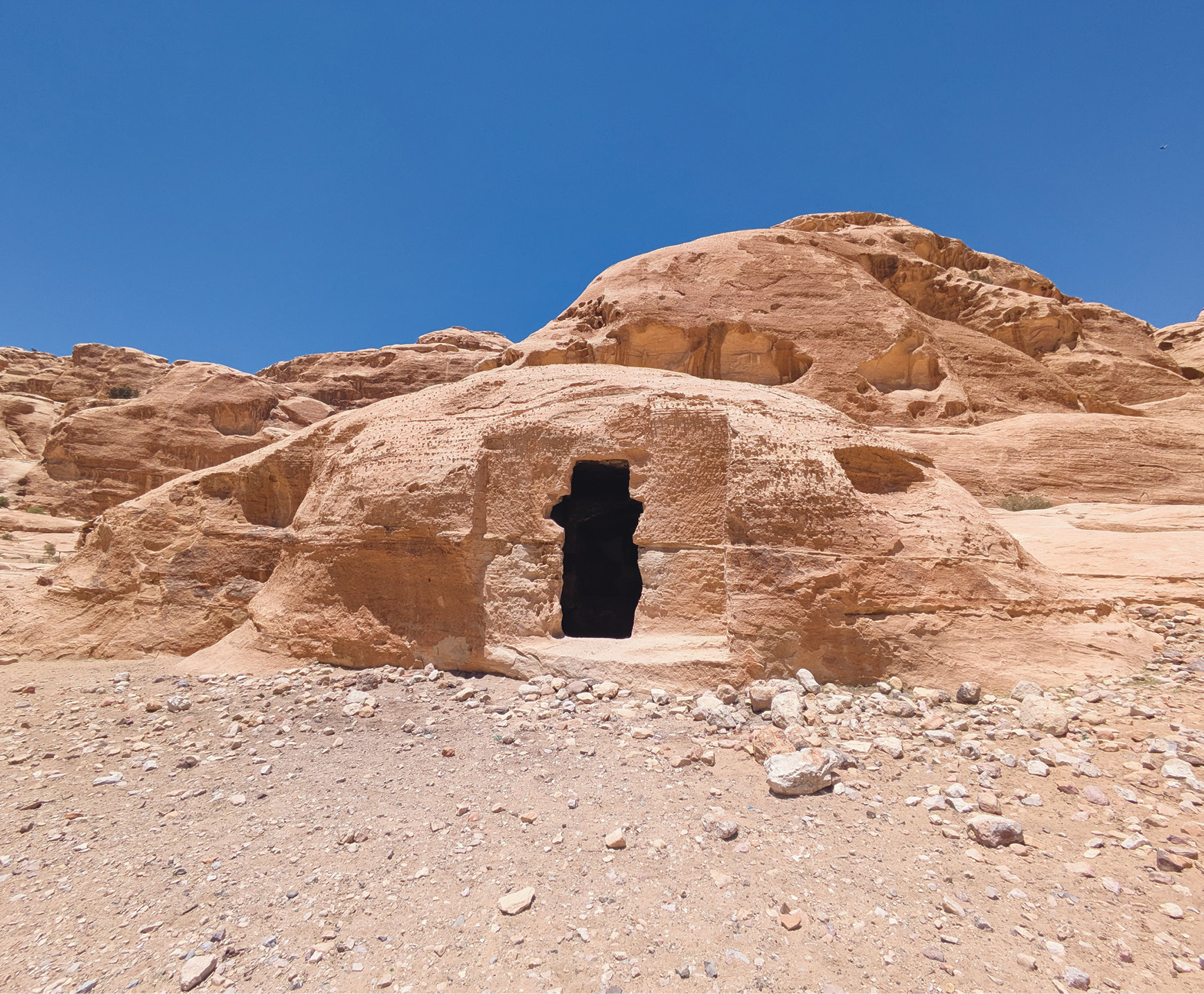
Petra was inscribed as an UNESCO World Heritage Site in 1985, in recognition of its exceptional cultural and historical value. Encompassing more than 26,000ha, the site stands as a remarkable testament to the engineering ingenuity and economic prosperity of the Nabataeans, a once-powerful Arab people who emerged as a dominant political and commercial force between the 2nd century BC and the 2nd century AD. Archaeological evidence suggests that the Petra landscape was occupied as early as the Neolithic period, with human activity in the region dating back approximately 9,000 to 11,000 years. This presence is certainly visible at the nearby Neolithic settlement of Al-Bayda, where engraved figurative rock art dating from both this period and the Bronze Age is dispersed around the immediate landscape, along with ceramics, lithic scatters, and quern stones. It is in the environs of this settlement that a large number of Nabataean rock-cut mausolea and shrines are found. The same landscape is also where the team got our first insights into Nabataean ritual activity that was not high status, but largely egalitarian. This involved mausolea that usually comprised rock-cut rooms in which the dead were interred, probably laid to rest in a shroud and left on a rock-cut mortuary table. In this particular area, the tombs appear to have been deliberately cut into large, naturally formed globular geology. In many instances, rock art – in the form of ibex and cupmarks – was engraved on the top of each feature. It is more than probable that these engravings venerate an earlier pre-Nabataean tradition that did not involve the close proximity of burials.
From nomadism to regional power
The Nabataeans originated as a semi-nomadic Arab group inhabiting the deserts of northern Arabia and the southern Levant. Many believe that they gradually moved from the southern part of the Arabian peninsula to settle in the mountains around Petra. This became their capital – known to the Nabataeans as Raqmu – and served as the political and cultural heart of their kingdom, which, at its height, extended from the Euphrates River in the north to the Red Sea in the south.
Emerging as a distinct cultural and political entity between the 4th and 2nd centuries BC, the Nabataeans gradually transitioned from a mobile, pastoral lifestyle to a sedentary society specialising in long-distance trade. They developed a highly efficient commercial network focused on the transport of incense, spices, and luxury goods from southern Arabia to the Mediterranean markets. A position between three continents enabled the Nabataeans to trade on a wider level, using the Gaza port to get goods to Europe in less than three months. Their wealth and strategic control of caravan routes granted them substantial regional influence, rivalling other contemporary powers.
The kingdom reached its zenith during the 1st century BC, but began a gradual decline thereafter. In AD 106, under Emperor Trajan, the Nabataean territory was formally annexed by the Roman Empire and reorganised as the province of Arabia Petraea. Despite the loss of political sovereignty, many aspects of Nabataean culture, particularly their distinct architectural style and painted ceramics, continued for some time before being assimilated into the broader Graeco-Roman cultural sphere.
During this zenith, Petra experienced substantial urban growth, at which time its population is estimated to have reached approximately 20,000. This population, however, was not concentrated within the current dispersal of ostentatious buildings at Petra, but instead spread across the surrounding area, including semi-permanent settlements and rock- cut dwellings. Much of the population would have been involved in construction, maintenance, and conservation of initially the burial activity of Petra, followed by the secularisation of the site from the 1st century AD.
During the Byzantine period, a significant portion of the Nabataean population converted to Christianity, and their cities – including Petra – became integrated into Christian pilgrimage networks. Today, the Nabataeans are increasingly recognised as one of antiquity’s most innovative and sophisticated societies – masters of hydraulic engineering, stone carving, and cross-cultural exchange – whose legacy endures in the monumental landscapes they left behind.

A brief golden age
Though their ascendancy lasted only a few centuries, the Nabataeans wielded considerable regional influence through trade, diplomacy, and military strength. The wealth generated from these endeavours funded the construction of the city’s remarkable architecture, with fine examples still standing today, carved directly into the cliff faces of the surrounding mountains.
While the Treasury may be the most recognisable monument, the valley contains an array of significant structures, including the Nabataean amphitheatre, the Great Temple (which was probably a royal palace), the Monastery, the Winged Lions Temple, the Byzantine Church, the Silk Tomb, and the Urn Tomb, among many others.
Carved and weathered legacies and histories
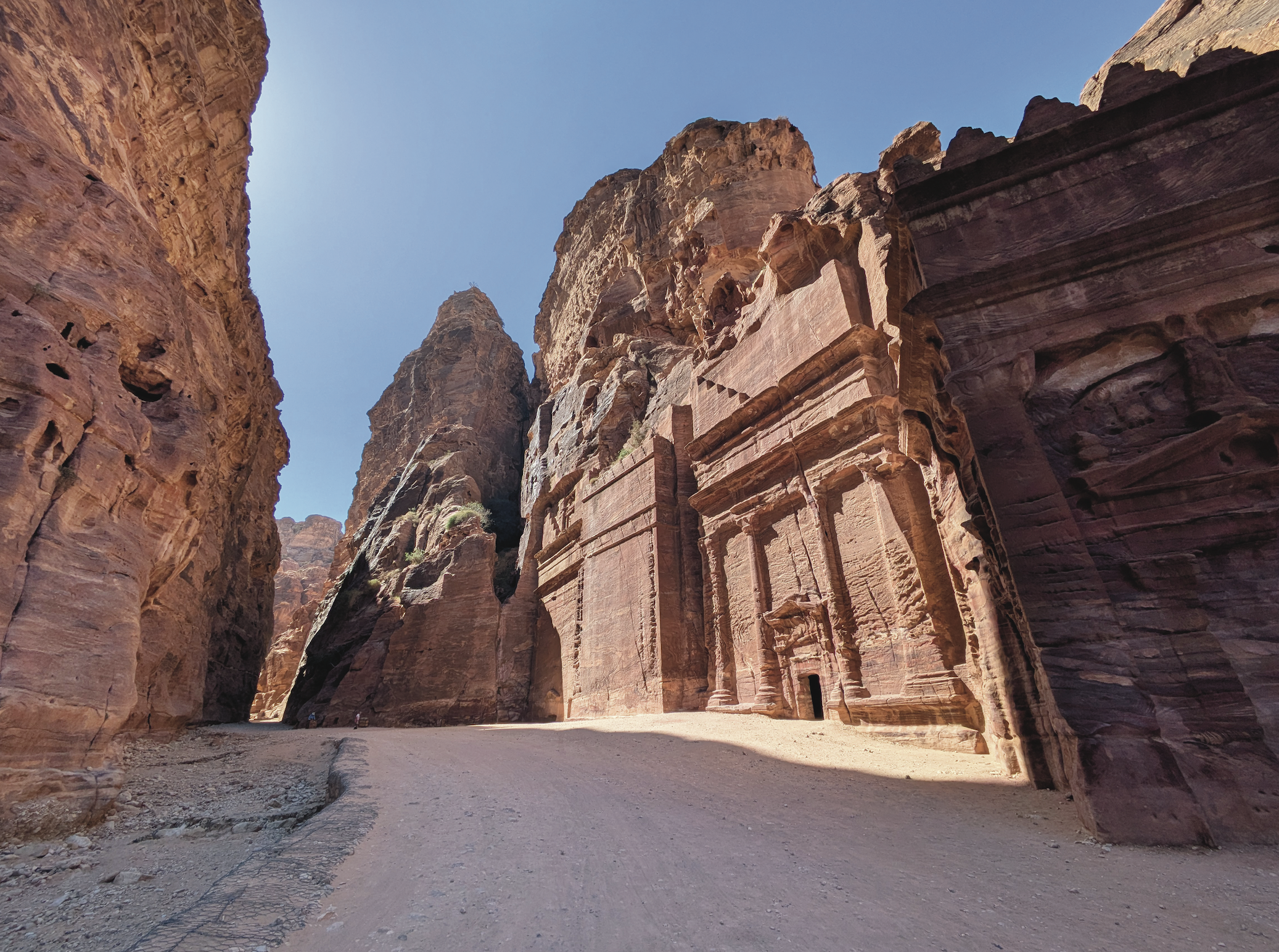
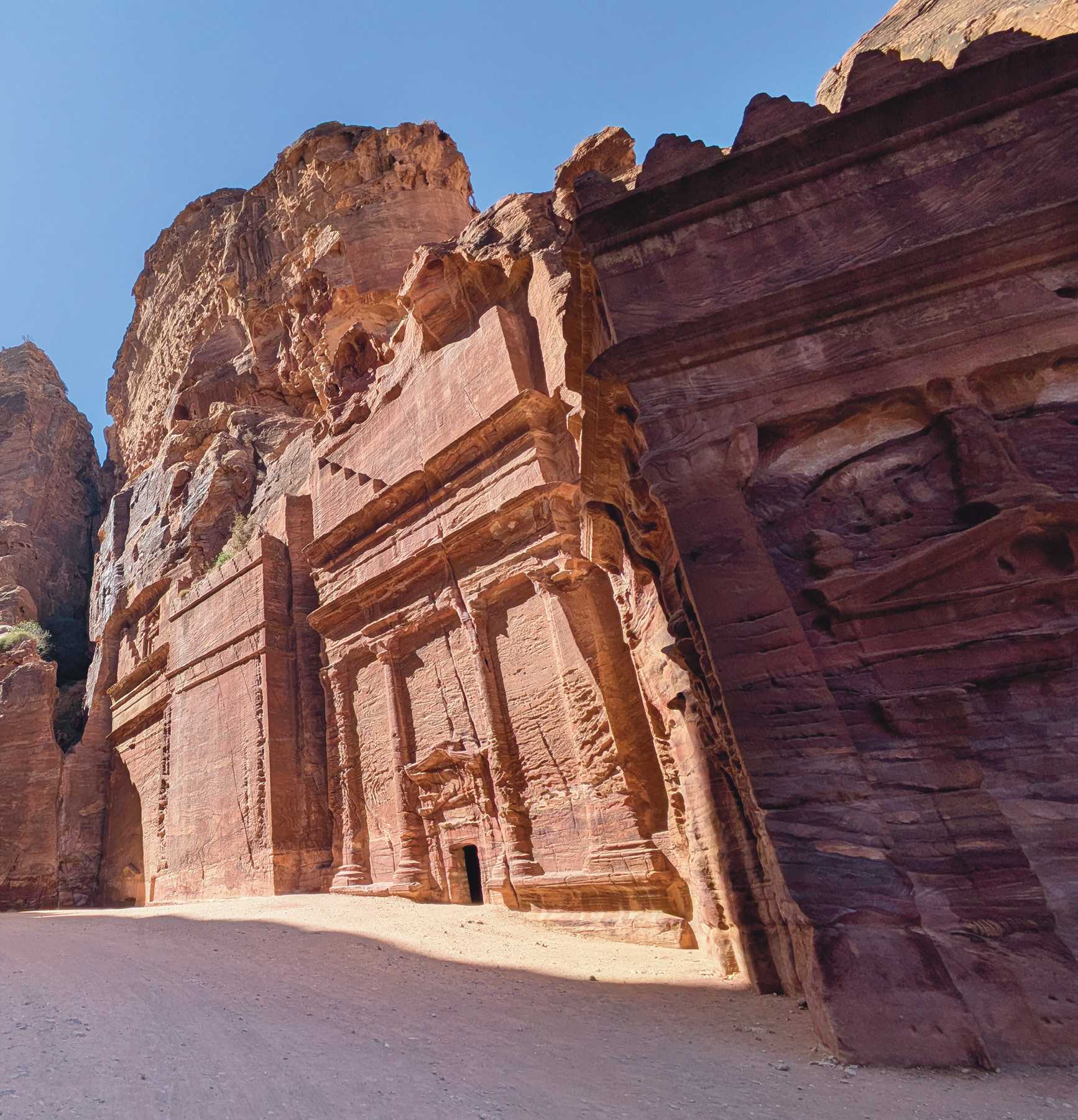
Scattered among these monumental buildings are scores of tombs – many of them modest, others richly adorned, suggesting that Nabataean society was probably stratified. Many of these mausolea though, often featuring carved stone architraves and temple-like pediments, were designed to communicate wealth, lineage, and power. The more ornate examples, created to resemble temple-like buildings, were constructed around the hidden natural and rock-cut enhanced thoroughfares that linked Petra’s eastern and western sections. It is important to mention that tombs were not intended as places of eternal burial for Nabataeans, but instead receptacles that held the body until the afterlife, so the concept differed from our modern-day perceptions. The majority of structures associated with death, burial, and ritual were carved into the soft sandstone geology. Yet the same sandstone that made Petra’s architecture possible has also made it vulnerable. Over centuries, wind, rain, seismic activity, and time have worn away much of the intricate detailing, making many façades difficult to interpret.
To combat this decay, conservation efforts over the past 50 years have focused on stabilising and, in some cases, reconstructing the ornate architecture that was carved into the city’s vertical rock faces. These efforts not only preserve Petra’s physical heritage, but also its symbolic representation of Nabataean social and political identity.

The dead and the living – side by side
Earlier, we referred to Petra as a ‘city’, although our preliminary field survey suggests that it was, in its original conception, anything but a conventional urban settlement. The primary function of the Petra complex initially appears to have been mortuary in nature, serving predominantly as a site for the organisation and interment of the dead. This use probably extended to the Treasury building. In this sense, Petra can be more accurately described as a ‘city of the dead’, distinguished by its elaborate rock-cut tombs and monumental façades carved into the sandstone cliffs. Archaeological evidence does indicate that settlements were present during the Nabataean period; these, however, lay some distance away from the ‘city of the dead’, usually in the form of small villages and caves, many of which were inhabited until relatively recently. It is probable that these settlements were occupied by communities who were directly engaged in the construction, management, and use of the Petra complex, such as architects, carpenters, masons, priests, and a large workforce. This is not to say that the city was not inhabited by living communities during the later stages of the Nabataean influence.
Yet for all the focus on kings, priests, and elites, what of the individuals who made Petra possible, the large manual workforce who physically carved the city from stone? Many of these craft specialists may have held elevated positions within their own professional hierarchies. Some were probably buried in more modest mausolea located at the outer edges of the city’s monumental core. It is clear that the planning, construction, and ongoing maintenance of Petra’s vast array of structures required a highly organised and educated workforce. There were different schools of carvers, each had their own style and tradition, as reflected in the diverse architectural detail on various tombs.
Interestingly, these rock-cut tombs vary widely in both complexity and placement. They reflect not only the personal status of those interred, but also the changing role of Petra itself. By the 1st century AD, as Nabataean political power waned and Roman influence increased, the function of the city evolved. Whether the construction of new mausolea continued during this transitional period remains unclear, although there are tombs assigned to the Roman era, such as as the Tomb of Sextius Florentinus. But what is evident is that Petra, even in decline, retained a vibrant and layered architectural legacy, one built not only by rulers, but also by the skilled hands of those whose names have long since faded into the weathered sandstone.

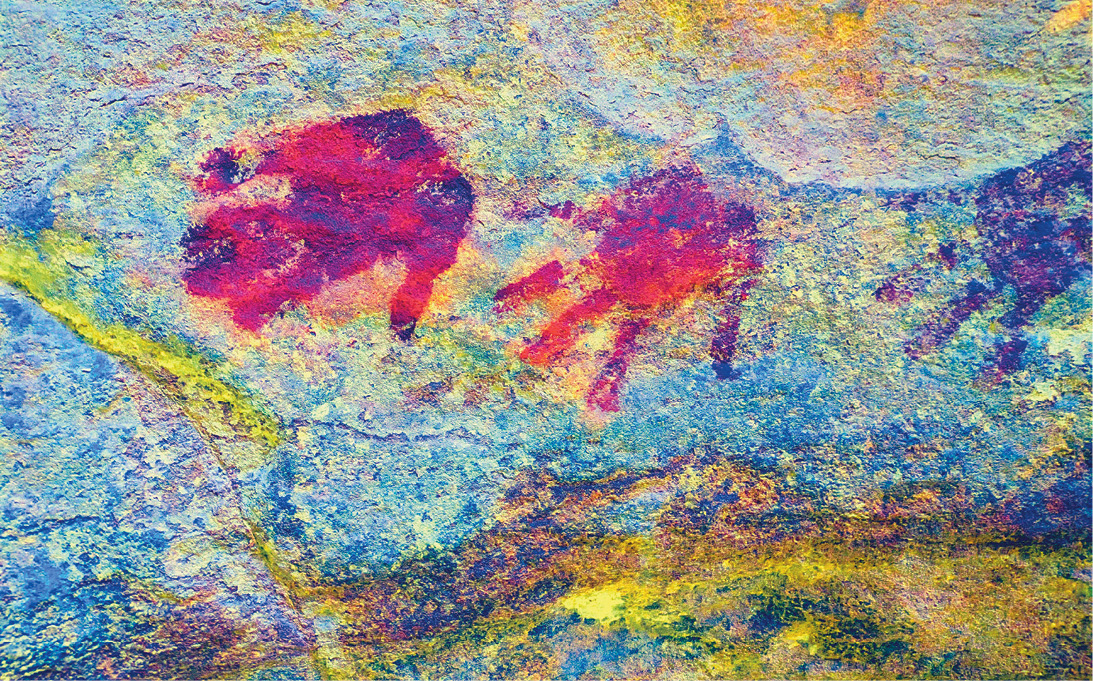
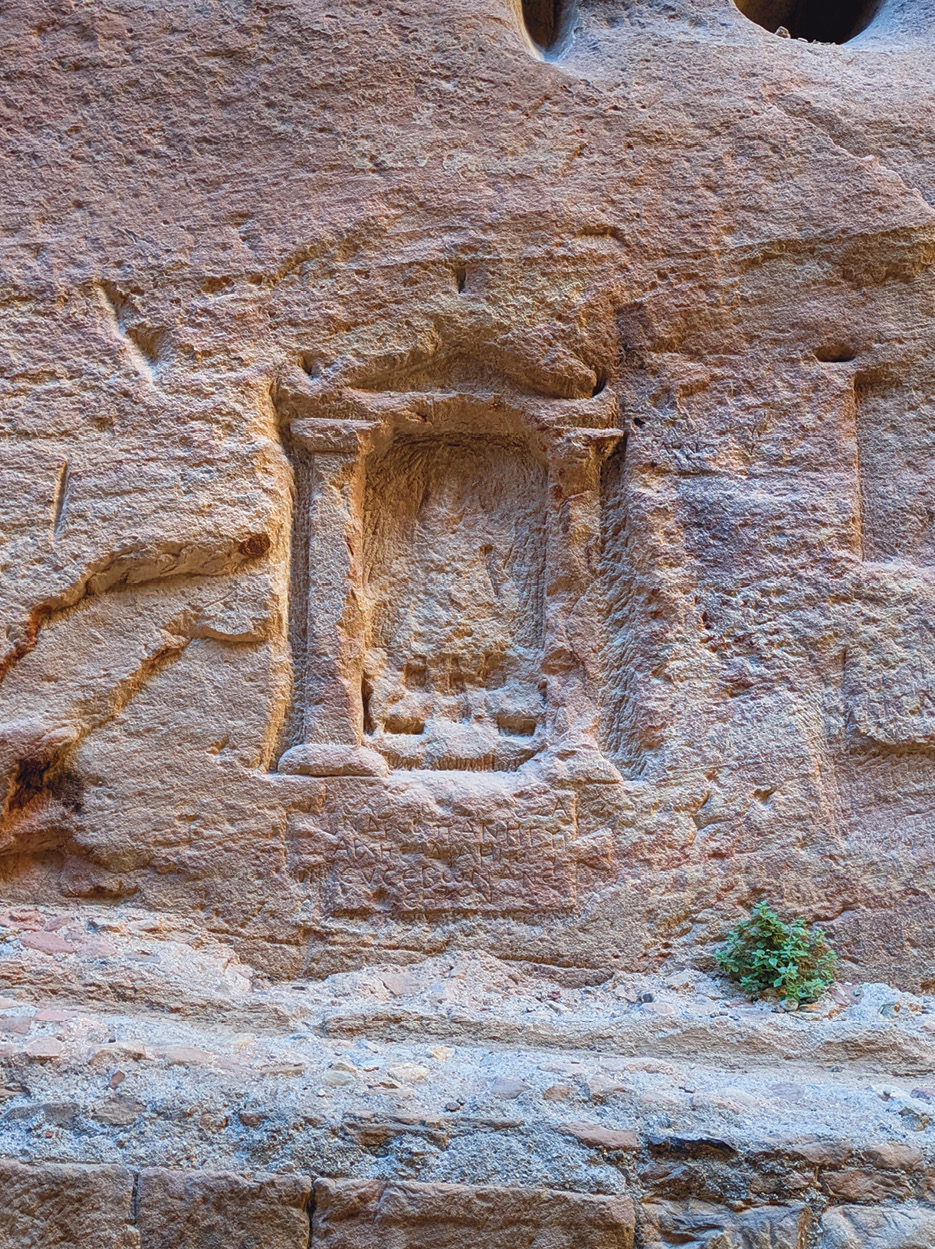
Later architectural additions to Petra, such as the Nabataean amphitheatre and various free-standing structures, are aligned along the site’s east–west axis and are accessed through procession routes augmenting naturally eroded channels within the surrounding sandstone cliffs. There are, of course, natural sections; however, linking the route through the passageway of Al-Siq gorge (the narrow eastern approach to the site) is a rock-cut leat that would have provided a gravity-fed water supply to the area of Petra where the Treasury building stands. Along this 2km access route are a limited number of rock-cut mausolea, shrines, and memorial plaques – the plaques possibly commemorating engineers who were involved in this project. The team also identified within the narrow access area evidence of paintings that could not be clearly seen with the naked eye. These paintings – although undatable – included hand stencils and smeared finger lines, which may be the action of an artist who could have been decorating one of a number of shrines that occupy this part of the access route to the Treasury building area. Such later elements probably post- date the site’s primary use as a funerary complex and may reflect a significant shift in its function. The construction of shrines and memorials could correspond to a period during which traditional burial practices and commemorative rituals had either evolved or diminished in prominence within Nabataean society after the onset of Roman rule.
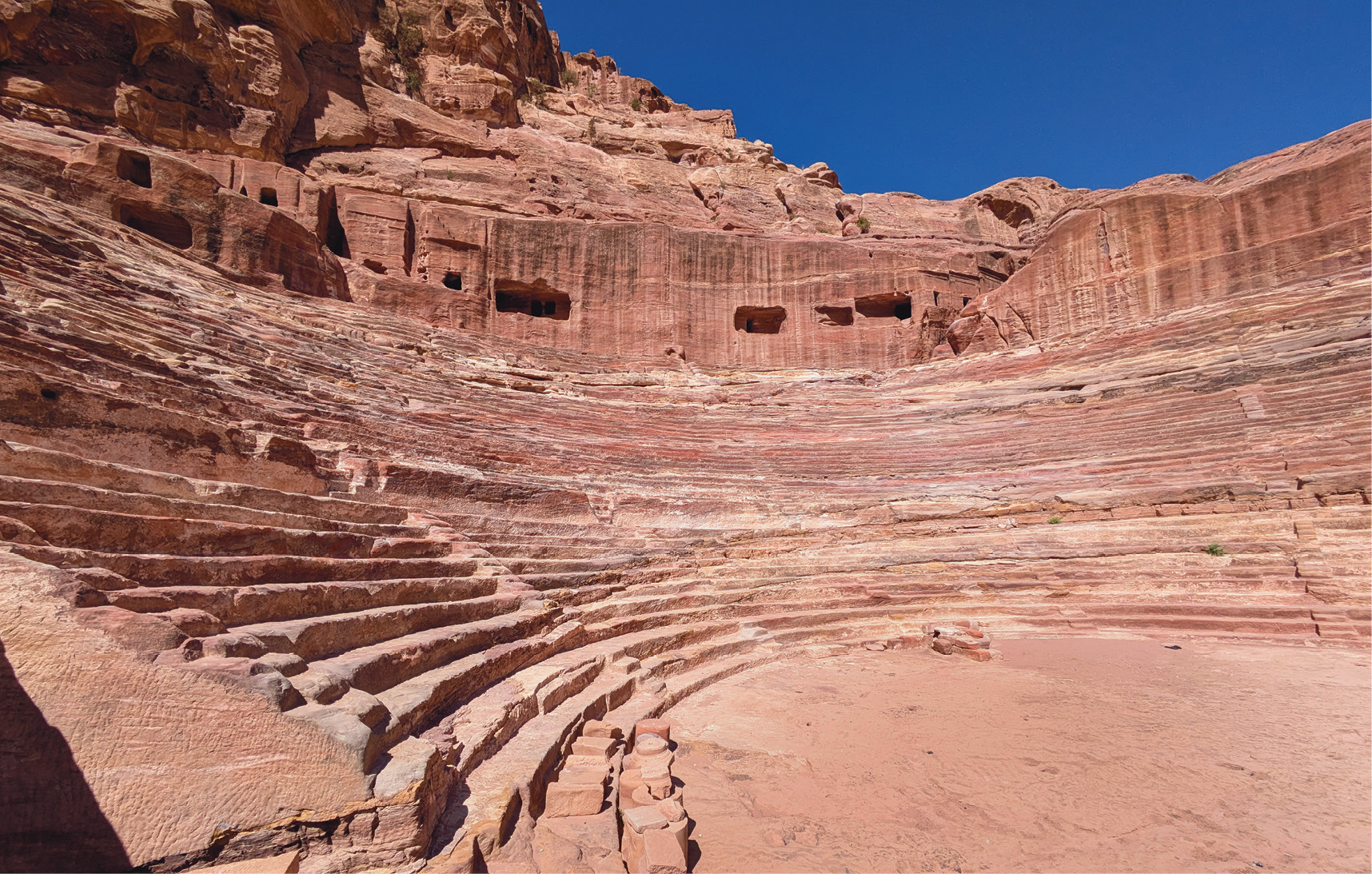
The 1st-century AD Nabataean amphitheatre, designed for public performances and communal gatherings, stands in stark contrast to the surrounding funerary architecture that dominates the eastern section of the Petra landscape. Indeed, parts of this monument even cut into some earlier mausolea, damaging or destroying them. The scale and civic function of the Nabataean amphitheatre may symbolise a broader sociocultural transformation, one in which public space and communal identity asserted themselves over earlier ritual and mortuary expressions of status and memory.
This broader shift in the use and meaning of Petra’s built environment is evident, too, in the construction of the so-called Great Temple, which was probably used as a palace with an accompanying pool, located to the west of the impressive colonnaded street that defines the far western part of the Petra complex. The Great Temple, built during the early 1st century AD under the reign of King Aretas IV (9 BC-AD 40), appears to have been strategically sited at a key transitional point between the civic and funerary zones of Petra. Situated near the western approach into the necropolis, it lay in proximity to several subsidiary valleys that provided a seemingly inexhaustible supply of high-quality sandstone. Investigations conducted by our team have recorded extensive Nabataean quarrying activity in this region, extending for more than 700m (partially based on the graffiti present). As will be discussed below, these quarries offer valuable insight into the labour systems, material procurement, and day-to-day lives of the artisans and workers who sustained Petra’s monumental building campaigns.
The processional route that traverses the Petra basin for approximately 5km reflects a dynamic interplay between topography and architectural expression. As this route progresses through a dramatically shifting landscape, it reveals a hierarchy of mausolea that vary widely in scale, ornamentation, and spatial prominence. Such variation probably reflects differences in patronage, social status, and the evolving ritual or aesthetic values of Nabataean elites. This pronounced display of wealth and authority is particularly concentrated around the narrow eastern and western inlets that converge near the famed Treasury, underscoring the centrality of this area in the symbolic geography of Petra.
Interestingly, interspersed among these monumental tombs are smaller rock-cut funerary chambers, probably serving as family vaults for non-elite segments of Nabataean society, possibly including the interment of artisans, labourers, and slaves. Our field investigations extended into more peripheral zones beyond the main ceremonial core of Petra, where we found a large assemblage of modest rock-cut tombs. These structures may have been used by individuals or families from the lower social strata, too, and indicate a broader and more inclusive use of Petra’s funerary landscape than previously assumed.
Seeing ordinary people through archaeological eyes
As one moves through the Petra complex – from the visitor centre and museum, along the dramatic Al-Siq, past the iconic Treasury, the amphitheatre, and onward to the monumental Great Temple – there is a clear and striking emphasis on wealth, power, and elite status. These grand structures, carved or constructed with immense technical skill, reflect the social ambitions and religious or political authority of the Nabataean elite. But they also prompt an important question: who built these impressive monuments?
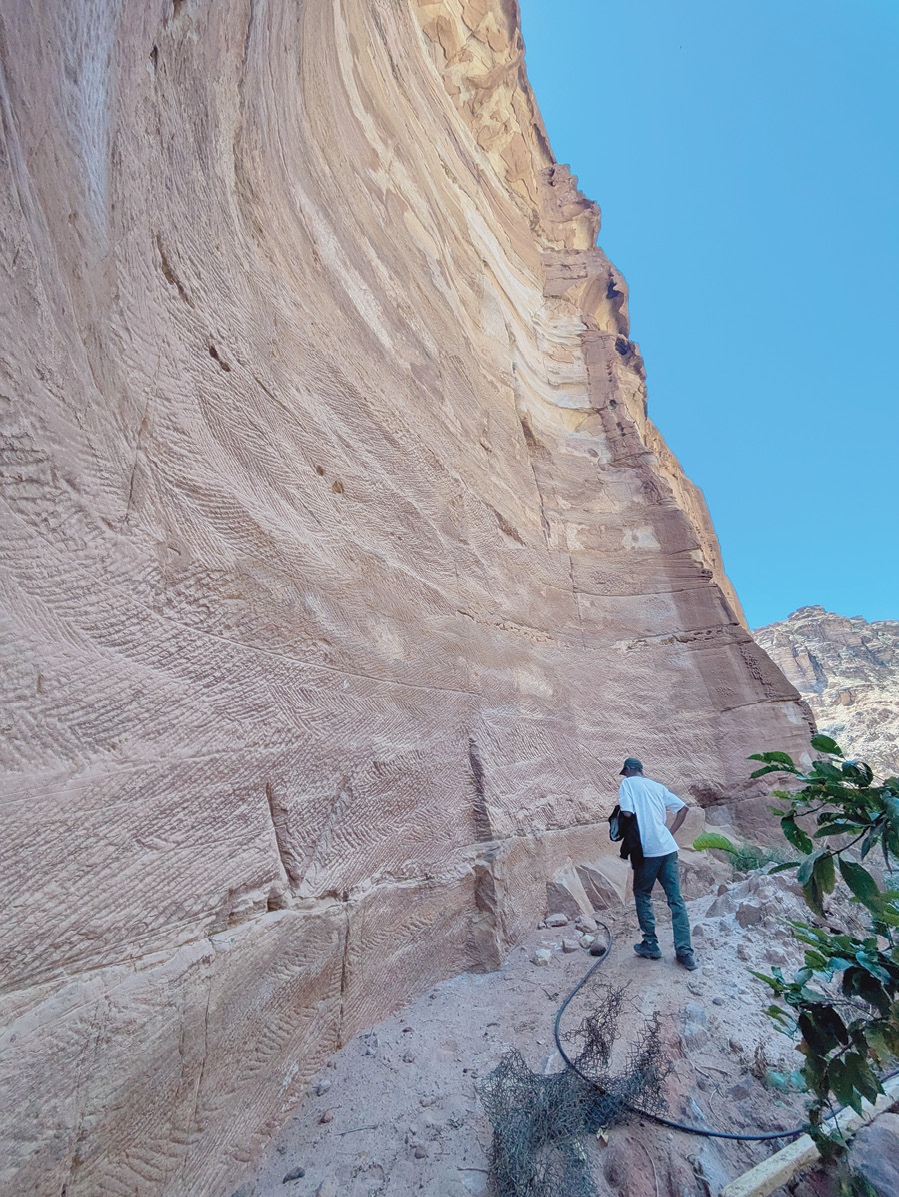
Our fieldwork sought to address this often-overlooked dimension of Petra’s past by focusing on the lived experiences of the ordinary people who made such monumental achievements possible. We concentrated our fieldwork in a narrow, winding side valley to the west of the Great Temple (Wadi As-Siyagh), where one of a number of significant quarry complexes is located. This area offers crucial archaeological evidence of the labour force behind Petra’s most iconic buildings.

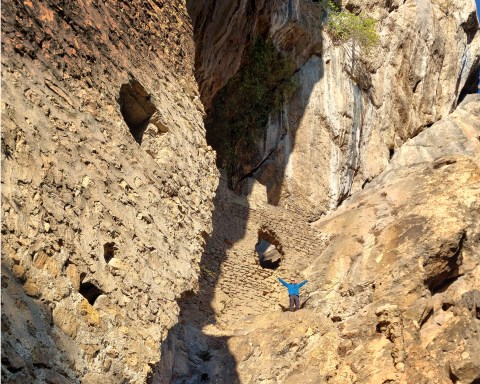
The quarry faces here reveal the extraction techniques used by Nabataean stoneworkers. Blocks were carefully cut from prepared, flattened surfaces located between 70m and 100m above the valley floor. Quarrymen employed a wedge-splitting technique, inserting wooden or metal wedges into evenly spaced drilled holes to detach blocks cleanly from the rock face (this splitting technique is clearly evident). Post-holes carved into the rock to receive timber scaffolding offer silent testimony to the physical danger and technical expertise required for the work. These structures allowed workers to operate above the extraction surfaces and to lower the heavy stone blocks to the valley floor. From there, the stone would have been cut, dressed, and even carved, before being transported, probably by sleds or carts, to nearby construction sites such as the amphitheatre, the colonnaded street, or the Great Temple.
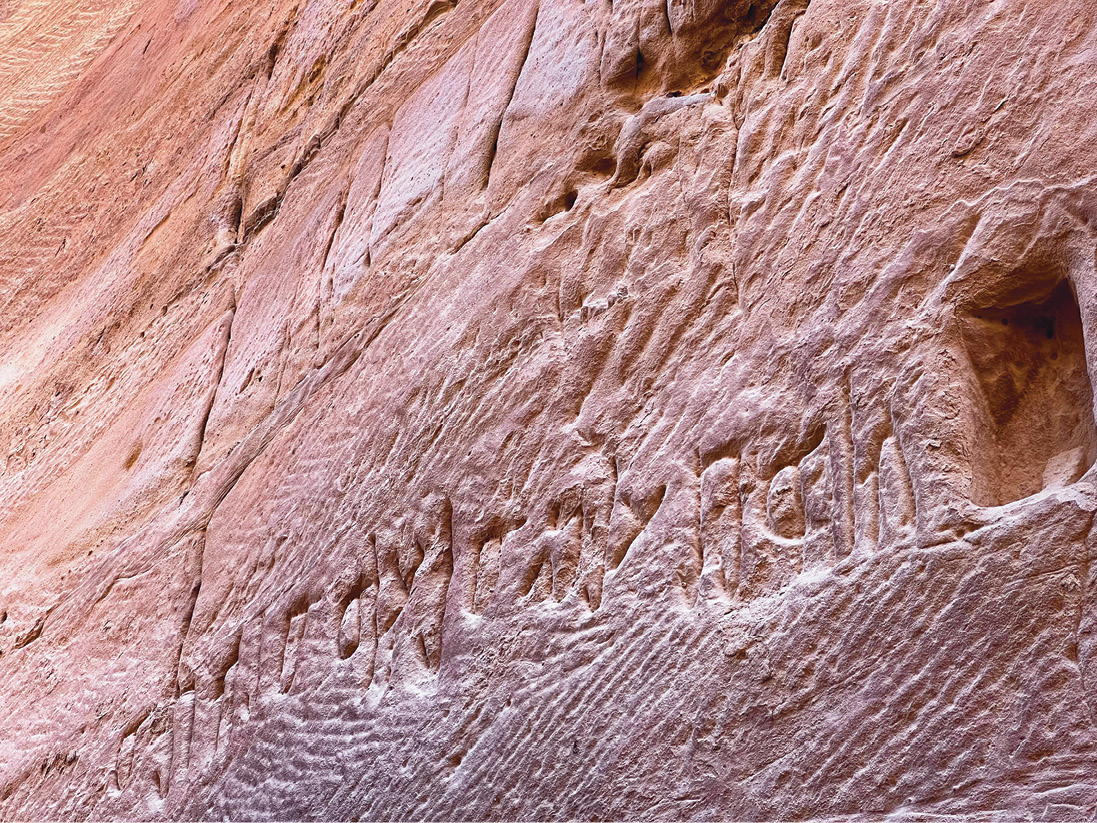
Importantly, these quarry sites also preserve subtle but powerful traces of the quarrymen themselves. Indeed, in some locations, workers left behind graffiti – textual markings carved or scratched into the rock – which may have served as names, prayers, or informal records. Later graffiti, in the form of simple geometric signs, represent family insignia, and were made by modern Bedouin communities, albeit in a dispersed way. In a few rare and poignant instances, weathered memorials suggest the deaths of individuals who may have lost their lives in the course of their labour.

These remnants offer a glimpse into the human stories that underpin Petra’s monumental landscape. While the temples and tombs may reflect elite identity, it is in these overlooked spaces – the quarries, work camps, and transport paths – that we begin to see the hands and lives of the builders themselves. Through archaeology, we are able to recover, at least in part, the lives of those who have traditionally remained invisible in the historical record. Clearly, Petra was more than a city for the dead. Although we can never fully understand the various functions of this remarkable site, many hidden aspects await discovery, including traces of those individuals who assisted in the construction of such a vast urban enterprise.
Further information: For more details, go to: https://whc.unesco.org/en/list/326, https://mota.gov.jo/EN/Pages/Petra, https://visitpetra.jo/en/Openinghours
All images: courtesy of the authors