Subscribe now for full access and no adverts
Before the invention of the railway and the car in the 19th century, the horse offered the fastest means of transport on land for more than 4,000 years. Its role in the military was correspondingly important – especially during the Roman period. The considerable effort and expense involved in keeping and training horses was accepted in order to reap the equally considerable benefits of cavalry. Numerous military units comprised a versatile mix of mounted troops and infantry, including the vaunted Roman legions. Formations consisting entirely of cavalry came to be known as alae, literally ‘wings’, evoking their classic battlefield deployment on the flanks of the infantry.
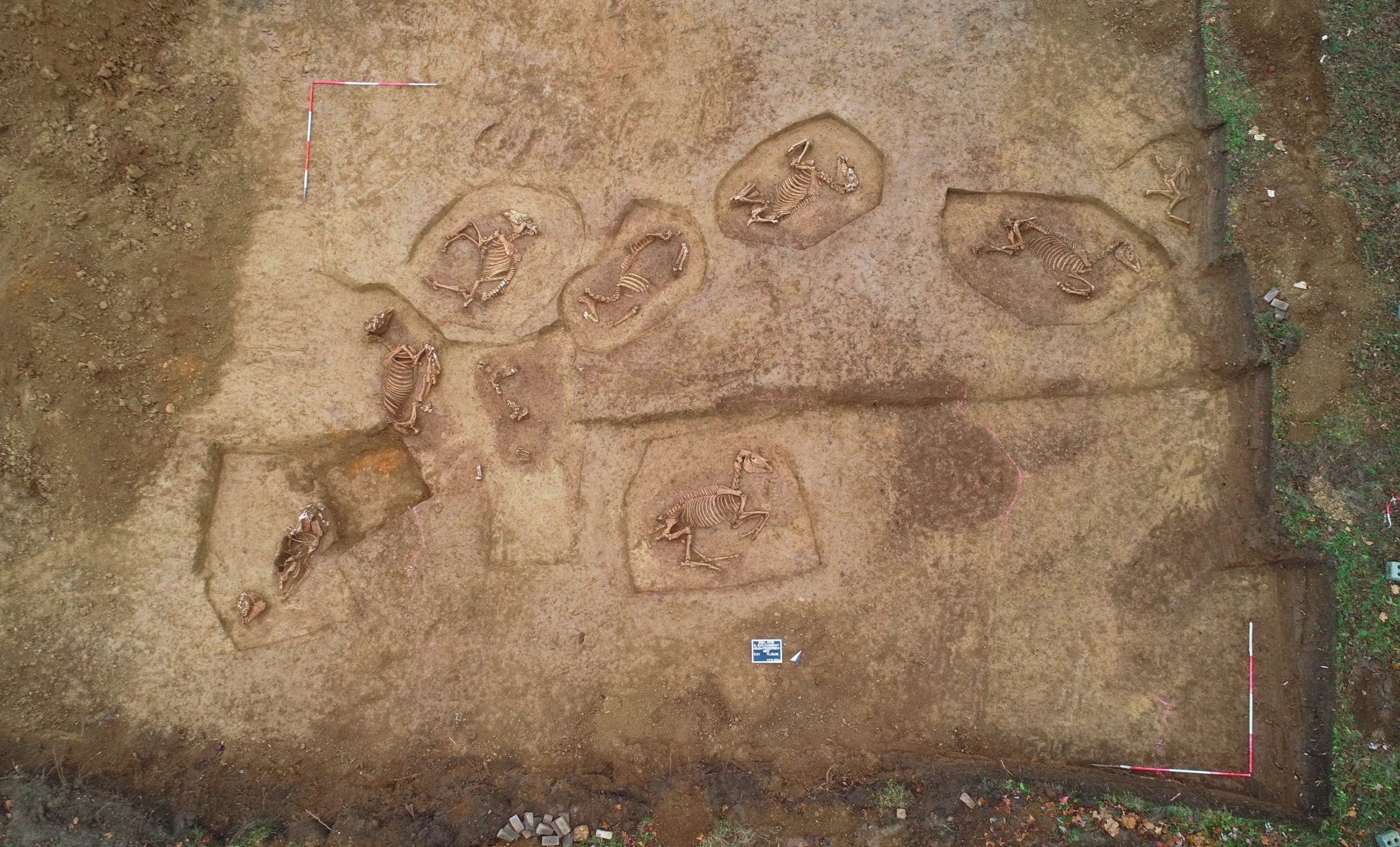
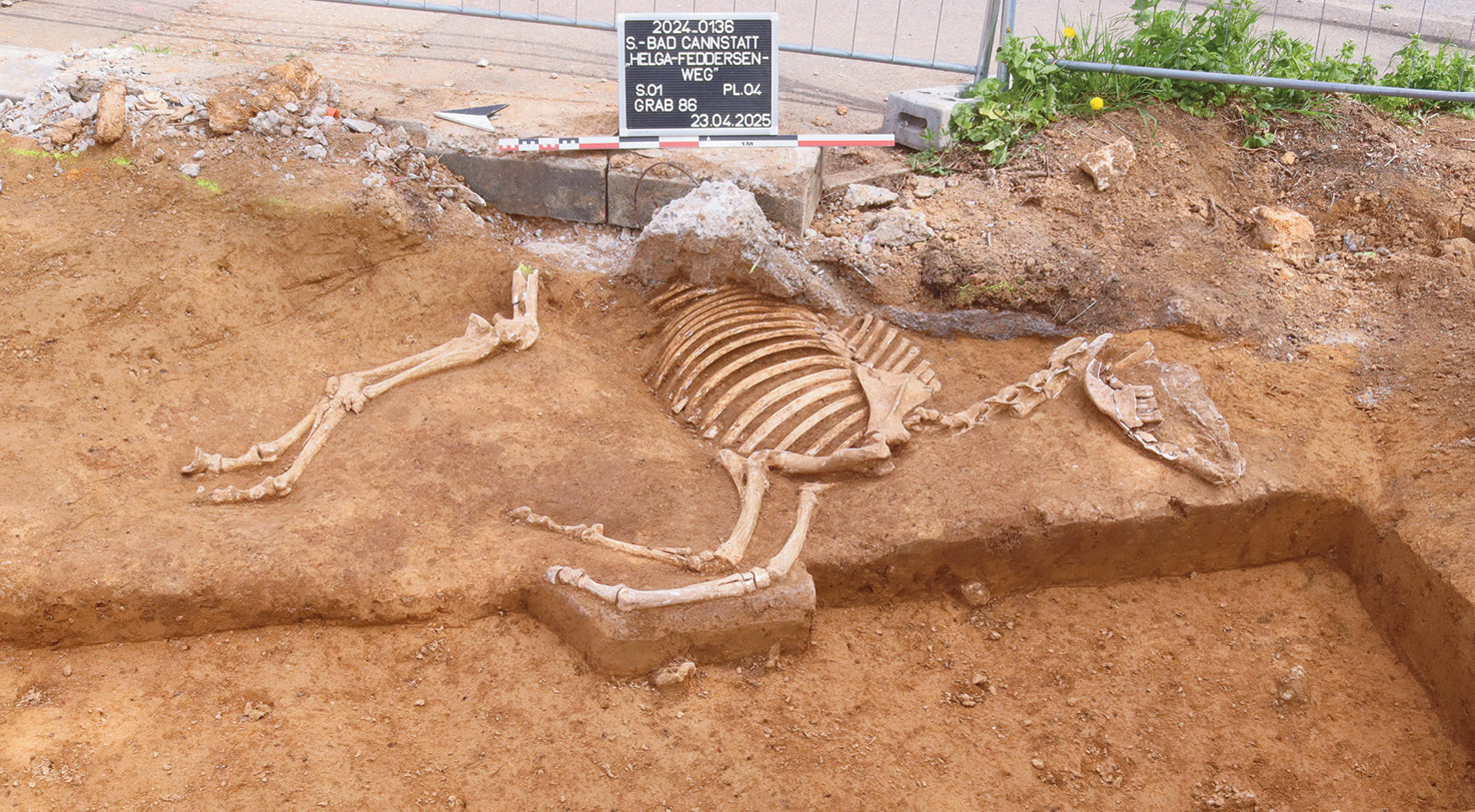
In the Roman provinces, archaeological evidence for mounted soldiers can take many forms, including inscriptions and images (such as on gravestones), structures (especially stable barracks, where riders lived side by side with their mounts), small finds (for example, hoof shoes and snaffles), and, of course, the animals themselves, courtesy of their skeletal remains. An opportunity to learn far more about this last category came in 2024-2025, when the largest known Roman horse cemetery in southern Germany was excavated in advance of development at Stuttgart- Bad Cannstatt. Thanks to this, the skeletons of 109 equids were recovered. Even though our analyses have only just begun, it is already clear that the Cannstatt horse cemetery offers a rare and valuable insight into the life of military riding animals in the Roman provinces – and also into the lives of their riders.
Cavalry at Cannstatt
Roman Cannstatt lay at a pivotal position along a stretch of the Roman frontier, known as the Limes, in present-day south-west Germany. This stretch of the frontier is called the Neckar Limes, after the river that marked its course. The location is favourable for many reasons: it lies on the river, at a transport hub, and halfway between the provincial capitals of Augsburg (known to the Romans as Augusta Vindelicum) and Mainz (Mogontiacum). In addition, springs feeding from the second-largest natural reservoir of mineral water in Europe bubble to the surface here, while fertile layers of loess soil carpet terraces on both sides of the Neckar. All of these aspects were presumably factored in when the Roman imperial border was pushed forward to the Neckar line around AD 100, and a new home had to be found for the most important military formation in the region: an ala quingenaria – that is, a fully mounted unit comprising 500 horsemen. One of its most important qualities was the ability to deploy rapidly in order to control this section of the imperial border. In the event, the fort was founded on the left bank of the Neckar, just back from the lip of the valley slope, providing it with a sweeping view stretching for some 30km to the Swabian Alb mountains.
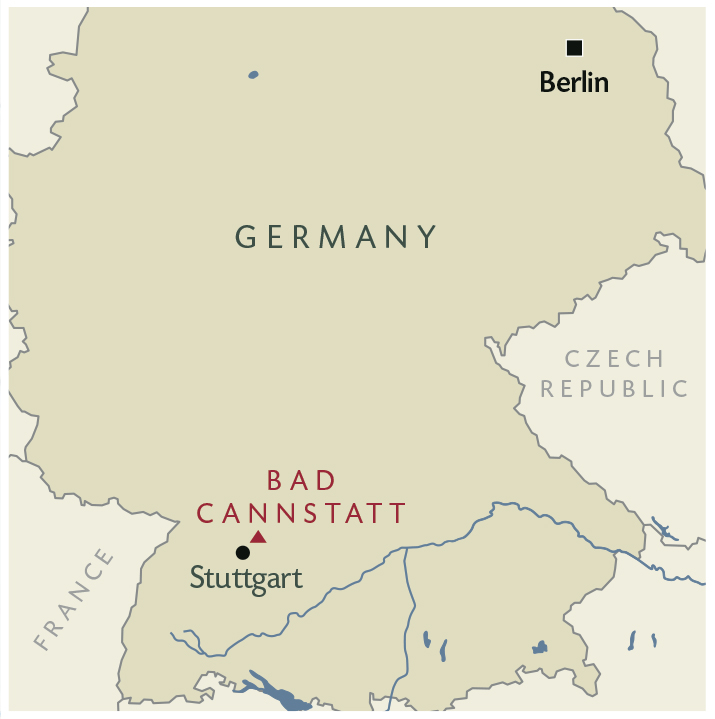

This map shows the line of the Roman frontier or Limes in Upper Germany and Raetia after c.AD 150. Earlier in the 2nd century, part of the Limes ran along the river Neckar to the west. It was to this era that the Roman fort at Cannstatt belonged.
This military presence brought civilians, too, in the form of soldiers’ partners and dependents, while also acting as a magnet for entrepreneurs of all shades, resulting in the development of an extramural settlement – sometimes called a vicus – beyond the fort ramparts. The frontier was not yet static, though. Instead, around AD 150, the Limes in Upper Germania shifted once more, and the unit was duly redeployed around 30km eastwards to a new base at Welzheim, leaving Cannstatt to become a civilian town in the hinterland.
It was in 1894 that the teacher Ernst Kapff discovered the presence of the fort at Cannstatt, with the Reichs-Limeskommission (RLK) determining its outline in 1894-1896. The uncovered walls subsequently became an open-air archaeological attraction, but the opportunity this presented to inspect the remains drew to a close in 1908. That was when the King of Württemberg decided to install a set of barracks for his 26th Dragoon Regiment directly on top of the Roman remains. This new facility covered around 7ha, almost twice the footprint of its 2nd-century predecessor. So it was that, after a gap of 1,760 years, mounted troops were once again stationed in Cannstatt! These royal barracks remain an imposing feature of the district of Hallschlag and, thanks to their slope- edge location, they can be seen from afar, just as the Roman fort once was.

Before the royal barracks were built, some emergency archaeological investigations were carried out, but sadly all of the documentation except for a site plan was lost in an archive fire. As a result, apart from the fort structures investigated by the RLK – such as the ramparts and headquarters building – hardly anything is known about the interior buildings. In its final phase, the fort was 3.7ha in size: enough for a cavalry unit with 500 riders and horses, as well as additional pack and draught animals. However, the excavation plan remains rudimentary and the horses are currently ‘invisible’ within the fort walls. We do not know of any stable-barracks containing urine-pits – a telltale sign that horses were housed within them – such as those found in large numbers within the neighbouring ala fort in Heidenheim (Roman Aquileia), 70km away. We also do not know the name of the cavalry unit stationed in Cannstatt. However, it is generally assumed that it was the ala I Scubulorum, a formation mentioned on military diplomas from Upper Germania at a time when Cannstatt is the most likely candidate for its base. Another clue comes from an incomplete inscription naming an ‘ala I …’ at the successor fort of Welzheim.
Various excavations in Cannstatt have yielded finds associated with equestrianism and horse husbandry, such as bridle parts and hoof shoes made of iron, as well as the characteristic pendants, melon beads, and other fittings that once adorned horse bridles or breast- and tail-straps. However, the total number of these finds is not sufficient by itself to demonstrate the presence of an ala with hundreds of animals.
Where are the horses?
Given the shortcomings in the epigraphic, structural, and artefact evidence, it would be fair to observe that the search for Roman cavalry in Cannstatt has been most successful when it comes to the remains of the animals themselves. At least ten equid skeletons were discovered during excavations in the early 20th century in the vicinity of two cemeteries associated with the fort and later settlement. These burial places were located just beyond the fort ramparts, on the main arterial roads serving the site. Although these animals may have belonged to the civilian phase of activity at Canstatt, a military context can be assumed for a further 13 horse skeletons that were found approximately 50-100m north of the fort in 1927. Although this area eventually became home to the extramural settlement associated with the fort, the disposal of the horses in clay-extraction pits seems to have preceded this development.

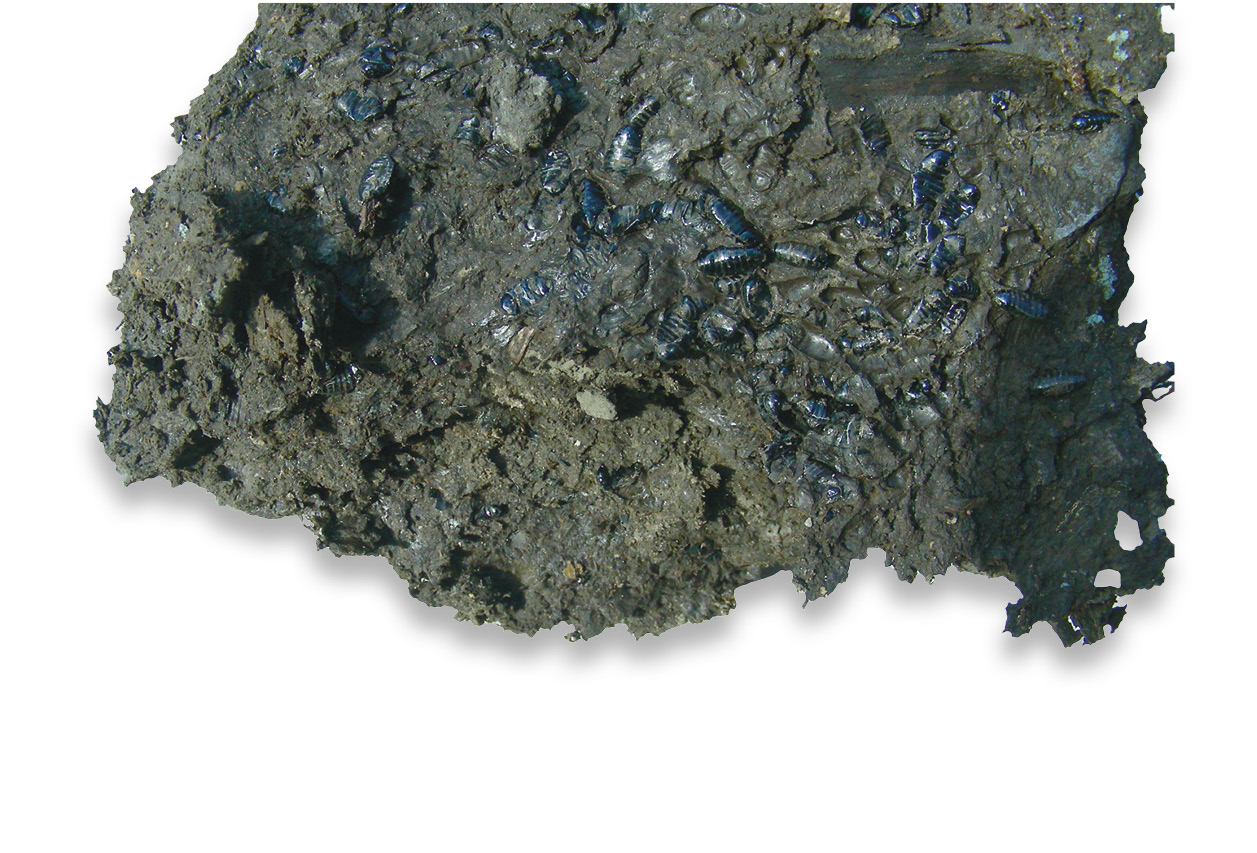
Another find that is likely to be relevant to the search for military horses is a sizable dump of organic material that was encountered in 2014, about 90m from the western fort gate. This was unearthed during an excavation in the civilian settlement, with sampling revealing a high number of grassland species, interspersed with thousands of spelt husks and a mass of fly pupae. It was probably stable manure. This dung had been deposited in a swampy depression in the terrain, where it was used as a levelling layer between two large wooden platforms inserted horizontally to stabilise the subsoil so that a road surface could be laid. Such an infrastructure project can be regarded as a state measure, while the quality and size of the posts and planks indicate that they might have originally been used in the fort. One possible scenario is that they were left over after renovation work there, and so transported to the swamp, where they were used to create a more robust highway. It is entirely conceivable that this work also found an ingenious use for manure that had been mucked out of stable barracks in the fort.
The horse cemetery
In the 1920s, blocks of flats were raised beyond the newly built dragoon barracks, about 300m north of the Roman fort. At least six equid skeletons were discovered there, with a further 12 added to this tally a few years later during road-building nearby. These discoveries prompted the conclusion that this must have been the site of the military horse cemetery. Indeed, the location lent itself to this role: to the south-west and north-west of the fort, the civilian extramural settlement was developing along the main roads; to the south-east, the slope running down to the Neckar left little usable ground; the space necessary for keeping horses only remained available to the north and north-east. Logically, then, features such as the parade ground, pasture, and the horse cemetery should lie somewhere thereabouts.
That is where matters rested until 2024, when the 1920s apartment blocks were demolished, allowing a 1.7ha area to be redeveloped. As further archaeological finds and features associated with the cemetery were expected within this plot, a rescue excavation was mounted. Even allowing for the expectations that horse remains would be found, a surprising number of skeletons were unearthed. This was despite the fact that the entire site had been severely truncated in modern times. Excavations revealed that the Roman ground level had been lost over a large area, probably resulting in some skeletons being completely destroyed. Others, which had been buried in deeper pits, were no more than the depth of a spade head below the modern surface. While the original size of these pits can no longer be determined, it seems likely that the horse carcasses would have been buried 2m or more deep, in order to protect them from scavenging animals. If so, it provides a sense of how much soil was later removed from the site.

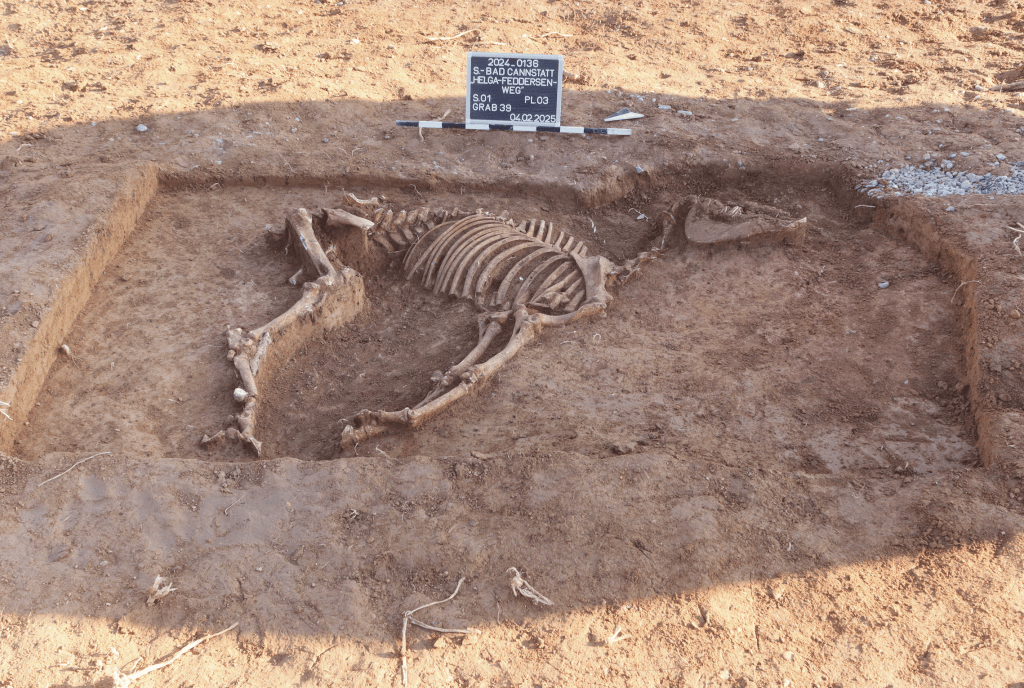
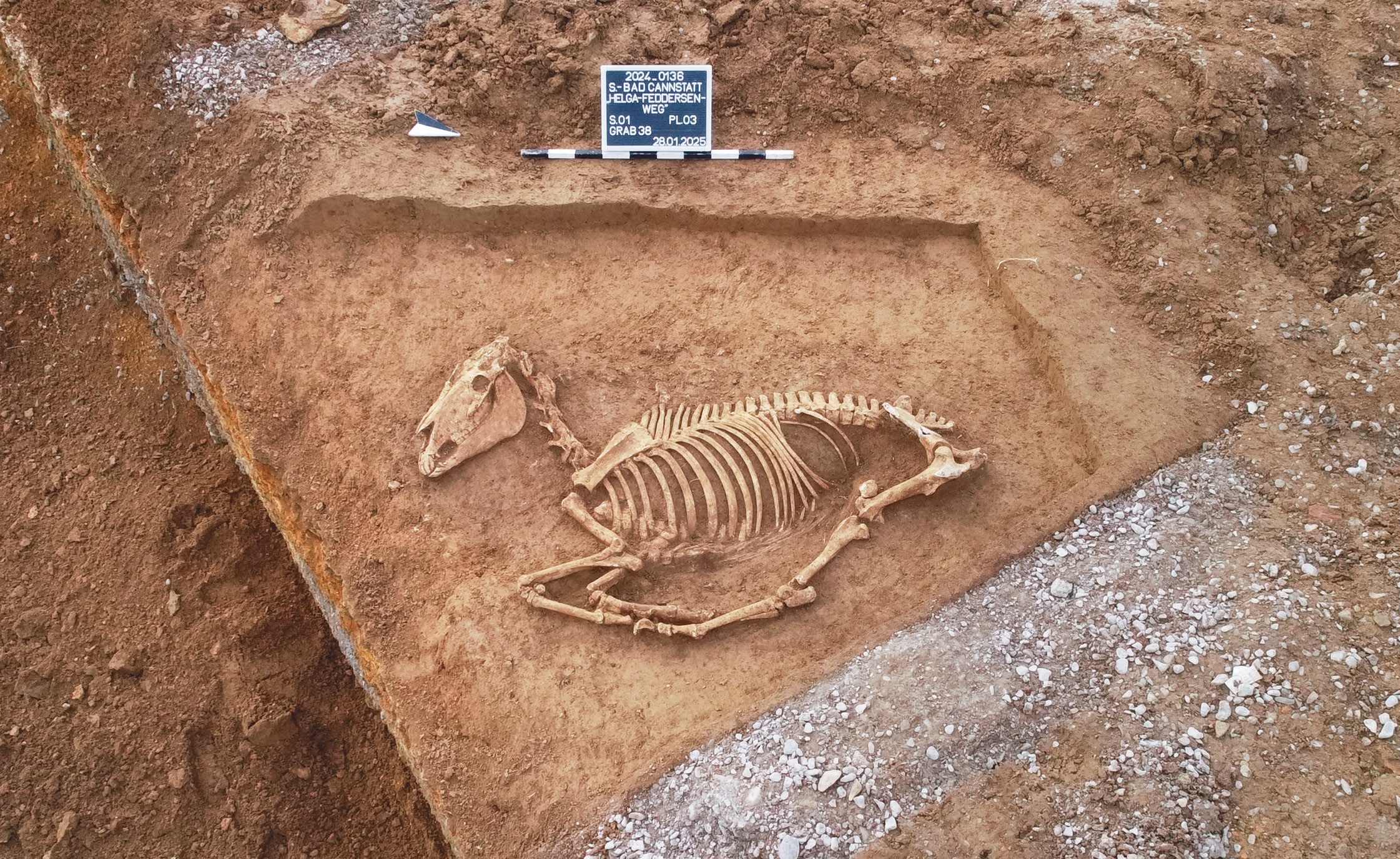
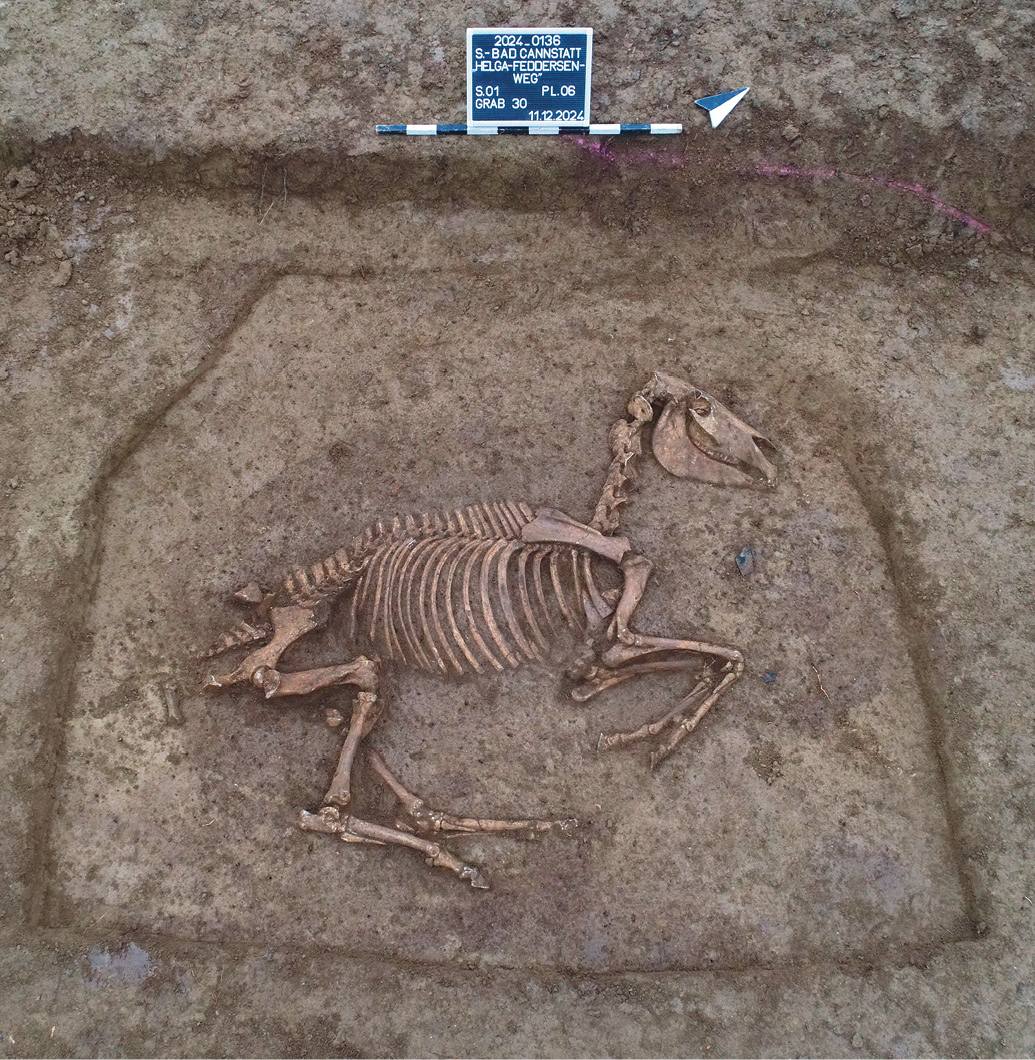
The 2024-2025 excavation revealed some 109 equids in an area of around 3,500m². To the north and east, the edges of this horse cemetery were not found, while to the west the burials broke off at a distance of approximately 200m from the Roman extramural settlement. Even allowing for some skeletons having been completely removed by modern disturbances, the excavation plan shows that the density of burials in the horse cemetery was probably not uniform. Instead, there appear to have been notable clusters in certain places. Despite this, the individual pits rarely intersect with each other, indicating that the burials were marked above ground, probably with earth mounds, and perhaps also plaques of some kind. Most of the skeletons were buried individually in pits, with only a few appearing in pairs. The absence of ‘mass graves’ containing numerous carcasses indicates that the animals died over a prolonged period, and not during a single high-casualty event such as a battle or epidemic.
It is currently thought that the majority of the 109 equid skeletons were buried over the course of about half a century, during the period when the ala is believed to have been in residence. Theoretically, about 700 animals would have been available to the unit at any given time, ensuring that there were spares to replace animals that were injured, became sick, or died. Working from this figure, it quickly becomes clear that the excavations can only have uncovered a small proportion of the former military horses that served with the unit at Cannstatt.
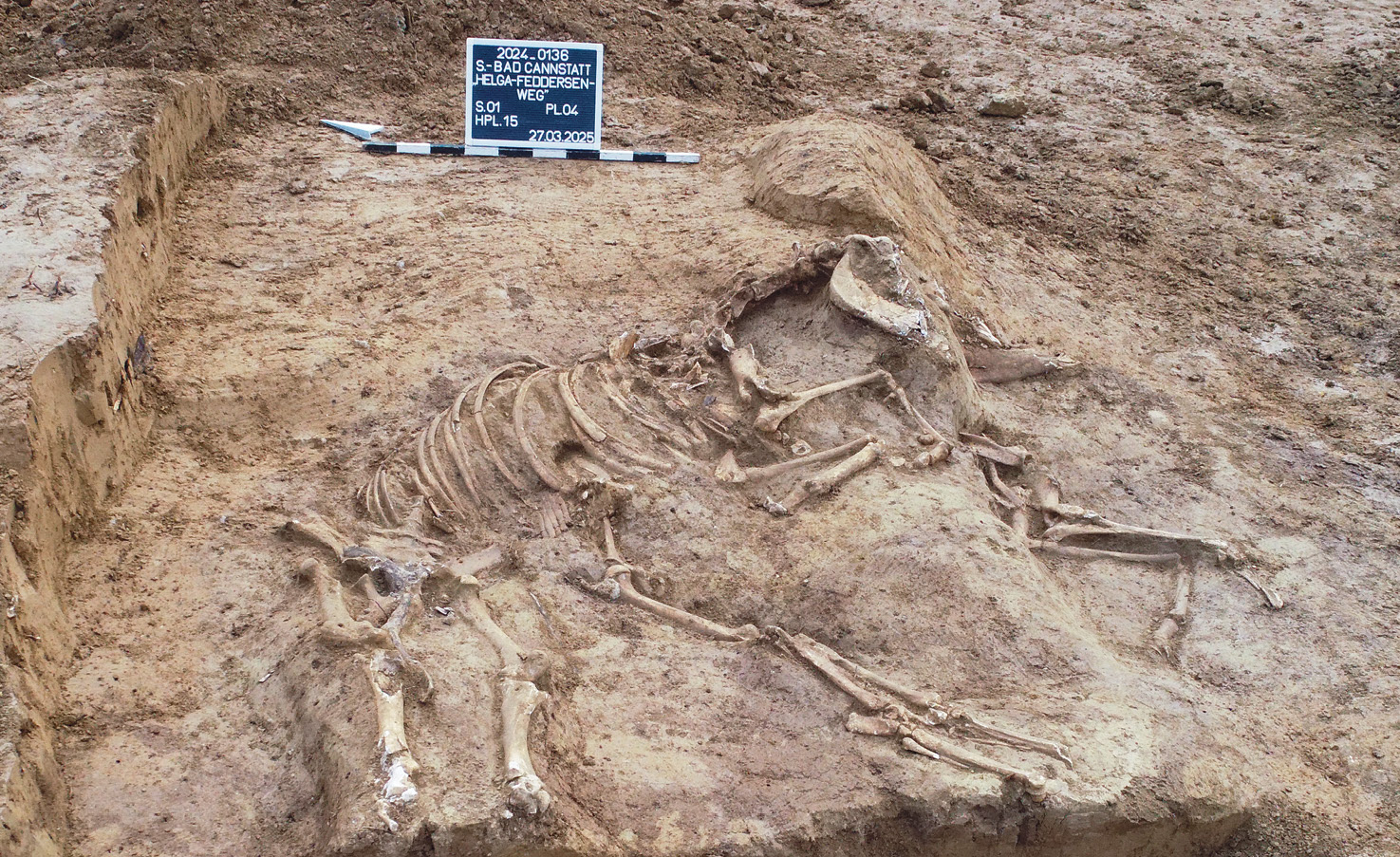
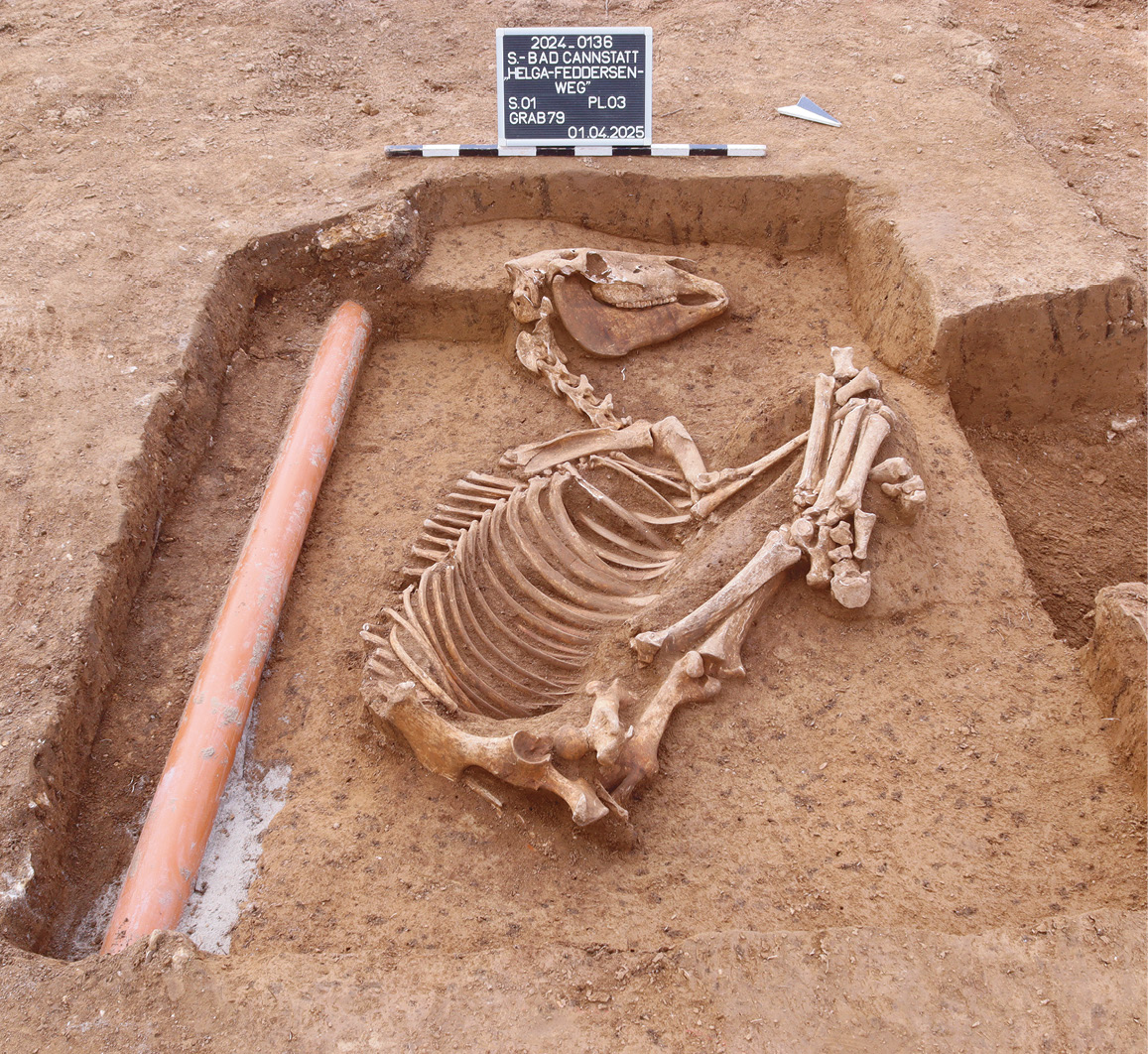
In general, the horses were buried lying on their side, with the arrangement of their legs varying from sharply bent, to bent slightly, to stretched out fully. It can be assumed that in many cases, sick animals were led to the cemetery from the fort and then put down on site, so that carcasses weighing 300kg or so did not have to be moved further than necessary. Even so, there are clear signs that this approach was not always possible. For example, some horse skeletons have limbs that had been unnaturally stretched. It seems likely that this occurred when the front and hind legs of the horse were bound together with ropes, and the carcass was dragged to the disposal site. Because no other recognisable traces of manipulation of the horse remains have been detected so far, it can be assumed that entire animals were usually buried intact.
Another interesting case concerns an animal that was placed in a pit, where it lay partly on its back, with its legs stretching upwards. This unusual position indicates that rigor mortis had already set in before the horse was buried, suggesting that it was not transported to the cemetery until at least a few hours after death. Indeed, the treatment of animals that had already succumbed to rigor mortis can also tell us something about how these horses were perceived. Although a much larger pit was needed for horses with outstretched legs, this additional digging seems to have been readily undertaken, instead of – say – reducing the labour involved by cutting off the animal’s legs. One can recognise a kind of respect in this willingness to take on the extra work.

In general, only a few pot sherds and small metal objects that seem to be random rubbish entered the ground when the pits were backfilled. There is, though, an intriguing exception to this rule. Of all the equids found, just one was interred with a set of grave goods that are characteristic of human burials from this era: two jugs and an oil lamp. These had been carefully placed in the crook of the horse’s left forelimb – presenting a clear sign of special treatment that surely tells us something about how this animal was regarded.
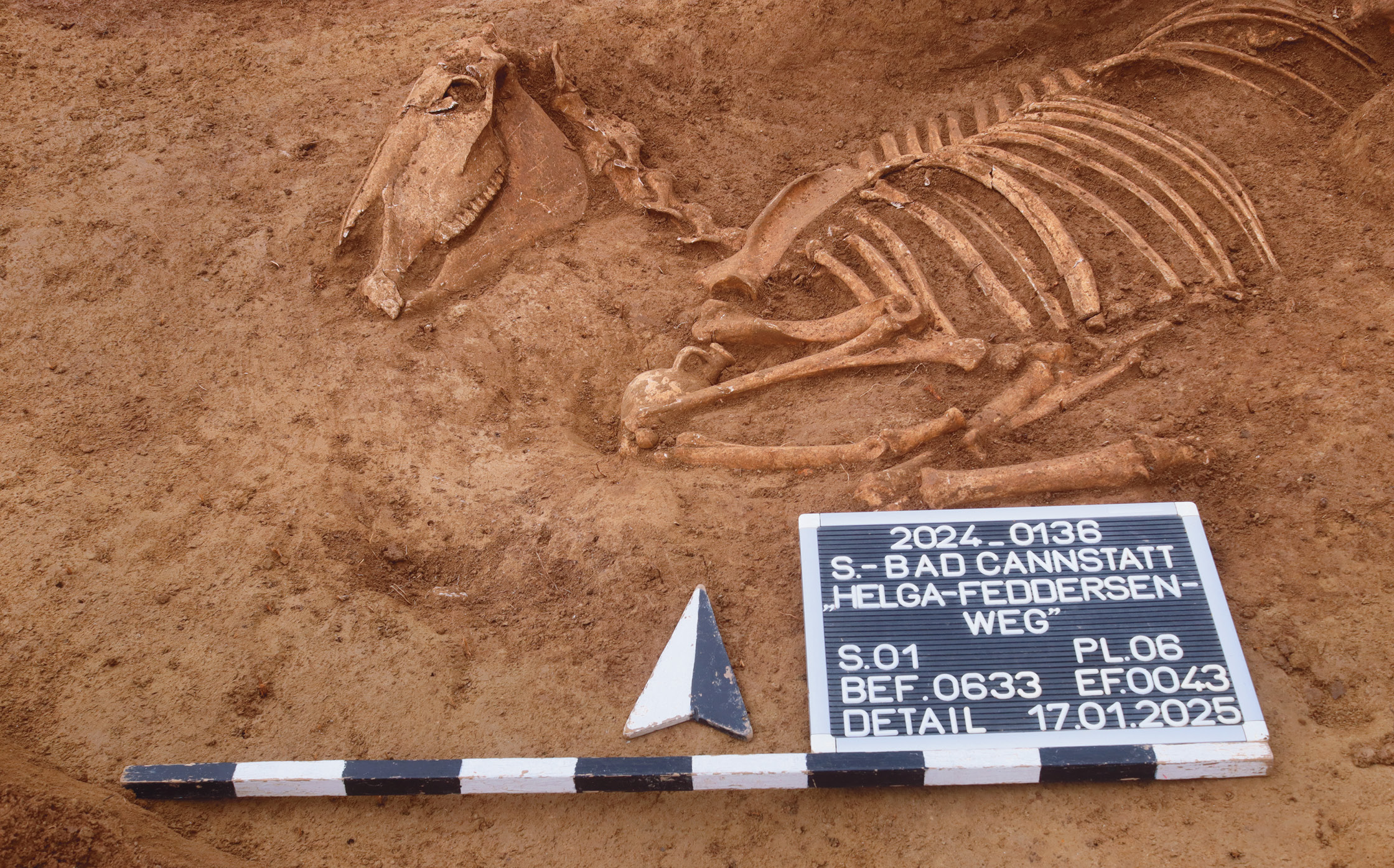
In addition to the excavation results outlined above, zooarchaeological analyses of the equid skeletons will contribute crucial information to our understanding of the site. Although this work is still pending, some initial observations can be outlined here. In particular, while the site has been named a ‘horse cemetery’ for simplicity, it is not yet clear whether all of the equids buried in this place really were horses, or if some were mules and/or hinnies. Even today, specialised military units make use of both horses and donkey-horse hybrids, with the latter particularly valued as pack animals in mountainous terrain. While horses are faster and can carry heavier weights, mules are more sure-footed and less skittish. The Romans would have been well aware of these relative strengths.
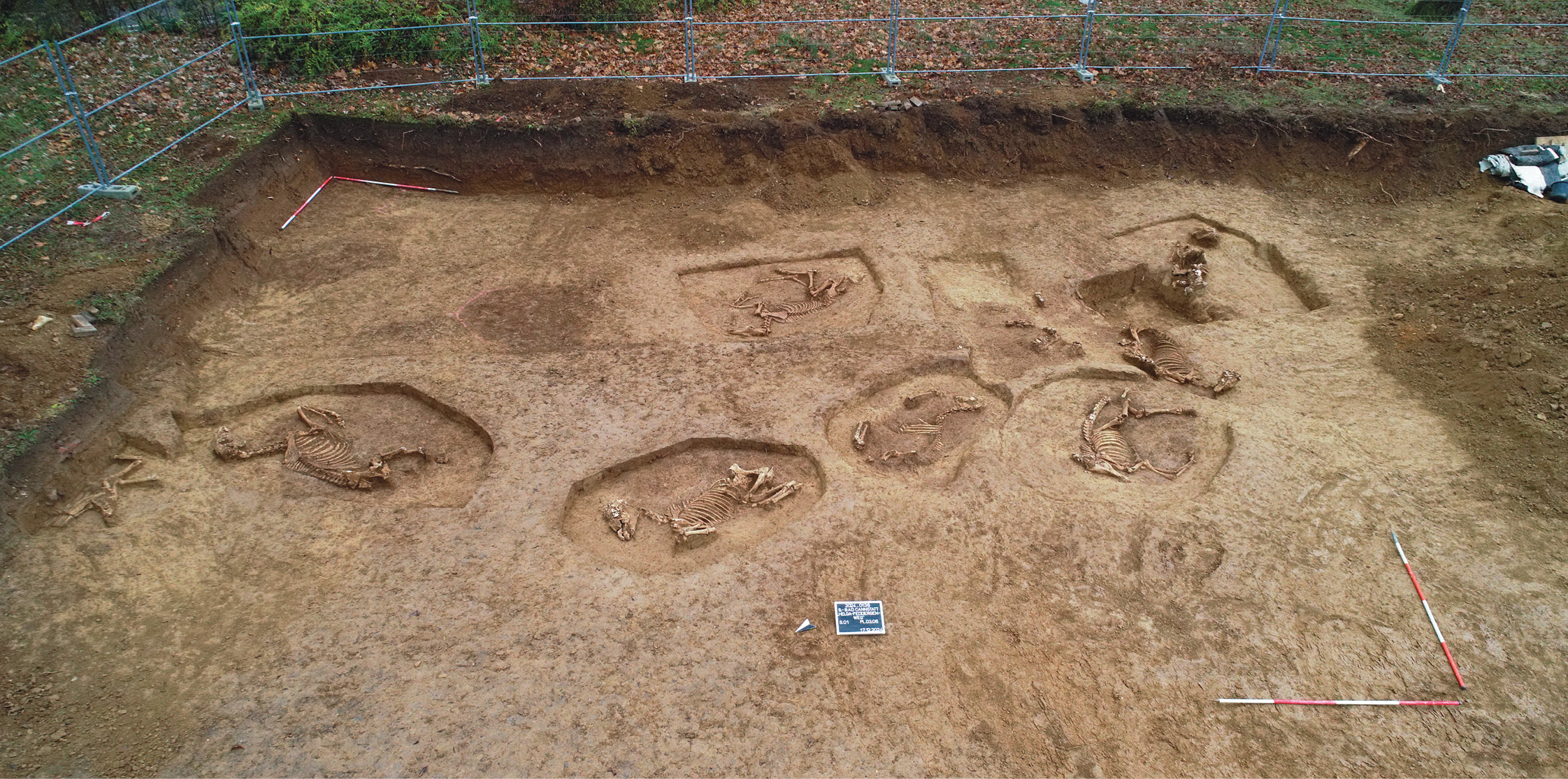
In addition to identifying any mules and hinnies, the archaeozoological investigation will determine the sex and age at death of the animals. Initial examination of a random sample indicates a high number of stallions, which are often recognisable courtesy of their well-developed canines. Most of the skeletons appear to have come from adult animals suitable for military use. A small sample of 22 skeletons has been investigated in more detail so far, and this revealed that only one animal died below the age of 3. This is a first and interesting hint that horses were brought to Cannstatt at a young age to start their (military) training here. On the other hand, foals – which would indicate breeding at the site – are missing from the skeletal record.
Calculating the height at the withers will show whether the Cannstatt horses correspond to Roman horse sizes recorded elsewhere: on average 140cm – about the size of a large pony today. Further insights will flow from this, for example a large variation in horse sizes could reflect a struggle to supply the necessary number of animals. Alternatively, if the cemetery population is predominantly made up of big horses with only small differences in height, it would be a better fit with plenty of animals being available to choose from.
The skeletons are being examined, too, for injuries or signs of physical strain. Because the rider’s life would depend on his horse in an emergency, it would not have been spared during training and use. Equally, as soldiers had to be 6ft tall to join an ala, combining their weight with that of their armour and saddle will have created quite a burden for a horse. That this strain could be reflected in their vertebrae has been confirmed by study of the first sample of skeletons.
Skeletons can provide information about the conditions the animals were kept in as well, and sometimes how they died. In addition, aDNA studies should shed light on the origins and breeding of these animals. This is a subject that there is a keen local interest in, as Cannstatt is a district of the state capital Stuttgart. Its name comes from Stutengarten, meaning ‘mare garden’, which seems to reference a medieval stud farm, while the city also bears a horse on its coat of arms.
Not just horses
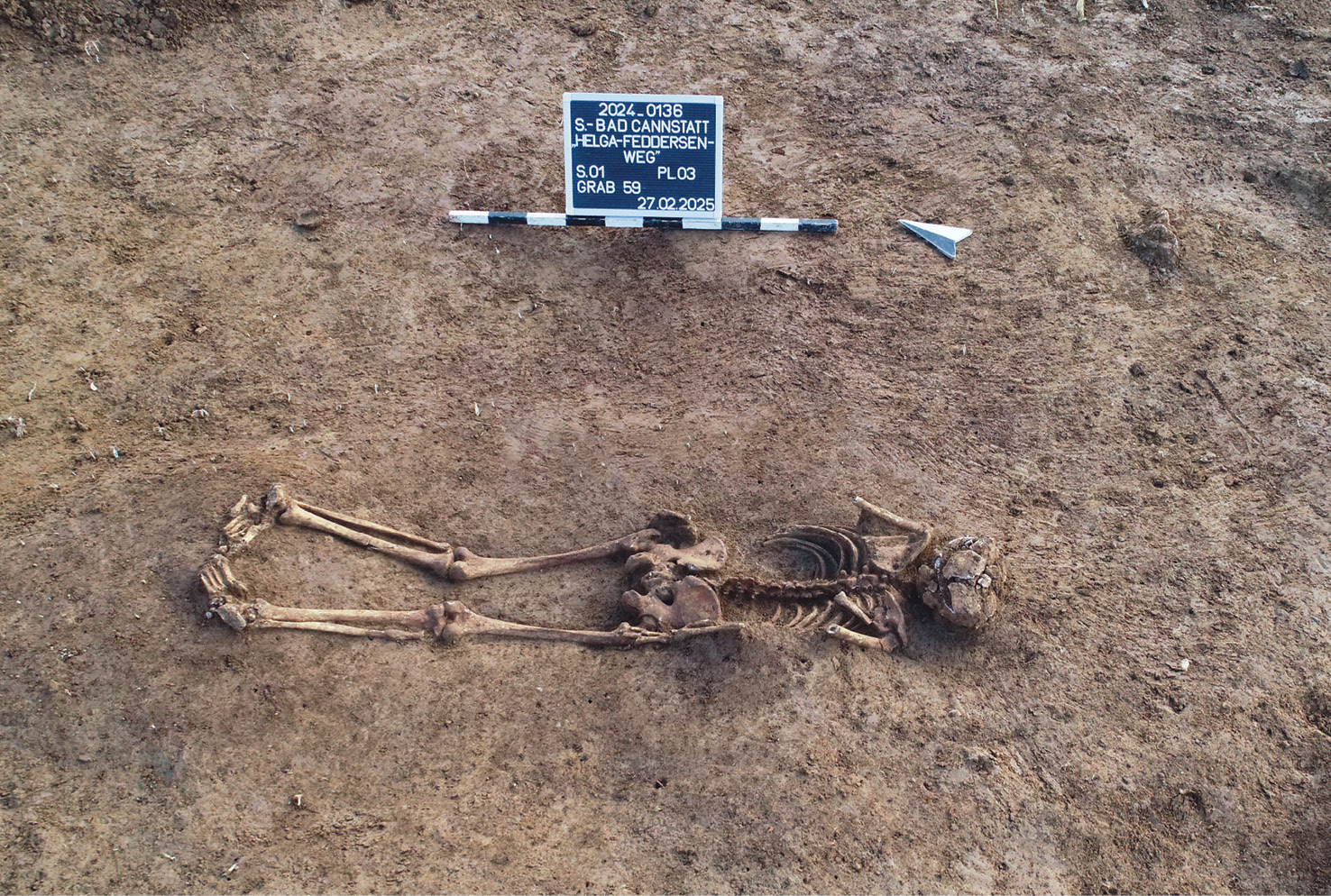
Equids were not the only occupants of the cemetery: a single human skeleton was also found among the horse remains. This individual was an adult male, who had been ‘buried’ face down without any grave goods. Although the results of radiocarbon dating are still awaited, both the context and the depth of the remains are a good fit with the burial occurring during the era when the horse cemetery was in use. ‘Disposing’ of people, whether destitute and without caring relatives or disgraced by a crime, for example, is known to have occurred in similarly remote locations in Roman times, so it need occasion no surprise that a human has been found in the horse cemetery.
Apart from the skeletons, comparatively few finds were encountered during the excavation. Many of those that were recovered came from the backfill of a 15m-long dip in the ground. The high density of finds there, which include chunks of pottery and some well-preserved metal objects of cavalry type, is particularly striking when compared to the almost sterile backfill in the horse pits. It is possible that this material originated in the fort, and was brought in to fill a natural depression – either following Roman-period fort-cleaning, or during the construction of the dragoon barracks in the 20th century, when spoil from the site was spread over surrounding fields.
It is also worth noting that the 2024-2025 excavations were not restricted to the horse cemetery. They opened up an area of 170m by 100m that adjoined the site to the west. No further Roman features were found there. Instead, it appears to have been a large, open area that extended to the rear of the plots forming the extramural settlement. This space, which lies about 200m from the east gate of the fort, could have served as the unit parade ground.
Riders of Rome
While strictly speaking the presence of an ala in Cannstatt was never seriously doubted, it has long been frustrating that the evidence was so sparse. Now the horses themselves have been found in sufficient numbers to make military use the only viable explanation. The special significance of this for Roman studies more generally comes down to the large number of equid skeletons recovered. While the remains of individual horses and mules have been repeatedly encountered in Roman contexts, finding more than a dozen skeletons from a single site is rare, while the recovery of more than 100 specimens has few parallels. Thanks to the large number of skeletons, statistically reliable archaeozoological studies can now be carried out on these Roman military horses in Upper Germania. The results will undoubtedly provide exciting new data concerning Roman mounts, with implications that stretch far beyond Cannstatt.
Acknowledgements: Thanks go to Dr Carmen Liebermann and her team from ArchaeoBW for carrying out the excavations, and to Dr Simon Trixl, Dr Michael Francken, and Dr Andreas Thiel for helpful advice.
All Images: courtesy of Sarah Roth, unless otherwise stated