Subscribe now for full access and no adverts
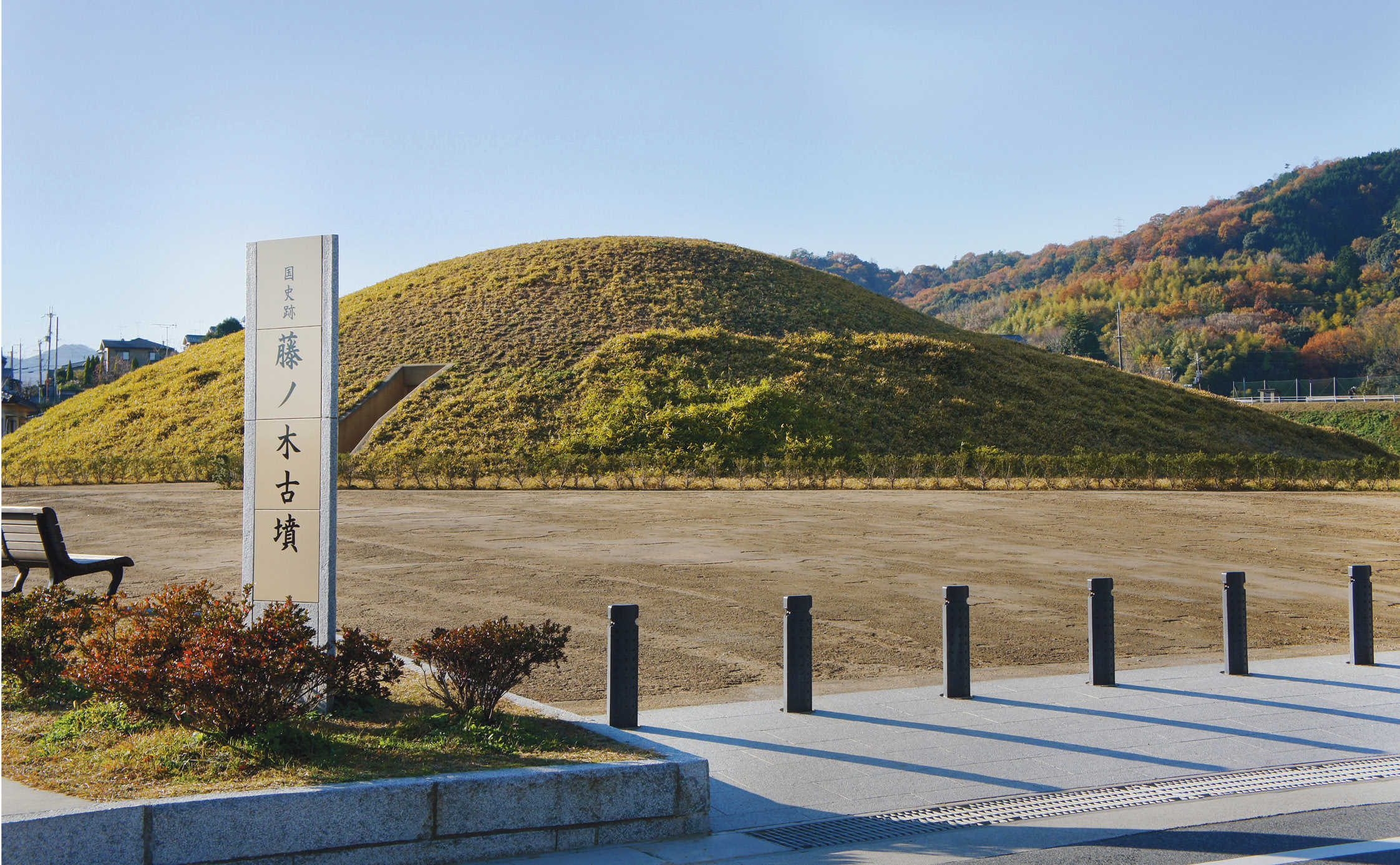
It is estimated that some 160,000 burial mounds (kofun in Japanese, meaning ‘old mound’) were constructed between the middle of the 3rd century AD and the early 8th century. These tombs were the final resting places of Japan’s ancient elites, and form part of a broader East Asian funerary tradition, aspects of which they emulate. Such burial mounds are so distinctive a feature of the archaeology that the era from AD 250-710 is known as the Kofun period. The construction of burial mounds was not restricted to these centuries, though, as important people were being interred within them from the preceding Yayoi period (which spans the Neolithic to the early Iron Age) onwards. Most recently, in 1989, even the Showa Emperor Hirohito was buried beneath a mound with some personal grave goods, unlike the great majority of the population of contemporary Japan who are cremated.

Naming tombs

In the late 19th century, following the restoration of imperial power in 1868, the Japanese government assigned many tombs to personages mentioned in ancient chronicles, specifically the Kojiki (‘Records of Ancient Matters’) dating to 712 and the Nihon Shoki (‘Chronicles of Japan’) drawn up in 720. As the emperor was regarded as divine, these tombs took on special sacred significance. Following Japan’s defeat in 1945, and the Showa Emperor’s renunciation of his divinity, the 900 or so tombs attributed to imperial ancestors came into the guardianship of the Imperial Household Agency as private graves. Access to them continued to be forbidden, a decision around which controversy has swirled. Many questions remain, such as who was buried within? Do the tombs contain proof that the Japanese imperial family was in fact of Korean descent? Why not permit normal archaeological investigations now that they are no longer sacred places?
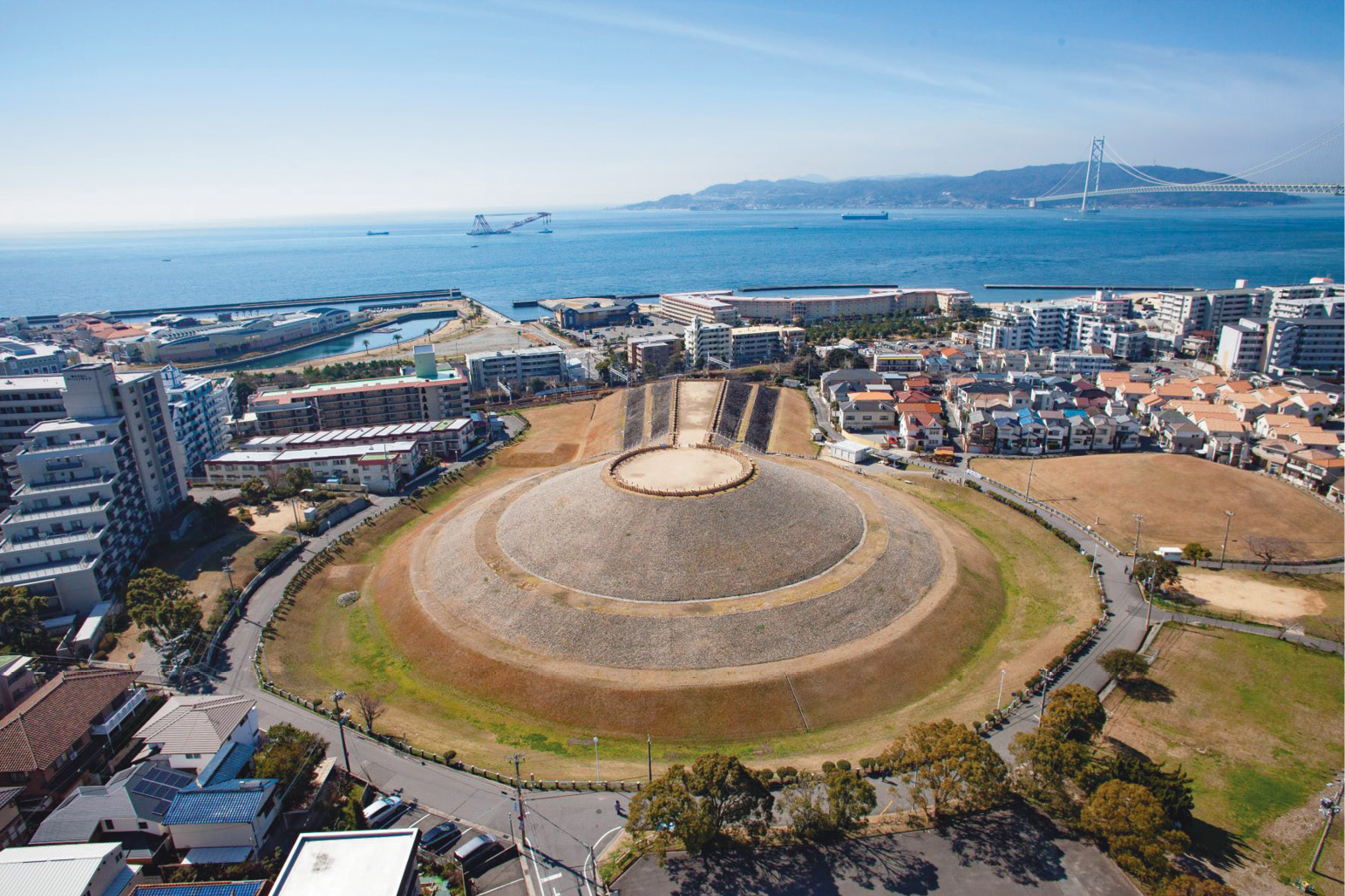
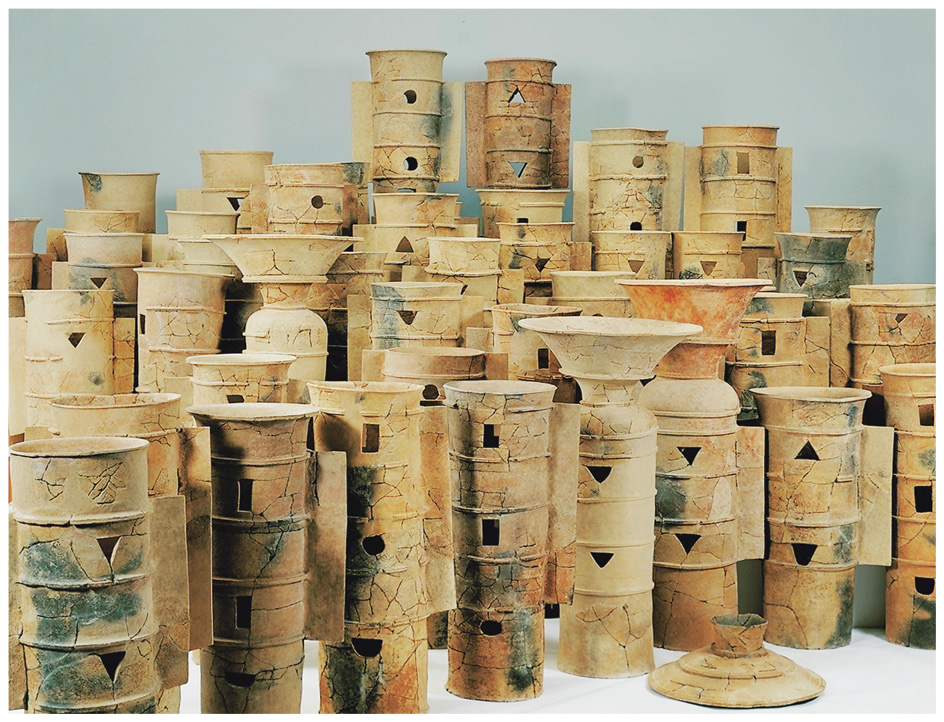
Above: The mound at Goshikizuka lies in the outskirts of Kobe and has been reconstructed to look as it did in the 5th century AD. It dominates the maritime approaches to the port at Naniwa. It was associated with a large quantity of terracotta objects known as haniwa (below). Image: Kobe City Board of Education
In 2019, two large tomb clusters on the Osaka plain, at Mozu and Furuichi, which include massive ‘keyhole-shaped’ mounds attributed to the semi-legendary emperors Nintoku and Ojin, were inscribed as UNESCO World Heritage sites. At 486m long, the mound attributed to Nintoku is one of the largest burial monuments of the ancient world. The nomination dossier submitted to UNESCO used both the names of the people purportedly interred within, as well as the local topographical names preferred by archaeologists (in the case of Nintoku’s tomb, Daisen, and in the case of Ojin’s tomb, Konda Gobyoyama) – although precedence throughout the dossier was given to the former. Despite recent official statements suggesting some change in policy, access continues to be largely denied to anyone beyond the Imperial Household Agency.
The two clusters of kofun at Mozu and Furuichi comprise a total of 49 tombs. The huge mounds are considered to be a clear expression of the kingly power that emerged in this part of Japan from the 5th to 6th centuries AD. It was from here that the Yamato clan went on to establish hegemony over the other regional polities that developed during the later part of the Yayoi period, to create the first state-level society in Japan, with capitals in Asuka, Naniwa (Osaka), and Heijo (modern-day Nara). The kofun elites knew of their continental counterparts, and the geopolitics of the period linked the Yamato clan with the kingdoms of Paekche, Shilla, and Goguryeo on the Korean peninsula, as well as the succession of dynasties that ruled China between the fall of the Han and the establishment of the Tang. Korean and Japanese rulers emulated the Chinese court, adopting Chinese writing and legal systems, as well as – from the middle of the 6th century – Buddhism, palace architecture, and more. Japanese elites were buried with elaborate grave goods that would have been instantly recognised in Korea: bronze mirrors, prestigious accessories, and – from the 5th century in particular – large quantities of iron armour, weaponry, and horse trappings. The result is a display of conspicuous consumption on a huge scale for a country that was largely dependent on importing iron ingots from the Korean peninsula.