Subscribe now for full access and no adverts
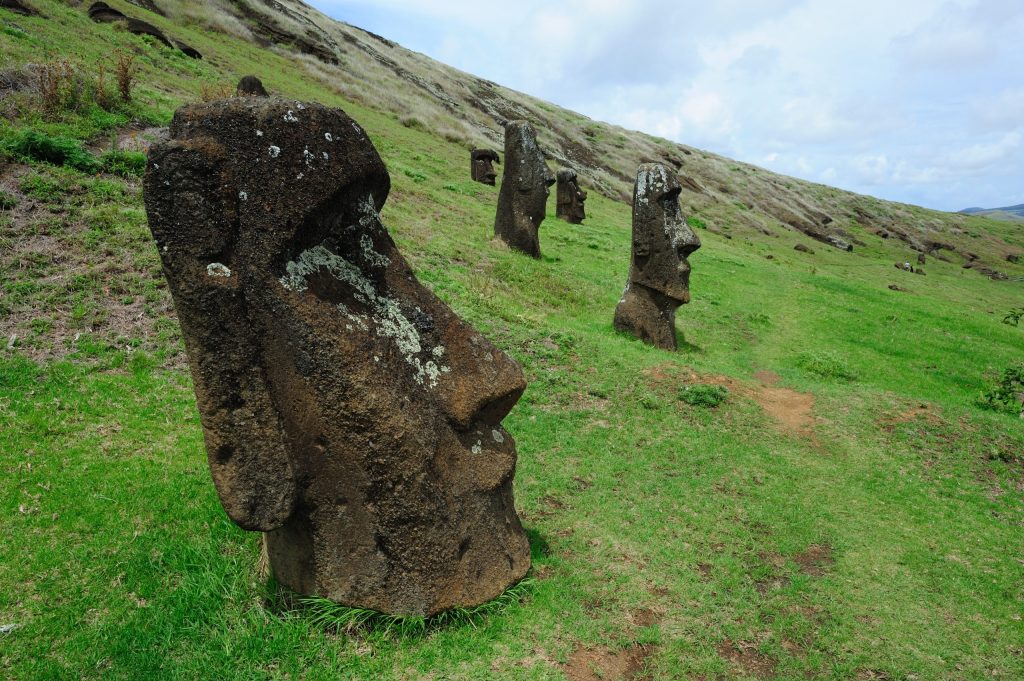
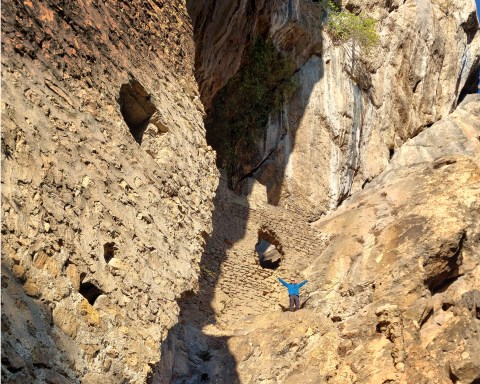
Easter Island (Rapa Nui) is famous for its monumental stone sculptures, known as moai. More than 1,000 have been found across the island, and over 95% of these figures were made in Rano Raraku, a quarry on the slopes of the volcanic crater known as Maunga Eo. In 2022, a fire at the quarry sparked concerns about its preservation. In response, Carl Lipo from Binghamton University and Terry Hunt from the University of Arizona led a team that collected thousands of photographs of the quarry’s landscape using a small drone. Feeding these into photogrammetric software, the team pieced together the first high-resolution 3D model of Rano Raraku (below).
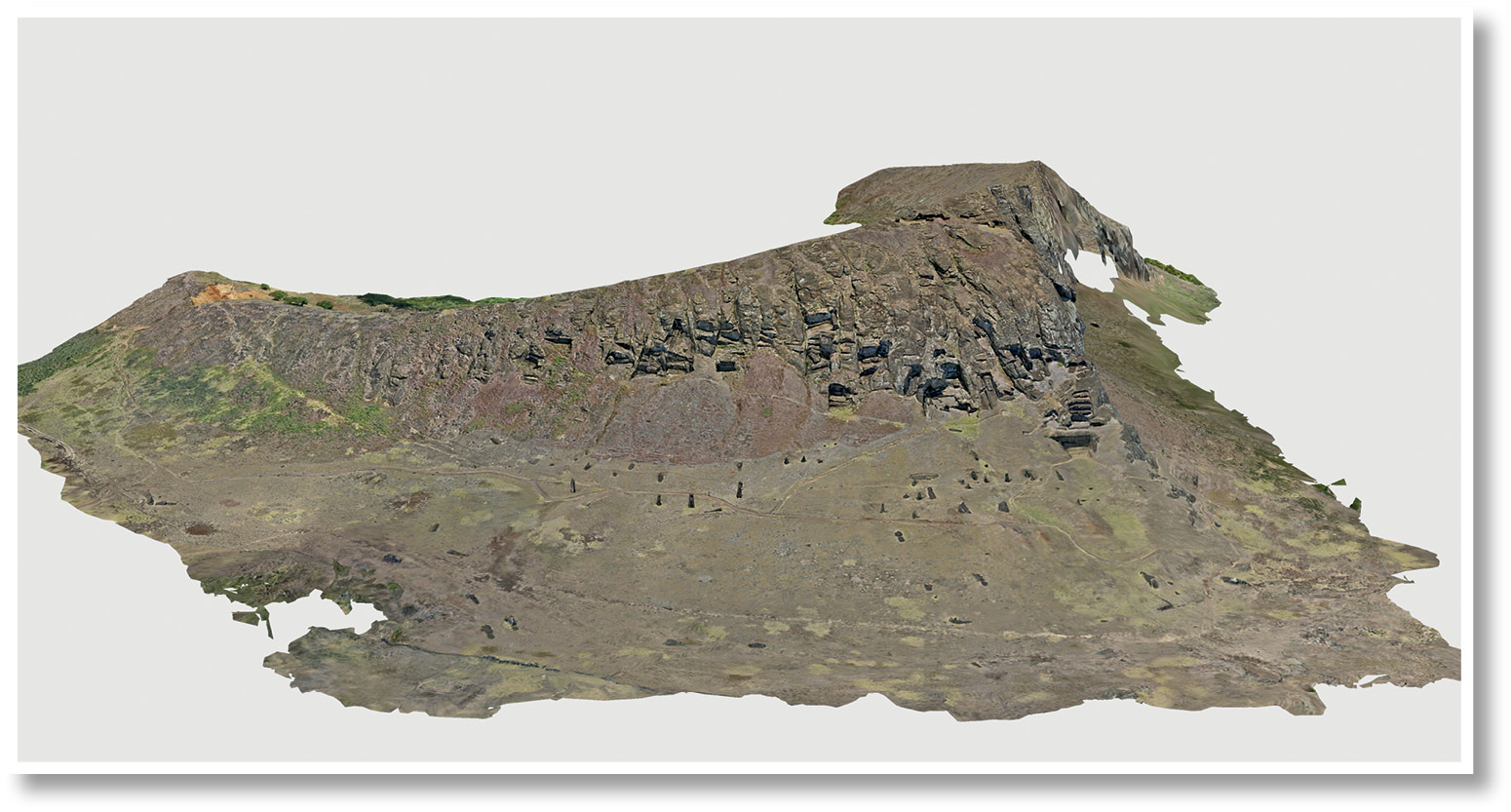
This model enables detailed study of the site, which was not previously possible. In a recent paper published in PLOS One (https://doi.org/10.1371/journal.pone.0336251), the team used the 3D model to record 426 features representing moai in various stages of completion, 341 trenches cut to outline blocks for carving, and 133 quarried voids where statues had been removed. They also identified several other features likely to be related to the transport of moai down the steep terrain.
The analysis has identified, too, at least 30 distinct ‘workshops’ that contain varying combinations of quarrying methods and carving techniques. This discovery aligns with hypotheses that multiple individual groups produced the moai, or that kin-based communities worked simultaneously rather than being managed by any centralised power. These findings offer further archaeological evidence that relatively small, non-hierarchical, and decentralised communities were involved in the construction of Rapa Nui’s monumental structures.
It is hoped that the 3D model of Rano Raraku, which is publicly available at https://arcg.is/qu59O1, will continue to help people around the world explore and study this important location.
Text: Amy Brunskill / Main image: Adam Stanford; Inset: Carl Lipo

Please send your images to cwa@world-archaeology.com. They must be high resolution (300 dpi) and in landscape format, ideally 20cm high by 30cm wide.