Subscribe now for full access and no adverts
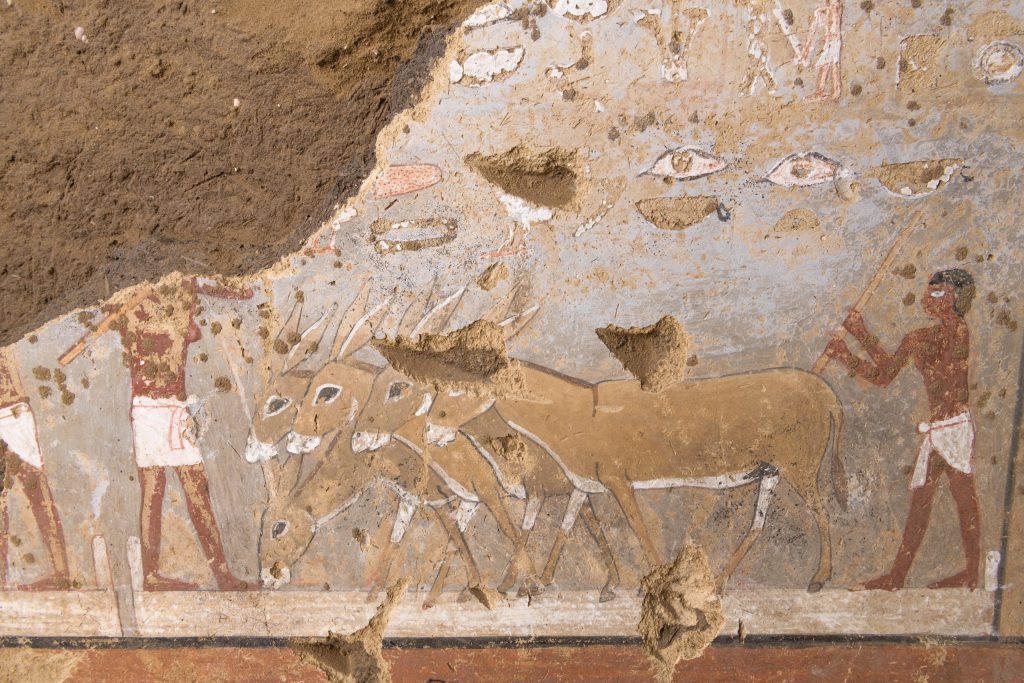
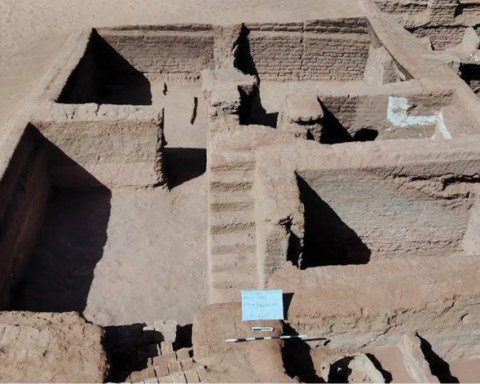
An ornately decorated mastaba has been discovered in the cemetery at Dahshur, the southernmost of the necropolises associated with Memphis, an ancient Egyptian capital.
The tomb was discovered during recent excavations by the German Archaeological Institute (DAI), Cairo, which has been carrying out research at the site for several decades. An inscription on a large false door reveals that the mastaba belonged to Seneb-nebef, an administrator in the palace district, and his wife Idut, who was a priestess of Hathor. The rectangular 8m by 12m structure comprises a long corridor leading to a cult chamber, with seven burial shafts and one more containing ceramics and other funerary objects. The burial shafts have not yet been excavated, but Dr Stephan Seidlmayer, head of the research mission, believes it is likely that other family members were buried in the additional shafts, alongside Seneb-nebef and Idut. Stylistic dating of both the tomb and the ceramics found indicate that they date to the late 5th or early 6th Dynasty, c.2300 BC.
A large part of the tomb has been destroyed by natural erosion due to its position on a slope, but the remaining section preserves a number of subtle paintings on the mud-plaster walls. Among the images are scenes of agriculture (such as the donkeys threshing grain shown here) and from daily life (including a marketplace and ships on the Nile); other images feature servants carrying funerary offerings and a depiction of the tomb’s owner and his wife sitting in front of a sacrificial table. The discovery of a tomb with such fine paintings is unusual in the Dahshur necropolis, and provides valuable evidence of the artistic skills that were present in the area around the Old Kingdom’s capital.
Text: Amy Brunskill   / Image: Bassem Ezzat, DAI Cairo
Please send your images to cwa@world-archaeology.com. They must be high resolution (300 dpi) and in landscape format, ideally 20cm high by 30cm wide.