Subscribe now for full access and no adverts
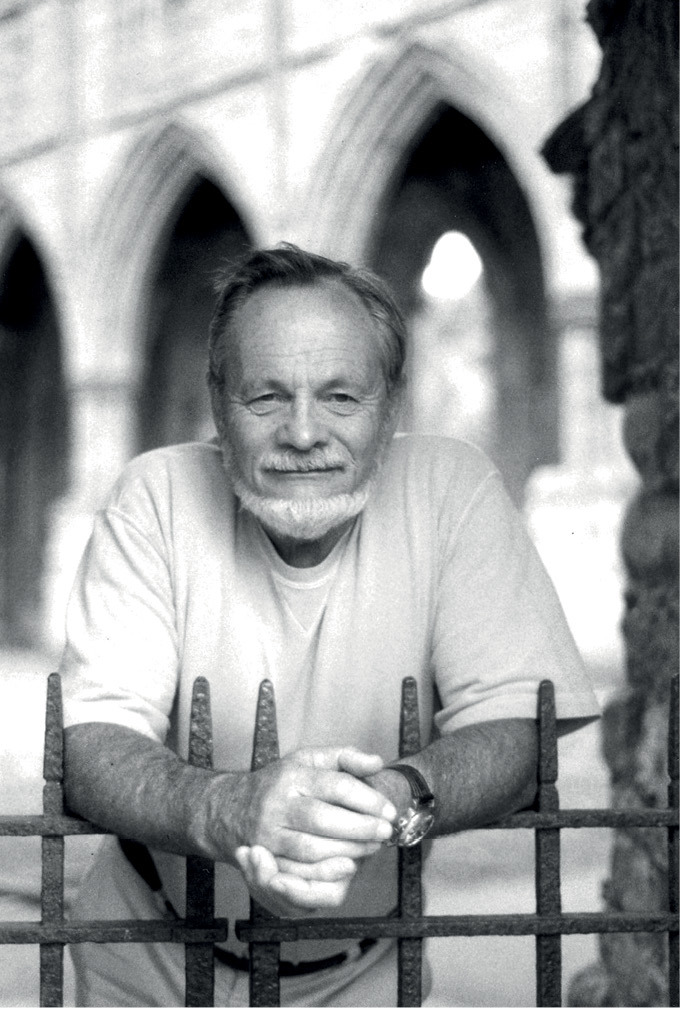
Born in Birmingham, England, Brian was adopted at four days old by parents he called his ‘very great luck’. His father, a publisher who worked with E M Forster, gave Brian and his brother a rigorous education at Rugby School.
It was during his admissions interview at Pembroke College, Cambridge, that archaeology entered the picture. The interviewer produced a list of options and suggested archaeology and anthropology might suit him. Brian signed up with no real expectations. His very first course was taught by Miles Burkitt, a great storyteller who emphasised that archaeology was about people: ‘Yes, dead people,’ Burkitt would say, ‘but people who once loved and fought and died.’ His lectures were laced with scandalous excavation tales, and soon Brian was hooked.
A chance encounter led him to Africa in 1960, working under Desmond Clark as the Keeper of Prehistory at the Rhodes-Livingstone Museum in what was then Northern Rhodesia (now Zambia). It was tough, exhilarating fieldwork. That year, he also visited Olduvai Gorge directly after Louis and Mary Leakey found Homo erectus in Bed II, becoming the first outsider to see it.
Brian remained in Africa until 1965. However, he began to question whether archaeology was his destiny and considered following his father into publishing. He saw himself as ‘perhaps a good second-rate excavator,’ with no patience for lab work. On returning to England, he was invited to lunch at the Athenaeum by Sir Mortimer Wheeler. To his great surprise, Wheeler praised his writing and urged him to use his skills to reach the broader public.
In 1966, Brian accepted a teaching position at the University of Illinois. The following year, he moved to the University of California, Santa Barbara, where he was to remain until his retirement in 2003. He was drawn in part by the ocean – he was a lifelong sailor. On discovering a lack of accessible textbooks, he decided to write his own. In the Beginning (1972) and People of the Earth (1975) were the first. They were soon joined by a growing list. Known for their rigorous yet entertaining narratives, all remain current and in print, now under my long-term co-authorship. These textbooks have introduced hundreds of thousands of students to the subject.
Brian’s second string was trade books, written for the general reader, with a knack for distilling scholarship into engaging narrative. His first, Rape of the Nile (1976), was a history of Egyptian tomb-robbing, commissioned on the back of an article he wrote for Archaeology magazine. It was followed by The Adventure of Archaeology for National Geographic, which was a great boost for him.
Brian’s output was prodigious. He published more than 50 trade titles, covering almost every area and every period of archaeology. Some of his most enduring books addressed climate change. The Little Ice Age, The Great Warming (which landed him on The Daily Show), Elixir, and, most recently, the award-winning Climate Chaos: Lessons on Survival from Our Ancestors, which we wrote together.
Brian had the energy and focus of someone a fraction of his age. He maintained a writer’s discipline: 1,000 words a day, revise, repeat; and don’t procrastinate. He kept deadlines and hated mediocrity, qualities beloved by editors and publishers alike.
Beyond books, Brian wrote numerous features and was a columnist for several magazines, including Current World Archaeology, where his voice was a staple in the 2000s. He was a consultant to the BBC, Time-Life, and the National Geographic Society, among others. An engaging lecturer, he enjoyed speaking to wide and diverse audiences. His remarkable contributions to archaeology led to numerous major awards.
Brian remained active and engaged to the very end, and he was working on several books at the time of his death, which came suddenly on the afternoon of 1 July due to sepsis and other complications. Always brimming with enthusiasm, he was generous and kind, with a brilliant sense of humour. He had a positive outlook, and a very happy home life with his wife Lesley, their daughter Ana, and a menagerie of animals. He was a tour de force, whose life and whose work touched so many of us. Thank you, Brian. We miss your wit, wisdom, and warmth beyond words.
Dr Nadia Durrani is the former editor of CWA and the co-author of
multiple books with Professor Brian Fagan.