Subscribe now for full access and no adverts
The statuette… is intricate and highly detailed…
What is it?
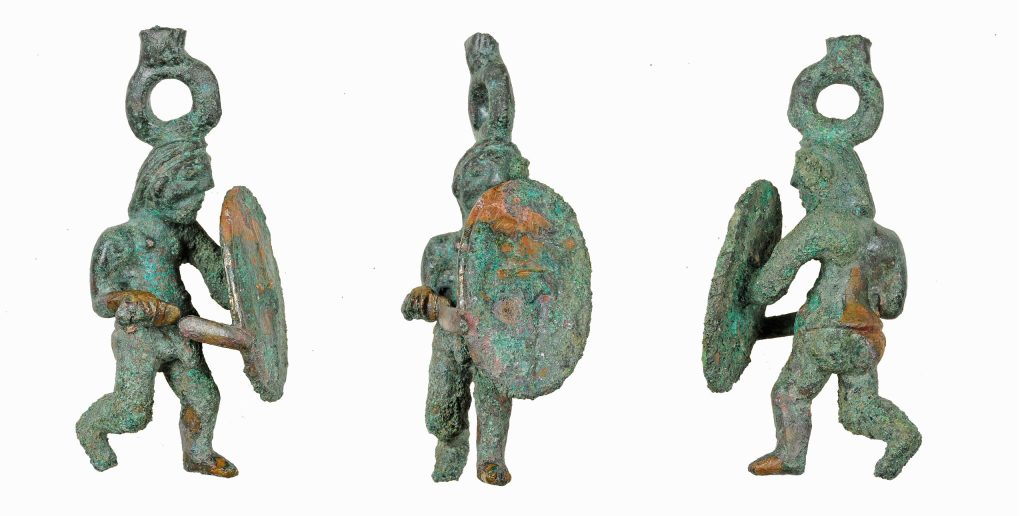
This small, bronze figurine, which measures 7.5cm tall and weighs 55g, depicts a warrior standing in a lunging pose. He holds a sword in one hand and a shield in the other; the typological details of the shield date the figurine to the late 2nd century BC. The figure appears to be wearing chest armour but is naked from the waist down. A loop attached to the top of his head suggests that the object was intended to be suspended as a pendant. The statuette was created using the lost wax casting method, and is incredibly intricate and highly detailed, reflecting the advanced skills of the metalworker who made it.
Where was it found, and when?
The figurine was discovered in June 2024 in a ditch at the Celtic oppidum of Manching in Bavaria, Germany. The large settlement site, occupied from the 4th century BC to the mid-1st century BC, was first excavated in the 1930s and has been subject to a number of extensive excavations since the 1950s. The latest archaeological investigations were carried out 2021-2024 and uncovered more than 40,000 finds, including over 15,000 metal objects, many of them associated with metalworking at the site. After its discovery, the corroded bronze figurine was subjected to X-ray prospection and other analyses to reveal the object’s finer details and find out more about its production.
Why does it matter?
Analysis of the figurine suggests that it was a casting defect. There are no traces of use on its surface, but tool marks on the shield, toes, and back of the statuette reveal that these and other areas were retouched after casting.
The intended function of the figurine remains uncertain. The loop on the figure’s head indicates that it was probably designed to be hung from a chain or necklace, but whether it was purely ornamental, a spiritual figure, or a ritual object is unknown. Several other small bronze sculptures with ring loops have been found at other Celtic sites, but all examples found this far north of the Alps are significantly simpler and more abstract than the Manching figurine. Comparable high-quality, dynamic human depictions from this period were previously only known from the Mediterranean region. However, the style of this warrior and his equipment clearly place him in the Celtic cultural sphere.
The find’s significance is increased by its place of discovery. At its peak, Manching was an important supra-regional hub, home to an estimated 5,000 to 10,000 people, with advanced urban planning, an organised economic system, extensive trade links, and specialised production zones. Despite being one of the best researched oppida in central Europe, only about 12% of the extensive site has been explored to date, and discoveries like this warrior figurine offer important insight into activity here in the Iron Age.
FIND OUT MORE: Further investigations into the origin of the Bronze Warrior are currently under way.
Text: Amy Brunskill / Photo: Bavarian State Office for the Preservation of Monuments