Subscribe now for full access and no adverts
Four thousand years ago, a new material came on the scene: bronze. The desire for this metal connected groups all over Europe and even further afield and sparked a series of social and economic shifts, including the emergence of increasingly powerful and wealthy elites, a surge in interpersonal violence, and new developments in ritual beliefs and practices. The RMO’s latest exhibition, Bronze Age – Fires of Change, examines what life was like for the people who experienced these changes, and explores how they understood and interacted with the world around them.
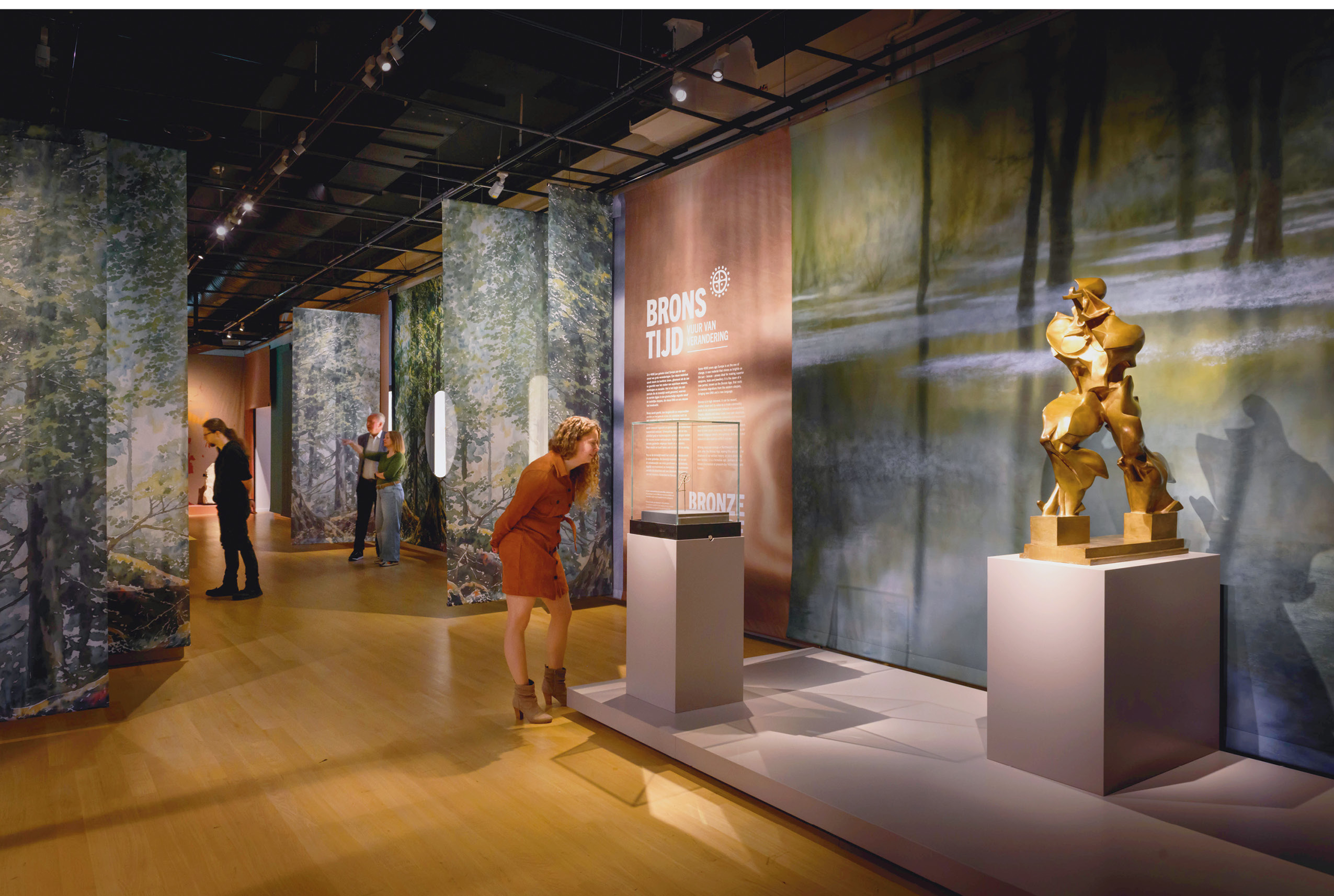
of Europe during this period of dramatic change. Image: Mike Bink
Buried riches
For the people of Bronze Age Europe, death was not the end. During this period, we see a shift from inhumation to cremation as the dominant funerary practice but, as in the preceding Neolithic, the ancestors remained an important part of the community, with burial mounds and monuments occupying the same landscapes where day-to-day activities were carried out. In these monumental tombs, elite individuals were buried with grave goods that reflected the riches and influence acquired through their access to the lucrative resources and extensive trade routes of the time. The Mold Gold Cape is one such object. This masterpiece of the Bronze Age – an intricately decorated ceremonial cape made of gold sheet, found in Wales – shows signs of repair that indicate it was worn extensively in life, before ending up in the burial of an important woman or youth: a display of wealth that transcended death.
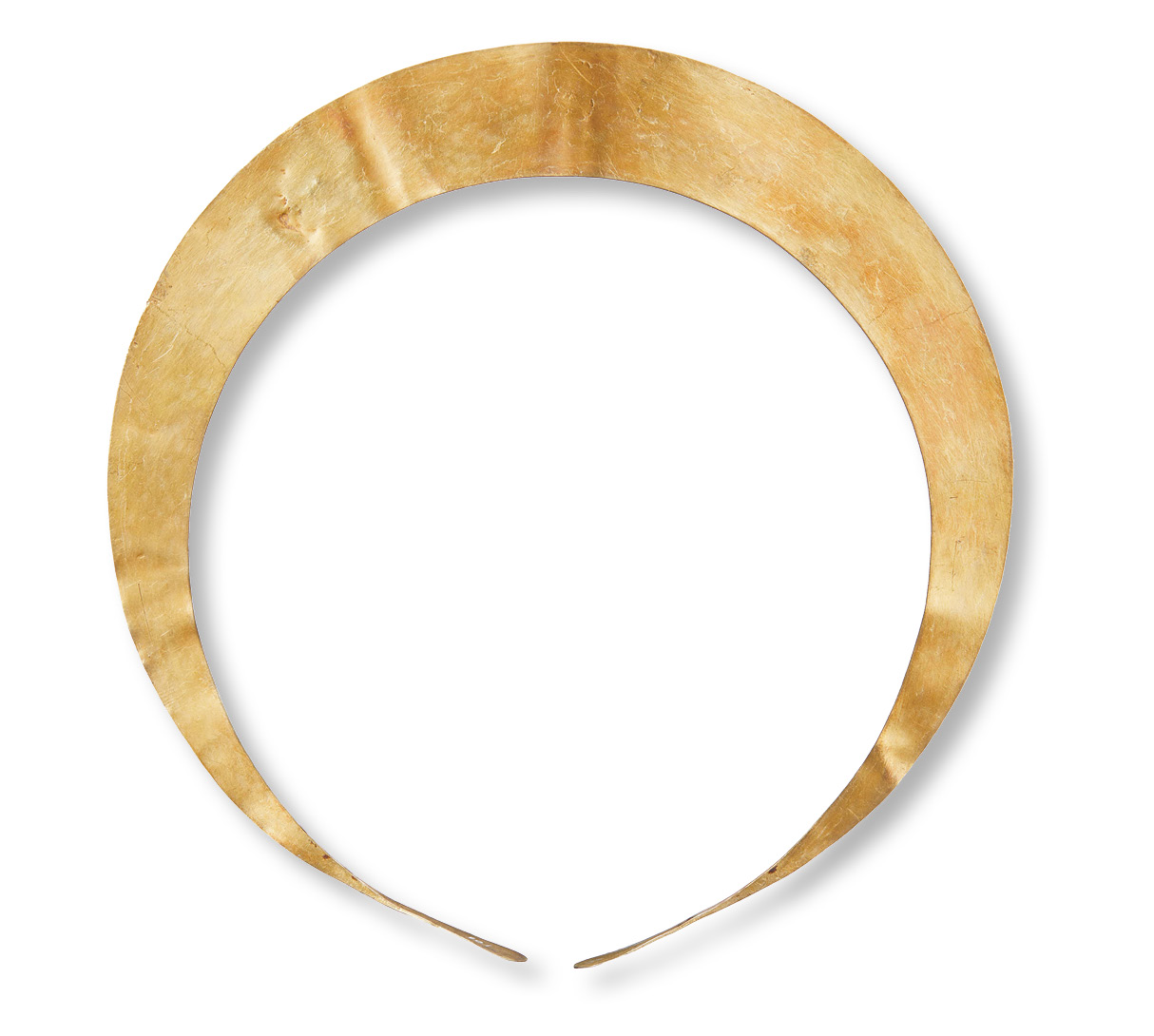
We also find evidence of high-status items deposited in the landscape, distinct from burials. Around 100 finely crafted, thin, crescent-shaped gold necklaces known as lunulae have been found in western Europe. Most of them come from Ireland, but lunulae have also been discovered in Great Britain, France, Germany, Belgium, and Denmark, demonstrating that they were recognised as valuable status symbols over a large part of Europe. In a similar vein, female jewellery sets comprising a typical style of brooches, belt buckles, and cloak pins appear over a wide area in northern Europe. These objects belonged to elite women and testify to their identities as travellers, diplomats, and marriage partners who were key to securing vital connections in the Bronze Age.

Solar power
Many high-status objects also reflect the influence of the cosmological world, in which the sun played a central role, serving as a symbol of life, power, and renewal. The Gold Hat of Schifferstadt is part of a group of four conical hats made of thin sheets of gold leaf, found in Germany and France. These mysterious objects are decorated with bands of concentric solar motifs, leading to suggestions that they functioned as calendars, perhaps connected to the calibration of the solar and lunar year. It is therefore believed that they may have been religious headdresses belonging to the priests or leaders of a shared solar cult that existed across Europe. These religious beliefs had ancient and far-reaching roots. Images of the sun being pulled across the sky in a boat accompanied by animals and mythical creatures – echoing similar ideas found in ancient Egypt, the Middle East, and the Classical world – appear frequently in rock art in southern Scandinavia, as well as on the decorations of objects like situlae (large bucket-shaped vessels), razors, and the iconic Trundholm chariot.
The importance of the sun is evident, too, at monumental sites like Tiel Medel (CWA 123). Here, as at earlier sites like Stonehenge, construction was heavily influenced by the solar calendar, with the central mound surrounded by a segmented ditch with openings corresponding to the position of the rising and setting sun on solstices and cross-quarter days. This sanctuary has a clear practical function, as a solar observatory and calendar for the farming community who constructed and lived alongside it. However, it was also part of a wider ritual landscape that contained older burial mounds and ancient monuments, as well as other graves and ritual deposits aligned with the openings in the central monument. The site is a vivid reminder of the extent to which cosmological beliefs – particularly the movement of the sun – influenced the daily lives of Bronze Age people.
Water, too, played a central role in the cosmological world. This was where the sun disappeared every night and reappeared every morning: water represented the boundary with another realm, one that belonged to the gods, the ancestors, and natural forces. On display in the exhibition are more than 100 objects that were deposited in lakes, rivers, and peatland, presumably as offerings to this other world. Ranging from sickles and spears to jewellery and axes, these finds highlight the extent of the practice. Votive depositions in water are also to thank for one the show’s star displays.

Weapons for the water
In 1896, a giant sword was found in peatland in Ommerschans, in the eastern Netherlands. The sword, or dirk, dates to c.3,500 years ago, but its style imitates an older Early Bronze Age dagger that has been replicated on a massive scale, 68.3cm long. Far too large for anyone to use, and made without a grip or handle, this highly impractical but visually stunning object was not created for battle but as a ritual object. Deposited in the bog alongside the sword was an assemblage of other items including woodworking tools believed to have been used to make the wooden sword required to create the mould for the bronze version, as well as a set of grinding and polishing stone tools that use-wear analysis indicates were used to finish the complete sword. This set of objects, humble-looking at first sight, in fact represents the full story of the magnificent Ommerschans sword and all of the work that went into it. But what was behind this remarkable piece of craftsmanship, and how did it end up in its watery grave?
In the Bronze Age, the area where the sword was deposited was the location of a high sand-ridge that ran across the landscape, providing a connection from a wetland area to the northern Netherlands and all the way to Scandinavia beyond. However, at the time the offering was made, this vital lifeline to the wider world began to be threatened by advancing peat growth. The giant sword and its accompanying objects were deposited at the lowest spot on this route through the landscape, where the connection first began to disappear. All evidence therefore points to an object made for a symbolic purpose and placed very intentionally in this location as an appeal to the gods or the ancestors from the area’s inhabitants, hoping to protect the crucial route that linked them to the rest of Europe.

What makes the Ommerschans sword even more remarkable is that it is not the only example of its kind. Five similar giant swords are known – one other from the Netherlands, two from the UK, and two from France – all ritually deposited in rivers and bogs. These six larger-than-life weapons, known as the ‘Plougrescant-Ommerschans swords’, are all made from bronze of exactly the same composition and, while they were not made from the same mould, are so similar in design that whoever made them must have been aware of the others. Experts therefore conclude that these swords were manufactured in the same workshop over a short span of time before being distributed along the networks that spread across Bronze Age Europe: symbols of shared material culture and ritual beliefs that connected disparate communities over great distances.
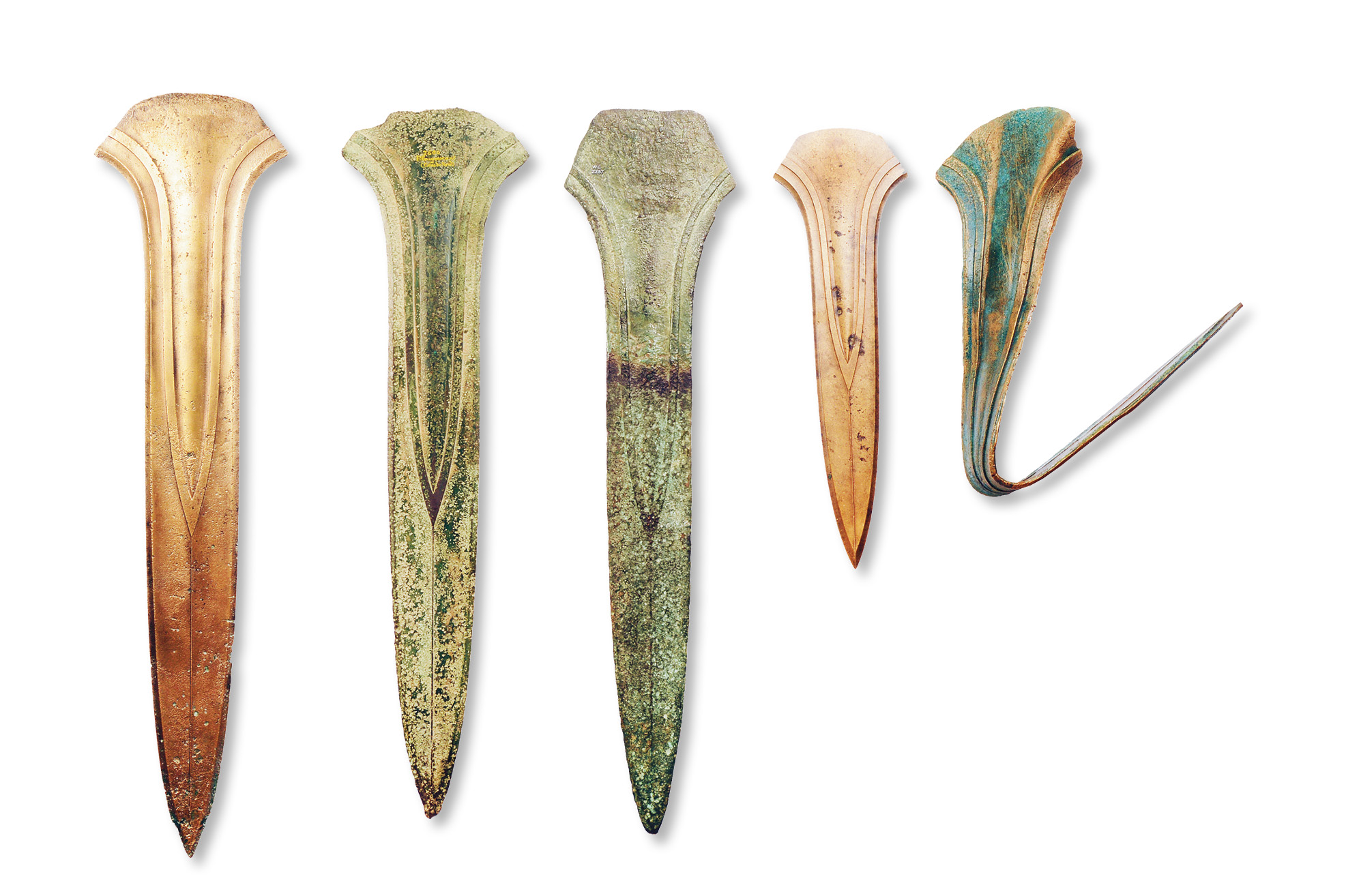
With the Ommerschans sword recently acquired by the Rijksmuseum van Oudheden, all six of these monumental finds have finally been reunited for the first time in 3,500 years. Displayed side by side in the centre of Bronze Age – Fires of Change, they make an impressive family picture, and one that reflects many of the most fascinating elements of the Bronze Age: the spectacular craftsmanship and metalworking taking place, the networks facilitating cultural and material exchange between communities across Europe (in which the Netherlands played an active role), the importance of ritual activities and cosmological beliefs, and, of course, the material of the moment: bronze itself.
Bronze Age – Fires of Change
Address: Rijksmuseum van Oudheden, Rapenburg 28, 2311 EW Leiden, Netherlands
Open: until 16 March
Website: www.rmo.nl/tentoonstellingen/tijdelijke-tentoonstellingen/bronstijd

A catalogue has been published in Dutch to accompany the exhibition. For details, see: www.sidestone.com/books/bronstijd-vuur-van-verandering.

A new publication about the Plougrescant-Ommerschans swords has also just been published and can be found here: www.sidestone.com/books/larger-than-life.