V-Force: Britain’s nuclear bombers and the Cold War

November 9, 2025
This article is from Military History Matters issue 149


Subscribe now for full access and no adverts
REVIEW BY GRAHAM GOODLAD

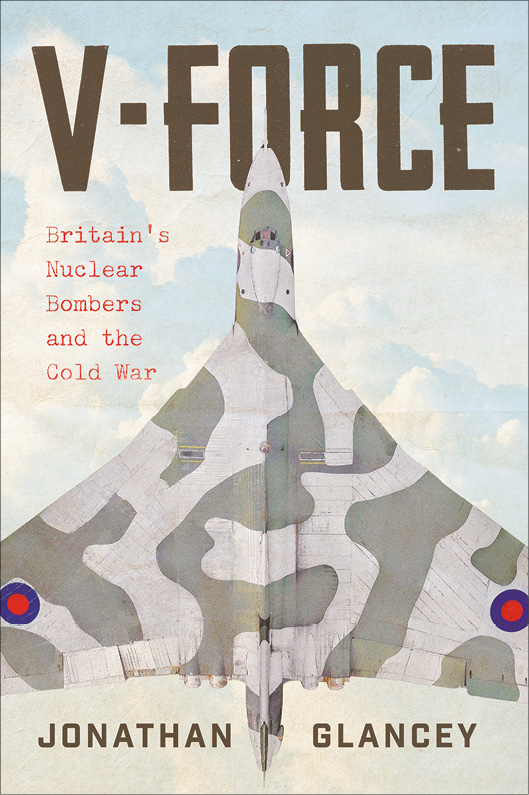
Growing up near RAF Scampton at the height of the Cold War, in my formative years the delta-winged Avro Vulcan was a familiar sight. Soaring overhead with what V-Force author Jonathan Glancey calls its ‘otherworldly howl’, it was an awe-inspiring machine. The Vulcan and its cousins, the Vickers Valiant and Handley Page Victor, were the V-bombers. Their story has been told before, both as individual aircraft and as a group, but in Jonathan Glancey they have found a new historian with a fresh approach.

The first chapter takes us straight into the most dangerous moment of the West’s four-decade-long confrontation with the Soviet Union, when Vulcans were on standby in the Cuban Missile Crisis. In a sobering reality check, we hear from the wife of pilot Peter West, who had told her to drive their children from Lincolnshire to the Isle of Skye if the bombers set off to attack the USSR: ‘What a bloody fool. How far does he think I’ll get? I would be passing all the airfields, all of which would be primary targets, come on!’

Aerial giants

Not all of the book, it has to be said, relates directly to the story of the V-Force. Readers may be surprised to find some 40 pages (out of c.300) devoted to the history of aerial bombing from Guernica onwards, followed by a brief survey of the development of the British, US, and Soviet atomic weapons projects. The book gets into its stride with a fast-paced appraisal of each of the V-bombers. As Glancey acknowledges in his introduction, this is not an in-depth technical survey. Nonetheless, there is enough design detail to show that the three aircraft represented a quantum leap from the piston-engined bombers of World War II.

Woven into the text are vivid portraits of key figures, such as test pilot Roly Falk, who invariably flew wearing a pin-striped suit and caused controversy by barrel-rolling a Vulcan at the 1955 Farnborough air show. Here, too, is Stuart Davies, the Avro company designer who took over after the premature death of his better-remembered boss Roy Chadwick, who was responsible for the Lancaster and the original concept of the Vulcan.

V-Force successfully captures what it was like to fly these aerial giants at a time of great international tension. Glancey’s discussion of the movement of Aboriginal people to make way for the Maralinga nuclear tests in South Australia in the 1950s and ‘60s, reminds us of how remote the period seems in some ways from our own, more sensitive age. A senior scientist at the time queried the placing of ‘the affairs of a handful of natives above those of the British Commonwealth of Nations.’

Other startling details relate to the welfare of the air crews. Only the Vulcan and Victor pilot and co-pilot were provided with ejection seats. Pilots were trained to fly with a patch over one eye, as a precaution against the other being blinded by the nuclear flash. On a more mundane note, we learn that a plane capable of eradicating entire cities had a soup warmer for the crew that was so inefficient it took a full 90 minutes to do its work.

Pilots were trained to fly with a patch over one eye, to protect against the other being blinded by the nuclear flash.

Industrial icons

The V-bombers carried the nuclear deterrent for just over a decade until they were replaced in 1969 by Royal Navy submarines as the more secure option. The introduction of higher-altitude Soviet fighters and lethal surface-to-air missiles signalled the planes’ growing vulnerability. The oldest of the three, the Valiant, had been retired by then following the discovery of catastrophic metal fatigue in its wing spars. Glancey charts the conversion of the other V-bombers to non-nuclear roles. Most famously, the Vulcan saw action during the 1982 Falklands conflict, making the longest bombing run in history to disable Argentine-occupied Port Stanley airfield. The Victor, repurposed as an air-to-air tanker, played a vital role in enabling that mission and was still serving as late as the 1991 Gulf War.

Glancey not only provides a reliable account of the V-bombers’ service but also notes the locations where survivors can be seen – the RAF Museum at Cosford in the West Midlands is the only place where examples of all three are on display. He closes with a section charting the enterprising if short-lived project to return Vulcan XH558 to the sky. His admiration for the aircraft comes across clearly in his writing.

Readers of Glancey’s earlier aviation-themed books will expect him to range beyond the strict confines of aircraft history, to consider their impact on popular culture. It cannot be a coincidence that three boys’ war comics of the period were named Victor, Valiant, and (with a shorter life) Vulcan. Perhaps more tenuously linked to the book’s title – but no less entertaining – is a lengthy digression on how the feared nuclear Armageddon was represented in films and TV of the period, followed by a potted history of the Campaign for Nuclear Disarmament protest movement.

The (never fulfilled) plans for civilian airliner spin-offs from the V-bomber programme receive their own chapter. So, too, do the nuclear bombers produced by the US, the USSR, and France, and the proposed replacements for the V-bombers, including the familiar story of the cancelled TSR-2 project. A repeated misspelling of test pilot Roland Beamont’s name is a rare (if small) error in the text.

In short, this is not a conventional history of the three V-bombers. Rather, the story of the aircraft is a way of evoking that brief but intense period when Britain stood in the front line of the Cold War. Well-researched, engagingly written, and enriched with many telling details, V-Force is an elegy for the fleeting modernity of yesteryear. It is also a lament for the decline of post-war British industrial and design capacity. In the 1950s, this country was capable of independently producing three nuclear-armed bombers. Yet for several decades now, collaboration with other nations on military aviation projects has been the UK’s destiny, and the country’s role in the defence of the West is much less clearly defined than it was a generation ago.

V-Force: Britain’s nuclear bombers and the Cold War
Jonathan Glancey
Atlantic Books, hbk, 352pp (£22)
ISBN 978-1838957957

By Country

Popular
UKItalyGreeceEgyptTurkeyFrance

Africa
BotswanaEgyptEthiopiaGhanaKenyaLibyaMadagascarMaliMoroccoNamibiaSomaliaSouth AfricaSudanTanzaniaTunisiaZimbabwe

Asia
IranIraqIsraelJapanJavaJordanKazakhstanKodiak IslandKoreaKyrgyzstan
LaosLebanonMalaysiaMongoliaOmanPakistanQatarRussiaPapua New GuineaSaudi ArabiaSingaporeSouth KoreaSumatraSyriaThailandTurkmenistanUAEUzbekistanVanuatuVietnamYemen

Australasia
AustraliaFijiMicronesiaPolynesiaTasmania

Europe
AlbaniaAndorraAustriaBulgariaCroatiaCyprusCzech RepublicDenmarkEnglandEstoniaFinlandFranceGermanyGibraltarGreeceHollandHungaryIcelandIrelandItalyMaltaNorwayPolandPortugalRomaniaScotlandSerbiaSlovakiaSloveniaSpainSwedenSwitzerlandTurkeySicilyUK

South America
ArgentinaBelizeBrazilChileColombiaEaster IslandMexicoPeru

North America
CanadaCaribbeanCarriacouDominican RepublicGreenlandGuatemalaHondurasUSA

Discover more from The Past

Subscribe now to keep reading and get access to the full archive.

Continue reading