
Subscribe now for full access and no adverts
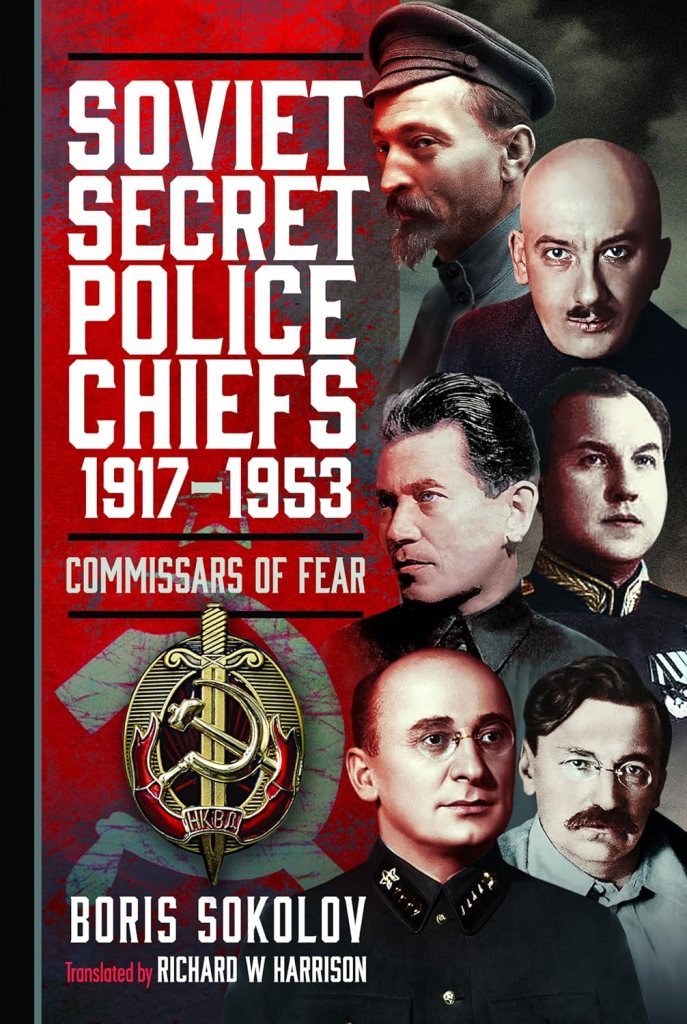
REVIEW BY ANDRÉ VAN LOON
To get straight to the point: the strength of Soviet Secret Police Chiefs lies in its weakness. It is an engrossing read and yet a partial historical account, which leaves the deepest questions about the Soviet Union’s murderousness unanswered. As much as you are likely to be fascinated by the book’s individuals, not least the forbidding mystery of Stalin, you are also bound to scratch your head about the system that engineered so much loss of life. Just how did this happen?
The book’s pleasure and its trouble starts with its fairly classic structure. We get the different police chiefs in turn: Feliks Dzerzhinskii (police chief in 1917-1926), Vyacheslav Menzhinskii (1926-1934), Genrikh Yagoda (1934-1936), Nikolai Yezhov (1936-1938), Lavrenti Beria (1938-1946), and Viktor Abakumov (1946-1951). Only Dzerzhinskii and Menzhinskii died apparently natural deaths; all the others were executed by the very regime they supported.
Each chapter then follows a birth-to-death story, with sometimes several pages of ancestry discussion. This descends into farce in the case of Yezhov, the leader of the Great Purge of 1936-1938, who claimed Russian birth but was actually Lithuanian, and whose birthday of 1 May (International Workers’ Day) has also been contested. Sokolov notes wryly that not much trust can be placed in documentation, as so much of it was destroyed or forged.
The macabre heart of each chapter lies in the exercise of power, when these men found themselves able to order the deaths or imprisonment of millions. The hardened moral corruption was there from the start, with Dzerzhinksii’s readiness to shoot people because they appeared on prepared lists (and with no mention of any checks or trials).
Things turned more perverse later on, with Yagoda’s wild parties while people were shot in the back of the head on stairwells and in basements, the obscene show trials under Yezhov, crackdowns against unarmed civilians in East Berlin under Beria, and Abakumov torturing prisoners in person.
I hasten to add that many of the most colourful personal stories are open to question, and much of what Sokolov describes is unlikely ever to be factually proven once and for all. The Soviet Union deliberately obscured facts, promulgated outlandish fictions, and simply lied or kept silent about matters as great as life and death. (Russia today has not broken from this habit, brazenly claiming whatever it wants to undermine its opponents.)
It’s here, I would argue, that the trouble comes to the fore. The book’s analysis of personalities illustrated by colourful, questionable quotes from letters and statements, does not extend to the Soviet system. These people, often relatively obscure or marginal before events swept them up, were intentionally placed into a ruthless machine of state power. Yet Sokolov skirts around that machine, appearing not to see it.
Leon Trotsky, speaking in 1937, said that Stalin was not the master, but the victim of his own system. The fascinating question of how much the Soviets first created and then were undone by their own system would have made Soviet Secret Police Chiefs a richer, more challenging account.
Is the book worth reading? Yes, if we recognise that many of its facts are open to interpretation, or perhaps downright falsehoods first told a century or so ago. Yes, if we humour Sokolov’s curious insistence on speaking of the police chiefs as men of flesh and blood, often cultured and warm-hearted – it is unlikely that their victims would have cared to know these men had softer sides to them.
However, we must recognise that the precise nature of the Soviet Union’s meticulously planned mendacity and murder was always about more than individuals. So, yes, Soviet Secret Police Chiefs is a useful read, but it is hardly the full story.
Soviet Secret Police Chiefs, 1917-1953: commissars of fear
Boris V Sokolov (trans. Richard W Harrison)
Pen & Sword Military, hbk, 272pp (£29.99)
ISBN 978-1036101688