
Subscribe now for full access and no adverts
REVIEW BY CALUM HENDERSON
Lionel Watson was already married with four children when he murdered Phyllis Crocker, a woman he had met the previous year at the Hoover Factory in west London, in May 1941. He lied to eighbours that she had moved to Scotland and buried Crocker, along with her young daughter Eileen, under some paving stones in a garden in Greenford. Watson then took up with another girl he had met at the same factory. She was just 17.
Watson’s crime is one of many examined in this new book by Canadian academic Amy Helen Bell, which looks at violence in wartime London. There was certainly no shortage of it. Not only were the Luftwaffe killing thousands of civilians each night during the Blitz, but the murder rate in the capital also shot up. In 1945, the number of annual homicides in England and Wales reached a 75-year high.
There were many reasons for this, as Bell explains. For one, murder was so much easier to get away with. Given the turmoil and displacement caused by the continuous bombing, crime often went undetected. The blackouts made the streets safe for predators, while bomb craters were a perfect place for dumping victim’s remains.
And the violence raining down from the sky seemed to encourage bloodshed on the ground. Pub brawls turned deadly, as drunken men unfit for conscription felt they had nothing to lose, while wartime racial tensions sparked gang violence within Jewish and Irish communities in Soho, then one of the seediest corners of the capital.
But perhaps most tragic of all were the mercy killings, such as in the case of Lily Wright, who in February 1940 murdered her nine-year-old daughter Pamela because she was terrified at the prospect of a German invasion – which was, at that time, a very real possibility.
Women who stood trial for crimes of compassion were often treated very harshly by the Crown, even if they were mentally unstable. Bell draws the comparison with other cases in which male killers were given sympathetic treatment on the grounds that they may have been ‘provoked’ into murder by their adulterous wives.
Yet for other women, wartime London was a place of opportunity, albeit with certain risks. There were more options for paid work and volunteering; there was more access to pubs and dance halls. And those same bombed-out houses offered space for what the author calls ‘passionate meetings’ in the depths of the blackouts.
Prostitution, too, became highly profitable because of the number of soldiers stationed in the city during the war, so much so that Quentin Crisp came to describe 1940s London as ‘one massive Hyde Park… a paved double bed.’
But in many ways soldiers were the worst. Trained to kill and with weapons at hand, many inflicted the very violence they’d seen on the frontlines against helpless victims back at home. An astonishing July 1942 study, quoted by Bell, found that one third of all crimes were committed by men in the armed forces. The statistics didn’t even include the many thousands of American troops stationed in Britain at the time.
The author has clearly been inspired by Hallie Rubenhold’s 2019 book on Jack the Ripper, and tries to repeat Rubenhold’s approach of focusing on the victims as much as their killers. Each murder Bell looks at is described in immense detail, with plenty of information on the circumstances surrounding the deaths and the aftermath. In doing so, she provides a rich portrait of a city thrown into chaos by war – in her words, a ‘dusty, dark, and grimy landscape of fear’.
Lionel Watson was caught and later hanged by the legendary executioner Albert Pierrepoint. Suspicious neighbours proved his undoing. As one Mrs Lilian Bound later told the police: ‘I looked out over my balcony and saw that he had dug a hole in the shape of an oblong, right beside the coal shed. I called out to him and asked, “Are you digging for victory?”’
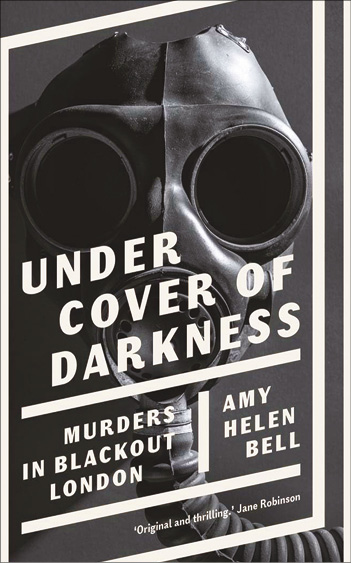
Under cover of darkness: Murders in blackout London
Amy Helen Bell
Yale University Press, hbk, 272pp (£22)
ISBN 978-0300270051