Subscribe now for full access and no adverts

REVIEW BY SG
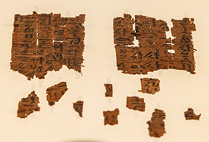
In the 1800s, a papyrus scroll was discovered in Luxor. The text, a complete version of The Teaching of Ptahhatp, was copied out in the late Middle Kingdom, but originates from the Fifth Dynasty reign of king Djedkara Isesi (Izezi). Known as Papyrus Prisse, the text was published in 1858 as the ‘world’s oldest book’. However, even Sir Alan Gardiner believed it to be virtually untranslatable, and so the text fell into obscurity.
Bill Manley now offers a fresh interpretation, presenting the complete Papyrus Prisse version, together with incomplete alternative versions from other sources. According to Manley, The Teaching of Ptahhatp is not simply the ‘world’s oldest book’: it is the earliest complete statement of philosophy, written some 2,000 years before the first ancient Greek philosopher took up his stylus. And Manley’s book is far more than a simple translation of an important ancient text. He recounts the discovery of the scroll, set against the prevailing discriminatory beliefs held at the time, and traces the evolution of writing and the development of the codex (book format), exploring other important ancient Egyptian texts such as The Tale of Sinuhe. We also learn more about Ptahhatp himself – Manley preferring the palindromic spelling of the name over the more commonly used ‘Ptahhotep’. As vizier, Ptahhatp was rich enough to have a large mastaba complex at Saqqara, which Manley describes as he recreates the life of an official in the peripatetic royal court.
Ptahhatp’s teaching extols the virtues of the love of wisdom, the futility of argument, and a commitment to self-improvement. The meaning of life is grounded in truth. We must become the person we are intended to be, or face a life of futility, loneliness, and fear. So much of this advice is still relevant today. Ptahhatp tells the reader to defer to their boss, and to think before they speak: ‘when your mind is overflowing, restrain your mouth… take your time when it is your turn to speak, and you will say appropriate things’. ‘Listening is an ideal beyond anything’, so he counsels us: ‘do not interrupt them until they have emptied the belly of what they wanted to say’.
Manley offers a thoughtful and engaging discussion throughout, and includes translations of two other incomplete texts, The Teaching of Kagemni and The Teaching of Hordefef, as well as an exploration of the Why Things Happen, a text inscribed on the ‘Shabaka Stone’, all of which helps to explain the fundamental beliefs behind Ptahhatp’s guidance. Manley provides copious notes, a bibliography, and colour and black-and-white illustrations. This book is ideally suited to students of philosophy and Egyptology, but also to anyone who wishes to learn more about the ancient world by listening to the words of the ancients, instead of simply staring at their monuments.
The oldest book in the world: Philosophy in the age of the pyramids
by Bill Manley
THAMES & HUDSON, 2023
ISBN 978-0-500-25232-1
HARDBACK £25