
Subscribe now for full access and no adverts
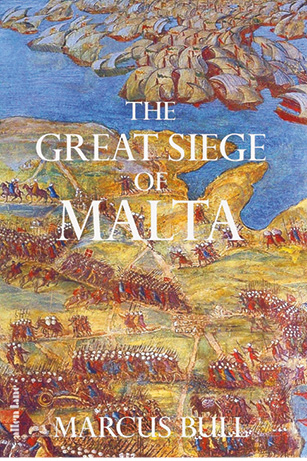
REVIEW BY STEVE TIBBLE
Writing a major new popular history about the Great Siege of Malta of 1565, in which the Knights Hospitaller – a Catholic military order – saw off a four-month assault by the Ottoman Empire, is no easy task. Far too many of us have memories of Ernle Bradford’s The Great Siege (1961). Viewed with huge affection, this was a crowd-pleasing Boys’ Own story that captivated so many young people at the time of its publication and beyond.
Professor Marcus Bull is, in fact, a medieval historian, best known for his excellent scholarly work on the Crusades, primarily in the 12th century, rather than the early modern period. Yet he has tackled this subject with success, in what emerges as a bravura correction to the dampening old advice to ‘stick to what you know best’. With The Great Siege of Malta, Bull moves from one field of study to another, showing himself to be supremely adept in both. His scholarly insight and understanding of the primary sources are wielded with the lightest touch, while the reader is borne along by the almost mythical story of the island’s self-defence.
Malta’s survival against the Ottoman onslaught was significant in bolstering morale in the battered French court, then uneasily at the centre of the Wars of Religion. At this time of uncertainty, an historic example of epic bravery in the face of adversity was needed. The French, initially so ambivalent in their approach to the Ottoman assault on the island, could now be consoled that they had been on the right side of history all along.
It is this kind of strategic detail, so easy to lose in an ostensibly simple tale of heroism, that makes the book so rich. Bull’s evaluation of the Great Siege is much more sophisticated than any previous attempt to tell the story. For instance, the traditional view of the siege has been determinedly Eurocentric. Bull tries as hard as possible to fix that imbalance, but the nature of the source material means that this can only be partially remedied. After all, the majority of the detailed commentaries about the event come from European sources, as the Ottomans, perhaps not surprisingly, did not choose to linger so lovingly over their disappointments.
Each of the protagonists are covered in turn, again with impressive attention to detail. First there are the Knights of Malta themselves, who fought alongside an uneasy alliance of soldiers, native islanders, and casual adventurers against the Ottomans, led by Suleiman the Magnificent, in his second and final attempt to conquer the strategic island.
Bull is good, too, on the global context. Although the siege takes place in the middle of the Mediterranean, it was part of broader military and political events stretching from Japan to South America and back into Europe.
Arguably, of course, the siege changed very little. The Knights Hospitaller were in command of Malta in 1564, and still there in 1566. Similarly, after the siege, the Ottomans still controlled much of the eastern Mediterranean, and they presented as dangerous a threat as ever to the European states that were their neighbours. The exploration of that truth is where this book is so powerful and mature in scope. Although the siege itself was both heroic and inspiring, it was at the same time less momentous than one might imagine. The effect on morale was arguably just as important as the victory itself.
Bull’s success is in placing the siege within the frame of the broader world of the mid-16th century, while still retaining a profound sense of appreciation for the heroism of the defenders on the ground. There is no cynical or revisionist attempt on the author’s part to diminish their achievements. The result is a compelling and beautifully written analysis that proves a worthy successor to Ernle Bradford’s masterpiece of 60 years ago.
The Great Siege of Malta
Marcus Bull
Allen Lane, hbk, 352pp (£30)
ISBN 978-0241523650