Subscribe now for full access and no adverts
REVIEW BY QUITA MOULD
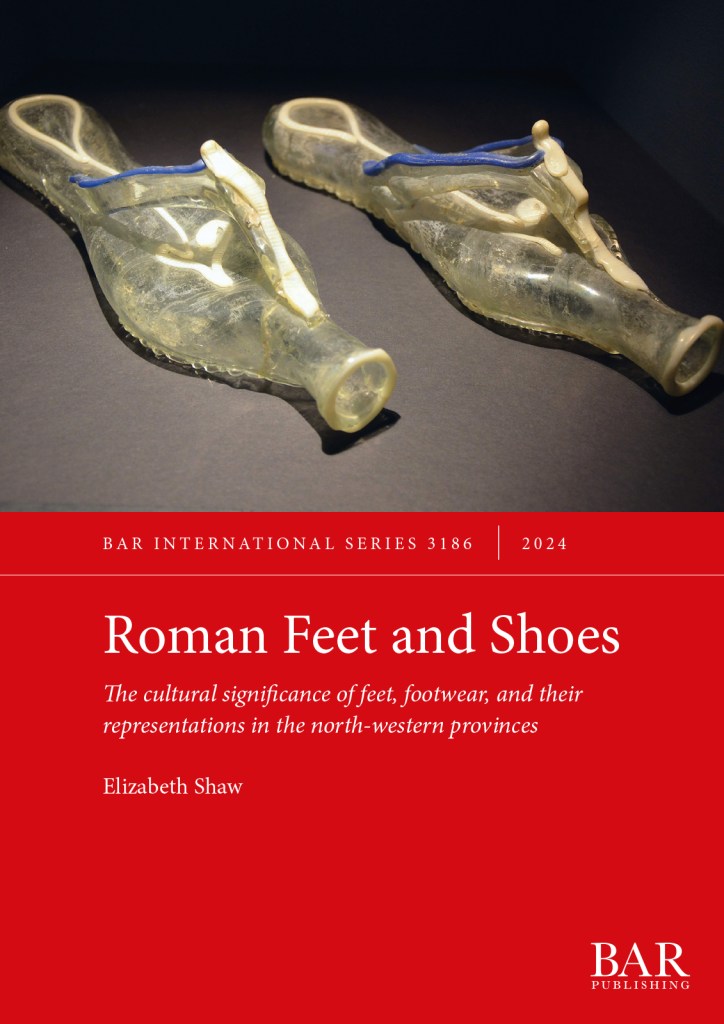
In this volume, the author describes a range of Roman shoe- and foot-shaped artefacts and considers the cultural significance of such representations. She summarises the ancient written sources available and the thoughts of previous researchers, before attempting to draw her own conclusions using various strands of evidence including the location, site type, and context of their discovery. For this, the author has gathered a large amount of information on foot-shaped artefacts, amassing a corpus of close to 1,500 representations of Roman feet and footwear using published material, digital searches, and museum visits. In addition, she discusses the significance of the evidence for footwear in Roman burials and the deposition of shoes in wells and ‘watery places’. These topics have been extensively researched, as the 32-page bibliography will testify.
Individual chapters are devoted to a range of subjects, including attitudes to Roman feet and footwear, the possible significance of hobnailing patterns, and the remains of feet from statuary found in Britain, with lamps and plate brooches being considered in detail. The section considering the implications of footprints and shoe-sole impressions seen on ceramic building material I found to be particularly successful, weighing up whether the marks were accidental and incidental or intentionally made, perhaps to test the dryness of the clay before firing or as a deliberate mark to denote the maker or kiln-owner.
At several points, I was sent scurrying for a dictionary (more a reflection of the ignorance of this reviewer than a criticism of the author) but one new word that this volume introduced to me, ‘chirality’, used here to mean whether a left or right foot, is perhaps the one I will be most likely to deploy in the future. The right foot was considered auspicious in Roman culture and, in some of the items discussed (such as the foot-shaped stamps), a preference for the right foot can be noted, but not in others. Surprisingly, the footwear from wells with ritual associations did not show the expected dominance of left-footed shoes suggested by personal experience and that of other researchers.
As so often in archaeological finds research, some of the areas of enquiry are hampered by the nature of the evidence available to us. In the case of Roman foot-shaped lamps, for example, of the 245 recorded in the database only a third had a known find spot and only six had been found in an archaeological context associated with other finds. The limitations of the evidence for each of the categories of find are recognised and clearly stated throughout and, unavoidably, several of the questions posed remain unanswerable. Looking through the prism of the 21st century, we may never fully appreciate the various thought processes that dictated why a motif was chosen or a particular item selected for deposition. All the information gathered here does reinforce the view that representations of feet and shoes were significant to the Roman world and that, on current knowledge, there may be several ways of interpreting such finds that are equally plausible and valid.
Roman Feet and Shoes: the cultural significance of feet, footwear, and their representations in the north-western provinces
Elizabeth Shaw
BAR Publishing, £55
ISBN 978-1407361543