Subscribe now for full access and no adverts
REVIEW BY DENNIS B BLANTON
This new book from William Kelso is in the tradition of popularised portrayals of archaeological discoveries linked to the ‘Virginia adventure’. Beginning in the 1960s, Ivor Noël Hume published several evocative, book-length accounts of studies of the ‘Tidewater’ region – that is, the north Atlantic Plain. Just as Hume’s stories did, this new work will captivate readers seeking to understand the story of Jamestown’s founding, its legacy, and how knowledge of it has improved with the advent of new research since the 1990s. In essence, it is a thoughtfully conceived series of short stories from the archaeologist who spearheaded the ‘rediscovery’ of James Fort and oversaw most of its two-decade period of renewed study.
The book unfolds through eight chapters organised largely as a historical chronicle. Essential context is set in the first of them. Biographies of the principal figures who influenced the path of the colony’s early decades are detailed. The chapter also recounts the backdrop of the Virginia Company’s ambitions and plans, and the trials and tribulations of the settlement’s initial years.
Chapters 2 to 5 describe new perspectives on the creation of the fortified settlement, an improved sense of Native American engagements with the colony – including the fate of Pocahontas, the growth of the initial settlement into a fledgling port community, and the implications of a period of colonial rebellion in the 1670s.
In Chapters 6 and 7, the author further illuminates matters of church and state. The first of these updates archaeological findings at the location of Jamestown’s statehouse complex. The buildings there figure prominently as the seat of government. The other reviews what is known of Jamestown’s succession of churches. From the 19th century, these hallowed locations have been a focal point of Jamestown Island archaeology. Their story is complex and made more so by the discovery and analysis of the burial places of some of the colony’s elite. Together, this pair of chapters conveys messages important in Kelso’s telling of the Jamestown story. In his own words, ‘this volume is my look at the once-buried evidence of the place where America first struggled to invent itself’.
The closing chapter introduces us to the sobering reality of Jamestown Island’s fate. It is besieged by the waters of the James River, which are rising rapidly under the effects of global warming. This means that the original fort and town site, and indeed all of the island’s archaeological sites, are probably destined to disappear. Kelso describes the sense of archaeological urgency these conditions create and outlines measures that may be taken to address them.
An appendix called ‘Historical Archaeology’ is a fascinating bookend to this latest work from the author. It explains the way he has practised it and why, and it is a personal meditation on the relationship of history and archaeology, and the meaning of ‘science’.
This book succeeds in its purpose. It will have great appeal to popular audiences and fledgling students. It is a tribute as well to the contributions of the author and the teams he has worked with. It is not, however, the kind of technical report that will satisfy the interests of many scholars and their advanced students; and it is not intended to be that kind of work. Kelso tends to pursue archaeology more in the service of history and less from the perspective of anthropology. The recent archaeological discoveries are treated neither comprehensively nor in granular detail. Supporting data like tabulations of artefacts and detailed archaeological drawings must be found in other reports and we await those yet to come. At the end of the day, archaeologists are obligated to report findings in multiple formats, and this new publication is a fine example of one of them.
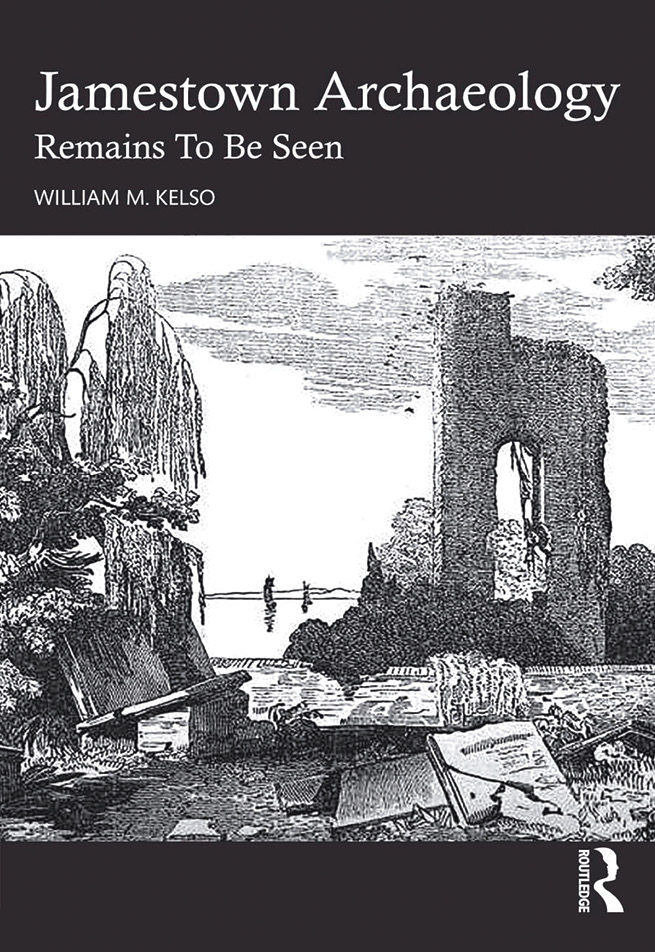
Jamestown Archaeology: Remains To Be Seen
William M Kelso
Routledge, £36.99
ISBN 978-1032579344