Subscribe now for full access and no adverts

REVIEW BY MICHAEL TUNNICLIFFE
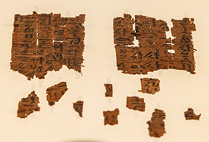
During the Twenty-seventh Dynasty (c.525-404 BC), Egypt was part of the sprawling Persian Empire. Material survivals from this time are scarce, and the Persians themselves left few documents relating to Egypt. One important exception comes from Elephantine. In the 19th and early 20th centuries, a series of papyrus documents were found, written in Aramaic, the language widely used in the western part of the Empire. They portray the everyday lives of a community of mercenaries stationed at the southern Egyptian border. These people worshipped the god Yaho (the Yahweh or Jehovah of the Hebrew Bible), and many scholars designate them as Jews. Yet they appear to have been a highly unorthodox community. They had a temple to their god, contrary to the emerging orthodoxy of 5th-century Jerusalem, where they also worshipped other named deities associated perhaps with cult objects – contrary to the first two of the Ten Commandments. Hence Becking prefers not to call them ‘Jews’ but ‘Yehudites’.
He describes the Persian take-over of Egypt, and when and how the mercenaries and their families may have arrived, as well as their possible ethnic and religious identity. They were one of many ethnic groups in the vicinity of Aswan, and he sketches out the multi-ethnic nature of Elephantine, and the mechanisms by which the Persians sought to maintain stability and control. Nevertheless, there were at least five attempts at rebellion by the Egyptian population during these 120 years. By the last quarter of the 5th century, the relative harmony began to break down, as evidenced by a series of incidents and law suits. There may have been newcomers joining the Yehudites from elsewhere, possibly Palmyra. In 410 BC, the nationalist priests of Khnum took their opportunity while the Persian governor was away. Ethnic tensions spilled over, and, alongside wider destruction on the island, the Yehudite temple of Yaho was destroyed. This prompted the famous appeal by the community to the authorities back in Judah for their temple to be rebuilt. This was agreed, but with the proviso that no animal sacrifices should be offered.
The strength of Becking’s work is that it draws on the full range of written material, not just the two or three well-known texts. His study offers a closely argued account of how a tolerant and harmonious community, where intermarriage was not uncommon, broke down in a relatively short time. As a modern-day parallel, he cites what happened in former Yugoslavia after the death of Marshal Tito in 1980, and how quickly communal and religious divisions erupted into violence. The book offers a tantalising glimpse into a chapter of everyday life in this neglected period of Egyptian history.
Identity in Persian Egypt: The fate of the Yehudite Community of Elephantine
by Bob Becking
Eisenbrauns 2020; this edition 2023
ISBN 978-164-602-244-1
Paperback £29.95