Subscribe now for full access and no adverts
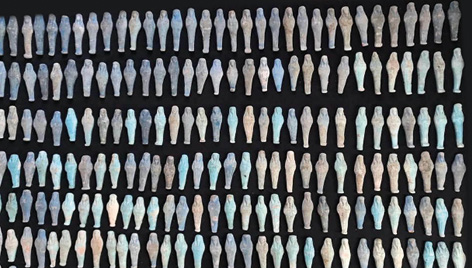
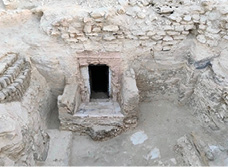
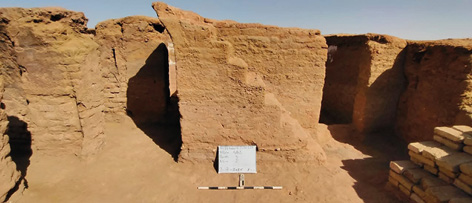
Workshops from the Late Period and early Ptolemaic era have been discovered by an Egyptian-Italian (University of Padua) team working at the interconnected Kom al-Ahmar and Kom Wasit sites in the Western Delta (Beheira Governorate). The workshops consist of at least six rooms within a large building. Inside two of the rooms, the team discovered 9,700 fish bones, suggesting extensive fish-processing and -salting took place here during that period. The other rooms were probably used for the production of metal and stone tools, and faience amulets. Other finds include fragments of Greek pottery, imported storage amphorae, and a number of unfinished limestone statues at various stages of manufacture.
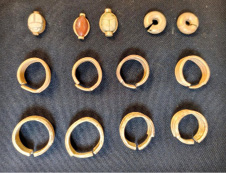
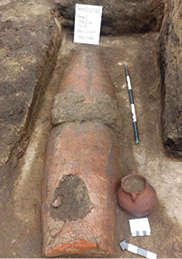
The team also uncovered part of a Roman necropolis containing a number of burials. Of the 23 sets of remains discovered at the site, some were found in clay coffins, while others were buried directly in the ground. A number of child burials inside large amphorae were uncovered, too. Initial studies of the remains show no clear evidence of serious illness or violence. Further finds include a large number of intact amphorae, and a pair of gold earrings belonging to a young girl.

Text: Sarah Griffiths / Image: Ministry of Tourism and Antiquities