Subscribe now for full access and no adverts
A collection of undersea constructions dating to the end of the Mesolithic period has been discovered off the coast of France near Île de Sein, Brittany.
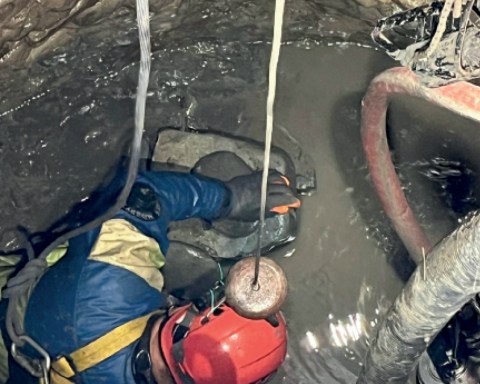
A total of 11 submerged structures were identified through analysis of a LiDAR survey in 2017. These were then investigated between 2022 and 2024 by divers from the Société d’Archéologie et de Mémoire Maritime (SAMM), who determined that the features were human-built linear granite constructions of varying size, one of which measures 120m long and has a total mass of c.3,300 tonnes, making it the largest underwater construction ever found in France at this depth.

These stone walls are estimated to have been built between 5800 and 5300 BC by maritime hunter-gatherer societies during the Mesolithic-Neolithic transition. Although they currently sit under 7-9m of water, c.7,000 years ago, when sea levels were lower, they would have been on the shoreline of the island.
The smaller constructions display strong similarities to Mesolithic fish-traps known elsewhere, and are therefore believed to have functioned as stone fish-weirs. However, several other walls are of a much greater scale and more complex construction than would be expected for a fishery dam, comprising large granite standing stones placed at regular intervals with a wall made of smaller stacked stone blocks built up around them.
The researchers propose two possible interpretations of these larger structures. The first is that they could represent fish-weirs that underwent multiple stages of construction and maintenance over several centuries as sea levels continued to rise. Alternatively, they may have had a protective function, serving as dykes to shield against heavy swells and perhaps rising waters. This hypothesis is supported by the fact that most of the granite monoliths are still standing upright after thousands of years, suggesting that they may be embedded deep in the bedrock, intentionally designed to be resistant to swells and currents. Additionally, the largest of the walls appears to have been reinforced on the north side, where it is exposed to the swell: a feature not known from any fish-weirs.
The creation and maintenance of such massive stone structures would have required a reasonably sized group with strong collective cooperation, technical knowledge, and possibly a relatively sedentary lifestyle, offering important insight into the Mesolithic communities of the west coast of France.
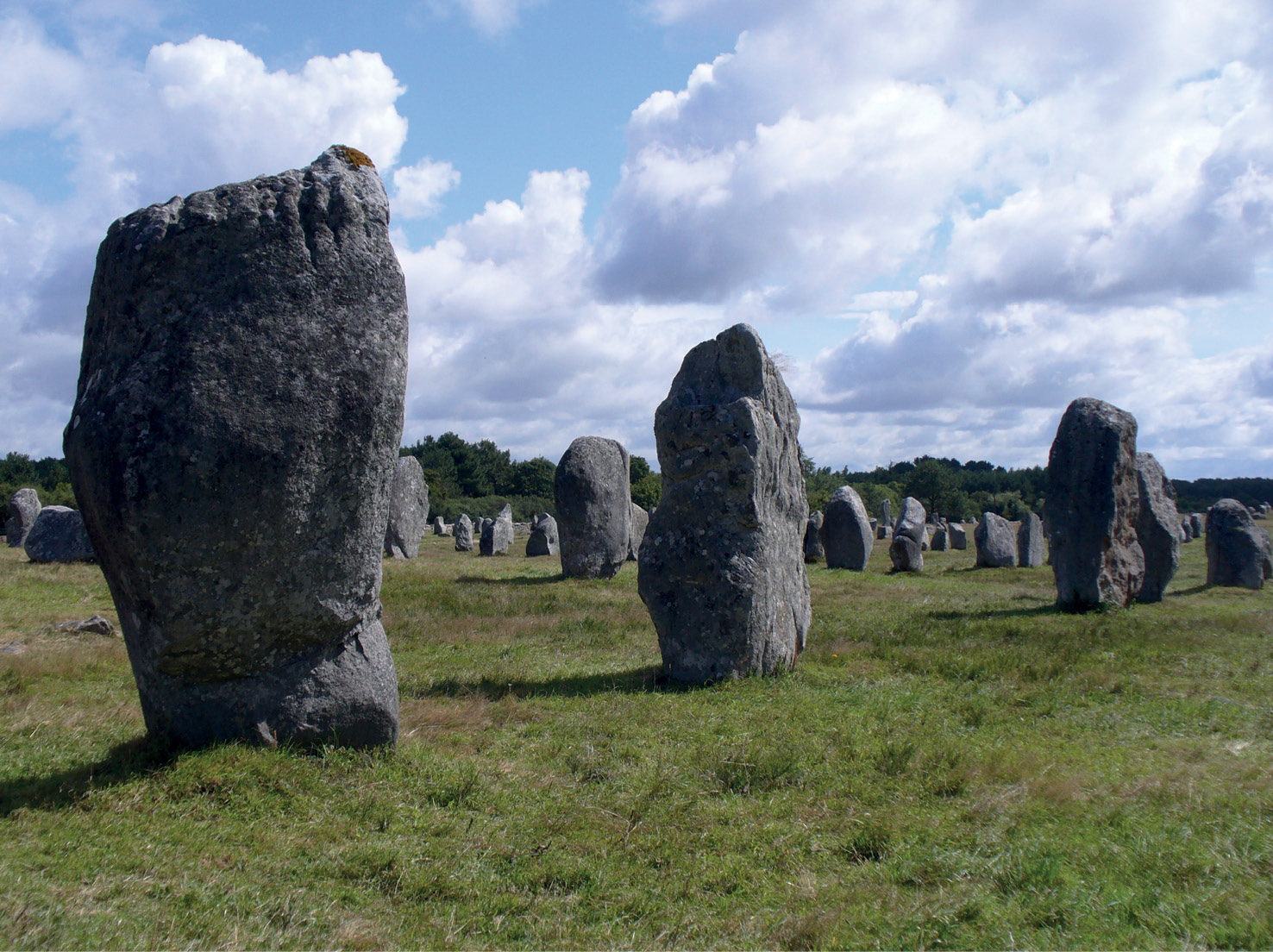
What is more, these constructions pre-date the earliest of Brittany’s famous megalithic monuments by around 500 years. The evidence that Mesolithic people in the region were extracting, moving, and erecting stones on the same scale as some of those Neolithic megaliths contributes to our understanding of the origins of this later megalithic tradition, and supports the possibility of an exchange of knowledge between local maritime hunter-gatherers and the Neolithic peoples who arrived from the east at the end of the 6th millennium BC.
The results of this research have been published in the International Journal of Nautical Archaeology (https://hal.science/hal-05406477), and it is hoped that further investigations will reveal more about the age, construction, and role of these remarkable submerged structures.
Text: Amy Brunskill / Images: SAMM (Société d'Archéologie et de Mémoire Maritime); Wikimedia Commons, Steffen Heilfort