Subscribe now for full access and no adverts
New research – using the largest multi-isotope dataset of animal remains yet generated in archaeology – has shown that communities in southern Britain had diverse ways of organising feasts during the transition from the Bronze Age to the Iron Age.
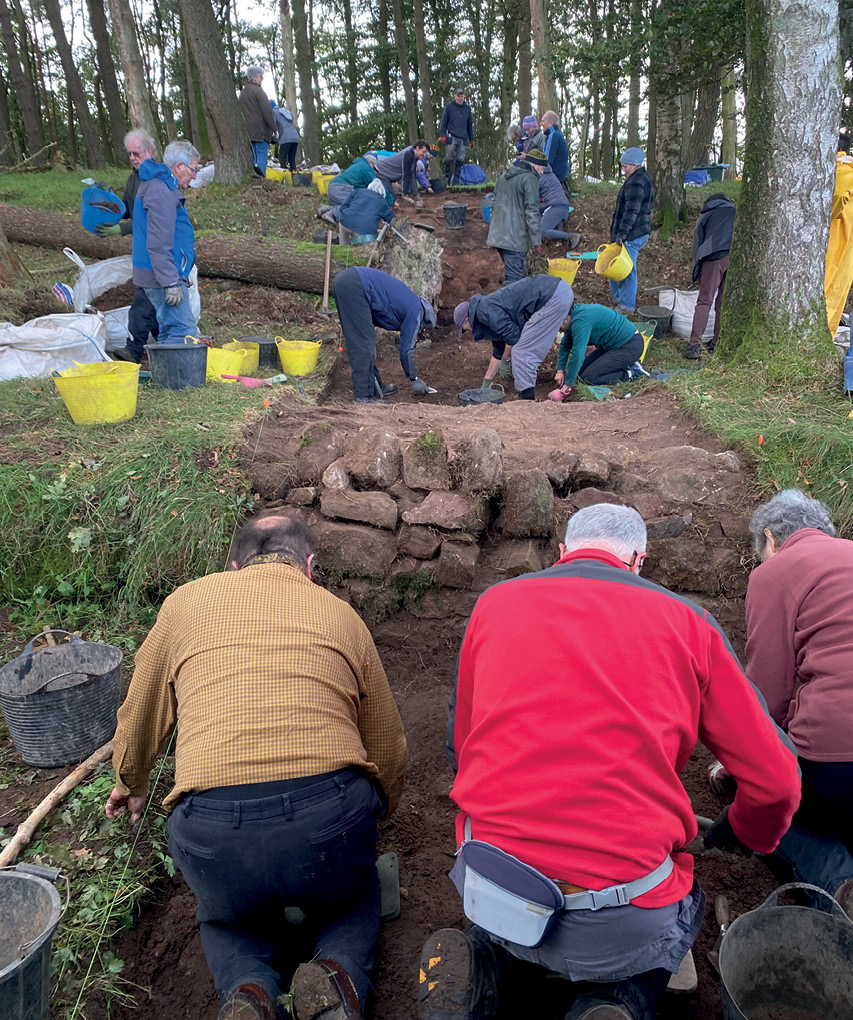
The period between 1550 BC and 500 BC, particularly 1250-1150 BC, was one of intense climatic change in Britain, with a shift from drier conditions to wetter ones. In the wake of this change, late Bronze Age and early Iron Age populations in Britain appear to have moved towards holding large gatherings for feasting, reflected in the massive middens that appear across southern Britain at this time. To learn more about this custom, a team led by researchers from Cardiff University and the British Geological Survey examined the isotopic profiles – including strontium, sulphur, oxygen, carbon, and nitrogen analysis – of over 250 animal bones found in six midden sites: All Cannings Cross, Stanton St Bernard, East Chisenbury (below), and Potterne in Wiltshire, and Runnymede and Wallingford in the Thames Valley.
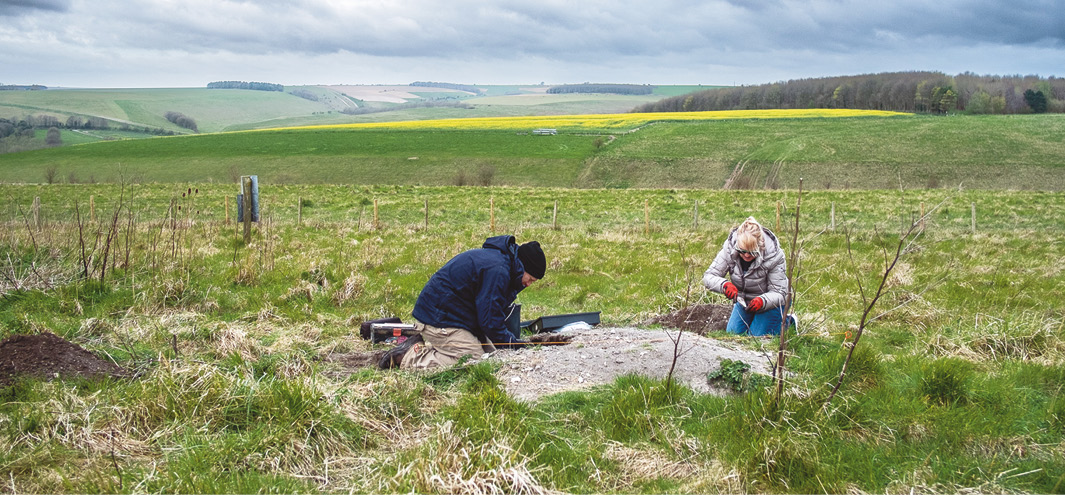
The results showed that All Cannings Cross, Stanton St Bernard, and East Chisenbury all had similar isotopic profiles suggesting that their refuse represented animals born and raised locally. They also appear to have involved a rigid management strategy with a focus on sheep dairying. In contrast, the other Wiltshire site, Potterne, had vastly different results, indicating that the animals consumed and disposed of in that location had been raised in various locations across southern Britain – and perhaps even as far away as Scotland. Management strategies for these animals were more varied, too, suggesting that a large, diverse group of people may have contributed to the Potterne feasts. In particular, at Potterne, unlike the other Wiltshire sites, which favoured sheep/goats, pigs appear to have been the preferred animal, appearing in large quantities and more frequently coming from afar.
In the Thames Valley, the midden at Runnymede showed similar results to Potterne, with the animals appearing to have come from a broad catchment area, although perhaps one slightly more restricted since most had been raised in south-eastern England. Unlike Potterne, however, the focus was not on pigs but on cattle, which appear to have been brought over greater distances than the other animals represented at the site. Like Potterne and Runnymede, the midden at Wallingford featured non-local animals, but they came from a much smaller source area. It may be that the Wallingford midden represents a smaller, subsidiary site to Runnymede.
Overall, there were two clear, contrasting feasting strategies. Potterne in Wiltshire, and Runnymede and Wallingford in the Thames Valley, all included animals from wide catchment areas, although the size of the catchment varied by site, with the animals from Potterne having come from the farthest afield. While the community/communities at Potterne feasted on pigs, those at Runnymede and Wallingford favoured cattle. All Cannings Cross, Stanton St Bernard, and East Chisenbury, on the other hand, used local animals, specifically sheep and/or goats, for feasts. The question remains as to why these different sites – some of which are quite close to each other – employed such different practices.
Text: Kathryn Krakowka / Photo: Cardiff University