Subscribe now for full access and no adverts
A new study, which was recently published in Antiquity, has examined a sediment core from a palaeochannel of the River Ure, near Aldborough in North Yorkshire, and combined it with both historical and archaeological evidence in order to discern how metal mining in the area might have evolved between the Roman and post-medieval periods.
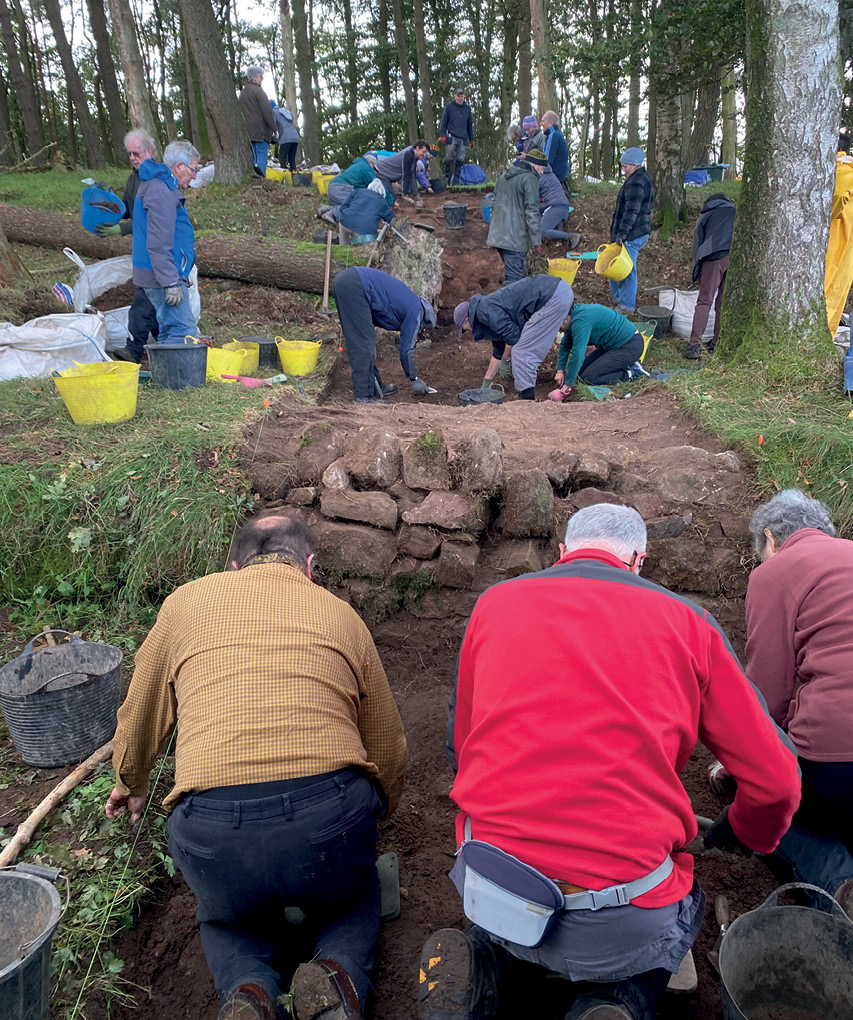
The Roman town of Isurium Brigantum, present-day Aldborough, was located at the centre of one of the largest metal-producing regions of Roman Britain, a status which continued into the medieval and post-medieval periods at its nearby successor, Boroughbridge. Surprisingly little archaeological evidence of this long-lived production was known, however, and it was not clear whether it had remained steady across this lengthy period of time. Recent excavations near the Roman town had revealed a palaeochannel, and the team, led by researchers from the Universities of Nottingham and Cambridge, thought that this would be an ideal location for sediment coring to help analyse local levels of metal pollution. A 5.96m (19.6ft) core was extracted and then analysed using a variety of methods.
The results showed that from the later medieval (mid-12th century onwards) to the post-medieval periods – when there are more historical records about such activities – there was excellent agreement between the peaks and troughs of metal pollution within the sediment core and written evidence of metal production. In particular, the documented high point in lead production during the 17th-18th centuries is observed in the core, as are short-term falls in pollution in the mid-18th and mid-17th centuries – which correspond with the political crises of Jacobite advances into Yorkshire (1745), Civil War campaigns that impacted lead exports in the Humber (1643-1644), and an outbreak of plague in 1645-1646. The data also tally with a collapse in pollution in 1535-1536, when lead salvaged during Henry VIII’s Dissolution of the Monasteries flooded the market.

As for pollution from iron, which appears to have been the primary metal produced in Aldborough from the Roman period through to the Middle Ages, there were short-lived drops c.1535-1536 which might also reflect the disruption caused by the Dissolution of the Monasteries, as well as in the mid-15th century and mid-14th century, which might both reflect periods of plague – the latter showing the impact of the Black Death.
These findings gave the researchers confidence to then use the sediment-core data to project what metal production might have been like in the periods for which we have little to no historical evidence. It appears that there was not a complete collapse in metal production following the withdrawal of Roman administration from Britain c.410. Instead, they found a small but continuous rise in lead pollution from the mid-5th to the mid-6th centuries, with a small spike in silver pollution in the mid-5th century. Following a peak in lead pollution in the mid-6th century, there was then a large drop in activity, until a renewed gradual rise from c.600. In terms of iron production, pollution levels were extremely high between the mid-8th and late 10th centuries – and, in fact, between the late 9th and early 10th centuries it was more than double the levels seen in the later medieval and early post-medieval periods. Sharp, short-term falls in the later 9th and mid-10th centuries might show the impact of the Viking invasions. There was also a steep rise in iron pollution from the early to mid-6th century, followed by a sharp fall during the second half of that century, which did not recover until the early 7th century. The cause for this is uncertain, but it might reflect the presence of the Justinianic plague in the region during this time.
Overall, the results highlight the usefulness of this sediment core as a proxy for examining metal production near Aldborough, and also provide new insights into the post-Roman period, demonstrating that iron and lead production continued and even rose following the end of Roman power in the region.
Further Reading: ‘Aldborough and the metals economy of northern England, c. AD 345–1700: a new post-Roman narrative’ published in Antiquity (https://doi.org/10.15184/aqy.2025.10175)
Text: Kathryn Krakowka / Photo: R Ferraby and M J Millett