Subscribe now for full access and no adverts
Excavations at Old Park, on the eastern outskirts of Canterbury in Kent, have revealed further evidence of occupation of the site by ancient hominin species. These new discoveries have dated the earliest lithic layers to between 712,000-621,000 years ago – making this location one of the earliest sites of human occupation ever found in Britain.
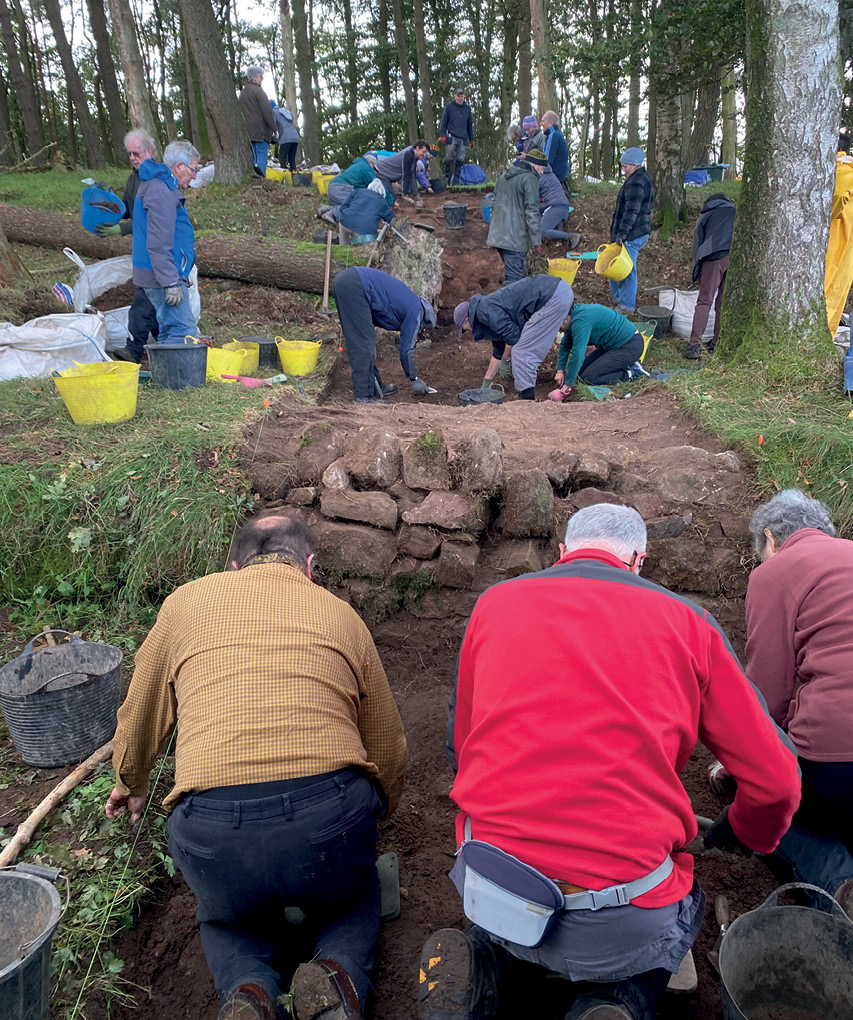
The significance of the site was first realised in the 1920s when more than 330 hand axes were recovered from Fordwich Pit, within Old Park. The context of the finds was not well understood, however, and much of the geological information that had been produced was lost after its documentation, meaning the age of the site has long remained uncertain. In order to see if more, dateable, evidence of hominin activity could be recovered, a team from the University of Cambridge has been excavating the site over the past six years.
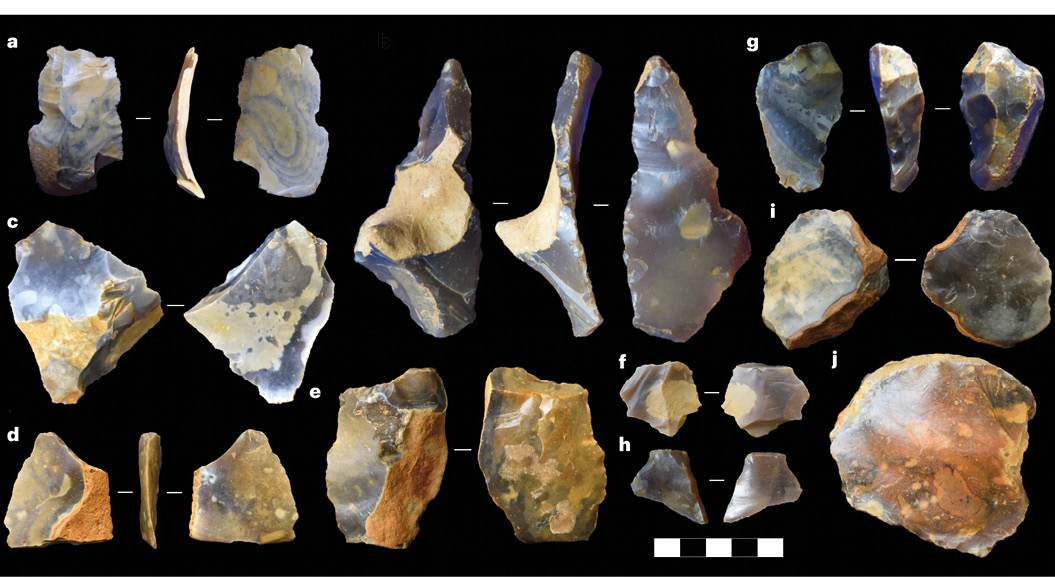
Their efforts soon bore fruit, with lithic flakes recovered in several layers of alluvial deposits. After dating these layers, the team hypothesised that the site had been occupied at least twice, and possibly as many as four times, with the oldest habitation layer dating to c.712,000-621,000 years ago. Based on these discoveries, the team suggest that the hand axes found in Fordwich Pit date to at least two different periods. The rougher, more irregularly flaked hand axes, they propose, possibly date to the earliest occupation of the site, which would make them the oldest-known hand axes in northern Europe. The well-worked, more heavily flaked hand axes, on the other hand, possibly date to the reoccupation of the site by Acheulean populations around 200,000 years later.
Palaeoecological evidence from the excavation revealed that, during this later occupation period, Old Park would have been located on the banks of the ancient River Stour and covered in grassland. Additionally, this occupation would have occurred during the Anglian glaciation – one of the coldest Ice Ages in northern Europe.
Dr Michela Leonardi, a University of Cambridge and Natural History Museum palaeoecologist who modelled Old Park’s ancient environment, said: ‘If humans lived in cool-to-cold grassland ecosystems at this time, even if only during the summer, it raises important questions about how they did this. Did these populations track migrating prey? Could they have made clothing with sewn seams or shelters to guard against the cold?’
The results were recently published in Nature Ecology & Evolution (https://doi.org/10.1038/s41559-025-02829-x).
Text: Kathryn Krakowka / Image: Key et al. (2025). Nature Ecology & Evolution