Subscribe now for full access and no adverts
Excavations in Guardbridge, along the Eden Estuary in Fife, have revealed a rich landscape of archaeological features spanning the late Upper Palaeolithic through to the modern day.
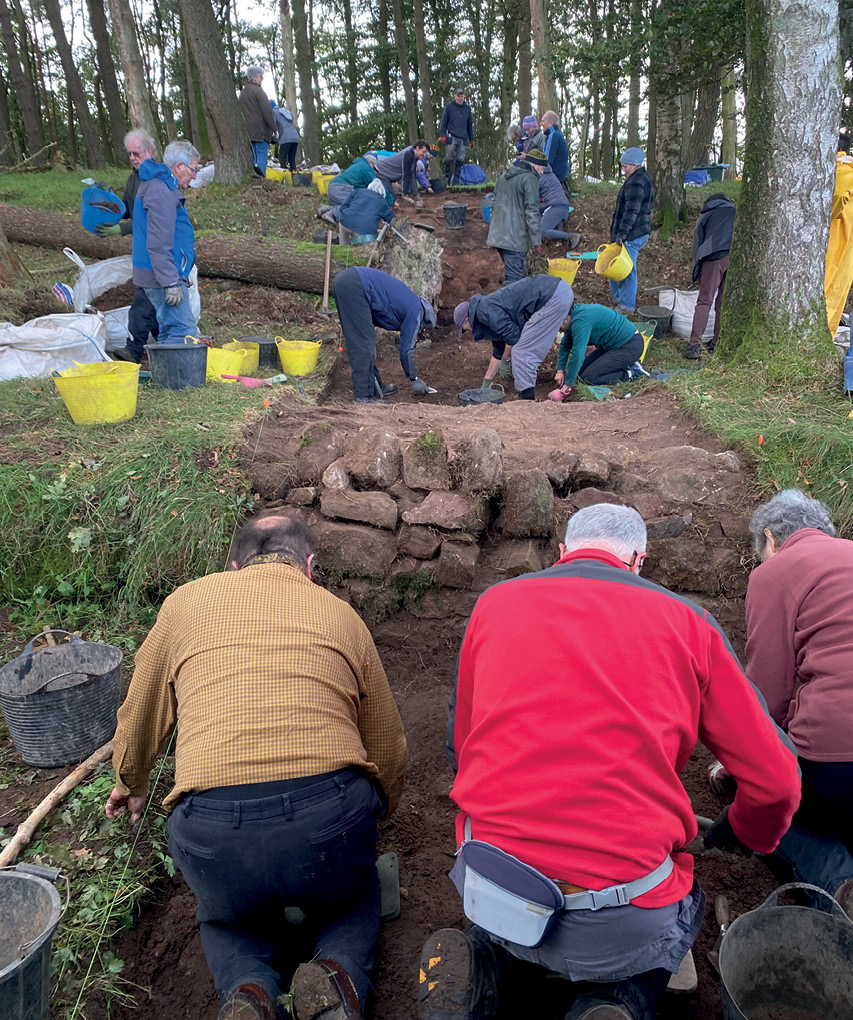
Conducted between 2019 and 2021 – and recently published on Archaeology Reports Online (http://www.archaeologyreportsonline.com/reports/2025/ARO61.html) – the excavations at Seggie were carried out by GUARD Archaeology Ltd in advance of housing development. Aerial photographs had previously identified a prehistoric multivallate fort in the north-east corner of the site and, after trial trenches revealed further evidence of archaeology, a total of 20.14 hectares (49.8 acres) of topsoil were stripped.
This work revealed traces of Palaeolithic activity that was represented by a scatter of flints from the knapping of tools by some of the earliest inhabitants of Fife. There were then traces of a Mesolithic campsite, with a firepit radiocarbon dated to c.4320-4051 BC and some burnt lithics arranged in a star-shaped pattern, which might suggest the location of a tent or other form of shelter. The site’s position overlooking the Eden Estuary was presumably advantageous for hunting and fishing. Neolithic occupation was reflected by pits containing burnt cereal grains, saddle querns, and pottery sherds, although no traces of domestic structures were found.
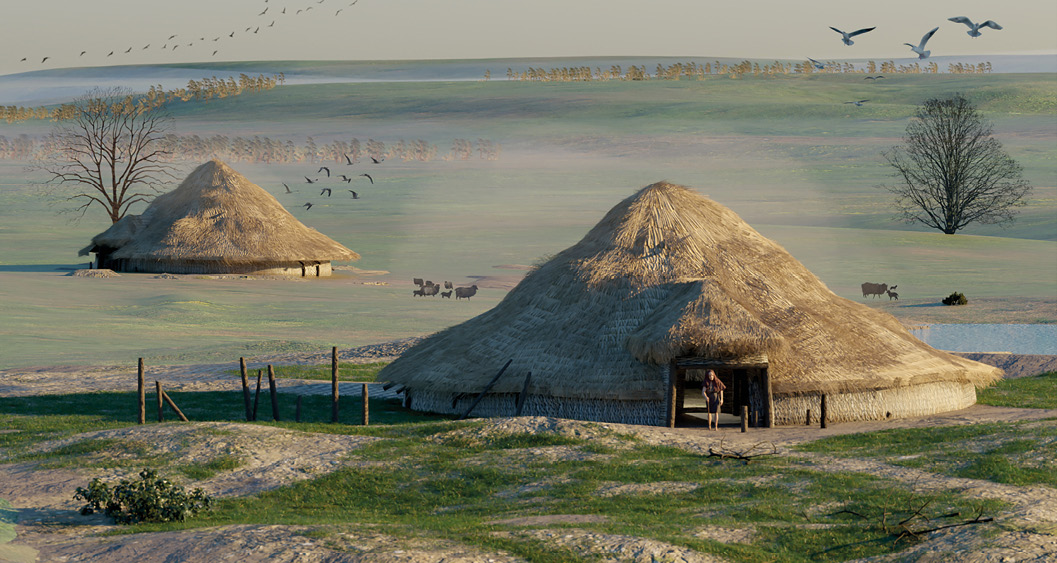
Activity appears to have intensified during the Bronze and Iron Ages, with the excavation uncovering the remains of numerous roundhouses, and occupation apparently continuing from 2200 BC into the early centuries AD. Two Bronze Age casting moulds for a sword blade and a socketed gouge attest to metalworking. Excavation confirmed that the fort was late Bronze Age-Iron Age date and several roundhouses were found outside of its ramparts. Spindle whorls and loom weights recovered from inside this fortified settlement provide evidence of weaving while a shale bracelet reflect personal adornment.
After a possible period of inactivity, the site was again in use between AD 900 and 1300, with several medieval corn-drying kilns discovered. Charlotte Hunter, who worked on the project, said: ‘These kilns were presumably worked by labourers belonging to the farm of “Segy”, which appears on early maps. The different construction techniques apparent show how kilns changed over time, improving in design and size to meet the growing demand from the growing medieval population of Fife.’
The final evidence of activity on the site was found above ground: a pillbox dating from the Second World War, located just north of the fort. While the area around this modern feature did not form part of the excavation, the site was documented before the structure deteriorated further.
Text: Kathryn Krakowka / Image: GUARD Archaeology Ltd