Subscribe now for full access and no adverts
Archaeologists working in Villedieu-sur-Indre in central France have uncovered a remarkable set of pits filled with the remains of c.2000-year-old horses.
The excavations were carried out over an area of 1.3ha by a team from Inrap in advance of a construction project. They identified various structures, ditches, and a road associated with early medieval occupation, but by far the most exciting discovery was a number of pits containing horse bones, which have been radiocarbon dated to 100 BC-AD 100, during the transition between late pre-Roman and early Roman Gaul.
The archaeologists revealed a total of 14 pits containing the remains of 37 horses. The number of horses in each pit varied, but all had been placed carefully in the ground, lying on their right sides with their heads facing south. Their positions indicate that the horses were all buried at around the same time, soon after their deaths. Zooarchaeology reveals that they are, without exception, fully grown stallions more than four years old, although they are of relatively small stature – measuring c.1.2m at the withers – as is typical of the Gallic subspecies. The pits also contained the remains of three medium-sized adult dogs. These, again, had been carefully positioned, lying on their left sides with their heads facing west. Except for these animals, the excavations have produced no other archaeological material dating to the Gallic period.
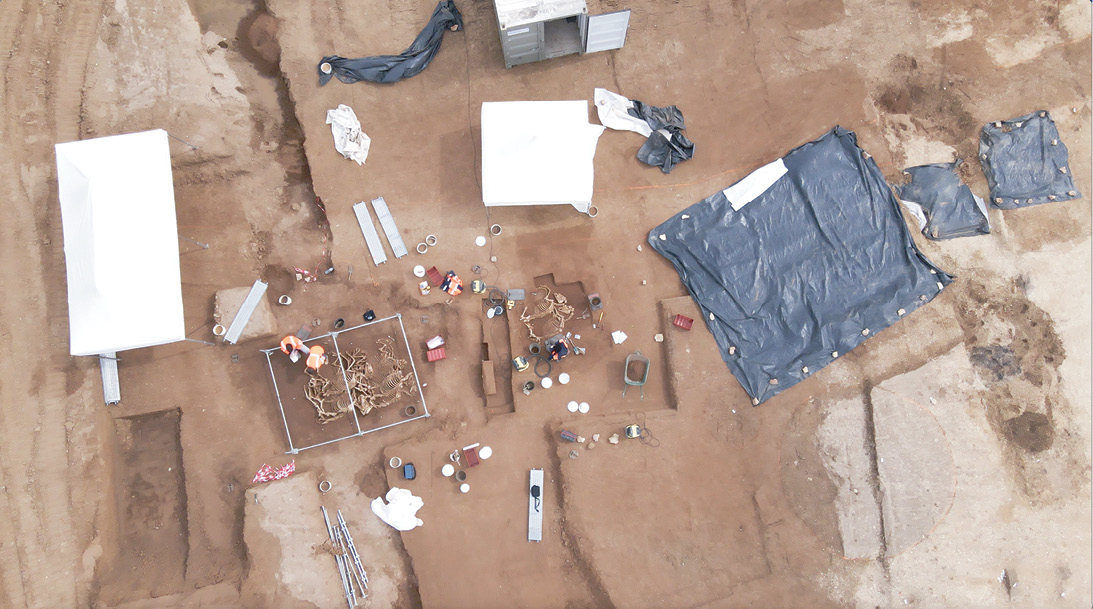
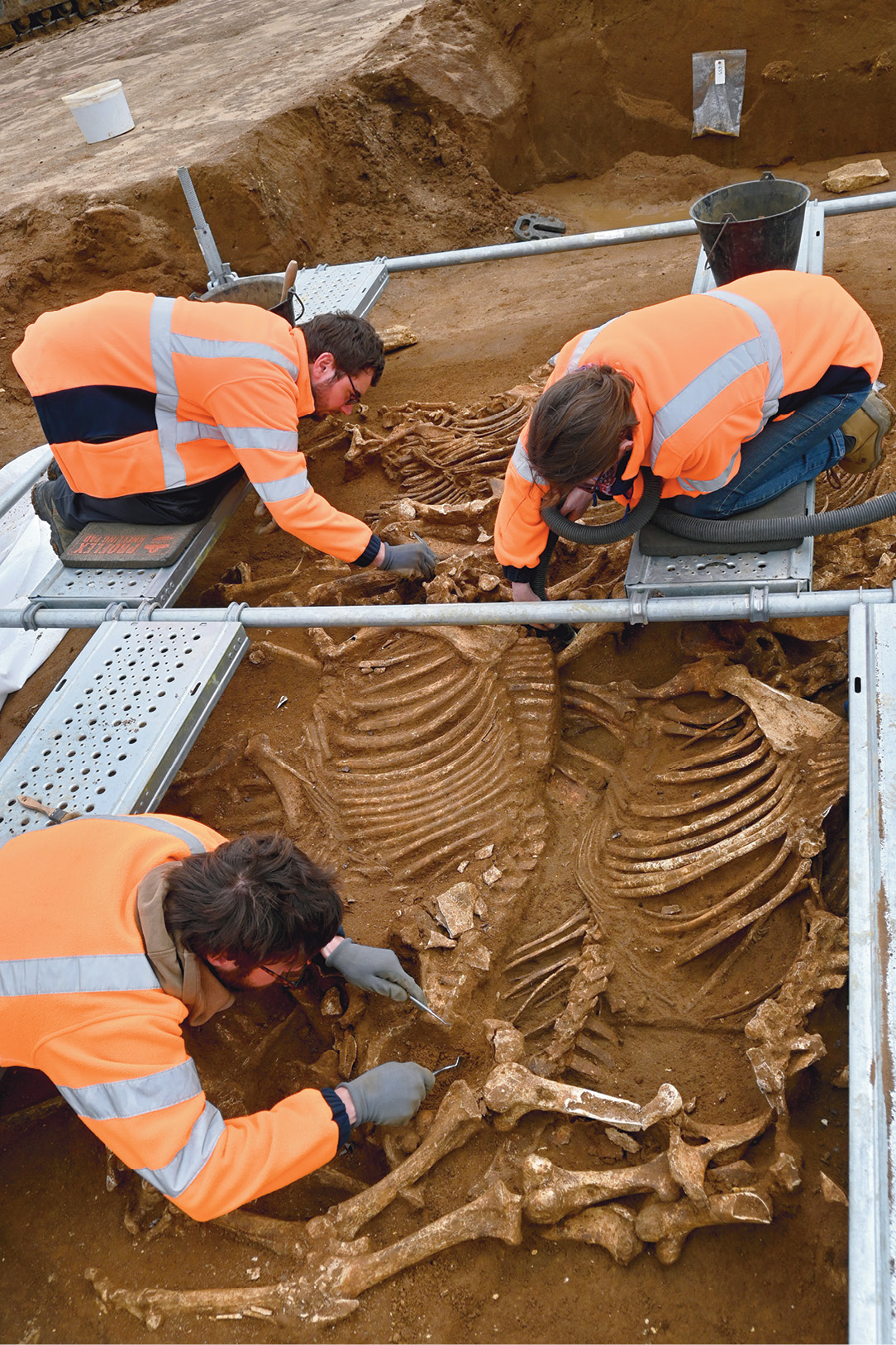
The reason for this mass burial is currently the subject of debate. As no foals or mares have been found among the remains, researchers have ruled out an epizootic episode (an outbreak of disease) that affected the whole herd, but beyond this, at present, we cannot say for certain whether the deaths were accidental or deliberate.
Parallels have been drawn with two other unusual Gallic sites excavated by Inrap some 20 years ago on the Gergovie plateau in Auvergne: Gondole and L’Enfer. A pit at Gondole was found to contain the remains of eight horses and their riders, while L’Enfer produced 53 horses across five pits. As at Villedieu-sur-Indre, none of these pits contained any other material, and they are not directly associated with any contemporary structures. However, each site is located just a few hundred metres away from a known oppidum. Interpretations of the Gergovie sites have therefore hypothesised that there may be some connection between these burials of large numbers of mature male horses near oppida and the battles of the Gallic Wars, which were occurring around this time. This theory applies equally well to the newly discovered site at Villedieu-sur-Indre, which is located near the oppidum of Camp de César.
It has also been suggested that the horses could have been part of a ritual sacrifice of some sort; if this were the case, it must have been a particularly important event, as the horse remains at Villedieu-sur-Indre would have represented a significant portion of the total herd.
Archaeozoological study is ongoing, and it is hoped that this will shed more light on the circumstances surrounding the horses’ deaths, but this unusual discovery is already prompting a reconsideration of the religious and funerary practices of the late Iron Age and early Roman period in Gaul.
Text: Amy Brunskill / Images: ©François Goulin, Inrap; © Mathilde Noël, Inrap