
Subscribe now for full access and no adverts
Recently published research has revealed that the location of a new housing development in Larkhall in South Lanarkshire was already popular in prehistory. The discoveries were made during archaeological excavations undertaken by GUARD Archaeology prior to the construction of new houses in 2014, the results of which have only now been revealed following the completion of post-excavation analyses.
The earliest evidence of settlement on this site, which overlooks the River Avon (a tributary of the Clyde), was a small and ephemeral circular hut that was radiocarbon dated to 9000-7000 BC. This represents one of the earliest Mesolithic encampments ever found in Scotland, dating to a period when small groups of hunter-gatherers were moving into northern Europe after the retreat of permanent ice sheets and the return of vegetation, plants, woodland, and animals.
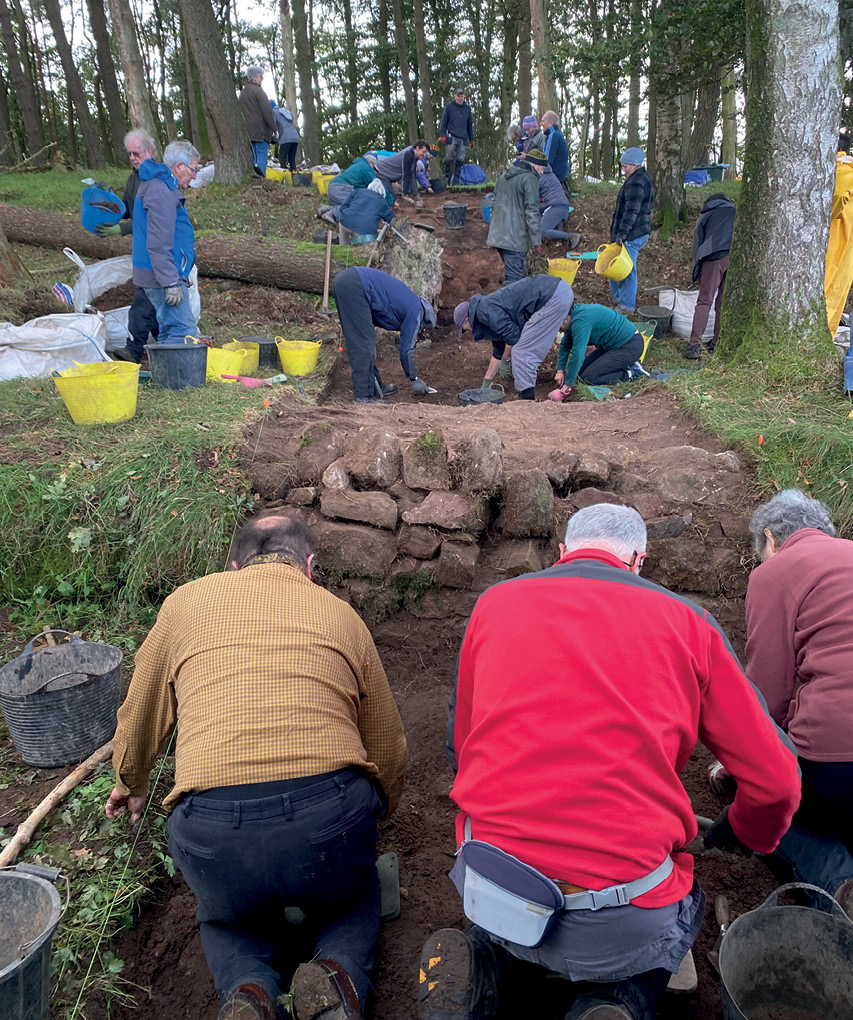
Some 7,000 years later, another group of people settled this same location. In the middle of the promontory was a substantial roundhouse, radiocarbon dated to sometime between the 16th and 13th centuries BC, during the Bronze Age (below). A ring of eight large post-holes and the remnants of the thick oak posts that had once supported the building’s large conical roof were revealed. The circuit of post-holes was surrounded by a gully that held the outer wall in place. Fragments of daub from this outer wall survived, showing how the inhabitants kept their house windproof. Sherds of pottery vessels were also found in pits and post-holes within the centre of the building, which were sealed by an organic deposit that may have been part of the building’s roof, preserved by waterlogging. Radiocarbon dating indicated that the building was abandoned sometime between the 12th and 10th centuries BC.
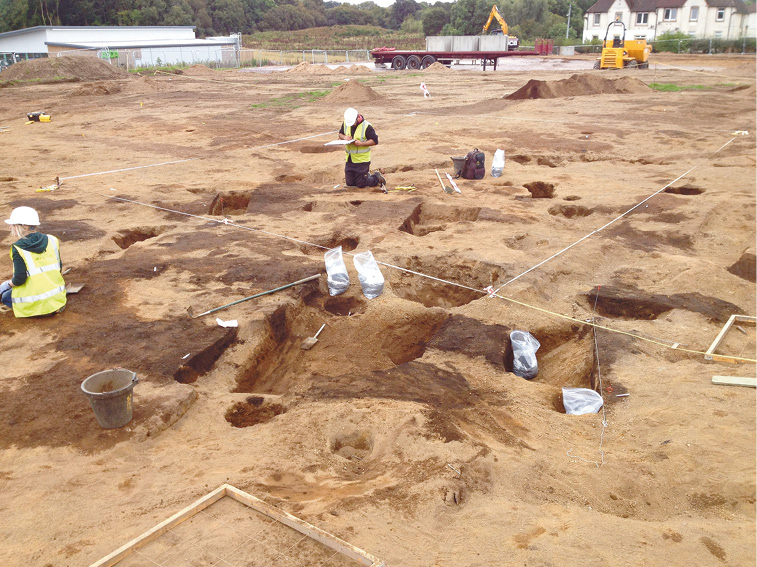
More than 1,000 years later, a small rectangular timber building was built on this same spot, overlying the Bronze Age roundhouse. It contained a large fire-pit that was dated to the 1st to the 3rd century AD, placing its occupation during the Iron Age, when the threat of Rome still lay to the south. The building also contained evidence of dung, suggesting that at least part of it functioned as a small byre for animals. Overall, these chronologically distinct phases of occupation emphasise the attractiveness of this place in the landscape of South Lanarkshire to successive groups of people from the Mesolithic to the Iron Age.
The archaeological work was funded by Bracewell Stirling Consulting, and was required as a condition of planning consent by South Lanarkshire council, who are advised on archaeological matters by the West of Scotland Archaeology Service. ARO53: a Mesolithic camp, Bronze Age roundhouse and an Iron Age building at Nairn Street, Larkhall, South Lanarkshire by Kevin Mooney is available to download for free from http://www.archaeologyreportsonline.com/reports/2023/ARO53.html.
Text: Kathryn Krakowka