
Subscribe now for full access and no adverts
The traditional portrayal of post-Roman Britain as a landscape in decline, devoid of the cultural richness that had been infused into it by the presence of the Empire, was turned on its head in 2020, when a mosaic at Chedworth Roman Villa in Cheltenham was dated to the 5th century (see CA 393). It indicated that even with the lack of Roman authority, people in Britain were still holding on to some aspects of Romanitas, with Gloucestershire in particular appearing to have remained a pocket of cultural continuity.
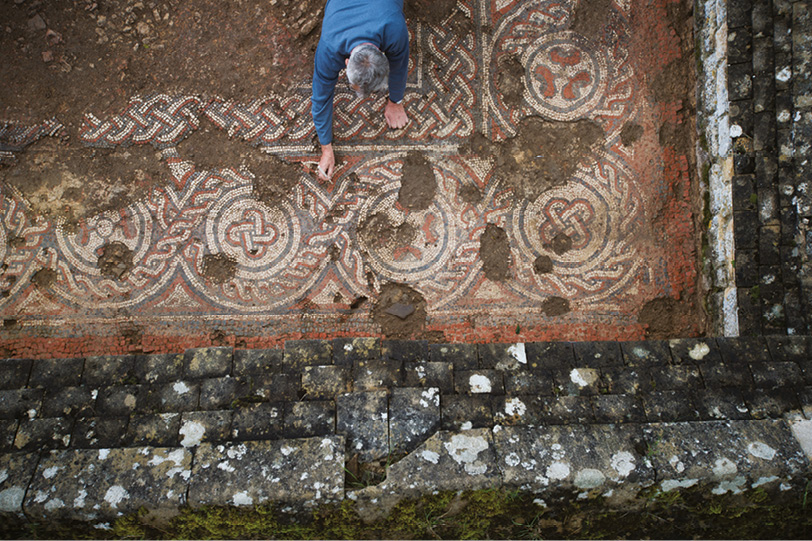
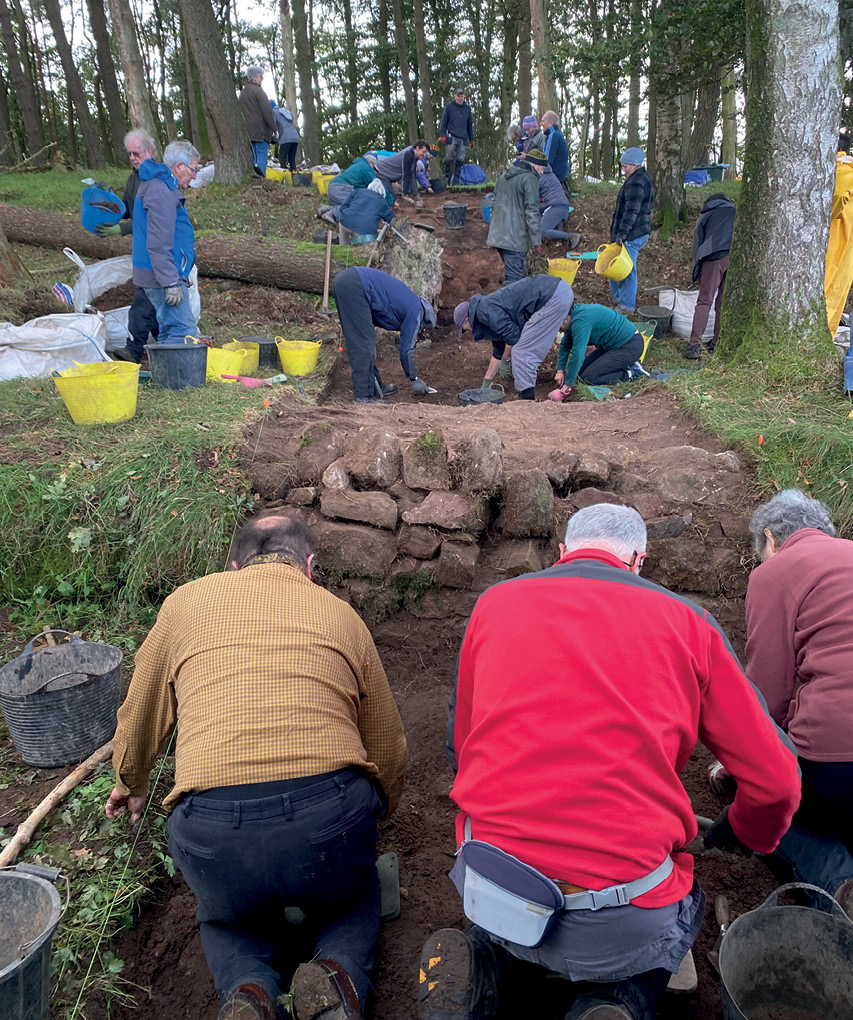
The mosaic in question was first uncovered during extensive excavations of the villa between 2010 and 2018, in Room 28 of the north range of the complex. Radiocarbon dating of the wall separating Room 28 from Room 27 was dated to the 5th to 6th centuries (three dates from the foundation trench of this wall established a mean date of AD 475-495 for its construction), and indicated that the mosaic in Room 28 – which was clearly created after the space was divided – must have been laid down during or after this period.
Now this 5th-century date has been confirmed using optically stimulated luminescence (OSL) analysis of soil samples from beneath the mosaic itself. This revealed that the soil was last exposed to sun-light no earlier than AD 400, sparking a new line of investigation: could there be other evidence highlighting how this region of Britain responded, and possibly thrived, after the end of direct Roman rule?
Commenting on the next steps, National Trust archaeologist Martin Papworth said: ‘We’re now continuing our research. Evidence is being gathered from other West Country villa archives to track down additional dating evidence. This will put our 5th-century Chedworth dates in context so we can further understand what life would have been like during this period, not only at Chedworth, but within the community of villas and towns that surround it.’
Text: Kathryn Krakowka