Subscribe now for full access and no adverts
Excavations at a Moche site in north-central Peru have uncovered a throne room believed to belong to a previously unrecognised female ruler.
The site of Pañamarca was first rediscovered in the 1950s, and since 2018 has been the subject of investigations and conservation work by the Archaeological Landscapes of Pañamarca research project. To date, excavations have revealed evidence of a monumental site with plazas, adobe platforms, and a number of buildings exuberantly decorated with colourful wall paintings.

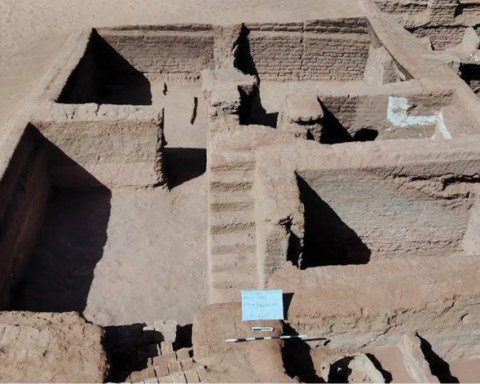
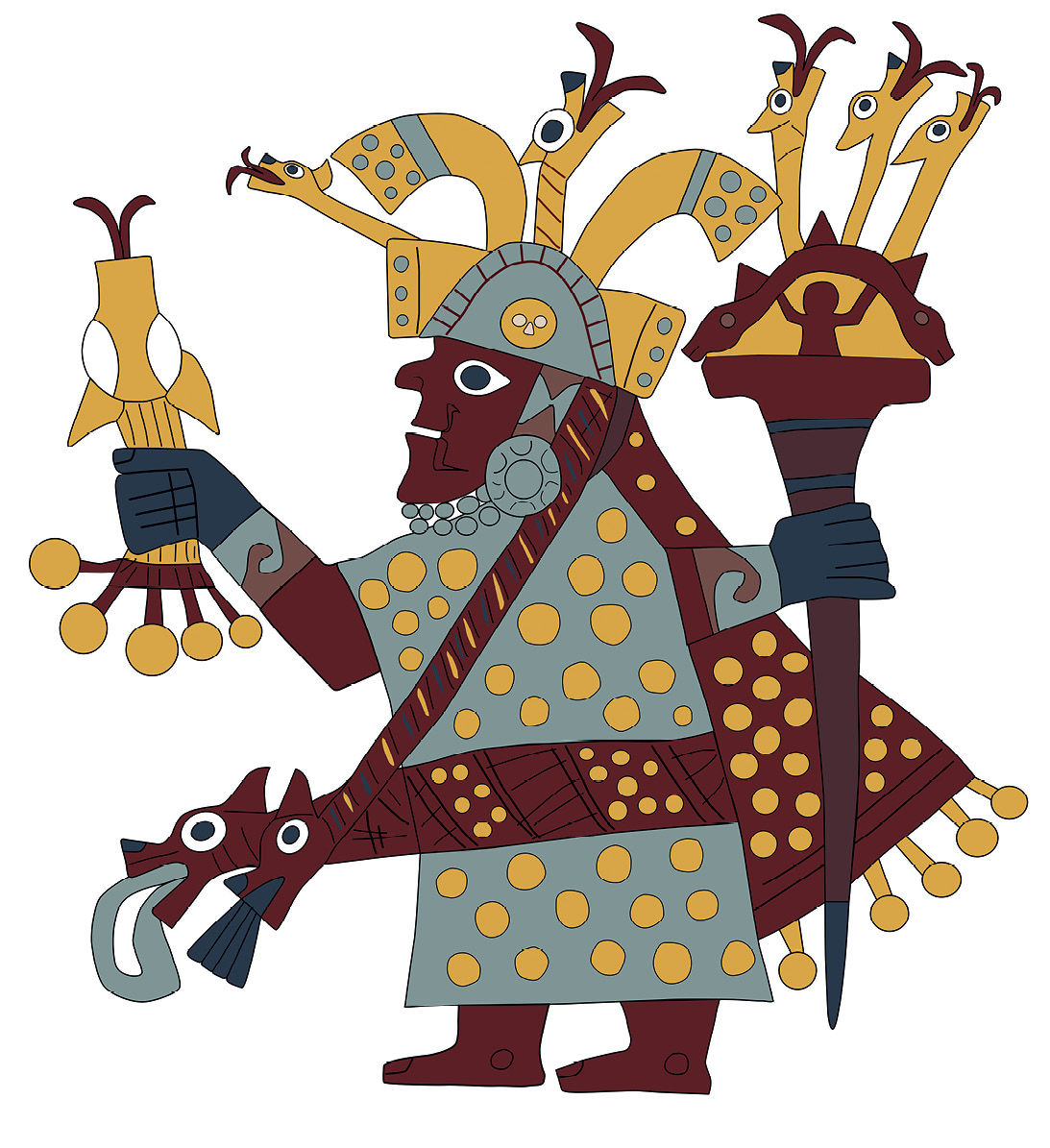
The latest discovery occurred in a structure known as the ‘Hall of the Moche Imaginary’. Previous excavations in this large, square-pillared building have revealed it to be one of the most richly painted spaces in Pañamarca, decorated with mythological scenes and images of ritual processions, among other things. However, the team’s interpretation of the space was transformed this year when they came across a finely decorated earthen throne. Signs of wear on the backrest reveal that this seat was not merely symbolic but had been used in life. The question was, by whom? Newly uncovered wall paintings offer a clue. The two ritual procession scenes turned out to be leading towards a central figure: a woman with distinctive braids, plumed headdress, and dress, holding a rattle and a sceptre. The same figure is seen again in a smaller wall painting, raising a cup, and again in another image where she is seated on a throne identical to the one found in this room. These images point to a female Moche leader as the occupant of the throne, the first known example in Peru.
This year’s other significant find was another square-pillared structure, located c.160m away from the Hall of the Moche Imaginary, named the ‘Hall of the Braided Serpents’ due to its decorations, which include images of intertwining serpents with human legs. Radiocarbon dating suggests that the two halls are contemporaneous: both were built around AD 650, and each underwent several phases of ritual destruction and rebuilding. However, their settings are quite different. The Hall of the Moche Imaginary is in a more secluded location, with the throne itself facing away from the monumental centre of Pañamarca, towards the Pacific Ocean. By contrast, the Hall of the Braided Serpents sits overlooking a vast plaza that would have been a place of gathering and spectacle, and has been likened to the box seats at a theatre: a place for high-status figures to see and be seen.
For now, both of these spaces have been backfilled to protect them, but work will continue at the site next year. Only 10-15% of the Hall of the Moche Imaginary has been excavated so far; future research will reveal more about this space and, perhaps, who used it. Additionally, analysis is yet to be carried out on a strand of human hair found in association with the throne. Already, though, the discoveries in this room represent a fascinating contribution to growing arguments for the existence not just of Moche ‘priestesses’, but of women with sociopolitical power and governing authority in the Moche world from c.AD 600 onwards.
Text: Amy Brunskill / Images: photograph and digital illustration by Lisa Trever