Subscribe now for full access and no adverts
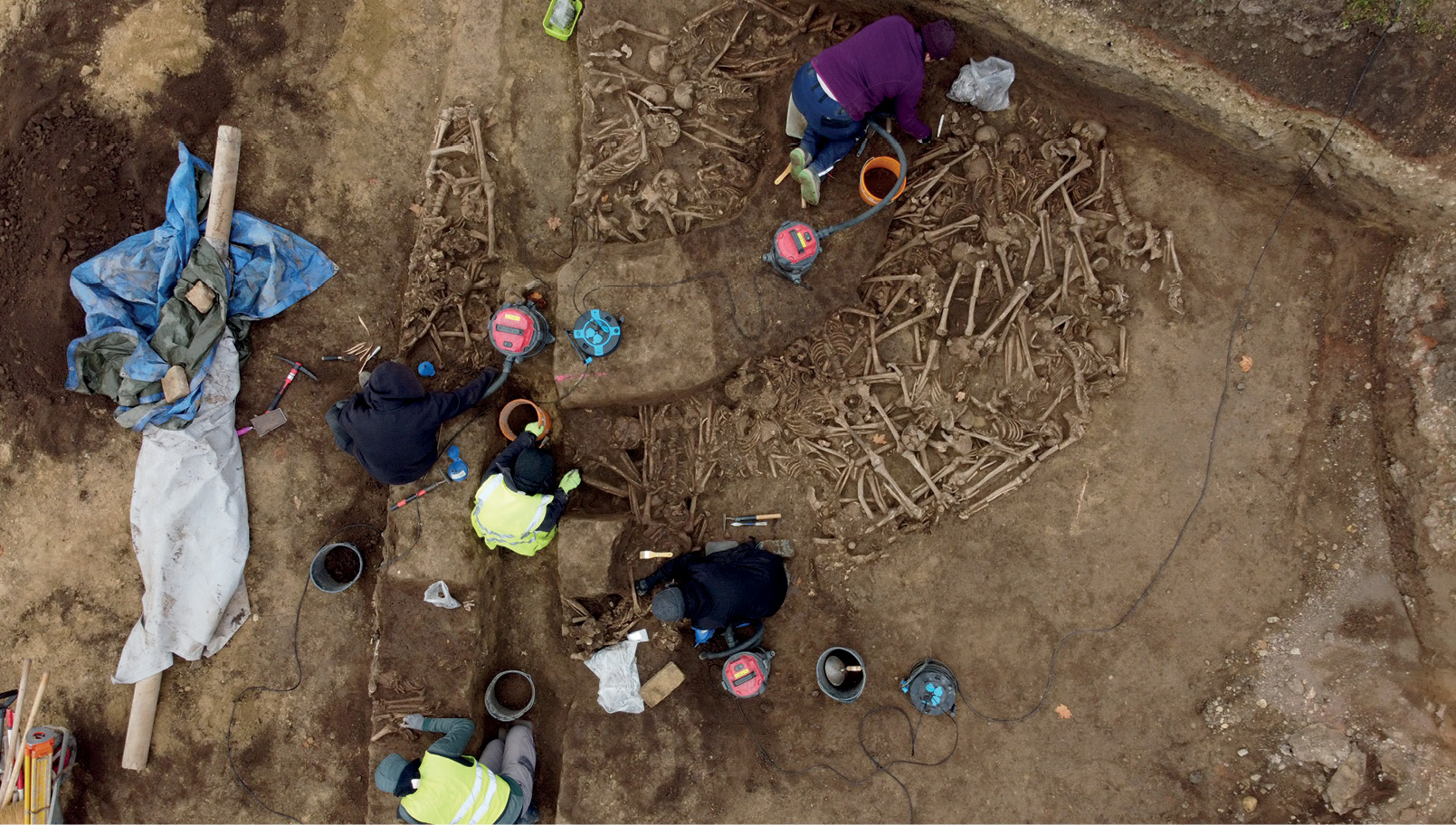
A mass grave recently unearthed in Austria is believed to be associated with a Roman battlefield. In autumn 2024, construction workers carrying out renovations of a playing field in Simmering, a district of Vienna, had unexpectedly come across a large quantity of human remains. The ensuing excavations revealed a burial pit measuring 5m by 4.5m and 0.3m-0.5m deep, which contained the skeletons of around 150 individuals. The bodies appear to have been buried hastily, placed in the pit in no particular order or orientation and quickly covered with a layer of earth.
A third of the skeletons have been analysed so far. These examinations have revealed that they all belong to men, mostly more than 1.7m tall and aged between 20 and 30 years old at the time of death. They appear to have been in good health for most of their lives, with no evidence of infectious diseases or malnutrition. However, all have injuries incurred around the time of death – most frequently to the skull, torso, and pelvis – which seem to have been caused by a range of weapons. Researchers therefore conclude that this burial represents the aftermath of a disastrous military conflict, which resulted in a large number of casualties, with little time and few resources for their burial.
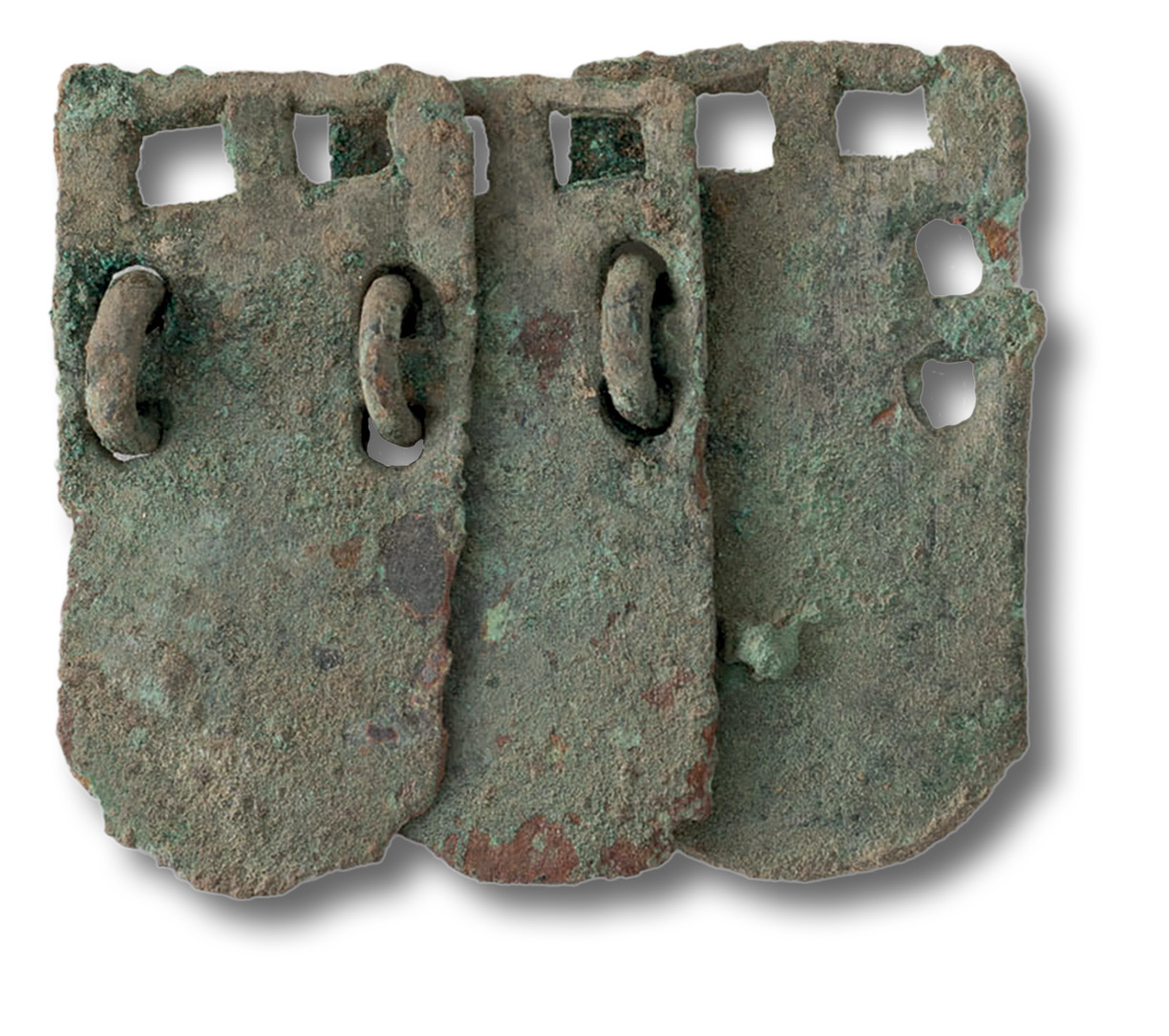
The age of the burial offers a clue to the conflict in question: some of the bones have been radiocarbon dated to AD 80-230, and several objects found in the pit help to narrow this down further. These artefacts include fragments of an iron dagger with decorations typical of Roman designs from the middle of the 1st to the start of the 2nd century AD, as well as pieces of scale armour, which was widely adopted by the Roman army by around AD 100, and a cheek-piece from a Roman helmet in a style established in the middle of the 1st century AD. Other finds include two iron spearheads – one embedded in a hip bone – and hobnails from caligae (Roman military boots), providing further indications that the deceased were Roman soldiers who died in battle. All of this points to a date of c.AD 100, leading researchers to believe that the mass grave is probably associated with Domitian’s wars against Germanic tribes on the Danube at the end of the 1st century AD. These conflicts are referred to in several Classical sources, and further evidence for them is provided by the expansion of fortifications on the Danubian Limes a few years later. The mass grave at Simmering represents the first physical evidence of this fighting, and reveals the probable location of one of these battles.
The discovery of a vast inhumation burial like this is highly unusual, as cremation was the dominant burial practice in the European parts of the Roman Empire during the period in question. It is also significant that the site is located less than 7km away from central Vienna, making it possible that this military defeat may have had a direct connection to the development of the legionary fortress of Vindobona, which occurred around this time, representing the start of Vienna’s urban history. It is hoped that further research will shed more light on the backgrounds of the individuals buried in the mass grave, as well as the site itself and its wider context.
Text: Amy Brunskill - Images: A Slonek/Novetus; L Hilzensauer, Wien Museum