Subscribe now for full access and no adverts
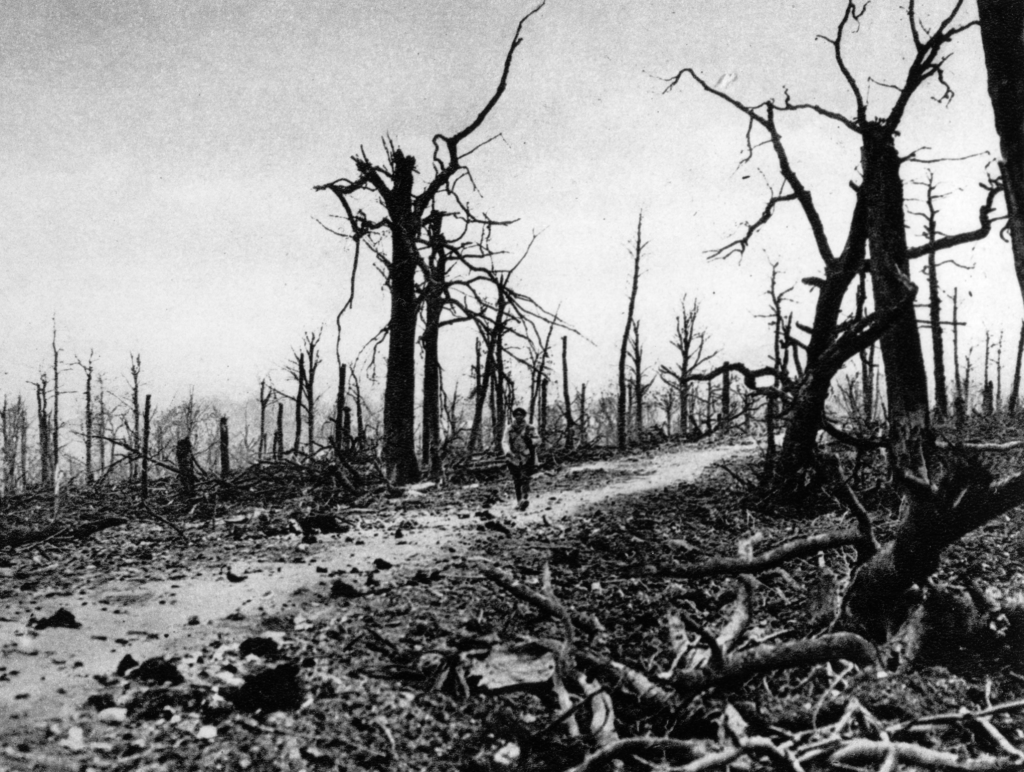
Verdun – or the ‘Mill on the Meuse’, as it became known – holds a similar place in France’s national psyche to that occupied in the British imagination by the Somme. Though surprisingly little remembered today outside France and Germany, the epic struggle for the famous fortress city that took place over 10 months in 1916 would go down in history as the longest battle of World War I. With more than 300,000 casualties on either side, it would also prove to be one of the bloodiest engagements of all time – its huge loss of life providing an early glimpse of the full horror of 20th-century industrialised warfare with which the 1914-1918 conflict would for ever be associated.
Occupying a strategic position on the River Meuse, in north-eastern France, Verdun had already survived several attempts to capture it over the centuries – most notably during the Franco-Prussian War of 1870-1871. Such resilience had lent it an almost mythic status, even before Erich von Falkenhayn, the Chief of the German General Staff, launched his assault on it in February 1916 in an attempt to inflict both a strategic defeat and a blow to French national morale. With his infamous order to ‘bleed them white’, and with more than 1,200 guns now massed along an eight-mile front, the stage was set for a prolonged ordeal – one that would see entire villages destroyed and the land so poisoned that it would prove impossible after the war to return it to agricultural use.
In the first part of our special feature for this issue, we trace the military career of Philippe Pétain, the French marshal later disgraced for his collaboration with Nazi Germany, but whose contribution to Verdun’s defence led to him being lauded at the time as his country’s saviour. In the second part, we look in more detail at the battle itself to understand how France’s eventual victory was achieved at such terrible human cost.
Pétain at war
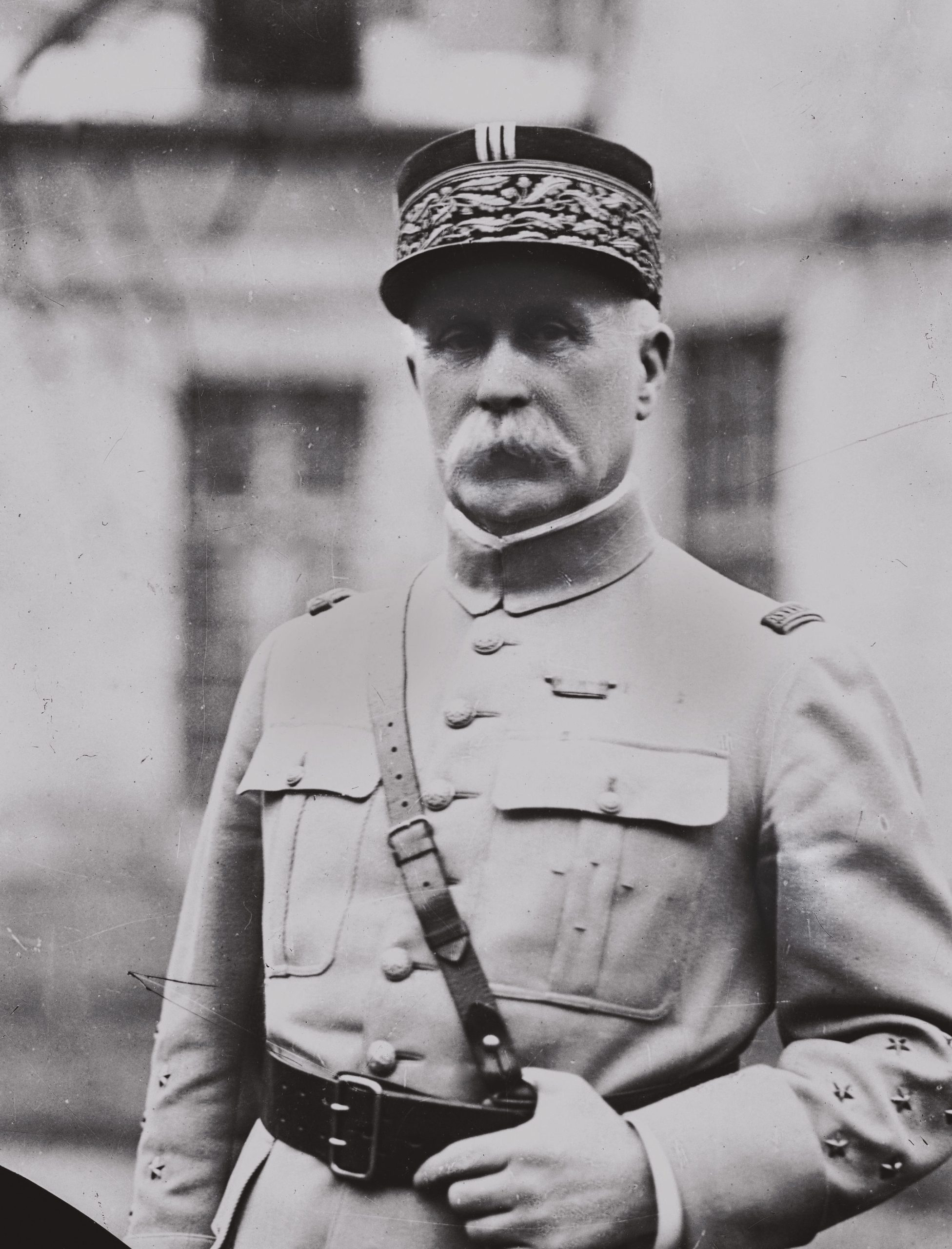
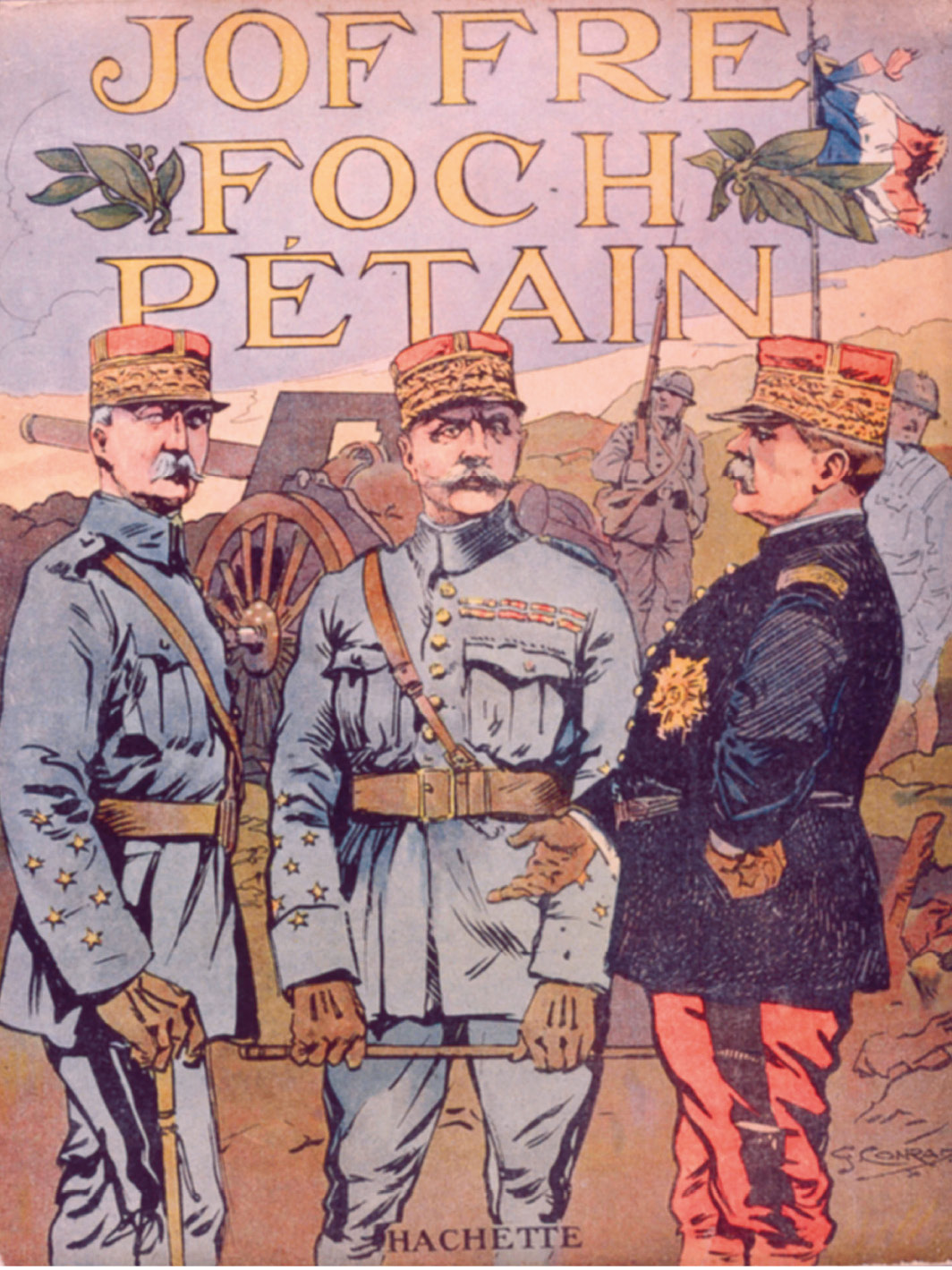
Few leaders have experienced such a dramatic collapse of their reputation as Marshal Philippe Pétain. His achievements in the First World War – as defender of the fortress of Verdun, and then as the commander-in-chief who saved the French army from collapse after the mutinies of 1917 – were real. Just over two decades later, however, it was a different story.
Following the disaster that overtook France in the summer of 1940, Pétain argued that collaboration with the Nazi occupier was the only realistic response. As head of the puppet Vichy regime for the next four years, he was complicit in his country’s deepening subjugation to a savage occupying force. Tried for treason after the Liberation, the aged marshal narrowly escaped the death penalty.
Pétain ended his days aged 95, a disgraced prisoner on the Île d’Yeu, off the Brittany coast. Successive French governments have resisted pressure from right-wing activists to have his remains transferred for burial on the mainland. While in no way seeking to diminish Pétain’s responsibility as Vichy’s controversial head of state, this article focuses on his role as a military commander. What was his contribution to the survival and success of the French army in the First World War?
Learning and teaching
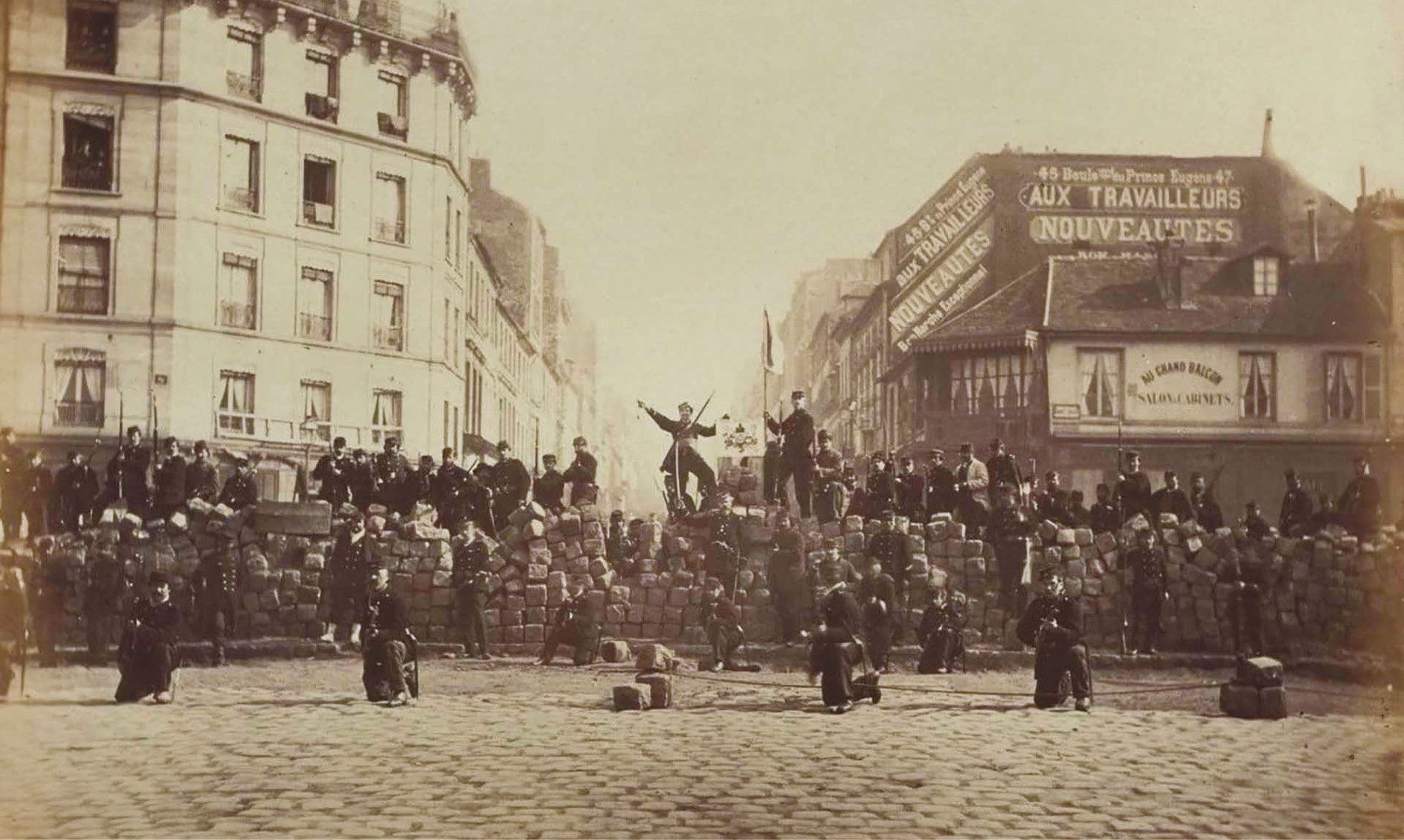
Born into a rural farming family in mid-19th-century France, the young Pétain faced a choice of two professions if he was not to make his living on the land: the Catholic Church or the army. He seems to have opted for the latter after experiencing the backwash of the Franco-Prussian War as a schoolboy. Not only did he organise his classmates to drill with wooden rifles, at a deeper level he was touched by the widely felt desire for revenge on the German invader. News of the Paris Commune – a revolutionary insurrection in the spring of 1871, marked by great violence – incidentally helped to set him on the path to becoming a man of the political right. Five years later, aged 20, he entered the Saint-Cyr military academy to embark on a period of rigorous training. He was by no means an outstanding cadet, graduating 229th out of 386.
There was no fast-track route to promotion for Pétain. Unlike several senior figures with whom he would serve during the First World War, such as Generals Joffre, Nivelle, and Gallieni, he spent his whole pre-1914 career in France, without gaining experience of colonial warfare. A spell on the staff of the military governor of Paris was followed by an appointment as a shooting instructor at the Châlons small-arms school.
Pétain had a recognised talent as a teacher, spending much of the last decade before the war as a professor at the War College. By 1910, he held the rank of colonel and retirement was in sight. Had it not been for the war, which broke out when he was 58, his career would scarcely merit the historian’s attention.
Pétain seemed uninterested in making the necessary connections to advance his career. In the politically divided French officer corps, he was always something of an outsider. He was certainly not a supporter of the liberal, secular Third Republic, established in 1870; yet as a merely nominal Catholic, nor was he a strong partisan of the opposing clerical, reactionary faction. On the most divisive national issue of the pre-1914 period, the trial and disgrace of Captain Alfred Dreyfus on false charges of passing secrets to the Germans, he remained studiously neutral. Pétain’s habitually abrasive, sarcastic manner did not help his cause. Nor did he settle down. After years of aimless affairs, he centred his attentions on one woman, Eugénie Hardon, but she married and divorced another man before she and Pétain finally tied the knot in 1920.
These pre-war years were not, however, wasted from a professional viewpoint. During his long military apprenticeship, Pétain gave careful thought to the problem of infantry tactics in an increasingly lethal battle zone. He differed from those who thought that the key to success lay in a mass offensive, using the weight of numbers to surge across the killing ground towards the enemy positions. He described this approach as ‘a sort of rising sea that must advance without flinching under fire… this is attacking by means of throwing in men, as seen in its most brutal form, a sort of murderous game.’
Pétain maintained that le feu tue (‘firepower kills’). He argued that an army should obtain superiority before launching an assault, using concentrated rifle, machine-gun, and artillery fire to gain the upper hand over an entrenched opponent. He backed up his case with a study of tactics employed in the Anglo-Boer War of 1899-1902 and the Russo-Japanese War two years later.
The furnace of war
The German invasion of August 1914 was Pétain’s first direct experience of war. In one early engagement, corps commander Franchet d’Espèrey, who had seen action in French Indochina and the Chinese Boxer Rebellion, called out to him, ‘What do you think of this manoeuvre, Mr War School Professor?’ Yet the first three months of the conflict saw Pétain promoted more dramatically than in the previous 30 years. This was a direct consequence of the mass sackings of failed senior figures by the commander-in-chief General Joseph Joffre, which suddenly created a number of vacancies at the top.
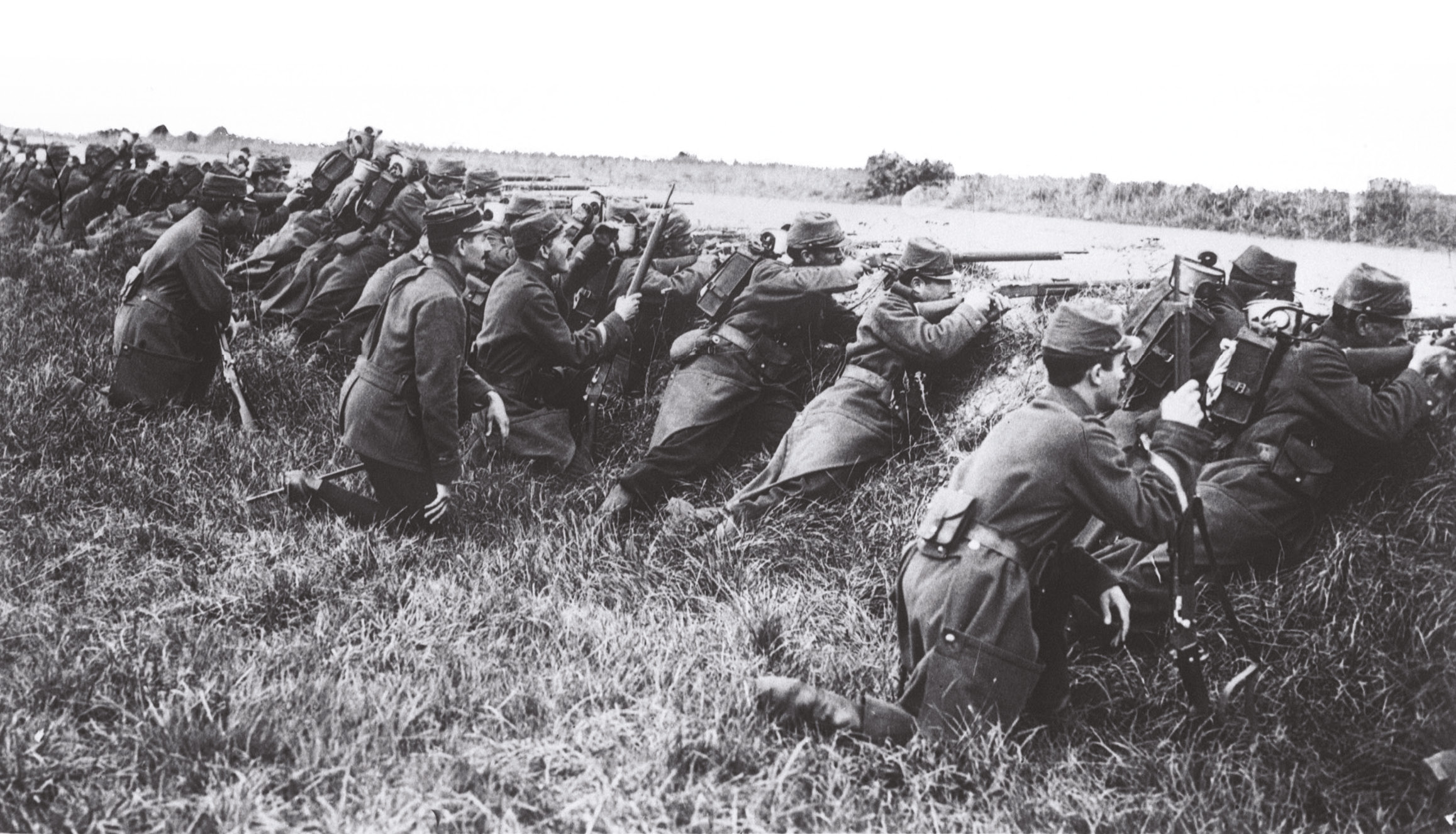
Appointed brigade-general, Pétain replaced the dismissed head of the 6th Infantry Division. In September, he took part in the Battle of the Marne, where the German invasion of France was halted. Then in October, as trench warfare began, he was posted to Arras in northern France, an area he knew well from his youth, as head of 33rd Army Corps.
The defence of Arras in the autumn of 1914 taught Pétain a valuable lesson. Although he repelled the initial German onslaught, the battle ebbed and flowed with heavy loss of life, resulting in stalemate. Pétain realised that the conventional wisdom, whereby the first line of defence was stronger than the second, was mistaken. Instead, the second line must be strengthened, making use of concealed, more deeply entrenched gun positions. These would absorb and weaken the enemy offensive and make possible a counter-attack. Pétain also stressed the importance of retaining reserves who could be deployed at an opportune moment to strike back at the enemy.

It was Pétain’s misfortune that, in trying to take Vimy Ridge the following spring, he found that the Germans had adopted the same method of defence in depth. In June 1915, he was promoted to command 2nd Army. Ordered by Joffre to undertake another offensive in the Champagne, he came up against another strong second defensive line, beyond the reach of the French artillery. This blunted the French assault and resulted in the loss of almost 200,000 men before the operation was called off in October 1915.
The high command continued to believe that a decisive breakthrough was possible. Pétain’s recommendation, that the army switch to a tactic of limited strikes, did not find favour. It was an approach intended to conserve French lives – an objective that was to be a consistent theme in his thinking.
As the year drew to a close, Pétain was sent to train four army corps at Noailles, close to Paris, for a new offensive in the following spring. In late February 1916, he was here – or, more precisely, in bed with his mistress in a Paris hotel – when he was summoned to take charge of the defence of Verdun against a ferocious German assault. The siege of this fortress city (see the accompanying article from here) would continue for the following ten months and prove a turning point in Pétain’s career.

Brink of collapse
Emerging from the cauldron of Verdun at the end of 1916, Pétain was disappointed to see General Robert Nivelle leapfrog him to become commander-in-chief of the French army. This was not merely a matter of frustrated ambition; Pétain disagreed profoundly with Nivelle’s faith in another major frontal assault on the exposed German salient on the Chemin des Dames, an east– west ridge north of Paris.
The Nivelle offensive of April 1917 failed to achieve its objectives. The new French commander had promised results within 48 hours. In fact, the assault continued for nine days with no appreciable gains. Nivelle went ahead despite evidence that the plans had leaked to the Germans, which allowed them to lay waste to the salient, before withdrawing to the safety of the Hindenburg Line defences. The French bungled their creeping barrage and their troops advanced into a hail of fire. Some 134,000 French soldiers were killed, wounded or missing by the time that the offensive ground to a halt.
The failure triggered a series of mutinies that soon threatened to undermine the cohesion of the army as an effective fighting force. Behind the many acts of indiscipline seen along the front was resentment at the growing casualty list, combined with dissatisfaction over poor food and lack of leave. The movement was not primarily political in inspiration, despite the efforts of socialist and pacifist agitators to stir up unrest. It had much more to do with anger at unendurable conditions in the trenches and the apparent indifference and incompetence of the army’s senior leadership. The scale of the disobedience was huge, involving more than 21,500 men across 121 regiments.
In May, Pétain was brought back as an emergency measure to replace Nivelle and to deal with the mutinies – first as commander-in-chief in the north and north-east and then, from mid-June, of all the French armies. The failure of the offensive had vindicated him and, for the moment, there was no alternative. Yet behind Pétain’s appointment was a tremendous tussle within the French government, many of whose members mistrusted him for his well-known antipathy towards the political class. He also aroused suspicion on the British side for his aversion to once again taking the offensive.
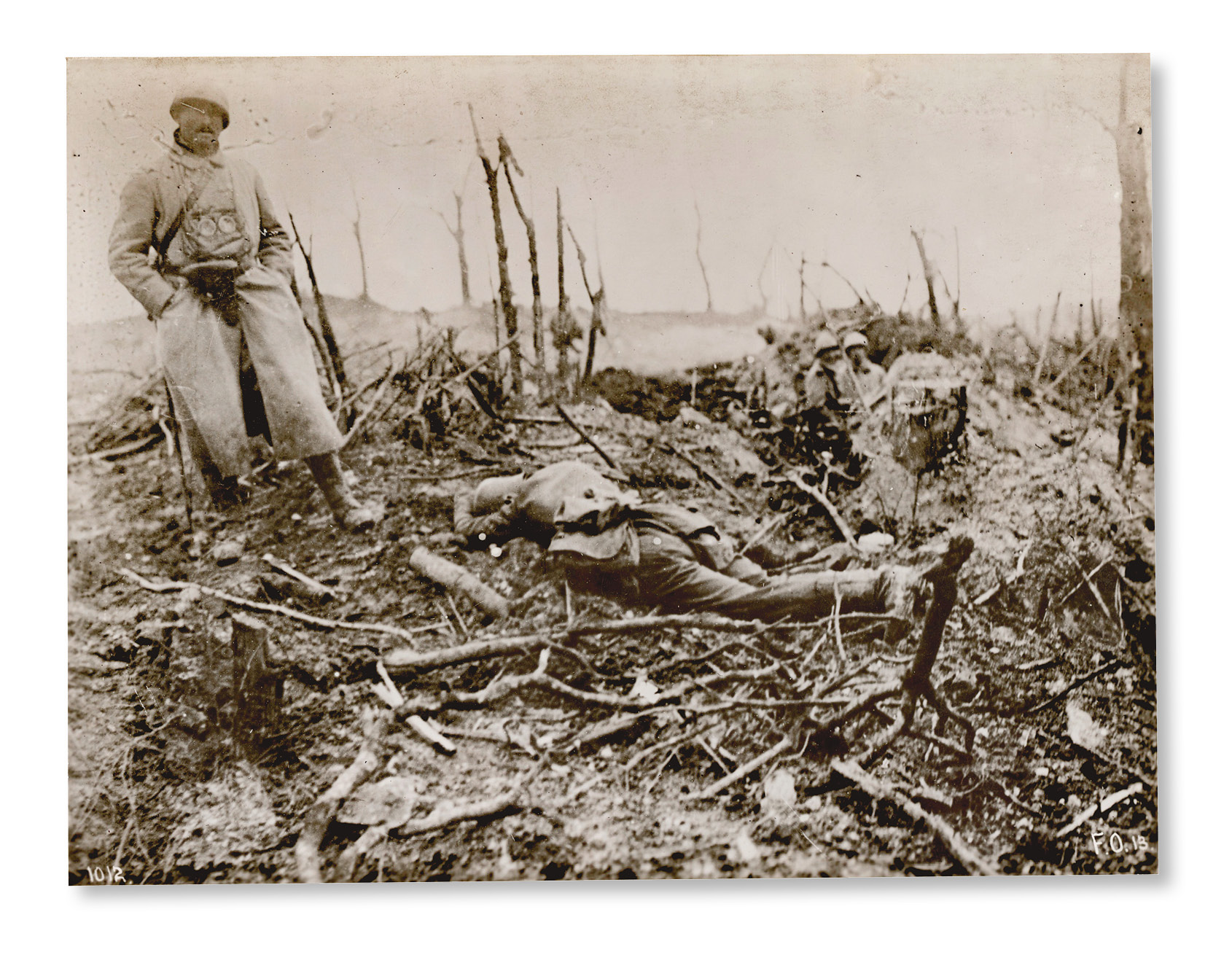
Pétain’s priority was to restore order in an army that was on the brink of collapse. He approached the problem with a combination of strict disciplinary measures and a willingness to address the troops’ legitimate grievances. He recognised that men who had been serving for almost three years deserved better treatment. His first action was to give an assurance that, at least for the foreseeable future, there would be no more attempts to achieve a grand breakthrough. Any attacks would have limited objectives, backed up by adequate artillery support and by maximising the element of surprise.
The approach was based on the assumption that, now that the United States had joined the war, the allies could expect the arrival of fresh troops from across the Atlantic, which would eventually make a difference. In Pétain’s famous phrase, the strategy was to ‘wait for the Americans and the tanks’ – referring to the eventual arrival of the light Renault FT tank (see box below).
This, of course, was for the longer term. Responding to the soldiers’ grievances about leave, Pétain decreed that troops should be granted seven days away from the line every four months. More trains were laid on and canteens set up at stations to provide a more welcoming environment. Rations for those serving on the front line were improved, with fresh vegetables and more hot food provided. There was to be more rest time in the rear areas. Pétain visited the soldiers, too, and explained the wider war situation to them. He insisted that officers make themselves more visible.
It was some time before the benefit of these measures was felt. The restoration of discipline also depended on strict enforcement of military law. More than 500 mutineers were condemned to death on Pétain’s watch – though only some 10 per cent were ultimately executed. By July 1917, the mutinies had been quelled.
THE RENAULT FT TANK
A revolutionary design for its time, the FT (sometimes known as the FT-17) was a light, manoeuvrable fighting vehicle, the first to have a fully rotating turret. Other original design features were the positioning of the crew compartment at the front and the engine at the rear. It was armed with an 8mm Hotchkiss machine-gun, later replaced by a small 37mm Puteaux cannon. Weighing 6.5 tonnes, the FT could be moved by road as well as rail, providing greater operational flexibility. The idea was to use swarms of these tanks to overwhelm the German defences. Although trials took place in April-May 1917, production problems delayed its appearance on the battlefield until the following spring. The FT proved highly effective in the Hundred Days campaign of 1918.

Ready for the offensive?
It took more than the suppression of the mutinies to make the army once again an effective fighting force. Pétain’s long-standing interest in tactics and training was vital to this process. An early directive reorganised the way in which troops were instructed on the latest developments, including the use of tanks and aircraft, which were now reaching the front line in larger numbers.
An ‘Instruction Section’, consisting of seasoned officers and technical experts, studied and taught tactical doctrine at small-unit level. Training manuals were written after consultation with the troops on the ground to find out which methods worked. The section shared ideas with the British army – something that had not been done before in an organised manner. Pétain established a ‘Reorganisation Commission’, too, that fulfilled the same function for larger units. Crucially, he was successful in restoring morale, which was estimated to be ‘good’ in more than 80 per cent of French units by the end of 1917. The men knew that he would not waste their lives. US General John J Pershing later said of Pétain’s leadership in this period that ‘no other officer in France could have performed the task so well’.
The fruits of Pétain’s work were visible in a modest way in the Battle of Malmaison, fought in October 1917. By contrast with his predecessor, Pétain was careful to call a halt once the operation’s objective, the taking of the Chemin des Dames sector, had been achieved. Although losses were still heavy, the offensive was acceptable to the men since it was of limited duration.
Pétain was less successful in implementing his vision of defence in depth across the front. Nor was there effective formal cooperation between the French and British armies. Rather than supporting General Foch’s plan for a formal allied reserve, Pétain and Field Marshal Douglas Haig relied on a willingness to send each other reinforcements if the need arose. Neither of them was keen to subordinate himself to a single allied commander – a position coveted by both men.
This lack of coordination turned out to be a serious weakness when the German Spring Offensive under General Erich Ludendorff exploded along the Western Front in late March 1918. Suddenly there was a real risk that the British 5th Army might be overwhelmed, enabling the advancing Germans to break through to the Channel ports. In fairness, Pétain responded promptly to an appeal for help, sending 15 divisions northwards to shore up the British position before Amiens and promising further support.
But Pétain was openly pessimistic about the British forces’ chances of survival – and his own army’s prospects. He seriously considered falling back on Paris. Although this was a transient phase, Pétain’s negativity damaged him in the eyes of his political masters. He began to lose ground to the more buoyant and aggressive Foch.
Although Foch appreciated that Pétain’s preference for limited offensives could conserve allied lives while inflicting heavy casualties on the enemy, it was unlikely to bring an early end to the war. Instead, he argued for a series of rapid hammer blows that would keep the Germans off-balance and prevent them from moving their reserves to cover vulnerable gaps. His optimism recommended itself to France’s political leaders. When Pétain suggested that the government leave Paris for its own safety, Foch rejected the idea: ‘the gusts strike all sides of the house, the tiles on the roof are blown off, the walls shake, but the foundation holds and will hold.’

Joint architect of victory
Pétain unsurprisingly found himself placed under Foch’s authority when the latter was appointed as Supreme Allied Commander in April. As Foch was a Frenchman, Pétain could not – unlike with British and US commanders – appeal to his own government against Foch’s decisions. In the final months of the war, he was obliged to accept a secondary role with as much grace as he could muster.
In diverting troops to assist the British, Pétain had weakened his own position, unintentionally inviting Ludendorff to redirect his forces to the Chemin des Dames sector in late May. In mid-July, the Germans came close to success in their final assault around Reims, in the Second Battle of the Marne. To the east of the city, Pétain’s defence-in-depth approach was vindicated, as the German infantry overran the weaker first French line but then lost impetus as their artillery failed to reach the second line. An effective counter-attack then pushed the German forces back.
Meanwhile, on the western side of Reims, the Germans were more successful, swarming across the River Marne to establish a bridgehead. Yet the credit for the eventual victory belongs primarily to Foch. He had anticipated where the blow would fall, and the subsequent bold counter-attack against German forces in the Marne salient was his idea. From this point on, Ludendorff never regained the initiative.
By the autumn, in cooperation with the Americans, Pétain was planning an ambitious strike eastwards into Germany, moving south to envelop the German army on the Western Front. But the armistice was concluded before the plan could be put into operation. The end of hostilities was a bittersweet moment for Pétain. His part in the victory was recognised by his elevation to the rank of Marshal of France, but in the final months of the war he had been eclipsed by Foch.

The strategic vision behind the victory of 1918 on the Western Front was that of Marshal Foch. Pétain’s preference for a cautious, defensive posture denied him a place in the front rank of decisive, inspirational commanders. General Émile Fayolle, who helped to repel the March 1918 offensive, later wrote that ‘we owe everything to Foch. It is not that he organised this series of victories, but he gave the order to fight… Pétain provided the means.’
Pétain’s contribution lay in his development of tactics, training, and doctrine, and his fostering of improved morale, which enabled the army to withstand the German assault and then turn defence into successful attack. It was Pétain’s tragedy that his post-war career, especially his actions in the final decade of his life, eclipsed the solid achievements of 1914-1918.
Further reading:
• Jonathan Krause and William Philpott (eds), French Generals of the Great War (Pen & Sword, 2023).
• Charles Williams, Pétain (Little, Brown, 2005).
You can read the second part by Graham Goodlad on how France’s eventual victory in Verdun was achieved here and find an infographic here.