Subscribe now for full access and no adverts
On a teardrop of land jutting from a remote plateau in central Spain lies the Roman city of Valeria. Until recently, this important site could be described as having largely fallen through the cracks of archaeological investigation. Our excavations of the imperial forum in 2022 and 2023 as part of an ArchaeoSpain field school have begun to remedy this situation. Among the exciting results is the evidence that we have found revealing how Valeria’s architects imitated features of the Augustan forum in Rome, by incorporating a semi-circular space or exedra where statues dedicated to the imperial family and local elites could rub shoulders, creating what the historian Joseph Geiger has called a ‘hall of fame’.

City history
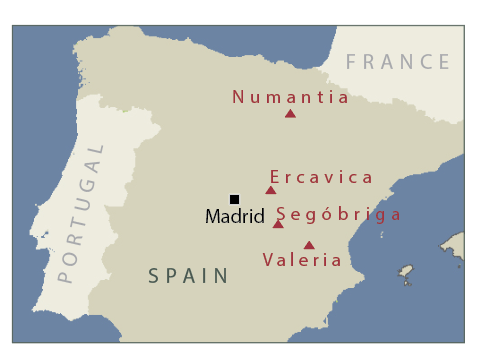
The city of Valeria is – together with Ercavica and Segóbriga – one of three large Roman centres that existed in the Cuenca province of Spain. All three of these cities saw their populations dwindle following the fall of Rome, meaning that their ruins have largely escaped being obscured or damaged by modern developments. Valeria was founded about 30km south of the current provincial capital of Cuenca. Despite the fascination 19th-century explorers felt for the ruins of Valeria and the advent of archaeological research at the site in the second half of the 20th century, our comprehension of the Roman city remains strikingly incomplete, due in large part to the sporadic nature of fieldwork and the sparsity of written records documenting what had been done.
It is thought that Valeria was named after the Roman general Gaius Valerius Flaccus, who established the city in the 90s or 80s BC. This was a time when fierce hostilities still existed between Rome and the local Celtiberians. Even 50 years after the death of the resistance leader Viriathus and the destruction of the Celtiberian stronghold at Numantia, Roman proconsul Titus Didius continued to raze cities, and sunder the limbs of adversaries, sell them into slavery, or treacherously slaughter them en masse after reneging on promises. Gaius Valerius Flaccus, proconsul of the province of Hispania during 93 to 81 BC, faced a similarly turbulent situation.
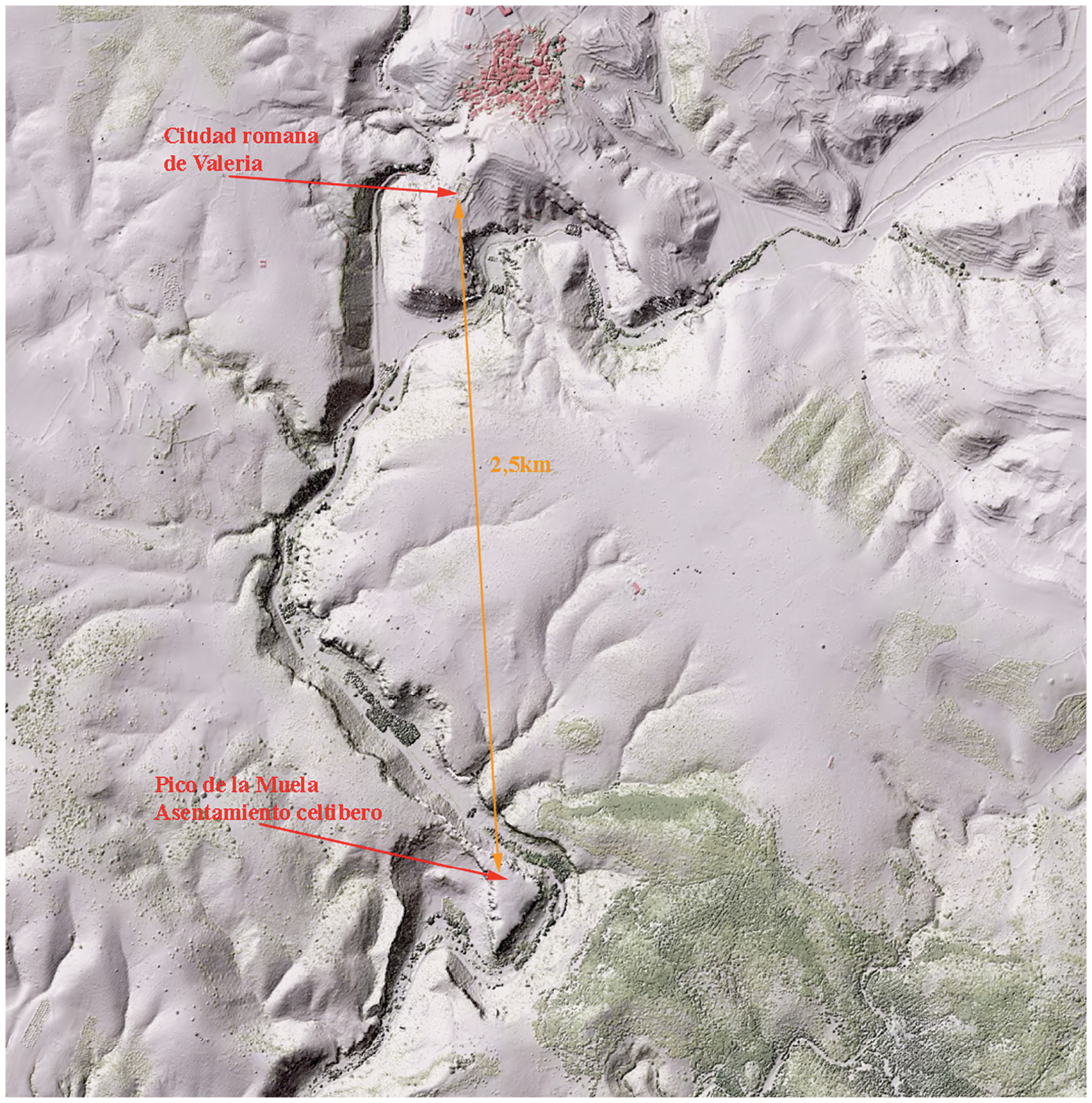
Historians have suggested that Valerius founded the city as a veteran colony, placing a group of settlers with military training pointedly close to an indigenous settlement that he had already conquered, known as Pico de la Muela, and also opposite a key entrance to the remote and formidable Cuenca mountain range. If this claim is accurate, Valeria would have been established under Latin law, resulting in the privilege of Roman citizenship being granted to its residents.
Little is known about the early years of the city, but we can be confident that its hinterland was no stranger to unrest as the Republic waned and local resistance grew. Rome’s headache would only have become more acute when the Roman general Quintus Sertorius rebelled against the Republic and established an independent monarchy in Hispania from 82 to 72 BC. A few decades later, another complication emerged when the Celtiberians of the province of Hispania Citerior (which roughly equates to central and eastern Spain) continued to support Pompey the Great, despite his defeat by Julius Caesar.
The Late Republican era had a more positive impact on Valeria itself, though. One manifestation of this was revealed 20 years ago, when workers dismantling a modern cemetery discovered a set of structures belonging to the Late Republican period. These buildings were interpreted as taverns and formed part of an impressive forum complex. Unfortunately, no archaeological reports document this discovery. As we will see, though, this Late Republican edifice was replaced with a larger and more grandiose forum at the time of Augustus, while many public buildings – including an expansive bath suite that has recently been unearthed – were built in the first two centuries AD.

From the 3rd century onwards, evidence of activity in the city centre once again becomes opaque. After the Visigoths took control of the region in the early 6th century, Valeria served as the chief city of the eponymous bishopric, and was subsequently absorbed by the caliphate of Cordoba, but to date there is scant evidence of their presence. A medieval church was later established at the site, and now serves as its museum, while various medieval walls can still be seen in the southern portion of the city. In the 14th century, the remaining inhabitants of Valeria relocated to the present-day village, which is located just to the north of the Roman city.
Romans return
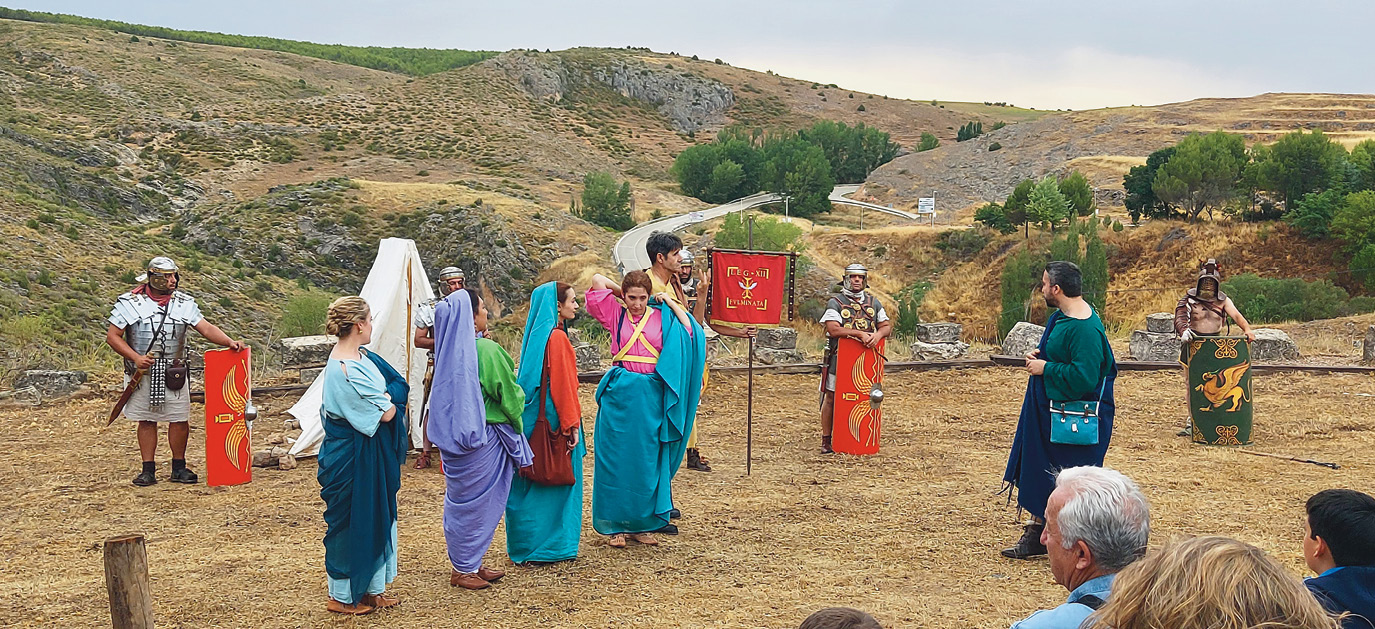
Eagles and vultures soar over the Valerian landscape, which is a popular destination for rock climbers. A Roman festival is held annually in the middle of August, when participants run a Roman mile along a challenging course that ascends from the valley below and ends at the Roman forum. Roman cosplay abounds, with legionaries, elite citizens, vendors, and commoners dressed in pristine white togas and brightly coloured tunics (below). Thanks to their efforts, ancient garb is once again to be seen milling about the forum, cardo, and baths. This influx of people also floods the modern village of Valeria, which has a population of just 40 (dropping to 20 in the winter).
Transforming the forum
Following the advent of the Roman Empire, the city planners in Valeria decided to build a new and substantially larger forum complex. This undertaking presented some architectural challenges, because the city occupied a narrow plateau that rises with cliffs above the channel of two watercourses. In order to achieve a larger yet still symmetrical forum, it was necessary to extend the east and west sides of the existing Republican structure outwards. However, due to the lack of suitably flat land, two cryptoportica – that is, covered underground walkways – were constructed, thereby increasing the level space available above them by 20m. This resulted in a rectangular space measuring 54m by 44m that, when combined with the porticoes and adjacent buildings, allowed the forum to span an impressive 100m by 85m.
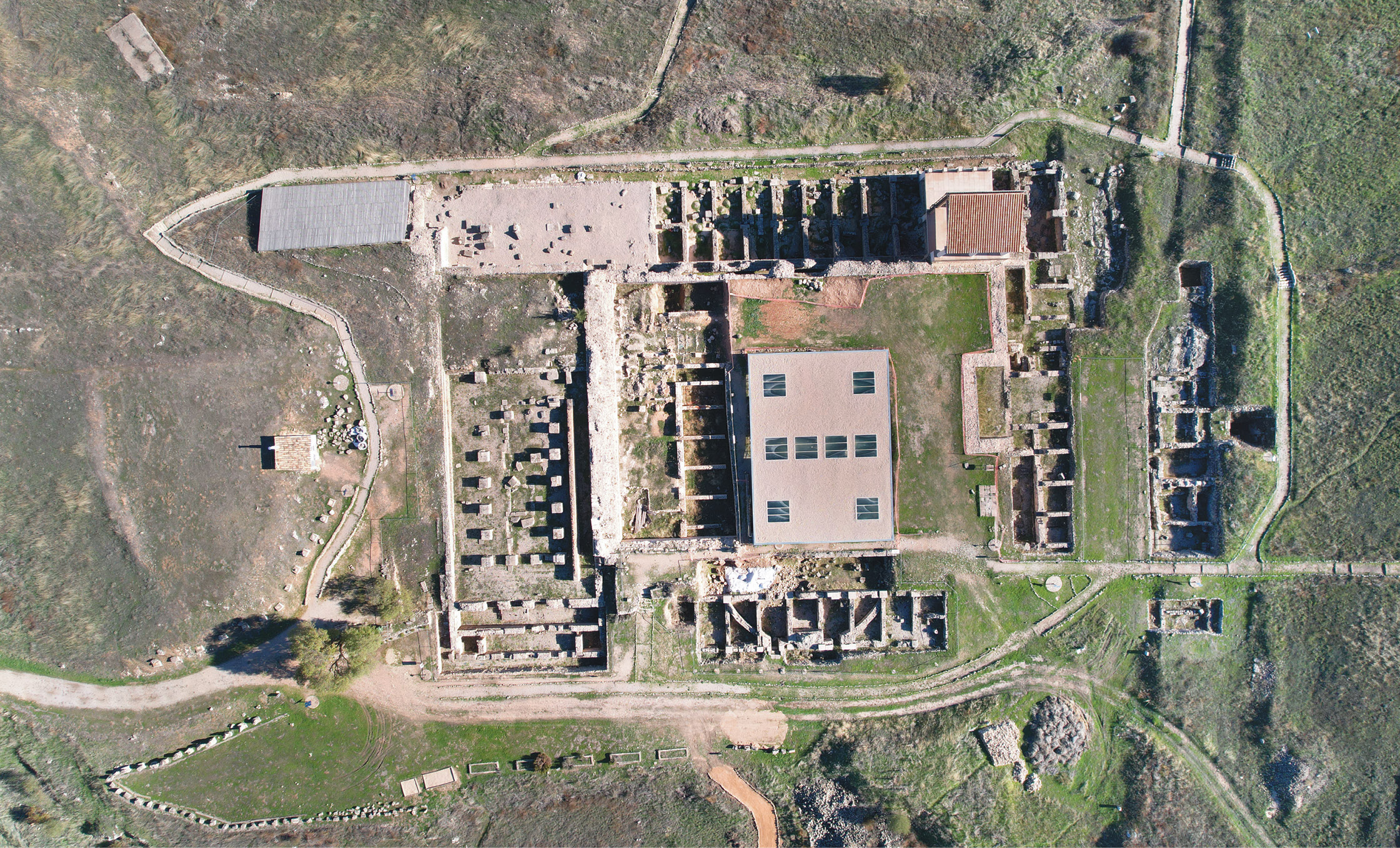
As is standard for Roman cities, Valeria’s forum was positioned at the crossroads of the two main roads running through the settlement: the cardo maximus and the decumanus maximus. The forum entrance, which lay to the south, comprised a staircase and an atrium. This was flanked by two more cryptoportica, with the attached taverns or shops opening on to the decumanus. At the far, northern, end of the forum a basilica occupies most of the range. There are rooms to either side of the basilica, the purpose of which has not been determined with certainty. One may be the tabularium, where official records were kept, while the other could have accommodated the municipal senate (the main political bodies of the Roman municipal administration) known as the curia. To the east, where the forum slopes down steeply into the ravine, runs a shaded corridor with alcoves for statues and cooling water fountains. Further down from the eastern cryptoporticus, a row of 13 taverns or shops are located at street level on the first cardo. Turning to the western cryptoporticus, the far side of that had a similar layout, with 17 attached commercial premises. Add to that the eight taverns on the southern side of the forum, and Valeria has 38 shops or taverns attached to its forum, an unusually high number in comparison to other such complexes in Hispania.
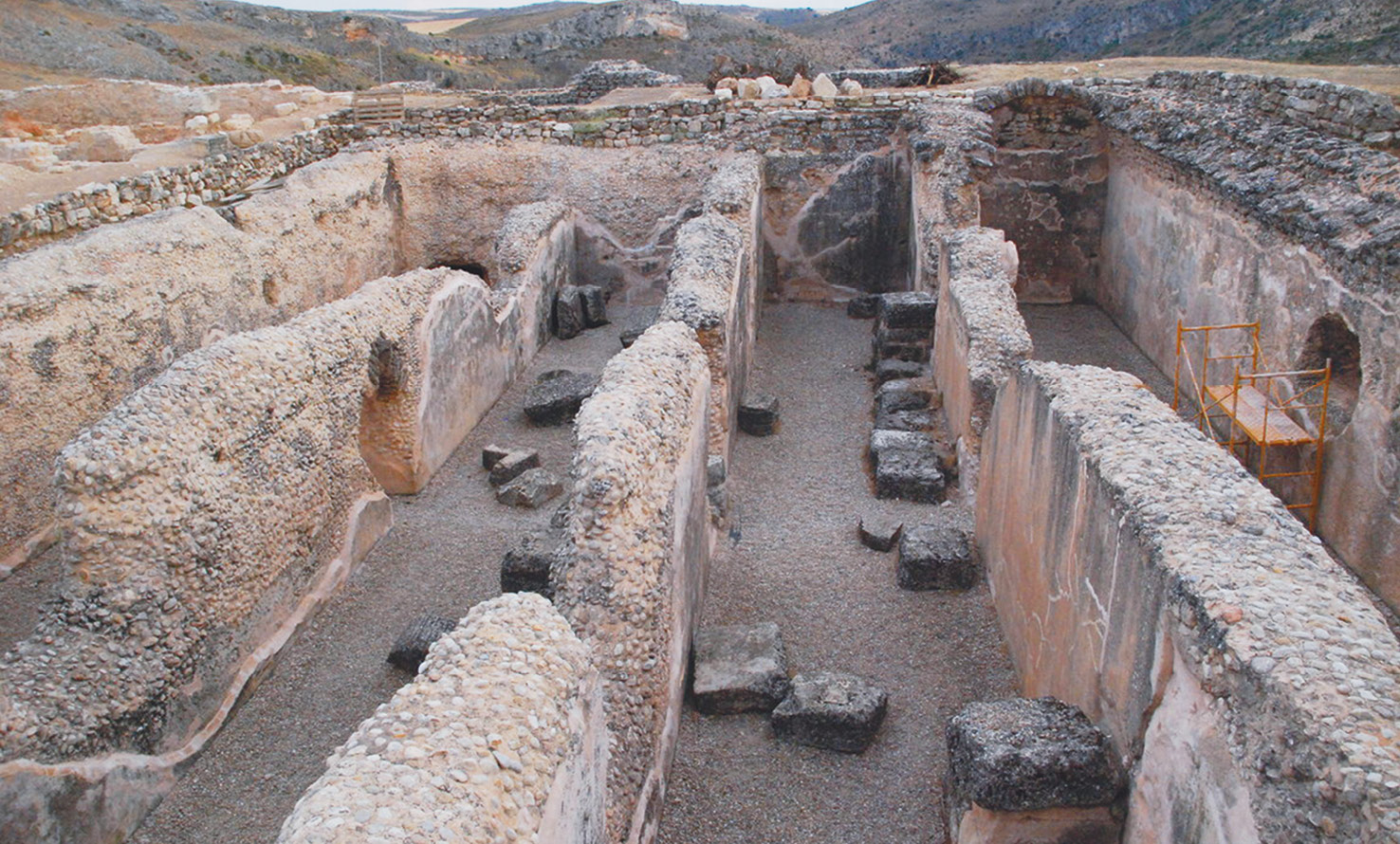
Another distinctive feature of Valeria’s forum is the presence of four substantial cisterns that were installed beneath the forum pavement when the imperial complex was built. These water tanks functioned as both storage facilities and a source of water for residences on the eastern side of the city, an area that comprises one-third of the urban area. Water distribution in a city with such complex topography must have posed a challenge to Roman engineers, but it was clearly one that they rose to. Two water channels are known to have entered the city from the north-west: one feeds the recently discovered baths, while the other connects to the cisterns beneath the forum via a length of lead piping.
God or mortal?
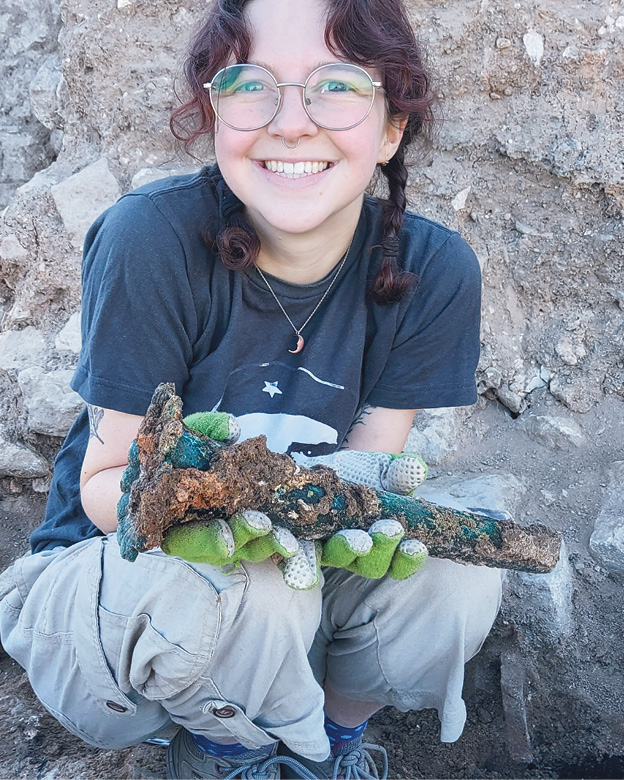
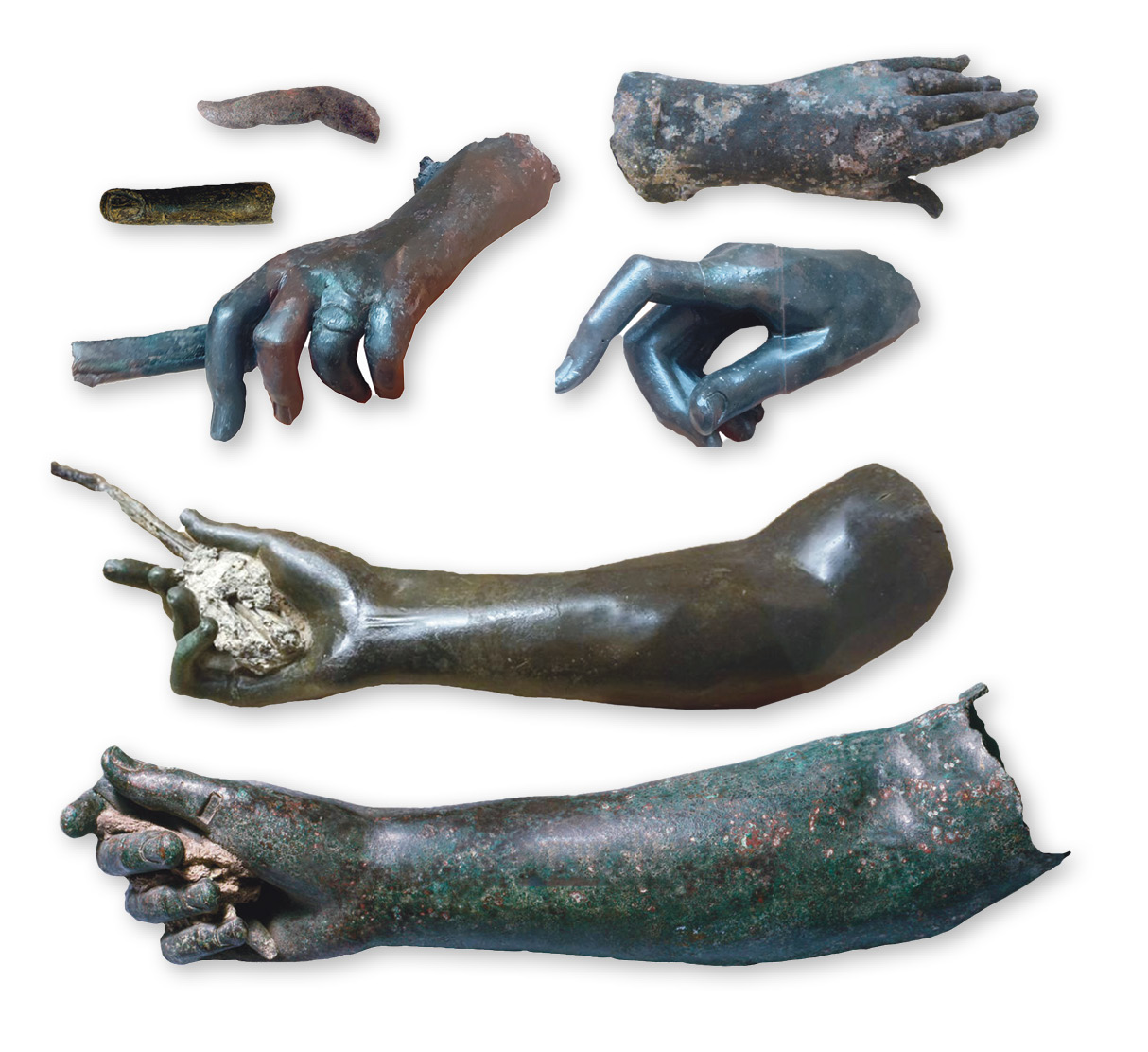
During the 2022 excavation, a bronze finger and a portion of the torch brandished by the goddess Ceres were uncovered (below). On the one hand, this could be proof of the existence of the cult of Ceres within Valeria. On the other, though, this discovery places a deity among the renowned figures represented in the city’s hall of fame. As such, it is possible that the statue is not Ceres, but a female member of the imperial family. This is because it was common for prominent women, such as Augustus’ wife Livia, to be portrayed in statue form with the attributes of Ceres.
Hall of fame
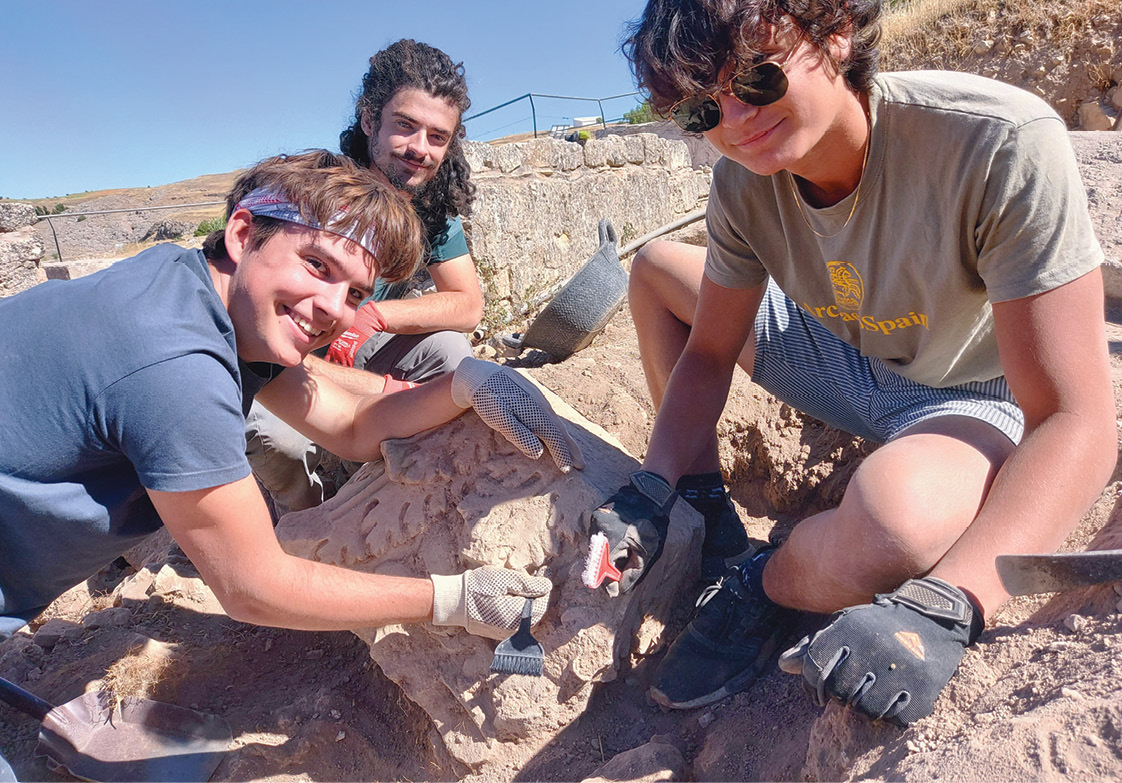
Our excavations at Valeria began in 2022, when we targeted the western cryptoporticus of the forum. This area had previously received archaeological attention from 1979 to 1983, which mostly focused on the taverns or shops, while a survey was conducted in 1996, and excavations of part of the cryptoporticus were mounted in 2002. Despite this activity, there are few written records available to reveal the results of these interventions.
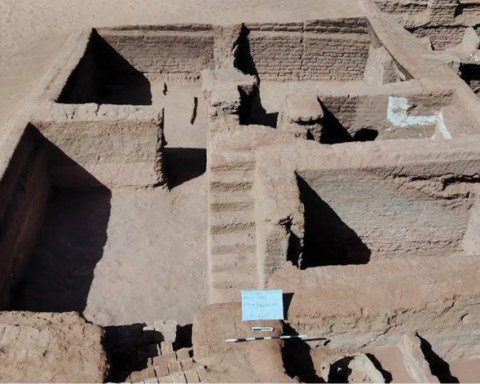
The western cryptoporticus is a substantial feature, which measures about 5m wide and runs from the room believed to be the tabularium along the entire 100m length of the western edge of the forum. Each of the taverns or shops lining the cryptoporticus has a rear door leading into it, presumably because it functioned as a storeroom. This neat arrangement was, though, disturbed by a semi-circular wall that projected out from the central portion of the western side of the cryptoporticus, cutting through five of the taverns. One of the key aims of our excavation was to uncover the purpose of this semi-circular wall or exedra, and the space associated with it.
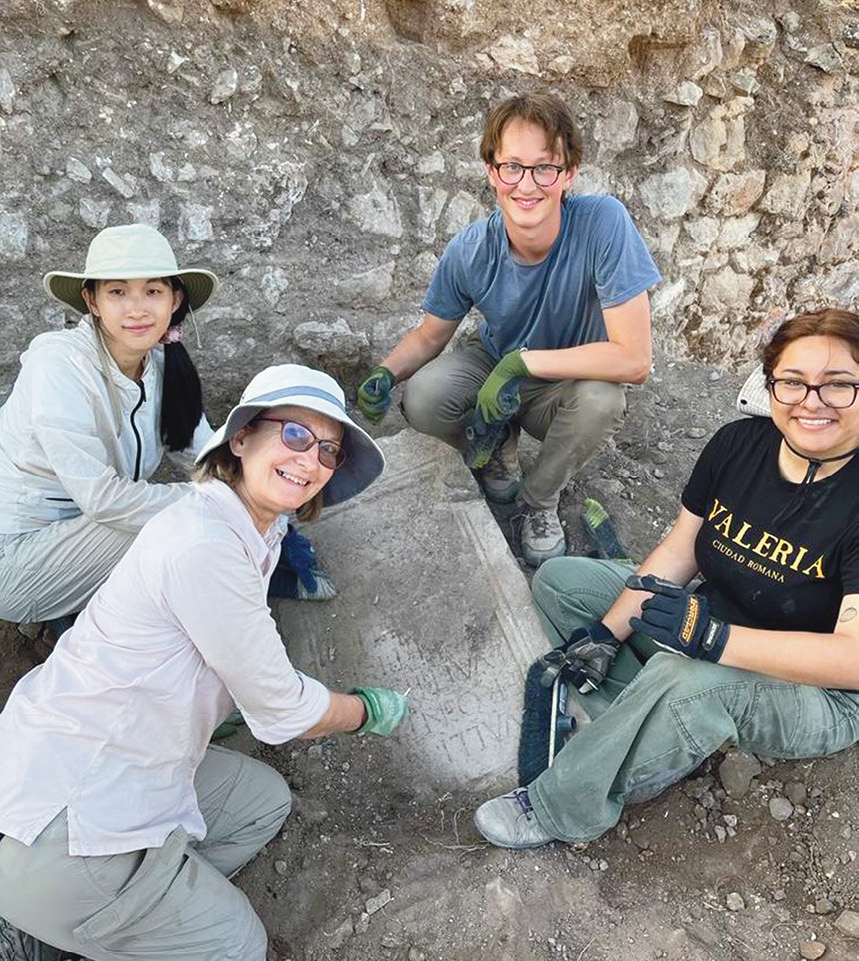
Our first clue came from a pedestal that was uncovered in 2022 and bears an inscription indicating that an individual called Gaius Grattius Nigrinus had bequeathed the funds to erect a statue to Annia, daughter of Marcus. This pedestal had a concave back, allowing it to be set in front of a column. We found a similar pedestal, this time dedicated to Grattius Nigrinus, housed in the small Valeria museum within the medieval church. Once again, this pedestal has a concave back. Another pedestal dedicated by Grattius Nigrinus, though, proved to have a flat back, revealing that not everyone in this family received a statue in the same architectural setting. Indeed, pedestals with concave rears that mention other families show that positions beside columns were not just reserved for the relatives of Grattius Nigrinus.
Our finds from the western side of the forum include large stone architectural fragments, such as fragments of columns, bases, shafts, and capitals. In total, we have also uncovered nearly 20 inscriptions on complete and incomplete pedestals in this area. We deduced that most of the associated statues originally stood in this portion of the forum, because, although the excavation records for the eastern and southern sides are sparse, those parts of it were not covered by the later cemetery and so have been comparatively easily accessible for centuries. This made such conveniently recyclable building materials vulnerable to looting.

Of the pedestals we discovered in this area, 12 carried information allowing us to identify who the statues represented, along with fragments of hands and forearms belonging to at least five different statues. In addition, we discovered the remains of at least one statue depicting either a divinity or an individual from the imperial family who was being portrayed as a deity.
The evidence so far suggests that this space served as Valeria’s hall of fame. It is even possible that it was founded by a member of the imperial family. One of the pedestal fragments bears the name ‘Diva Drusilla’. This could refer to Julia Drusilla, the emperor Caligula’s sister. She died in AD 38 at the age of 22, a loss that was marked in Rome by a period of public mourning. Drusilla was later elevated to the status of a pantheon goddess, which meant that she assumed the attributes of multiple deities, while a cult was also established in her honour. Alongside this statue of Diva Drusilla stood members of two notable families. Both of these dynasties seem to have lived in Valeria, where they came to hold high office. Members of these families also enjoyed a prestigious retirement when they were honoured with the position of flamines augustales, or priests of the emperor’s cult. Our list of Valeria’s elite grew in 2023, when statue pedestals bearing the names of Lucius Valerius and Fabia Fabulla were discovered, adding two more names to the members of the local aristocracy.

According to information we have unearthed so far, Valeria’s hall of fame was inspired by the design of Augustus’ Forum Romanum in Rome. There, four exedrae were appended to the forum porticoes, providing a space to showcase the imperial family. Standing alongside these sculptures were statues depicting affluent members of Roman society. This arrangement was not unique to Rome, though, as groups of sculptures portraying the imperial family’s ancestors and current members could be displayed in other cities of the empire, standing near statues representing local aristocrats and deities that were specific – or at least special – to each location. This approach has been documented in Segóbriga, another Roman city in the Cuenca region of Spain. Such halls of fame provided a platform within the forum porticoes where the rulers of the empire could be shown alongside, and so associated with, the summi viri – or ‘great men’ – of each locality.
Our excavations have provided an insight, too, into the final days of the forum. The results indicate that its decline was not sudden, but occurred gradually due to episodes of abandonment and parts of the complex being put to alternative uses. Some of the building materials from it, for example, were likely recycled elsewhere, while others fell into gaps in the cryptoporticus vault. This process continued until the passage was choked with roof tiles and masonry to a depth of 1m. Subsequently, the cryptoporticus walls themselves crumbled, and the remains of both the forum and Valeria’s hall of fame disappeared beneath the earth.
All images: courtesy of Catalina Urquijo and Dionisio Urbina