Subscribe now for full access and no adverts
Xuanzang was not afraid to break the rules. This Buddhist monk lived in Tang China during the 7th century AD. Although the imperial court banned foreign travel due to security concerns, this did not deter Xuanzang from slipping out of the country undercover in AD 629. His journey was destined to be a long one. Xuanzang made his way on foot through central Asia to India, where he sought documents about Buddhist teachings. Although Buddhism had been introduced to China during the early centuries AD, there were questions about the accuracy of some Chinese translations of key texts, so Xuanzang sought copies in the original Sanskrit to resolve the matter. He returned to China 16 years later with hundreds of manuscripts. Rather than being sanctioned for his transgressions, Xuanzang received a hero’s welcome and even had a monastery built for him.

The story of Xuanzang illustrates the rewards that long-distance travel could bestow during this era. At the same time, Xuanzang’s manuscripts are not alone as objects that ended up far from their place of origin. Instead, a great web of connectivity can be traced all of the way from east Asia to north-west Europe. Such east–west links are traditionally referred to as the ‘Silk Road’, and perhaps most closely associated from a Western perspective with the 13th-century adventures of Marco Polo. As Xuanzang’s exploits reveal, though, the existence of long-distance connections was allowing individuals to court risk and renown by undertaking extraordinary journeys many centuries earlier. Current research is also emphasising that these routes not only bound together east and west, but also north and south. As a major new exhibition at the British Museum showcases (see ‘Further information’ below), we can add much to our understanding of these regions if we think not of a ‘Silk Road’, but a far more intricate network of crisscrossing ‘Silk Roads’.
Tracking trade
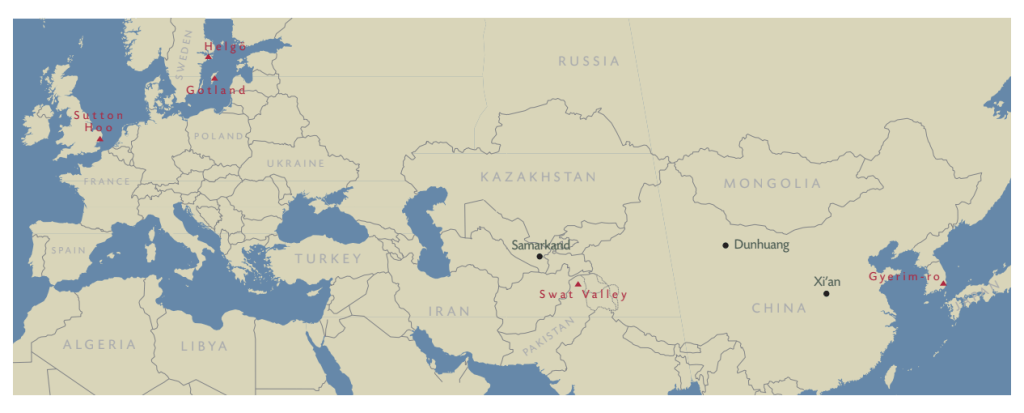
Modern attempts to chart ancient transport connections in central Asia began with two red and blue lines on a map. These both ran from Xi’an in China to Iran, and reflect an 1877 attempt by the geographer Ferdinand von Richthofen to set the surviving information in Greek and Chinese sources within real-world terrain. ‘The term “Silk Road” first started to be used in the 19th century’, says Luk Yu-ping, Basil Gray Curator of Chinese Paintings, Prints, and Central Asian Collections at the British Museum. ‘For a long time, it was attributed to Ferdinand von Richthofen, but more recent research suggests that the term was already in use in Europe when his work was published. So we say that the first use was around then. It really became popularised in the latter half of the 20th century. This was for various reasons, including opening up tourism, transport, and archaeological discoveries, which led to a heightened interest in artefacts from places associated with the Silk Roads. UNESCO also got involved with promoting it as a concept to bring different states and cultures together. There have been a lot of exhibitions about the Silk Road, but this one is hopefully a little different from the ones that came before.’
‘That is our aim,’ agrees Sue Brunning, Curator of European Early Medieval and Sutton Hoo Collections at the British Museum. ‘When we were working through what the public understands by the term “Silk Road” early on in the planning for the exhibition, there were a lot of references to camels, desert dunes, and obviously to silk, creating these rather romantic images. What we want to do is expand this picture and show a much richer world, with expansive cross-cultural connections linking up Asia, parts of Africa, and also Europe. So it’s not just those desert landscapes: it is all sorts of terrains, with routes by sea and river as well as land.’ Precisely when the footprint of the Silk Roads first makes its presence felt across all of these regions remains a source of debate. Some see Alexander the Great’s swathe of conquest in the 4th century BC as an appropriate start point, while Chinese accounts tend to favour an origin in the 2nd century BC, during the Han dynasty. The British Museum exhibition focuses instead on a defining period from AD 500-1000. This presents one of the peaks of Silk Roads connectivity, and coincides with an era of great powers, such as China’s Tang dynasty (618-907), the Rashidun caliphate (632-661), the Byzantine empire, and the Carolingian empire (800-887). It was an era when Buddhism, Christianity, and Islam spread widely, and some of the objects associated with them travelled even further.
‘There has long been an awareness in north-west Europe that objects could have distant origins’, Sue points out, ‘but these artefacts are often described as “exotic curiosities”. There’s been a sense that the people who received them didn’t really understand what they were or where they came from. But as you do more research and realise how interconnected this part of the world was to the wider Silk Roads, you can start to see how objects could move, and also how knowledge could travel with them. That opens the door to these people being much better informed about the origins of such artefacts and the ideas that were bound up with them.’
One fine example is a copper-alloy figurine of the Buddha seated on a double lotus flower. It was probably made in the Swat Valley, in what is now Pakistan, but ended up travelling in the opposite direction to Xuanzang and his manuscripts. Instead, the figure was found almost 5,000km from the Swat Valley, during excavations of 9th-century buildings at Helgö, Sweden. Given how far Scandinavia lay from the major centres of Buddhism during this period, it is natural to wonder what, if anything, the inhabitants of Helgö knew about the significance of this figurine. There is just a hint, though, that its spiritual nature was appreciated. When the object was found, it had leather strips wrapped around its neck and left arm. These were initially believed to be a way to fix the figurine to a surface or person, but some wooden sculptures of Norse deities found in bogs were also adorned with leather bands. Potentially, then, the Buddha was tailored to meet contemporary Scandinavian expectations of how spiritual figures should appear.
If the concept of one or two set routes connecting East and West has been eclipsed by a much more complex network, finds like the Buddha can also raise the question of how important silk really was to this trade. ‘It is obviously one of the commodities that was travelling,’ Sue says. ‘It was more significant in some areas than others, but you do find it all of the way into Europe as well, which some people may be surprised about. At the same time, it is just one of many commodities. There is a mixture of the tangible ones that people can touch and see, and the intangible elements, such as knowledge and religious beliefs. In some of the scholarship, there have been suggestions that it should really be the “Paper Road” or the “Spice Road” or various other types of road. I think this really makes the point that the nature of the things moving around is myriad.’
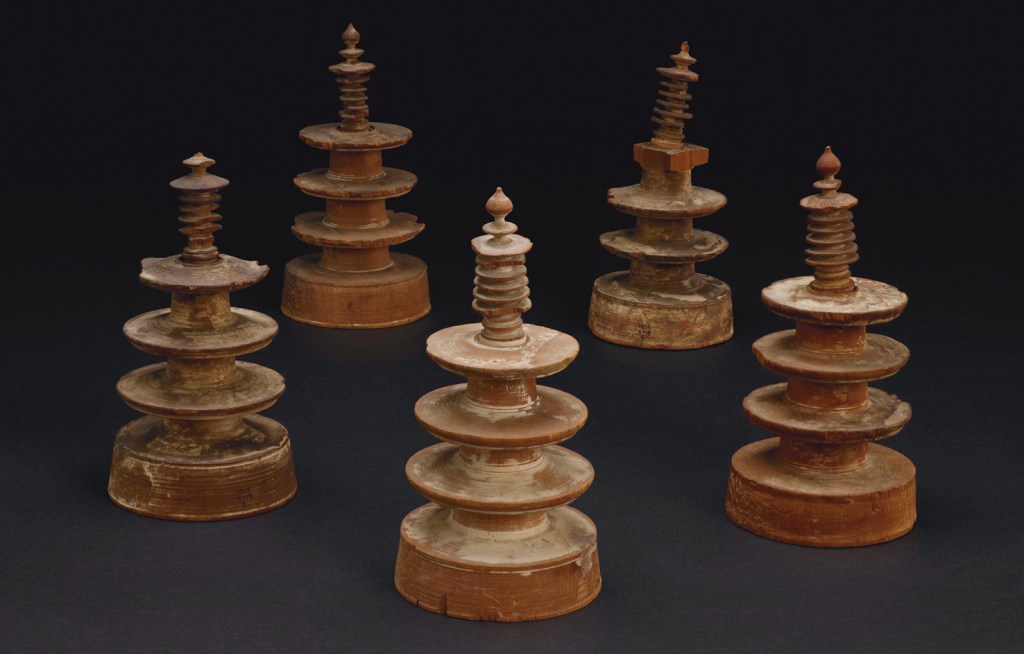
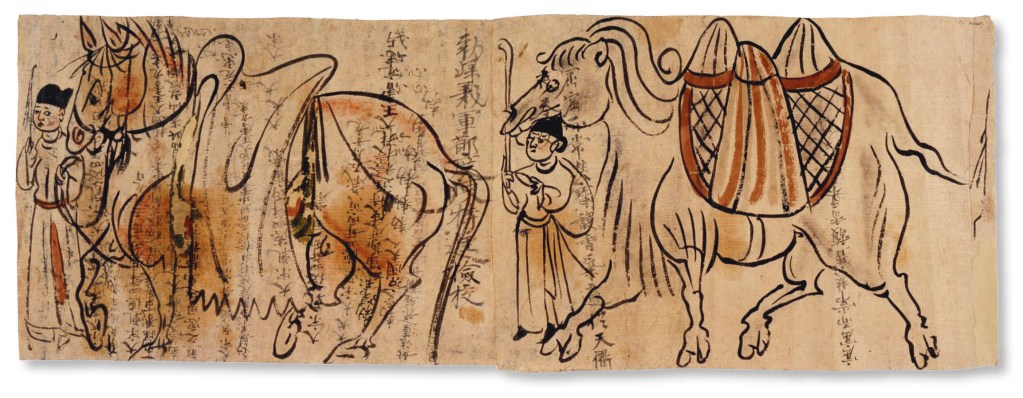
‘As Sue mentioned, scholarship has critiqued this idea of silk being the primary commodity’, says Luk, ‘but in some circles the importance of silk is back again. When we look particularly at China and the neighbouring regions, silk remained a highly significant and symbolic commodity. By 500-1000, there were other centres of production, and China was not the only place farming silk, but in Tang dynasty China it was a taxed item, so the government was receiving a lot of silk from local communities. The government was then using it as payment for armies and garrisons out on the frontiers. They were also using silk to buy horses – which the Tang court highly coveted – from the steppe area to the north and west. On the other hand, by this time maritime trade was very active, too. There is plenty of evidence of ships travelling, perhaps in stages, across the Indian Ocean and bringing large quantities of materials. The objects that survive in wrecks from this period are usually ceramics, so the role of silk is less clear. Perhaps, though, it has just not survived in the sea water.’
Eastern Silk Roads
While von Richthofen’s 19th-century attempt to chart the Silk Road placed a terminus at Xi’an, it is clear that goods were circulating far more widely in east Asia. ‘The idea of the Silk Roads is no longer just about linking parts of Asia with Europe,’ says Luk. ‘It involves thinking more about the Silk Roads as an umbrella term for the history of connections. Bringing Asia into this broader concept is quite new. It allows us to extend these links beyond China to the Korean peninsula and Japan, because archaeological finds connect large parts of Asia. Scientific analysis of glass beads from Japan, for example, shows that some came from west Asia, either via China or perhaps maritime trade. There was a lot more activity than people might expect, and the more we look at it – and use scientific methods to determine an origin – the more connections we find.’
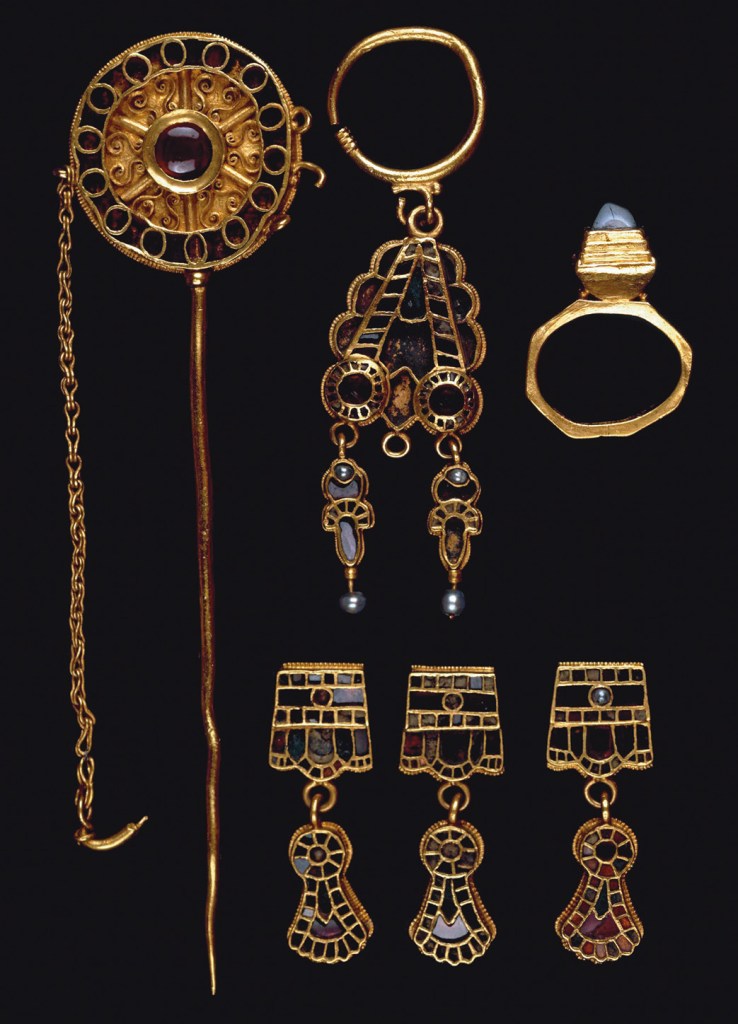
The distances that could be spanned is illustrated by Byzantine motifs and perhaps also objects appearing in Japan during this era, but not everything travelling the Silk Roads was beneficial. Plague periodically spread along these conduits, taking a terrible human toll and reshaping communities in many ways. An episode of smallpox in Japan, for example, helped to consolidate Buddhism, as people turned to the religion while seeking deliverance from the pestilence. Even though that outbreak was traced to the ports, and linked to people arriving on ships, it did nothing to stop long-distance trade. Clearly the risks that accompanied these connections were considered worth taking.
Warfare could have a profound impact on the ideas that different groups were exposed to as well. By the 670s, for example, the kingdom of Silla had expanded to cover much of the Korean peninsula, dispossessing the aristocracy of the earlier Baekje dynasty, many of whom sought refuge in Japan. ‘The Baekje elite had a lot of knowledge about China and Chinese writing,’ says Luk. ‘As a result of that, they helped to bring about an even greater interest in them in Japan. The earliest historical texts about the history of Japan date to this period; we will have one on display that was written entirely in Chinese. Equally some of the terms that were used – including the Japanese name for Japan nowadays, “Nihon” or “Nippon”, appeared during this period as a result of these interactions, and were written with text derived from Chinese characters.’
Korean Silla itself has been called the ‘kingdom of gold’, largely thanks to the extraordinary objects that have been unearthed in elite burial mounds. One example is a dagger from a tomb at Gyerim-ro in Korea. This item is remarkable for combining gold with ornate garnet and glass decoration that bears a striking similarity to the examples of such craftsmanship found at the other end of the Silk Roads, among the objects from the 7th-century kingly burial at Sutton Hoo, in Britain.
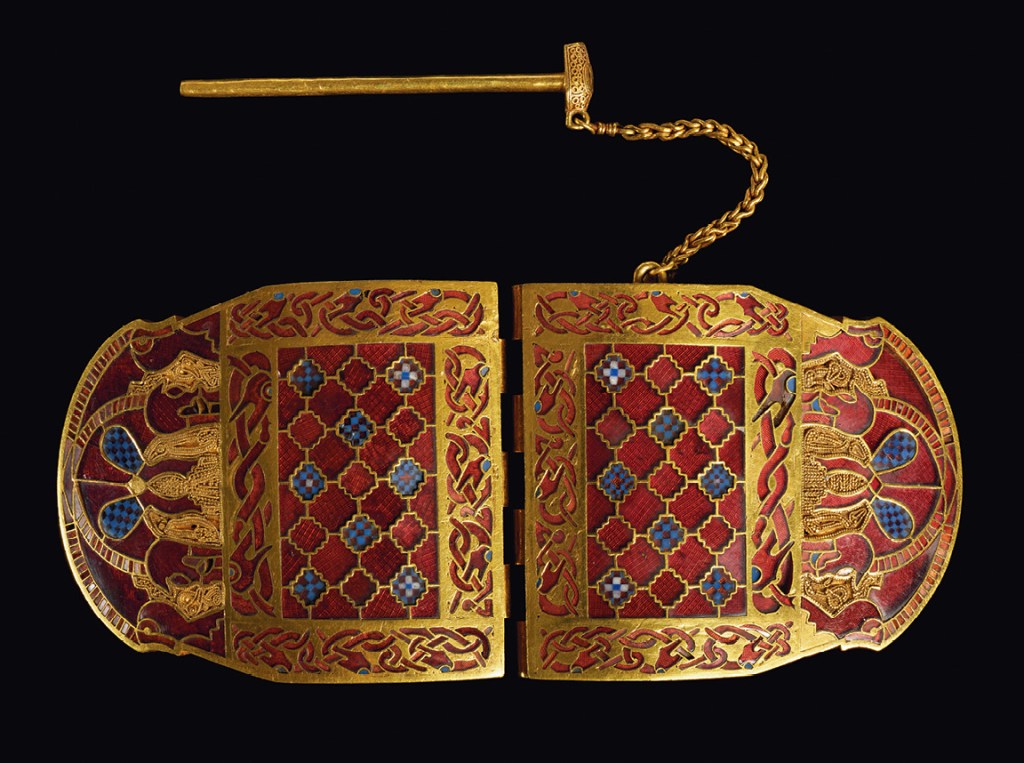
‘This garnet cloisonné metalworking technique is very widely travelled,’ Sue says. ‘So the dagger is an interesting fusion of the intangible exchanges that were taking place. We think the metalworking technique itself developed somewhere in the west Asia and Caucuses region. Over the course of three or four centuries it was adopted and adapted all of the way to Britain, where the technique reached its zenith at Sutton Hoo. The garnets that were inlaid into the metalwork have been on an enormous journey, too. Scientific analysis that took place for the exhibition has shown that many of the garnets found at Sutton Hoo derived ultimately from India and Sri Lanka. So we can see an enormous fusion of exchanges represented in this one type of metalwork.’
‘The gold on the Gyerim-ro dagger has also been analysed’, says Luk, ‘and it is not the same as the gold found in objects that were made in Silla Korea. The dagger is unique in the region as well, so it is believed that it was made elsewhere. There is still debate about where exactly it was created, but perhaps it is not too surprising that such a beautiful technique could spread both west and east. The current thinking is that the dagger was perhaps commissioned by someone in central Asia, who then brought it to Korea. It really is an incredible parallel, though.’

Trading lives
Horrors also travelled via the Silk Roads, as enslaved people were traded all along the network. ‘One example we bring out is the role of Scandinavian Vikings in this trade,’ says Sue. ‘In recent years, there has been lots of research into the silver entering the Viking world. We have examples of their silver hoards, and scientific analysis of this material has revealed that a lot of it was melted down from dirham coins that were minted in the Islamic world. These were recast into objects that were made in the Baltic Sea. We think that these coins were exchanged for human beings. Scandinavians seem to be taking people, particularly from central and eastern Europe, and exchanging them for silver, as there was a high demand for labour in the Islamic world at this time. It casts a rather different view on those magnificent silver treasures that we have from the Viking world.’
‘In some places, we can trace the stories of enslaved people through documents too,’ says Luk. ‘There’s material that comes from what is known as a library cave in Dunhuang, in north-west China. It is a repository of tens of thousands of documents that were found at the beginning of the 20th century. These have really transformed our understanding of cultures in that part of the world. Some of the documents are slave contracts, which give the names of the people who were enslaved. One is dated to 991 and talks about a woman called Xiansheng, who was 28 years old and purchased for five bolts of silk. So this lets us know a little more about individuals who were unfortunately enslaved and traded.’
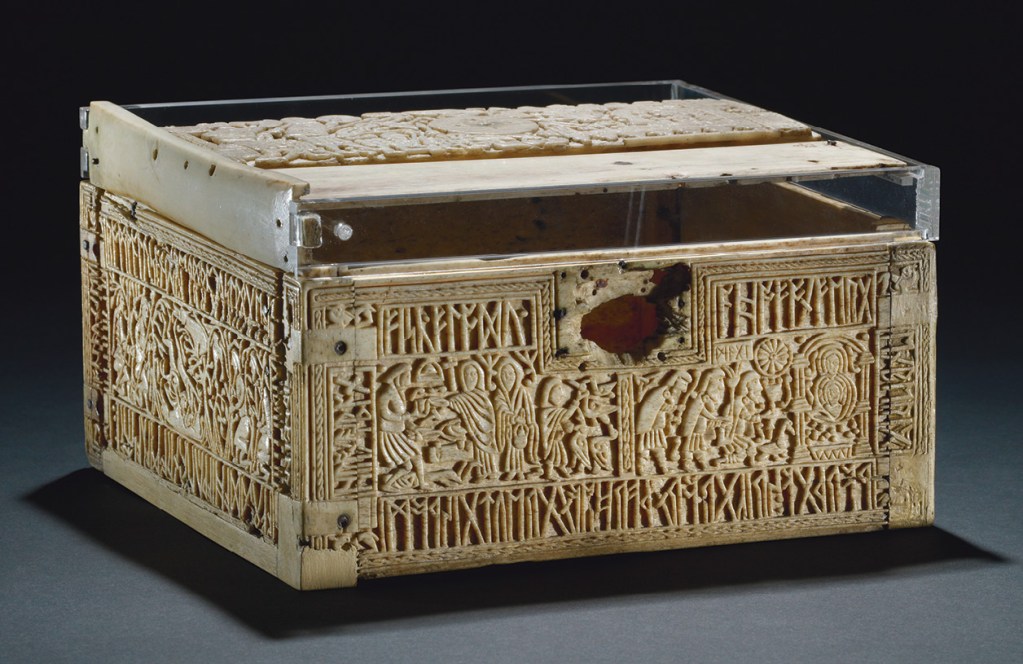
Such connections, for both good and ill, emphasise that in the centuries following the collapse of the western Roman Empire, its former European provinces were never isolated from the wider world, as was once believed. Instead, the invigorating mixture of traditions that was circulating in the region is well illustrated by the Franks Casket, which was found in France, but perhaps made in northern Britain around AD 700. ‘It’s an extraordinary whalebone container,’ says Sue ‘which brings together ideas and languages from different parts of the world. The decoration includes stories from the New Testament, stories from the mythology of Rome, Roman-Jewish history, and stories from northern European mythology. These are accompanied by inscriptions in Latin, Old English, and runic script, while a riddle on the front acts as a dedication. The answer to the riddle is “whale’s bone”: it’s a poetic idea that the casket is dedicated to the whale that gave up its bone and swam in the sea connecting the world that allowed this object to come into being.’
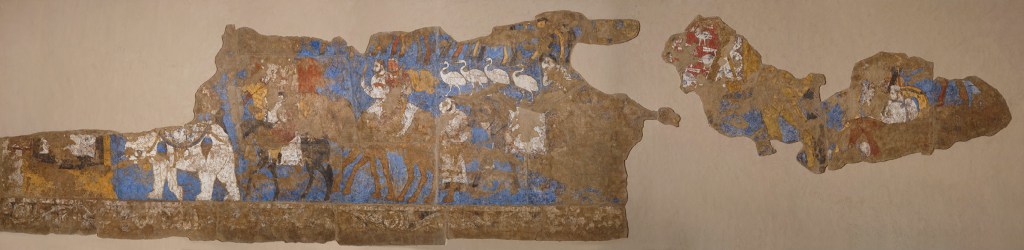
Above: This wall painting comes from a reception hall belonging to a Sogdian aristocrat in Samarkand. Sogdians from Central Asia were once great traders of the Silk Roads. The reception hall includes depictions of figures from neighbouring and distant lands as far as the Korean Peninsula. This section of the wall painting shows a ceremonial procession on its way to pay tribute to the ancestors of the ruler of Samarkand. It highlights the prosperity and cosmopolitanism of the Sogdians in their homeland. The inset detail shows two camel riders (below). Images: © ACDF of Uzbekistan, Samarkand State Museum Reserve; photo by Andrey Arakelyan;
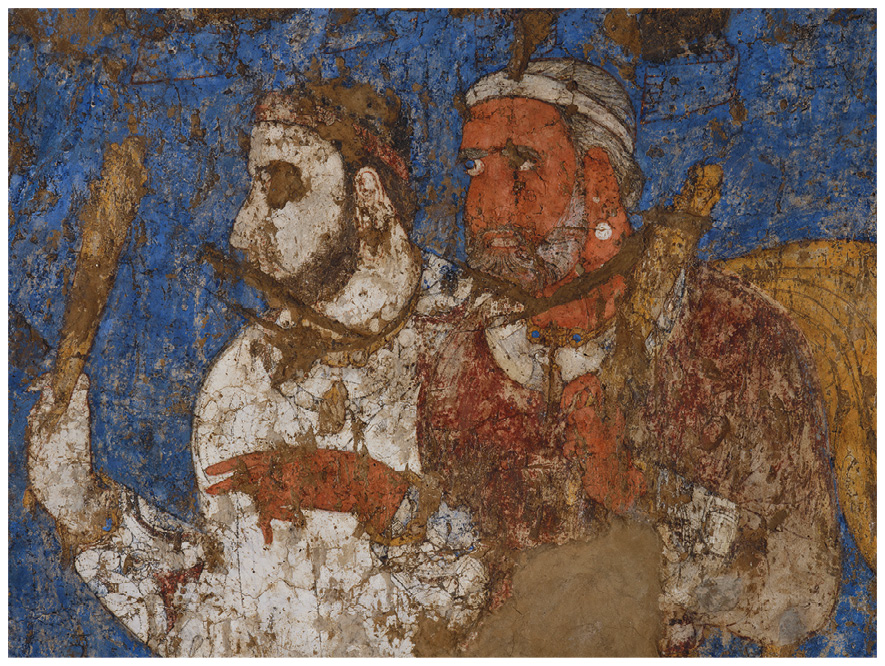
For all that the Silk Roads can be extended far beyond their former limits, some of their true wonders lie in the more traditional central area of the network. ‘There are highlights from Tajikistan and Uzbekistan’, says Luk, ‘including a 6m-long wall painting from Samarkand, created by a group called the Sogdians. The painting was excavated from an aristocratic house in the 1960s and shows part of a religious procession going to pay its respects to the ancestors of a local ruler. At their height, the Sogdians acted across Eurasia – establishing communities in China, and going all of the way to Byzantium. We want to highlight their involvement not only as intermediaries and small-scale merchants, but also as creators of an incredibly rich culture in their homeland of Samarkand. This is reflected in the wall paintings. The people are wearing fine textiles and riding horses and camels: luxurious lifestyles that were made possible by the Silk Roads networks.’
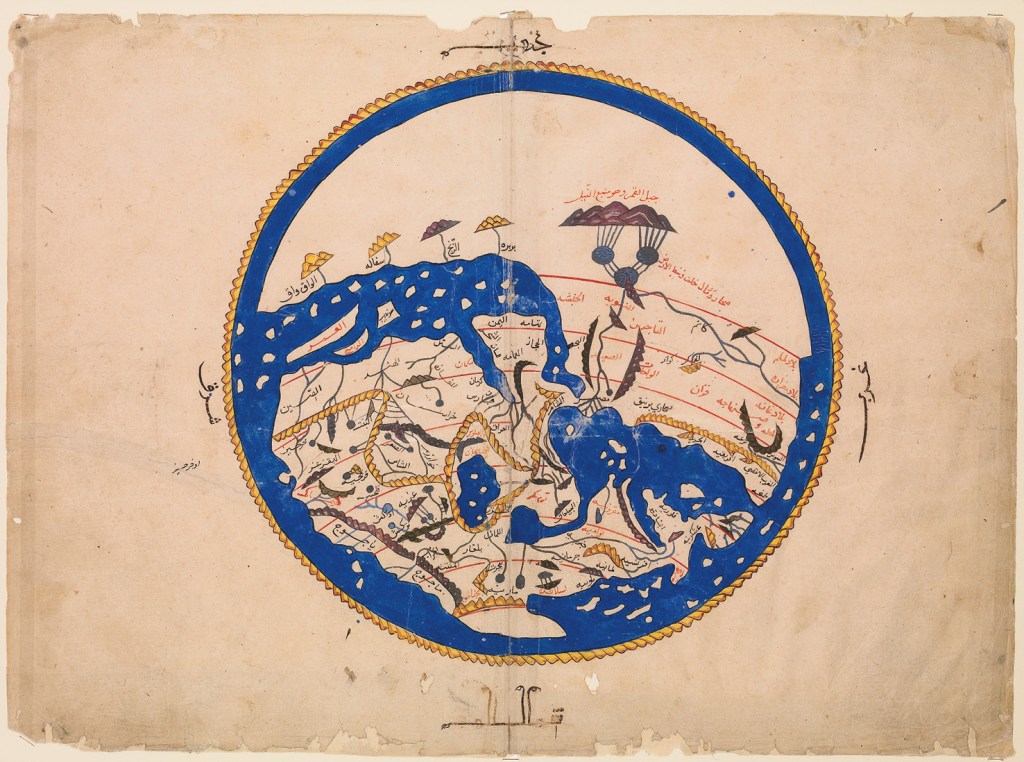
How then, was this world seen at the time? ‘We have a map’, says Luk, ‘which is a 16th-century copy of a 12th-century map, but the tradition of that map-making comes from the period we are covering. It is circular, with the ocean flowing around it, and it shows the three continents of Africa, Asia, and Europe. At the centre is Arabia and also Mecca. To the far east you find China, and to the far west you can go all of the way to Britain. So this map encapsulates all of these connections that people had in their minds, both by land and sea. I think seeing a map like this draws attention to it being a world with different centres and different perspectives. That is something we are trying to bring out in this exhibition: through the objects, we hope that visitors will see the world in a slightly different way.’
Further information:
Silk Roads will run at the British Museum from  26 September 2024 until 23 February 2025.
For more details, see www.britishmuseum.org/exhibitions/silk-roads.
CWA is grateful to Sue Brunning, Luk Yu-ping, Matthew Hutt, and Connor Watson.