
Subscribe now for full access and no adverts
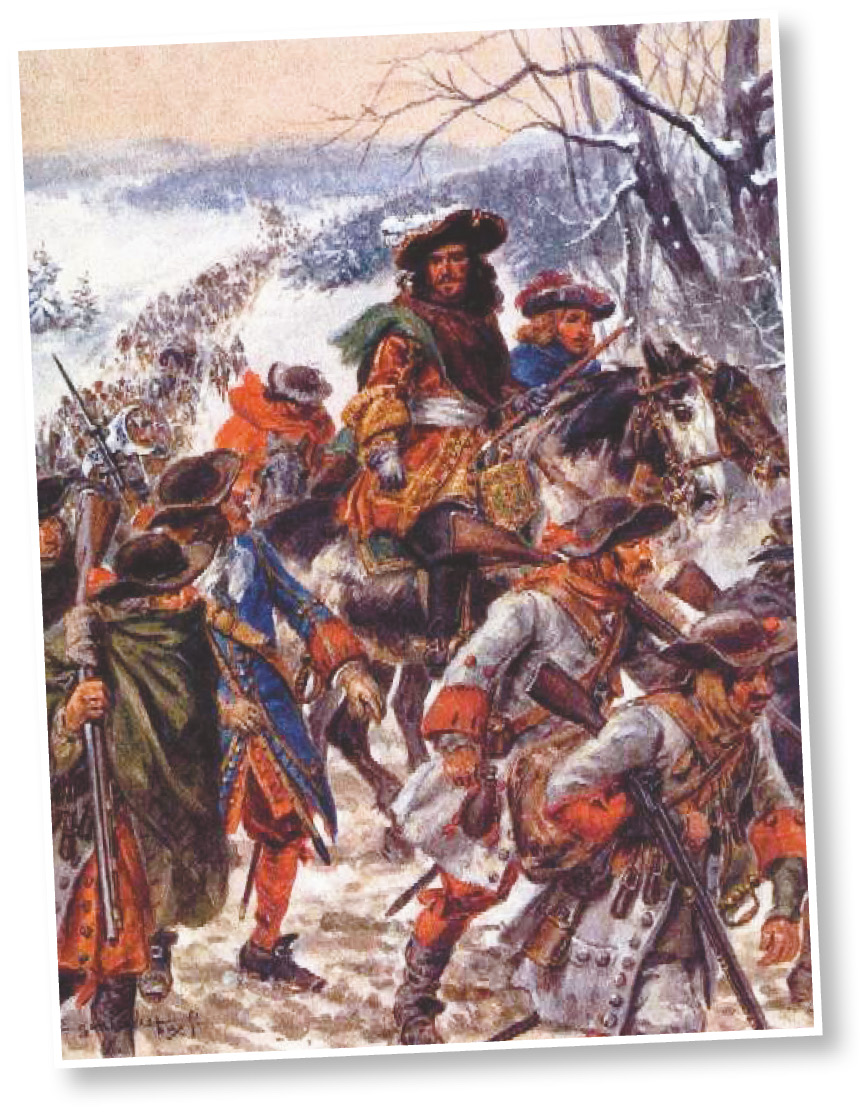
The French soldiers marching south through Lorraine pulled their grey-white coats tightly around them and wrapped their necks in scarves to ward off the frigid weather of north-eastern France in December 1674. They belonged to the command of Marshal Henri de La Tour d’Auvergne, Viscount of Turenne – the 63-year-old veteran of many wars and campaigns, who had first risen to prominence decades earlier during the Thirty Years War. The marshal now planned to launch a surprise attack on the imperial army fielded by the Holy Roman Empire in Upper Alsace. His own army had therefore set out on 5 December on a 150-mile trek in order to bear down on the much larger imperial host.
Field Marshal Alexander Hippolyte, Prince of Bournonville – the commander of the imperial troops – assumed that the French had suspended military operations for the coming winter and were many miles to the north. It must have seemed a sound assumption given that 17th-century armies rarely fought in the winter. But Turenne was a bold strategist and battlefield tactician who often undertook daring expeditions to outwit his foe.
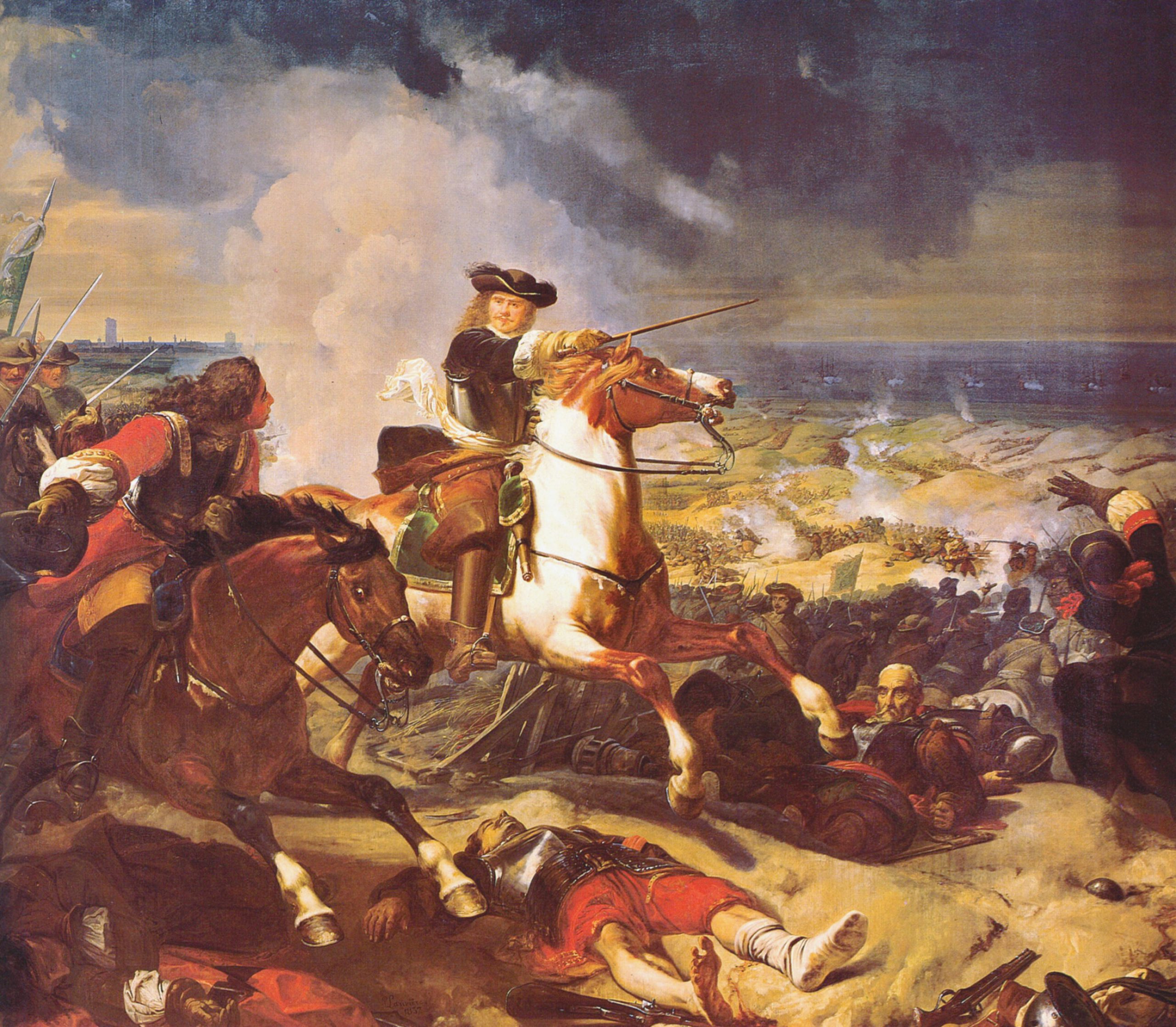
With just 30,000 troops under his command, Turenne had to come up with a way to outsmart the much larger imperial army – which, with the recent addition of 20,000 soldiers led by Frederick William, Elector of Brandenburg (widely famed as the ’Great Elector’ for his military and political achievements), had 57,000 troops. As early as April 1674, Turenne had been contemplating a strategic flank march that, if successful, would compel the imperial army to retreat eastwards to the right bank of the Rhine.
The allied commanders did not suspect that Turenne would attack them just four days after Christmas. But Turenne’s soldiers, like their commander, were determined to win a great battle in Alsace that winter. ‘Believe me, there must never be a fighting man at rest in France so long as there is a German on this side of the Rhine in France,’ Turenne told one of his closest confidants.
Exacting revenge
When Louis XIV married his cousin Maria Theresa of Spain in 1660, he claimed that her dowry was not paid. Louis saw this as an opportunity to go to war with Spain in order to annex the Spanish Netherlands and the eastern region of Franche-Comté – two areas adjacent to France that would serve as buffer zones to absorb enemy attacks in future wars. Louis asserted that these territories had ‘devolved’ to him as part of the marriage agreement, hence the one-year conflict in 1667-1668 was known as the War of Devolution.
Although both regions were technically part of the Habsburg Holy Roman Empire, they were ruled at the time by the Spanish Crown. In the War of Devolution, Louis relied on his two veteran marshals, Turenne and Louis II de Bourbon, Prince of Condé, to conduct military operations to seize the two territories. While Turenne led the French offensive against the Spanish Netherlands, the Prince of Condé invaded Franche-Comté. Yet before Turenne could complete his conquest of the Spanish Netherlands, a triple alliance of the Dutch Republic, England, and Sweden came to the aid of the Spanish, and forced Louis to the peace table.

Louis quickly began plotting a new conflict to get revenge against the Dutch Republic for violating their long-standing mutual defence treaty with France. Louis loathed the Dutch, stating that they were guilty of ‘ingratitude, bad faith, and insupportable vanity’.
Louis made large payments to the kings of England and Sweden to stay out of another conflict in which the French king hoped once again to secure the two territories. He planned first to attack the Dutch, and once the Dutch had been defeated, his marshals would again secure both territories. To strike deep into the United Provinces of the Netherlands, Louis and his ministers forged an alliance with the anti-Dutch Archbishopric-Electorate of Cologne and the Bishopric of Münster. As a result of the alliance with the two German states, the French gained permission to establish supply bases within their borders, as well as to march through their territory and to strike the Dutch from the east.
Although Louis’ plan to buy off England and Sweden worked for a time, he was to find that another powerful alliance would come to the aid of the Dutch and the Spanish. That alliance would include the Holy Roman Empire, the realm of Brandenburg-Prussia, and Denmark. For its part, this anti-French coalition’s goal was to check French aggression.
So it was that the Franco-Dutch War began in April 1672 with a French offensive against the Dutch. Louis fielded 130,000 French troops and 20,000 German troops from Cologne and Münster. Initially, the Sun King himself accompanied Turenne and Condé as they marched north through the Archbishopric of Liège, which was part of the Archbishopric of Cologne, to the Lower Rhine. After securing fortresses in the Duchy of Cleves – the Rhineland state of the Holy Roman Empire that the Dutch administered for the Electorate of Brandenburg – the French invaded the Dutch Republic. In response to the attacks on the Duchy of Cleves, Frederick William, the ‘Great Elector’ of Brandenburg, entered the war on the side of the Dutch in May 1672.
By midsummer 1672, the French had overrun three of the seven provinces of the Dutch Republic. The Dutch appointed the young Prince William III of Orange (later, of course, to become King of England, Scotland, and Ireland, following the Glorious Revolution of 1688-1689) as captain-general of its army. To slow the French, Orange ordered his troops to flood the approaches to Amsterdam. In late June, the Dutch offered generous peace terms, by which the French would receive territory possessed by the Dutch in Brabant and Flanders – but Louis haughtily declined them.
In August, however, Louis decided to withdraw his troops from the Dutch Republic in order to defend France’s north-eastern frontier against an allied army that he expected to field 120,000 troops. Because of the expanding conflict, the French king anticipated having to fight the allies on two fronts. So it was that while Condé fought the alliance in the Spanish Netherlands, Turenne would defend Alsace.
Clash at Sinsheim
Louis dispatched Turenne with 23,000 troops to Alsace in August 1672 with orders to prevent actively the concentration of various elements of the coalition against France. ‘I put it in your judgement to do what you believe [appropriate], not doubting that you will take every advantage of the enemy,’ he told Turenne.
With Louis’ permission to use his discretion, the sexagenarian Turenne spent much of 1673 and 1674 operating on the right bank of the Rhine, striking elements of the imperial and Brandenburg armies before they could unite for an offensive against French forces. In 1673, the marshal drove the Brandenburg army all the way back to its home territory. As a result, the Great Elector signed a separate peace with Louis XIV on 6 June 1673, although he would re-enter the war a year later.
Having knocked Brandenburg out of the war, Turenne turned his attention to bedevilling the imperial army threatening Alsace. While on the right bank of the Rhine, he won a minor victory on 16 June 1674 against the Austrian Field Marshal Aeneas de Caprara’s Imperial Corps at Sinsheim in the Rhenish Palatinate. In order to catch his opponent, Turenne had conducted a forced march in which his 7,500 troops covered 100 miles in four days. When some of the younger troops groused about the arduous march, an old campaigner rebuked them: ‘[The marshal] would not have exposed us to so much fatigue if he had not some great thing in view, of which we as yet know nothing.’
Before returning to Alsace, Turenne plundered the Rhineland to feed his troops and their horses. Meanwhile, Bournonville withdrew to Franconia to reorganise his command. Turenne took delight in the timidity of the imperial army. ‘There was in their troops a terror not to be believed,’ he said.

Battle at Enzheim
Bournonville turned out to be not quite as timid as he initially appeared. In September, he managed to outmanoeuvre Turenne and occupy Strasbourg, an imperial free city and a strategic crossing point on the Upper Rhine. In early 1674, more western European states joined the alliance against France, while in September the Great Elector reactivated his forces after a 15-month hiatus. With Bournonville’s 37,000 troops in Alsace awaiting 20,000 Brandenburg reinforcements, Turenne resolved to strike fast before the two allied armies had joined forces.
Turenne, who had 22,000 men, launched a powerful assault on 4 October 1674 against the imperial army at Ensheim, a village 100 miles north of Strasbourg. Realising that a wooded hill on the imperial left was the key to the battle, Turenne sent his best troops to capture it. Although the French captured the objective, they could not drive the imperial troops from their entrenched position at Ensheim. It proved to be a costly victory for the French, with Turenne losing 3,500 men to Bournonville’s 3,000.
Turenne next withdrew north to Dettwiller in Lower Alsace, where he put his men to work establishing field fortifications. Louis sent him 5,000 troops to replace his losses in battle. Meanwhile, the Great Elector arrived in Upper Alsace with his 20,000 fresh troops. This gave Bournonville 57,000 men.
Both sides then began preparing their winter encampments. Bournonville widely dispersed his units so that they could procure food and fodder from the towns, villages, and farms in Upper Alsace, which up to that point had been largely untouched by the war. He stationed most of the allied troops in and around Colmar, with some units as far south as Mulhouse and others as far north as Sélestat, which was midway between Colmar and Strasbourg. Both Bournonville and Elector Frederick William assumed that when the campaigning resumed in spring 1675 they would be poised to invade either Franche-Comté or Lorraine.
For his part, Turenne intended to begin his strategic flank march in December 1674. He planned to take his best troops and leave behind 3,000 at Dettwiller. To mislead enemy scouts and spies, the French marshal divided his army into brigade-sized formations and sent them marching south through Lorraine on various roads, with orders to reassemble 80 miles away at the town of Remiremont. The French troops began their trek by marching west through the Saverne Gap, a gorge-like passage through the Vosges mountains. Once on the far side of the Vosges, they split up to take different routes to Remiremont.
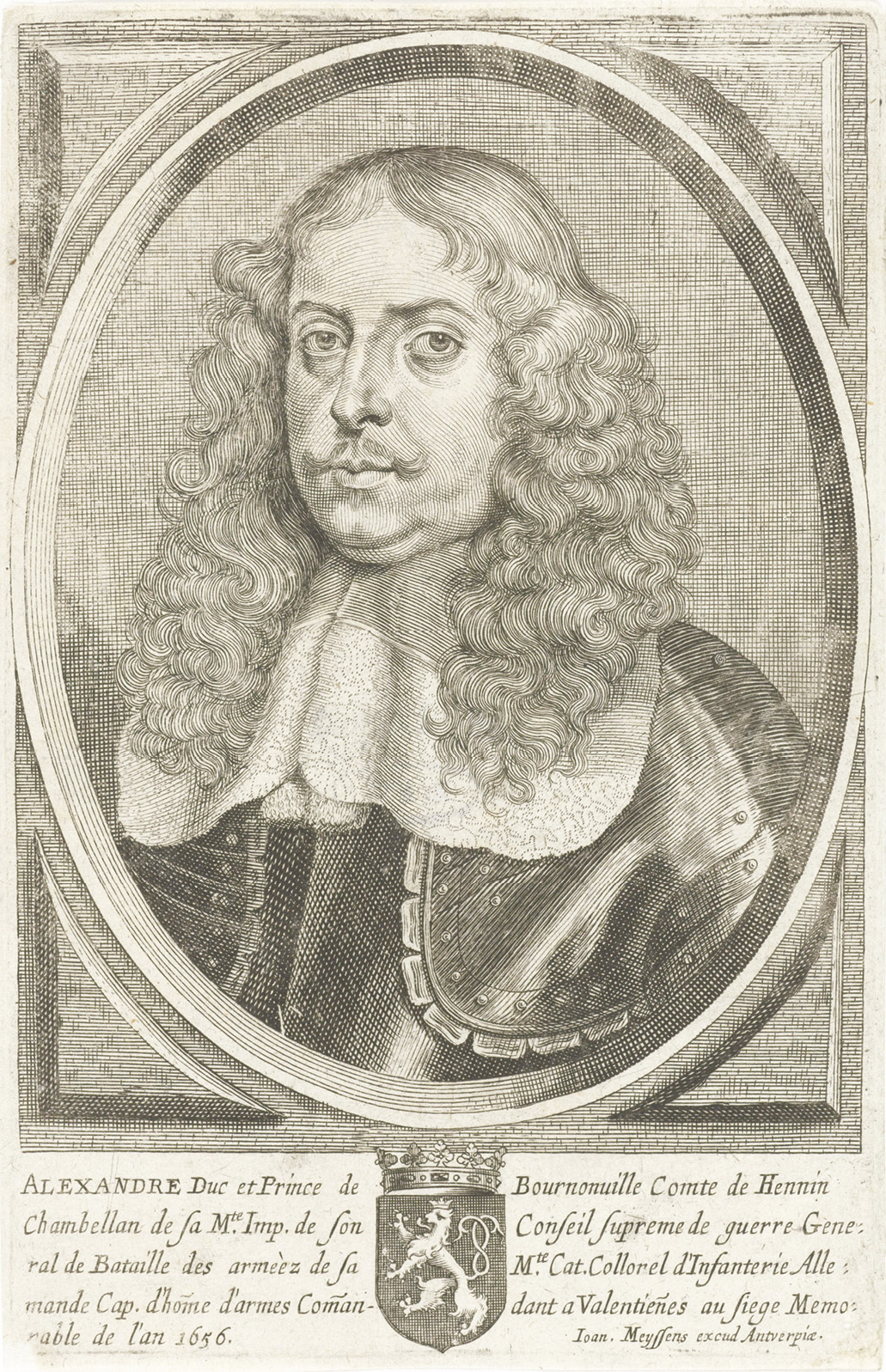
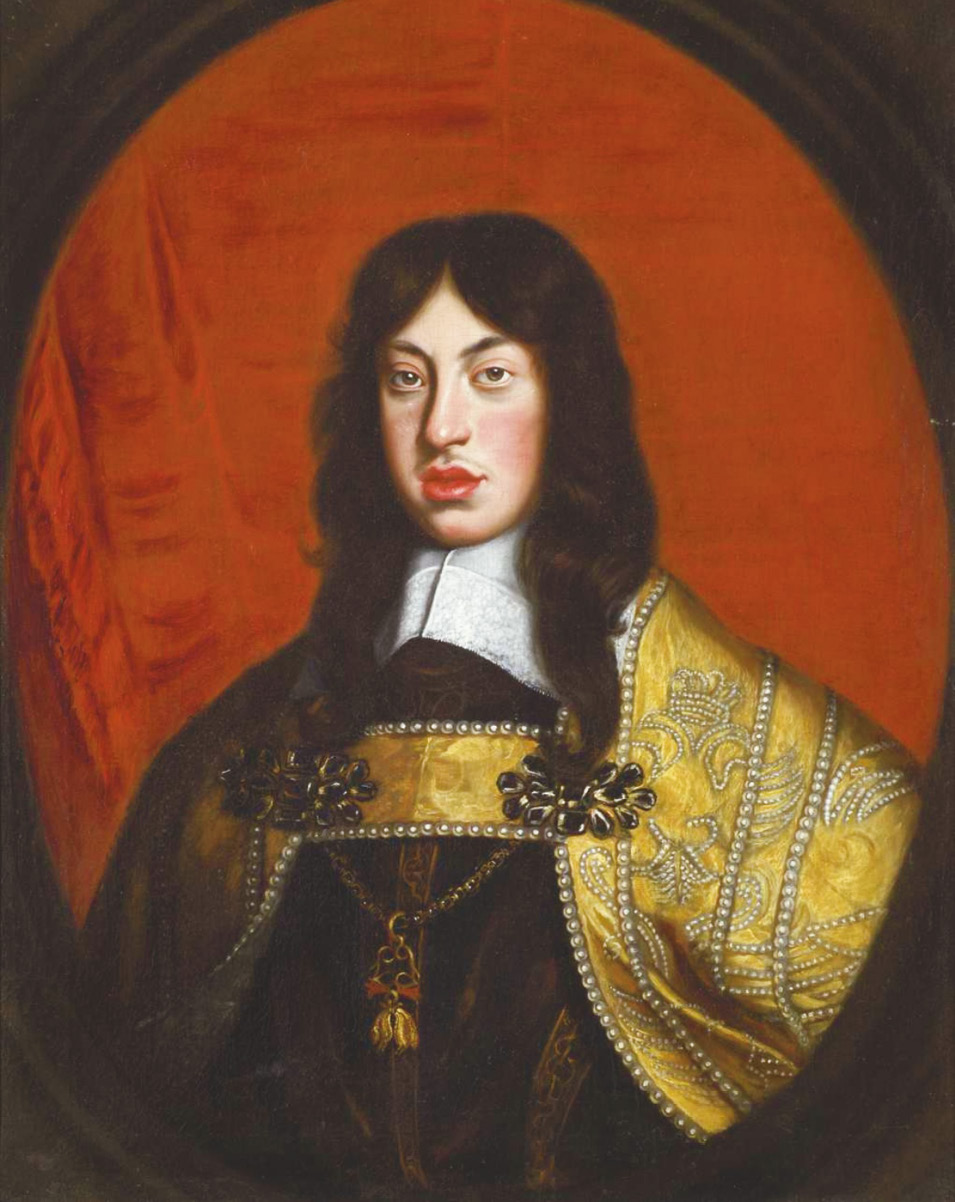
Imperial commander Alexander Hippolyte, Prince of Bournonville (above), and Frederick William, the ‘Great Elector’ of Brandenburg (below). Turenne’s opponents mistakenly assumed he had suspended military operations for the winter.

Reconnaissance-in-force
Turenne’s infantry would average five miles a day on the three-week march from Detmiller (via Remiremont) to the Belfort Gap, the strategically important corridor (also known as the Burgundian Gate) between the Vosges and Jura mountains that connects Franche-Comté in the west and Alsace in the east. While that pace may seem slow, they had to endure snow and rain, muddy roads, and flooded rivers and streams. Snow began to fall in mid-December. Despite the rigours of the march and the inclement weather, the morale of the French remained high as a result of their unshakeable faith in their commander.
At Remiremont, Turenne halted the advance for several days, to allow the French infantry to catch up with the cavalry. Satisfied that all of his infantry had come up and that the foraging parties had swept up as many provisions as possible for the time of year, Turenne resumed his advance southwards to the Belfort Gap in the third week of December.
Having secured Belfort on 27 December, Turenne learned from prisoners captured by his cavalry that the 57,000 Austrian and German troops of the allied left wing were concentrated around two towns to his east, Colmar and Altkirch, which were around 40 miles apart. In a bid to monitor both elements, Bournonville himself had established his headquarters at Mulhouse, a midway point between those two towns – and only about 25 miles east of Belfort. The arrival of Turenne’s army in the Belfort Gap astonished the allied senior command, because they had assumed his army was much further to the north, in its winter encampment at Dettwiller.
Turenne’s 3,000-strong vanguard, which was mostly cavalry with a small body of infantry behind it, attacked the imperial position at Mulhouse on 29 December. Seven squadrons of imperial cuirassiers under Field Marshal Hermann of Baden-Baden, who were 12 miles to the south at Altkirch, rushed north to assist Bournonville. The imperial cavalry deployed behind the Ill River, which flows through Mulhouse on its way to join the Rhine. They bought enough time for Bournonville to escape capture before joining the allied retreat northwards to Colmar.
In the heavy skirmish at Mulhouse, Bournonville lost 300 killed and wounded, and another 1,000 were captured. As for Turenne’s vanguard, it lost just 60 soldiers. The morale of Turenne’s soldiers soared even higher when they realised that they had captured 18 standards of the imperial-Brandenburger army.
Deployment at Turckheim
After Mulhouse, Turenne again allowed his troops several days to rest before pursuing the allied army. During that time, he reconnoitred the enemy positions around Colmar. As Turenne conducted his reconnaissance, the Great Elector and Bournonville arrayed their army for battle along a four-mile front stretching east from the village of Turckheim to Colmar itself.
Bournonville and the Great Elector had selected an excellent position in which their right rested on the River Fech and their left on the River Lauch. To make a frontal assault by the French a costly proposition, the allied commanders deployed behind a branch of the Fech known as the Logelbach that ran across their entire front. The allied commanders deployed artillery in parapets supported by infantry to break up a frontal assault by the French. The main body of the allied force formed into two lines behind the artillery emplacements.
Bournonville had assumed that Turenne would try to capture Colmar, and therefore it was heavily defended by imperial troops. To prevent a direct attack against the town, Bournonville placed the rest of his artillery to support the infantry defending Colmar. Working against the allies, though, was the fact that the Bournonville’s troops and the Brandenburgers had never fought together before. By contrast, Turenne’s veteran troops fought in a cohesive and seamless manner.
Bournonville and Frederick William still had some 50,000 Austrian and German troops, even though some elements had been captured and others had retreated across the Rhine following the skirmish at Mulhouse. Turenne had discerned that the allied right was the weakest part of the enemy’s position, however. He therefore made plans to exploit that vulnerability.

French advance
On 4 January 1675, Turenne advanced his forces to the village of Pfaffenheim, about 10 miles south of Colmar. He had surveyed the ground on which the allies had deployed, and he knew that his troops would be at a substantial disadvantage if they attempted an all-out frontal attack. But Turenne had also noted in his reconnaissance that Turckheim, on the extreme allied right, was only lightly defended – and he believed that his infantry could use the ground around it as a staging area to roll up the allied right flank.
Turenne had 15,000 foot and 15,000 horse. One of his proven battlefield tactics over the course of a long career had been to strike the enemy flank furthest from its supply line. In this case, the allies would undoubtedly seek to protect their supply line north to Strasbourg. Turenne therefore issued orders for the following day instructing his 43-year-old nephew Guy Aldonce de Durfort, Comte de Lorges, who commanded the French centre and right wing, to make a strong feint against the allied centre.
Turenne believed that Bournonville and the Great Elector would be so focused on defending Colmar, which they supposed was Turenne’s objective, that they would not anticipate the movement of 10,000 French troops marching furtively to Turckheim.
While the allies focused on defending their front, Turenne led his left column north through a defile in the landscape known as the Val Saint-Grégoire. In order to get into position, the French flanking column marched through broken terrain that was dotted with farms and vineyards but devoid of roads.
By mid-afternoon, they had secured Turckheim and deployed in two lines facing south-east to attack the allied right. Turenne had brought forward artillery, and it unlimbered on commanding ground outside Turckheim. His nephew de Lorges had orders to press his own attack against the allied centre once the French flanking column advanced. Turenne’s goal was to inflict enough casualties on the allies that they would withdraw from Alsace to reorganise and await reinforcements.
The first phase
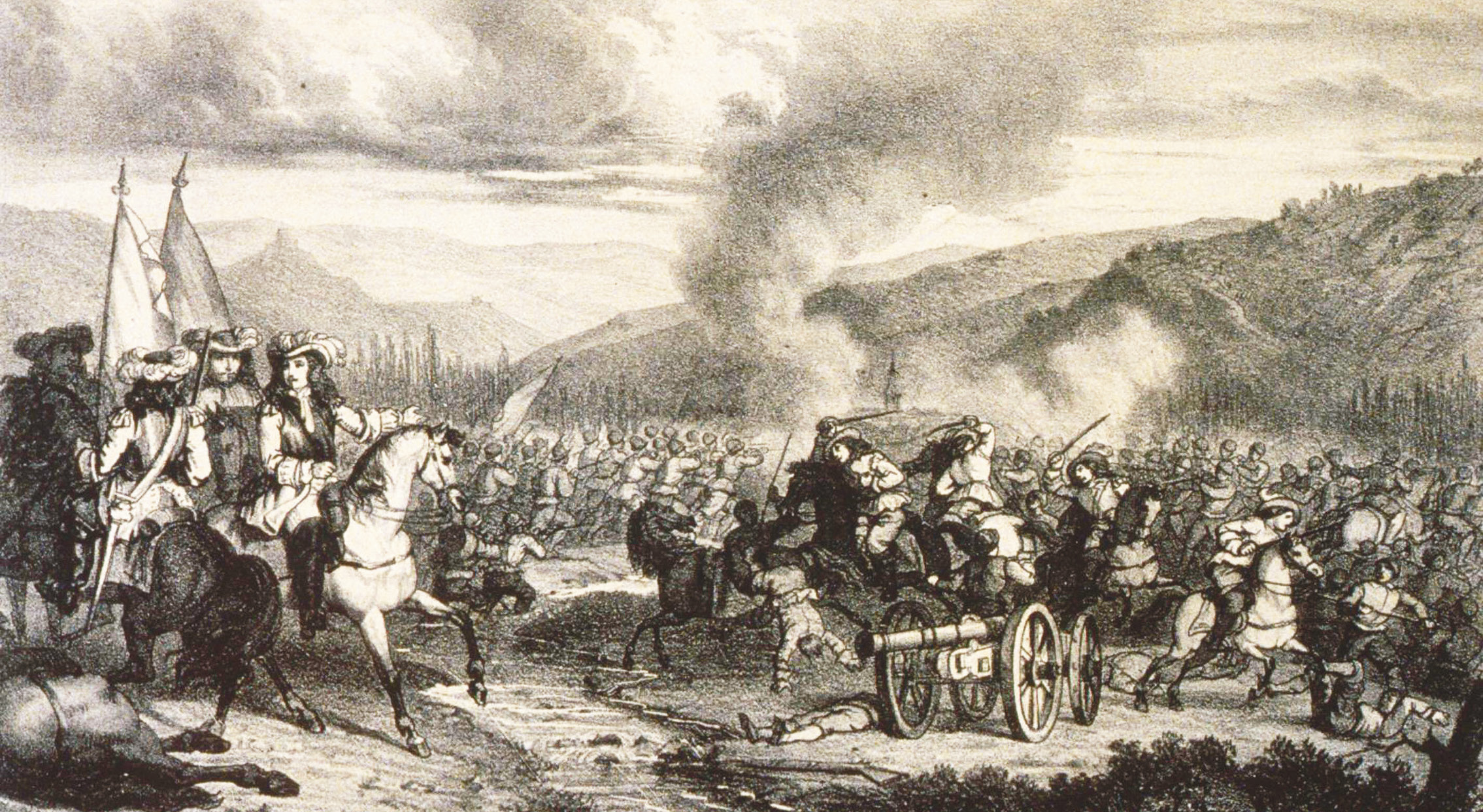
At 11am on 5 January, de Lorges began his advance toward the Logelbach. His front rank came under heavy fire from the enemy’s cannon in protected positions. The allied guns belched great gouts of fire that ripped holes in the ranks of the advancing French infantry. As the French right wing braved a storm of iron and lead, Turenne already had his troops on the march toward Turckheim. His column emerged in the early afternoon from its concealed position behind a spur of the Vosges and drove a detachment of imperial troops from Turckheim.
Turenne then deployed his flanking column in two lines of battle facing south-east. His left rested on a church, and his right on the vineyards between Turckheim and the nearby small town of Winzenheim. Meanwhile, his artillery unlimbered in a position that would allow them to rake the allied line.
Turenne’s nephew had done a convincing job of occupying the attention of the allied commanders for four hours. Turenne now waited until the right moment to unleash his flank attack. He ordered his most senior commander, Lieutenant General Foucault, to begin his attack at 3pm. The two lines of French infantry crossed the shallow waters of the Fech and bore down on the imperial flank.
Seeing the danger posed to his position, Bournonville rushed 12 battalions of infantry, 30 squadrons of cavalry, and a six-gun battery from his second line to reinforce his endangered right flank.
As the fighting grew in intensity, Foucault was slain. When Turenne himself rode forward to direct his troops, the enemy succeeded in shooting his horse from under him. The mid-afternoon flank attack did not last much more than an hour, but that was long enough to rattle the two allied commanders, as well as most of the rank and file.
Although some of the imperial units, to their credit, tried to hold their ground, they were overwhelmed by the French advance. The French infantry, which envel- oped the enemy’s right wing, poured heavy musket fire into the enemy from several directions at once.
The brilliance of Turenne’s flank attack was that the French troops advancing east from Turckheim negated the strength of the allied field works on the north bank of the Logelbach. The troops in those positions realised the danger of being taken from behind and hastily withdrew towards Colmar.
Bournonville and the Great Elector decided that night to begin the 40-mile march to Strasbourg, in order to reach the relative safety of the right bank of the Rhine. The imperial army had lost 3,400 men – either killed, wounded, or captured – while French losses amounted to 1,100 killed or wounded. On the day after the battle, Turenne sent 30 squadrons of his cavalry to harass the retreating enemy. Word soon spread of his victory at Turckheim, and Louis XIV and his subjects rejoiced at the news.
After Turckheim
Leopold I, the Holy Roman Emperor, sacked Bournonville shortly after Turckheim, replacing him with the veteran commander Raimondo Montecuccoli, who came out of retirement to pit his wits against Turenne. Turenne himself crossed the Rhine again in spring 1675 in preparation for another pitched battle with the imperial army.
Although warned of the danger of exposing himself to enemy fire, Turenne chose to confer with his chief of artillery while the opposing armies engaged in an artillery duel on 27 July at Salzbach, a town in Baden-Württemberg, about 70 miles north-east of Turckheim. Turenne was killed instantly that day, when struck by a cannonball. The French army, unnerved by the loss of its venerable commander, withdrew to Alsace.
The news of Turenne’s death was received in France with universal sorrow. But, by that time, the marshal’s place in the French pantheon was assured. At the insistence of Louis XIV, his body was taken to the Abbey of St Denis, to be buried alongside the kings of France. In 1800, on the instructions of Napoleon – who viewed Turenne as the greatest of modern commanders – his remains were removed to the church of Les Invalides, where they rest to this day.
All images: Wikimedia Commons, unless otherwise stated