Subscribe now for full access and no adverts
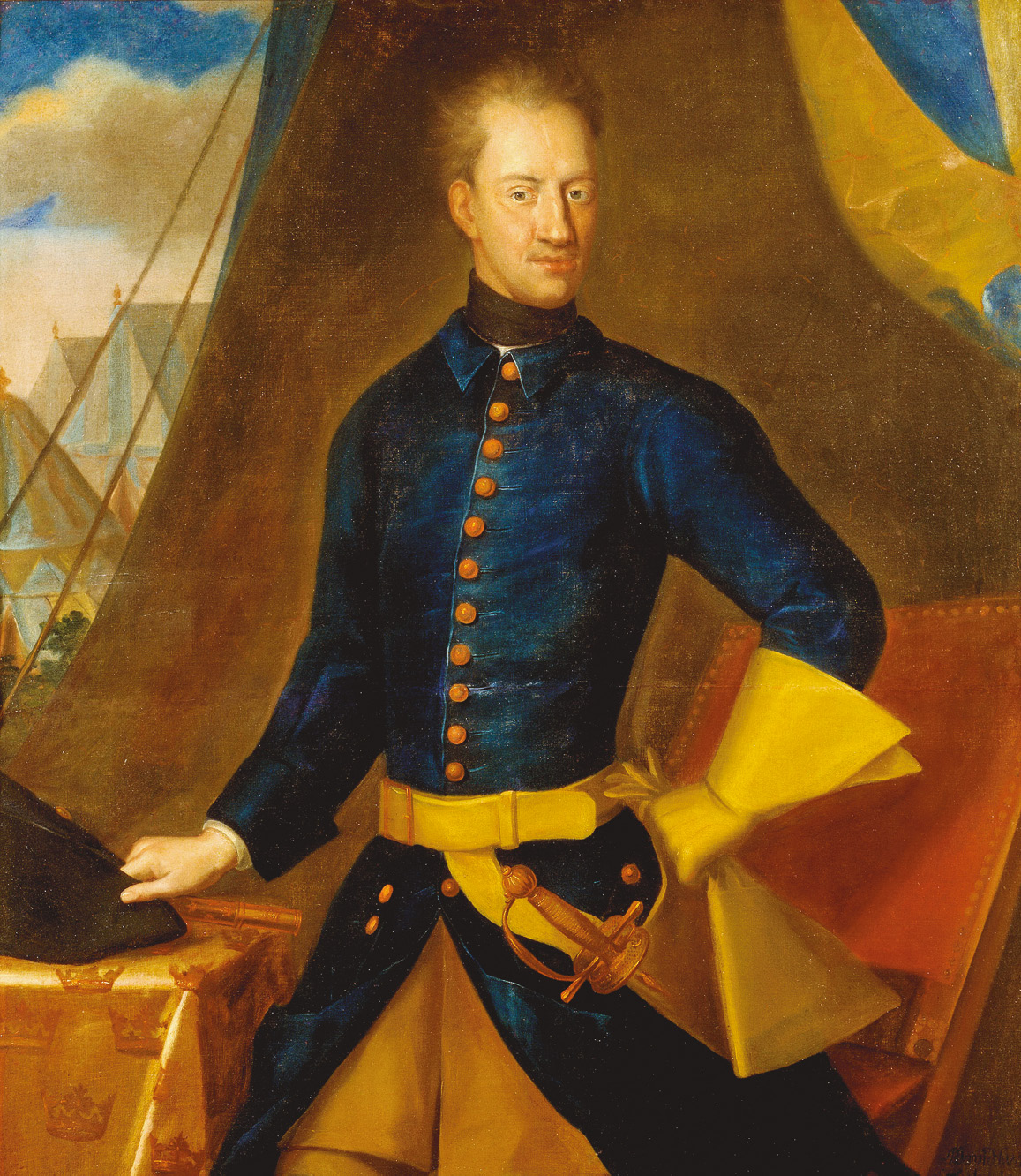
The Great Northern War saw Peter’s opponent Charles XII of Sweden mustering immediate forces of more than 30,000 – and the Swedish king was confident, maybe overconfident, that he could deal with anything the Russians offered. On 6 September 1707, Charles travelled to Dresden to see Augustus II, the former King of Poland, now replaced by Stanislaus I and demoted to Elector of Saxony. Then he crossed his Rubicon, turning eastwards – towards Moscow – with his sights set on an invasion of Russia. He moved first into Silesia, then Poland, where much land had been wasted by Cossacks and Kalmucks. Halting at Posen, he ordered a fortified camp built, where he would spend the next two months waiting for winter’s frosts to harden roads waterlogged by autumn rains.
Quitting camp on 6 December, Charles marched onwards to the Vistula, Poland’s largest river, where he waited another month for temperatures to drop further, and for ice to form, so wagons and artillery could cross with minimal loss. Charles’ route east was tricky, via the forests of Masovia (mid-north-east Poland), but his intention was clear: to turn the Russian position on the Narew. Ten days’ march saw him clear the forests and attain the Lithuanian plains. Come 7 February 1708, Charles, accompanied by an escort of 600, had crossed the Niemen to enter Grodno, evacuated by its Russian garrison hours earlier. The march continued, reaching Smorgonie, then heading south- east to Radoszkowicze where another camp was built. Now more than halfway between Dresden and Moscow, Charles’ troops needed rest, food, and fodder.
An impetuous decision?
Prior to the summer campaign, Charles commanded General Adam Lewenhaupt to advance with the supply train from Courland (on the Baltic’s shores) to join his main army: that was 12,500 on the hoof. Another 14,000 men under Lieutenant-General Georg Lybecker were told to march from Finland on St Petersburg. Charles had a decision to make: did he stalk the Russian army, or recover the Baltic provinces he’d lost while occupied by his attempts to defeat Augustus II in Poland? He chose, perhaps impetuously, to pursue Peter’s forces – although this meant extending supply lines and stretching troop numbers, distance, and time. Charles reckoned invading Russia and defeating its army was the only way to force Peter to a lasting peace on Swedish terms.
Charles quit camp on 16 June 1708, marching eastwards again towards Borisov, on the Berezina river, where around 8,000 Russians under General Goltz were entrenched at the crossing. The Swedish king then turned south, crossing the river further down at Berezina-Sapezhinskaya, and thereby rendering the Russian line indefensible: it had been turned. The Russians decided the Swedes must face battle before crossing the Dnieper – even if this was an attempt to weaken the enemy rather than achieve anything decisive. The Swedish victory at the River Babich (14 July 1708) led to Charles underestimating his opponent, however – for Russia was not spent.
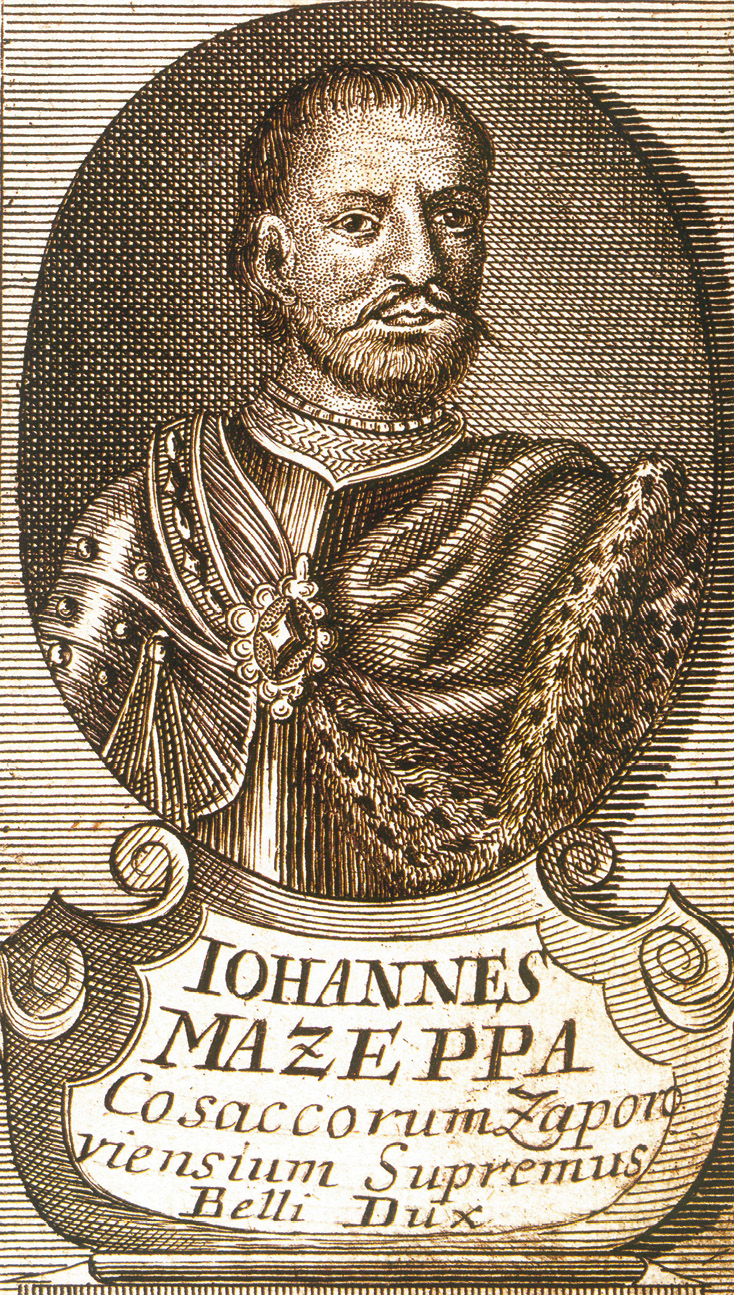
By 19 July, Charles had reached Mogilev on the Dnieper – the gateway to Russia – but then he paused, his now-35,000 troops kicking their heels while they waited for Lewenhaupt’s baggage train. Here, Charles was approached by the Ukrainian hetman (supreme military commander) Ivan Mazepa, who offered 30,000 Cossacks if the Swedish king took Ukraine under his protection. It was a quid pro quo – with Charles feeding his army in Ukraine, and Mazepa avoiding Peter’s vexatious reforms.
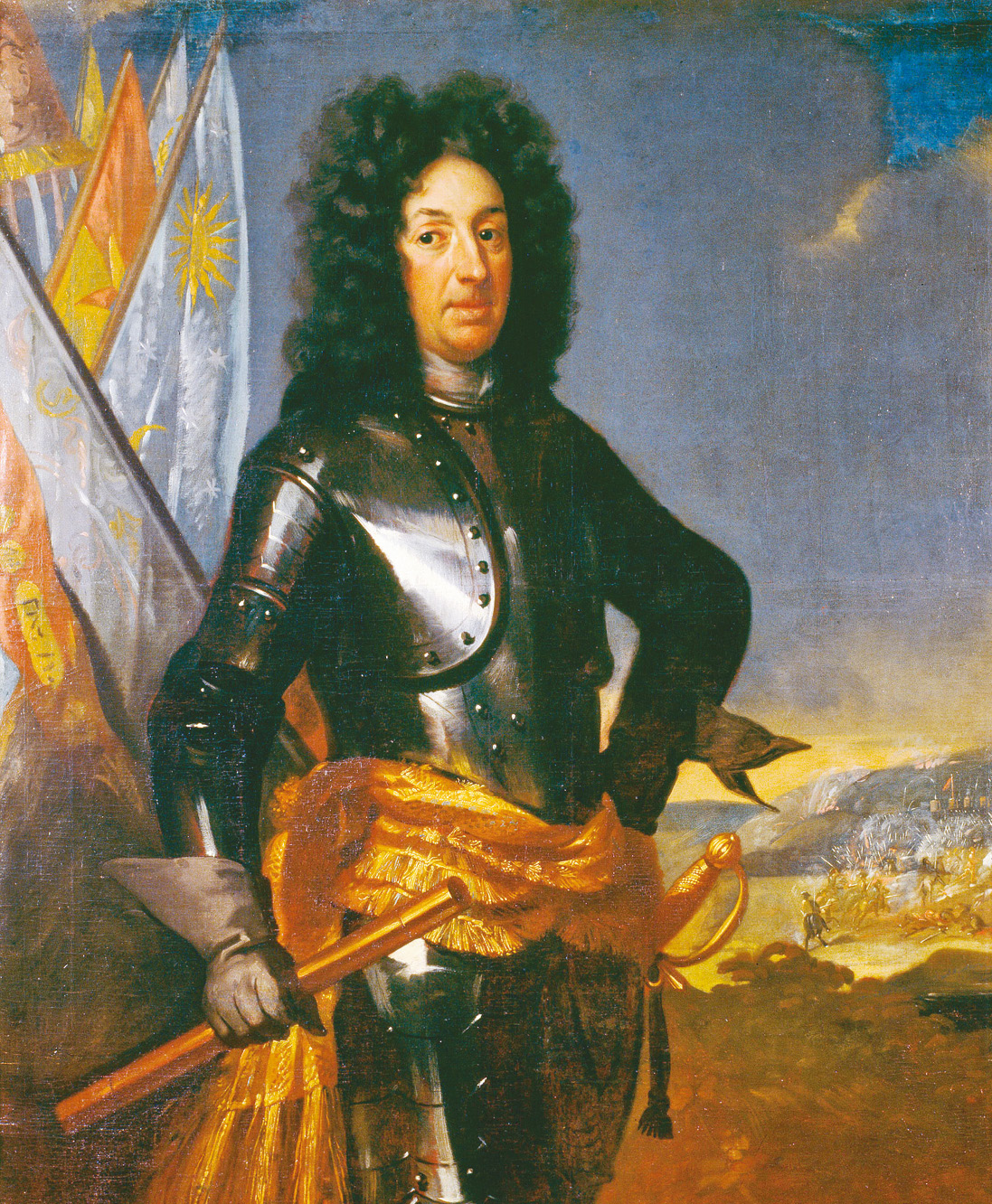
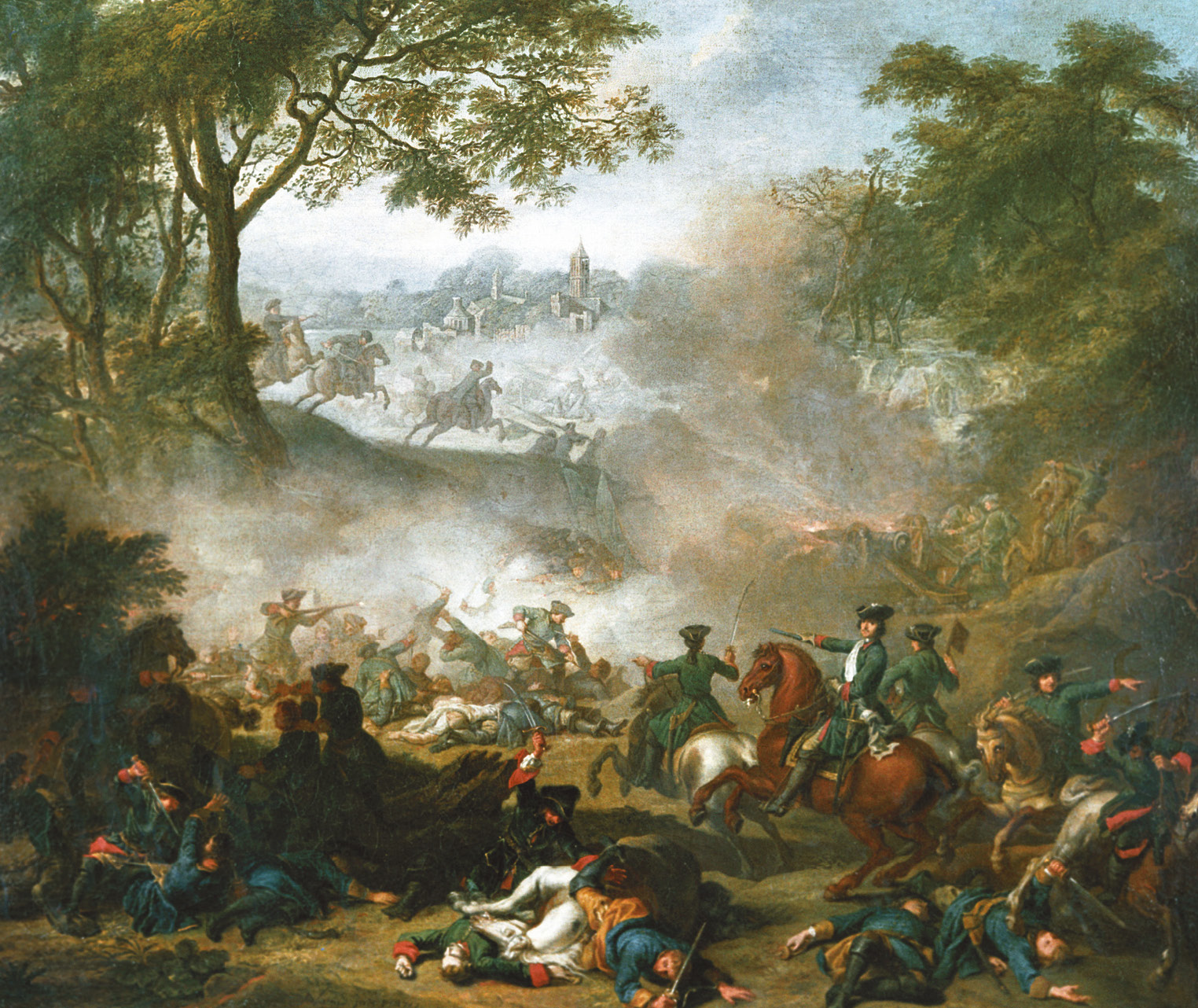
On 15 August, Charles broke camp again. Having procrastinated for a month, he departed with Lewenhaupt still absent. Charles headed south-east towards the Soz, the Russians retreating in a haze of scorched earth. Rather than waiting for the baggage train, which would enable his army’s subsistence over winter, Charles moved south to support Mazepa before Peter acted against him – so didn’t consolidate his forces while undertaking a flanking march potentially in the face of his enemy. Lewenhaupt didn’t hear about the change until 8 October, then had to march south only to be intercepted by Peter and a force of 14,500 at Lesnaya on 9 October. As a result, the Swedish baggage train and artillery were lost, with just 6,000 men joining Charles on 31 October. The push on St Petersburg also backfired, with Lybecker withdrawing, losing his heavy baggage and around 3,000 troops.
Severe hardship
Mazepa turned out to be a let-down, joining Charles at Horki with a few thousand men after Peter’s prompt retribution withered his revolt. Charles was pretty much alone. It was the coldest winter in memory, too – known to history as the ‘Great Frost’ – making living off the land, even in plentiful Ukraine, a severe hardship. Peter continued his campaign of harassment – which Charles tried to end by catching the Russians at Gadyach, only to find they’d quit having torched the place. Charles hit back, striking at Vepric in early January 1709, before defeating Russian armies at Krosnokutsk and Oposzanaya. A thaw turned the ground to quagmire, sending the Swedes into camp, with Charles’ force now down to 24,000 – including some 2,250 sick or wounded.
Spring came, and April 1709 saw Charles trying to recruit Crimean Tartars and the Turkish Sultan while moving south again, hoping to combine with reinforcements coming from Poland. He intended to besiege the small town of Poltava, some 200 miles south-east of Kiev, on the Vorskla. In a campaign of odd decisions, Charles added another in targeting Poltava. His prevarication saw the town better fortified and garrisoned than the previous autumn, while the Russian field army, commanded by Alexander Menshikov, one of Peter’s closest associates, approached the Vorskla’s opposite eastern bank. Nevertheless, the Swedish bombardment began on 11 May 1709. Ammunition was short on both sides – hence Charles being hit by a dead cat, fired along with rotting veg and stones.
An unfortunate incident
Early in June, Peter joined Menshikov, their combined strength now numbering over 40,000. As well as harassing Swedish foragers, Peter planned a feint across the river south of Poltava, disguising his intention to get the main army across north of the town. Charles, meanwhile, was advised by Lewenhaupt to retreat across the Dnieper – but he ignored the advice. Instead, he rode out on the morning of 27 June to investigate the feint – an expedition which saw him take a musket ball in the left foot, the wound playing a part in the forthcoming battle. Not only was Charles injured but the feint succeeded: Peter’s main army crossed six miles north of Poltava, and erected a fortified camp near the village of Semenovska.
Informed of Charles’ misfortune, Peter quickly decided to fight, albeit defensively. Charles suffered an attack of fever that finally abated on 2 July, but this better news was countered by the military situation worsening. No reinforcements were coming from Poland, the Sultan or the Tartars. The Russians broke camp, marching south towards the village of Yakovetski, barely four miles from Poltava, then camped again, fortifying with redoubts. On 7 July, Charles’ council of war informed his generals he intended to fight the next day, the Swedish position becoming untenable. Charles, ever optimistic, believed a lightning strike could prevail, with the Russians being thrust back on the river they’d crossed. Being wounded, however, he appointed Field Marshal Carl Rehnskjöld to command in the field.
The battlefield
The battlefield itself lay north-west of Poltava, with the Russians occupying the northern part of the field, their starting position south-west of the latest camp just north of Yakovetski, with its redoubts forming part of the line. The Swedish army lay to the south-west, closer to Poltava at the battlefield’s southern end. The town and the battlefield lay close to the Vorskla’s west bank, the river snaking north–south down the field’s eastern side, while the opposing positions were separated by the Yakovetski woods, which were penetrated by a deep gully running north– south. To the north of the field lay the villages of Tachtaulova and Pobivanka, with orchards and vineyards adding some charm to a scene soon to be permeated by death. The Swedish baggage train lay south-west of the field near another village, Pushkaryovka, along with several thousand Cossacks whom Charles unwisely disregarded.
The Swedish plan consisted of two manoeuvres: a frontal assault on the Russian redoubts and a break-out into the plain beyond, opening up the possibility of encirclement and sacking of the Russian camp. The initial move was scheduled for just before dawn – the army skirting the redoubts before defenders realised what was happening, with cavalry seeing off enemy horse guarding the redoubts’ rear, then cutting off the Russian line of retreat northwards, and the infantry following, also bypassing the redoubts to assault the Russian camp. Lewenhaupt wanted the siege raised to free troops, but Charles felt maintaining it also occupied defenders. This meant, however, that 1,300 valuable men continued looking towards Poltava, while 2,000 more protected the baggage train and 1,200 guarded the Vorskla’s west bank in case the Swedish army’s flank was threatened by any further crossing. The main beneficiary was Peter – for Charles’ commander Rehnskjöld had just 16,000 on the battlefield, half cavalry, half infantry. Other impediments for the Swedes included a shortage of musket balls and question-marks over their powder’s quality. The battle would rely on sword and bayonet. Just four cannon provided firepower, the rest remaining with the baggage train to maintain the speed of attack.
Opening moves
Using the password ‘With God’s Help’, Swedish infantry moved to their assembly points just after 11pm on Sunday 7 July, and waited for the cavalry to form. Charles sat nearby, in a litter. The cavalry’s six columns were late, as Rehnskjöld – now in overall charge – neglected his normal role as head of horse. Rehnskjöld failed, too, to inform Lewenhaupt of his plans – a significant omission. Unfortunately, the two men despised one another, which meant other Swedish generals didn’t know the strategy, which in turn saw command and control disintegrate – though Charles himself bears the ultimate responsibility for not issuing clear orders.
The Russians busily prepared, the sound of digging as 1am approached providing the first inkling to the Swedes that more redoubts were being built, in front of the existing ones. This meant the attack columns must divide earlier, and face flanking fire from the new redoubts being built one behind the other (rather than alongside as were the ones behind, immediately in front of the Russian line). Rehnskjöld galloped up to reconnoitre, but was spotted by the Russians, and the first shots were fired.
Charles and Rehnskjöld discussed the loss of surprise and whether to abort. The new redoubts made matters harder, especially as they didn’t have enough artillery to silence them, and hopes of a quick breakthrough died. Rehnskjöld advocated immediate attack, his cavalry now ready. Further delay made the Russian position stronger. Charles concurred and new plans were hastily conceived, the infantry forming into five columns, four passing the enemy as quickly as possible, while the fifth attacked the new redoubts, hopefully keeping them occupied.

Battle is joined
At 4am, the Swedish infantry advanced as the morning sun rose, with cavalry following. Surprisingly, the plan worked, with most of the army passing either side of the redoubts. The infantry assault initially prospered, with the first two redoubts falling, but then it came unstuck against the third one. The Swedish commander, Major-General Carl Gustaf Roos, was initially repulsed, so committed all of his six battalions, around 2,600 men, in a desperate attempt to reduce it. While Roos’s valuable troops were wasted, the Swedes’ left wing reached the rear line of redoubts, where a strong force of dragoons under Menshikov awaited. The Swedish ranks called for cavalry backup, so masses of blue-coated troopers arrived – an exchange of cold steel lasting over an hour with neither side initially on top. Menshikov felt the battle could be tipped, and sent word to Peter for the whole army’s committal. Peter hesitated, however, believing the Swedes might be holding back as well, so instead the Russian cavalry was ordered to withdraw.
The Swedish right, where Lewenhaupt commanded six infantry battalions, passed the redoubts on the eastern side, its commander ignorant of the overall strategy. Severely troubled by fire from the redoubts, his line of march swung further right, away from the field towards the Russian camp: a modest force of 2,400 heading for a camp occupied by more than 25,000 men with nearly 80 cannon. Just as Lewenhaupt was readying to attack, confusion in Swedish ranks emerged again as he was ordered to halt. No one admitted giving this order – but with Charles and Rehnskjöld both issuing orders, confusion reigned.
The Russians were no longer the patsies they’d previously been.
Back on the left, withdrawing the Russian cavalry saw the Swedes progressing beyond the redoubts, and forming up on the plain behind. It was 6am. Rehnskjöld sent word to Roos that he should quit attacking the redoubts, bringing his force up with the main body. Peter took advantage: discerning Roos’s isolation, he sent several thousand cavalry and infantry under General Rensel to cut him off. Most of Roos’s command were killed or captured. Though Roos himself escaped towards Poltava with just 400 men, they were forced to surrender.
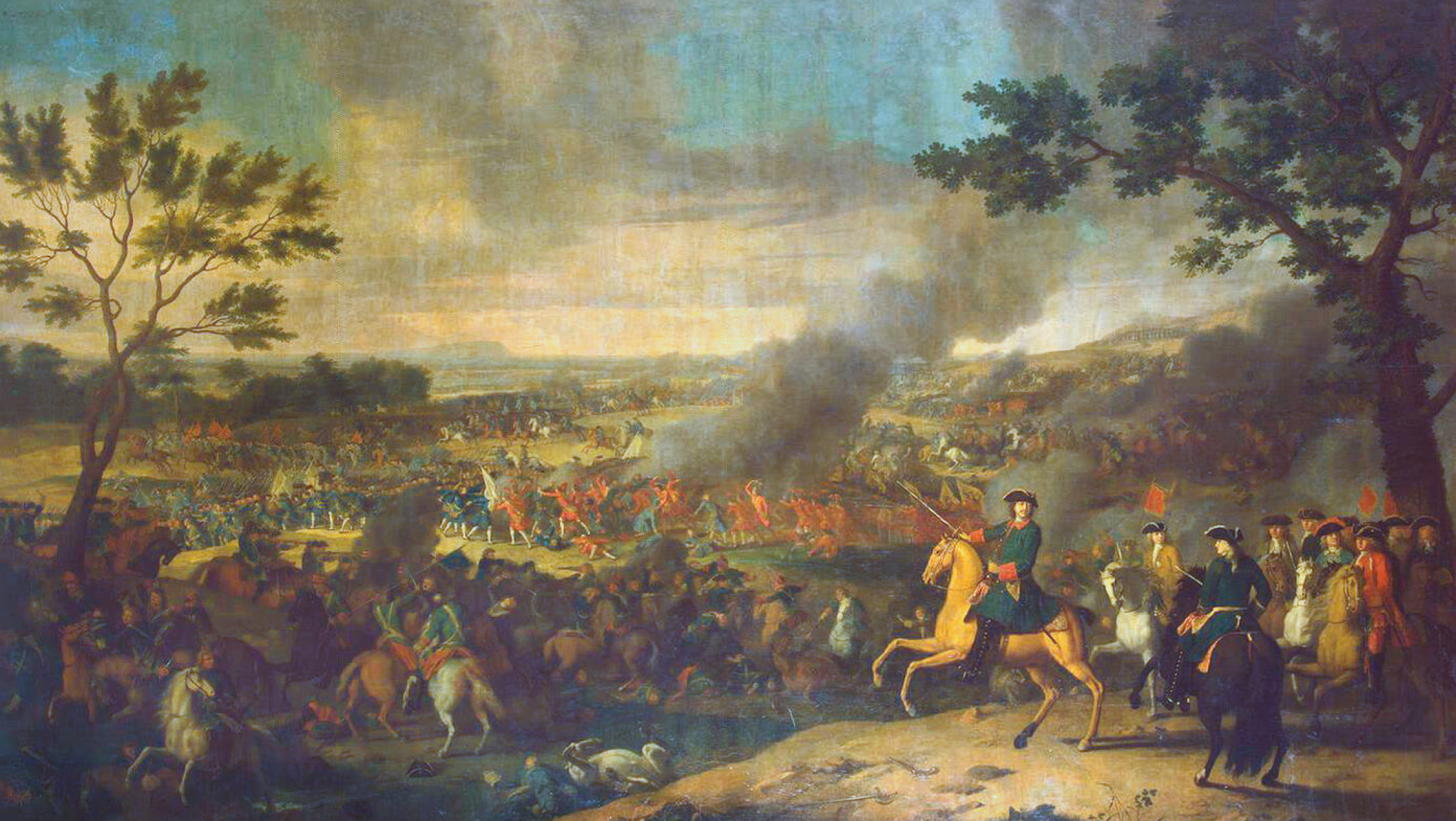
At 9am, Lewenhaupt’s six battalions joined the main Swedish army – but Rehnskjöld now had to choose: move north and hopefully cut the Russians from their supply lines; attack the main Russian camp; or retreat to fight again. The latter seemed sensible, but, before any retreat began, Peter acted – thousands of green-clad Russians pouring from their camp and forming up with guns to the front, infantry in the centre, cavalry on flanks, and Peter himself riding with the Novgorod regiment on the left. The camp’s cannon fired over the lot.
Rehnskjöld hastily ordered his men back into battle formation. There was more confusion in the Swedish hierarchy as to whether to attack cavalry or infantry, but Rehnskjöld got his way: it would be the infantry. The Russians shifted, though. After a brief address from Peter to his retinue, 30,000 troops began moving in two lines on a mile-wide front. The depleted Swedes had a much narrower front, with 12 understrength battalions spread thinly in a single line with both flanks overlapped. The Swedish cavalry, led by General Carl Gustaf Creutz, was rearward, trying to reform after clashing with Menshikov’s dragoons.
It was 10am when Rehnskjöld gave Lewenhaupt a direct order to attack; the Swedish ‘Charge of the Light Brigade’ resulted – 4,000 Swedish infantry advanced, only to be decimated by Russian cannon, which switched from balls to grape and scrap shot at 100 yards, with infantry volley fire then joining in. The Swedes didn’t respond, survivors pressing on until the Guard battalions on the right hit the Russian line, driving it back on its second reserve line. Lewenhaupt wanted cavalry support, but there was none; instead his left wing struggled, concentrated cannon fire halting his battalions.

With the right wing advancing but faltering, a gap appeared in the Swedish line. Peter now delivered the masterstroke, ordering his infantry into that gap. Panic hit the Swedes. Most officers were killed or wounded, and with no support forthcoming, soldiers on the left began fleeing. Swedish cavalry belatedly arrived: Creutz and around ten squadrons on the right. The Russians responded, however, according to Peter’s training and drilling: four battalions of the Nizhni-Novgorod regiment and Busch Grenadiers forming into a square with cannon at each corner. Its fusillade kept the horse at bay until Menshikov’s squadrons hit them from behind, having come around in a wide arc. The Swedish left was now in disarray, with panic spreading to the rest of the line. In the ensuing rout, 21 of Charles’ 24 litter-bearers were killed or wounded, the litter having fallen prey to a cannonball. Charles himself was lucky to avoid death or capture, returning to the Swedish camp at Pushkaryovka.
Endgame and legacy
Around 19,000 Swedes fought, with nearly 10,000 lost – of whom 6,900 were dead or wounded, and 2,800 captured, Rehnskjöld included. The Russians suffered only 1,350 killed and 3,300 wounded. The Swedes’ front-foot tactics cost them, while the Russians’ defensive tactics paid dividends. The steadiness of the Russian infantry was something for which Peter could take credit – for he had evolved a powerful, resilient fighting force. Put simply: the Russians weren’t the patsies they’d previously been against the Swedes. Charles’ remnant retreated down the Vorskla to its confluence with the Dnieper – where, on 9 July 1709, Charles was ferried across the Dnieper with a bodyguard of 1,000. With insufficient boats, Lewenhaupt and 12,000 men surrendered the following day.

Ultimately, the battle’s significance was multi-stranded. It led to the shattering of Sweden’s hegemony in the north; to the loss of Ukrainian independence; to the ending of the cause of Stanislaus, the two-time Polish king who lost his throne after Poltava; and to the emergence of Russia, formerly to all intents an Asiatic country, but now with a definite European toehold. Poltava was the largest, decisive battle of the Great Northern War, which signalled an end to Sweden’s days as a European Great Power and the beginning of Russian supremacy in northern Europe.
The poet Lord Byron (1788-1824) perhaps summed it up, when he wrote:
Dread Poltowa’s day,
When fortune left the royal Swede,
Around a slaughtered army lay,
No more to combat and to bleed,
The power and fortune of the war
Had passed to the triumphant Czar.
Stephen Roberts is a historian who has written many times for MHM, including cover stories on Edward III, the Siege of Leningrad, and the Battle of Aboukir Bay.
Further reading:
• The Battle of Poltava 1709: Foundation of the Russian Empire (A Valery, Helion & Co/ ‘Century of the Soldier’ series , 2020)
• The Battle that Shook Europe: Poltava and the Birth of the Russian Empire (P Englund, I B Tauris, 2013)
All images: Wikimedia Commons, unless otherwise stated