
Subscribe now for full access and no adverts
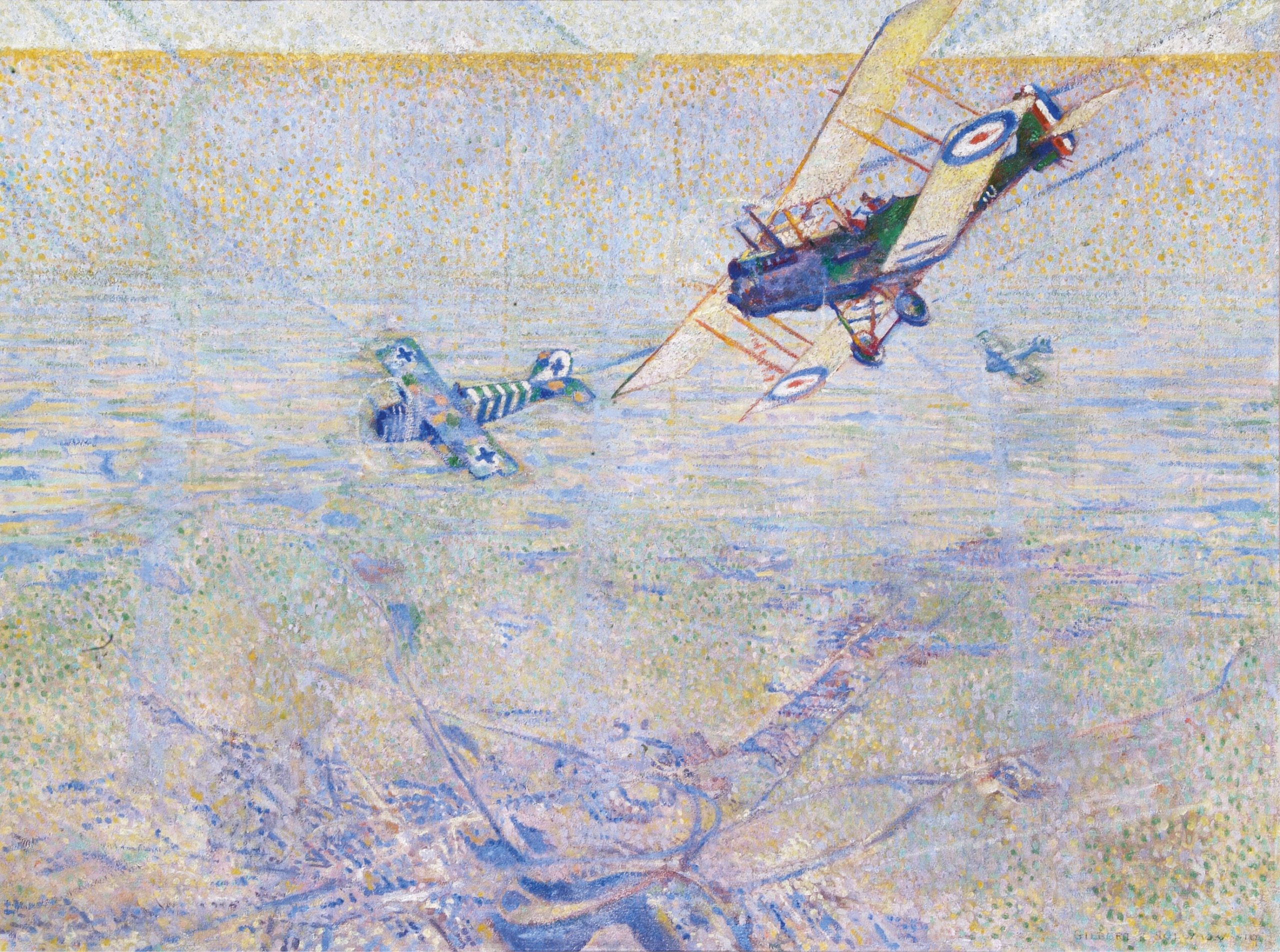
Morning, 28 July 1917. The Royal Aircraft Factory R.E.8 biplane was streaming through the skies five miles inside German lines when the pilot and his observer realised they had been encircled by enemy fighters.
Machine-gun bullets tore through the aircraft, the wounded pilot steering a course back towards base but then losing consciousness. As the plane lost altitude, and without any parachutes, the observer reached for the controls. The crash landing wrecked the R.E.8. Yet the men aboard survived.
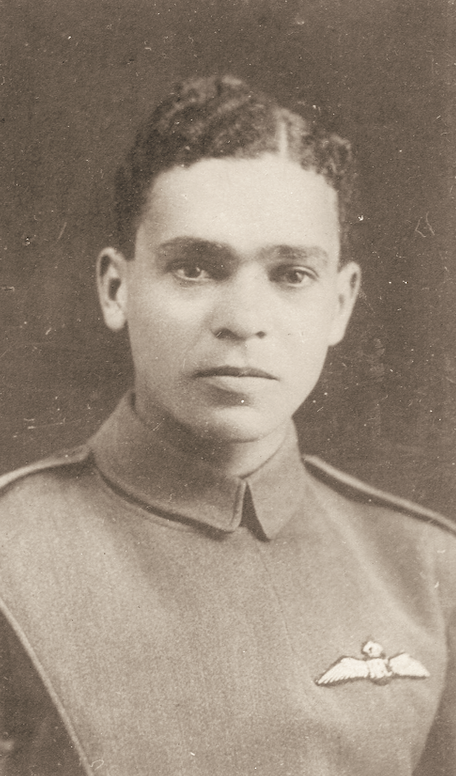
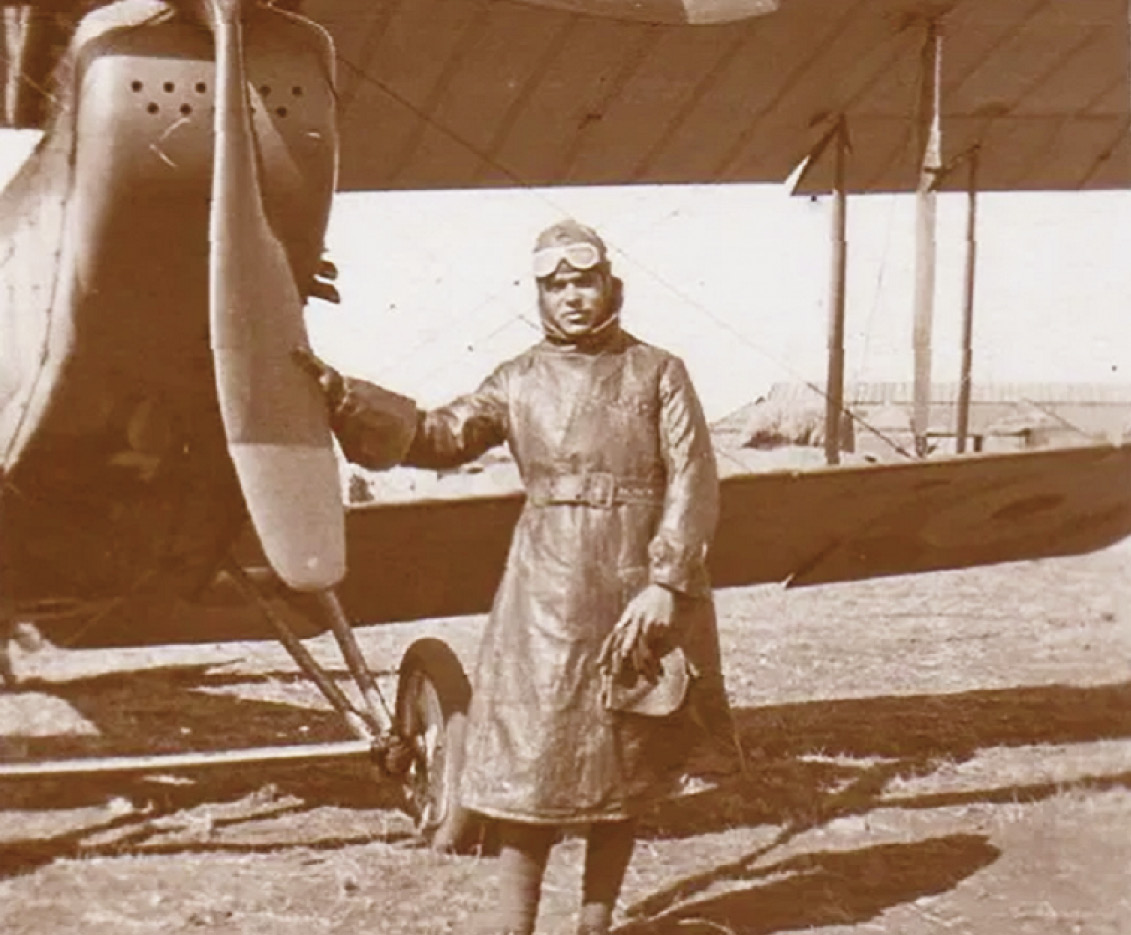
More remarkable than the survival of the two servicemen was that the wounded pilot should have flown the plane at all. Flight Sergeant William Robinson Clarke was the first Black airman to break the colour bar in the Royal Flying Corps.
Clarke is a less iconic figure than Walter Tull, the professional footballer who in 1917 became the first Black commissioned officer in the British infantry. The chance discovery of Clarke’s photograph in the archive of the Royal Air Force Museum has nonetheless added much to the ongoing reappraisal of the Black contribution to British history.
Aviation was still in its infancy at the start of the First World War. Little more than ten years had passed since Orville and Wilbur Wright successfully tested an engine-powered aircraft near Kitty Hawk, North Carolina. Across the Atlantic, an awareness of the potential military importance of air power led to the formation of the Royal Flying Corps in 1912. The primitive development of aeroplanes meant that flying was dangerous – but also, in the words of famed fighter-pilot James McCudden, ‘the thing of the future, and the very near future’.
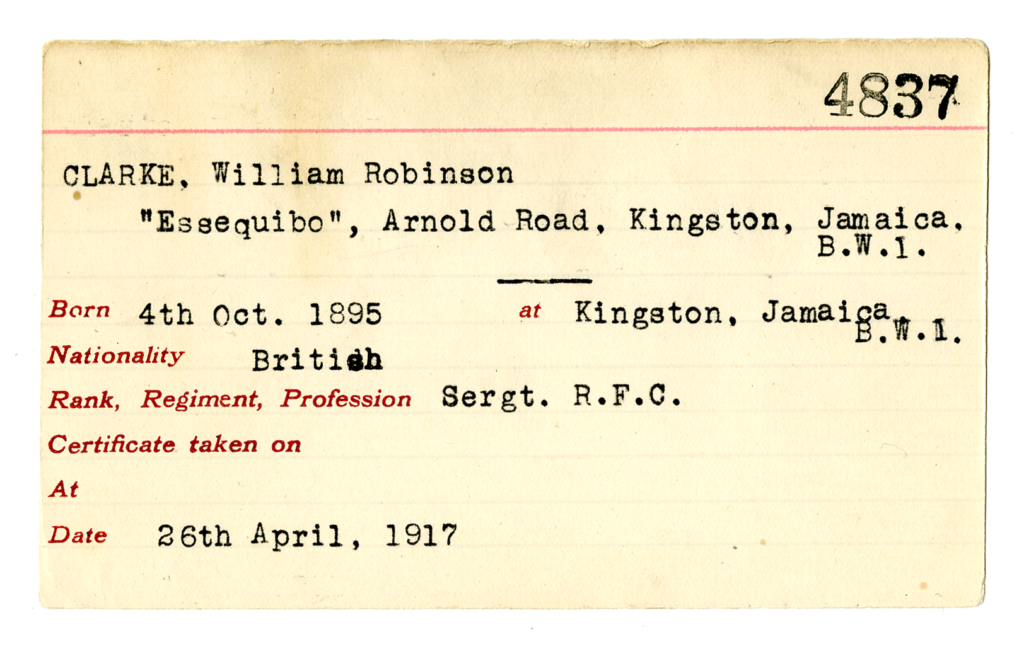
Born in Kingston, Jamaica, on 4 October 1895, Clarke was one of a rare breed of Black combat pilots who saw service during the First World War. They did so not in a coordinated civil-rights campaign but as individuals on both sides of the conflict.
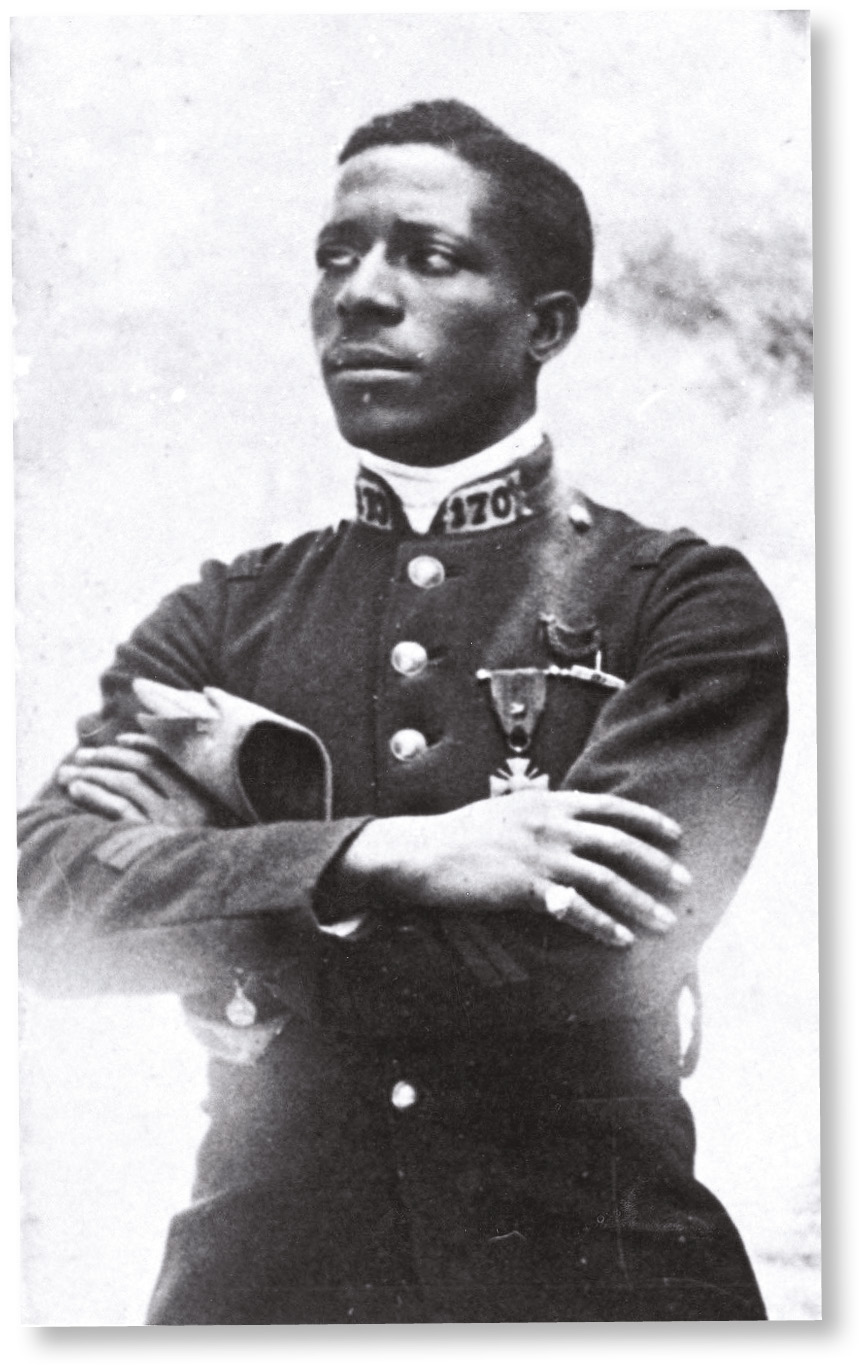
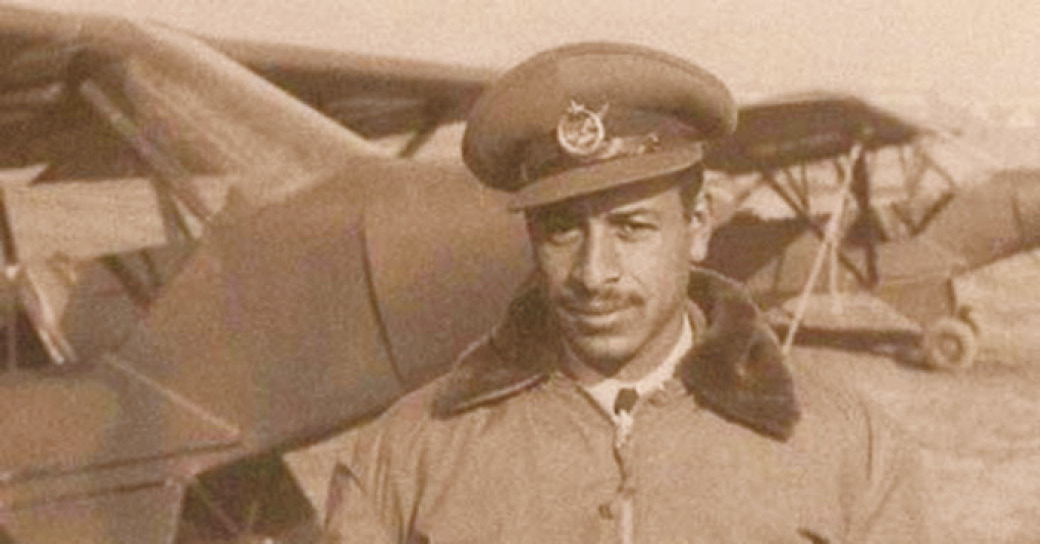
The first of these pioneers was long thought to be African American aviator Eugene Bullard (1895-1961), whose heroism with the French Air Service earned him the sobriquet the ‘Black Swallow of Death’. We now know that Clarke earned his wings earlier than Bullard. Preceding both men, though, was Turkish pilot Ahmet Ali Çelikten (1883-1969), the ‘Black Eagle of Steel’, whose long and formidable aviation career saw him rise to the rank of colonel.
That Clarke should ever have sat in the cockpit of a plane was extraordinary given his race, class, and country of origin – for he took to the skies at a time of pervasive resistance from the British political and military establishment to the recruitment of Black servicemen.
A white man’s war?
The news was official. On 5 August 1914, the front pages of the morning newspapers confirmed what readers had foreseen with anticipation or fear. ‘Great Britain declared war on Germany at 11 o’clock last night.’ Almost immediately, recruiting offices across the nation were straining to process the swelling crowds of volunteers at their doors.
A desire to serve King and Country stirred the hearts of citizens not only in Britain but also throughout its Empire. Four thousand miles from the seat of British government, the people of the West Indies rallied around the flag. They had long been encouraged to consider themselves British and to embrace as their own the institutions and culture of the Mother Country. While many offered financial aid and material support to the war effort, others were determined to fight.
Their motivations were manifold. Some West Indians saw military service as a means to escape the poverty that afflicted their homelands. There were also those who wanted to avert a victorious Germany imposing colonial rule on the Caribbean through the sort of violence with which it had tyrannised the West African protectorate of Togoland. More far-sighted were the nationalists who believed wartime loyalty was a step towards British recognition of West Indians’ right to self-governance. ‘We shall be fighting to prove that we are no longer merely subjects, but citizens,’ affirmed Grenada’s The Federalist newspaper, ‘citizens of a world empire whose watchword should be Liberty, Equality and Brotherhood.’
The British War Office had other ideas. Military officials were determined to restrict the conflict to ‘a white man’s war’. Allowing men of colour to fight on an integrated battlefield would, they feared, undermine the respect for racial hierarchy on which the British Empire was built and by which it was maintained. The public rationales for resisting the recruitment of Blacks absurdly pretended to be in their best interest. One excuse was that they were too susceptible to colder and wetter climates than their own; another, that their skin colour exposed them as targets for enemy fire.
Elsewhere in Whitehall there was some unease. While the Colonial Office was itself far from immune to racism, it feared that not permitting West Indians to serve in the British Army would have an even more corrosive impact on their loyalty to the Crown. The intransigence of the War Office had already fuelled a furious reaction from West Indian newspapers, with The Federalist denouncing ‘the nasty cowardly skin prejudice characteristic of the Empire’ and contrasting it with the French military’s successful use of Senegalese combat soldiers.
The War Office was unmoved. Even when battlefield failures led to the reluctant use of Indian military units, officials denied it established a precedent for further deployment of non-white soldiers. The most that officials were willing to concede was the creation of Black West Indian units for the restricted purpose of defending their own islands from German raids.
The impasse was eventually resolved through royal intervention. On 17 April 1915, King George V informed the Colonial Office through his emissary Lord Stamfordham that he could not help ‘thinking that it would be very politic to gratify the wish of the West Indies to send a Regiment to the front’. Further discussions behind closed doors finally led to the War Office announcing on 19 May the recruitment of a British West Indies regiment.
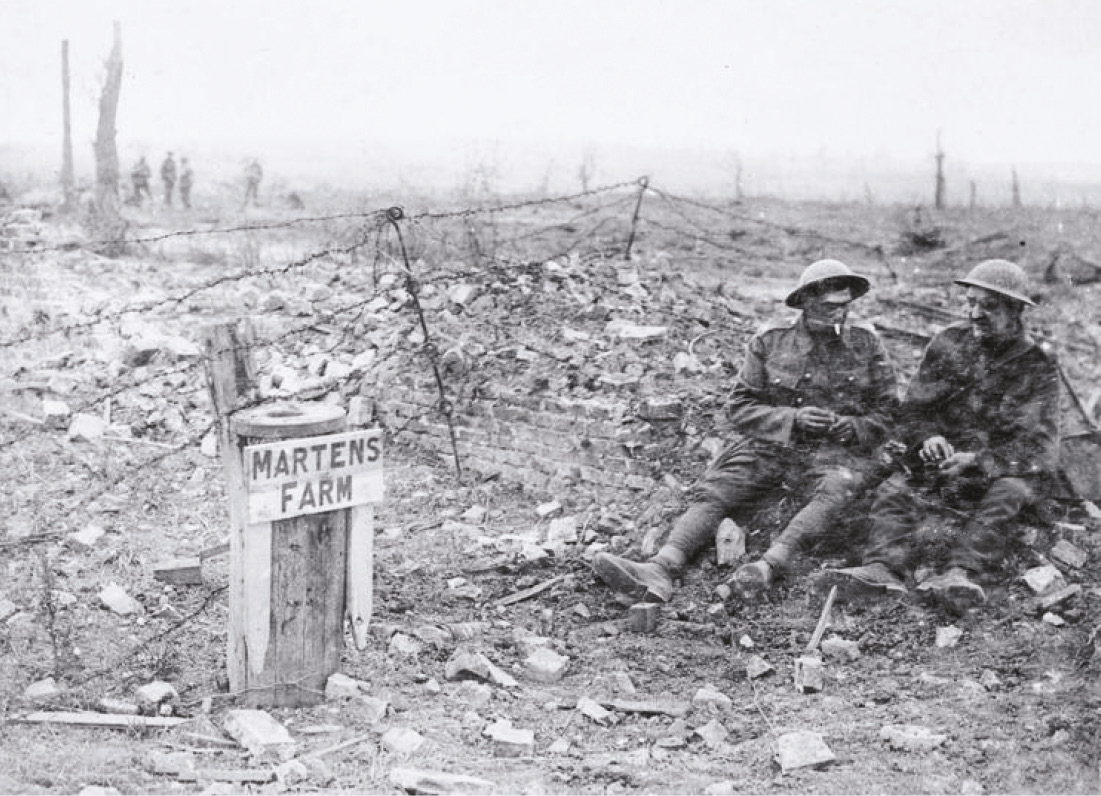
West Indians rushed to answer the call to arms. By the end of the war, more than 15,000 had served in 11 battalions stationed in Asia, Europe, North Africa, and the Middle East. Many were confined to menial labour roles – but some were engaged in frontline fighting, including at the Battles of the Somme and Passchendaele.
‘Where I wanted to be…’
At a time when the War Office was still refusing to countenance recruitment from the Caribbean, some West Indians showed that they were unwilling to take no for an answer. Fuelled by patriotic fervour, they boarded ships bound for Britain and the nearest recruiting office. A few purchased their own tickets; others stowed away in search of adventure. Nearly all experienced disappointment.
In May 1915, British police arrested nine Barbadians who had made the transatlantic journey hidden below the decks of the SS Danube. The defendants appeared before a magistrate, who not only sentenced them to a week in prison, but also made them the objects of racist ridicule. Informed that the men had concealed themselves in the cargo load, he mused: ‘In a dark corner, I suppose.’
One young man would succeed where others failed: the Kingston-born William Robinson Clarke – ‘Robbie’ to his friends and family – who was still a teenager when war broke out. An accomplished athlete during his school days, he was working as a chauffeur for a wealthy white family when hostilities commenced. Clarke immediately rode the patriotic tide sweeping through the West Indies. Recalling that moment, he expressed his overwhelming sentiment: ‘I wanted to support the Mother Land.’

Clarke and his prospective brother- in-arms Lancelot McIntosh paid their own passage to Britain. Having arrived in the UK, the 19-year-old Jamaican journeyed to Farnborough, where he joined the Royal Flying Corps as an air mechanic on 29 July 1915.
We do not know why Clarke succeeded in overcoming the colour bar. Aviation was a nascent aspect of war, and a man with his expertise in motor mechanics was much needed. His relatively light skin may also have assisted him.
Whatever the reason, his experience contrasted with that of other Black volunteers. Norman Manley, the future Premier of Jamaica, was a Rhodes Scholar at Oxford when the war came. He and his brother Roy both attempted to enlist in the RFC, but neither could afford the inordinate £150 cost of training for a flying certificate. The siblings both signed up with the British Royal Field Artillery.
Meanwhile, Clarke pursued his aviation career. On 18 October 1915, he was posted to the RFC Base Depot in France. ‘Still having horrible weather,’ he lamented in a letter to his mother, ‘snowing nearly all day today and very cold.’ Still, there was a sense of pride and purpose attached to the keepsake included with the letter: a scrap of fabric from a balloon used to draw enemy fire. Clarke may have worked at ground level, but his gaze was on the skies. ‘All I wanted to do was fly,’ he later said. ‘Every time I saw those planes flying over, I knew that was where I wanted to be.’
The content of his character clearly enabled him to overcome hostility towards the colour of his skin, since in December 1916 he returned to Britain as a trainee pilot. Five months later, the newly promoted Sergeant Clarke completed his training. He crossed the English Channel once more and entered the ranks of No.4 Squadron in Belgium. Its aerodrome was located near the village of Abeele on the main supply route to Ypres.

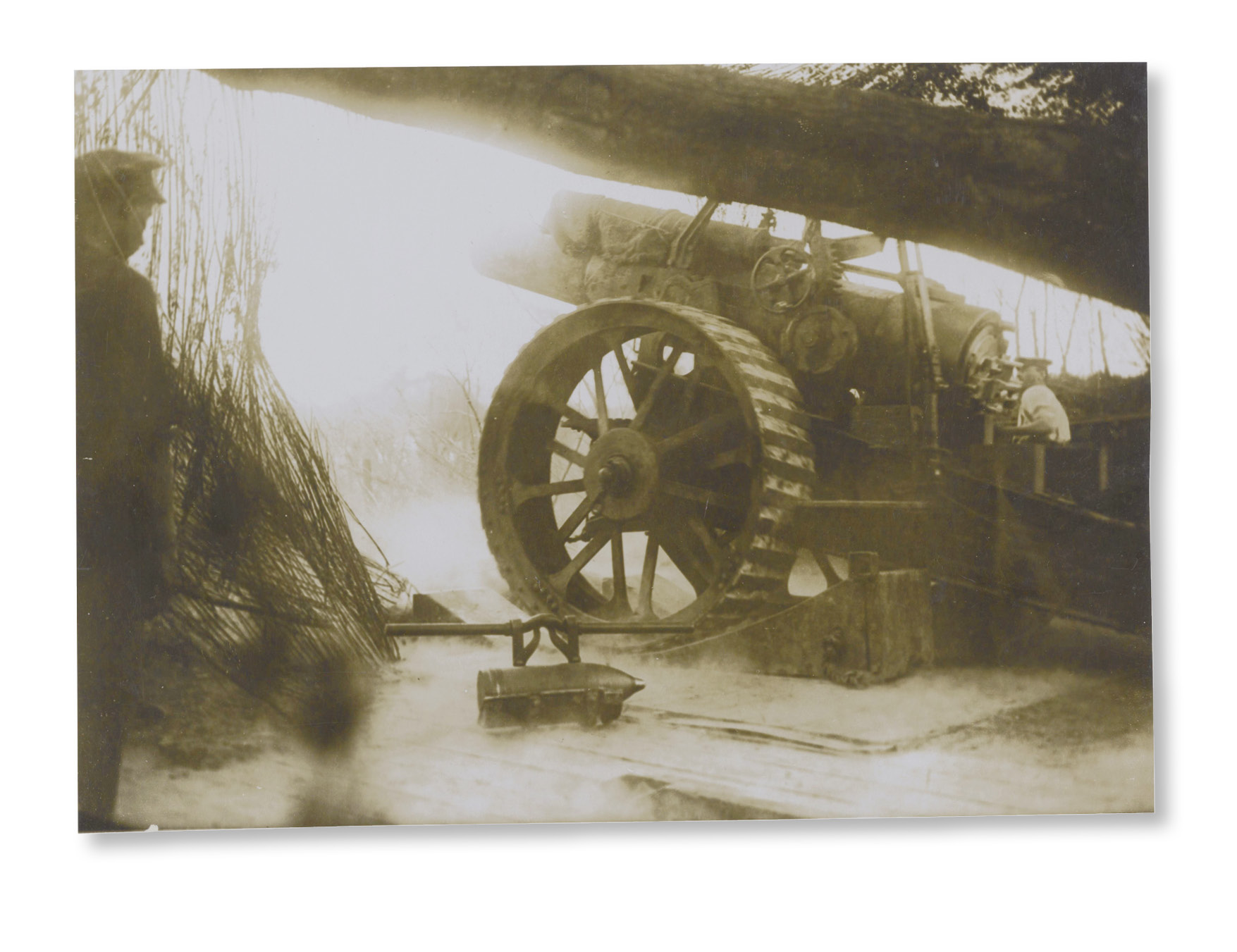
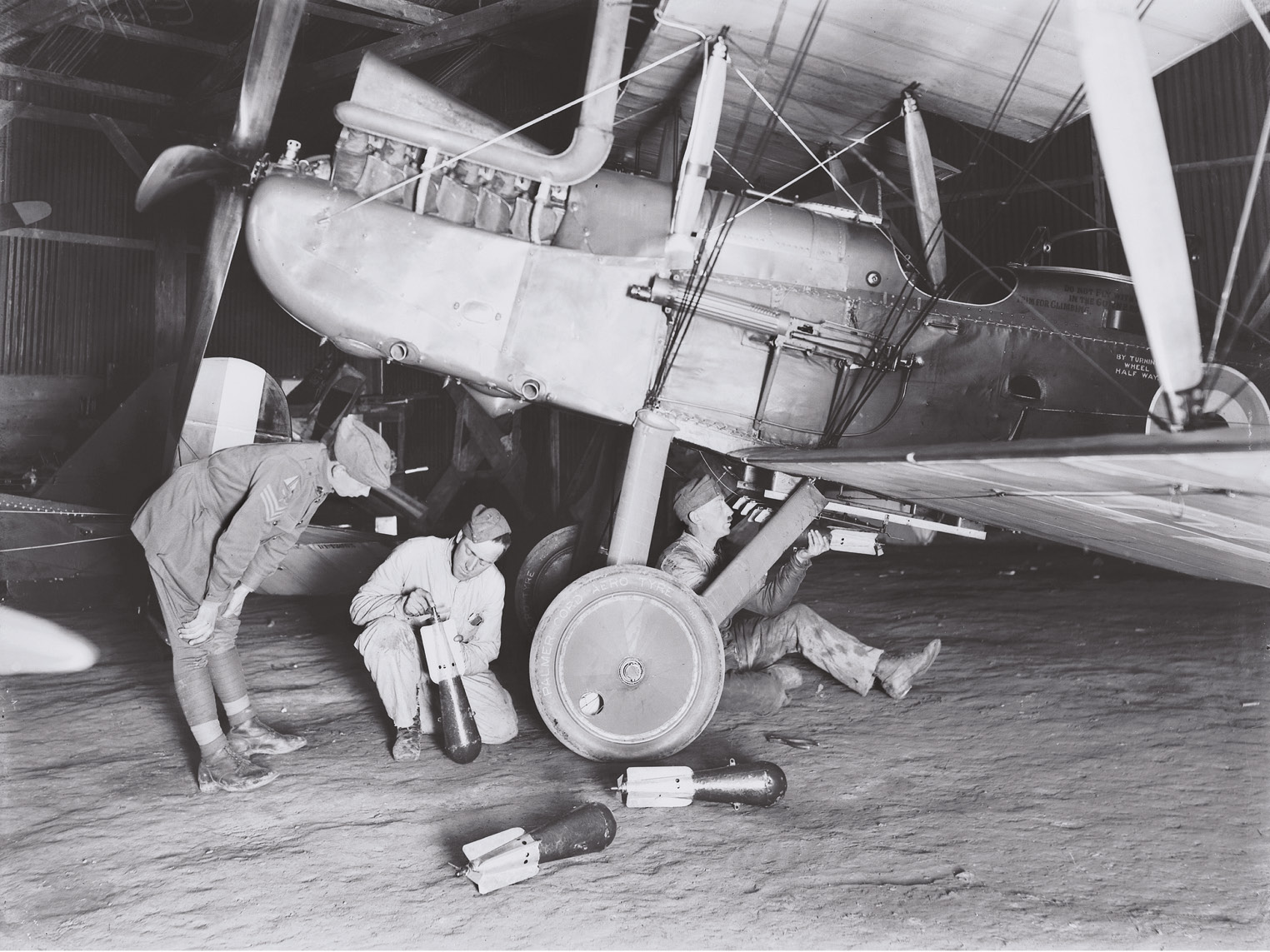
Clarke piloted a two-seater R.E.8 biplane, which could climb to a height of 13,500 feet for the purposes of air reconnaissance over the Western Front. It was equipped to carry out bombing raids, too. The R.E.8 was popular enough with some aviators that they gave it the pet name ‘Harry Tate’, in honour of a popular music-hall performer. Yet its bulk made it a burdensome machine for many, as numerous pilot fatalities sadly proved. The design imperfection of the plane was not, though, the cause of Clarke’s near demise on that July morning in 1917. With Germany commanding the air above the Western Front by that spring, there was a serious possibility of death for pilots every time they took to the skies. The fatality rate of British pilots was 200 a month.
Clarke was exposed to the frailty of his aircraft on a mission to photograph German defences for the planning of the Battle of Messines Ridge, in West Flanders. A shell clipped one of the bracing wires between the wings of his R.E.8. Had it snapped, the plane could have been in serious trouble. ‘Thank goodness it did not touch the engine,’ mused the relieved pilot.
Clarke flew several further successful missions. His moment of fate was nonetheless drawing closer. ‘We were so taken up looking for a good target’, he wrote to his mother from a hospital bed following the plane crash, ‘that we forgot to look out for enemy scouts. The first thing I knew was hearing the rat-a-tat of his machine-guns.’ Without the composure and proficiency of his observer, Second Lieutenant F P Blencowe, it could have been the last.
An ambulance train hurried the wounded Clarke to a medical facility in Camiers, in northern France. From there, he returned to Britain and a hospital bed in Lichfield. ‘I suppose you are somewhat anxious to know how I am faring,’ he wrote to his mother. ‘Well, I am very much alive and kicking, though it was a near thing.’
A very near thing. Clarke had severe injuries. Wood splinters torn from his aircraft by enemy machine-gun fire had lacerated his face and back. One bullet hit him near the spine and passed through his torso. It would take four months before medics released him from their care.
Clarke returned to the RFC, but was no longer physically able to fly. Instead, he resumed his role as a mechanic, first at a reserve depot, before being assigned to the newly formed 254th Squadron in coastal Devon.
Battling the colour bar
After four years of intense fighting, the armistice of 11 November 1918 finally silenced the Western Front. It was with possibly complicated emotions that Clarke learned two months after the end of the war that the RFC considered him fit to resume flying. Instead, he relocated to a repatriation camp and, following his formal discharge, a ship bound from Liverpool to Jamaica. In his possession were some money from the British government, enough to cover the cost of his original passage and a further £60 that sufficed as his pension. No price could be put on the Silver War Badge and clutch of campaign medals that he carried with him as well.
Having returned home, a restless Clarke travelled widely for a time, settling in the United States, where he married and raised a family. Changing circumstances eventually led him back to Jamaica, a second marriage, and a career as a contractor and builder. His wartime experience continued to shape his life, however. ‘I couldn’t get the army life out of my blood,’ he later admitted – a mindset that led him to become Life Vice President of the Jamaican Royal Air Forces Association. He died in April 1981, and was buried at the Up Park Camp military cemetery in Kingston.
‘Robbie’ Clarke was an unwitting trailblazer of racial equality. He breached the colour bar as an individual rather than as an activist in a broader movement. It does not seem he considered how the British state could reward either his own wartime service or that of other West Indians by recognising their political rights as part of the peace settlement.
The contribution of Black volunteers from the British Caribbean was, indeed, erased from official memory of the war. None were invited to attend the Victory Parade in London on 19 July 1919. The war was over but a hard battle was still to be fought against a reinstituted colour bar in Britain and its Empire.
Standing amid the crowd in Hyde Park to celebrate Armistice Day, Norman Manley wondered how long the collective mood would last. ‘I thought of the future of mankind,’ he reflected, ‘but it did not seem that the spirit that had fused in unity with the slogans about “The war to end war” and “Make the world safe for Democracy” was going to survive the passions and hazards of peace.’ The race riots that erupted across Britain in 1919 proved Manley right.
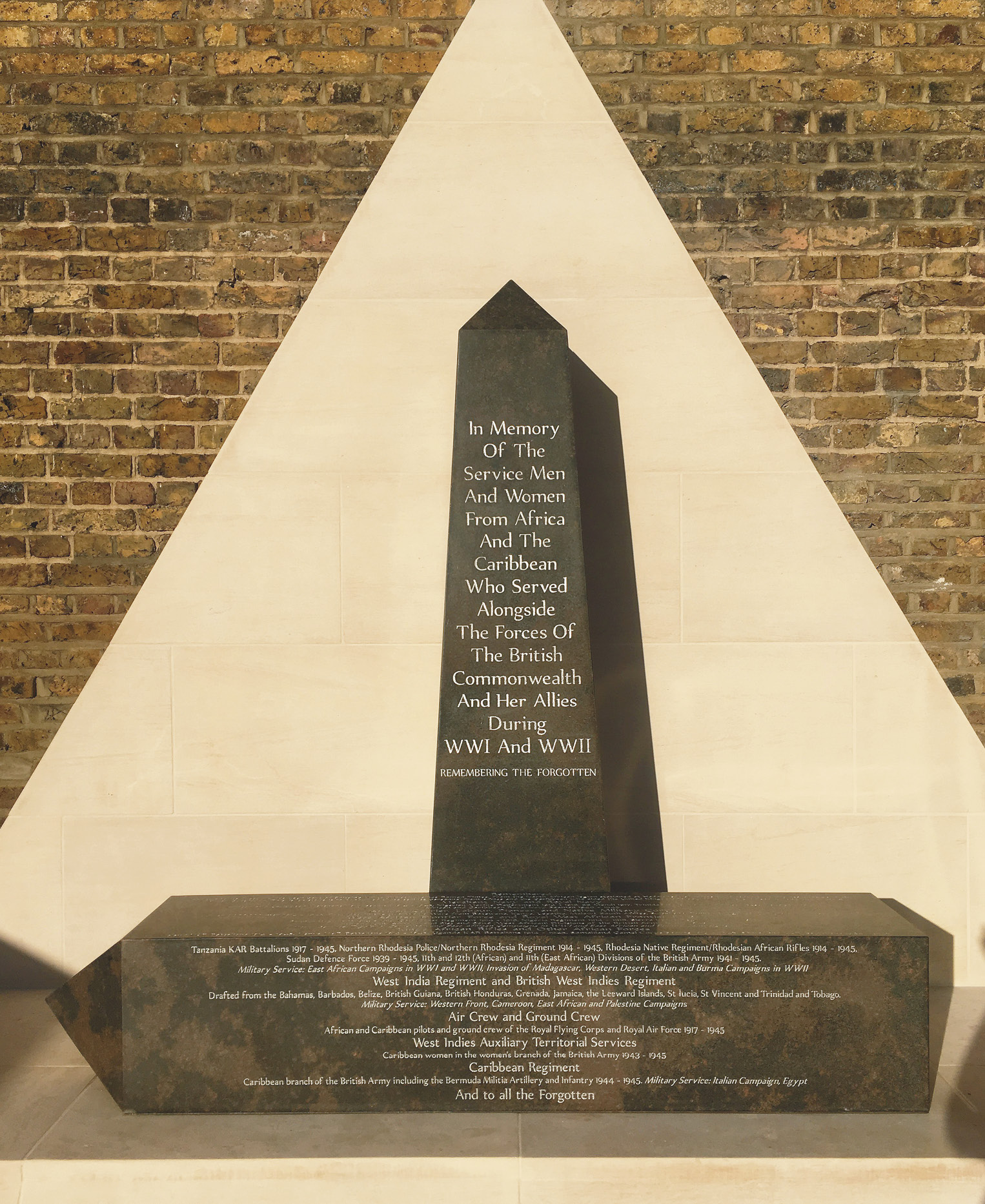
So too did the raising once more of the colour bar in the British armed forces, including the newly formed Royal Air Force. The exigencies of war eventually forced the RAF to remove the barrier to men not of ‘pure European descent’. Few if any of the 6,000 Black airmen from the Caribbean who served in the Second World War are likely to have known that they followed Clarke’s lead.
The contribution of Clarke and other Black servicemen to the war was an inconvenient truth for a British Establishment determined to restore the social order that was a basis for the Empire. Clarke may have been rediscovered by accident but it is with purpose that we should continue to tell the stories of those once intentionally forgotten.
Clive Webb is Professor of Modern American History at the University of Sussex. His most recent book is Vietdamned: How the World’s Greatest Minds Put America on Trial (Profile Books, £22).
All images: Wikimedia Commons