Subscribe now for full access and no adverts
It started with a problem on dry land. In the 1990s, a team of archaeologists led by the late Hayat Erkanal were investigating a promising prehistoric and Classical settlement on the Aegean coastline of western Anatolia. Structural remains could be traced back to the Middle Chalcolithic, or Copper Age, in the 5th millennium BC, while finds indicated that this bustling settlement, now known as Liman Tepe, enjoyed enviable maritime links with the wider Aegean world. Although the fortunes of Liman Tepe waxed and waned over the centuries, with the site seemingly undergoing several spells of abandonment, it eventually became the Classical Ionian city of Klazomenai, and was later absorbed into the Roman world.
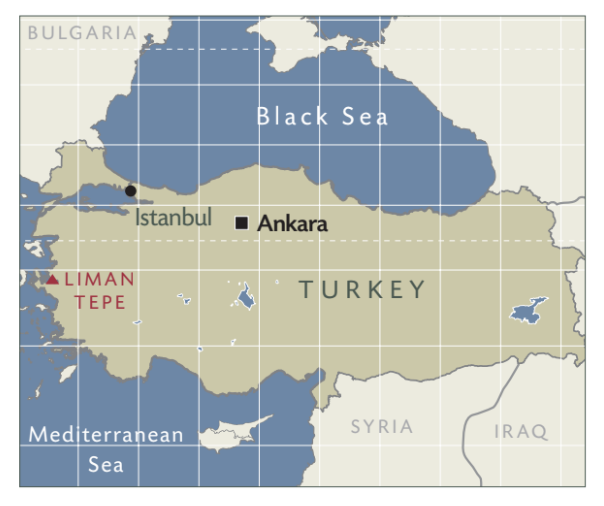
Since then, the location of Liman Tepe, opposite Karantina Island on the Gulf of Izmir, Turkey (Türkiye), has continued to find favour as a settlement site. Today, it is home to Urla, a town stretching out along a main street running parallel to the coast. By 1995, that road had become a cause of consternation to the archaeological team working there. While their excavations were revealing the impressive monumentality of prehistoric Liman Tepe, the magnitude of what they were finding was difficult to convey to visitors. Here, the prime offender was the main street, which effectively obscured an imposing set of Bronze Age defences from the 3rd millennium BC by running right along the top of them. Could this road be rerouted? It was an attempt to answer this question that revealed an extraordinary new dimension to the archaeology of Liman Tepe and its various successor settlements, running right the way from the 7th millennium BC down to the Ottoman period.

By land and sea
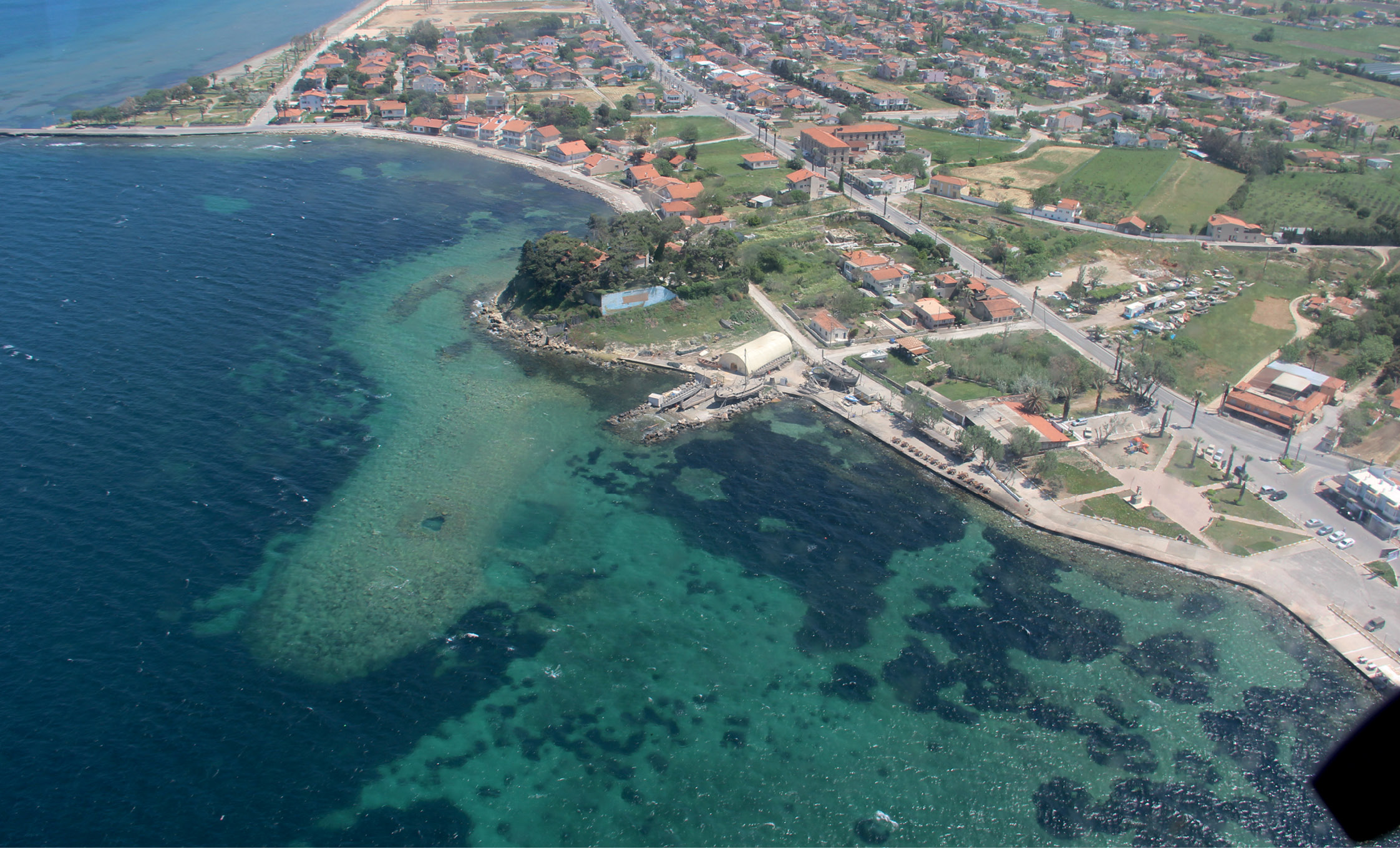
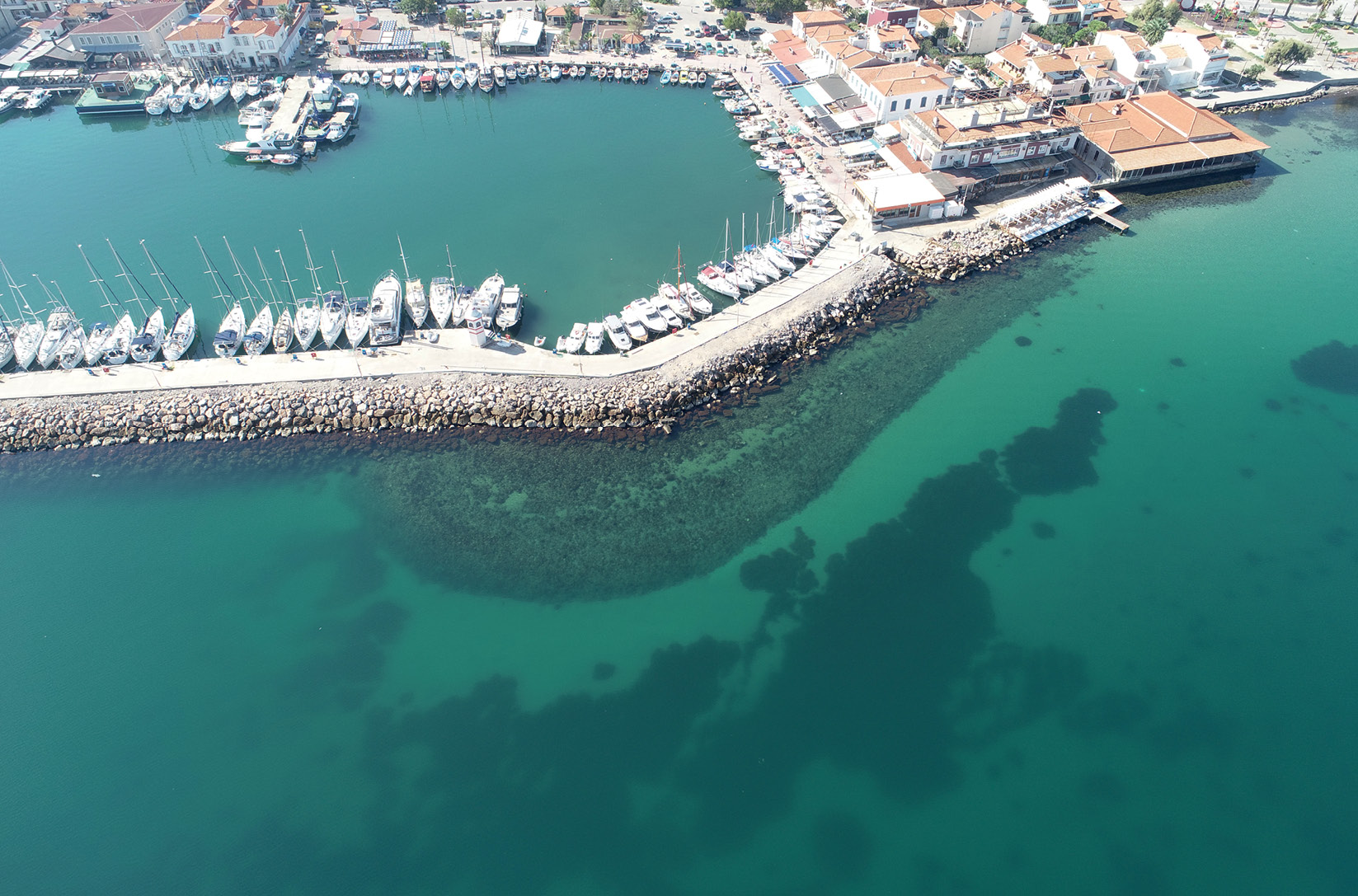
‘We thought it might be possible to move the main street so that it ran over what is now the sea and bypassed the prehistoric remains,’ remembers Vasıf Sahoglu, the current project director and archaeology professor at Ankara University. ‘That was when we found an old aerial photograph from the 1950s showing Urla. And, on it, we could see traces of a stone structure projecting out beneath the water from a small promontory. Naturally, we wondered “What is this?” and went out swimming to investigate it. We quickly realised that the stones were part of a major man-made monument lying below the current sea level. At the time, we wondered if it could be the northern part of the Bronze Age settlement at Liman Tepe. This was because the structure more or less carried on the known line of the defences that were created during that period, and also sketched out a horseshoe shape. We had already excavated a monumental, horseshoe-shaped Bronze Age bastion associated with the defences on land, so the similarity was intriguing.’
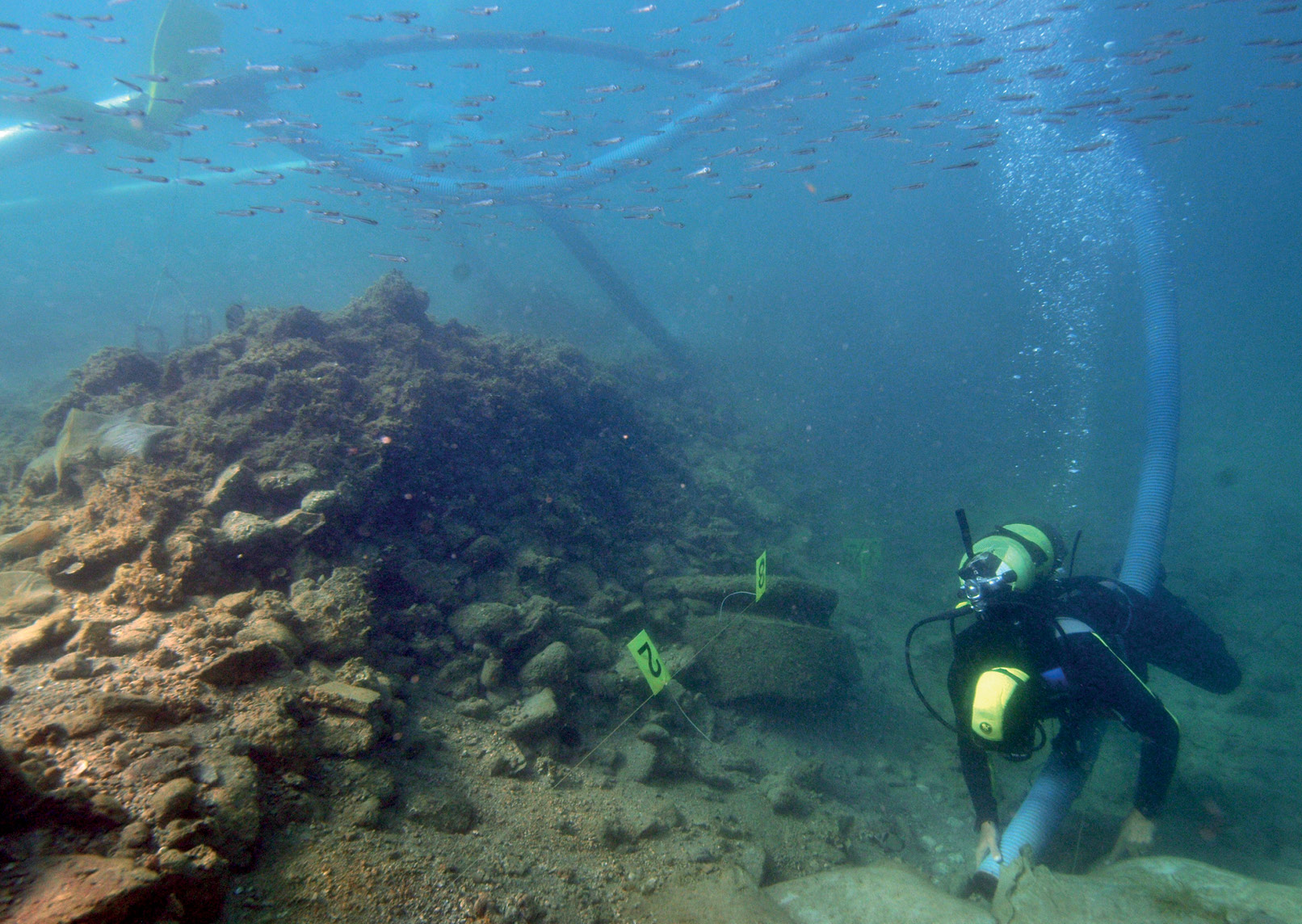
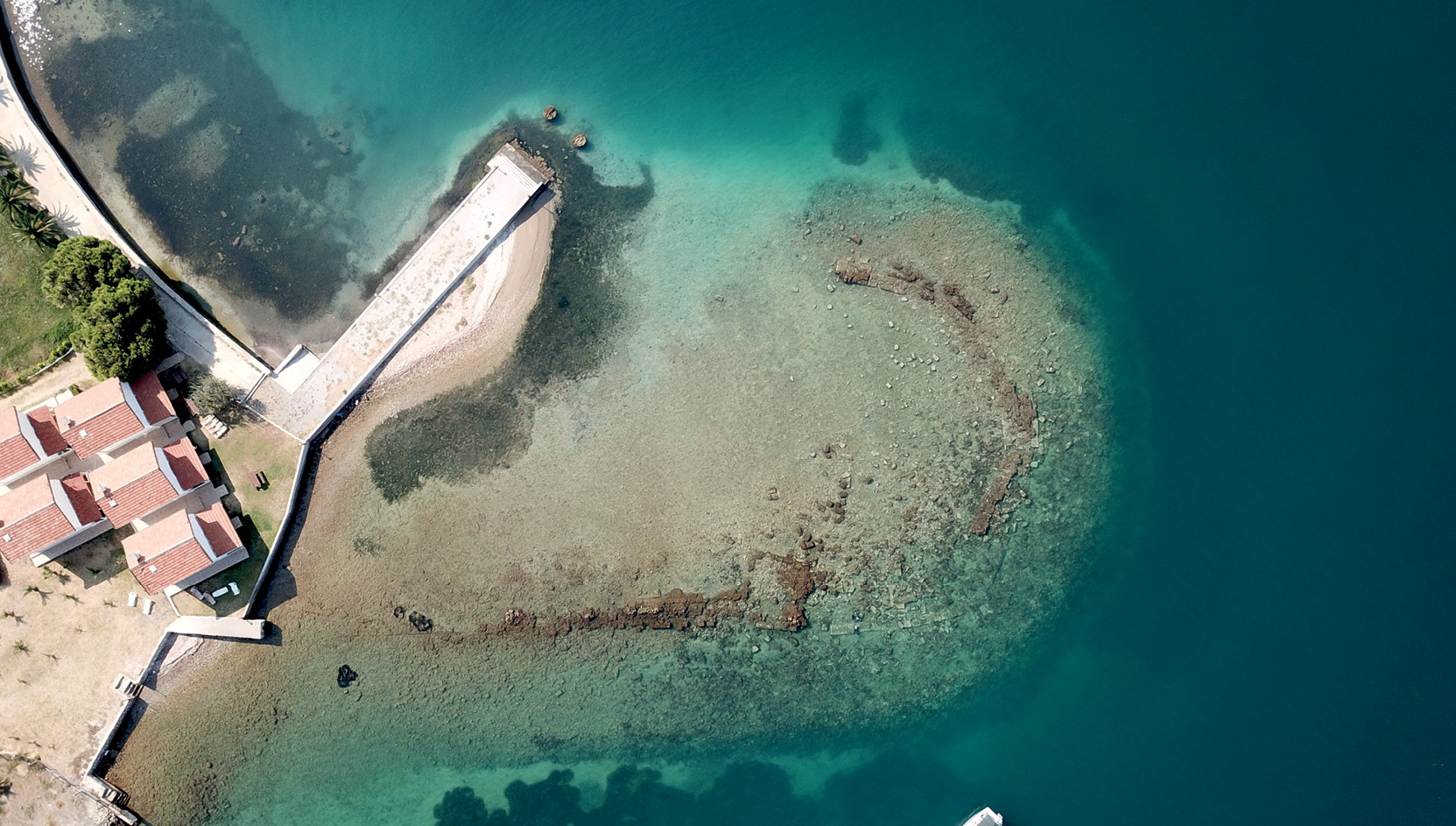
‘In 1996, we planned this submerged structure, and over the following years we became more and more interested in taking a closer look at it. But although Turkey had undertaken early work on shipwrecks, it didn’t have an institute dedicated to underwater archaeology, so there wasn’t an obvious way to proceed. Our chance came in 2000, during a meeting between Ankara University and Haifa University about supporting joint projects. At the time, a team from Haifa under the late Avner Raban was excavating the ancient harbour at Caesarea. So we thought that a partnership would be a good way to investigate what had been found at Liman Tepe, and also give us an opportunity to learn how to work underwater. The universities supported this, and we were also joined by Michal Artzy, and started out by investigating the mysterious submerged stone structure. It turned out to be the remains of a huge artificial breakwater for a harbour that was actively used during the 6th century BC and then the 4th century BC, which places it during the Archaic period and then the Classical period of Klazomenai.’

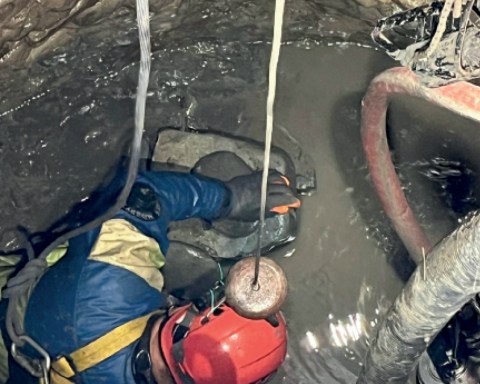
‘The collaboration with Haifa University continued for five seasons, and during that time we created the Ankara University Research Center for Maritime Archaeology as well. Once the joint project ended, we continued excavating by ourselves, and that work is ongoing. When we began digging trenches underwater in the ancient harbour, people asked us “Why are you doing this? Have you already dug up everything there is on land?” But, of course, looking underwater gives us a completely different perspective. For one thing, there is much better preservation of organic material, while goods that were dropped in the harbour when they were being loaded on to or unloaded from boats were often left where they fell until we found them. There has been much more disturbance of the ancient levels on land.’
While underwater archaeology would be expected to reveal more about the nautical side of the settlement, it turned out that this was only one of the arenas where it could bring far more to our understanding of Liman Tepe. Although excavations on land could trace settlement at Liman Tepe back as far as the Middle Chalcolithic in the 5th millennium BC, this date suggested that the settlement was founded at a surprisingly late date. The general rule of thumb for Classical cities on the western Anatolian coast is that occupation has its origins in the Neolithic period in the 7th millennium BC or earlier. At the same time, material dating to this era is known from Liman Tepe, in the form of worked obsidian implements. The raw material occurs on the Cycladic island of Melos, which lies between mainland Greece and Crete. It was only as work underwater progressed that the apparent explanation for this anomaly came to light.
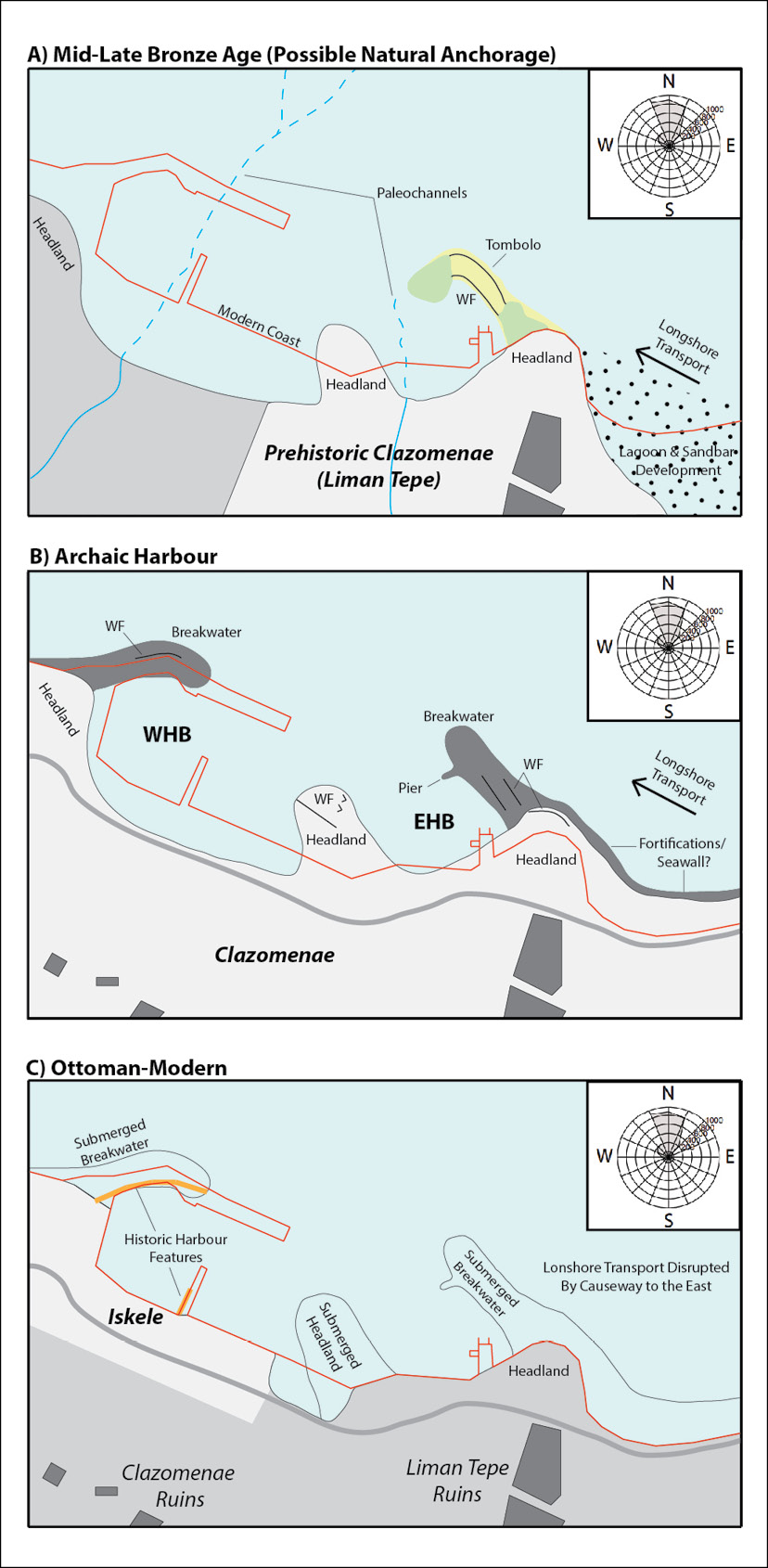
‘We undertook geoarchaeological research with McMaster University’, says Vasıf, ‘and that revealed an entire submerged landscape stretching out in front of the modern shore. From radiocarbon dates and cores, we can see that the Neolithic coastline lay about 500-600m away, beneath what is now the sea. This discovery demonstrated how rising and falling sea levels had a significant impact on the development of human settlement at Liman Tepe. Although we haven’t found the precise location of the Neolithic site yet, we can see that there was a series of promontories running along this submerged coastline, and we think that one of those places must be the location. Unfortunately, a very thick layer of silt – about 3-4m deep – has accumulated over the promontories, which makes any archaeology difficult to reach. At the moment, we are planning further survey work to narrow the options, by using a form of sonar known as a sub- bottom profiler, and a multi-beam scanner as well. This will allow us to create a more detailed plan of the seabed and also to see – so far as is possible – what lies beneath it.’
The Neolithic is not the only era for which work on dry land suggests a conspicuous absence of human settlement at Liman Tepe. Instead, there is another gap of perhaps more than 500 years between the Middle and Late Chalcolithic during the 4th millennium BC. This time, though, Liman Tepe is far from being an outlier on the western Anatolian coastline, as a similar break in occupation is apparent at numerous other sites, and has been linked to a shift in climate during this period. Once again, the answer is probably to be sought in the sea, as reconstructing its level indicates that water height peaked during this 500-year period, transforming Liman Tepe into a small offshore islet. As such, the archaeologists hypothesise that, rather than continuing to live there, the Copper Age inhabitants moved with the shoreline and founded a new settlement on higher ground inland. It was only when the sea retreated once more in the Late Chalcolithic that Liman Tepe was recolonised. At that time, the waters may well have dipped a little below their modern level. A very recent discovery from the underwater work is Late Chalcolithic pottery associated with stones that seemingly form part of inundated structures, suggesting that a portion of the 4th millennium BC settlement now lies submerged.
‘These new remains help to refine our knowledge of the ancient coastline’, says Vasıf. ‘It’s a very exciting development. No other study of this nature has been undertaken in western Anatolia, and our approach is also methodologically unique. But this work really needs to be repeated at the other coastal settlements, because there must be many other stories like this. Each site will have its own dynamics, and we need to bring them all together if we want to be able to see the bigger picture. At the same time, the scale of the research that has been undertaken at Liman Tepe makes it the key site for understanding the microregion in which it lies. The result of our work on the earlier prehistoric periods has really been a lesson about the importance of local shifts in coastline, and we are pleased to have learnt it.’
Harbour town
Another crucial natural process governing human activity at Liman Tepe was the way that silt built up offshore. This is illustrated by the fate of two bays that arced to the east and west of a promontory forming a focus for much of the prehistoric settlement. ‘We know that maritime activity was under way from at least the 7th millennium BC,’ Vasıf points out, ‘because we have that obsidian coming from Melos in the Neolithic period. One of the advantages that Liman Tepe enjoyed for a good spell of the Copper Age and Bronze Age was a natural embayment running to the east of the site. This was protected from the prevailing winds racing down the Gulf of Izmir from the north and north-west, making it a perfect place for ships to land. We can see from the finds unearthed on land that Cycladic connections remained strong in the 3rd and 2nd millennia BC, mainly thanks to this natural bay. But, throughout this period, it was also gradually silting up, due to sediments arriving from the Gulf of Izmir with the natural currents, as well as streams dumping large quantities of alluvial material into the gulf.’

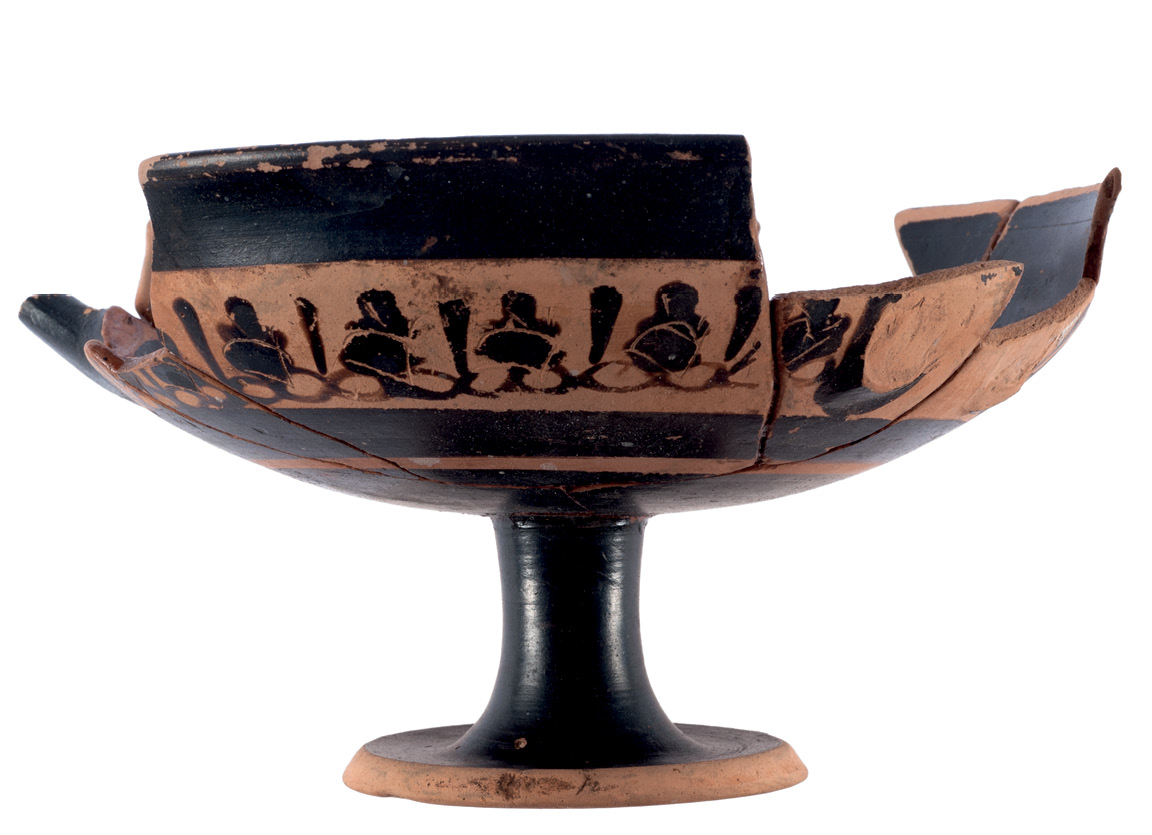
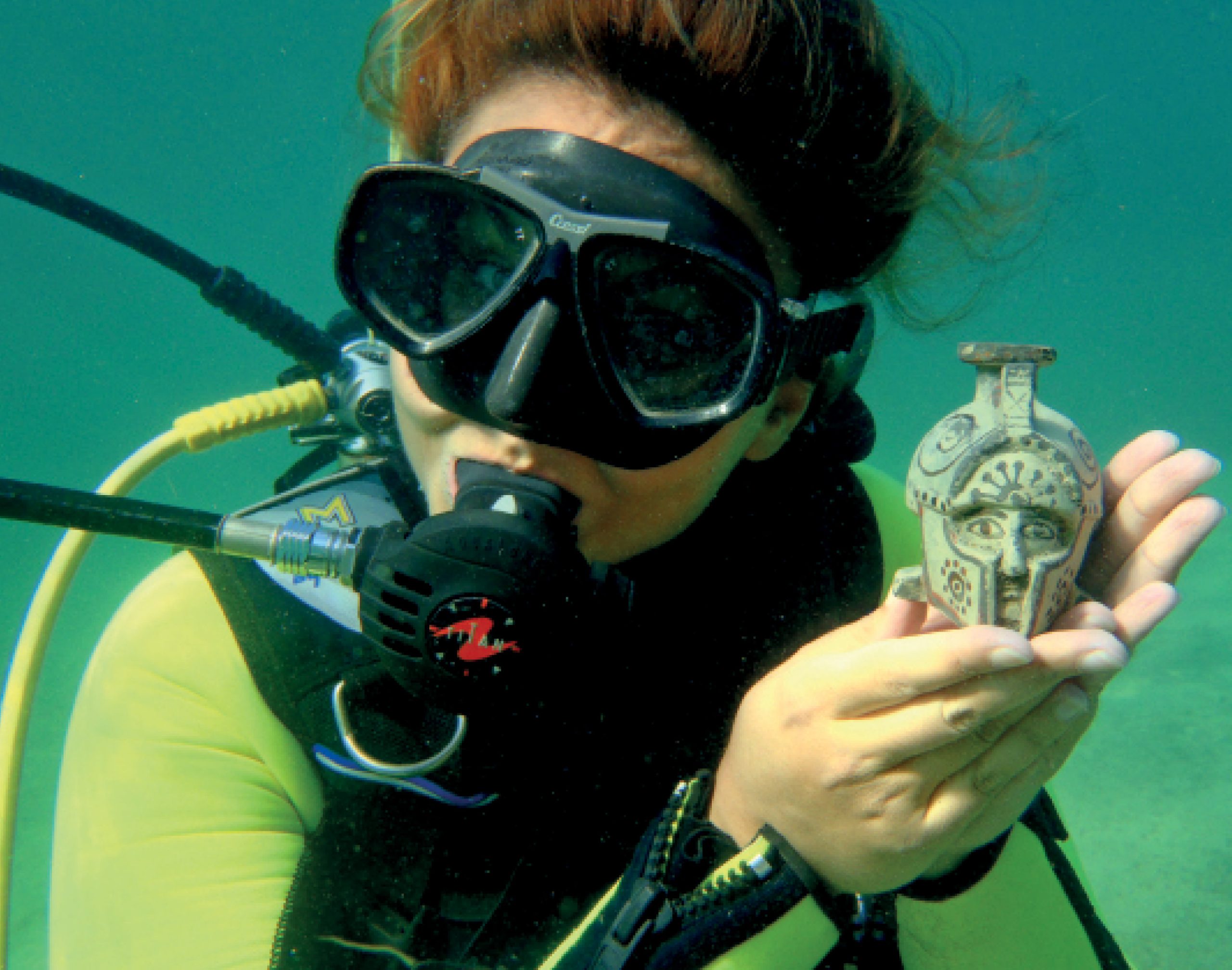
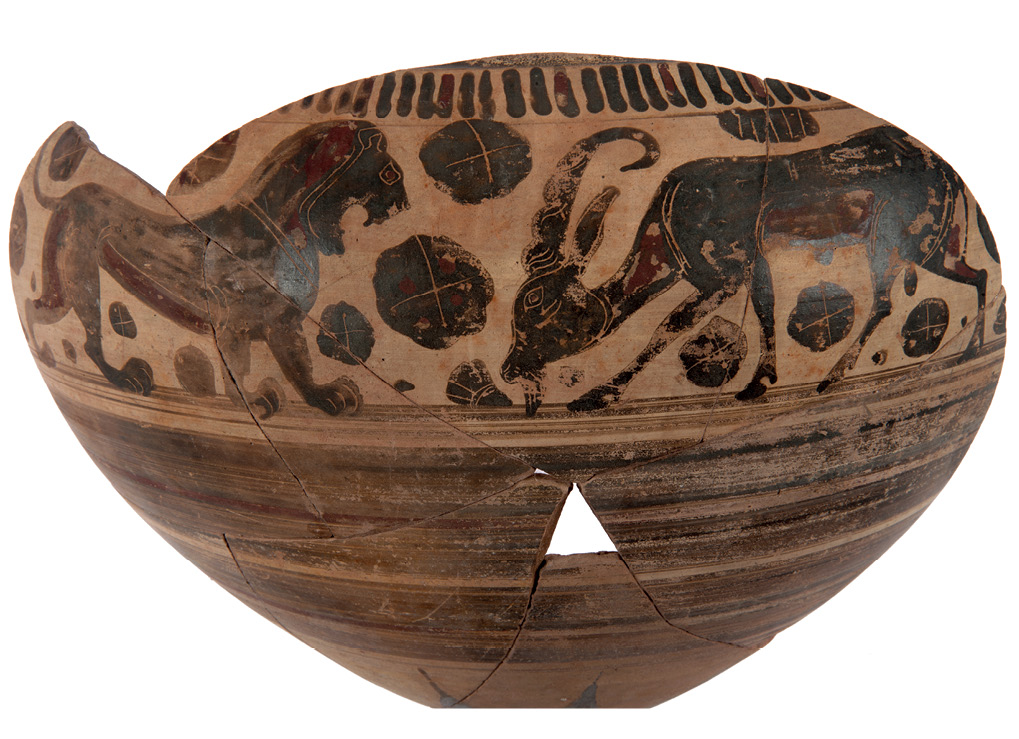
Top, above & below: A selection of pottery recovered during excavations of the levels associated with the Archaic period harbour. (Not shown to scale.)
‘Our geoarchaeological investigations show that the eastern bay had fully silted up by the Late Bronze Age – which started around 1400-1350 BC – meaning this natural dock was no longer available. At the same time, we know that Liman Tepe was especially active in maritime trade during this period, when large quantities of Mycenaean material were arriving. How was this possible? The answer seems to lie in the more exposed western bay. Remote sensing of the huge Archaic and 4th-century-BC breakwater there revealed the remains of an earlier feature lying underneath. This was partly natural and partly artificial, so it seems likely that it reflects a Late Bronze Age attempt to create a new harbour for ships.’
It was in the Archaic period, during the 6th century BC, that these first steps to create a safe harbour in the western bay reached fruition. As well as the huge breakwater that initially attracted the archaeologists’ interest in the area, aerial photographs have revealed the presence of a second such structure. This, though, lies under the current harbour, making it hard to access for archaeological research. Installing a major new facility in the 6th century BC is a natural fit with developments under way on land, as this is the era when Liman Tepe enters history under the name of Klazomenai. Its eminent status in the region is reflected by membership of the Ionian League. The wealth and power of Klazomenai is apparent from the size of the urban area, too, as well as its role in a range of industries, including oil and wine production, the manufacture of exquisite sarcophagi, and metalworking.
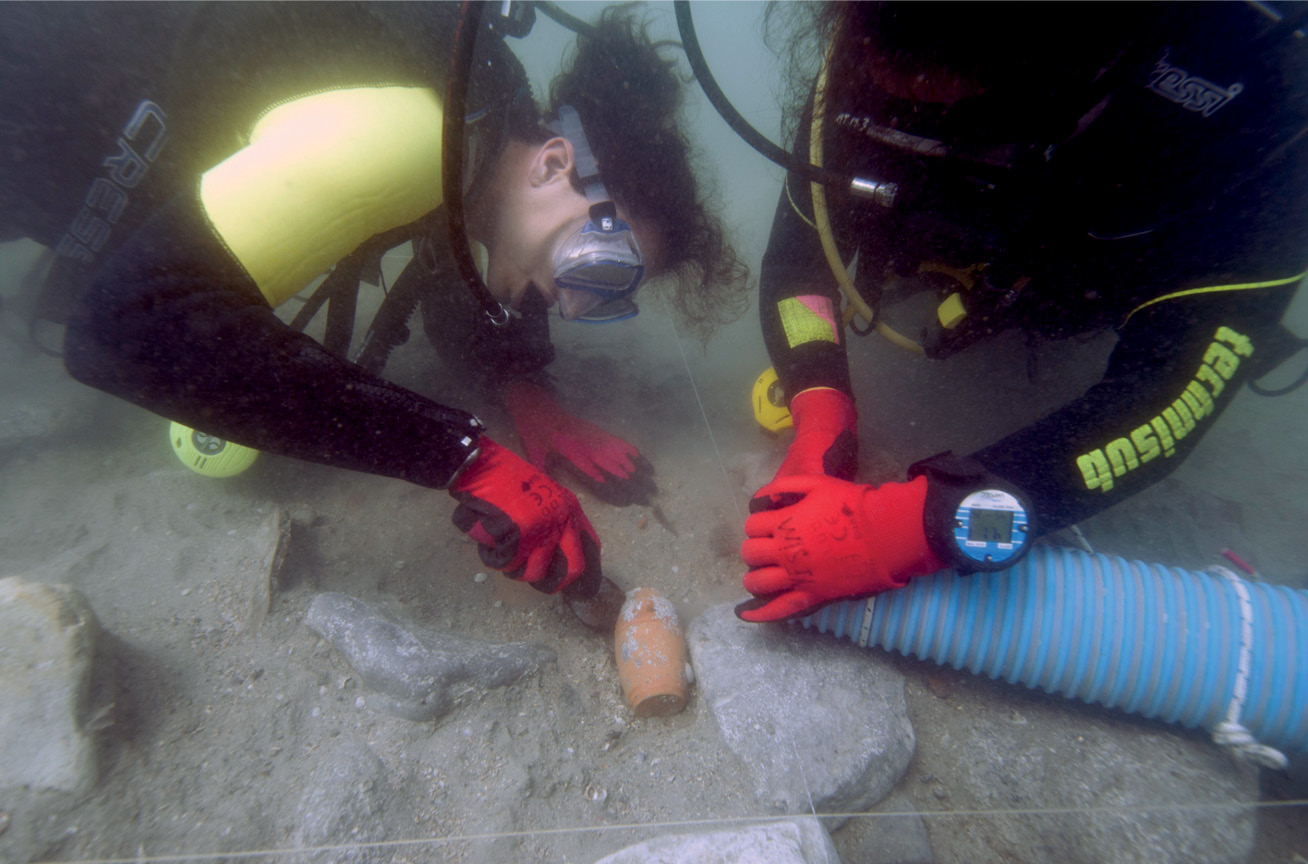
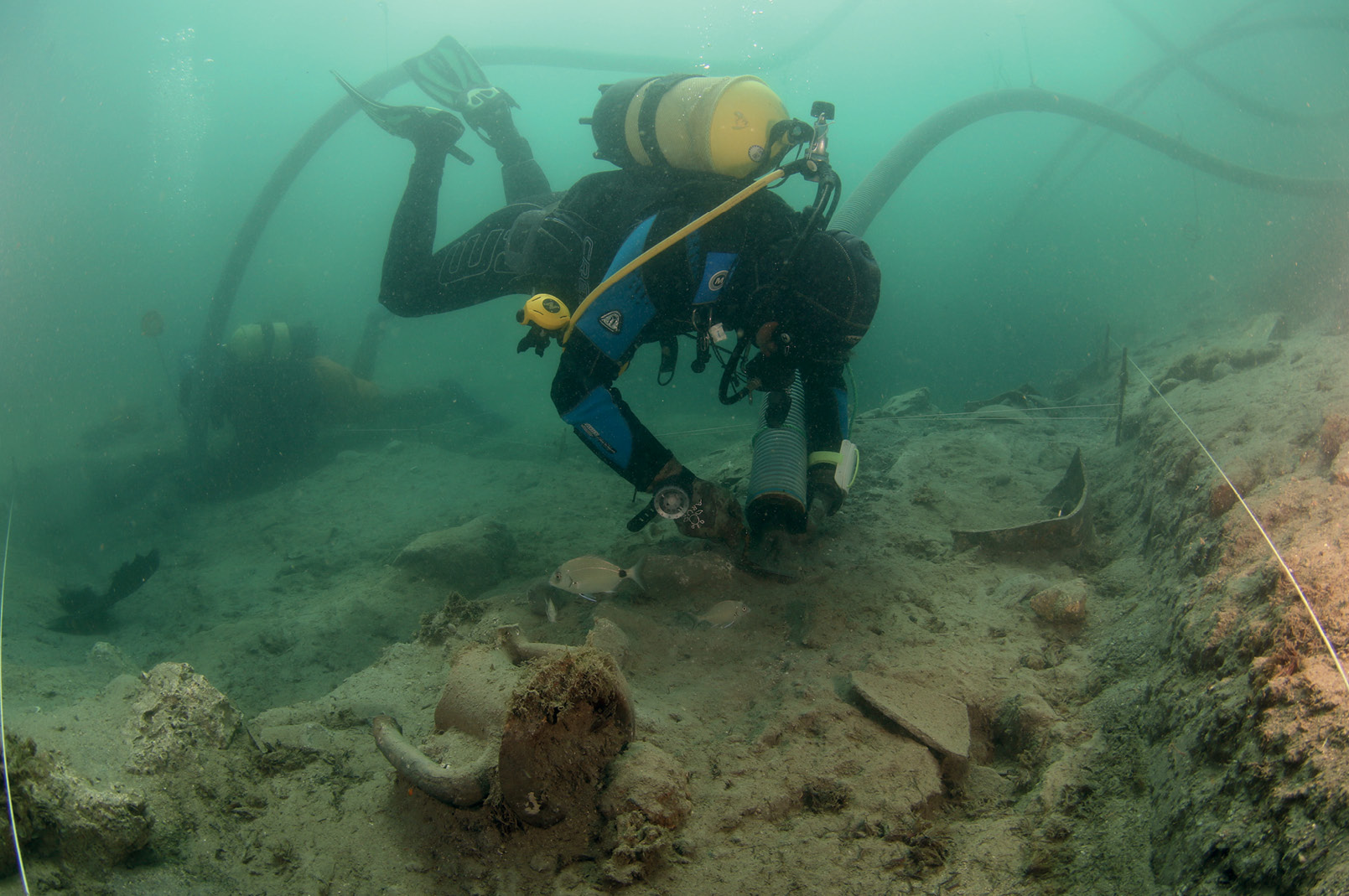
‘Our underwater excavations in the harbour are exposing the economic heart of this city,’ says Vasıf. ‘All of the key goods were either entering or leaving via this space. Studying the finds associated with this activity allows us to appreciate the nature of the maritime connections available to Klazomenai. There’s an enormous body of material to draw on. Unsurprisingly, our work is producing lots of pottery, as well as coins and other metal objects, alongside a wealth of organic materials. One example is an amphora that was used to transport olives, and when we found it – 2,600 years later – the olive stones were still inside. Our discoveries have already changed perceptions of the scope of productivity of Klazomenai, as well as its overseas reach. We can see links to the Black Sea and all around the Aegean, as well as Cyprus, which was supplying Klazomenai with mortars.’
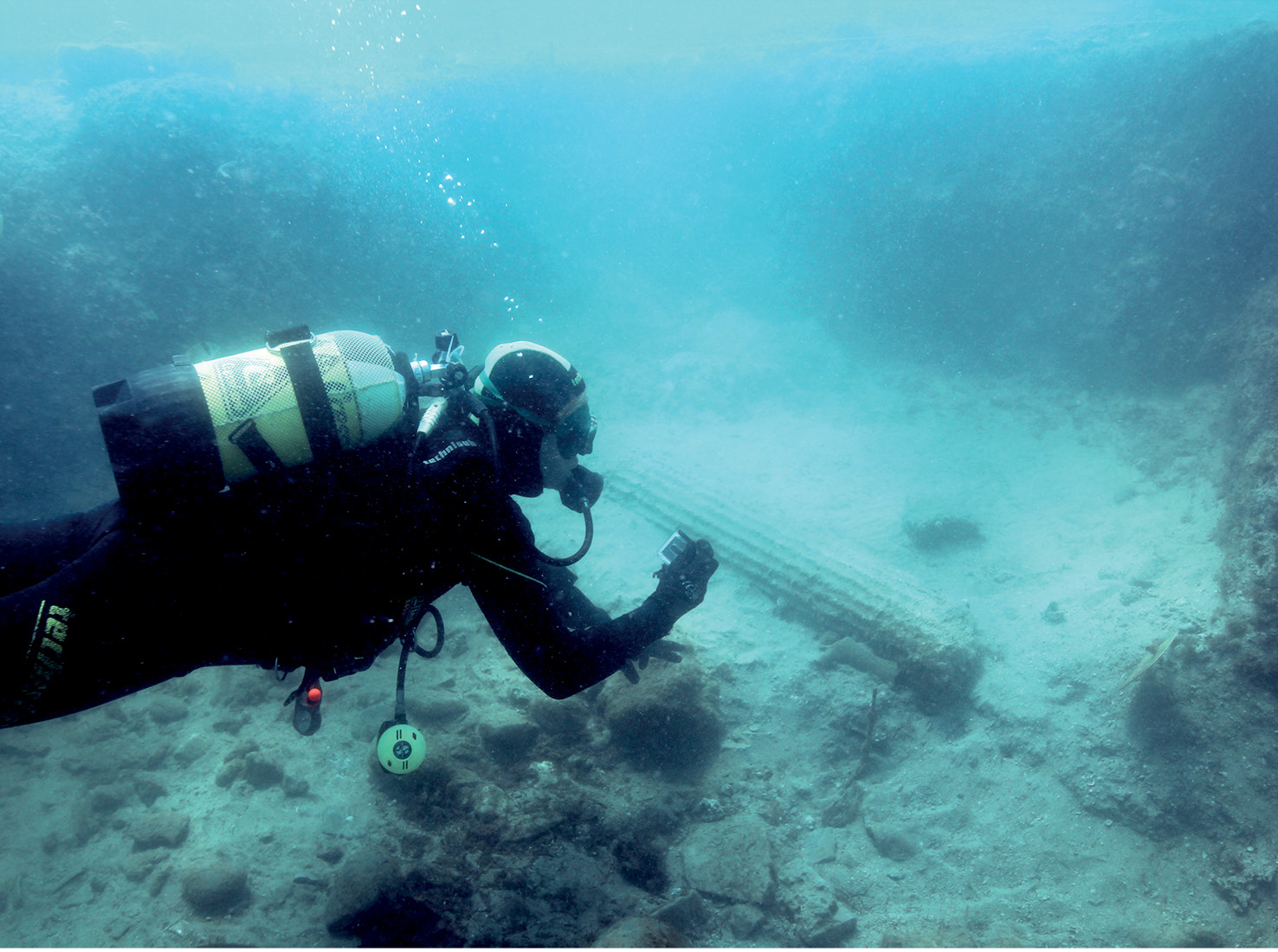
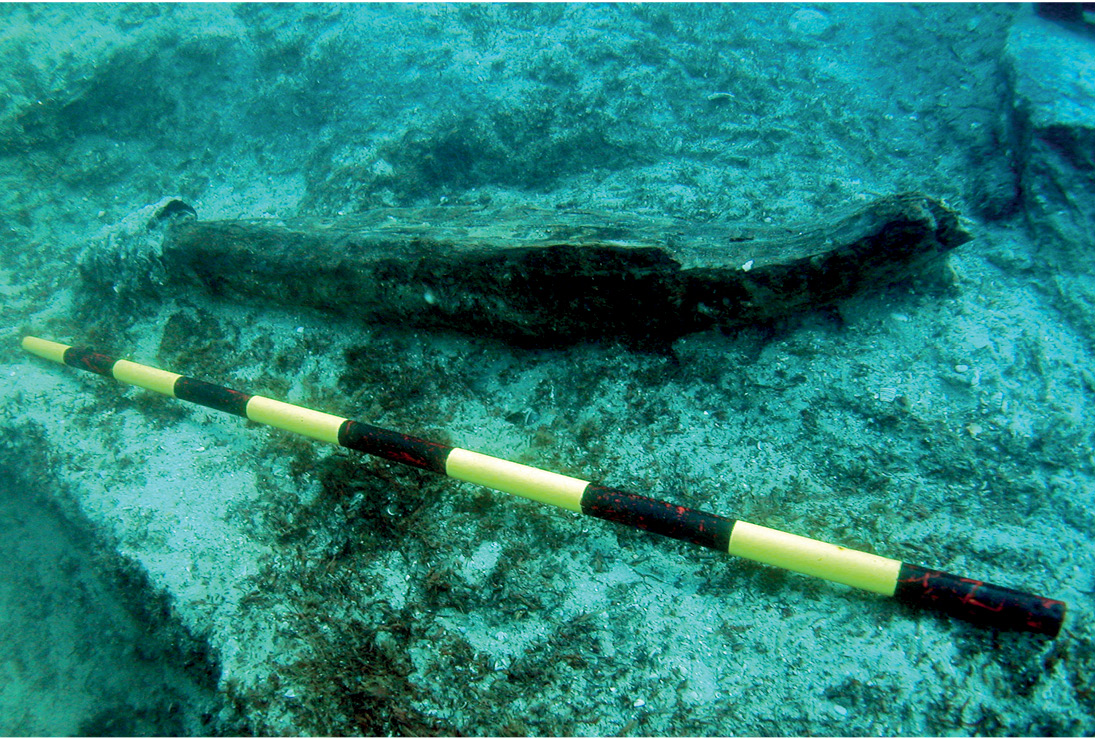
‘The organics are particularly interesting, because we have not found many during our work on land. As well as the olive stones, we have recovered walnuts, chestnuts, and lots of grape seeds. Specialist studies have shown that there are various different varieties of these species present. In the longer term, we are hoping to undertake aDNA studies, which I’m sure would tell us something interesting about the range of plants present and whether these different varieties are local or were being imported from elsewhere. Other organic material includes items that probably come from boats, including rope and lots of pieces of worked timber. One of the most fascinating items is an anchor that was made of wood – apart from its iron tip – and is a contender for the oldest example of its kind known. The bottom portion of this anchor lodged in the sand about 70cm below the Archaic seafloor, while the top part broke off, presumably as sailors were trying to pull it free. We have recovered lots of stone anchors from this period, too, while the 4th-century BC deposits have produced plenty of corroded pieces of metal anchors. Interestingly, though, our excavations in the harbour have produced little evidence of activity in the 5th century, which falls between the eras of extensive use in the 6th and 4th centuries BC.’
An island refuge?
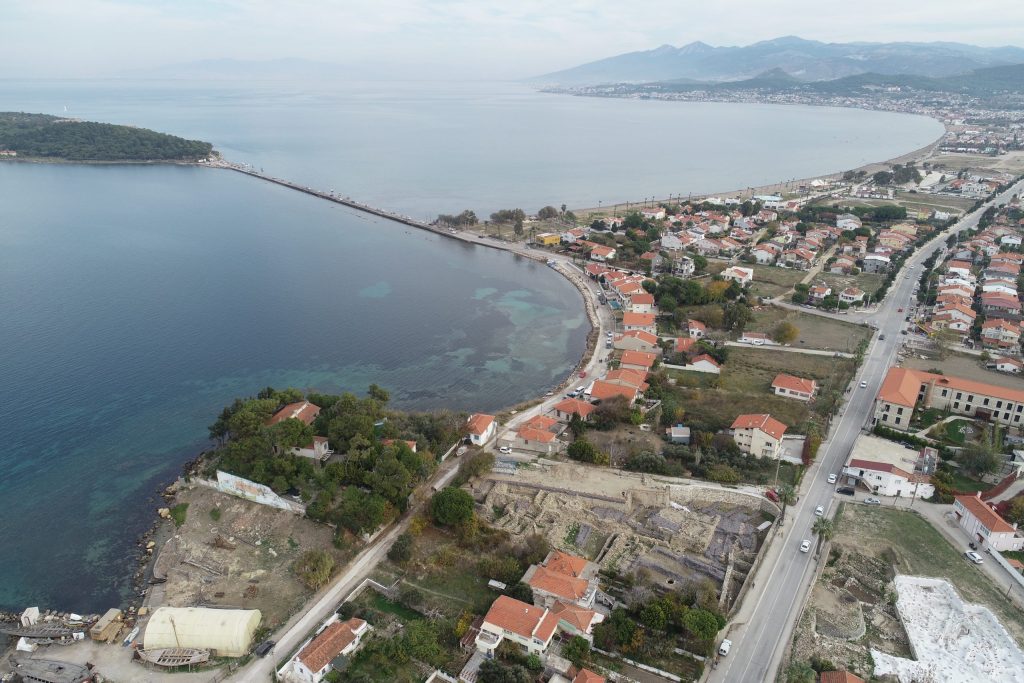
Once again, this evidence from the seabed helps to clarify findings from the excavations on land. There, too, a lull in the 5th century has been detected. While it would be tempting to see this as another example of the periodic fluctuations in settlement location wrought by this capricious coastline, on this occasion the cause is believed to be entirely human in nature. The 5th century BC was a period of Persian invasions, and it is suspected that the inhabitants of Klazomenai relocated to a more secure setting on Karantina Island, which lies about 500m offshore. If so, it is easy to see why the huge harbour on the mainland entered a period of abeyance. It is also possible that a new harbour was constructed at Karantina during this period. If so, though, its remains are currently masked by the remnants of a huge Roman facility that was later constructed there. By then, Karantina Island was no longer the isolated refuge that proved so handy in the 5th century BC. Instead, it had been connected to the mainland by an impressively engineered road, an act that is traditionally credited to Alexander the Great.
‘We call it the Alexander Causeway,’ Vasıf says, ‘and geological cores fit with this being constructed in the 4th century BC, so it could belong to his reign. If so, it presumably reflects Alexander’s fondness for making his mark with grandiose architectural projects. There are a few other examples of comparable causeways serving to link islands to the mainland that are also attributed to Alexander and served as eye-catching monuments. Our causeway certainly changed life in the city, while its impact can still be felt today. I think it’s really exciting to see how this man-made structure managed to change the fate of an entire area over a period of 2,400 years. One of the reasons is because the causeway acts as a great barrier in the sea. Its presence accelerated the silting up of the shore to the east; this process is still very active today, and, if you wade out into sea there, you’ll find that it’s really shallow. Further back in time, the presence of a link to the mainland is presumably what persuaded the Romans to create their harbour on Karantina Island, rather than returning to the site of the Archaic port. At the same time, their new harbourworks benefited from the causeway presenting a de facto breakwater. We are still investigating the Roman facilities, but we can see a significant structure built of cut masonry lay in the centre of it, which we suspect might have been a lighthouse.’
The Romans were not the only group who grasped the potential of an island that was well placed to act as a harbour, while boasting a physical link to the mainland as well. The modern name of Karantina Island comes from a complex that was established there during the Ottoman era in 1865. This facility was used to process people arriving by sea, at a time when there was considerable concern about the plague that periodically accompanied them. The Karantine facility is now the best-surviving example of its kind in Turkey. After disembarking, males and females would be segregated and ushered into a room with devices on the wall, into which they were instructed to place their clothes. The devices could then be turned to send the garments away for washing, while their owners would likewise progress to a shower room. Step by step, everything and everyone would be cleaned, and the arrivals would then be quarantined on the island to ensure that there was no trace of disease. Enforcing this process was aided by passage along the single causeway link to the mainland being relatively straightforward to control. It was not a journey that everyone was destined to make, though. The presence of a cemetery on the island testifies to the risk of disease ravaging these seafarers being real.
From harbour to hazard
It is also possible that some passengers never reached the island at all. During early work on the remains of the Archaic harbour, the archaeological team encountered cannon balls and glazed pottery on the seabed just beyond the breakwater. Although their source is not certain, the simplest explanation is that these artefacts mark the site of an Ottoman shipwreck. If so, one plausible explanation for its demise is presented by the breakwater itself. During the heyday of Klazomenai, the top of this structure would, of course, have stood proud of the water. By the Ottoman period, though, the ruined stone bulk would have lain concealed about 50-60cm below the surface, making it a potentially lethal hazard for shipping. Today, a multitude of warning signs alert mariners to the potential dangers of a structure that was originally devised to safeguard shipping. Even so, a small sailing boat still managed to get lodged on the tumbled breakwater a few years ago. Such incidents offer a potent reminder of how the millennia-long interplay between natural processes and human ingenuity on this short length of coast continues to exert an influence on the modern world.

ACKNOWLEDGEMENTS:
The excavations at Liman Tepe continue as part of the Izmir Region Excavations and Research Project (IRERP) under the framework of the Ankara University Mustafa V. Koç Research Center for Maritime Archaeology (ANKÜSAM) with permits and funding from the Turkish Ministry of Culture and Tourism. The research is also supported by Ankara University; TÜBITAK, Institute for Aegean Prehistory (INSTAP); Ankara University, Faculty of Language, History – Geography (DTCF); Turkish Historical Society (TTK); INSTAP-SCEC; and Izmir Metropolitan Municipality and Urla Municipality. For more information on ANKÜSAM and IRERP, see http://ankusam.ankara.edu.tr.
All images: courtesy of Vasıf Sahoglu