Subscribe now for full access and no adverts
It was towards the end of the 3rd millennium BC that the Bronze Age of Southeast Arabia reached its peak. This achievement marked a turnaround in the fortunes of the region. Towards the beginning of the millennium, Southeast Arabia lagged behind its neighbours. Agriculture was only adopted in the mid-3rd millennium BC, much later than elsewhere in the Middle East. The switch to growing crops, such as barley, dates, wheat, and melons, brought an increase in settlements as rural communities flourished. The fruits of this agricultural revolution were only one reason for the region’s rising fortunes, though. Another came from access to trade links with some of the era’s greatest powers, including Iran, Mesopotamia, Early Dilmun, and the Indus Valley. This was aided by having easy access to the southern coast of the pinch-point between the Arabian Gulf and Gulf of Oman created by the Strait of Hormuz. Southeast Arabia was also rich in copper – a commodity that was extremely important during the Bronze Age and attracted maritime traders working these routes. Mesopotamian records recovered from Ur, in what is now Iraq, record receipt of metal from this general region, which was known as ‘Magan’. Archaeologists, though, refer to the culture that presided over the heyday of the Bronze Age in Southeast Arabia as the Umm an-Nar.
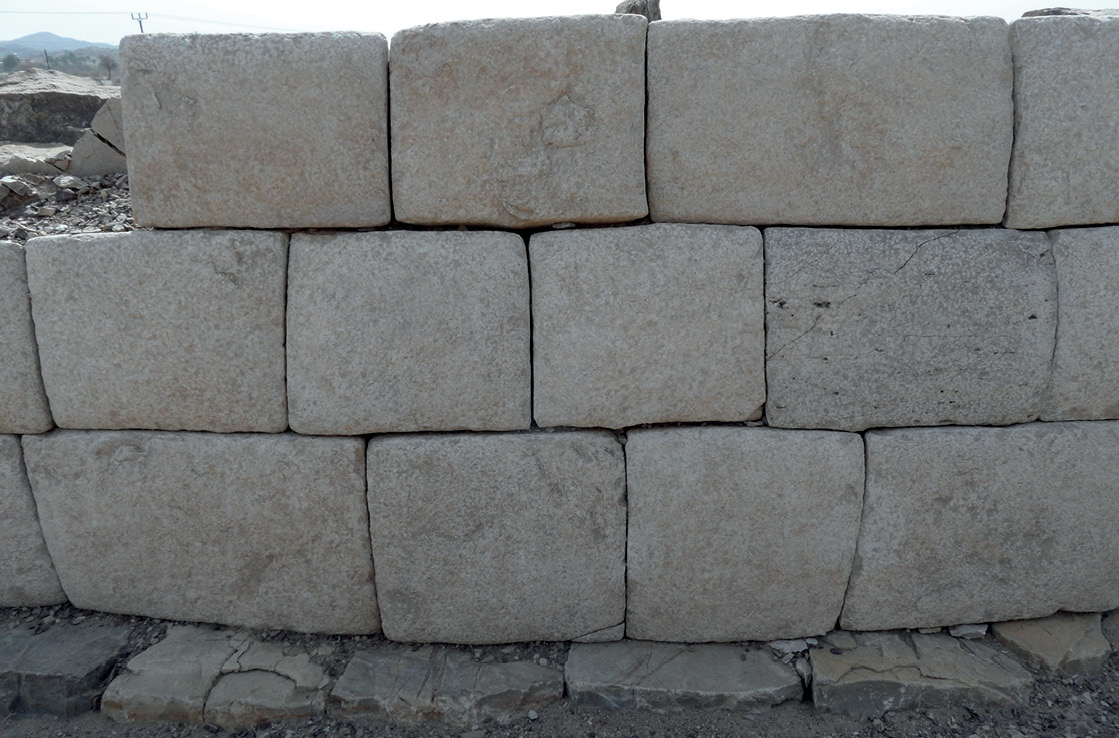
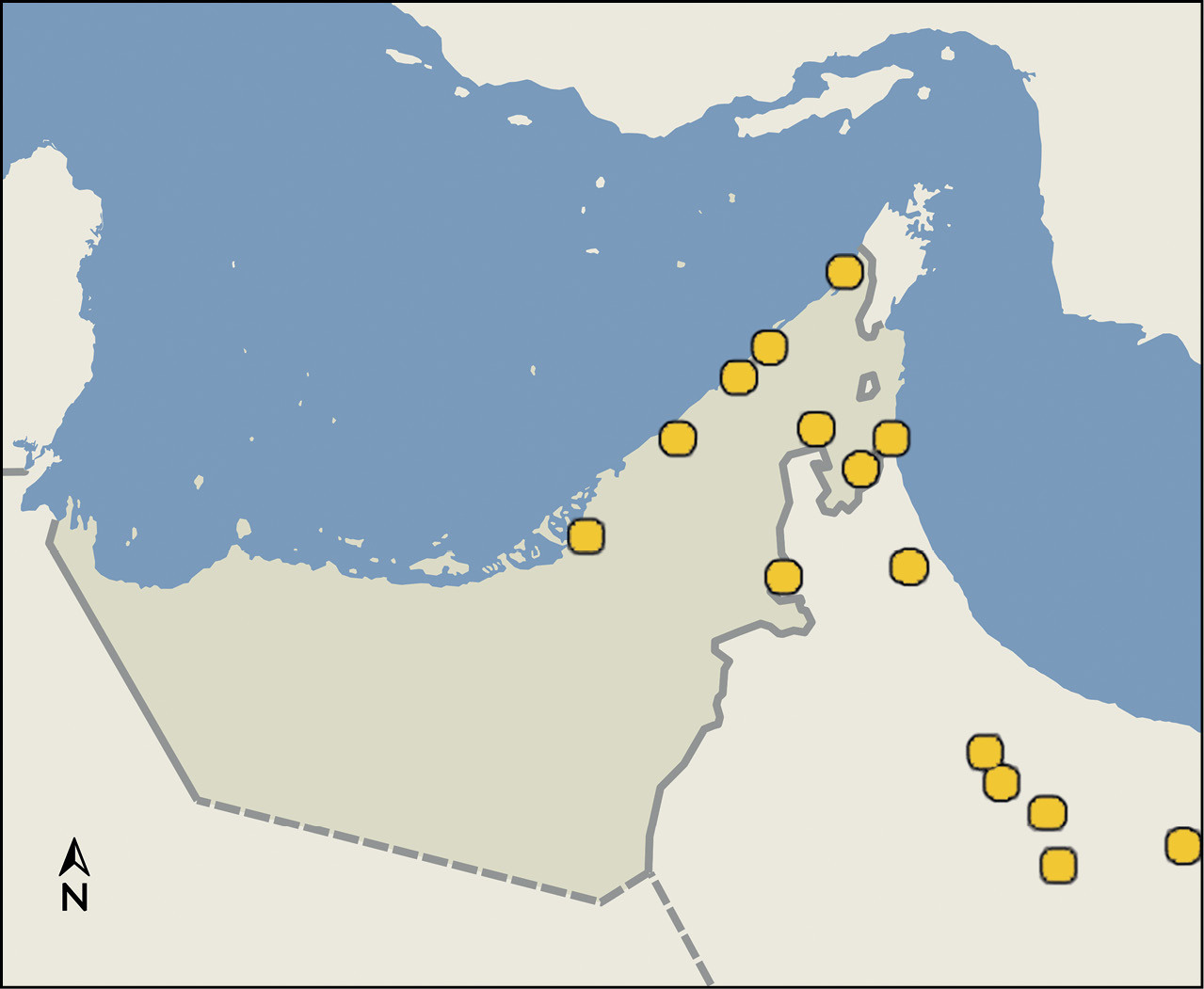
In its entirety, the Umm an-Nar period runs from roughly 2700-2000 BC. During the course of that era, a uniform material culture appeared over an area of some 70,000km², focused on what is now the United Arab Emirates (UAE) and northern Oman. The handiwork of the Umm an-Nar culture can be seen in its colourful pottery, impressive toolkit of bronze implements, and increasingly sophisticated house plans. More than anything, though, it is the distinctive Umm an-Nar tombs that serve as monuments to the achievements of these prehistoric people. Collective burial places were built alongside the homes for the living, and took the form of low circular buildings up to 14m in diameter and less than 2m high. These contained narrow chambers with straight walls that were roofed with horizontal stone corbels; numerous individuals would be interred within – more than 400 in some cases. The finest examples of these tombs boasted outer walls of close-fitting white ashlar, the shape and colour of which have seen it nicknamed ‘sugar-lump’ masonry. These were skilfully made and impressive monuments. Such tombs testify to a unity of burial concept across a wide area, as well as the existence of highly skilled masons. As there was nothing else in the Umm an-Nar villages that required such high-quality stonework, it is suspected that these masons were itinerant specialists who roamed widely in the region, constructing the tombs for many communities, rather than residing in a single settlement.
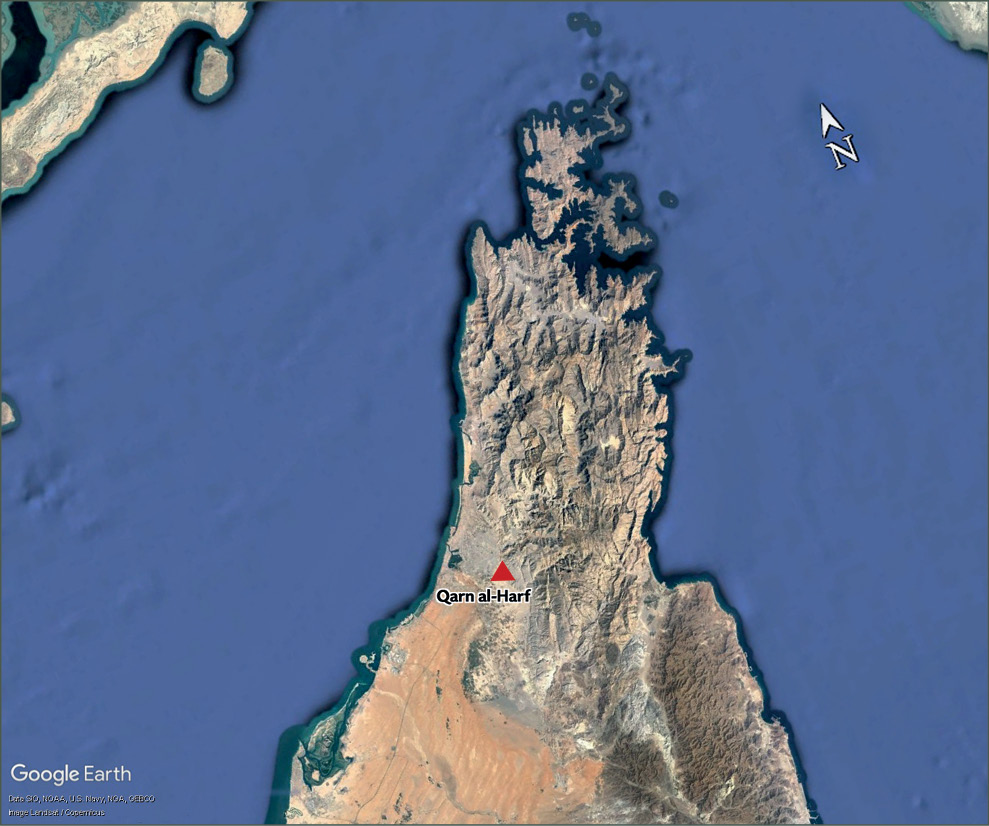
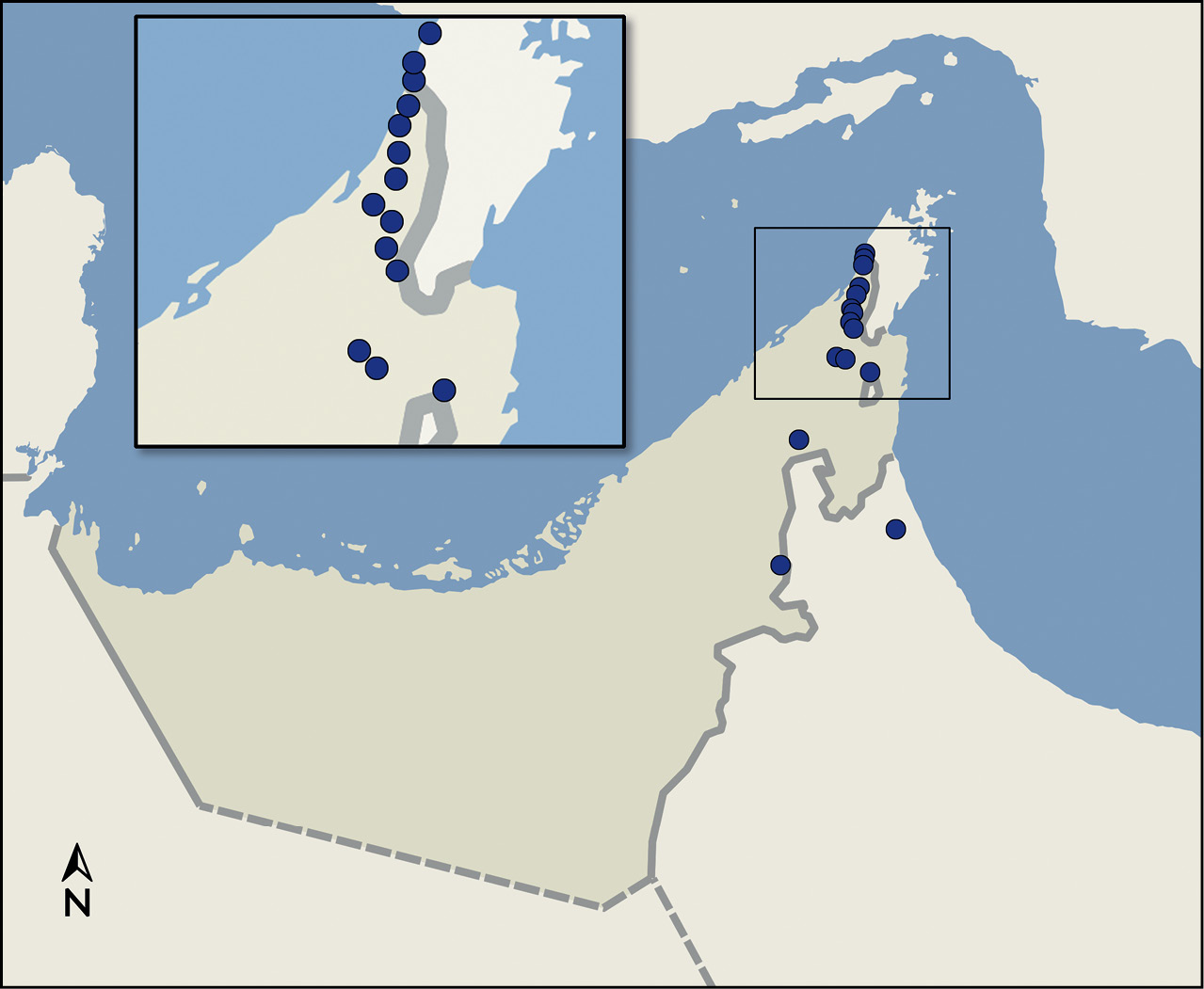
The good times were not destined to last, though. As the Umm an-Nar era gave way to the following Wadi Suq period (c.2000-1600 BC), so too the archaeology of the region indicates an abrupt transformation. Change is apparent across all aspects of life, with the unity of the Umm an-Nar era effectively disintegrating. The iconic ‘sugar-lump’ tombs fell out of favour and were no longer built, possibly indicating that the masonry skills had been lost. They were replaced with myriad different local approaches to disposing of the dead. There are also signs that the copper trade was disrupted, and in most areas the number of visible settlements plummets. But against this backdrop of fragmentation and collapse, there is one area where population numbers seem to remain stable, or even rise: the plains of Ras al-Khaimah. This small pocket of land, measuring just 50km by 12km, lies beside the Strait of Hormuz, placing it between the Arabian Gulf and the northern edge of the Hajar Mountains. Around 2000 BC, it apparently offered an enclave of stability as the Umm an-Nar world fell apart. An opportunity to learn more about this pivotal region emerged when the Department of Archaeology at Durham University was engaged to excavate a prehistoric cemetery at Qarn al-Harf. The results will shortly be published (see ‘Further information’ box below).

location of Qarn al-Harf on the fertile outwash plain between the mountains and the sea. Images: Google Earth
Transformative tombs
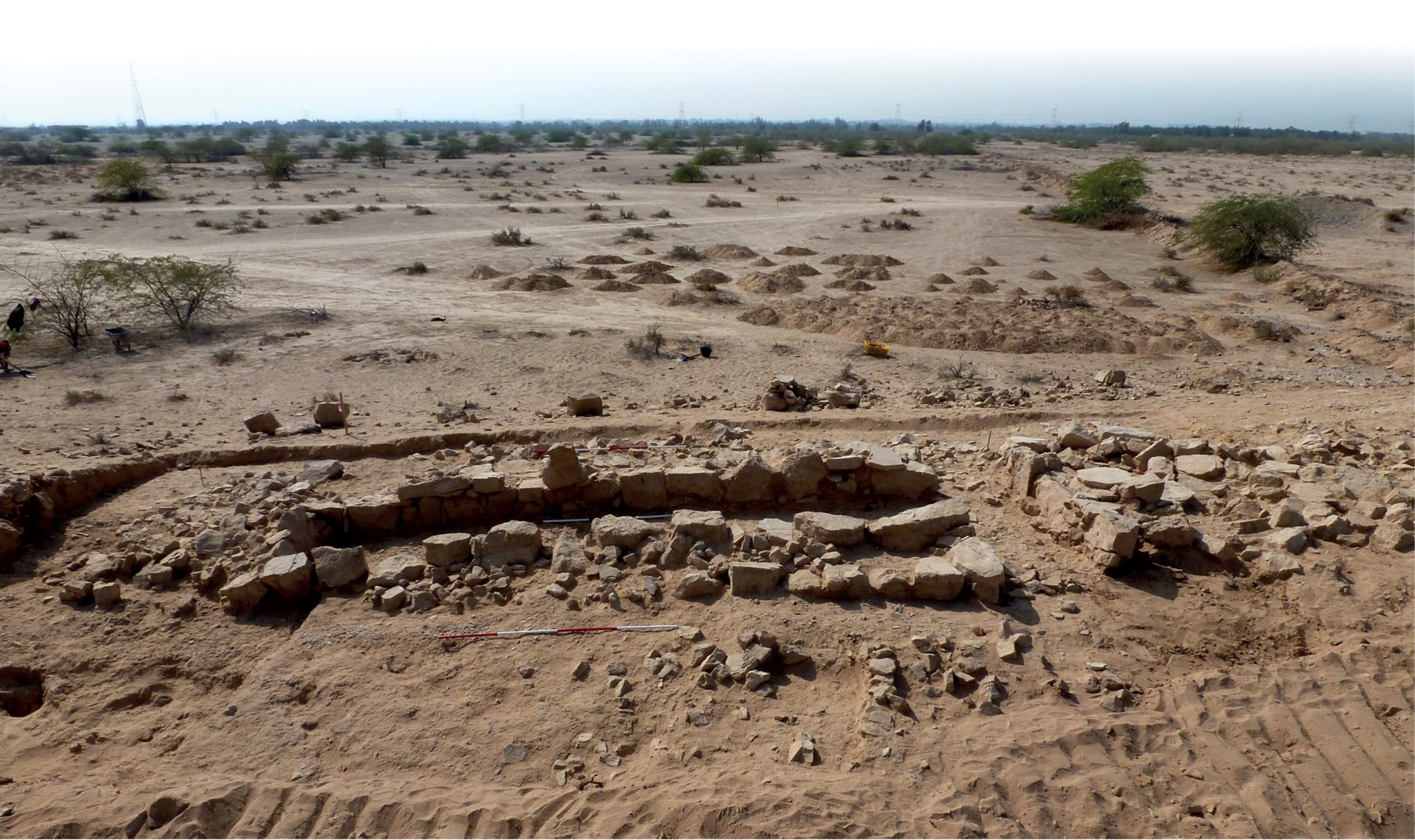
Rescue excavations took place at the cemetery in 2012-2013, because a new road – part of the Emirates Highway – was being constructed in Ras al-Khaimah. The first stretch of this road network linked Abu Dhabi and Dubai, and was built soon after the unification of the UAE in 1971. Linking Ras al-Khaimah to this highway system represented the final phase of the project. While the route of the road was carefully planned to minimise its impact on the natural and archaeological heritage of the region, some damage was unavoidable. In particular, the highway would clip the northern prehistoric cemetery at Qarn al-Harf, resulting in the destruction of three tombs believed to lie there, out of 65 known at the site, on the strength of a 1999 survey. In order to ensure that as much knowledge as possible was gleaned from these monuments before they were lost, the Government of Ras al-Khaimah funded an archaeological project, which was conducted by Durham University. In the event, the team dug four large tombs, as well as several smaller ones. The results shed intriguing new light on the processes under way in Ras al-Khaimah, as the Umm an-Nar period gave way to the Wadi Suq era around 2000 BC.

‘For me, the key thing is how this population was trying to adapt to a changing world,’ says Derek Kennet, director of the project and Howard E. Hallengren Professor of Arabian Peninsula and Gulf States Archaeology at ISAC, the University of Chicago. ‘There’s one particular tomb in the cemetery, Qarn al-Harf 6, which allows us to see the transition between the two periods. Chronologically, it belongs to the Wadi Suq period, but the way it is made suggests that they wanted to build a traditional Umm an-Nar circular tomb, and didn’t have the skills or manpower to manage it. The ability to make fine ashlar had been lost, while the tomb itself is an irregular, flattened circle in plan. Moving away from a perfectly round shape meant that the chambers within didn’t curve as much, making them less technically challenging to cover with corbelling. Unlike an Umm an-Nar tomb, Qarn al-Harf 6 was also built away from the associated settlement and placed at the back of the plain, near the mountains. This allowed the community to avoid having to shift hundreds of tons of stone to their settlements across the plain – possibly indicating that labour was in short supply. But while Qarn al-Harf 6 is trying to maintain the Umm an-Nar way of doing things, it ended up ushering in a new phase of Wadi Suq tomb architecture. You can see how this evolved from Qarn al-Harf 6, with the developed Wadi Suq tombs in the area becoming oval in plan – as well as quite nicely built – with their own style and regularity. Qarn al-Harf 6 sits very much in the middle between these traditions.’
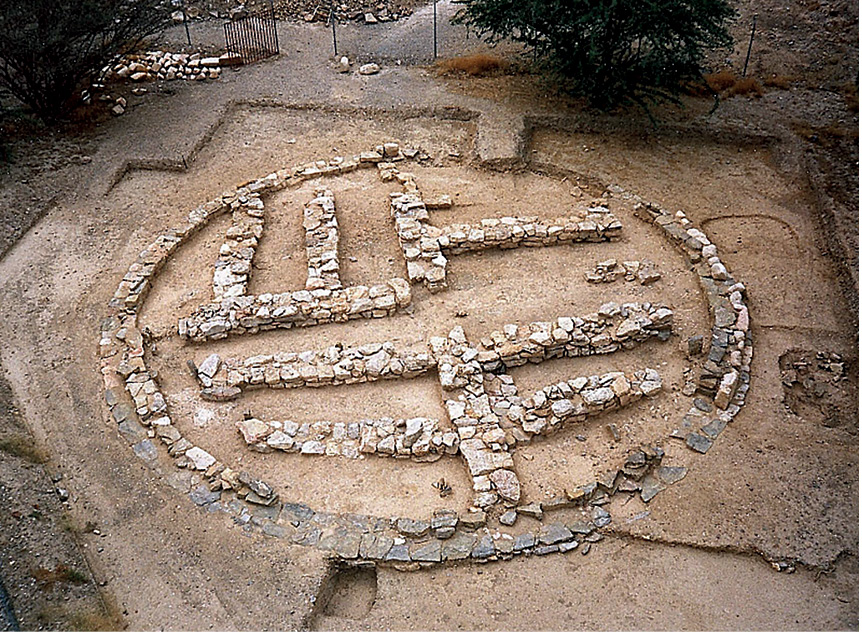
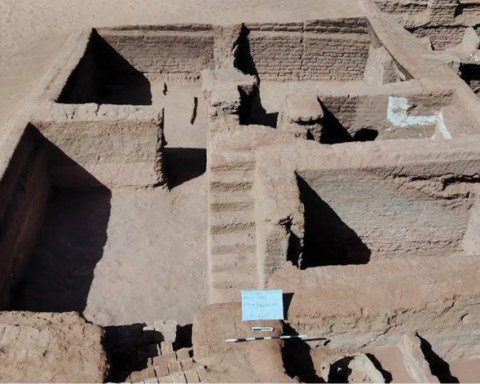
Above & below: An aerial view of an excavated Umm an-Nar tomb at nearby Shimal, showing the precise circular shape and neat, delicate construction (above). By comparison, the kite photograph of Qarn al-Harf 6 during excavation (below) shows the irregular ‘sub-circular’ shape of the main tomb. The tomb shares many features of the Umm an-Nar tradition, but the builders seem to have been unable to achieve the precise circularity of the Umm an-Nar period. Image (above): courtesy Department of Antiquities and Museums, Ras al-Khaimah, UAE
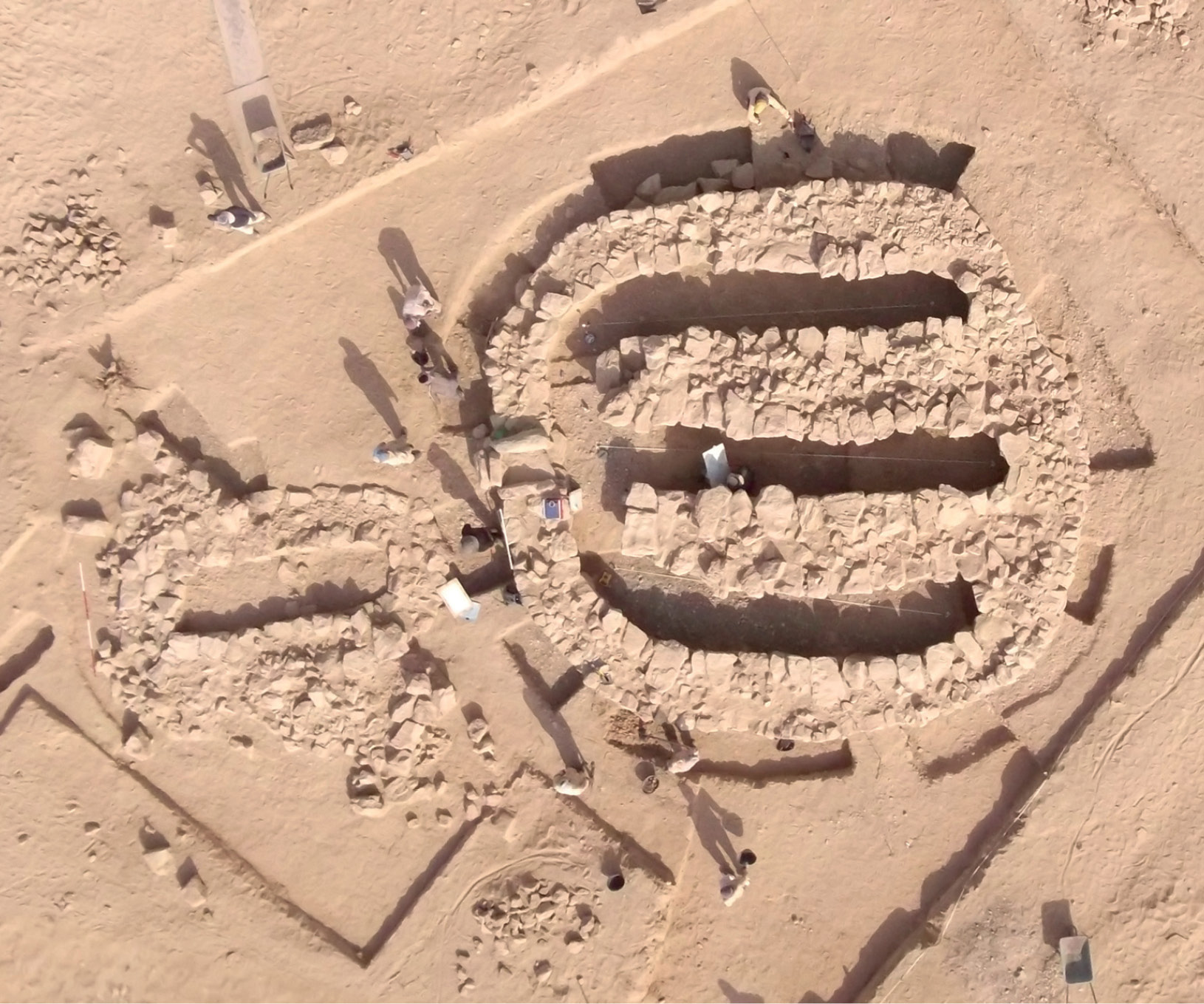

‘When you look at Qarn al-Harf 6 with a local interest, it gives a very nice illustration of how this development from one period to another happened. From a broader perspective, it also offers an example of how a community can be hit by some kind of calamity and no longer be able to manage the level of technological sophistication of skills that they previously had. Nonetheless, they clearly still aspired to them, and you can almost see them trying to hang on to the earlier Umm an-Nar culture, but they can’t quite do it. This attempt at continuity is happening after the Umm an-Nar traditions have disappeared from the rest of their core area, which makes this small enclave in the north at Ras al-Khaimah very much the exception to the wider regional pattern.’
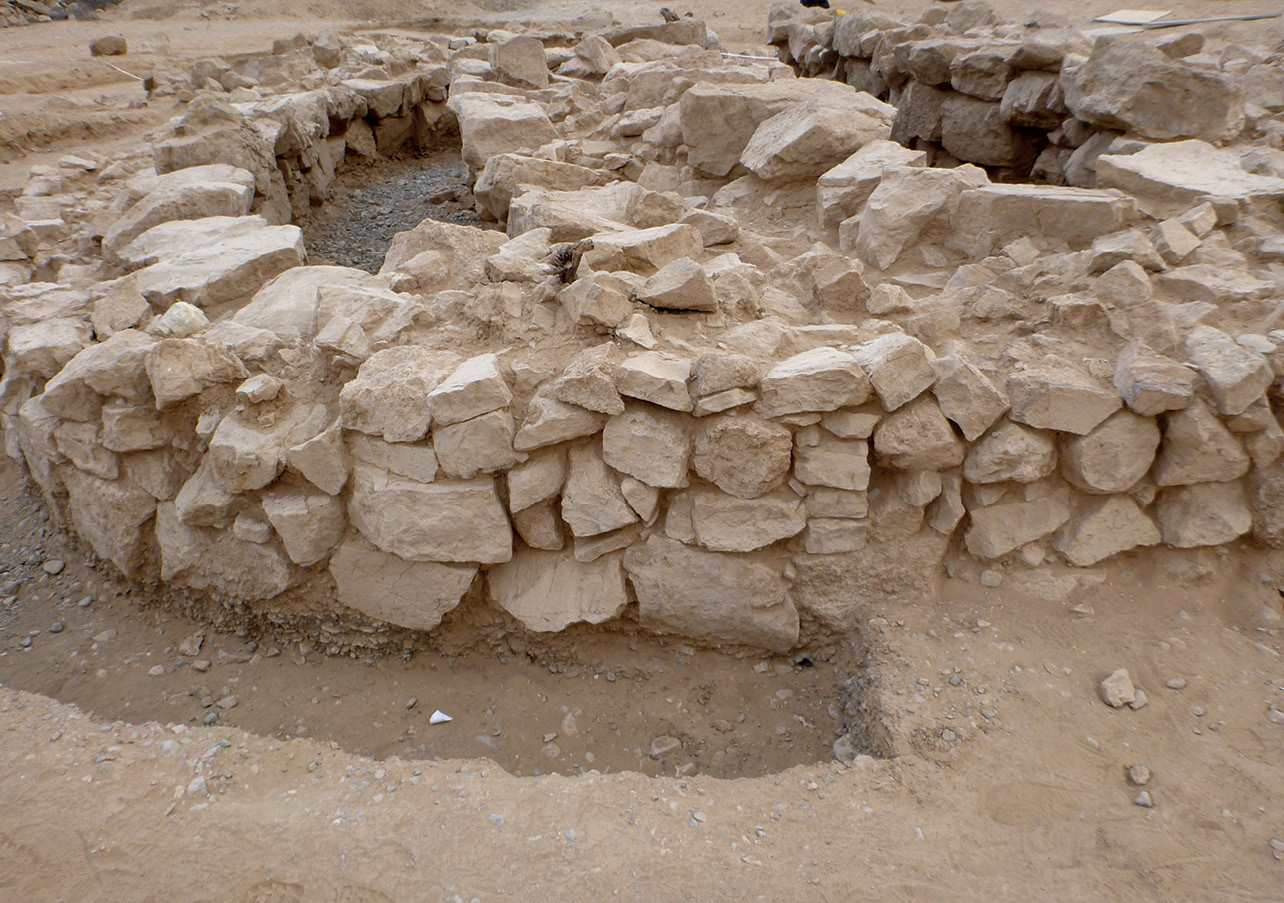
Above & below: A view of the rough external facing of Qarn al-Harf 6 (above), typical of the Wadi Suq period of the early 2nd millennium, compared to the beautifully carved ashlar ‘sugar-lump’ masonry from a typical Umm an-Nar tomb of 200 years or so earlier (below).
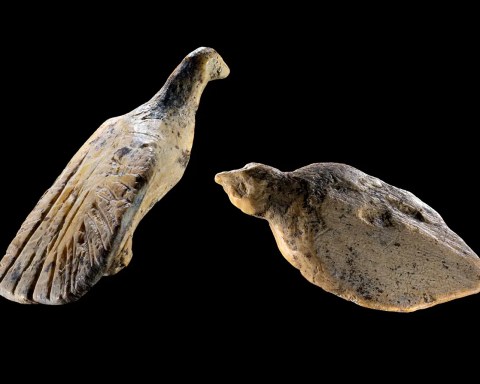
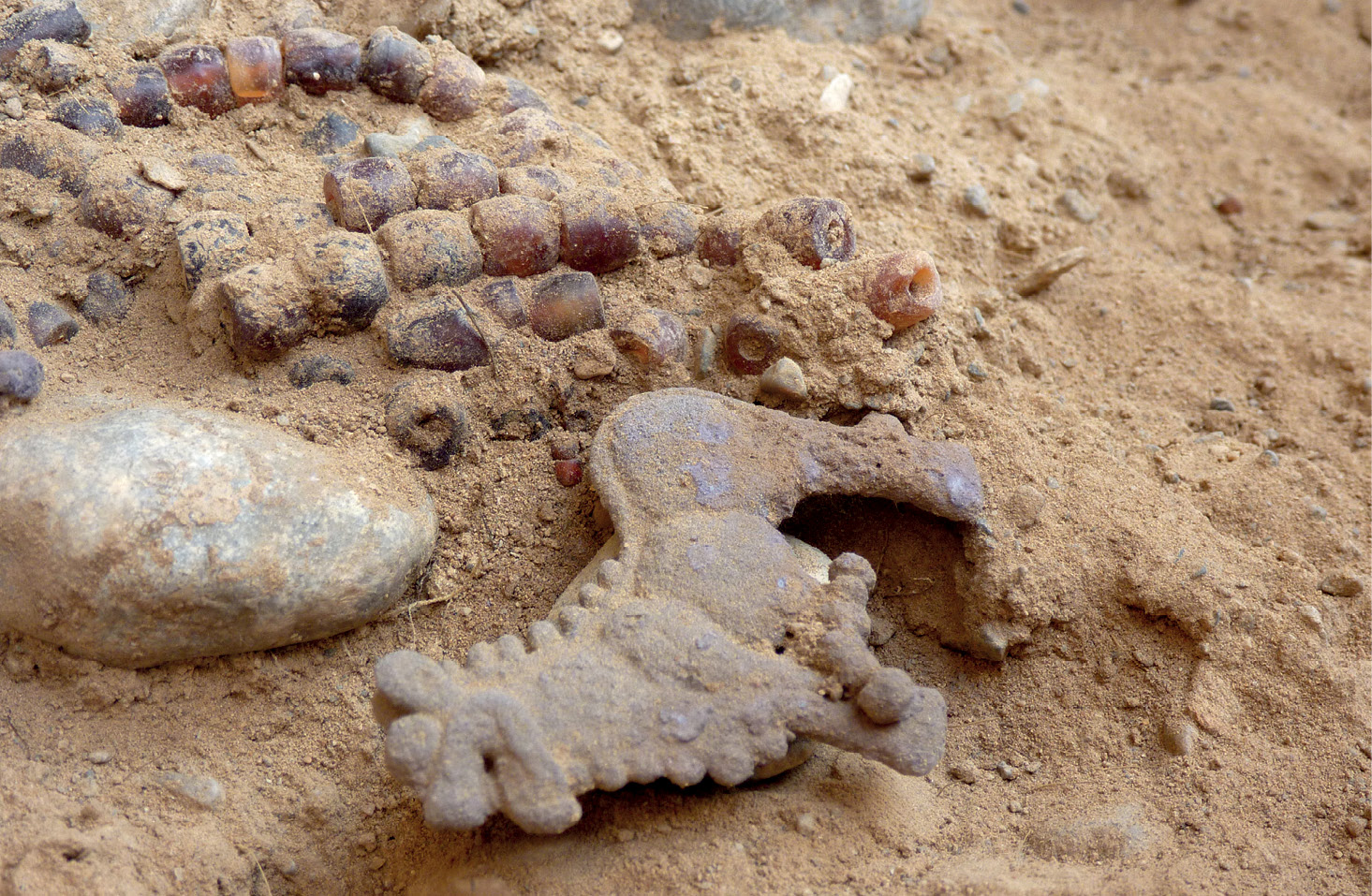
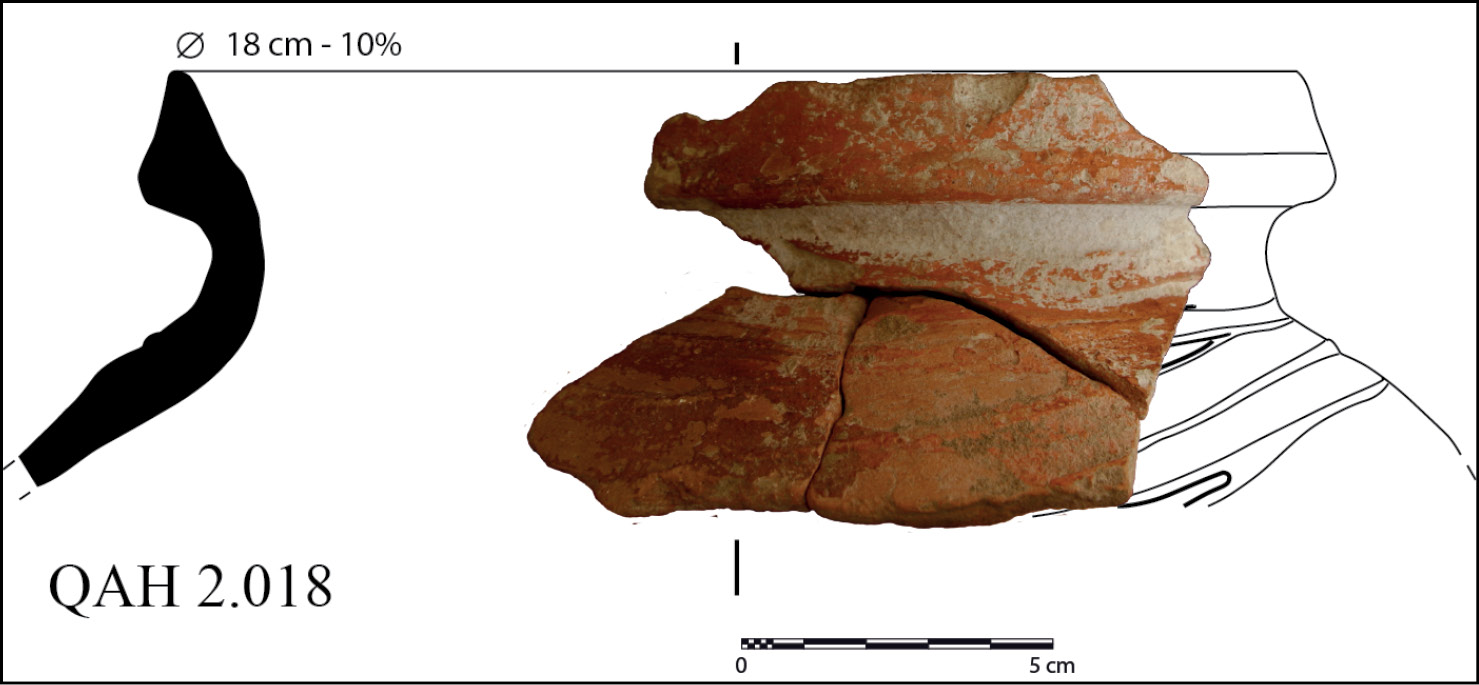
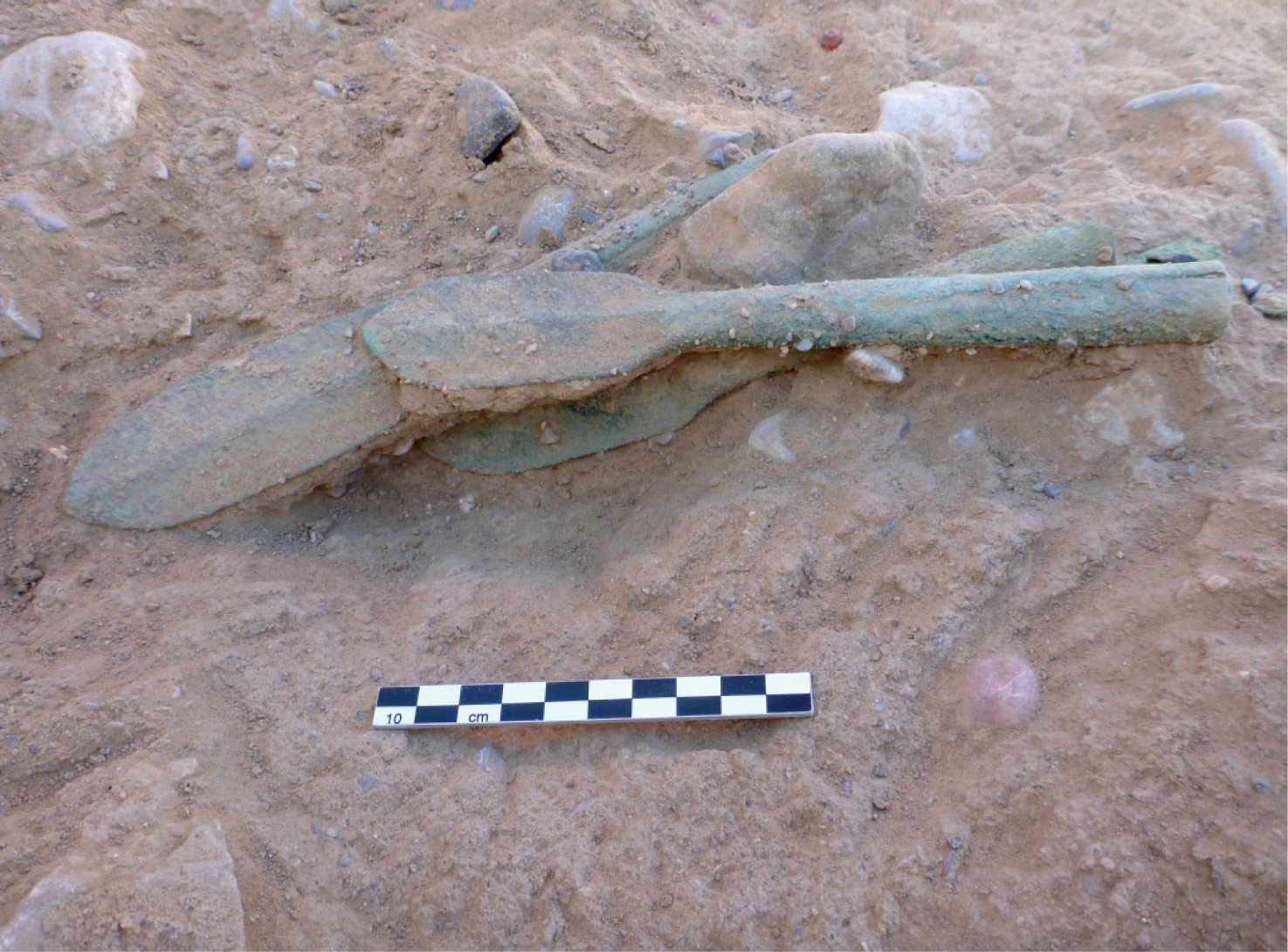
The finds from the tombs show, too, that despite the apparent disruption to the copper trade that coincided with the beginning of the Wadi Suq period, the occupants of the region were not cut off from the wider world. Three amulets representing animals offer a fine example of this. One of the amulets features a bull with a single horn, which parallels an enigmatic animal that appears on Indus Valley seals and is sometimes referred to as a unicorn, even though the creature is clearly bovine in nature. As well as these eastern influences, there were also links to the west, with metalwork reaching Qarn al-Harf from as far away as Syria. Rather closer to hand, pottery and beads from Dilmun, in what is now Bahrain and eastern Saudia Arabia, also made their way to the Qarn al-Harf tombs, quite possibly as a result of Bronze Age cabotage along the shores of the Arabian Gulf. Despite the splintering of the Umm an-Nar culture into numerous distinctive local groups, the long-distance connections that had brought wealth via the copper trade still seem to have served the Ras al-Khaimah plain – even if in an adjusted form – during the Wadi Suq period.
Changing times
All of this raises questions about what triggered the collapse of the seemingly successful and prosperous Umm an-Nar culture, and why it was only on the 250km² area of the Ras al-Khaimah plain that a group who once spanned some 70,000km² was able to mount a serious bid to hold on to their traditional ways. ‘The changes in Southeast Arabia are happening at exactly the same time as what is known as the 4.2 kiloyear or “ky” event,’ Derek says. ‘This is a period of climate change that was first identified at Tell Leilan in northern Mesopotamia by Harvey Weiss about 30 years ago. He observed that massive change was apparent at the site, which he could see in the stratigraphic sequence, and was dated to about 4,200 years ago. When Weiss looked at the hinterland of Tell Leilan, he realised that there also seemed to be a massive decline in contemporary settlement. Since then, other people have started to spot signs of significant change at around this time. One example is an off-shore analysis of marine sediments from the Arabian Sea. These were taken from an area about 300km from Qarn al-Harf, and show an increase in sand and dust being blown down from Mesopotamia around 4,200 years ago. This fits with other signs that this was a period when rainfall in the area diminished, resulting in drier conditions, with potentially disastrous consequences for some farming communities.’
‘Since then, the 4.2ky event has become a big topic of discussion, and is now accepted by major geological bodies as a significant event. It seems to have had almost global consequences, but the impacts could be very different in different places. In Egypt, the 4.2ky event has been linked to the end of the Old Dynasty, while the Akkadian dynasty in southern Mesopotamia seems to have experienced decline. There was a major depopulation of the Iranian countryside at around this time, while the first urban phase of the Indus Valley also came to an end. So it’s an interesting period, and there’s still a lot of scholarly debate about the impact that the event had on human populations. In some places, like in northern Mesopotamia, the effect appears to have been profound. But in some other areas, it looks like human populations were able to continue in some way or another. Much seems to have depended on the resources that these groups had, and the range of local options that were available to them as a result. Because Southeast Arabia was already a semi- to hyper-arid environment, the people of the Umm an-Nar period didn’t have many alternative avenues open to them as the region became drier.’

‘In a more general sense, I think this is one of the reasons why ancient settlement in Southeast Arabia has sometimes been overlooked. This area doesn’t have all of the conspicuous, long-lived tell sites that you see in places like Iraq and Syria. Instead, settlement was much more fragile, as only three or four years of drought could force populations to up stakes and move on in order to survive. This pre-existing fragility means that we can perhaps see the effects of the 4.2ky event more clearly in Arabia. That brings us back to the one area that the Umm an-Nar culture manages to contract into: the plain of Ras al-Khaimah. Not only does everything change across the old Umm an-Nar region, but a period of rapid social and economic change between 2200 BC and 1900 BC is also detectable in the archaeology everywhere within about 1,500km of Ras al-Khaimah. Clearly, then, there is something exceptional about Ras al-Khaimah.’
Seeking shelter
The plain comprises a swathe of fertile land that reaches down to the sea, and it enjoys a number of advantages over neighbouring regions. Ras al-Khaimah also faces up the gulf towards Dilmun, Mesopotamia, and Iran, placing it in an ideal location to tap into maritime trade. The occupants of the plain are likely to have benefited from overland links as well. Analysis of the metalwork found at Qarn al-Harf indicates that inland copper sources were still being exploited in the 2nd millennium BC. Indeed, while the Wadi Suq communities used techniques distinct from their Umm an-Nar forebears, they were still skilled at extracting and working the metal. There are various ways by which the resulting produce might have reached the coast, but among those most plausibly used in the 2nd millennium BC are routes that terminate at Ras al-Khaimah, where the finds from the Qarn al-Harf tombs show that maritime connections to the wider region existed during this perod. Quite possibly, then, copper was being traded to Dilmun, and then on to Mesopotamia.
As well as these mercantile opportunities, the coastal plain at Ras al-Khaimah benefits from an arguably even more important strength: it is underlain by limestone aquifers. These ensured that groundwater remained reasonably easily accessible, at a depth of about 7-8m. Thanks to this, people would still be able to irrigate their fields, allowing arable agriculture to remain both possible and productive even in the drier conditions triggered by the 4.2ky event. The wider geography of the region means, too, that the plain is likely to have benefited from better winter rainfall. Further to the south, by contrast, the substrata were much more porous, meaning that what water did fall tended to just drain away. So it looks very much as though people were moving into a little refuge with better water resources at the end of the Umm an-Nar period, as a changing climate made their traditional lifestyles impossible across the remainder of their territory. The natural advantages of the Ras al-Khaimah plain are likely to have helped the population maintain greater prosperity, a longer life-expectancy, and a higher birth-rate. Even so, instead of saving the past, their ad hoc approach to maintaining traditional ways ended up ushering in a distinctive future.
‘It’s a bit like early medieval people in Britain trying to hold on to the Roman era by constructing new style buildings that ended up sowing the seeds of a new age,’ says Derek. ‘Although Ras al-Khaimah presented a refuge, with the groundwater and coastal access providing climatic and economic buffering, the inhabitants no longer had their earlier technological sophistication. The archaeology tells a story of decline and not quite being able to hang on to old traditions. So even in this enclave of stability and continuity, it’s still a story of change.’

Further Information:
• The results of the Qarn al-Harf excavations will be published by Oxbow later this year as D Kennet, A Caine, A Hilton, C Velde, and L Weeks (2024) Southeast Arabia at the Dawn of the Second Millennium: the Bronze Age collective graves of Qarn al-Harf, Ras al-Khaimah (ISBN 978-1789257953).
• Derek Kennet is Howard E. Hallengren Professor of Arabian Peninsula and Gulf States Archaeology at the Institute for the Study of Ancient Cultures, University of Chicago.
All images: courtesy of Derek Kennet, unless otherwise stated