
Subscribe now for full access and no adverts
The end of 2024 sees the 225th anniversary of Napoleon Bonaparte’s ascent to power as leader of France. The key event was the coup of 9 November 1799, or 18 Brumaire – the ‘foggy month’ in the recently adopted French revolutionary calendar. With deft use of the threat of force, the country’s leading general effectively ended a decade of continuous political upheaval.
At the time, Napoleon was the predominant figure in the Consulate, a trio of new rulers who replaced the five-man Directory, which had governed the revolutionary First Republic since 1795. He soon formalised the situation by assuming overall authority as First Consul. Despite his civilian title, Napoleon’s power ultimately rested on the backing of the military. Five years later, the Consulate would be superseded by his proclamation as Emperor of the French.
In our special feature for this issue, we mark the rise to prominence of Europe’s most remarkable conqueror. Few would dispute Napoleon’s ranking among the great commanders of history. It has been estimated that he fought some 60 battles, of which he lost only seven. He created an empire that stretched at its height from the Channel coast to the borders of Russia. In pursuit of universal empire, Napoleon bent the crowned heads of Europe to his will, took the Austrian emperor’s daughter as his second wife, and placed his own brothers on the thrones of Naples, Spain, Westphalia, and Holland. One military historian, Martin van Creveld, has described him as ‘the most competent human being who ever lived’ – reflecting his ability to combine the direction of his country’s government with the personal control of armies on a continental scale.
It was an achievement which would become practically unrepeatable within a generation of Waterloo. The growing size of armies and the increasing complexity of warfare soon made it impossible for a single individual to hold all the elements of command in his own hands. Napoleon’s successors were obliged to work with semi-autonomous corps and divisional commanders. Increasingly, they delegated responsibility to a general staff, comprising specialists in different aspects of war planning and execution.
Nonetheless, Napoleon continues to offer important lessons to later military leaders. His emphasis on drawing the enemy into a decisive battle, rather than being distracted by time-consuming sieges, his development of combined arms operations and grasp of logistics – until the massive miscalculation of the 1812 Russian campaign – all repay careful study. His compelling personality and long record of success make him a continuing source of fascination more than two centuries after his death in lonely exile in the South Atlantic.
In this issue we explore, first, the part played by Napoleon’s generalship in his progress from unknown artillery officer to ruler of France. In a companion piece (see here), we explore in depth two battles he fought in his 1796-1797 Italian campaign. The first of these, Lodi, was not a decisive engagement but played a critical role, thanks to the victor’s gifts of self-promotion, in the development of the Napoleonic legend. It was followed by the Battle of Arcola, which set the French armies finally on the road to victory in Italy.
These two articles are the first in a short series devoted to the career of this extraordinary individual. In the next issue of MHM, we analyse the reasons for the remarkable run of victories achieved by Napoleon between 1800 and 1809 – a period that saw him overcome the armies of Prussia, Austria, and Russia, and dictate terms to his defeated opponents. In his triumph, however, were sown the seeds of his eventual decline and fall. Our final article will focus on the years 1810-1815, when imperial overstretch and overweening ambition, combined with his foes’ ability to learn from their earlier reverses, finally sealed Napoleon’s fate.
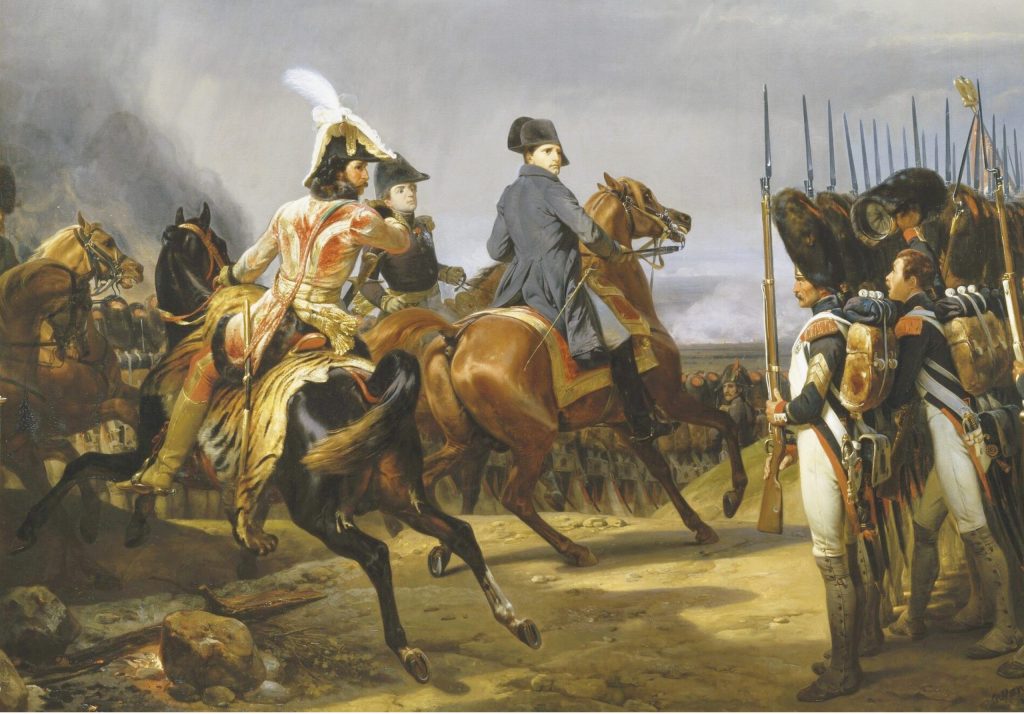
‘Little Corporal’ to nation’s warlord: Napoleon’s transition from victorious general to France’s supreme ruler
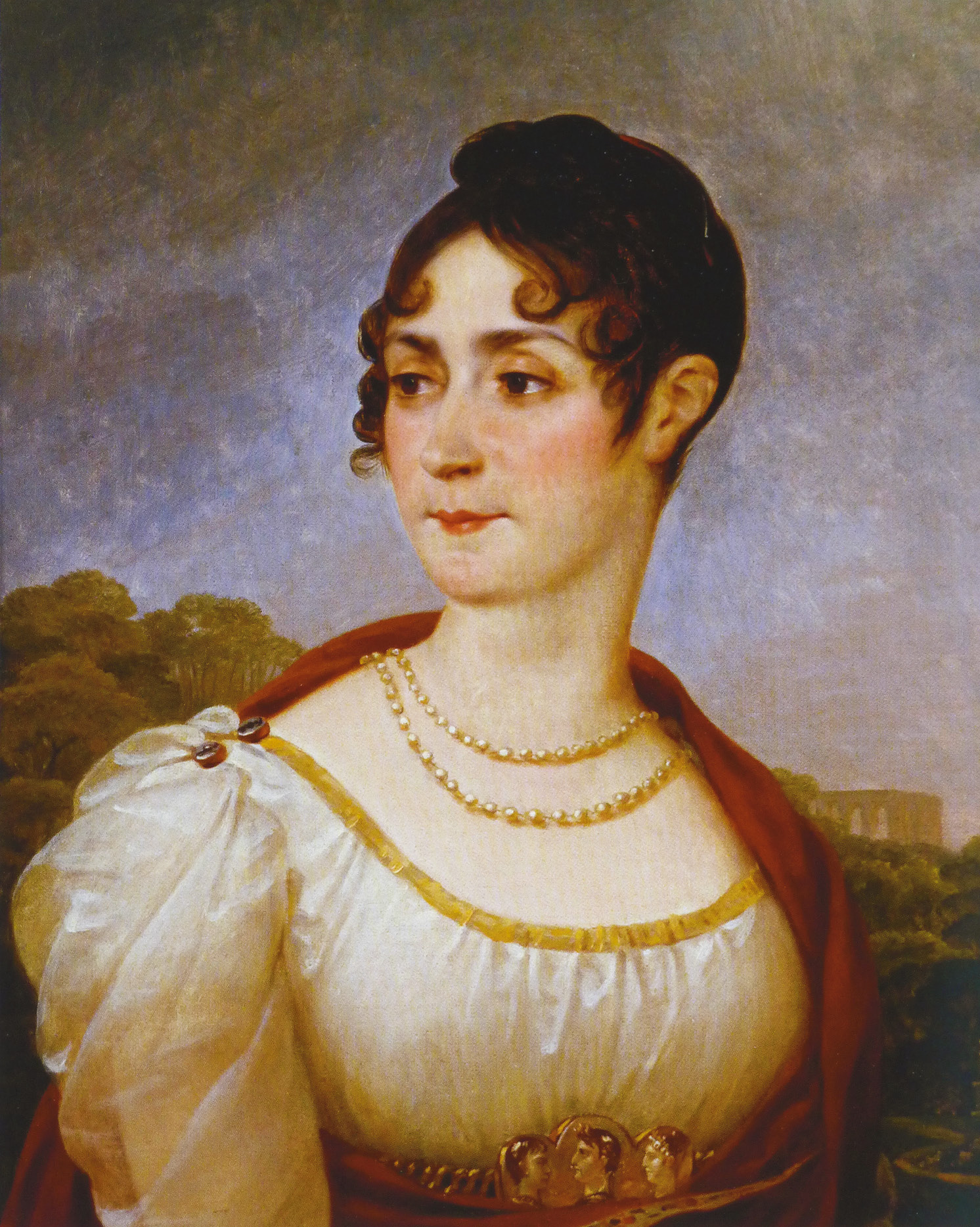
Corsica was an unlikely place of origin for the man who was to become Emperor of France and would conquer much of Europe before his 40th birthday. The island did not come under French control until shortly before Napoleon’s birth in 1769. His father, a minor Corsican nobleman, had been active in the nationalist struggle for independence – though he soon accommodated himself to his homeland’s new masters. The young Napoleon spelt his surname ‘Buonaparte’ in the Italian fashion until 1796. He was sent at the age of nine to a military-style school at Brienne in France, where his Corsican roots made him something of an outsider.
From this harsh environment Napoleon progressed, six years later, to an army cadet training establishment in Paris. Here it was that he chose the artillery as his preferred career route. This made sense for a young man with a talent for mathematics. It was also, unlike other branches of the royal army, one where merit counted for more than aristocratic privilege when it came to promotion.
Napoleon learned his craft as a gunner at a time when, under the influence of General Jean-Baptiste de Gribeauval, France’s artillery arm was undergoing major reforms. The production of standardised artillery pieces firing 12-, 8-, and 4-pound balls, and mounted on lighter carriages with interchangeable parts, made for greater mobility and effectiveness. It was a system that Napoleon would put to good use in his campaigns.

Revolutionary warrior
It was the onset of the French Revolutionary Wars, however, that transformed Napoleon’s career. From the spring of 1792, France was at war with Austria and Prussia. The conflict soon became a struggle for the survival of the new republic. At home, the Revolution, which had begun in 1789, entered a new and more radical phase. In the Terror, anyone suspected of anti-revolutionary sentiments was liable to face summary trial and execution. Abroad, an initially defensive war became a crusade to export the values of the Revolution to neighbouring states – and, more urgently, to wrest control of vital resources to sustain the fledgling republic.

In the process, the apparatus of the state was galvanised to recruit, arm, and equip an army much larger than those that had typically fought the campaigns of 18th-century monarchs. The organising genius of war minister Lazare Carnot produced the levée en masse, the conscription of all unmarried men aged 18 to 25. France gained a formidable fighting force, united by a shared commitment to the defence of the nation. By the summer of 1794, perhaps more than three-quarters of a million men were under arms. In succeeding years, a combination of compulsory service and voluntary enlistment continued to swell the ranks.
Initially, the revolutionary forces were poorly disciplined and not as well trained as the royal army that they replaced. But the republican army compensated with a pervasive ethos of patriotic fervour and developed effective tactics, with infantry columns advancing behind swarms of skirmishers. This became the instrument of Napoleon’s ambition amid the turmoil of the revolutionary decade.
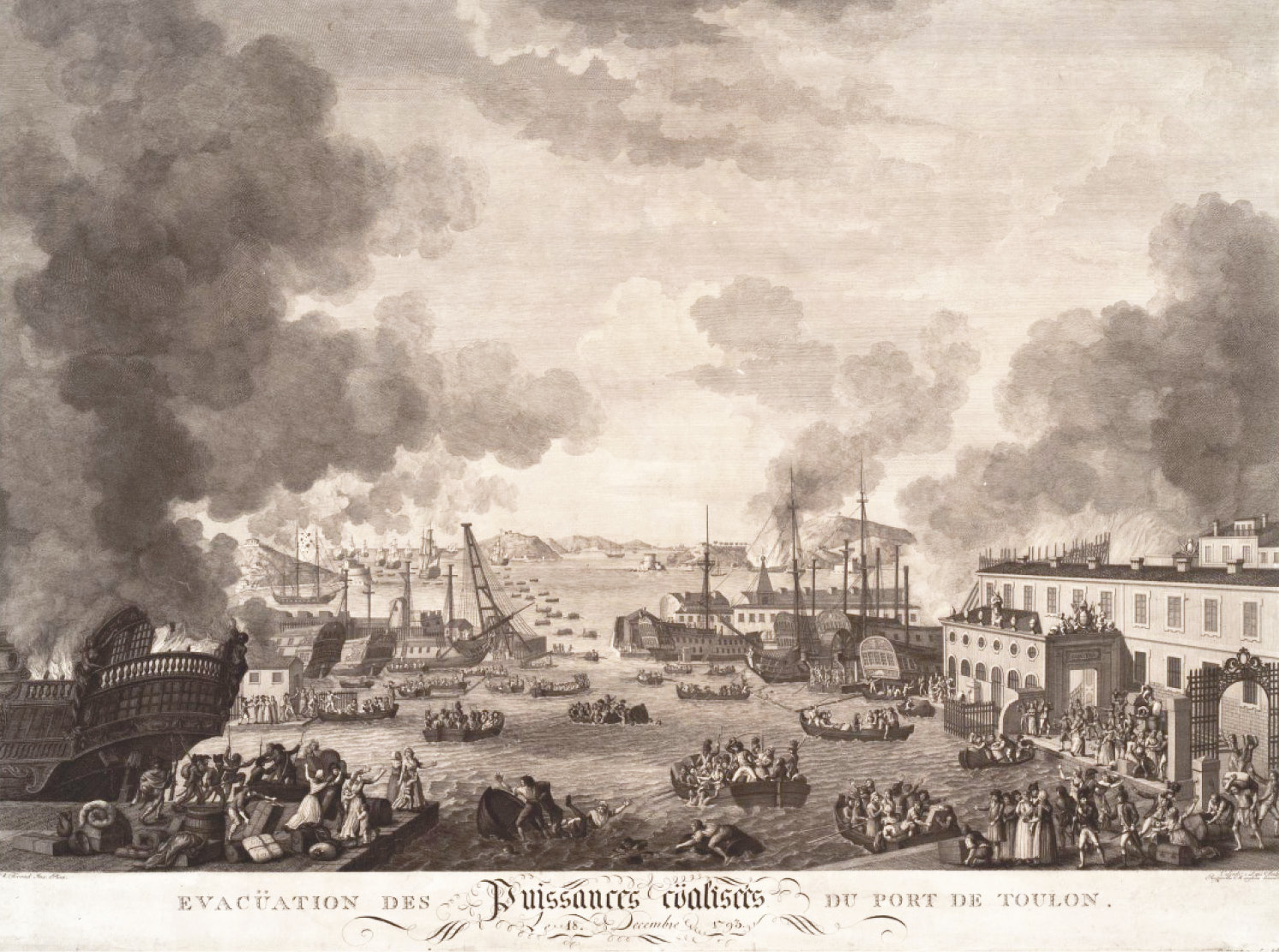
Napoleon’s first substantive experience of warfare was gained at the siege of Toulon in the final months of 1793. The outbreak of a royalist revolt in this heavily fortified Mediterranean port, and its subsequent occupation by an Anglo-Spanish naval force under Admiral Lord Hood, presented a serious challenge. Napoleon was not in overall command of the besieging force, but was given charge of its artillery. He owed this appointment to a fortunate combination of circumstances. He happened to be in the area, escorting a convoy of powder wagons to Nice. In addition, as on other occasions in his early career, he took advantage of influential connections – to his fellow Corsican, Antoine Saliceti, politician and diplomat of the Revolution and First Empire, and to Augustin Robespierre, brother of the revolutionary leader.
The 24-year-old Napoleon rapidly requisitioned more artillery to supplement his meagre arsenal. On his initiative, French troops concentrated on taking the British- held Fort Mulgrave, controlling the western heights overlooking the harbour. In the savage fighting that ensued, Napoleon suffered a severe bayonet wound to the thigh. The capture of the fort enabled him to position his guns to fire down on the enemy fleet, forcing it to evacuate the port in mid- December with some 15,000 French royalists aboard fleeing republican retribution.
The Siege of Toulon amply displayed Napoleon’s talent for self-promotion and his ability to win the loyalty of his men. He intervened personally to direct the cannon fire and shared his men’s hardships, sleeping in the open alongside them. His part in the episode secured him promotion as brigadier-general. Despite his success, however, he could not be certain of his path to the top of his profession. French generals were subject to political pressure, and failure in the field could even result in execution: 84 generals suffered this fate in the space of two years. After the fall of the Robespierre brothers in July 1794, Napoleon himself briefly suffered imprisonment, from which he was lucky to be released to resume his career.
From Paris to Italy
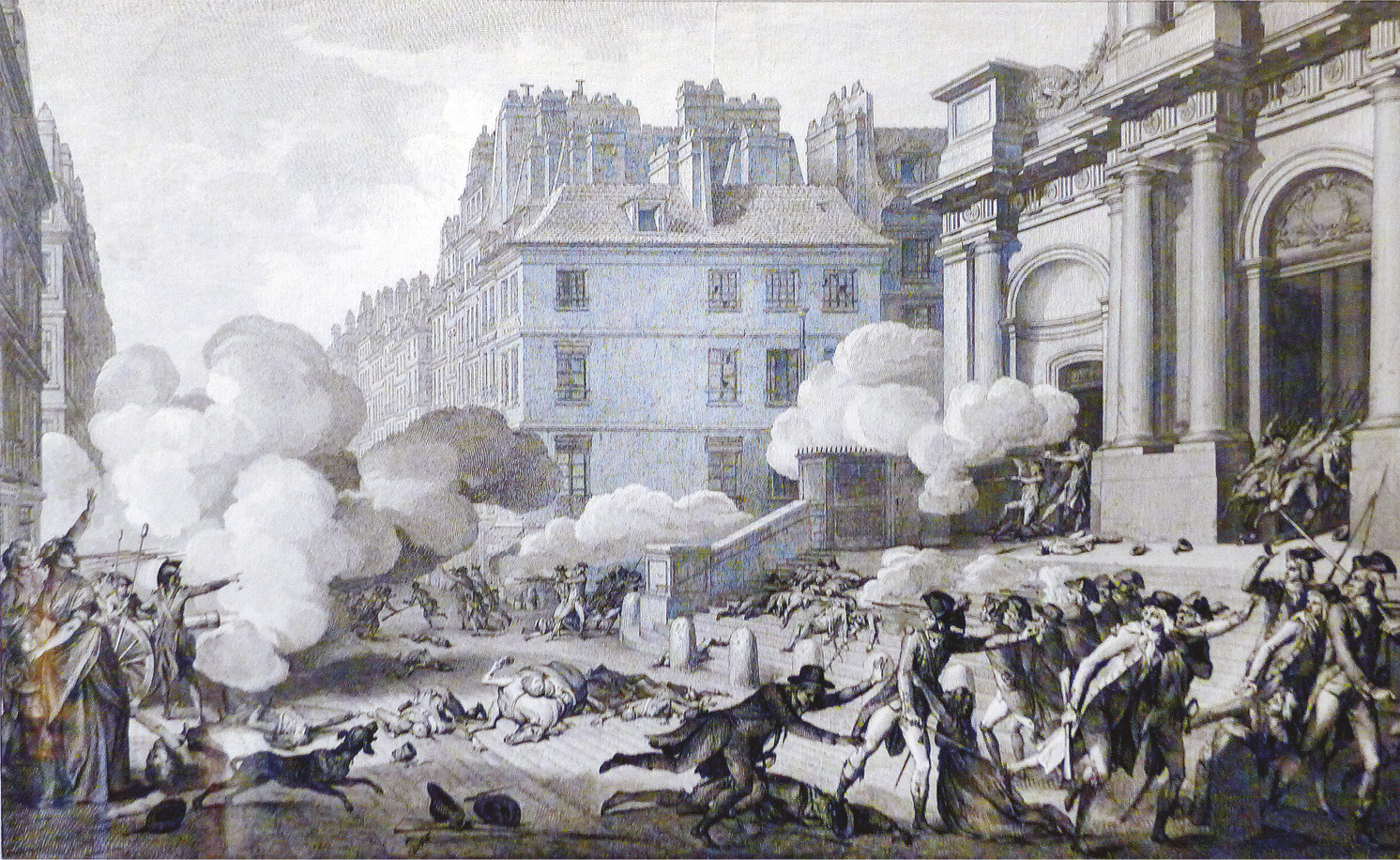
Napoleon’s prospects remained uncertain. He was tasked with drawing up plans for an expedition into Italy that proved inconclusive. An attempt to recover his Corsican birthplace from British occupation was repulsed by the Royal Navy. The event that saved him was the uprising of 13 Vendémiaire – 5 October 1795 – a royalist revolt against the revolutionary National Convention.
As at Toulon, Napoleon was not given overall responsibility – that was assigned to a leading politician, Paul Barras. Once enlisted to protect the embattled revolutionary government, he took the lead in deploying cannon in the streets of central Paris, close to the Tuileries Palace. In the ensuing action – immortalised by 19th-century writer Thomas Carlyle as the ‘whiff of grapeshot’ – some 300 royalists were shot down and the revolt rapidly collapsed. Napoleon had no scruples about the use of force. Having witnessed mob violence earlier in the Revolution, he had developed a deep-seated dislike of uncontrolled crowd behaviour. The suppression of the insurgency suited his authoritarian personality.
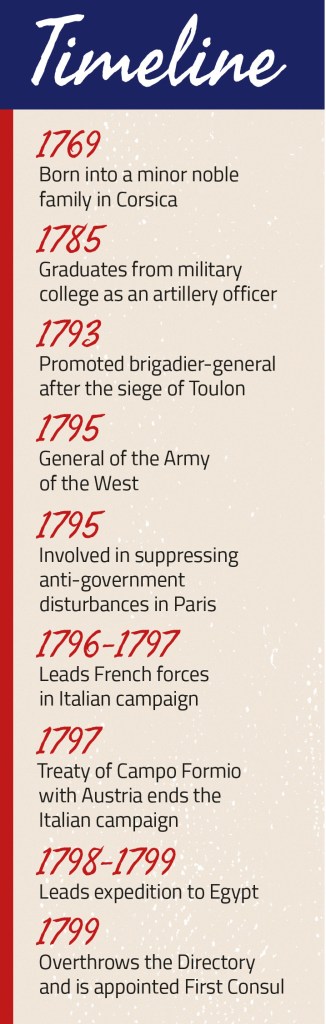
Napoleon forged a useful contact in Barras, who emerged as the leading figure in France’s new government, the Directory. This was a five-member ruling group, governing with a law-making body composed of two chambers: the Council of Elders and the Council of Five Hundred. Napoleon accommodated himself with ease to this new development. He despised the amoral, slippery Barras as an individual, but thoroughly exploited his usefulness.
On a personal level, the connection brought Napoleon into contact with one of the Director’s former lovers, Joséphine de Beauharnais, whom he soon married. Barras also proved instrumental in promoting Napoleon to the position of Commander of the Army of the Interior. In March 1796, he gained his first independent field command, as head of the Army of Italy.
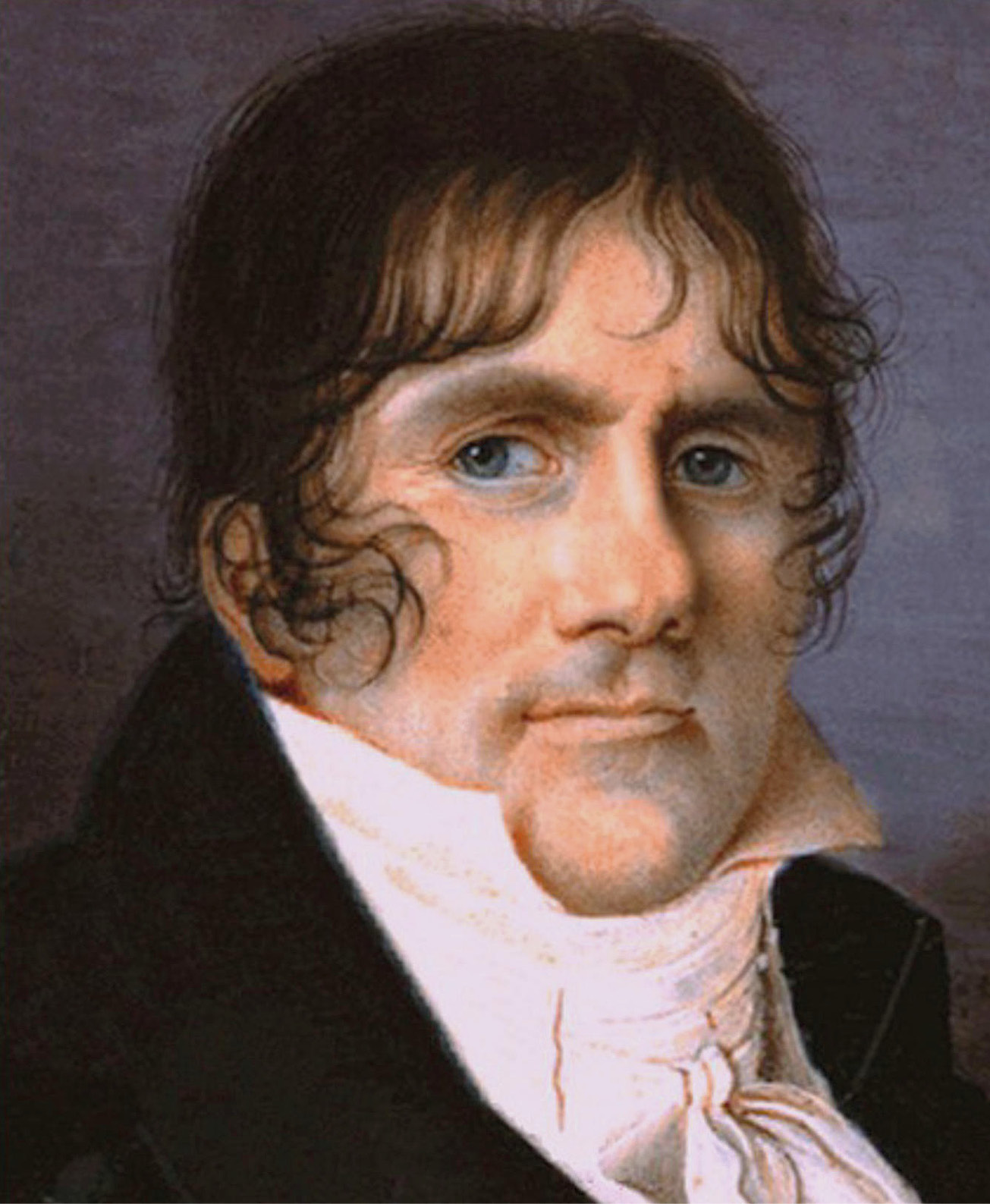
Conscious of its fragile hold on power, the Directory may have given Napoleon this appointment to divert a potential coup leader away from the domestic political scene. The young general’s ambition, however, matched the government’s aggressive foreign policy. By now, the notion of liberating neighbouring countries from the yoke of monarchy was much less important than the pursuit of national interest, pure and simple. The acquisition of territory and new resources, to bolster France’s fragile economy, was the main motive. The Directory wanted to expand the country to its natural frontiers on the Pyrenees, the Rhine, and the Alps. This brought it into conflict with the handful of states that still challenged French power – Britain, Austria, and the north Italian kingdom of Piedmont.
Taking centre stage
The French government originally saw the campaign in Italy as less important than the operations it planned for Germany. Under Napoleon’s bold leadership, however, the campaign against the Austrians in Lombardy now assumed central importance. The Army of Italy was seriously under-resourced. It would take Napoleon’s personality and organising ability to meld it into an effective fighting force.
Success did not come immediately. Piedmont was soon knocked out but, as our companion piece on the Battles of Lodi and Arcola shows, Napoleon’s victories in the first nine months of the campaign were incomplete. Nonetheless, he took advantage of the errors made by his enemies. Although numerically superior, and facing a ragged, poorly equipped French invasion force, the Austrians made the mistake of dividing their forces. They lacked both Napoleon’s tactical flexibility and his killer instinct. Nor did any enemy general come close to emulating the close bond that he had with his troops.
The Italian campaign reached its climax in January 1797, when the Austrians made a fourth attempt to relieve the fortress of Mantua, whose garrison had been bottled up since the previous summer. With the defenders now subsisting on rats and horseflesh, this was their last chance of salvation. Three separate contingents approached, the largest under the command of General Alvinczi, whom Napoleon had already defeated at the Battle of Arcola in November. Alvinczi marched southwards along the eastern side of Lake Garda. He encountered French forces under General Joubert, occupying an advantageous position on a plateau above the Adige valley at Rivoli.
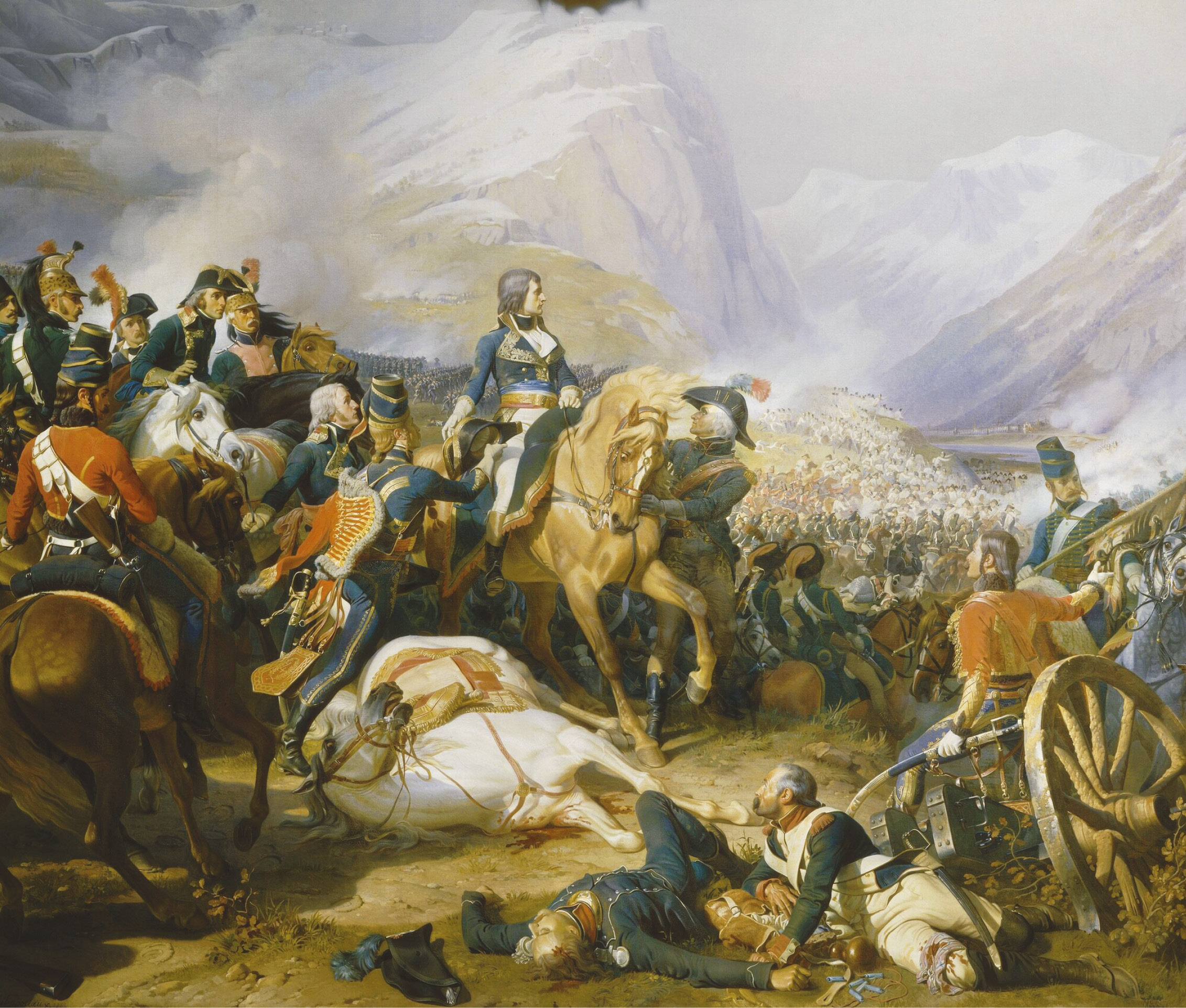
Napoleon ordered Joubert to stand firm until he arrived in the early hours of 14 January with reinforcements. Even then, the French were outnumbered by 28,000 to 22,000. But the poor roads meant that the Austrians were unable to bring up their heavy artillery. The crucial engagement of this two-day battle was in the Osteria Gorge, where devastating French cannon-fire stopped the enemy from breaking through. Napoleon showed skill in transferring troops at speed to counter Austrian moves, which included the arrival of a force in his rear. Rivoli was a decisive defeat for the Austrians, whose losses amounted to some 43% of their total strength. The following month, the exhausted garrison at Mantua surrendered.
Victory gave France effective control of northern Italy. It also enabled Napoleon to make an impression on the international stage. He reshaped boundaries, creating the Cisalpine Republic, centred on Milan, and the Ligurian Republic in Genoa. In the Treaty of Campo Formio, signed in October 1797, he dictated his own terms to Austria. The defeated empire surrendered Lombardy and the Austrian Netherlands (modern Belgium), and recognised the two French satellite republics in Italy. The Habsburgs were granted control of Venice as compensation for their losses. Napoleon also negotiated a more generous peace settlement with the papacy than the anti-clerical politicians of the Directory wanted. Crucially, however, he appeased them with a flow of money, works of art, and other valuables to swell France’s bankrupt treasury.
During the campaign, Napoleon had strengthened his power base with a view to future advancement. He gathered around him a coterie of trusted senior officers such as André Masséna, who had played a key role at Arcola, and Louis-Alexandre Berthier, a skilled administrator who became his long-serving chief of staff. The Italian campaign also saw him build a strong relationship with his troops. Although they still endured physical hardship, they were better equipped and rewarded than at the start of the expedition.
Oriental adventure
Napoleon’s next assignment proved much less successful. Turning down the chance to lead an invasion of Britain – France’s only major surviving opponent – he embarked on an expedition to Egypt. The aim was to secure a base from which to threaten British control of India and to develop a trade route to the subcontinent. Setting off with some 40,000 troops, he took Malta and reached Alexandria in July 1798.
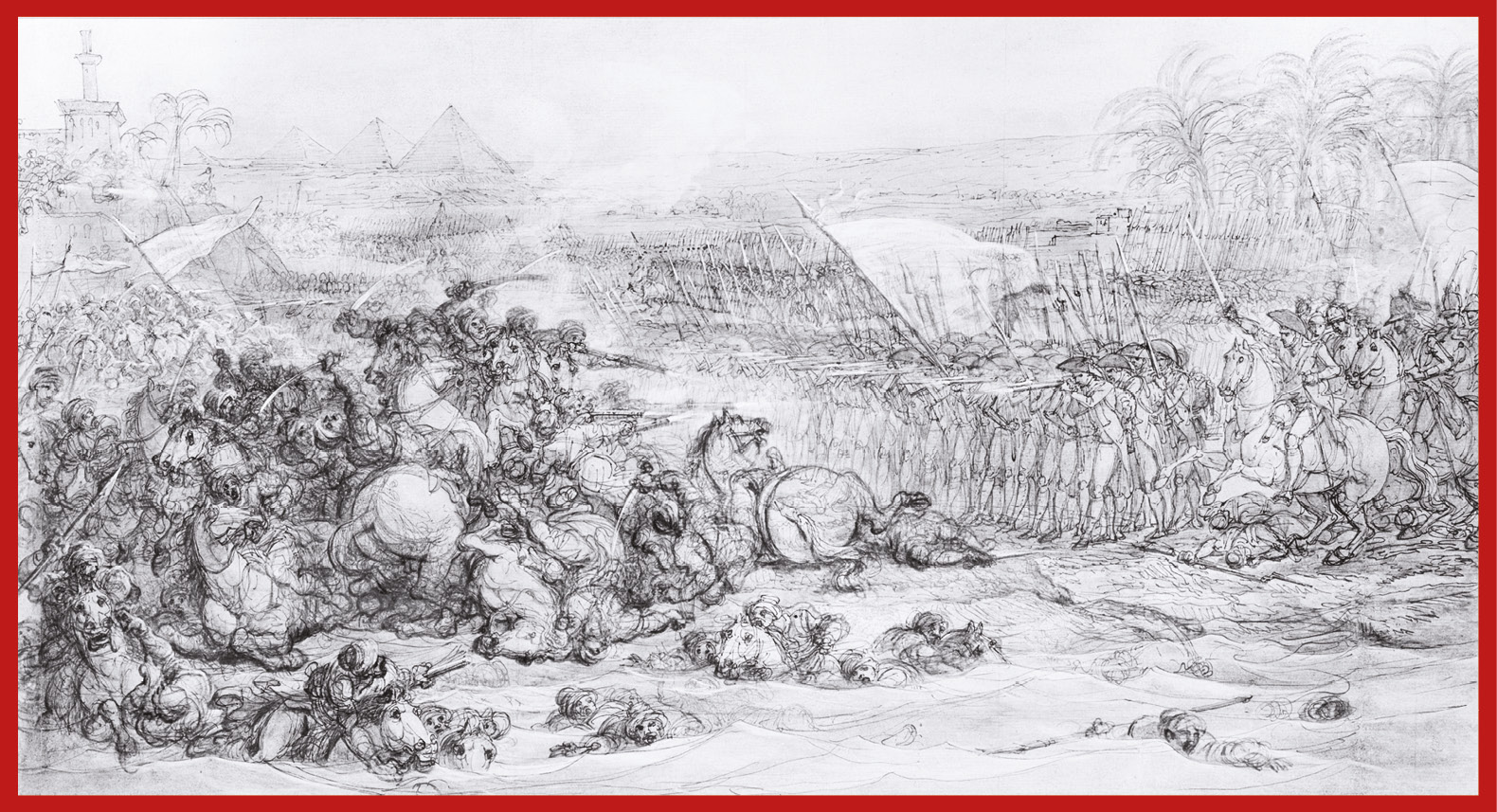
Heat, thirst, and disease soon began to take a heavy toll of the French force. Nonetheless, Napoleon had some success against Egypt’s ruling military caste, the Mamelukes. Their reputation for skill and aggression on horseback obliged him to adapt his tactics. Learning from the example provided by the Austrians and Russians in resisting Ottoman cavalry, he formed his troops into several large squares, six men deep, with cannon positioned in the spaces between them. At the Battle of the Pyramids, these formations proved effective against the onrush of Mameluke horse. The French then moved on to occupy Cairo.
But the Egyptian campaign was never a realistic project. The superiority of the Royal Navy, backed by a secure base at Gibraltar, proved decisive. In early August, Admiral Nelson destroyed Napoleon’s fleet at anchor at Aboukir Bay (see MHM 135, August/September 2023), leaving the French army isolated. In any case, the task of conquering the vast emptiness of Egypt and then of finding some way to turn it to France’s commercial advantage was practically beyond any invader’s capability. In addition, the French now found Russia and the Ottoman Empire united against them.
Napoleon’s oriental adventure fizzled out in anti-climax. Seeking to pre-empt a Turkish attack on Egypt, in February 1799 he led the greater part of his army up the coast into Syria. Although he captured the port of Jaffa, his assault on Acre proved a failure after Royal Navy ships captured his siege train. Assisted by British naval gunners, the Turkish garrison put up a determined defence. Napoleon’s only real victory was over a Turkish force that landed at Aboukir in July. Cutting his losses, he decided to return to France with a handful of loyal senior officers.
Ironically, Napoleon was feted as a conquering hero back in France. News from the Middle East was carefully managed to downplay French setbacks. He benefited from the unpopularity of the Directory, now universally disliked for its corruption, self-interest, and economic mismanagement. He was viewed as a saviour who would rescue the Revolution and guarantee order.
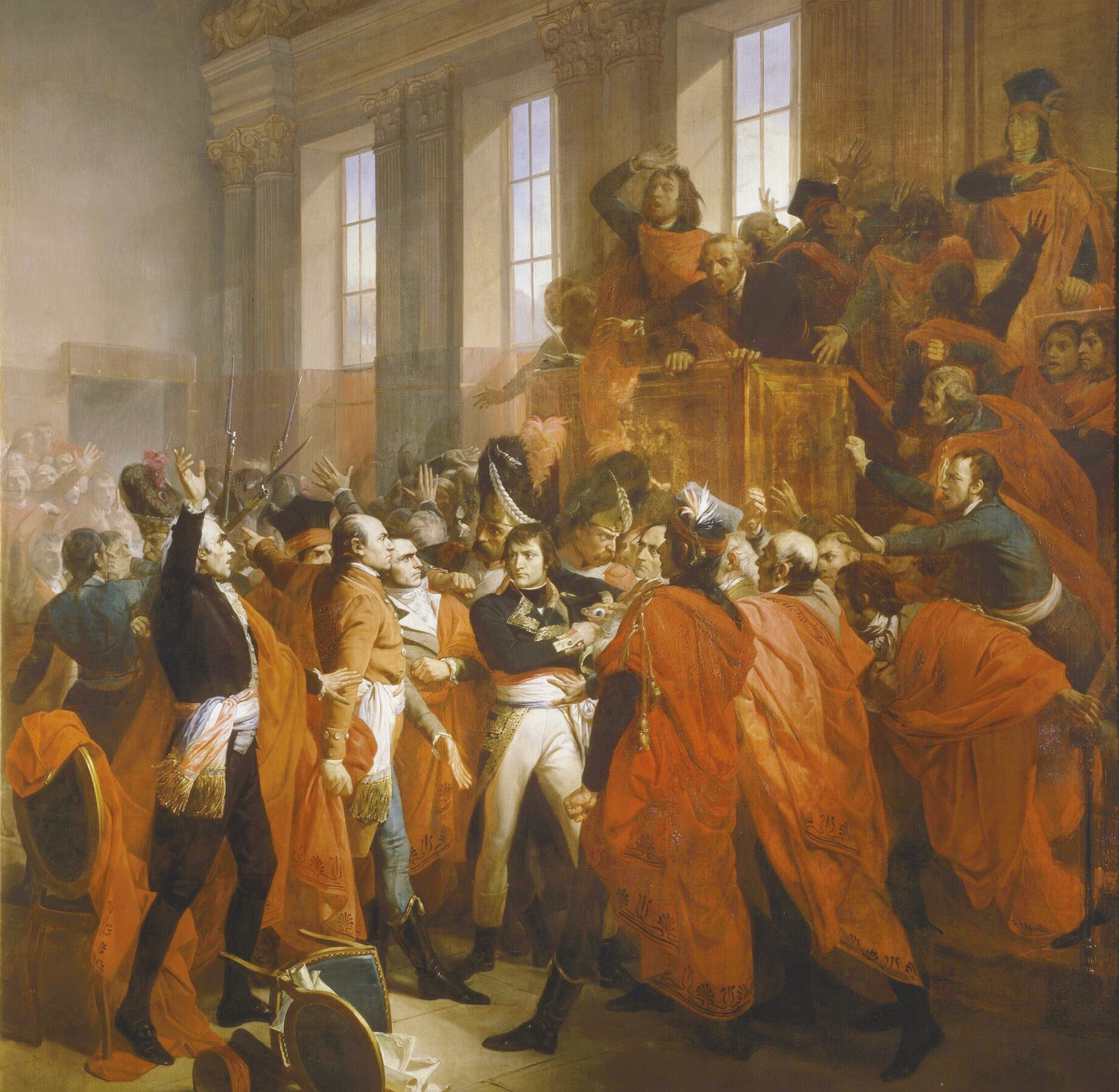
Even before Napoleon returned to France, plans were afoot to oust the government. A recently appointed Director, Emmanuel Joseph Sieyès, was manoeuvring for position against his colleagues. This former priest was a wily political operator who memorably summed up his pragmatic approach to life when asked what he had done during the Terror: ‘I survived.’ But Napoleon was determined not to be anyone’s frontman. In the coup of Brumaire, the Directors were pressured into resigning and armed force was used to overawe the Council of Elders.
The takeover did not go quite as smoothly as its leading protagonist had intended. But Napoleon had taken care to deploy 7,000 troops, on whose loyalty he could depend, across Paris. When the Council of Five Hundred proved non-compliant, his younger brother, Lucien Bonaparte, called in waiting soldiers to disperse them. Members with knowledge of English history compared Napoleon to Oliver Cromwell, who had dissolved more than one parliament in the previous century. They recognised Brumaire for what it was: a military coup, which brought the most successful and charismatic commander of his day to a position of supreme power.
Further reading:
• Michael Broers (2015) Napoleon: soldier of destiny (Faber & Faber).
• Philip Dwyer (2008) Napoleon: the path to power, 1769-1799 (Bloomsbury)
Images: Wikimedia Commons, unless otherwise stated
You can read the second part by Graham Goodlad here and find Calum Henderson's infographics here