Subscribe now for full access and no adverts
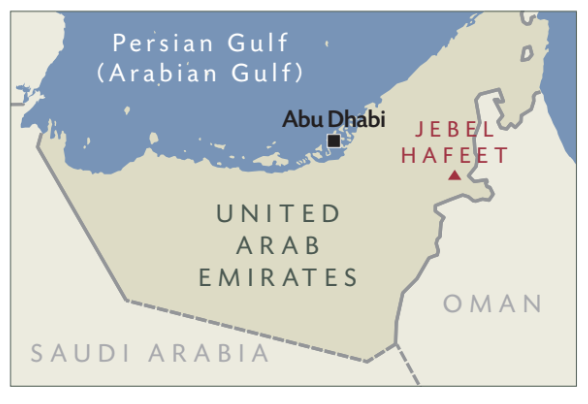
In January 2022, the United Arab Emirates (UAE) Origins Project team undertook an extensive fieldwork programme within the western hinterland of Jebel Hafeet, an imposing eminence that forms a northern outlier from the Al-Hajar Mountain Range. The southern section of Jebel Hafeet straddles the UAE and Omani border, while immediately to its north lies the city of Al Ain. Modern development has occurred in the vicinity of the western and northern flanks of Jebel Hafeet, but both the mountain itself and its eastern flank are largely protected areas that have remained relatively unspoiled, and – from an archaeological perspective – underexplored. This provided a valuable opportunity to learn more about ancient activity at a conspicuous landscape feature, as well as within its wider hinterland. The main aim of our project was to survey the western flanks of Jebel Hafeet for prehistoric activity, including lithic scatters, settlement evidence, and rock art. Our initial results are allowing us to sketch out a story that stretches far back into prehistory.
The whereabouts
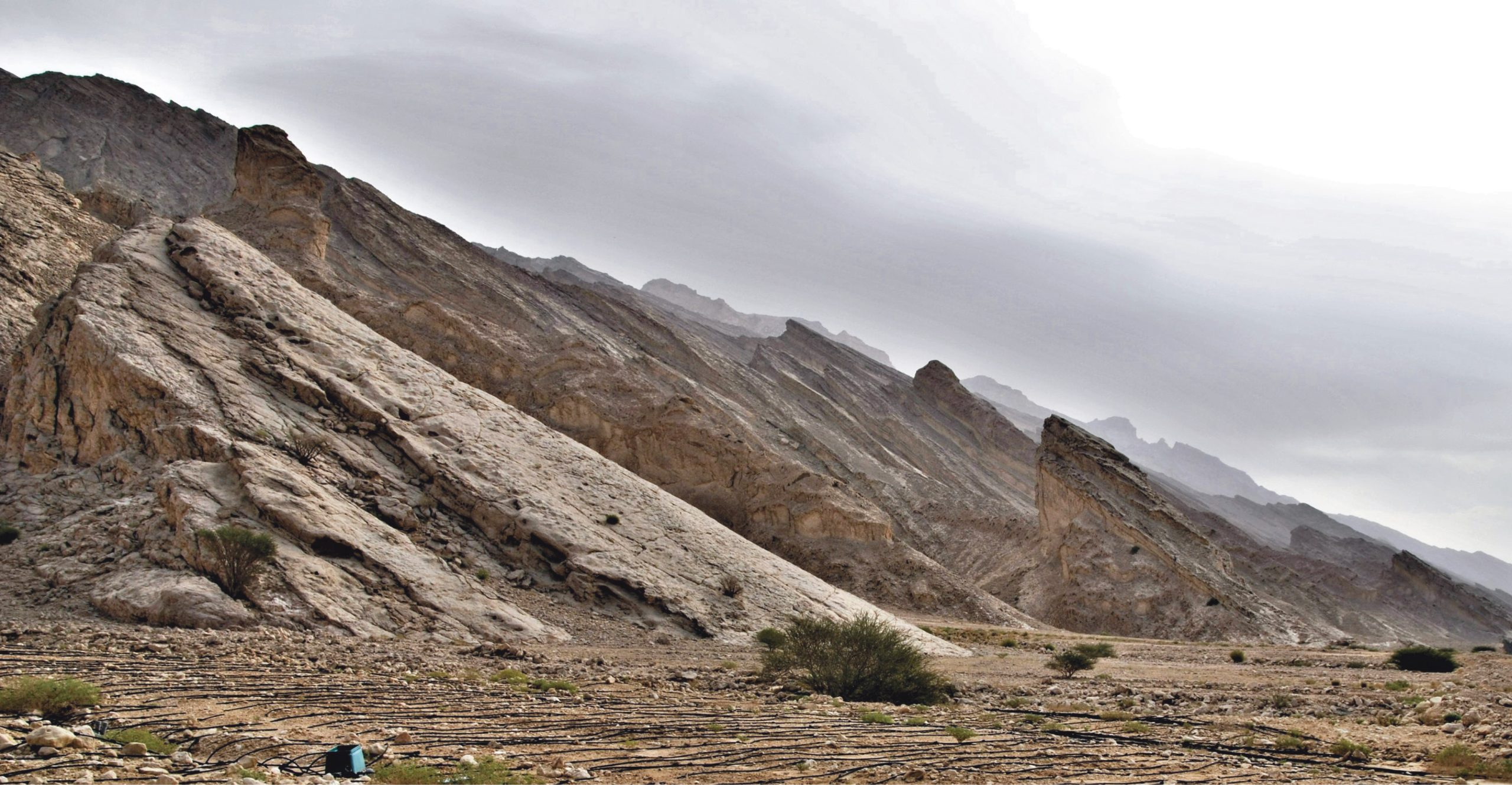
Jebel Hafeet means ‘empty mountain’ and this rock formation is, in geological terms, a limestone anticline or escarpment. It presents a major outcrop that runs for c.26km north–south by c.4-5km east–west, and rises 900m above the surrounding plain (leaving it standing 1,250m above sea level). On its western flank, the ground rises at an angle of roughly 30°, while to the east the slope is much steeper, ascending by at least 70°. Jebel Hafeet is the only mountain in the emirate of Abu Dhabi – one of seven emirates that comprise the UAE – but there are a number of escarpments and upland areas to the north and east. In 2017, the importance of Jebel Hafeet was reflected in its designation as a National Park by the UAE authorities. A year later, it was incorporated into the Sheikh Zayed Network of Protected Areas.

The origins of the rock stratigraphy at Jebel Hafeet lie in shallow marine deposits that built up during the early Eocene and Miocene epochs, between 56 and 5 million years ago. Today, the limestone geology of Jebel Hafeet is rich in fossils, including invertebrate animals, corals, and foraminifera – tiny organisms that are typically found in marine environments. The prevailing southerly winds in the region have, over the course of many millennia, done much to shape the eastern and western flanks of Jebel Hafeet. These have been carved out by severe erosion, mainly caused by a combination of storm events and the scouring action of the surrounding dune formations that lie within the hinterland on both sides of the mountain. The northern section of Jebel Hafeet, located within the oasis area of Wadi Nahyan and Green Mubazzarah Park, has also suffered from erosion. A number of hot springs rise there, but as there is no volcanic activity in the area, this water is presumably being geothermally heated. If so, the springs must extend to a depth of at least 2km underground.
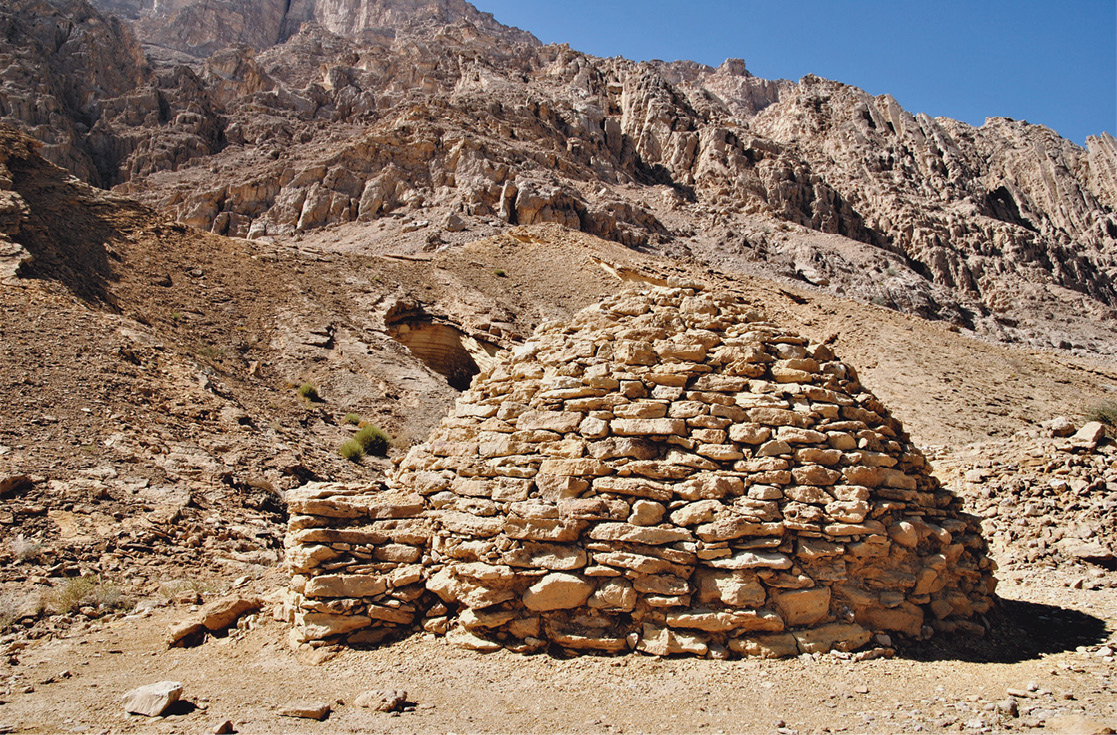
Erosion has exposed a number of areas, too, that are of great archaeological interest because former land surfaces have survived intact. The archaeology of this region has produced evidence of Middle Palaeolithic activity in the form of significant lithic scatters that date to between c.130,000 and 40,000 years ago. Also present are a number of sites that reflect Late Palaeolithic, Neolithic, Bronze Age, and Iron Age activity (for example Qarn bint Sa’ud, see CWA 116). Notwithstanding the development in the vicinity of Jebel Hafeet, prehistoric sites are preserved on both its eastern and south-western flanks, as well as within its immediate hinterland. In particular, a concentrated area of burial monuments hugs the lower section of the mountain to the south and east. This group dates to the Bronze Age (3200-2600 BC – an era regionally known as the Hafit Period) and comprises 122 individual cairns, a number of which have been reconstructed.
Walking through 700 centuries of human history
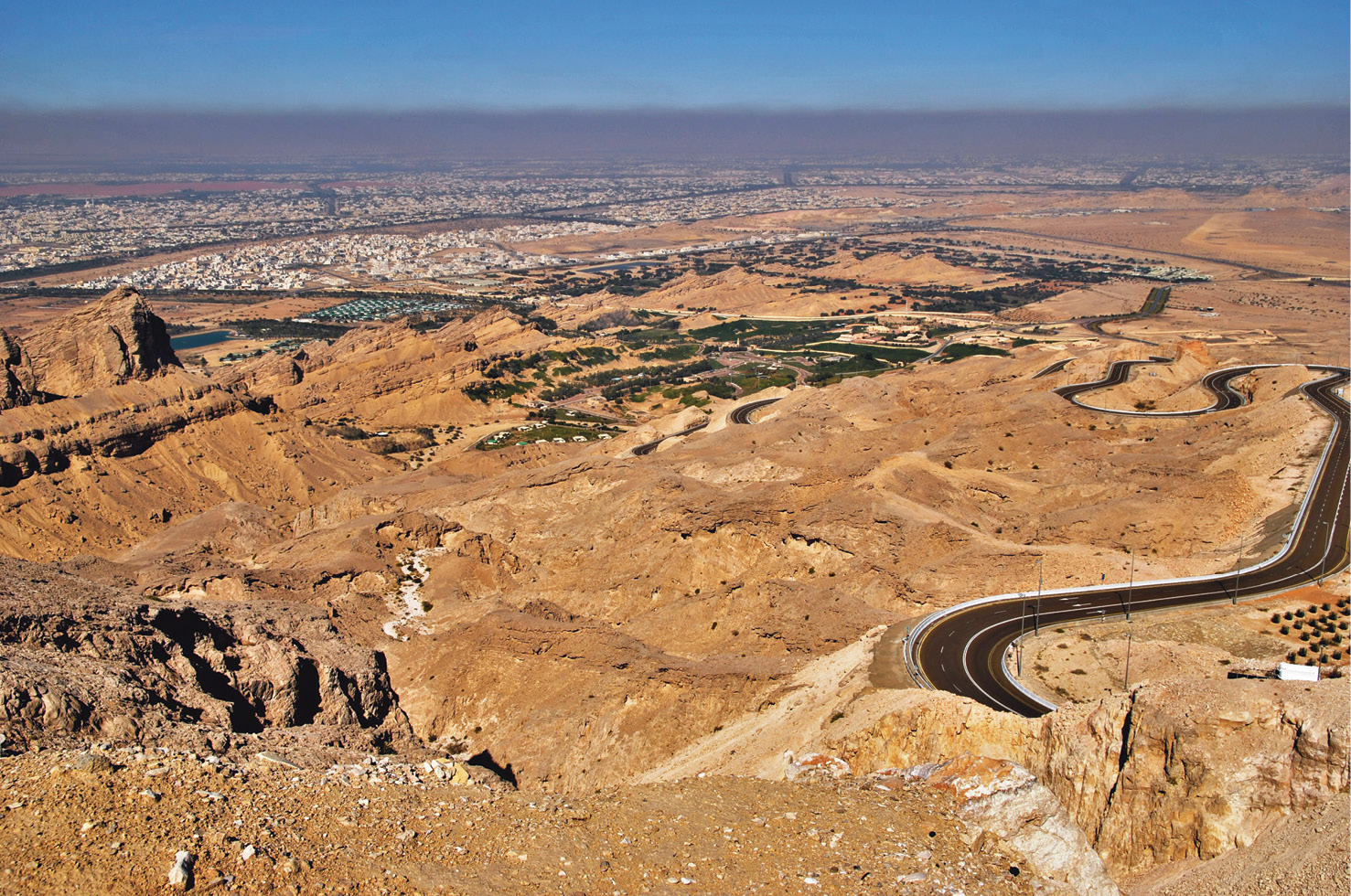
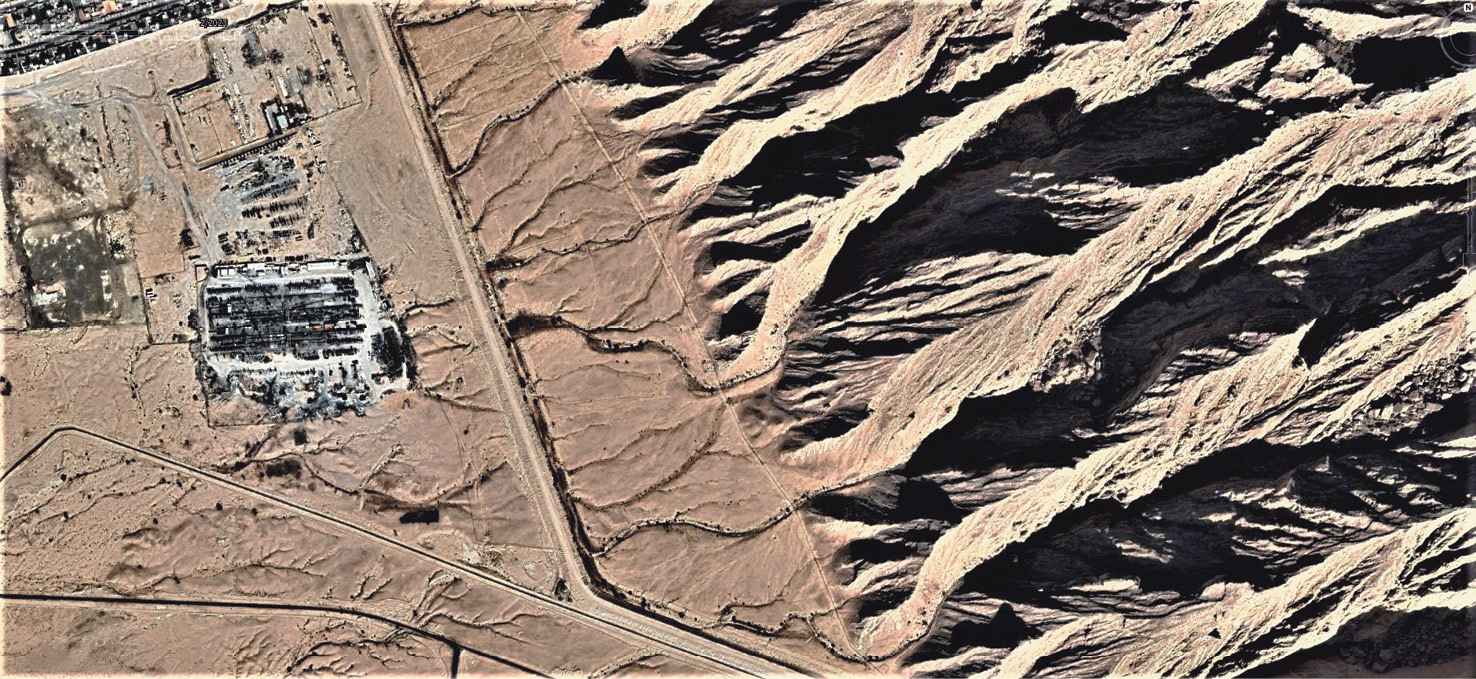
We dedicated most of our time to surveying the western flank of Jebel Hafeet. Within this zone, the north-western section comprises a narrow strip of land running for about 7km between the base of the mountain and an imposing 30m high causeway that extends to the border between the UAE and Oman. A service road on the summit of this causeway marks the edge of the protected area within the National Park. So far as the survey team is aware, there has been little previous archaeological fieldwork undertaken within the hinterland of Jebel Hafeet.
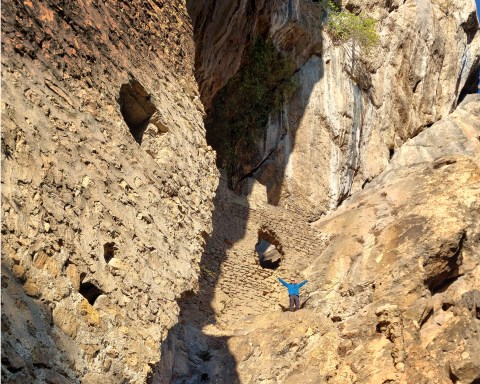
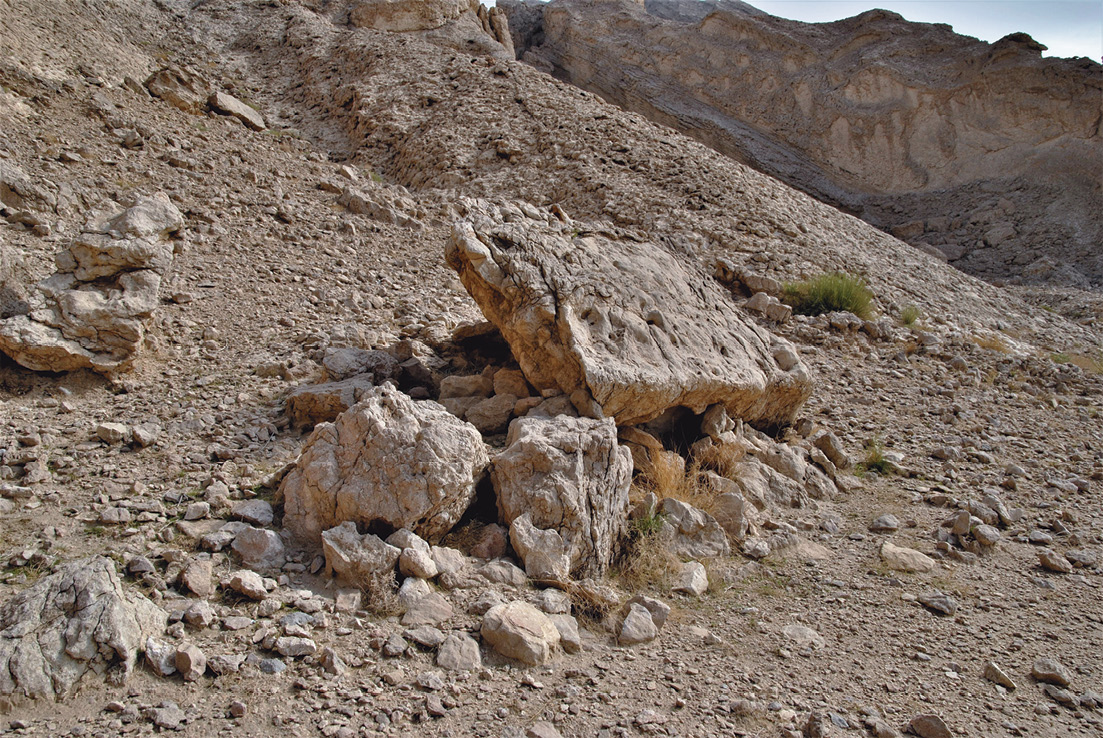
The archaeological potential of this area is illustrated by examining a stretch of land that includes both disturbed and undisturbed landscape, as well as natural terrain surviving within the inlets and weathered gullies that cut into the mountain face. On the remade ground is the elevated service road and an area that was introduced to support an experimental tree-growing project. It is likely that this artificially landscaped terrain covers the original surface of the hinterland. Despite the scale of this modern disturbance, our team still identified an abundance of archaeology on both the western flank of Jebel Hafeet and within the steep-sided gully inlets. Among these, former land surfaces lying exposed close to the base of jagged rock formations proved to be particularly fruitful.
Our discoveries included lithic scatters, pottery sherds, traces of temporary settlements, a funerary site, potential rock art, several rock shelters where habitation stratigraphy was clearly preserved, and a stream-side settlement. Intriguingly, the two rock shelters and the settlement activity appear to have been positioned to take advantage of the cooler, southerly prevailing winds that blow along the western side of the Al-Hagar Mountains and Jebel Hafeet. On the strength of predictive modelling undertaken using these data, we believe that more rock shelter and settlement sites will exist further to the south, beyond the limits of our fieldwalking survey. When it comes to drawing up a broad chronology for our findings, even at a conservative estimate the range of artefacts and sites that we encountered can be dated to between the Middle Palaeolithic and the Iron Age. Indeed, it is more than likely that the pottery sherds found during our survey extend from the Iron Age into the historic period.
Little Cave, big potential
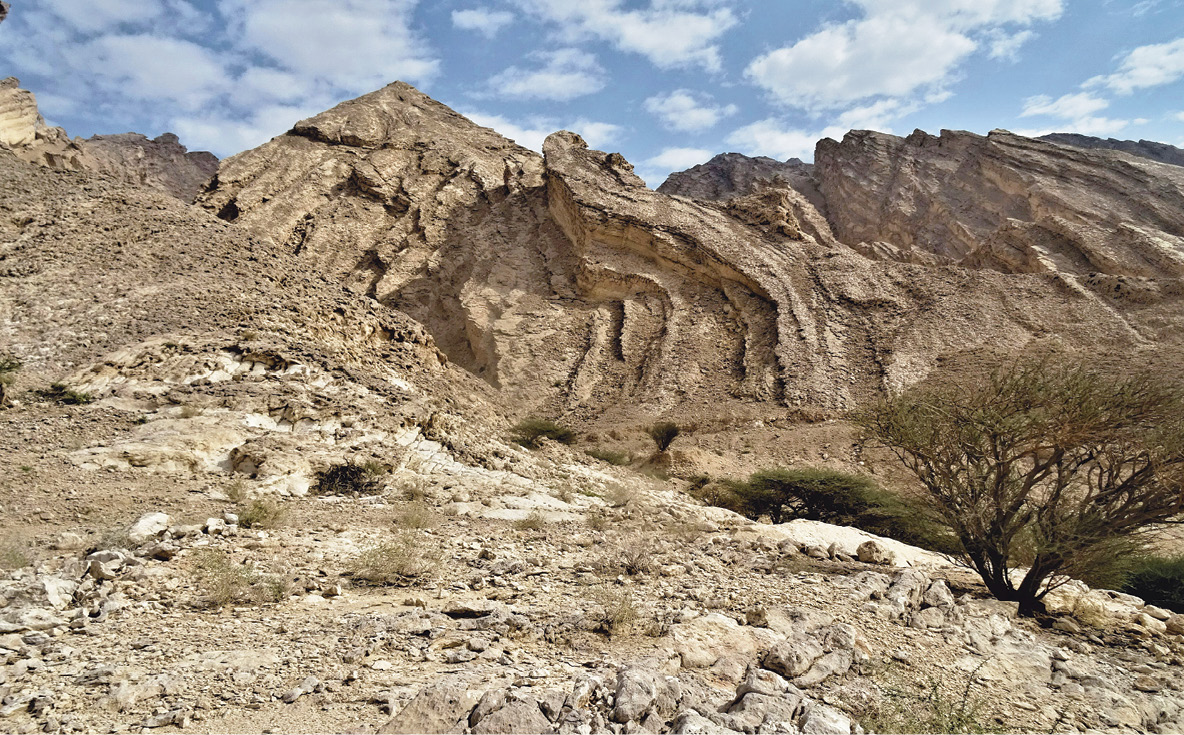
One previously known archaeological site that lay within our survey area was Little Cave. As its name suggests, this is a modest subterranean feature, which was formed when a lens of soft stone set between much harder silica strata was eroded away. There are signs that archaeological excavations were previously undertaken immediately outside the cave entrance, although the details of this work remain unclear. As a safety precaution, the area around the cave has been fenced off to keep out casual visitors. For those with permission to enter, though, access is a memorable affair, taking in a precarious rocky slope and some steep steps. Once inside, the cave extends for around 20m, narrowing as one progresses through a tight and slanted gallery, which leans at an angle of 45°.
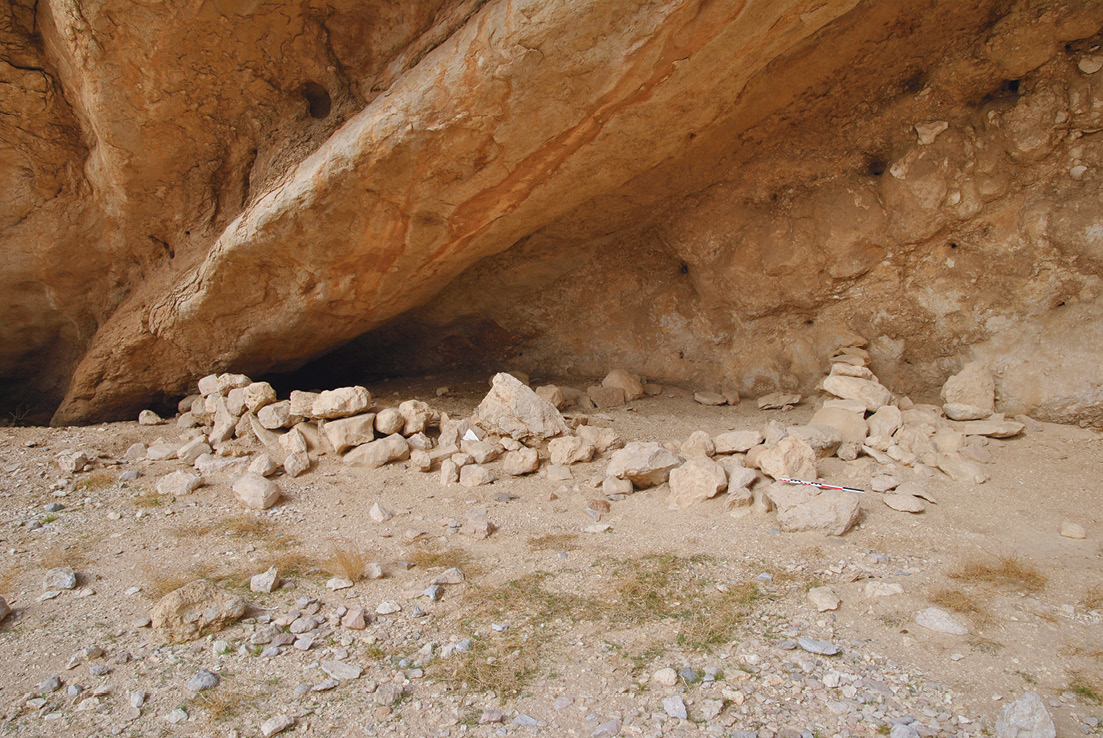
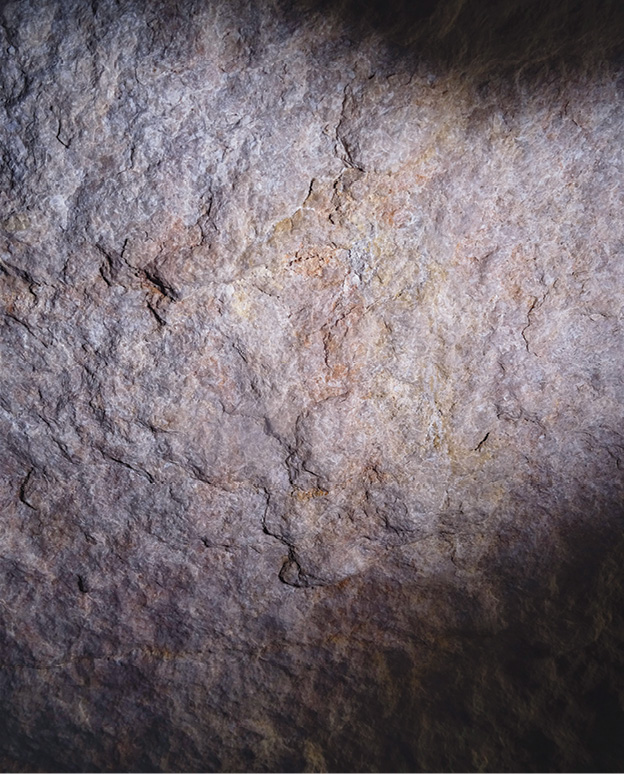
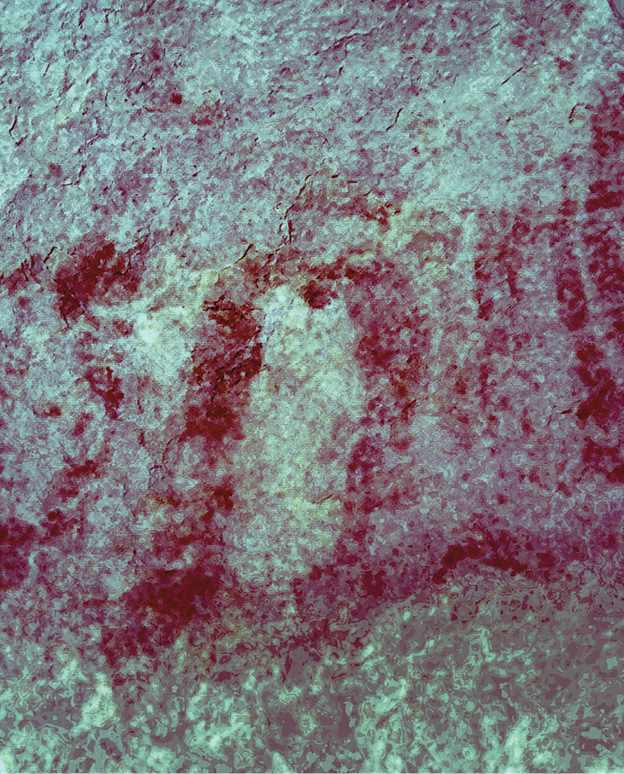
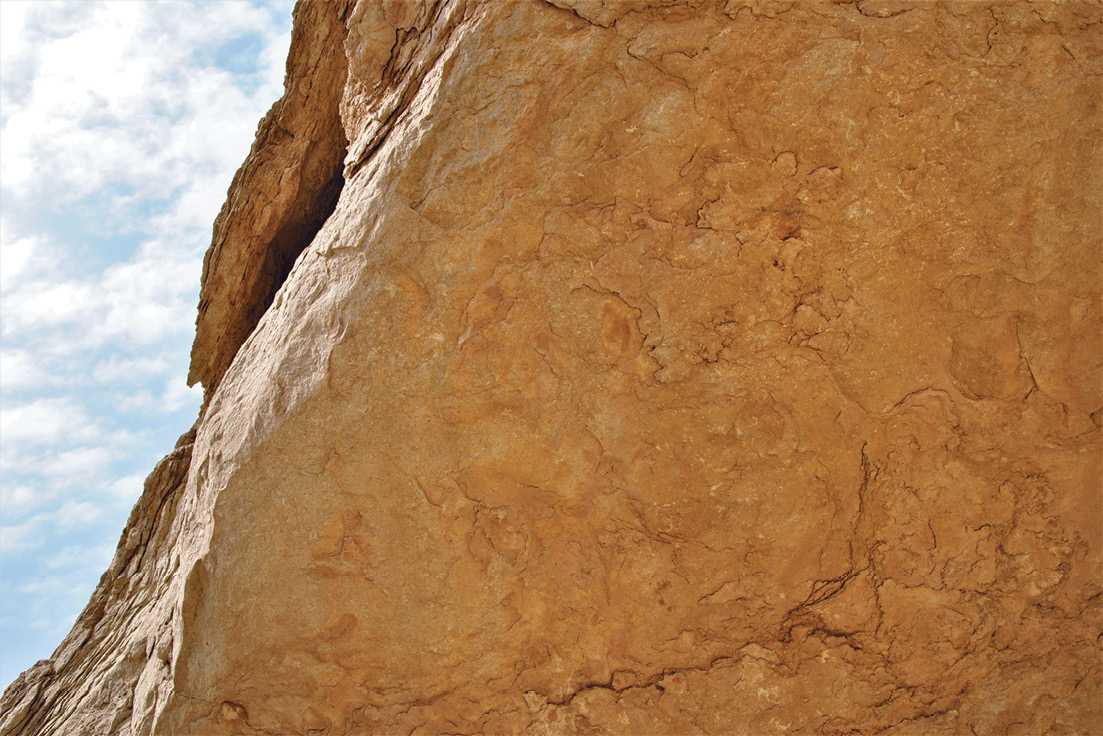
Within this awkward space, we photographed areas of the western gallery wall, using carefully directed lighting to illuminate areas of interest. Off-site, a desk-based colour algorithm programme – Decorrelation-Stretch (known as D-Stretch) – was applied to photographic imagery in order to bring out details that cannot be seen with the naked eye. This colour-sensitive technique revealed a series of marks that were made using iron-oxide-based pigments and are clearly a product of human agency. That said, the date, extent, and function of these marks is yet to be puzzled out. Little Cave is not the only area of interest here, as our team identified possible artistry at one of the rock shelters (JH15), where traces of potential painted imagery were seen on the ceiling.

Lithics and landscapes
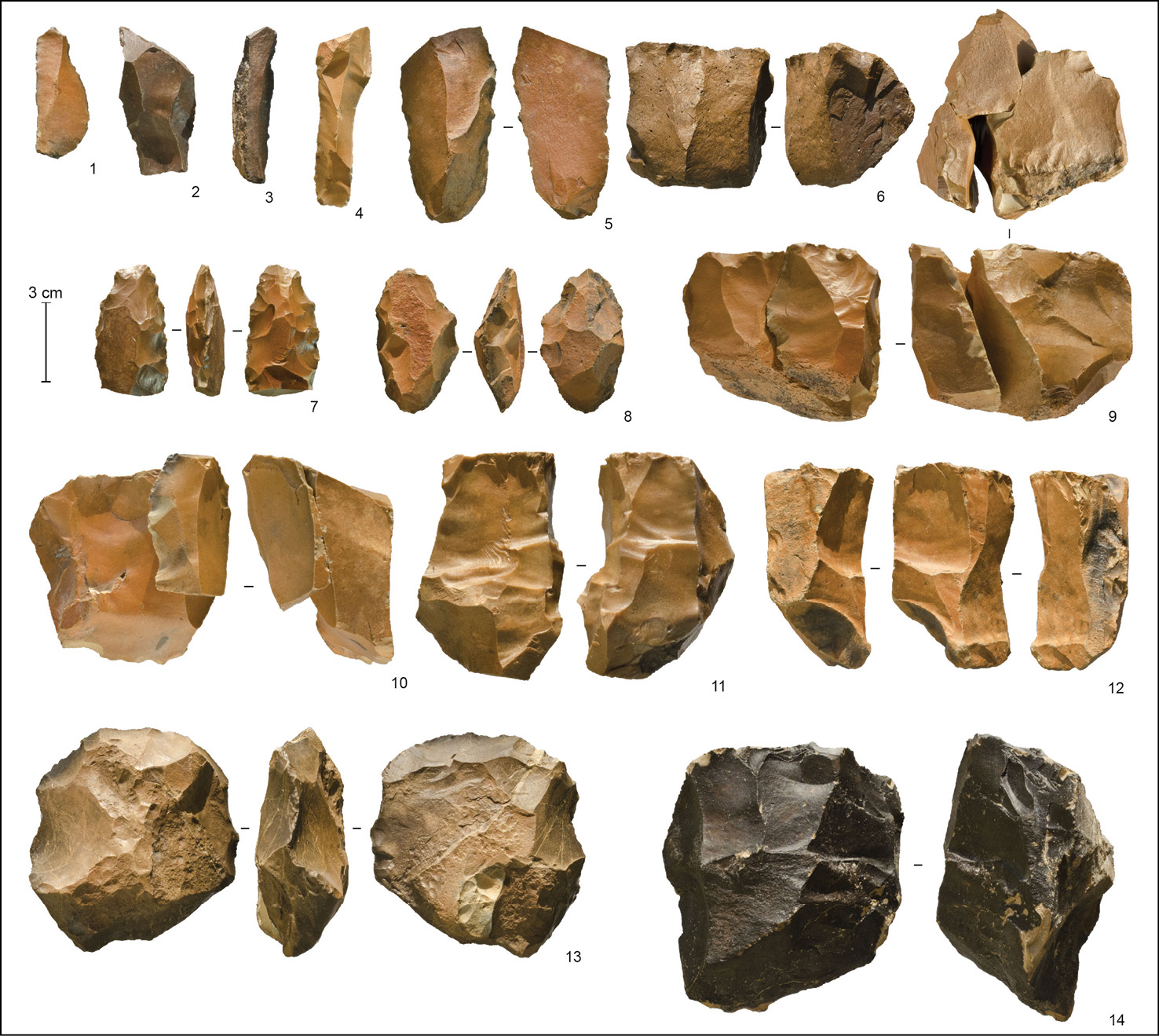
Our survey activities targeted exposed Pleistocene ground surfaces around Jebel Hafeet, too. This work identified possible Palaeolithic human occupation at two locations lying approximately 25km to the east of Jebel Hafeet. These form part of a vast lithic scatter covering more than 2ha and composed of more than a million stone artefacts. These most durable of cultural expressions also offered a means to assess the cultural affiliation of these ancient human populations. Through the study of how these stone tools were manufactured, archaeologists have been able to draw up a loose temporal framework by making technological and typological comparisons with excavated artefacts from dated sites in better-studied regions across the Arabian Peninsula and beyond.
It is clear that the area we surveyed was used by Palaeolithic groups as an ancient workshop. There, fine-grained chert nodules served as raw material for the manufacture of stone tools during two different phases of the Pleistocene. The elements of the lithic assemblage that probably date to the most recent of these eras include small and stout tools that were worked on two faces, as well as artefacts that archaeologists call ‘blades’. These flaked objects are twice as long as they are wide; sometimes they did indeed serve as cutting tools and were used without any retouching. We were able to reconstruct the manufacturing process by finding the cores that these blades had originally been struck from (a method specialists call ‘refitting’), when they were crafted many thousands of years ago. The production process demonstrates a simple, yet highly efficient use of the available stone resources. Elsewhere, particularly in southern Oman and Yemen, but also in the Emirate of Sharjah, similar sites have been dated to the end of the Palaeolithic between 13,000 and 8,000 years ago.
Today, these items are rather more common than the older, Middle Palaeolithic artefacts that we also encountered. As well as displaying a more advanced state of deterioration, these tools represent a distinct concept of stone-tool manufacture. Blades are less frequent, and the technology involved in the manufacture of the stone tools can be classified as Levallois, a type of lithic tool used by Early Modern Humans. This method of shaping the lithics became widespread throughout Africa and a greater part of Eurasia between 300,000 and 40,000 years ago. At the time, it proved a highly successful way to create more sophisticated tools.

Geospatial and remote imagery
Beyond the identification of individual sites, one of the wider goals of this project was to assess the potential of this understudied region for further investigation. Based on a combination of geology, predictive modelling, palaeogenetics, and the detection of Pleistocene sites nearby (such as in Saudi Arabia, Oman, and the Emirate of Sharjah to the north), Abu Dhabi seemed well-positioned to produce evidence of Pleistocene activity. The discovery of prehistoric stone tools in several locations during our initial survey work seems to vindicate this premise.
With these data in hand, we are now planning to expand the survey into a larger sample zone. We will be incorporating a range of remote-sensing technologies into this new phase of the project. When approaching a ‘blank map’ such as that currently existing in Abu Dhabi, there are certain landscape and geological indicators that can assist us when seeking to identify sites that are likely to have attracted human activity and/or occupation. The two indicators we will be focusing on in this case are water and flint sources, as both are essential for hunter-gatherer populations.
While there were certainly fluctuations in climate and environment during the Middle and Late Pleistocene periods, this region of the Arabian Peninsula was, overall, an open savannah with lakes and rivers throughout. Early humans and other closely related species often lived near the margin of lakes and/or rivers, while easily accessible sources of flint would have been important for tool-making activities. We plan to start this next phase of investigation by using several geospatial analytical tools, assisted by machine learning, to identify likely candidates for undetected archaeological sites within the Abu Dhabi landscape. We will then follow this up with low-altitude remote scanning and a walkover survey to test the accuracy of our approach. We are hopeful that this will allow us to start putting more dots on the proverbial map, as well as expanding our understanding of how Pleistocene people were moving through and settling in this region.

Yet to explore
To date, then, our work has allowed 16 promising sites to be identified (Sites JH01 to JH16). These range from temporary encampments to extensive lithic and pottery scatters. Using predictive modelling it is conceivable that other sites exist to the south of our survey area. Despite the presence of modern development within the north-western hinterland of Jebel Hafeet, much of the terrain along the base of the western flank of the mountain – including the naturally weathered gullies and steep-sided fossilised river valleys – remains untouched. As a result of this, archaeological remains in the form of cave deposits, lithic scatters, rock shelters, and temporary and fixed settlements potentially remain in a good state of preservation.

Our fieldwork identified sites that date from the Middle Palaeolithic (based on recovered lithics) to the Bronze and Iron Ages (based on recovered pottery assemblages). Along with evidence of occupation, the team identified two sites that may contain remnants of prehistoric paintings. This element of the project was, though, hampered by the geology, as many of the surfaces that could potentially have been used by prehistoric artists have been severely scoured by wind and sand erosion, in some cases transforming a veneer of hard, smooth rock into a surface with a consistency more closely resembling flour. With this in mind, the survey team noted three rock shelters with intact sediments that may cover sections of the walls that would have been accessible during early prehistoric times. This protection provides an excellent opportunity to examine areas where undisturbed prehistoric painted surfaces could lie, making them high-priority targets for archaeological excavation.
Further fieldwork is required, too, on exposed former land surfaces that extend southwards, beyond Sites JH11 and JH15 to the UAE/Oman border. A large expanse of open landscape within this hinterland area has not received any recent or modern development disturbance. Based on the preliminary results of the walkover survey undertaken so far, and using predictive modelling and remote-sensing techniques, it is to be anticipated that further prehistoric sites may be encountered within this area. Examining them should reveal even more about a busy landscape that was in use for at least 700 centuries.
All images: courtesy of George Nash