Subscribe now for full access and no adverts

The Kashihara Archaeological Institute is one of the most distinguished centres for archaeological research in Japan. It was with a great sense of anticipation that I followed Okabayashi-san and Yoshimura Kazuaki, Chief Curator, into their conservation lab to be met by conservator (one of four in the museum) Okuyama Masayoshi. The reason for my visit was to see two of the remarkable finds recently unearthed at the Tomio Maruyama burial mound. Before me, on a long table, was a case containing one of them: a sword that drew international attention for being the longest known from Japan. When seen in person, the reason for its renown becomes immediately clear; the length of the sword is simply astonishing. Its handle alone is about 34cm long, making it a similar size to any normal sword. When the length of the actual blade is factored in as well, we doubted that a single person would have been able to wield it for ceremonial purposes, let alone combat. At present, the weapon is still undergoing painstaking lab-based excavation and conservation, but the remnants of a lacquered wooden sheath around the pommel were much better preserved than I had expected from the media reports.

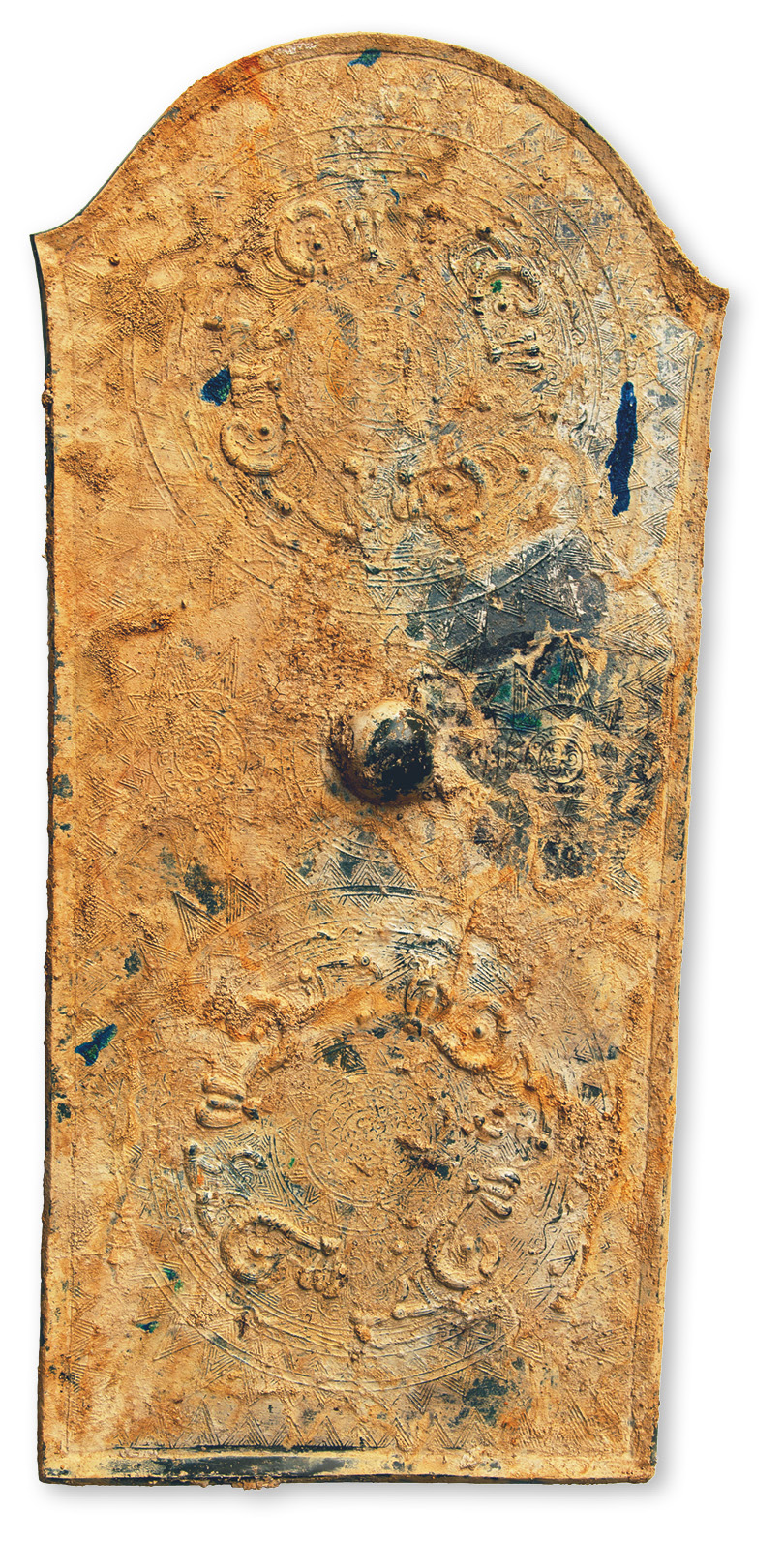
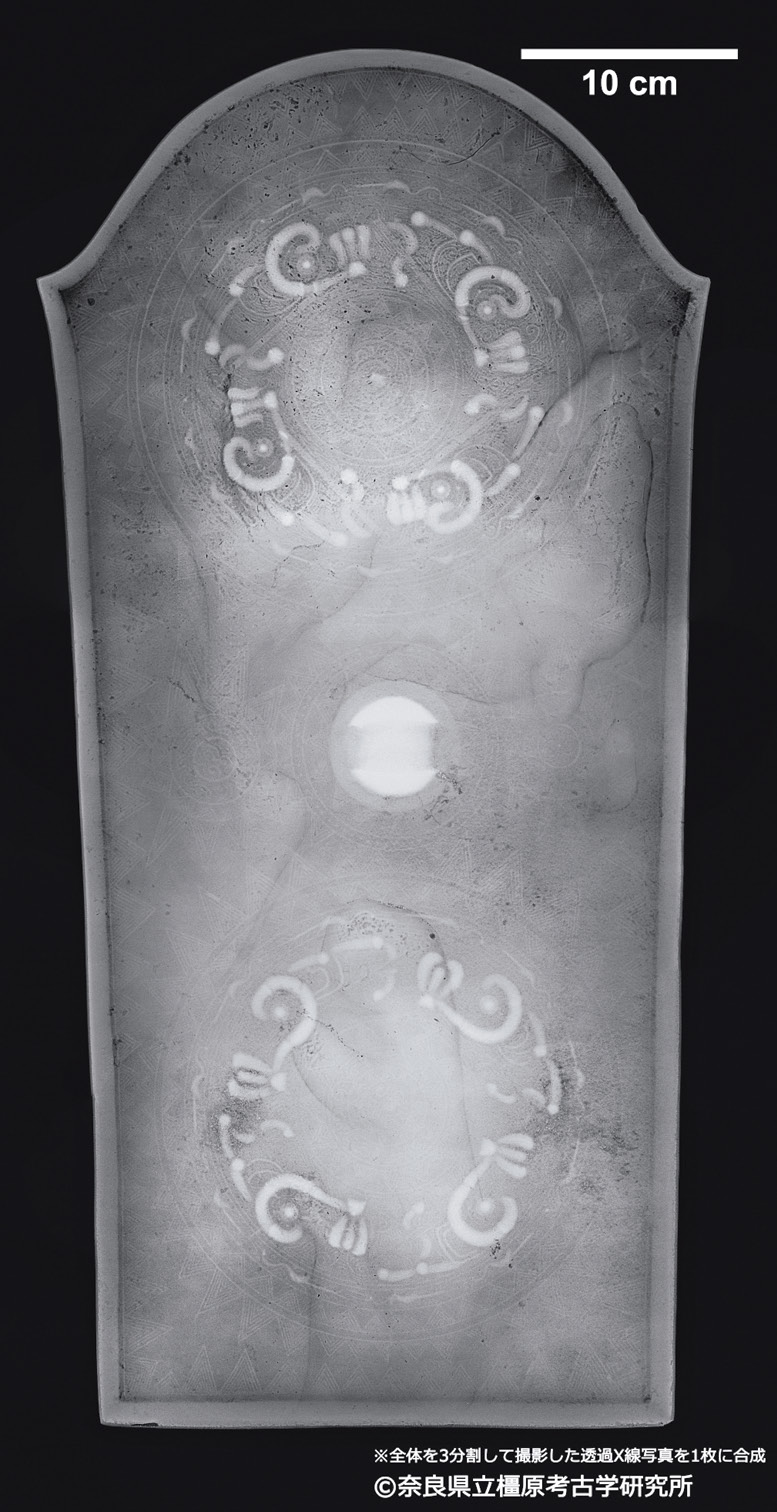
Our next stop was an adjacent store room, where the second surprising find from Tomio Maruyama awaited us: a shield-shaped mirror, which has recently been cleaned and conserved. The latest 3D photographs clearly show the exquisite decoration on its back. This includes two circular dragon-like motifs, one above the other, with the central boss flanked by circles incorporating saw-tooth designs around their circumference. Certainly, all these elements can be found individually on other examples of circular mirrors, but in combination they create an exceptional overall effect. Okabayashi-san confirmed that he has never seen anything quite like it. Just like the sword, the mirror became, on discovery, the largest known in Japan. It is not just the size of these objects that makes them important, though, as their potential implications are every bit as extraordinary.
An intriguing tomb
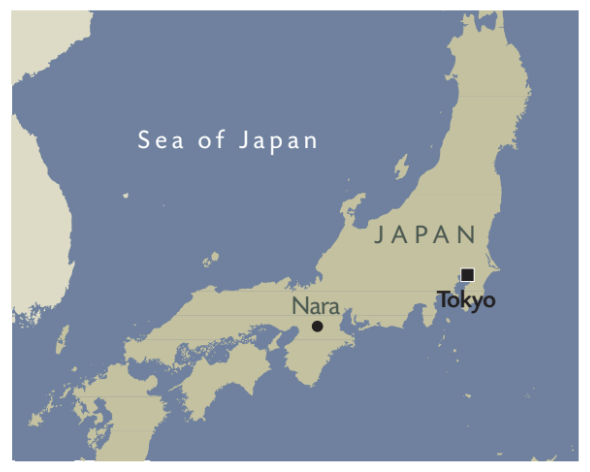
To appreciate the significance of these finds it is useful to consider the location of Tomio Maruyama. The tomb lies to the south-west of what was to become the site of the 8th century AD capital of Japan, at Heijo – modern Nara. Tomio Maruyama is situated in an area whose significance during this key period in ancient Japan is little understood, between the better-known Saki burial mound cluster, and the renowned concentration of tombs at Mozu and Furuichi, which were constructed beyond the mountains that separate Nara from Osaka. The Mozu and Furuichi burial mound clusters were inscribed as a UNESCO World Heritage Site in 2019 and include tombs that are among the largest funerary monuments of the ancient world. Especially notable is the Daisen Tomb, which is some 485m in length and attributed to the 5th-century Emperor Nintoku (see CWA 123).
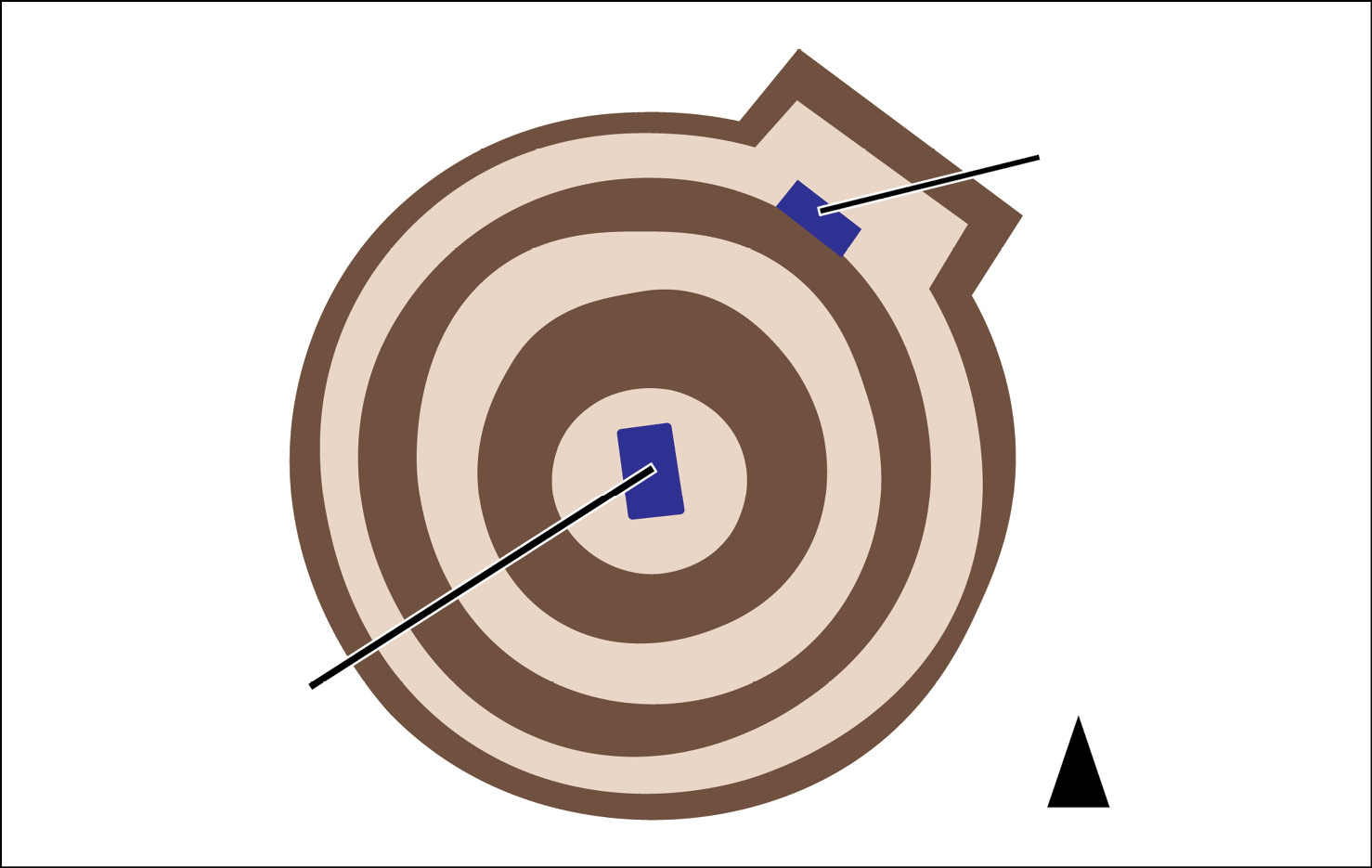
Tomio Maruyama is located on a terrace above the Tomio River, in a landscape that has been considerably altered since ancient times, not least because it has been encroached on by modern residential development. Archaeological investigations have done much to clarify the nature of the site, with investigations in 1972 locating a clay-lined burial cist on top of the mound. More recently, an aerial laser-scan in 2019 confirmed that the main part of the mound had a diameter of about 110m, making it the largest circular burial mound known in Japan. The second largest (also called Maruyama, which simply means ‘round mountain’ or ‘round hill’ in Japanese) has a diameter of 105m and was raised in Saitama Prefecture, far to the east. The laser-scan of Tomio Maruyama also confirmed that there was a small projection (tsukuridashi in Japanese) extending north-east from the main mound, giving the whole tomb a scallop-shell outline in plan. Close by are the remains of two further mounds. Of these, Tomio Maruyama 2 contained a stone-built chamber entered via a stone passage. This form of burial dates to the later 6th century, making it much later than Tomio Maruyama 1. It is possible that a potential third burial may be just an additional part of a so-called keyhole-shaped mound, which also comprised the Tomio Maruyama 2 passage tomb.
While this recent work has added much to our knowledge of the Tomio Maruyama tomb, its existence has been known for a long time. During the Meiji period (1868-1912), when imperial authority was reasserted in Japan as it embarked on an intense period of Westernisation and modernisation, parts of the tomb were looted. A number of stone objects were found at the time, including tubular cylindrical greenstone beads that would have formed part of a necklace worn by the interred deceased, fragments of bronze mirrors bearing distinctive beast-and-deity motifs popular in the 4th century AD, parts of talc armlets, and pieces of a shield-shaped haniwa (a terracotta figure that would originally have been set up outside the tomb – see CWA 123), along with unusually shaped cylindrical haniwa, all of which marked Tomio Maruyama out as an important site, most likely dating to the mid to late 4th century AD. This places it within the early part of what is known as the Kofun period in Japan’s archaeological sequence. The finds described above are now in the Kyoto National Museum, while a further three triangular-rimmed beast-and-deity mirrors found at the site went to the Tenri Sankokan Museum.
A second burial cist
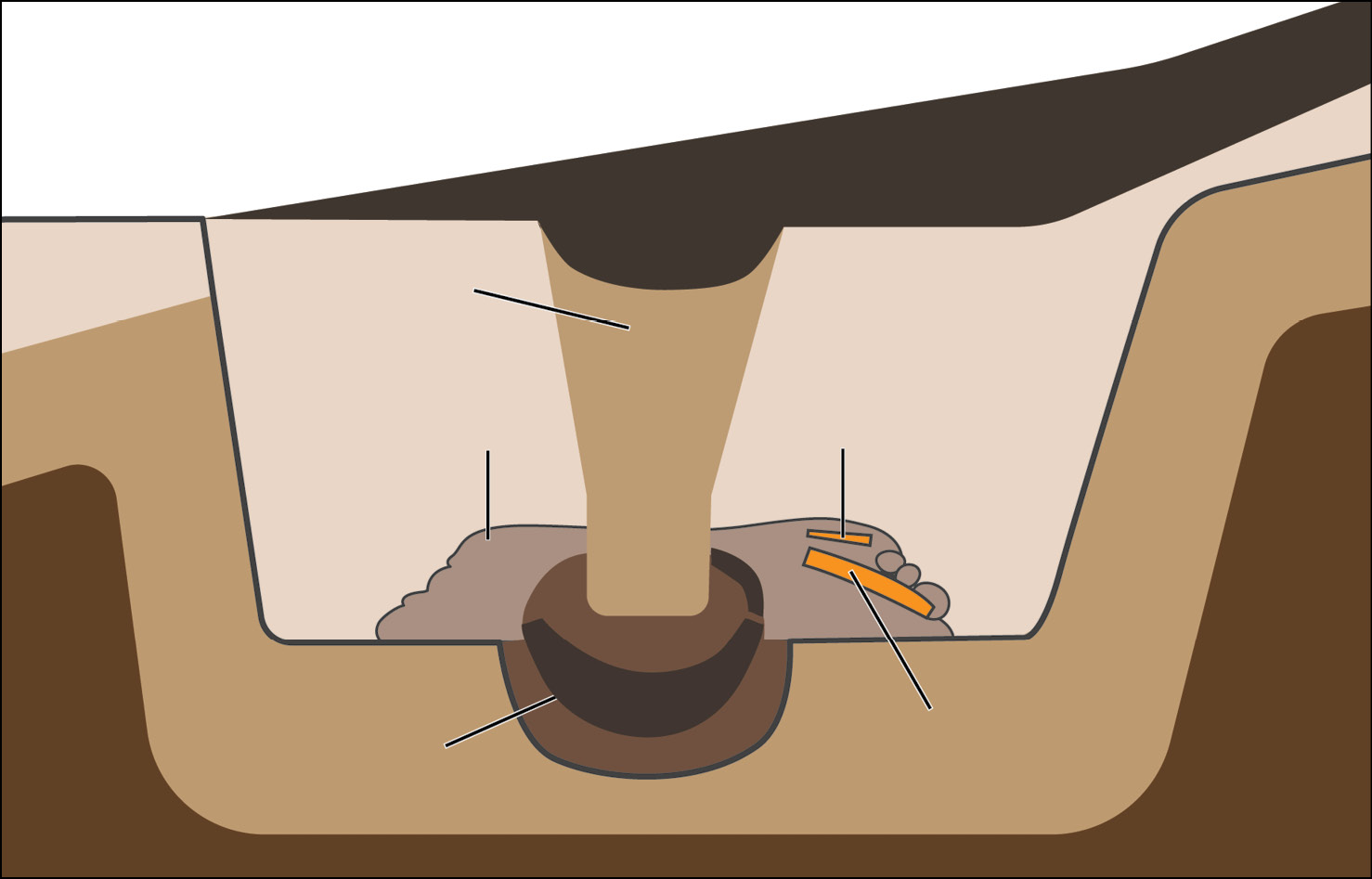
Further investigations were undertaken at the Tomio Maruyama tomb from 2021. Four trenches were opened to confirm the character of the site, and in particular the extent and form of the earthwork projecting to the north-east of the circular mound. These investigations confirmed something else that the laser-scan indicated: the circular mound comprised three tiers, with the slopes covered by large cobbles and separated by level terraces, which were lined with large quantities of closely set cylindrical terracotta haniwa sculptures. Near the projection, a second clay-lined burial cist was discovered, and it was here that the truly remarkable discoveries were made. A split-bamboo-shaped wooden coffin had been encased in a clay covering, comprising a burial cist 6.4m long and 1.2m wide, all set within a grave pit 7.4m long, 3m wide, and 1m deep.
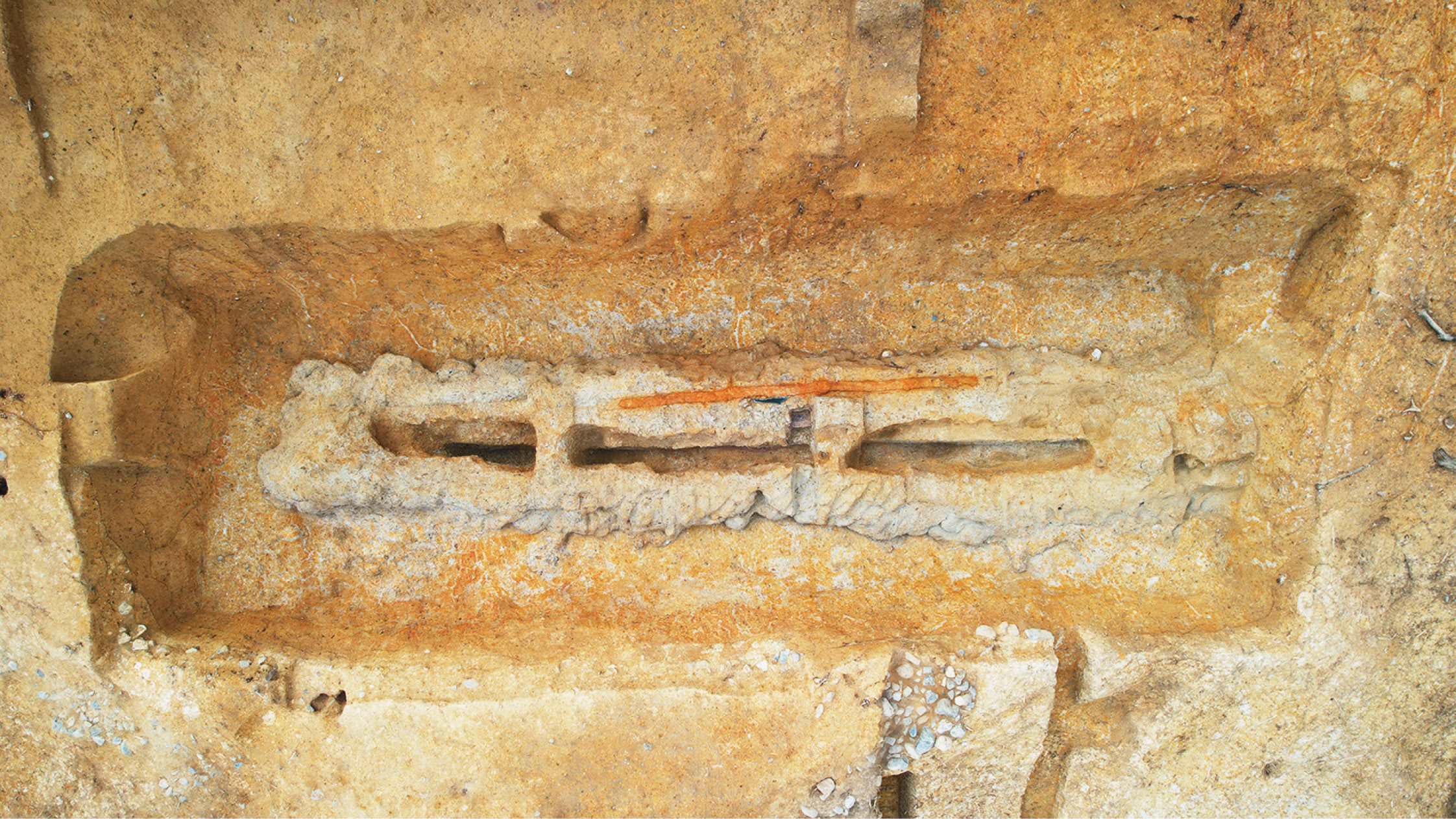
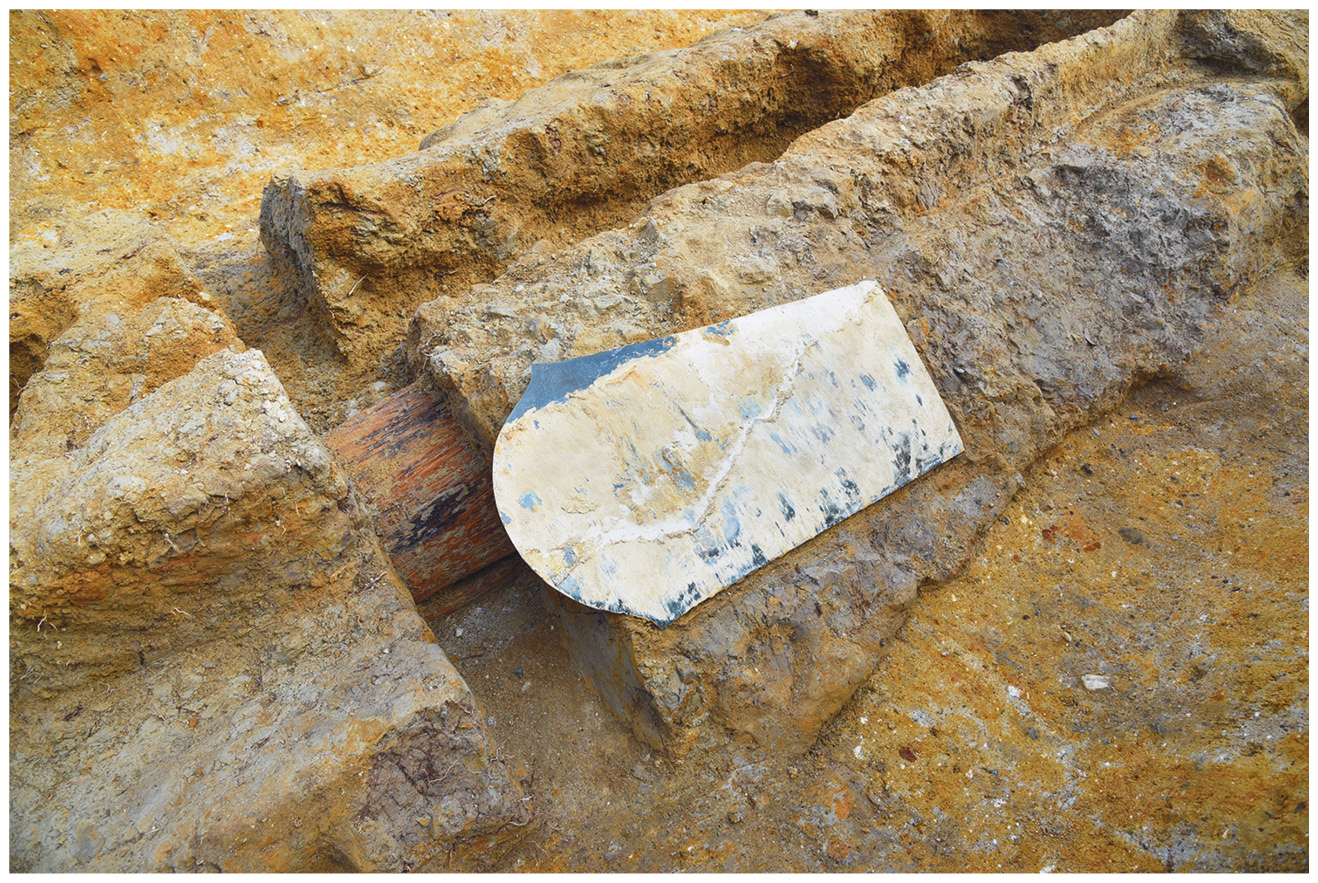
The coffin was not alone in the cist. Instead, a huge bronze mirror, seemingly originally placed on the top of the coffin, was found slumped to one side after the lid had collapsed, leaving it lying adjacent to the exceptionally long and curvy iron sword. The mirror was in the shape of a shield and 64cm long by 31cm wide, weighing 5.7kg. It is only 0.5cm thick at its thickest point, and is nearly 20cm larger than its closest rival: a round mirror from the Hirabaru tomb in Fukuoka Prefecture, far to the west on the island of Kyushu. The front of the Tomio Maruyama mirror would once have been a highly polished reflective surface, while the back bore intricate designs, including the representations of circular dragon-like creatures (daryumon in Japanese), while the rim was marked out by a saw-tooth pattern. At the centre of the back was a projecting knob.
The wavy, snake-like sword (a style referred to as dako in Japanese) was a staggering 237cm in length. This makes it nearly three times longer than the next lengthiest specimen of any sword style from Japan: a 115cm-long, straight-bladed sword from the Nakaoda 2 tomb in Hiroshima Prefecture to the west. Traces of the sheath survived, along with details of the handle and pommel. Taken together with the shield-shaped mirror, this was evidence that the person buried in Tomio Maruyama was a figure of considerable significance.
Some specialists believe that the burial found in 1972 on top of the mound was the primary one. Perhaps the individual interred there was a close relation of the leaders of the Yamato clan, who, from the 4th century onwards, gradually established hegemony over most of Japan. They were the ones who created the first Japanese state, and it is their successors who continue to occupy what has become known as the Chrysanthemum Throne. If so, the person buried with the shield-shaped mirror and snake-like sword may have been an important supporter, perhaps someone who was renowned for his or her particular ritual and military prowess. The size and excellence of the sword and mirror certainly suggest that this individual was equipped with the power to protect those interred at Tomio Maruyama from evil forces, not just human adversaries.
An alternative to a link with the Yamato clan has been proposed by historian Kazuhiro Tatsumi of Doshisha University. By this reading, the tomb actually contained the remains of high-ranking individuals from a competing clan, such as the Nagasunehiko (or Tomino Nagasunebiko). This group is mentioned in one of the early histories of Japan (the 8th-century Kojiki, or Record of Ancient Matters) as trying to prevent Emperor Jimmu from entering the Yamato region. As such, it is plausible that leading members of the Nagasunehiko clan lived and died in the vicinity of modern Nara.
Japan, at this time, had close relations with the East Asian continent, where elites were also being buried with sumptuous and powerful material regalia. Given the questionable suitability of the Tomio Maruyama sword for combat against human forces, it is intriguing to note that ancient Chinese chronicles speak of large swords being buried to secure efficacious results and to protect the realm. One of the earliest named figures in ancient Japanese history, Queen Himiko, is mentioned in reports of Chinese envoys to Japan. These accounts are detailed in the 3rd-century Wei Zhi (History of the Wei Kingdom), which notes that the queen reportedly had magical powers and enjoyed additional supernatural protection through her shaman-like brother. Significantly, Queen Himiko is recorded as owning a long sword. One of the greatest debates in the study of ancient Japan concerns where the country over which Himiko ruled – known as Yamataikoku, which is where she went on to be buried – is located. Current consensus favours the area around the Makimuku site, which lies 20km to the south-east of Tomio Maruyama. According to this hypothesis, Himiko herself was interred in the Hashihaka tomb: the earliest known keyhole-shaped tomb in Japan.


Just as the sword could have a role that went beyond the purely martial, so too there could be more to the mirror than immediately meets the eye. Bronze mirrors played an important role in the establishment and maintenance of political alliances in ancient Japan, as well as probably having magical powers in their own right. The earliest bronze mirrors from Japan were actually made in China, where according to Daoist beliefs they could repel evil. At Kurozuka, a late-3rd-century tomb close to Makimuku in the south-eastern part of the Nara basin, grave goods included 33 Chinese bronze triangular-rimmed beast-and-deity mirrors. Contemporary Chinese chronicles such as the History of the Wei Kingdom, mentioned above, describe how gifts of mirrors were used by the Chinese court as symbols of alliance, with 100 sent to Queen Himiko, and it is thought that they were used for similar political purposes within Japan.
Whoever was buried in the Tomio Maruyama tomb, and whatever their political and sacred affiliations and authority, specialists in the archaeology of this period are in no doubt that the shield-shaped mirror and wavy sword, once fully conserved, will be considered for National Treasure status.
Further Reading:
• Thomas Knopf, Werner Steinhaus, and Shin’ya Fukunaga (eds) (2018) Burial Mounds in Europe and Japan: comparative and contextual perspectives (Oxford: Archaeopress).
• Song-Nai Rhee and C Melvin Aikens, with Gina L Barnes (2021) Archaeology and History of Toraijin: human, technical and cultural flow from the Korean peninsula to the Japanese archipelago c.800 BC-AD 600 (Oxford: Archaeopress).
• Gina L Barnes (2004) State Formation in Japan: formation of a 4th-century elite (London: Routledge).
• Werner Steinhaus, Simon Kaner, Megumi Jinno, and Shinya Shoda (eds) (2020) An Illustrated Companion to Japanese Archaeology (Oxford: Archaeopress).