Subscribe now for full access and no adverts

He was probably nearing retirement. The soldier was more than 40 years old when he found himself on a beach, caught up in an evacuation attempt. Assuming that he had enlisted around the age of 18, as was common, he would only have a year or two left before he was discharged after 25 or 26 years’ service. If the soldier was not yet a Roman citizen, his retirement would be marked with the receipt of a bronze diploma awarding him this status, which bestowed a wealth of desirable rights. It would also make him one of the lucky ones – estimates suggest that perhaps only half of Rome’s soldiers survived to reach this milestone, with the rest succumbing to war, disease, or the simple misfortunes that dog lives of hard labour. Having got so close, the soldier on the beach could have been forgiven for starting to daydream about a peaceful future spent working a patch of good ground: one of the plots reserved for citizens. But it was not to be. For the year was AD 79, and the sand he was standing on stretched out in front of the seaside town of Herculaneum.
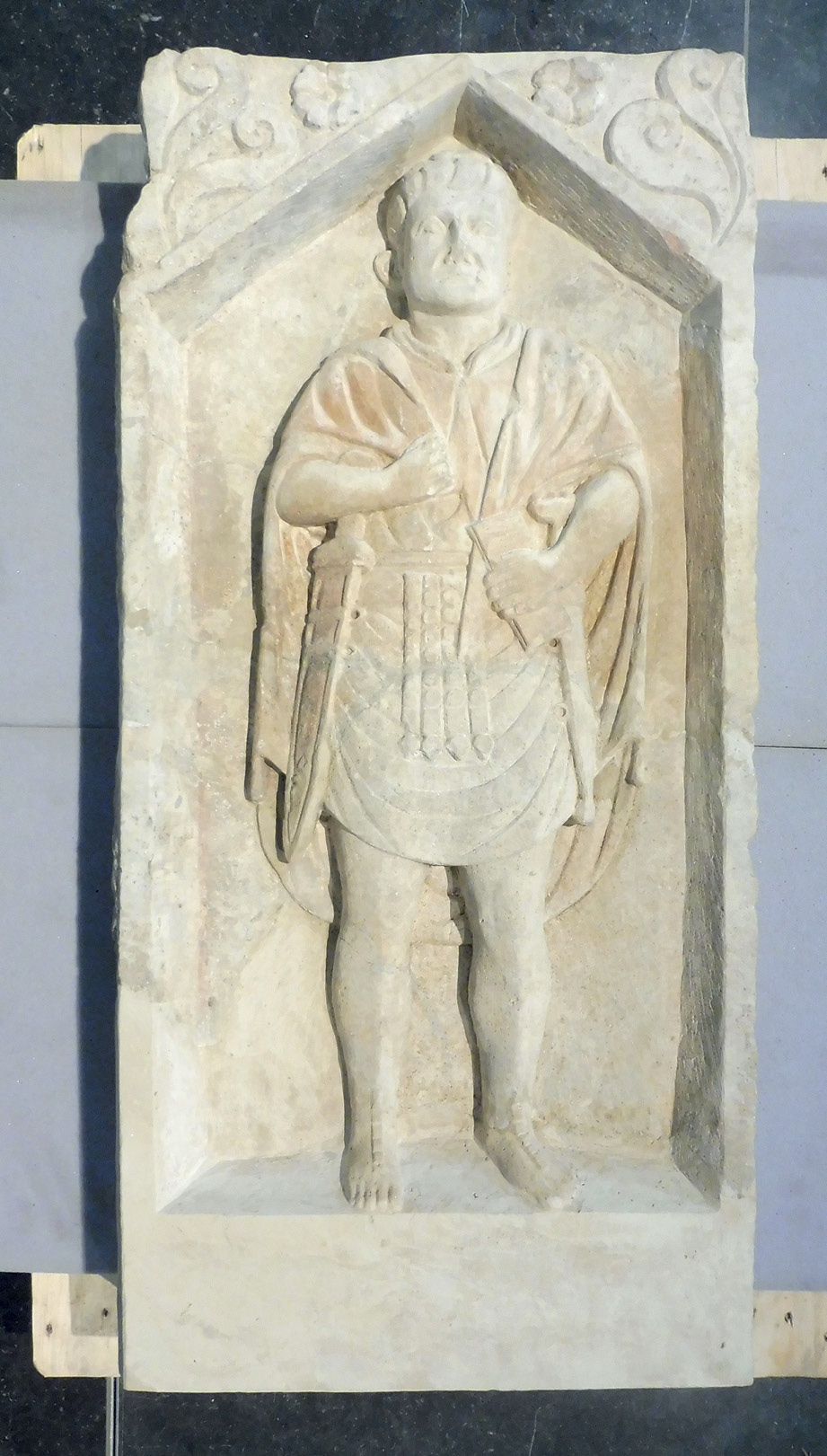
More than 300 people perished on that beach when Vesuvius erupted. Most of the victims were sheltering in boat sheds on the edge of town, but a few were waiting further out on the beach, presumably hoping for salvation from the sea. So far as we can see, the 40-something man was the only soldier among them. His status is marked out by a pair of military belts – the closest thing to a uniform in the era – with one supporting his dagger, and the other his short sword or gladius. There was no call for hot, heavy armour on the beach, but the soldier had attached to his dagger belt a metal-and-leather-strip groin protector that hung over his russet-red tunic. It was not just this military kit that marked out the man as a powerful presence: his bones show traces of heavily developed thigh and forearm muscles.
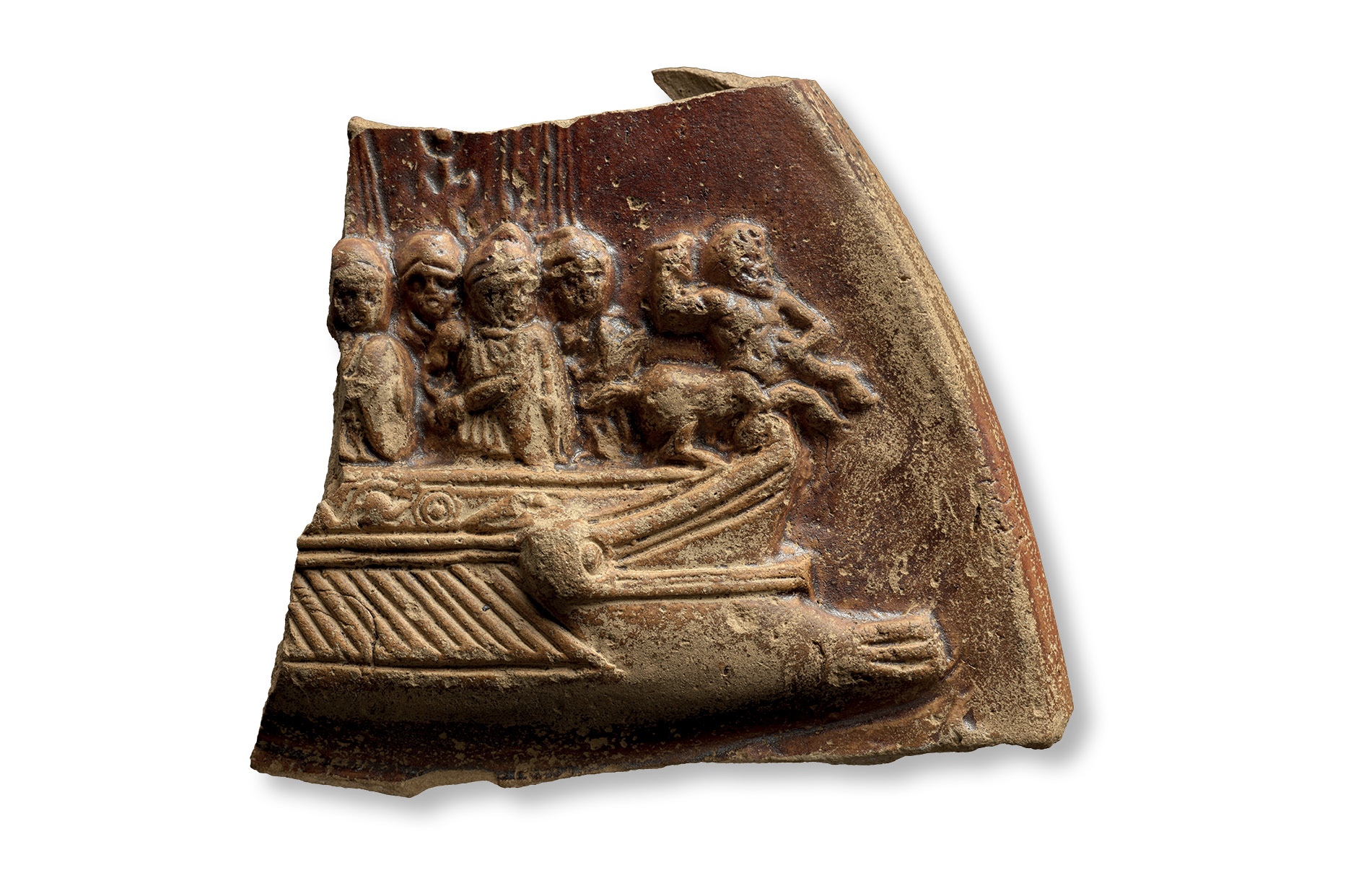
As the only boat found on the beach was seemingly a naval launch, it has been wondered if the soldier was a marine freshly arrived from the port at Misenum, a little further up the coast. A Roman fleet was based there, and its commander – the ancient author and curious soul Pliny the Elder – famously perished in a failed rescue attempt. Pliny’s initial rescue party is recorded turning back from landing at Herculaneum, but maybe another group was not driven away by the ash. One theory is that the skeletons on the beach are all that remain of a much larger group of victims, who were blasted into the sea by the final pyroclastic flow from Vesuvius (we know some people did end up in the sea, as bodies were washed back to shore and found atop the volcanic mass of new land that formed over the beach). The Herculaneum soldier could have had colleagues with him in the final moments.
Alternatively, the soldier may have been posted to the town prior to the disaster. His possessions certainly suggest another possible reason for his presence. He had a set of carpentry tools – showing that he was an immunis, a skilled soldier who was immune from some fatigues in order to ply his trade – and he was also carrying various valuables. These included 87 denarii in cash, making up a good chunk of the basic annual pay for a standard auxiliary soldier at the time. Unsurprisingly, a number of other individuals whose journeys ended on the beach had gathered a few treasured items before seeking shelter or escape, and the objects found with the soldier fit that pattern perfectly. Perhaps, then, his carpentry skills had seen him seconded to Herculaneum as a shipwright. If so, the soldier may have been a rare figure of authority on the seafront as disaster overtook the town, prompting him to put himself at risk by overseeing preparations for an anticipated evacuation. But a darker take on the soldier’s presence has also been proposed (by the Smithsonian Channel documentary Hero of Herculaneum) – that he accumulated those 87 denarii by extorting bribes from anyone wishing to jump to the front of the queue and await rescue on the beach. Although there is no reason why the coins could not be the soldier’s own savings, this question of the roles played by Roman soldiers – as heroes, villains, and everything in between – as well as the realities of their lives lies at the heart of the British Museum’s latest blockbuster exhibition Legion: life in the Roman army (see ‘Further information’ box).

The military mind
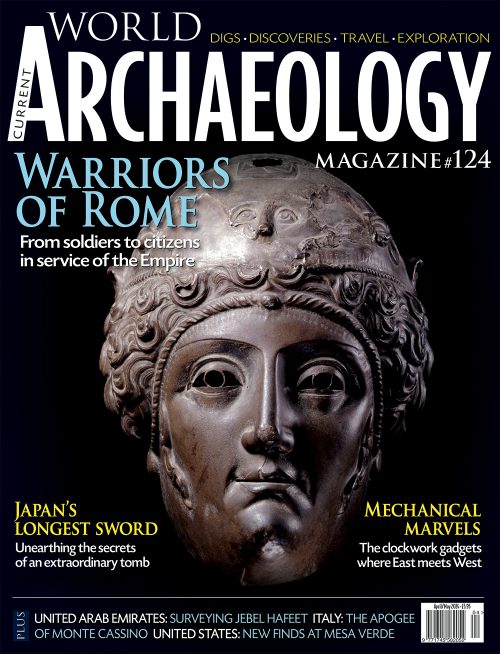
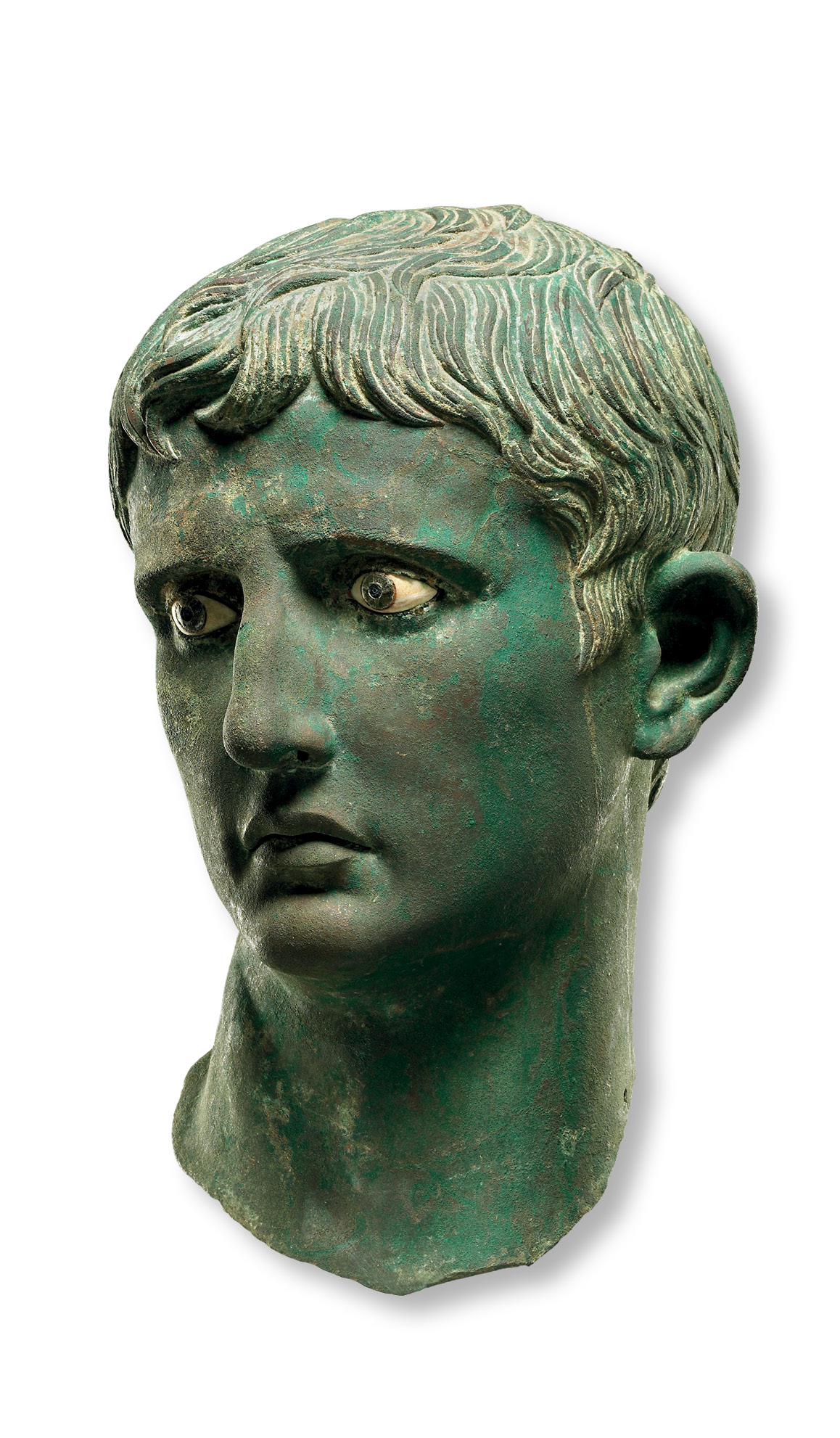
‘In total, you’re looking at a millennium of Roman military history’, says Richard Abdy, curator of Iron Age and Roman coins, and also lead exhibition curator of the British Museum’s show. ‘It runs, if legend is to be believed, from the Battle of Rome in 509 BC, when the last Etruscan king was turfed out, right the way through to the fall of Rome in the 5th century AD. That is far too much to cover in one exhibition, so we’ve focused in on a shorter timespan. We start with the first emperor Augustus, who conquered Egypt and used Cleopatra’s fabulous wealth to establish permanent Roman military regiments, setting up the idea of a career soldier. Augustus was very much a social conservative, and when he established this army, his idea was that half of it would consist of Roman citizens in the legions, while the other half would be non-citizen provincials from conquered territories, who served in supporting auxiliary regiments. But at some point, possibly during the reign of the emperor Claudius – as he is someone renowned for giving provincials a leg up – retiring auxiliary soldiers started to receive Roman citizenship.’
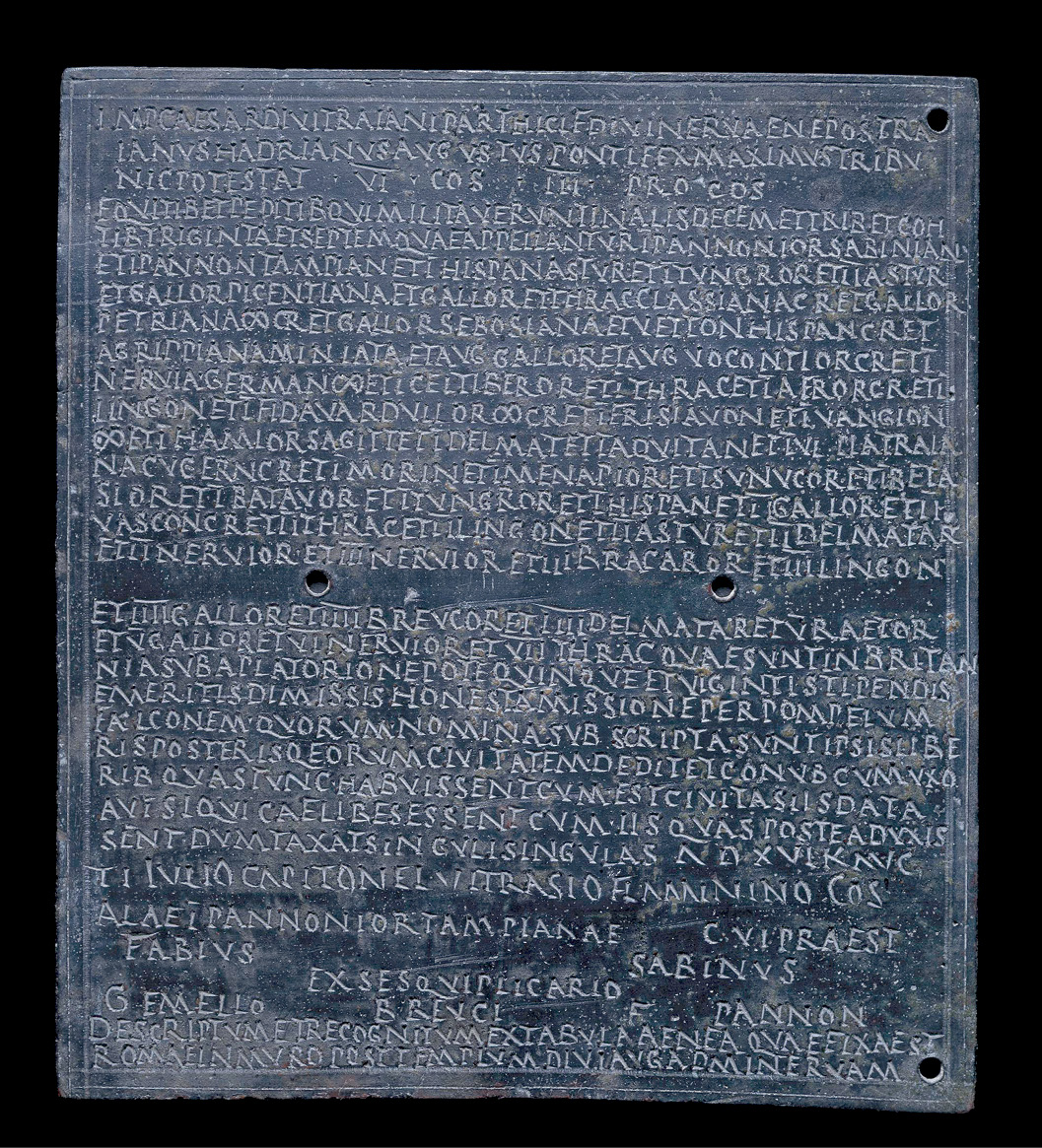
The earliest surviving diploma conferring this status dates to AD 52, and belonged to another marine who served at Misenum. His name was Sparticus. He was originally from Thrace and, in one of those quirks of history, by gaining citizenship Sparticus received the rights that his near-namesake – the famous rebel leader Spartacus – had fought for in vain a little over a century earlier. It is thought that only 20% of the inhabitants of the Empire were citizens, meaning that Sparticus’ elevation placed him among an elite who enjoyed a wealth of legal protections and tax advantages. The strong incentive this created to serve Rome in an auxiliary unit had an impact on the role of the army. As well as being an effective instrument of conquest, it now became a machine for mass-producing citizens. This important social dynamic only came to a close in AD 212, when the emperor Caracalla set the army on a new course by issuing an edict that granted citizenship to all freeborn individuals within the Empire.
‘Focusing on the army from Augustus through to the period when Caracalla’s edict took effect also allows us to use surviving ancient texts to get inside the heads of Roman soldiers’, says Richard. ‘One inspiration is the remarkable set of wooden writing tablets from the fort at Vindolanda, near Hadrian’s Wall in Britain. But the surviving papyri from Egypt offer an extremely rich textural source, too. In particular, we can read the letters that Roman soldiers sent home. There are three cases that I know of with complete letters, all dating to the 2nd century AD. One of them is a single letter, written by a soldier called Apollinarius to his mum. He’s another marine bound for the Bay of Naples, but travelling via Rome. Apollinarius writes very poignantly, “I beg you mother to look after yourself and don’t worry about me, for I have come to a fine place.” It really gives an impression of what it must be like to come from a distant corner of the Empire to this gigantic world city.’
‘Another chap is Apion, who writes two letters home: one to his father and one to his sister. He’s also an auxiliary marine heading for Misenum, and he tells us about all sorts of things, such as his first pay packet, his terrible voyage to join his regiment, his fitting in with the other Egyptians in the marines, and changing his name to Antonius Maximus. He marries a local girl; well, I say “marries”, but in this period marriage for ordinary soldiers wasn’t legally recognised, so it was unofficial. But with his new name and his new family, Apion was taking steps towards the day when he would become a citizen. We know that Apion was ambitious – he praises his father for teaching him to read and write, because he hopes it will lead to his advancement. Of course, his dad must have taught Apion’s sister as well, as they were able to correspond, so it tells you something about how people got educated in that world. Most people weren’t literate, but if you wanted to be promoted as a Roman soldier this was usually necessary – not least for reading and writing orders. There’s a lovely illustration of that from Vindolanda, where there’s communication between the fort and detachments of its soldiers posted elsewhere, with one of them telling the commander to “send beer”, which seems terribly cheeky.’
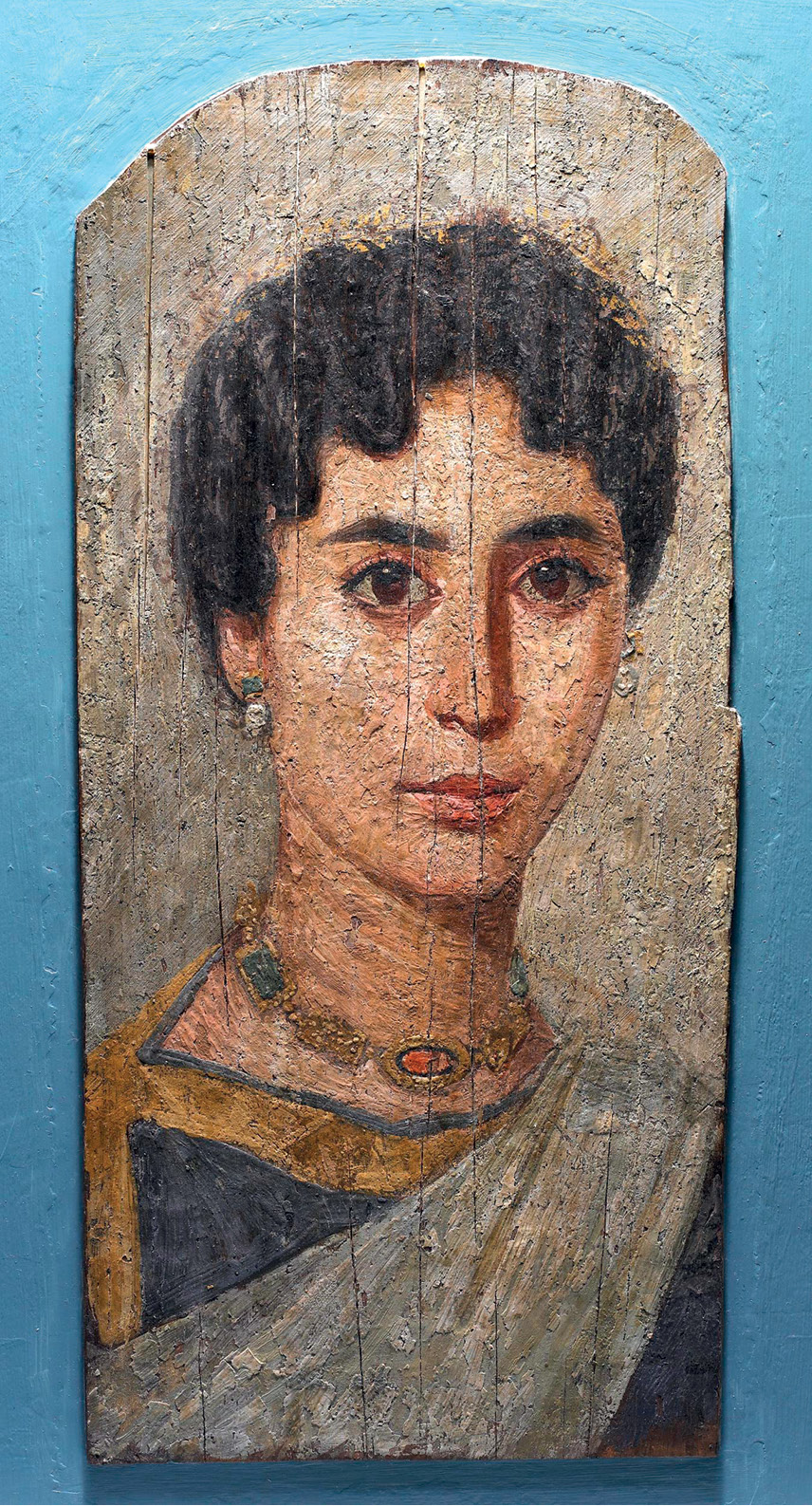
‘Our third soldier is Claudius Terentianus, who is the most extensive correspondent. A whole archive of his letters was found in a house at Karanis in the Fayum region of Egypt. There is an associated letter of introduction as well – it’s not by Terentianus, but it is for him – which is dated to AD 136 in the emperor Hadrian’s reign. In this letter he is described as a “retired soldier and man of means” when looking to do a property deal. If you count back 25 years of service, that has him joining up around AD 110-111, under the emperor Trajan, making him a near contemporary to the authors of the Vindolanda Tablets at the other end of the empire. These days, we think of the scenes on Trajan’s Column in Rome as the most wonderful expression of Roman military might and doings, and here we are privy to the thoughts of a soldier of Trajan’s army. It’s an amazing thing. From the letters, we learn that Terentianus was ambitious in a slightly different way to Apion, because Terentianus was already a Roman citizen, so he initially tried to join the legions. He is let down by his references, though. Instead, he also ends up in the marines. As it’s an auxiliary regiment, he’s only paid about four-fifths of the wage of a legionary. And he absolutely hates it. He gets bullied, he’s robbed, he has quarrels, and at one point exclaims “he paid no more attention to me than a sponge on a stick”, which was – of course – the Roman equivalent of toilet paper. Terentianus, in desperation, wants to transfer to an auxiliary land unit, but laments that nothing can be done without letters of recommendation or money (to grease the palms). So he’s having a terrible time. But a few letters in, Terentianus suddenly signs himself “soldier of the legion”. So strings were pulled, palms were greased, and he’s finally made it.’
Weapons of war
If these letters provide a glimpse of the motivations and experiences of individuals joining the army, surviving examples of military kit help illustrate why Rome’s war machine became so feared. Although soldiers are rarely found buried with their equipment, not least because it could be sold back to their unit when they retired, Roman militaria has been found in settings ranging from battlefield loss to ritual deposition. The equipment brought together for the exhibition frequently features the literal textbook examples of weaponry and armour that were used to conquer and then hold Rome’s vast empire. Such objects range from the starkly functional business end of weapons such as the double-edged gladius (a short sword) through to the sumptuous decoration that can grace scabbards and helmets. An example of the vivid colour that would also have been a feature of Roman forces drawn up for battle can be seen in a unique survival of a once common piece of kit: a rectangular legionary shield.
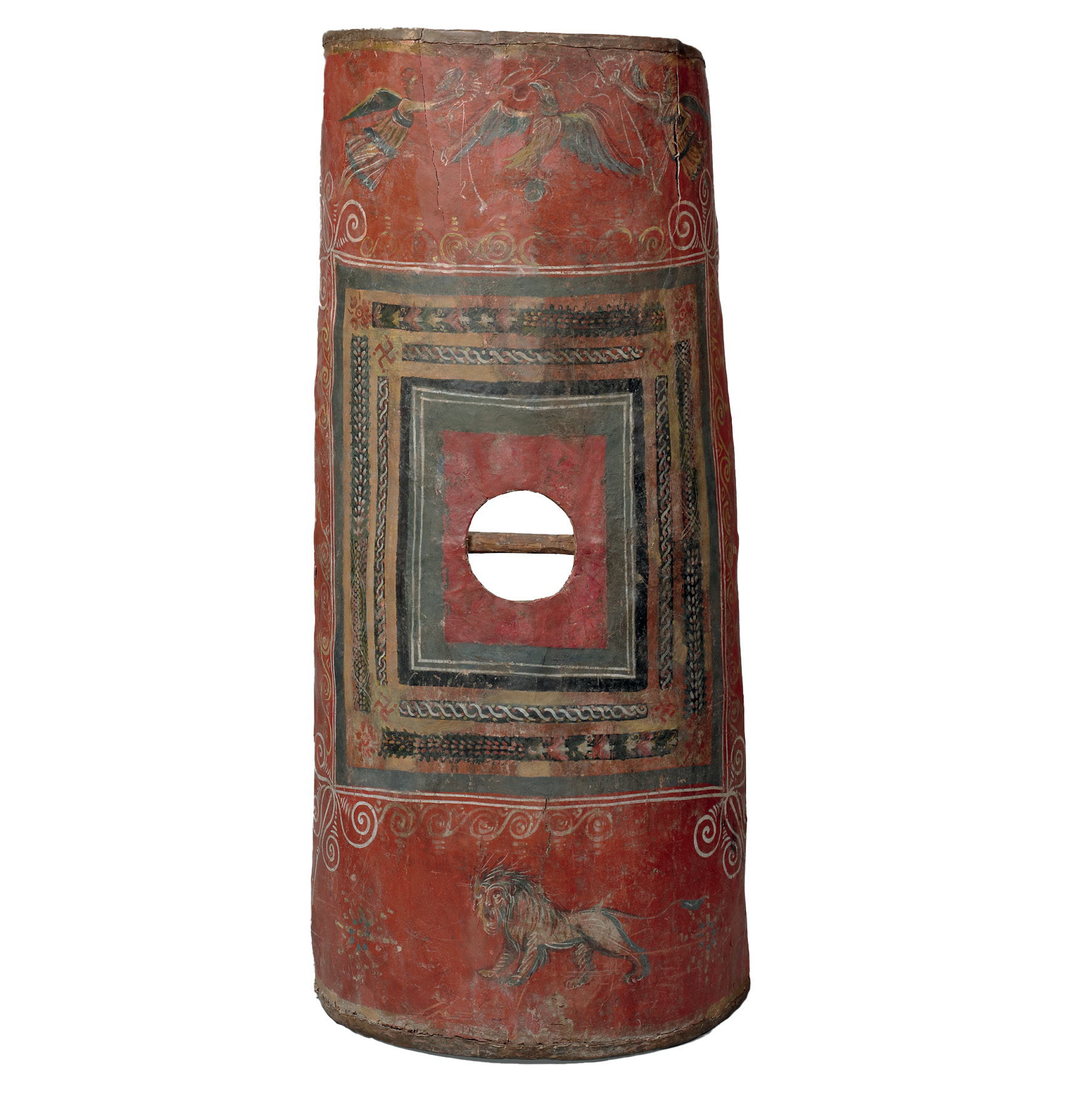
This was found at Dura-Europos, the great fortress-city on the banks of the Euphrates in Syria. The shield was recovered in the 1930s, from a tower in the city wall, where it lay among material dating to the destruction of the site at the hands of the Sasanian Empire in AD 257. So far as we can tell from artistic representations, though, the shield was already an archaic piece of equipment by then, raising the question of what it was doing in the tower. One possibility is that it had simply been stored there and forgotten about. The shield certainly could not be used, as it was found without a central metal boss: an element that was essential to protect the holder’s hand, and useful for striking enemies too. What is more, an absence of nail holes shows that a boss had never even been fitted, suggesting that the shield had languished as a spare part. Even so, we can be grateful that those responsible for painting the shield had completed their task. The result is a bold military red covering much of the shield-face, as well as colourful patterns, and two winged victories flanking an eagle. The composition is completed by a ferocious-looking lion prowling at the base of the shield.
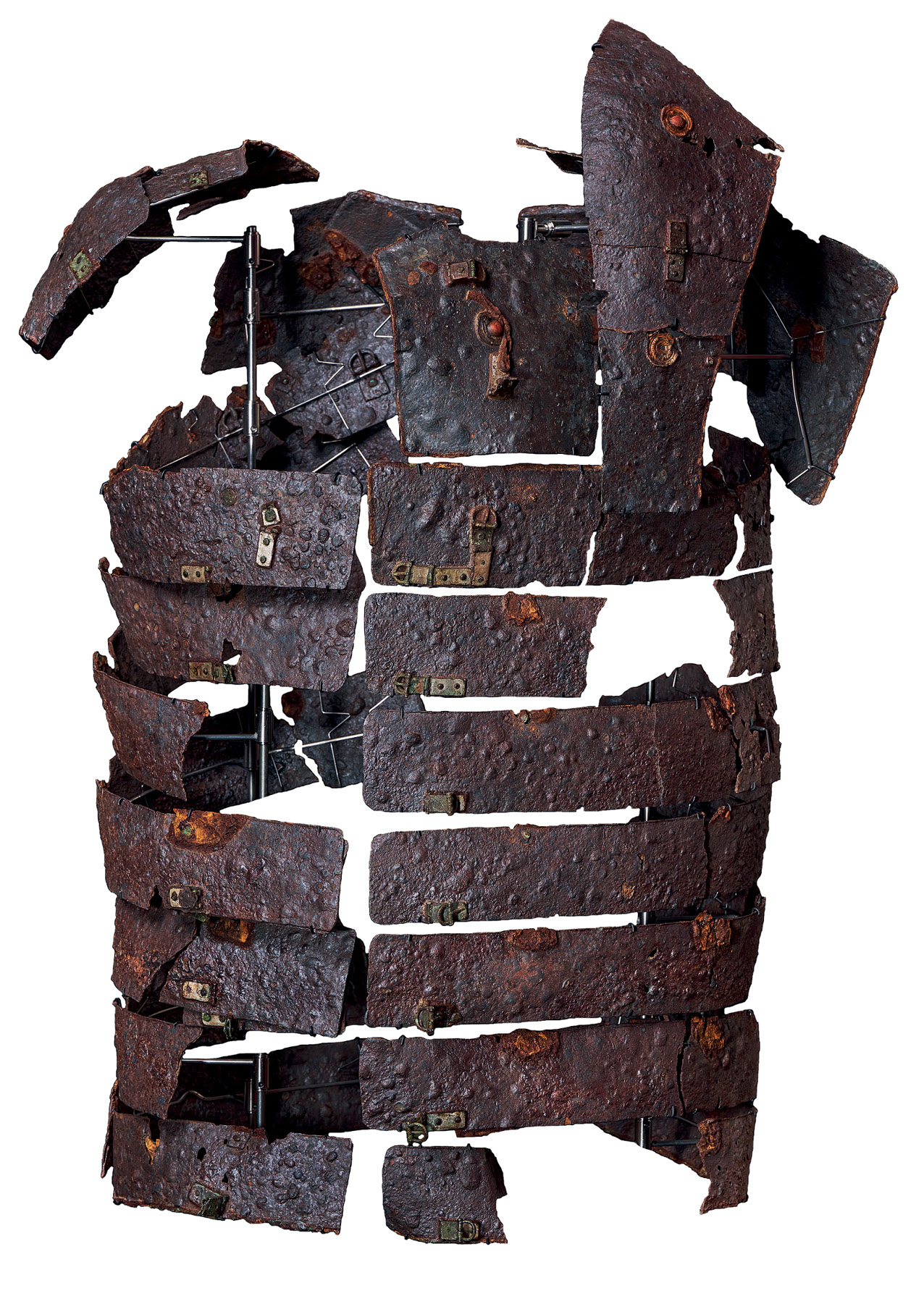
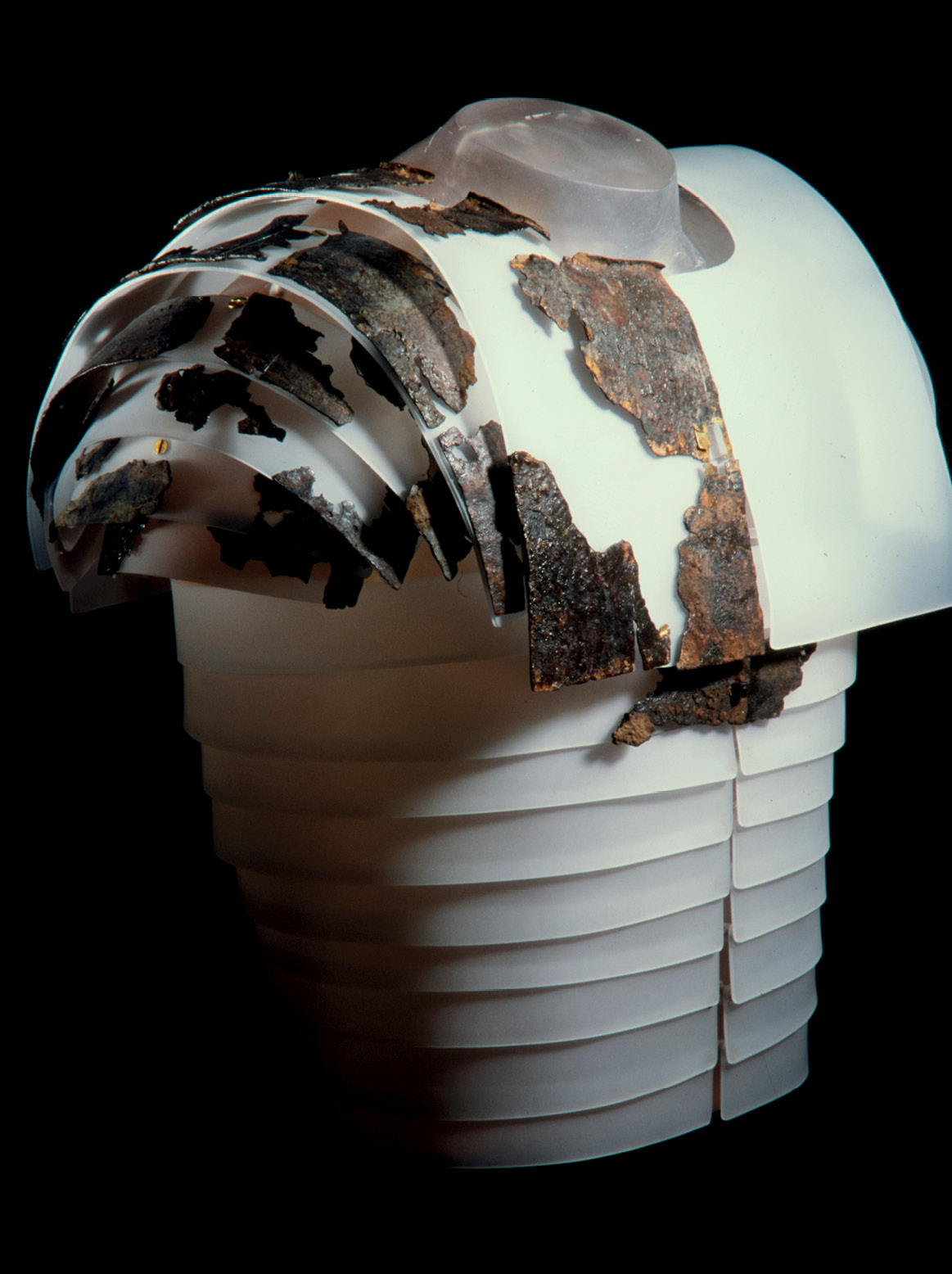
It is the combination of such shields with the remarkable segmental body armour worn by the heavy infantry in the legions that has created the modern view of the quintessential Roman soldier. Today, this armour is known as lorica segmentata, and its appearance has been described by Richard as creating a ‘sinister, skeletal-ribcage effect’. It was used from at least the Augustan period through into the 3rd century AD, with a handful of finds of substantial portions of such cuirasses showing us how the design evolved over time. Without doubt, the most sensational recent find of lorica segmentata occurred a few years ago in Germany, at the site of one of Rome’s most infamous military defeats. It occurred in AD 9, when three legions and their auxiliaries operating to the east of the Rhine were ambushed en route to their winter quarters. The attack was masterminded by Arminius, a German nobleman who had served as the commander of a Roman auxiliary unit, but remained loyal to his roots. Arminius’ trap was sprung on ground that had been carefully selected to place the Roman soldiers at maximum disadvantage. Sure enough, Arminius achieved an absolute victory, with only a handful of Roman survivors escaping the ensuing slaughter and reaching safety.
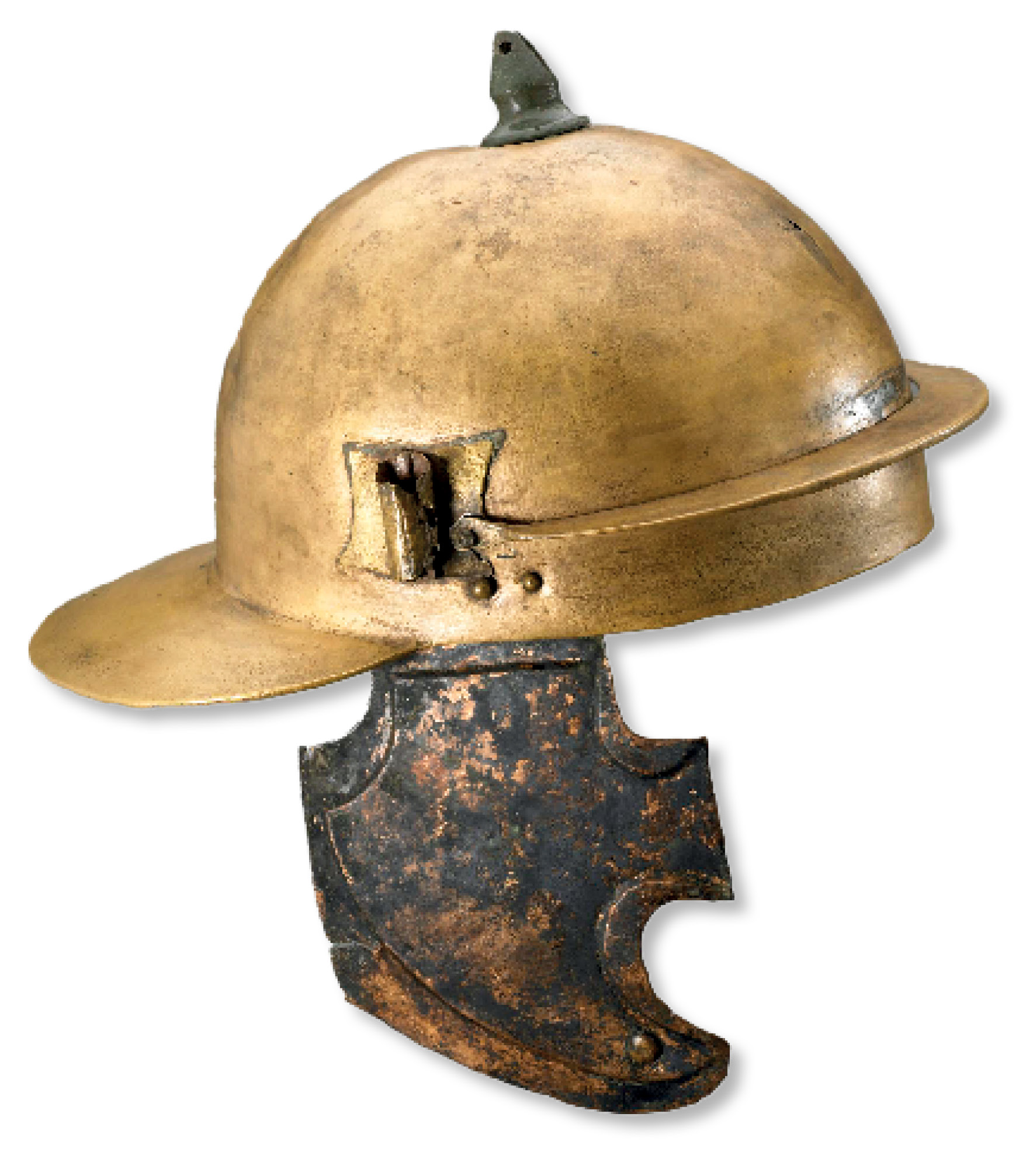
The site of this battlefield was securely identified in the 1980s, and since then it has produced thousands of pieces of Roman military equipment. Of these, the most extraordinary is a near-complete set of Augustan-era lorica segmentata. ‘It is just astonishing,’ says Richard, ‘and we’re told our exhibition is the only venue outside Germany that it will go to. The only bit of the cuirass that is missing is one shoulder area, presumably because it was upright in the ground and the plough went straight through it. The preservation of the remaining metal is remarkable. I asked our conservator about that, and she said it was because the ground was very acidic. Another side effect of acidic soil is that bone is not preserved, but I’m told that chemical traces show that the armour had not just been discarded empty. Someone died inside it. The circumstances are still being discussed in Germany, because the armour was found next to a metal shackle that was used to restrain people. This shackle was of Roman make, but it may have been captured after the battle and then used on a Roman prisoner. Other scholars have objected to this, because the cuirass is so well preserved that we can see the buckles fastening it together at the front were open when the armour was deposited. But to me it looks like, even if the armour was open, whoever was wearing it would still be pinned by the shackle with their bound arms blocking the removal of the armour. So debate rages, but we know that when a later Roman force visited the battlefield, they found gruesome traces of soldiers who had been slain as human sacrifices.’

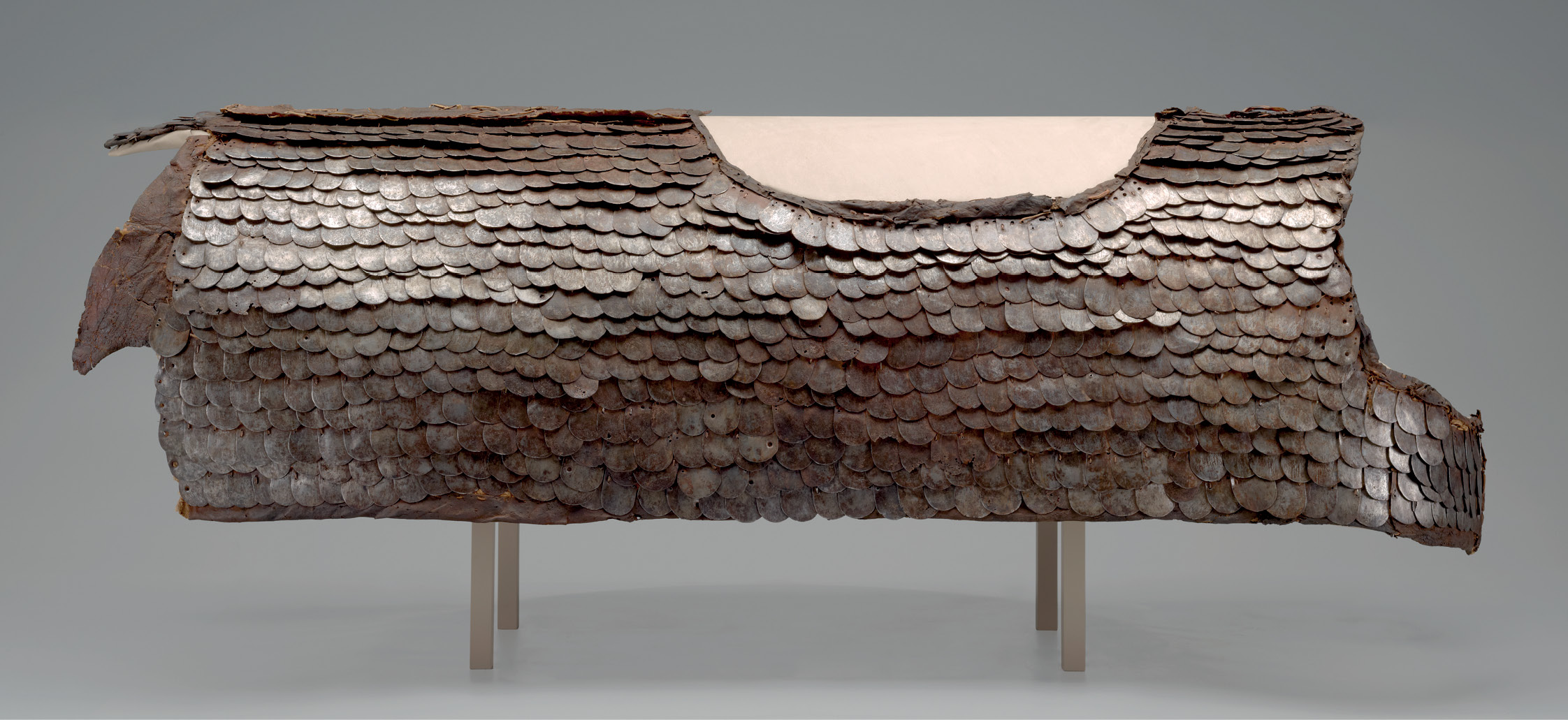
‘It is thanks to this discovery that we can see what lorica segmentata looked like in its earliest known form. The end result was only reached after two attempts to work out its original appearance, as the Mark 1 version had the top section back to front. That looked a bit awkward, because it left an exposed area where you could get a sword in. Anyway, AD 9 now gives us the earliest certain use of this armour in the military, and it is already quite light and very flexible to wear. In that regard, it appears fully developed, rather than an innovative new design, but how much further back in time it goes we just don’t know. One possibility, though, is that this type of segmental armour was used by gladiators before soldiers. A type of gladiator known as a crupellarius, for example, was clad in armour from head to foot, so perhaps we should be looking for an origin there. In chronological terms, the next big assemblage of lorica segmentata after AD 9 comes from Corbridge in Britain and dates to the end of the 1st century AD. By then, much more protection was being provided for the shoulders. After that, part of a 2nd-century set was found at the fort at Newstead in Scotland. On this one, all of the fittings holding the lorica segmentata together had been moved to the inside of the armour, so that they can’t get knocked off in battle. At the moment, it looks as if these segmental cuirasses only finally went out of use around the mid-3rd century AD.’ A crupellarius also wore segmental armour on the limbs, and it is interesting to note that the Newstead armour is displayed in the exhibition with a newly reassembled manica, or armoured sleeve, from the same site.
Call me Legion
Another unusual example of a soldier entering the archaeological record with their kit is known from Lyon in France. ‘A soldier’s grave was found in Rue des Fantasques, on the outskirts of the city’, Richard says. ‘He had fought in the Battle of Lugdunum in AD 197, which was a brutal clash between rival Roman forces, one loyal to the emperor Septimius Severus and the other supporting Clodius Albinus. The finds in the grave give us a good sense of what a later Roman soldier looked like. In this case, he had a flashy belt with metal fittings that spell out FELIX VTERE meaning “use with good luck”, though in this case it seems that his luck had deserted him. The belt held an imposing long sword, suspended on the left side to be drawn across the body – the era of the infantry short sword was over. We can see, too, that the soldier fought for Severus – because his belt purse only carried coins issued by him, rather than Clodius Albinus – putting him on the winning side in the battle. Like the soldier on the beach at Herculaneum, though, he was not found associated with any armour. In this case, French colleagues have recently proposed that the soldier might not have been killed in the battle itself, but in its aftermath, while he was on the rampage raping and pillaging. You wouldn’t have to wear your armour for that, but it did leave him vulnerable. The suggestion is that his actions understandably made the locals irate, so they did him in, and clandestinely buried him.’
If the behaviour of the Lyon soldier did lead to his murder, he would be far from the only example of a Roman soldier engaging in brutal or outright illegal deeds. We have already seen the allegations of bribery and robbery in the letters of Apion and Terentianus, and you do not need to look far in either the ancient literature or the archaeological record to find evidence of Roman soldiers engaged in disturbing acts. ‘Many of these stories are not uplifting’, says Richard. ‘The subject of Rome’s martial culture is often marked by cruelty and hardship. Soldiers were well-known abusers of civilians. The Gospels make this clear with the story of the possessed man who names his demons “Legion”, which was very much the inspiration for the exhibition title, and a fair allusion to a land possessed by Roman soldiers.’
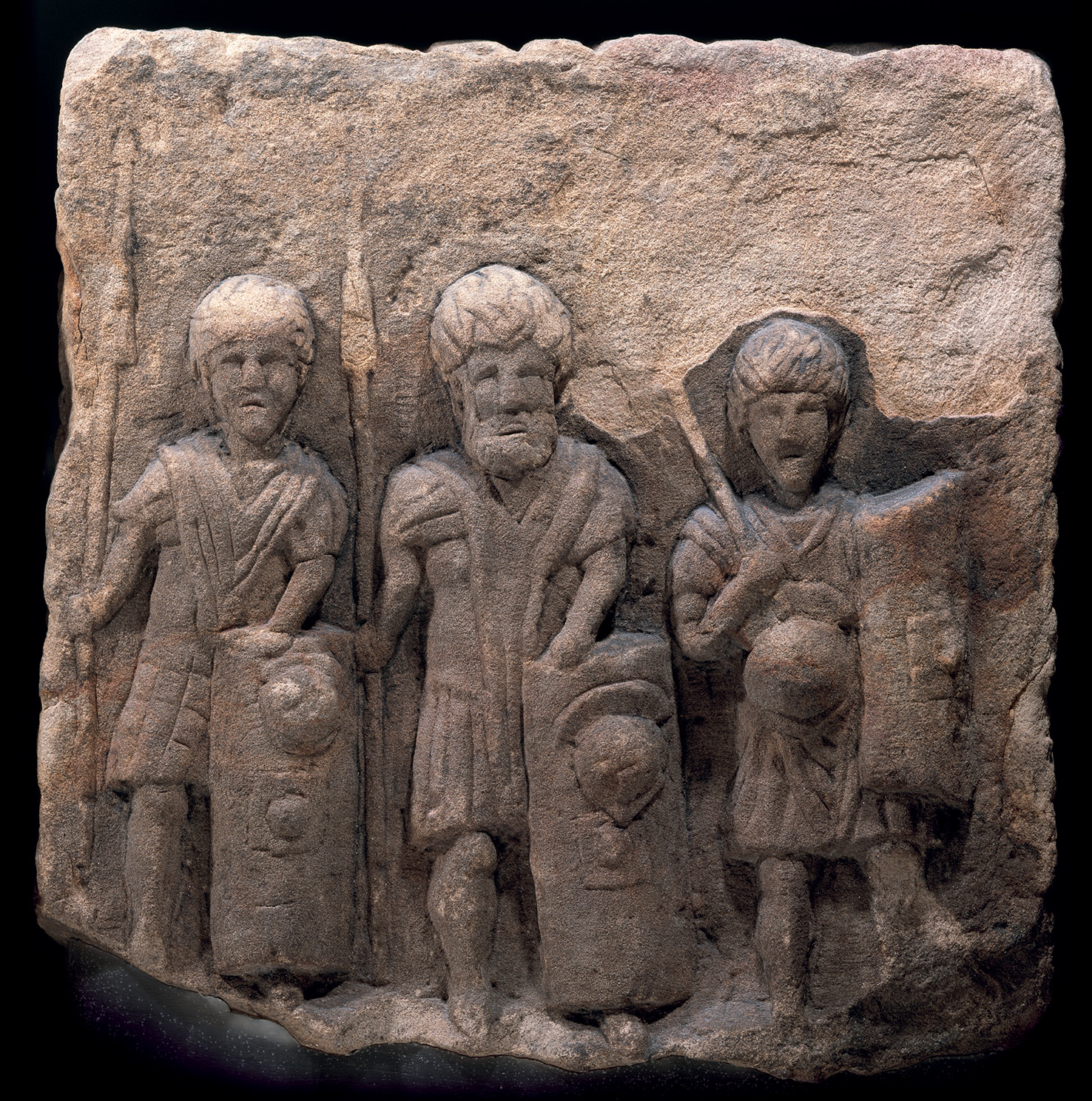
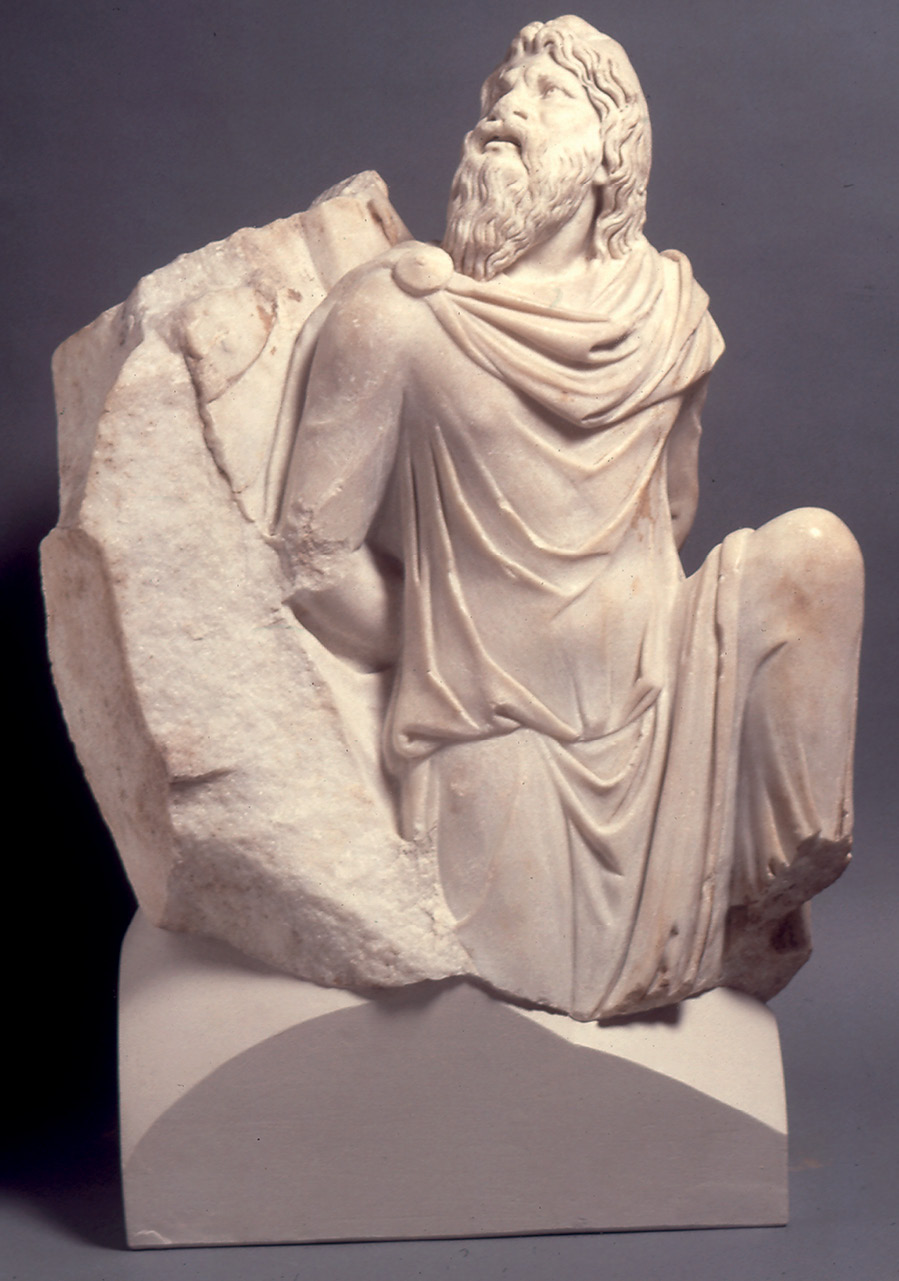

‘One example of this is the way that human booty would be picked up after a campaign. There is a heartbreaking document from the British Library about a seven-year-old boy called Abbas, who is abducted and enslaved by a soldier. Abbas is in the process of getting his name changed to the Greek Eutyches; this was very common when someone was enslaved, they often got a new pet name – in this case, Eutyches means “Lucky”. This decidedly unlucky boy is also being sold by a marine to a higher-ranking soldier for 200 denarii – almost doubling the marine’s annual wage [of 250 denarii]: the good fortune was entirely the owner’s. So that’s all quite grim. We also know that soldiers were sometimes involved with criminal justice, being called on to undertake punishments such as crucifixion. They could deliver arbitrary corporal punishment to people they met in the street as well. So if you were a civilian, you needed to clear the way or get a thrashing. There is a story from the Vindolanda fort archive about a merchant – he describes himself as “a man from overseas” – who complains that he received a beating by rods from the soldiers. The merchant didn’t think he deserved it, which fits really well with the ancient author Juvenal’s description of toe-stamping bullies in their military hobnail boots. But Juvenal adds that those brave enough to complain are sent to make their case in front of a military hobnailed judge. We can imagine that the hobnailed judge would have had deaf ears for civilians like the merchant.’ It is a reminder that even before auxiliary soldiers retired into the citizen elite, Rome’s warriors enjoyed certain privileged protections.
Further Information:
• The British Museum exhibition Legion: life in the Roman army brings together an extraordinary wealth of Roman military material and is unmissable for anyone interested in the subject. It will run until 23 June 2024. For more details and ticket prices, see www.britishmuseum.org/exhibitions/legion-life-roman-army.
• An engaging and gloriously illustrated volume has been published to accompany the exhibition: R Abdy (2024) Legion: life in the Roman army (London: British Museum Press, ISBN 978-0714122946, £30 paperback/£40 hardback).