
Subscribe now for full access and no adverts
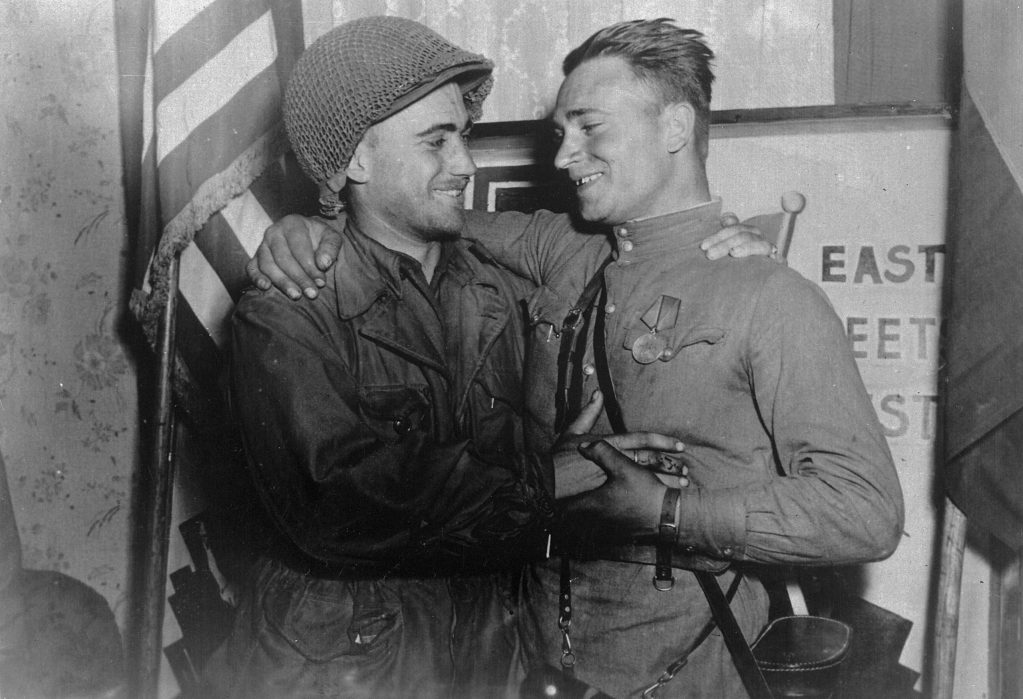
On the morning of Wednesday 25 April 1945, a forward patrol of G Company of the 273rd Infantry of the US 69th Division moved slowly along the Mulde river, a tributary of the Elbe. Every soldier knew the war was nearly over, and having got this far no one wanted to take unnecessary risks. At about 11.30am, they came across, first, a horseman, and then several officers and soldiers of the 175th Rifle Regiment of the Red Army. The Soviets offered their American allies vodka. Toasts were drunk. Although this was a historic moment, there were no cameramen present. So the event was staged again two days later at the small town of Torgau on the Elbe, about 85 miles south of Berlin.

This time, a group of Western reporters and newsreel cameramen were flown in, and they recorded the event for posterity. The soldiers from two worlds finally met officially, the Americans having advanced from Normandy eastwards, the Soviets from Stalingrad westwards. Again the Soviets offered vodka, the Americans cigarettes. Toasts were drunk to Stalin; then to the new US President, Harry S Truman; then to Churchill. The Americans were surprised to find women in the advanced Red Army units, including snipers. A concertina was produced and there was some dancing. The Russians were impressed at the mechanised power of the Americans. While they were mostly on horseback, the Americans were driving jeeps and other lightly armoured vehicles. The men and women shook hands and swore to do all they could to ensure their two countries would live in peace and friendship together. This would be remembered as the ‘Spirit of the Elbe’. Sadly, it did not last long.
Victory in sight
The key decisions about what would happen to post-war Germany had been taken two months earlier at the major ‘Big Three’ conference at Yalta. From 4 to 11 February, the US, British, and Soviet delegations had met in the splendid Livadia Palace, the summer home of the Tsars in the Crimea. The ailing Franklin D Roosevelt was visibly unwell; Churchill was exhausted by the pressure of more than five years of war; while Stalin was exuberant as his armies advanced on Germany. There were several disagreements at Yalta, including over the future of Poland and the make-up of the nascent United Nations organisation. But overall there was much agreement, and Yalta marked the high point of Allied collaboration in World War II.
Although it was not yet known exactly where the Allied armies would end up, it was decided that Germany would be split into four zones of military occupation. The British, French, and Americans would occupy zones in the west of the country, while the Soviets would occupy the zone to the east of the Elbe. Berlin, inside the Soviet zone, would itself be split into four zones of occupation. After a week of meetings, the conference concluded. The Big Three returned to running their respective war machines.
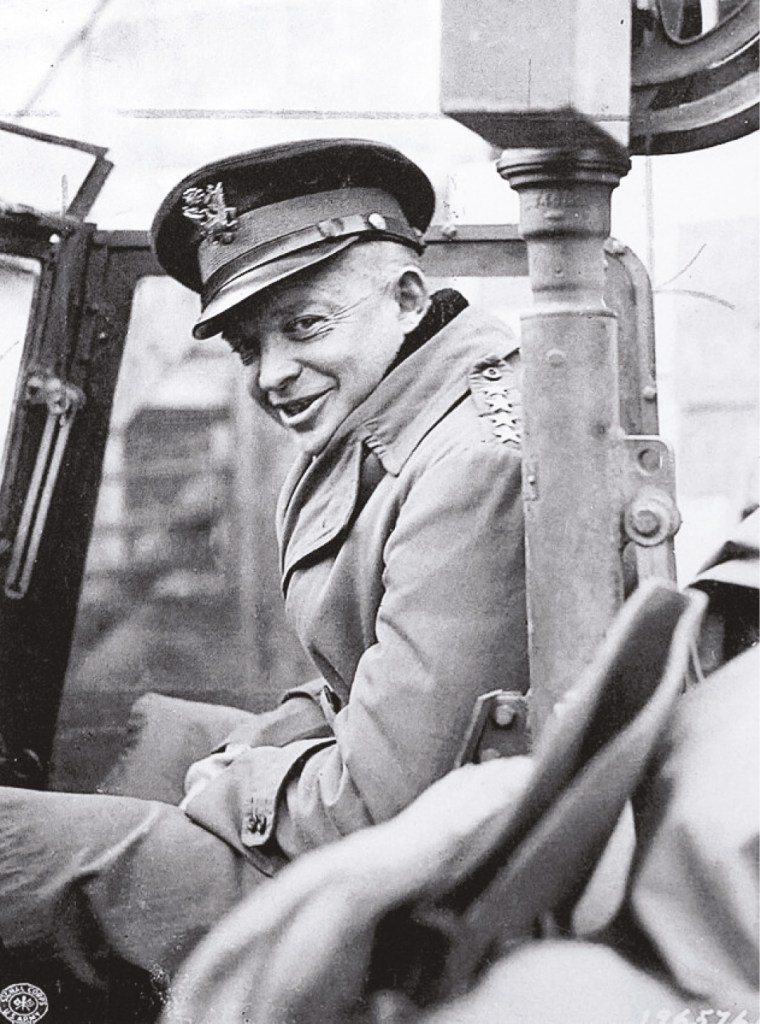
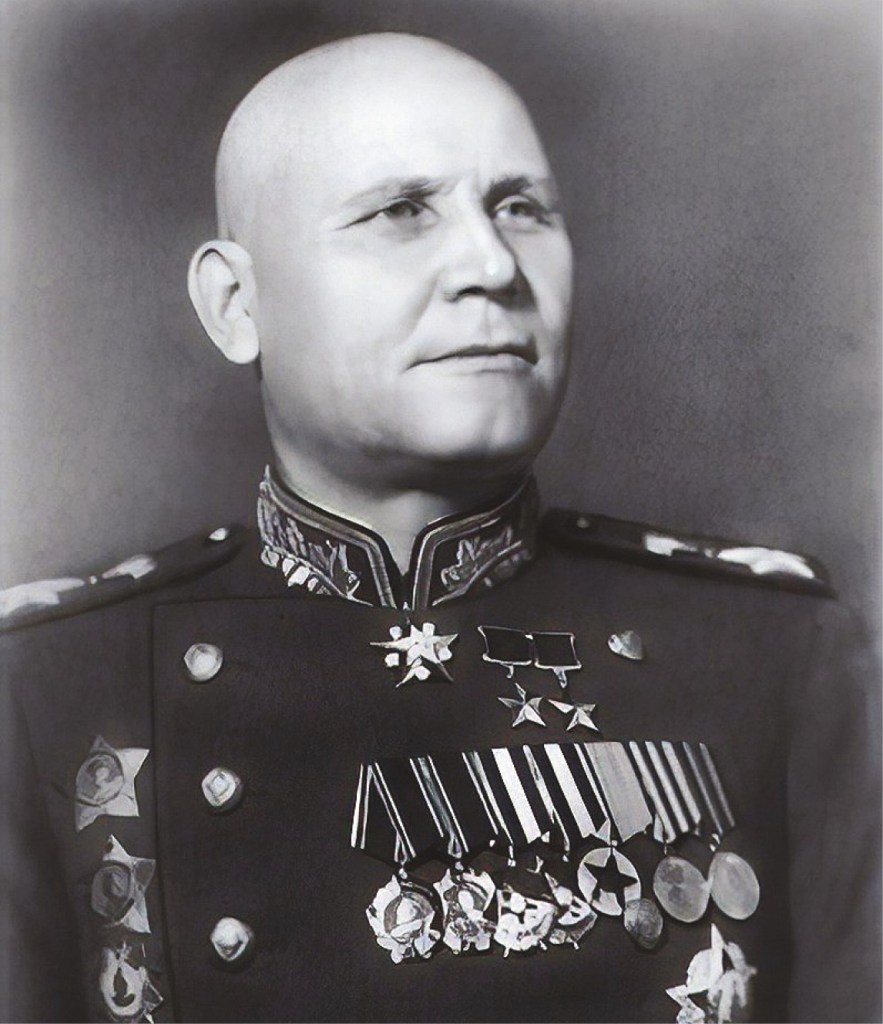
In the West, the Supreme Commander of the Allied Expeditionary Force, General Dwight Eisenhower, had command of seven armies, totalling nearly four million men. As Yalta ended, they were mopping up resistance to the west of the Rhine and would soon reach this great river barrier. But they were spread over a 450-mile front. In the east, the northern section of the Red Army had reached the Oder–Neisse line (roughly, the modern border between Germany and Poland). Marshal Georgi Zhukov led an army of three-quarters of a million men on the Oder; Marshal Ivan Konev another half million on the Neisse. But this army was tightly grouped over a much smaller area. And they were only 35 miles from Berlin.

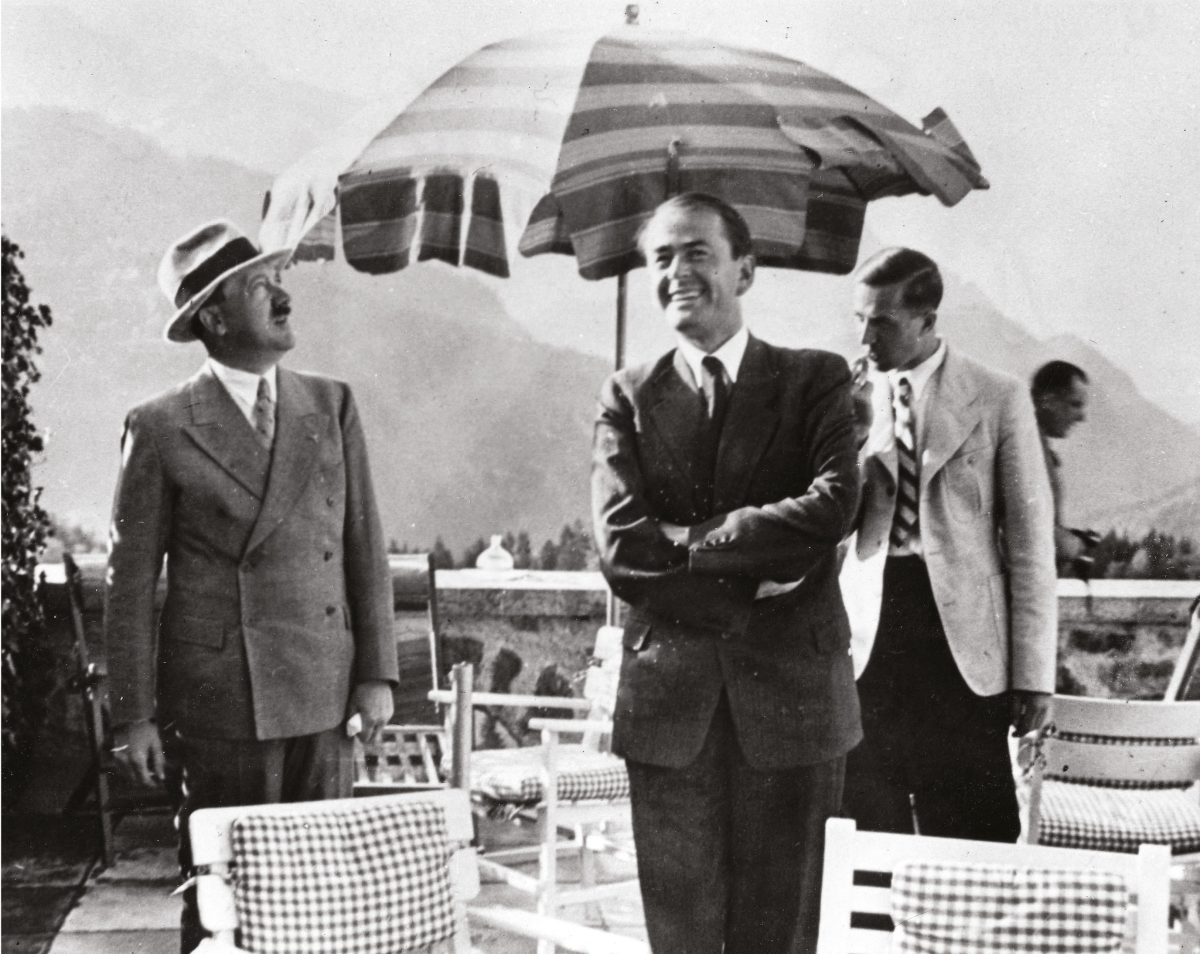
Any rational German military commander or political leader would have concluded that the game was up. Indeed, on 19 March, Albert Speer, the Nazi Armaments Minister, sent Hitler a memorandum concluding that the war would be lost within a few weeks. This was not what the Führer wanted to hear. He refused to accept Speer’s conclusion. As he ranted and raved in his underground bunker in Berlin, he cursed his generals and fantasised about new armies being formed to defend the Thousand-Year Reich.
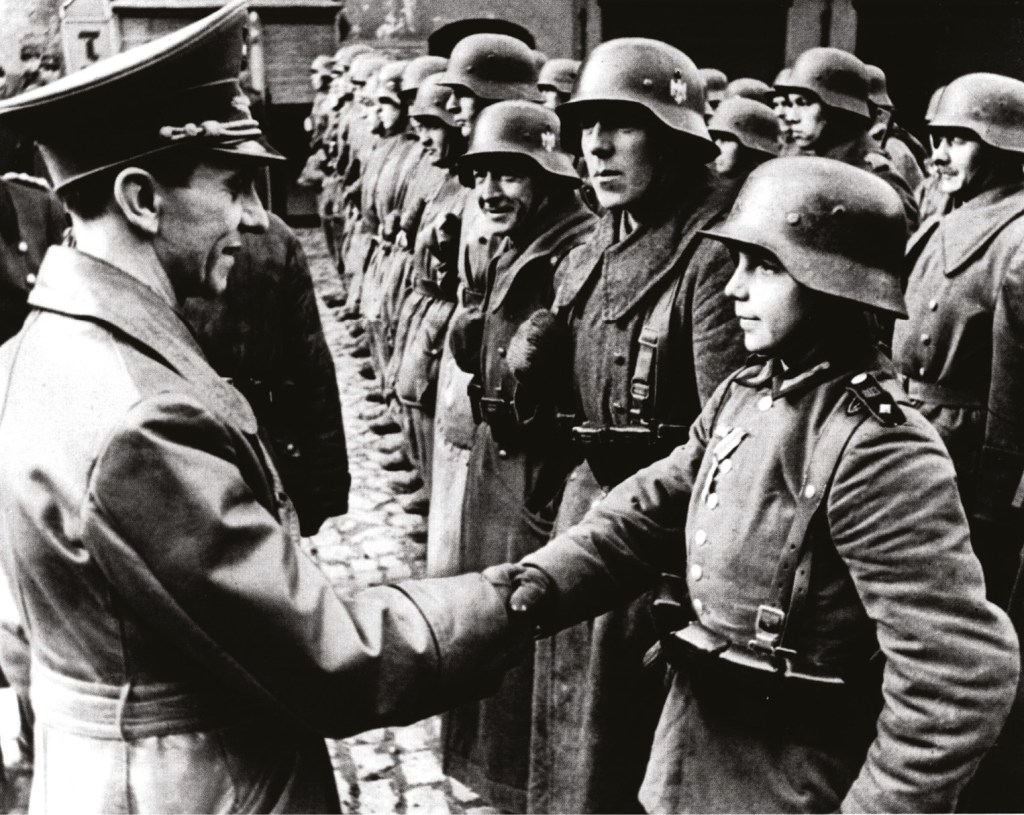
And indeed there were plenty of Nazi fanatics and diehards who were willing to fight and die for their Führer, among them teenagers of the Hitler Youth. Major Bill Deedes of the 12th King’s Royal Rifle Corps (later editor of The Daily Telegraph) did not believe the war was over yet. Writing home, he railed against ‘the damned papers, which are full of propaganda and pretend the war is as good as won’. ‘By golly it’s not,’ he wrote. ‘Lots of 16-year-olds are keen to die for Hitler.’ And, of course, the SS – who regarded themselves as guardians of the Nazi ethic – continued to fight with obsessive fanaticism. Gestapo and SS execution squads were determined to deter those they saw as defeatists. Bodies were strung up on lamp posts as a warning to others, with signs hanging from their necks which read: Ich bin ein Reichsverräter (‘I’m a national traitor’). Clearly the advance across Germany would not be a walkover.
Having crossed the Rhine surprisingly quickly and without the heavy losses Eisenhower had imagined (see MHM 144, February/March 2025), his armies surged forward across Germany. The next major action took place around the Ruhr. With its iron foundries and steel mills, this was the industrial heart of the Reich. Here Field Marshal Walter Model commanded what remained of Army Group B – 19 divisions and a large contingent of anti-aircraft gunners, the largest extant German fighting force in the west.
Eisenhower decided not to attack this large force head on – but instead sent two pincers to surround it. Led by General Courtney Hodges, the US 1st Army (having broken through following the unexpected capture of the bridge across the Rhine at Remagen) led the southern pincer. Ninety miles to the north, General William Simpson’s 9th Army headed up its northern counterpart. On 1 April, Easter Sunday, the two pincers joined up near the city of Paderborn.

Inside what was called the ‘Ruhr Pocket’, 400,000 Wehrmacht soldiers were now surrounded, and continuously pressed by five US Corps. Hitler wanted a fanatical, Stalingrad-type defence. Gestapo execution squads murdered hundreds of civilians in Dortmund and Düsseldorf who spoke of surrender. But, after just two weeks, Model realised that further defence was pointless. He ordered his youngest and oldest soldiers to return home. The rest had the choice of surrender or break out. ‘Gentleman, it’s over,’ Model said to his staff. ‘It’s up to you what you do from here.’ After being denounced as a traitor by Minister of Propaganda Joseph Goebbels on German radio, Model – who had fought bravely for the Reich on both eastern and western fronts – walked into a wood and shot himself. The collapse and surrender of his army effectively marked the destruction of German forces in the west.
A strategic dilemma
At this point, Eisenhower had several options. He could race to Berlin. Or drive south-east to link up with the Red Army and divide the remaining German forces in two. He had no doubt that his first and overriding objective was to end the war as quickly as possible. He was fully aware that Britain and the US were becoming increasingly war-weary. But Eisenhower was also aware of pressure from the Pacific. At this point, even those who knew of work on developing an atom bomb (and they were very few) had no idea whether it would work or when it would be ready. Planning for the Pacific War called for a series of invasions of the Japanese home islands, which were predicted to bring massive casualties. The most optimistic estimate was that there might be victory in the spring of 1946. Reserves of men and materials would have to be transferred from Europe to reinforce the Pacific. A whole planning department at Supreme Headquarters Allied Expeditionary Force (SHAEF) was already working on the massive transfer of military hardware and personnel.
Some of Eisenhower’s generals were keen to strike out and capture Berlin. Chief among these was his most aggressive commander, General George Patton, who sought further glory for himself and his men. He believed he could be in Berlin in two weeks. But Field Marshal Bernard Montgomery, too, saw the capture of Berlin as the culmination of a magnificent wartime career. He wanted to drive east to the Elbe and onwards to the German capital. Eisenhower was not persuaded, however. He knew the battle for Berlin would be bitter and intense. With the Ruhr Pocket collapsing, he made up his mind.
On 28 March, Eisenhower sent a telegram to Stalin. He made it clear that he intended to drive south-east on a line roughly from Erfurt to Leipzig to Dresden. He asked the Soviet leader what his plans were, as he wanted to coordinate with the Red Army in the final defeat of Germany. Stalin concurred with the Supreme Commander’s plan. He said Berlin had ‘lost its strategic importance’. In a statement that blatantly obscured his real intentions, Stalin told Eisenhower that the Red Army would only ‘allocate secondary forces in the direction of Berlin’. If he was to be believed, it seemed that neither army put much emphasis on capturing Hitler’s capital.
The British Chiefs of Staff were outraged when they learnt a day later of Eisenhower’s message to Stalin. First, they argued this was a change of strategy to advance south and bypass Berlin – one that had not been agreed by the Combined Chiefs of Staff. Second, they believed this would foreground the role of US troops in the defeat of Germany and sideline British troops under Montgomery in the north. Finally, they claimed that Eisenhower had gone beyond his authority by communicating directly with the Soviet leader.
When Churchill became involved in the dispute, he raised another, more fundamental point – that of prestige and the post-war impact if the Soviets captured Berlin. In an appeal directly to President Roosevelt, the British prime minister wrote that the Soviets would soon take Vienna. ‘If they also take Berlin will not the impression [be] that they have been the overwhelming contributor to our common victory?’. Churchill went on to ask if this would not raise ‘grave and formidable difficulties’ in the future? With his brilliant political insight, he had already foreseen post-war tensions with the Soviet Union. If the Red Army captured Berlin, he predicted this would give the Soviets a substantial advantage in any possible future conflict, hot or cold.
The American response was to stand wholeheartedly behind their field commander. General George C Marshall and the US Army’s Joint Chiefs of Staff in Washington refused to accept any criticism of Eisenhower’s decision. They said that he was the best person to judge strategy, that he had the right to address Stalin direct as the commander-in-chief of the Soviet forces, and that his plan to avoid Berlin was no distortion of previously agreed plans.
The fact was that, by spring 1945, the western war effort was overwhelmingly dominated by the United States. The US was providing the majority of manpower and the vast majority of weapons, vehicles, and aircraft. The British military contingent was down to roughly one quarter of the Allied war effort. The British Chiefs of Staff could huff and puff as much as they liked, but the American view would prevail.
Churchill’s political belief that tensions between West and East were inevitable post-war was overruled as well. Roosevelt still dreamed of future cooperation with the Soviets through the United Nations. He believed he could trust Stalin as a future ally. However naïve this might appear in retrospect, Churchill’s appeal fell on stony ground at the White House.

As a consequence, the US-led armies in central Germany were directed on a south-eastern trajectory. This was further boosted by intelligence that suggested the Nazi elite was preparing to abandon Berlin and reinforce a major garrison or redoubt in the south, in the mountains of Bavaria. It was believed that Hitler might already have left Berlin and was planning to lead a counter-attack against the Allies from his mountain retreat outside Berchtesgaden. We now know this intelligence was entirely wrong, but at the time it was widely believed at SHAEF and might well have added to Eisenhower’s decision to head south-east. In any case, he was fully aware that Berlin lay within the Soviet zone of occupation, so why not leave the capture of the city to the Russians?
The British could huff and puff – but the American view would prevail.
Battle for Berlin
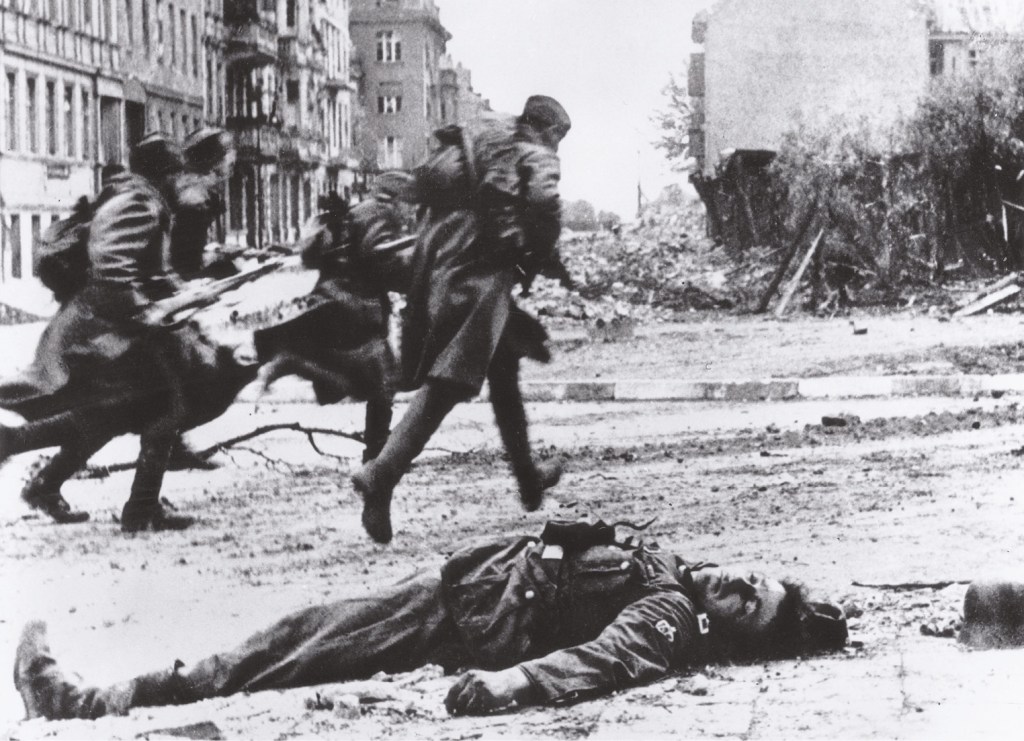
So, on 16 April, the Soviets launched a 9,000-gun artillery barrage along the Oder and Neisse rivers to the east of Berlin. Stalin encouraged his two Soviet commanders, Marshal Zhukov in the north and Marshal Konev further south, to battle it out between them for the honour of capturing the city. At first, the advance was slow and Soviet losses were heavy. But, after four days, the soldiers of the Red Army entered the suburbs of the German capital. Hundreds of thousands of civilians were caught in the crossfire. German youngsters and old men organised in a sort of Home Guard called the Volkssturm put up a ferocious defence. Moreover, the T-34 – the great Russian tank that had led the Soviet advance across eastern Europe – was not suited to city warfare. A single soldier with a shoulder-operated Panzerfaust could knock out a tank at short range.
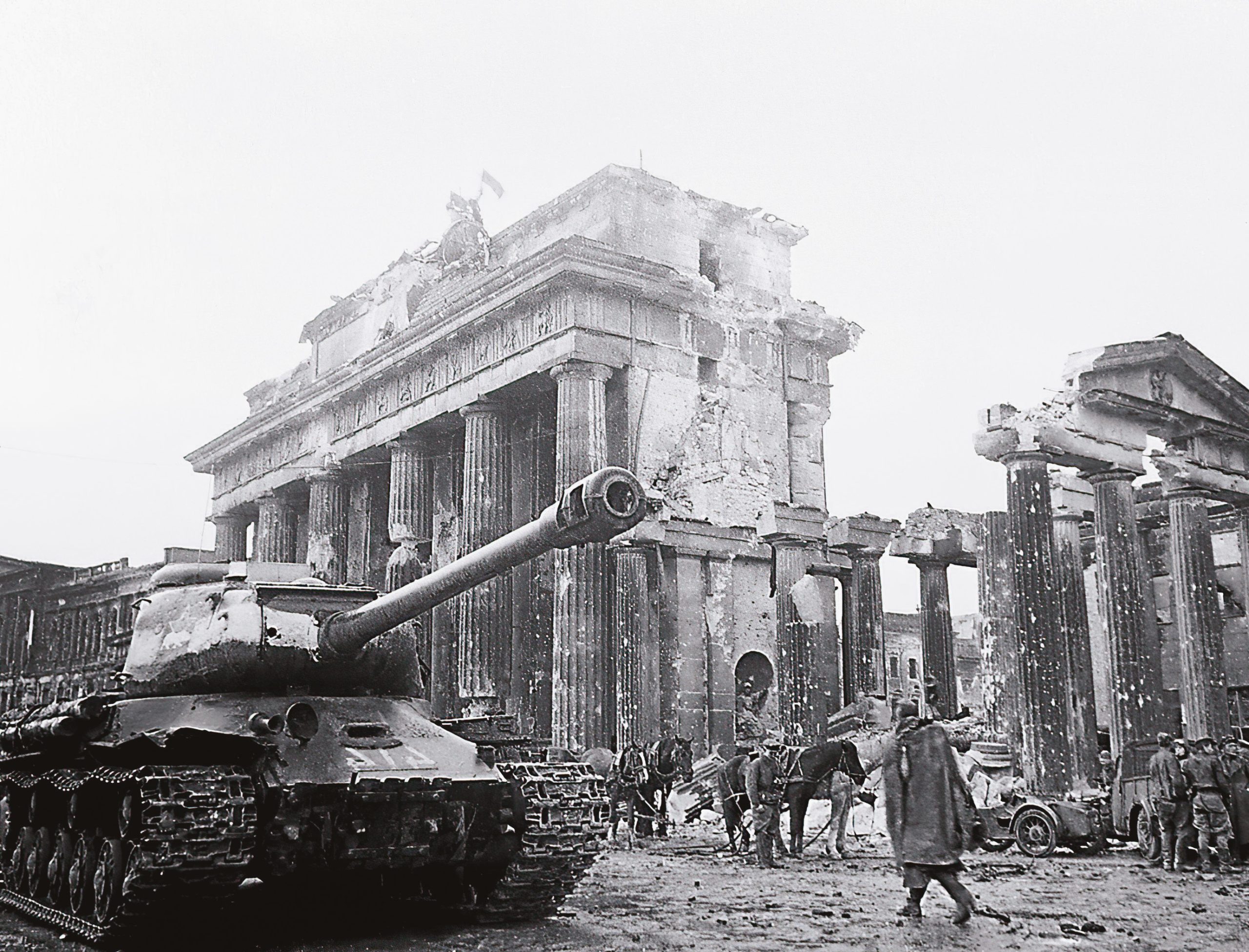
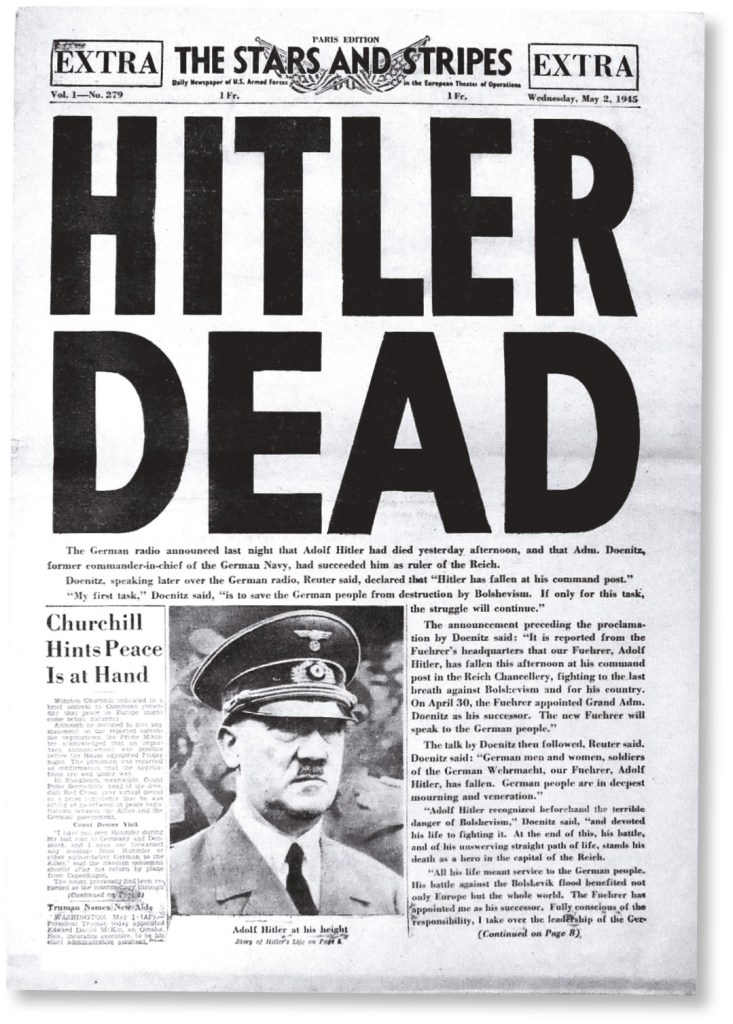
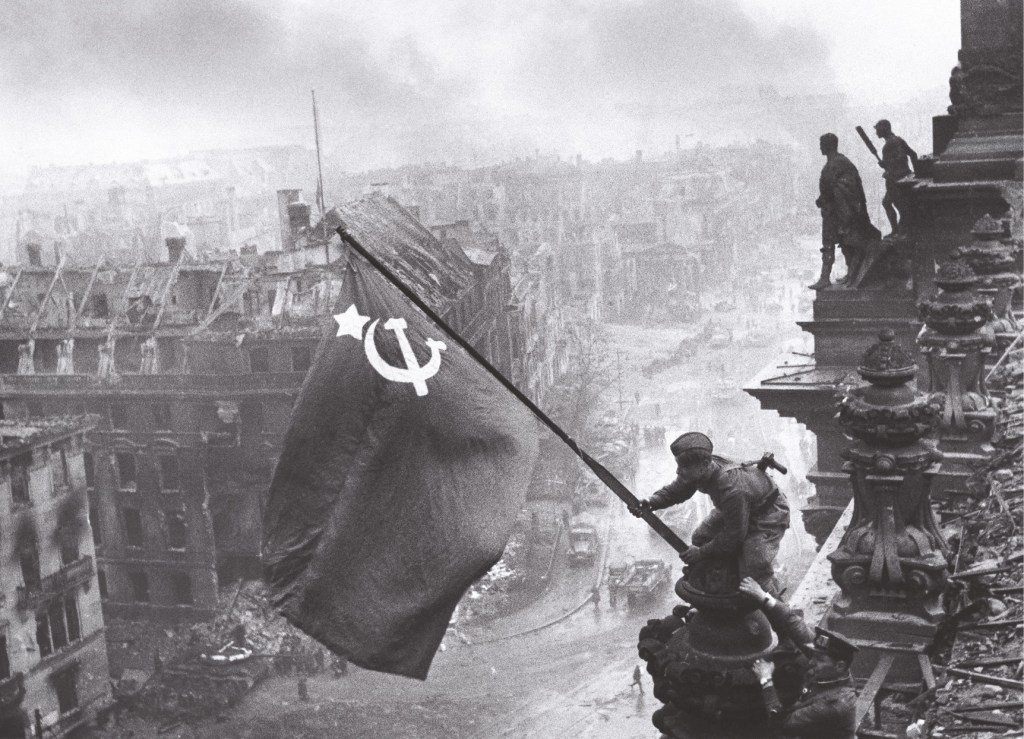
By 25 April, the two Soviet armies had surrounded the city. Street-by-street, then house-by-house fighting followed. Nearly half a million Soviet soldiers launched the final offensive in the west, into the heart of the city. The SS execution squads hanged dozens of those they regarded as cowards, adding to the terror faced by Berliners as the city was literally blown to pieces around them. On 30 April, Soviet soldiers captured the Reichstag, suspending a red flag from its roof just in time for the May Day celebrations. On that same day, Hitler shot himself in his bunker. Two days later, the generals in command in Berlin formally surrendered.
It had been a desperate and heavy battle, leaving whole sections of the city in rubble. More than 100,000 Berliners had been killed. Zhukov called the battle for Berlin ‘one of the most difficult battles of the war’. Indeed, Russian casualties had themselves been high, with 80,000 Red Army soldiers killed and more than a quarter of a million wounded. Eisenhower had been right in predicting the battle would be furious and losses great.
Final analysis
So, in conclusion, was Eisenhower right to leave Berlin to the Soviets? And even if he had been correct militarily to cut Anglo-American losses by avoiding an intense battle for the city, was he wrong politically, as Churchill argued? In the end, it has to be said, it made little difference militarily. The Red Army garrisoned Berlin. Large numbers of German women were raped by Soviet soldiers. But this was little reported at the time. And two months later, in July, as per the terms of the Yalta agreements, British, American, and French troops arrived in Berlin to occupy the zones that had been allocated to them. The Soviets did nothing to prevent this, nor to keep the city in their own hands.
We now know that Berlin went on to become the epicentre of the ensuing Cold War. In 1948, when relations between the occupying powers had deteriorated badly, the Soviets blockaded the city – but the Americans and British began an airlift that kept it supplied… just about. In 1961, with the building of the Berlin Wall, the city became the symbol of a divided Europe. President Kennedy addressed a huge crowd in West Berlin and said the free world was united behind it. And, of course, a generation later in 1989, when the Wall came down, it became emblematic of the ending of the Cold War.
None of that was a consequence of who had captured Berlin in 1945. Eisenhower had done the right thing at the time. Whoever captured Hitler’s capital did not make much difference to the troubled long-term history of that unique German city.
Taylor Downing’s latest book The Army that Never Was: D-Day and the Great Deception is out now (Icon Books, £25).
In the next issue of MHM: Was dropping the atom bombs necessary to defeat Japan?
All images: Wikimedia Commons, unless otherwise stated