
Subscribe now for full access and no adverts
When General Bernard Montgomery went ashore in Normandy on 7 June, D+1, he was convinced that the war in Europe would be over by the end of the year. The central military event of 1944 in the west, the invasion of northern Europe on the previous day, had been a success. A rapid advance now looked likely, with a gradual crumbling of Nazi forces retreating across Europe, while the Red Army was relentlessly advancing from the east. But things did not work out as he expected.
D-Day had been in planning for almost 18 months since the Casablanca Conference of January 1943. Major-General Sir Frederick Morgan had been appointed Chief of Staff to the Supreme Allied Commander (COSSAC). And, with no Supreme Allied Commander in place for the rest of the year, it was Morgan and his team who took all the core decisions that determined not only where and how D-Day would take place, but also the shape and course of the war in 1944.
At the Anglo-American summit at Quebec in August 1943, COSSAC proposed launching the invasion not in the Pas de Calais region, across the shortest stretch of the Channel, but further west in Normandy. Here the beaches were flatter, there were fewer high cliffs to surmount, and it was not as heavily defended as the Calais coastline. The British and American Chiefs of Staff approved and the political leadership, Prime Minister Winston Churchill and President Franklin D Roosevelt, endorsed the decision. From Normandy, they wanted the Allied armies to cross France ‘to strike at the heart of Germany and destroy her military forces’. But Normandy was 200 miles further west than the Pas de Calais. Although the decision to avoid landing in the Pas de Calais was the right one, it would substantially add to the challenge facing Allied forces, even if the landings proved a success.
Ever since the costly fiasco of the Canadian-led landing at Dieppe in August 1942, the Allies had avoided the idea of trying to capture another well-fortified harbour town. Instead, they decided on a complex operation to build their own harbours and float them across the Channel to Normandy. There were to be two harbours: Mulberry A at Omaha in the American sector and Mulberry B at Arromanches in the British. Huge difficulties had to be overcome. ‘Don’t argue the matter,’ said Churchill, who took a keen interest in the project, ‘the difficulties will argue for themselves’. Giant steel piers were designed on which platforms would float up and down with the tide. Roadways linked these pierheads with the beach for vehicles to unload. They had to be massively strong but also flexible for when the platforms rose and fell, and heavily anchored into the seabed. Ten miles of these roadways had to be produced. Then, giant 6,000-ton concrete caissons would be floated across the Channel and sunk to provide breakwaters for the piers.
Within 48 hours of D-Day, these giant structures began to be put in place. The US Naval Construction Battalions, better known as Seabees, assembled the American harbour in record time, while the Royal Engineers put the British harbour together more slowly but more thoroughly. Within days of the first landing, hundreds of tons of supplies, vehicles, weaponry, ammunition, and reinforcements began pouring ashore. But two weeks later a huge storm struck the Normandy coast. By 22 June, as the winds abated, a tangled mass of steel and concrete was all that remained of Mulberry A. The roadways had breached their anchors and smashed into the pierheads, which had collided with some of the caissons. The American Mulberry was abandoned and some of its parts were reused to strengthen the British Mulberry that had largely survived the storm. Now the Allies had only one floating harbour available. It would soon be one of the busiest harbours in Europe. But everything that followed D-Day was in part defined by the limitations of bringing supplies ashore and distributing them.

Battle for the bocage
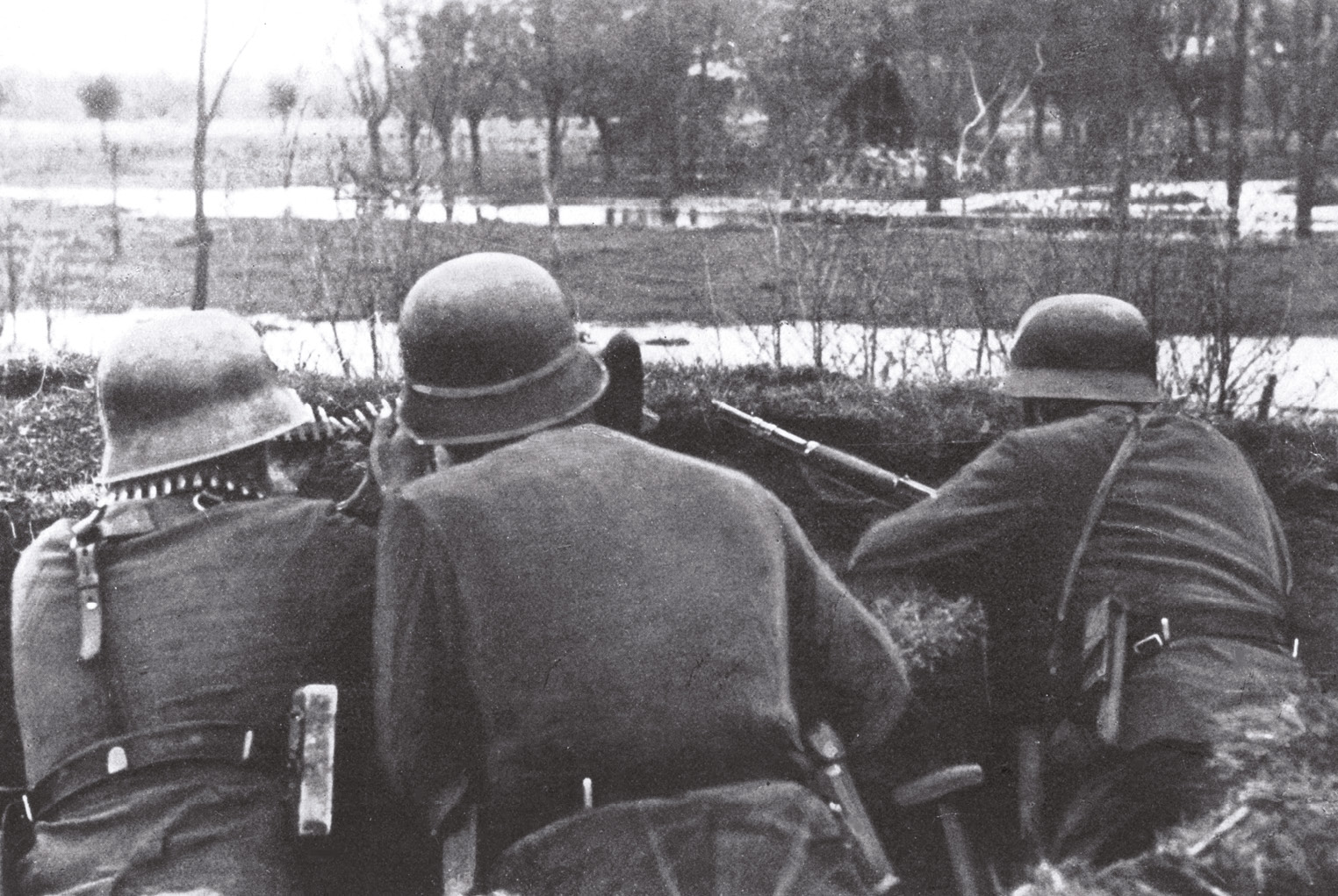
The next factor that held up the Allies was the countryside in the Normandy area, known as the bocage. Huge, thick, impenetrable hedgerows with deep roots lined narrow country lanes. Dense orchards and small fields surrounded many of the Norman villages. All of this made ideal defensive positions for the German infantry and armour to hold up the Allied advance. The mighty German 15th Army was held in the Pas de Calais by a brilliant deception operation (see MHM 138, February/March 2024) that convinced the German High Command that a second invasion was coming in that area. But still several Panzer and grenadier divisions were sent into Normandy. Rommel had failed in his plan to throw the Allies back into the sea in the first 24 hours of invasion. But fierce fighting prevented the Anglo-American armies from breaking out, and in some cases from even reaching their initial targets, for weeks on end. The German defenders were often battle-hardened Waffen-SS troops and the fighting took on the intensity of First World War battles.
General Montgomery, the commander of land forces in Normandy, planned to draw the German counter-assaults towards British and Canadian forces in the Caen area. But it was seven weeks before the Americans could break out in the west, around Saint-Lô. A new assault known as Operation Cobra began with a massive aerial bombardment at the end of July, but still German forces held tenaciously on. Finally, on 3 August, General George S Patton’s 3rd Army broke through German lines and started to advance at speed. Beyond the bocage, Patton’s tanks now moved rapidly ahead, sometimes advancing dozens of miles in a day.
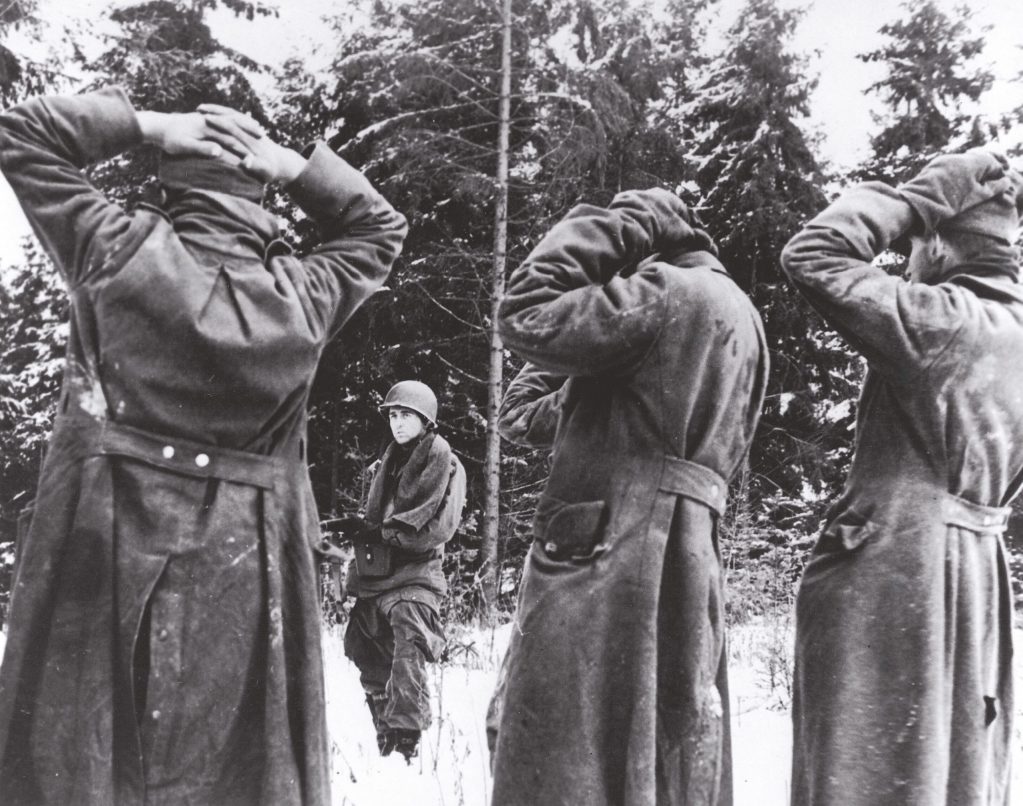
Hitler ordered his troops to move south from Caen. But they advanced into a trap. Montgomery moved south after the Germans. General Omar Bradley ordered Patton to turn east towards the Loire. By mid-August, the German 7th Army and 5th Panzer Army were surrounded. There was only one road to escape, through a town called Falaise. As the Allied noose tightened, what remained of 19 German divisions were cut off. About 10,000 German soldiers were killed in the ‘Falaise pocket’; another 25,000 were wounded and 50,000 captured. Having reported the defeat of his army and having told Hitler that the war was as good as lost, Field Marshal Günther von Kluge walked into a nearby wood and swallowed a cyanide capsule.
To Paris and beyond
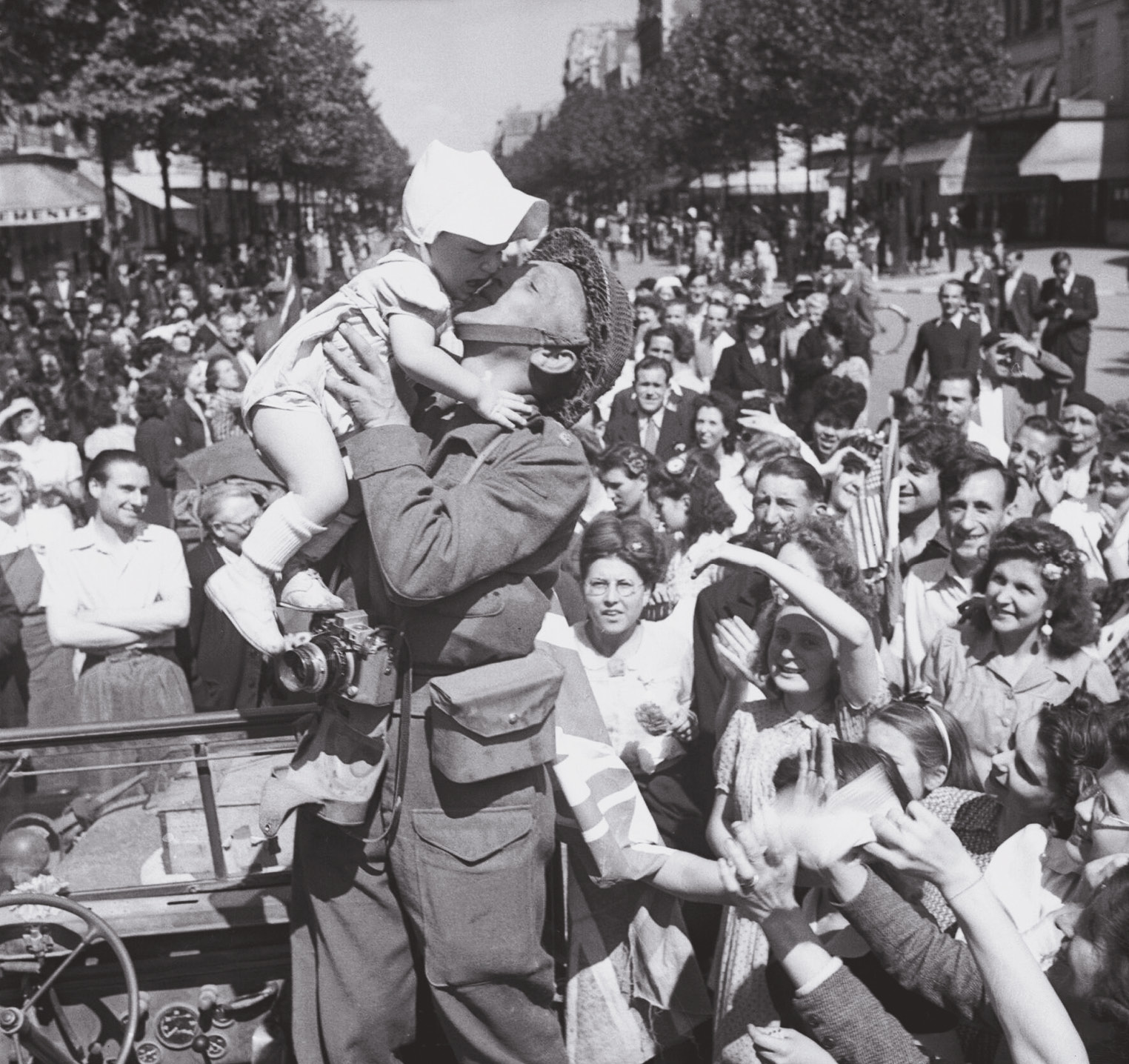
By the second half of August, the Allied armies were advancing along the Seine. On 25 August, the German garrison at Paris surrendered. Eisenhower ordered American troops to pause, allowing Free French forces to enter and liberate their capital. Crowds cheered as General Leclerc led his column of Sherman tanks up the Champs-Élysées. Eight days later, on 3 September, Brussels was liberated by British troops to even greater numbers of cheering locals.

Everywhere, German troops were reported to be retreating in disarray. It seemed to most observers that the war in the west was won. And on 20 July a bomb plot against the Führer in his bunker in East Prussia had nearly succeeded. Had someone not moved the case containing the bomb a few minutes before it went off, it would have done. If Hitler had been killed, it would probably have been the end of the Nazi war effort. As it was, the Allied leaders believed that the military attempt on his life signified a collapse in the German fighting spirit. However, the vicious repression that followed the bomb plot had the opposite effect. The SS were put in charge of key elements of the Nazi war effort, including the fighting forces. Now the Wehrmacht would be forced to fight to the bitter end. And the Germans still fought with great skill and determination, displaying an ability for swift improvisation.
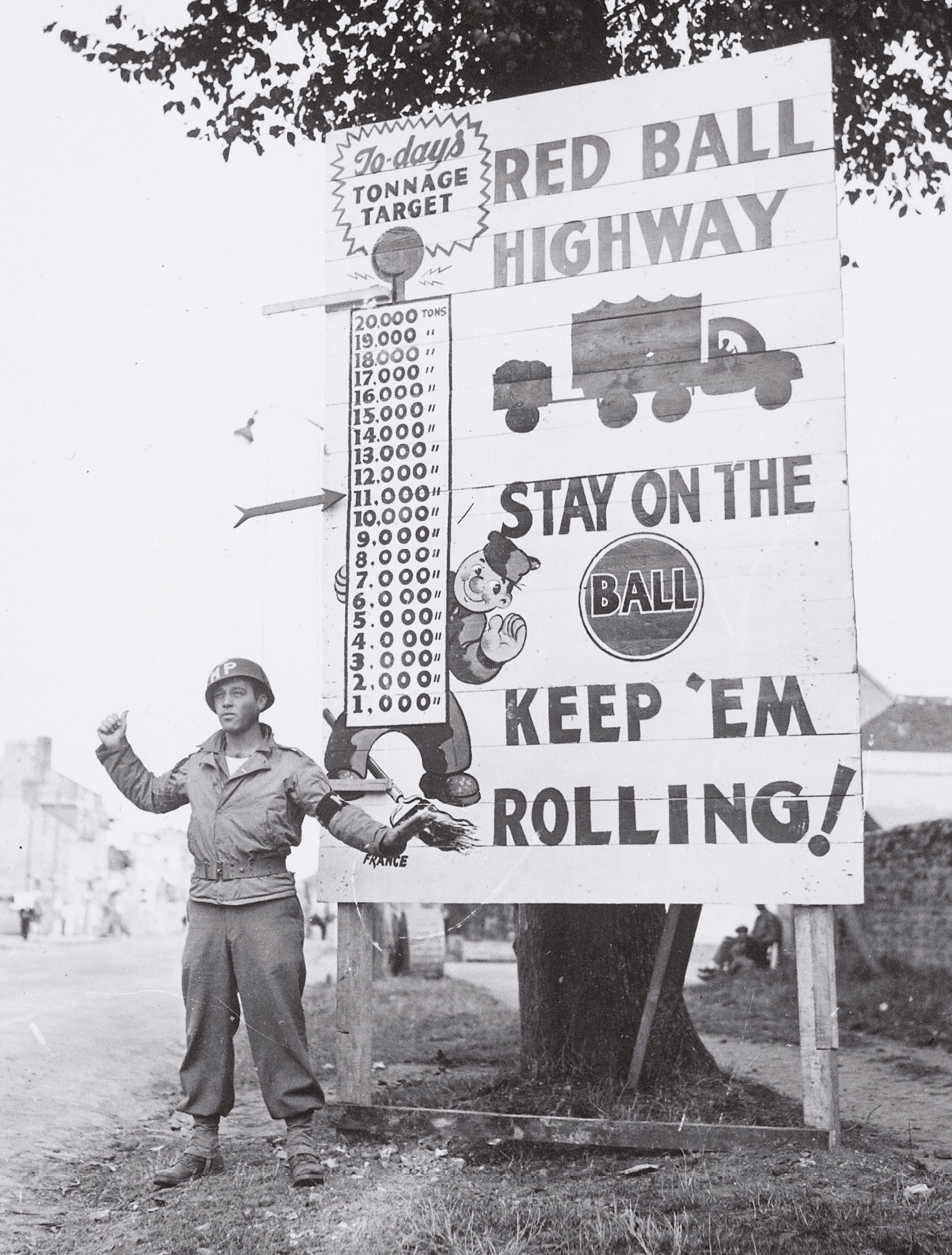
With the great distances involved in advancing towards the Reich, supply problems began to catch up with the advancing Allied armies. Every infantry division in France required about 750 tons of supplies a day. Armoured divisions needed even more. A huge convoy system of big American GMC and Dodge trucks, known as the Red Ball Express, was formed in August 1944. Main roads were closed to civilian traffic and made available only to the African-American drivers who rushed supplies forward in a vast one-way circuit, the northern route to the advancing front and then by a southern route back to Arromanches or Cherbourg. At its peak, nearly 6,000 trucks joined the Red Ball Express, carrying more than 12,000 tons a day. Even so, there was never enough to keep all the Allied armies supplied.
Eisenhower wanted to advance eastwards on a broad front. By early September, Montgomery in the north and Patton in the centre were the two spearheads. But Monty wanted the limited supplies prioritised for his advance. And Patton’s 3rd Army had slowed to a snail’s pace as it approached Metz and the Siegfried Line. Monty persuaded Eisenhower that he had a brilliant plan to leapfrog the remaining German defences in the west, to cross the Rhine and to win the war by Christmas. In a mood of euphoria brought on by what was widely seen as a collapse of the demoralised German army, Eisenhower agreed. Patton’s advance was denied supplies it needed and resources went to support Monty’s plan, Operation Market Garden.
Market Garden: a fatal error
Whether Operation Market Garden could ever have succeeded is now widely doubted. It was an ambitious plan from a commander who was known for his caution. At Alamein in 1942, he had refused to attack until he felt he had overwhelming resources and success was assured. During later campaigns in Africa and Sicily, he was respected for not having risked the lives of his troops until victory seemed certain. In Normandy, particularly among the Americans, it was thought he had held back when he should have pressed forward.
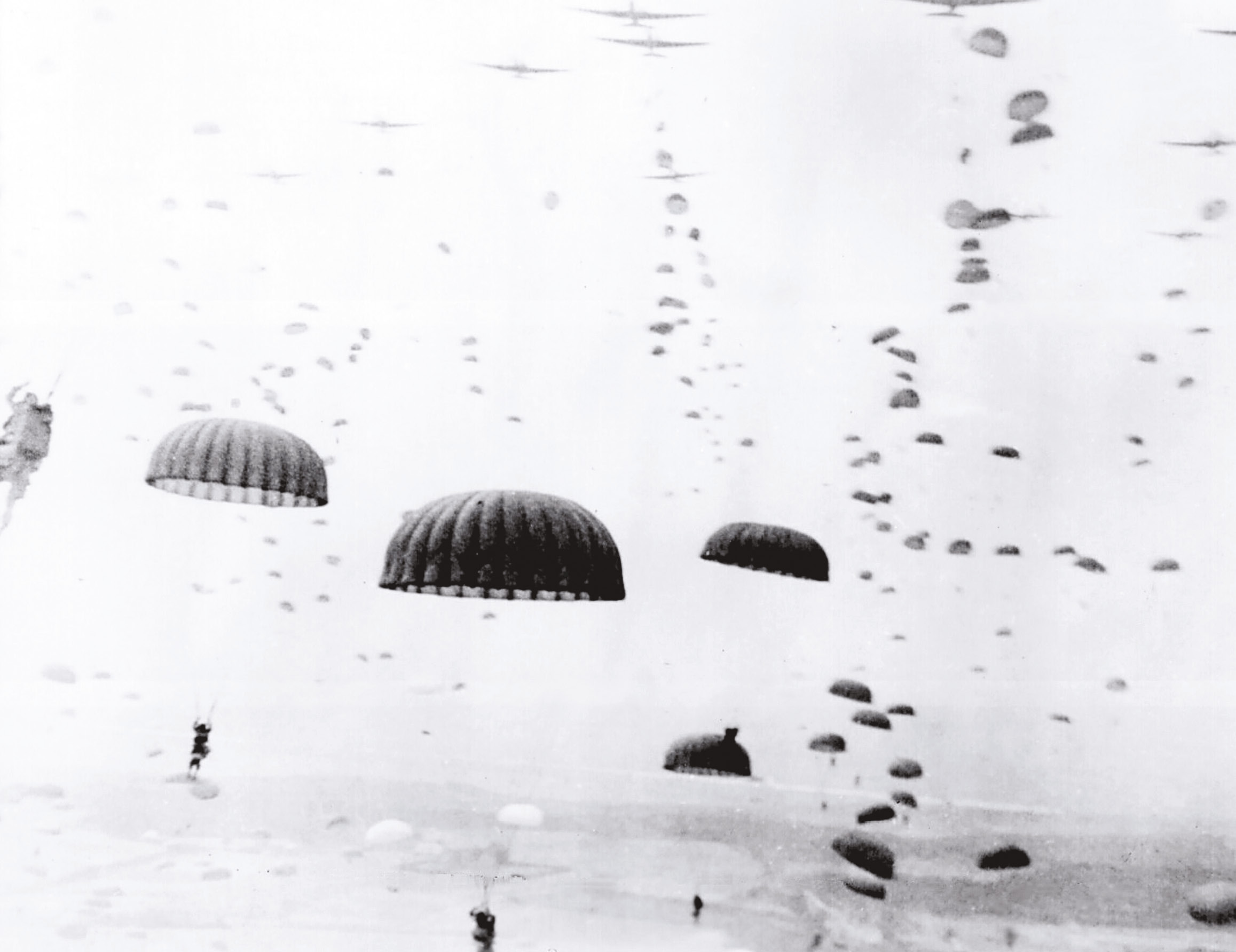
But now, certain the German army was in tatters, Monty proposed a plan that required success at every stage. Operation Market involved dropping three divisions of airborne troops into the German-occupied Netherlands. The US 101st Airborne was ordered to capture canal and river crossings between Eindhoven and Grave. The 82nd Airborne was charged with taking the stretch between Grave and Nijmegen, including the road bridge over the river Waal. The British 1st Airborne Division and the Polish Parachute Brigade had to capture the final bridge over the Lower Rhine at Arnhem, and hold it until ground troops arrived. Operation Garden required General Brian Horrocks’ XXX Corps to advance from the Belgian border 100km along a single road, under enemy fire, to relieve the airborne. If every stage of the operation went as planned, they would cross the Lower Rhine into northern Germany before the end of September. But, of course, rarely in war does everything go to plan. And Market Garden was no exception.
The Allied air forces that were to transport the airborne troops insisted on dictating where their Drop Zones (DZs) would be. At Arnhem, the DZ was 8 miles from the town and the ultimate objective, the bridge. Surprise would be lost as paras led by Lieutenant-Colonel John Frost had to fight their way through the city to reach their objective. Moreover, two SS Panzer Divisions happened to be refitting outside Arnhem. Although much depleted, these units were determined to keep the bridge over the Lower Rhine open. Further south, at Son, the 101st Airborne found the German resistance was much tougher than anticipated. The bridge here was blown by German engineers.
As XXX Corps raced northwards, it met heavy resistance. Its advance was reduced to a few miles a day. And it was held up for several hours while a new Bailey Bridge was constructed at Son. Its units were soon days behind schedule. There was an intense battle at Nijmegen. The isolated paras at Arnhem fought on bravely, expecting every hour to be relieved. After nine days, they had run out of ammunition, and, having suffered large numbers wounded, they were forced to surrender. Out of 10,000 men, only 2,400 escaped death, injury or capture. The 1st British Airborne Division was effectively annihilated. The relief column never reached the ‘bridge too far’.
With the failure of Market Garden, Eisenhower ordered Monty to turn his attention to the Scheldt estuary, and to opening its harbours to Allied shipping. Antwerp had been captured with its vast port in early September. But it couldn’t be used to bring in much-needed supplies until the estuary leading to it had been cleared of German troops – the remnants of the 15th Army. This should have been done in September – but, with Monty distracted, it was not until 9 November that the islands of Walcheren and South Beveland were captured and the Scheldt was finally cleared. By this time, the possibility of reaching the Rhine had been lost for the winter months.
Hitler’s last gamble
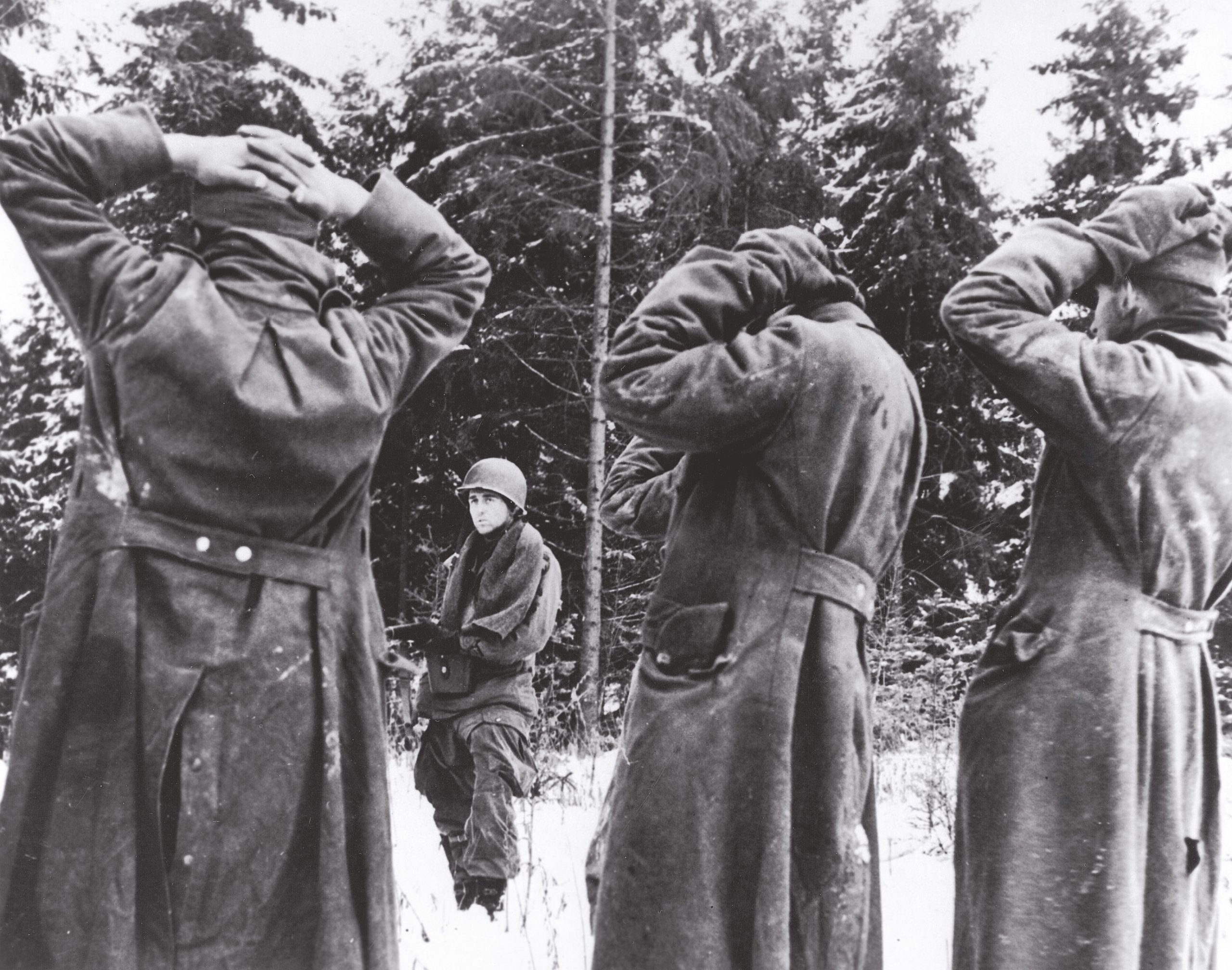
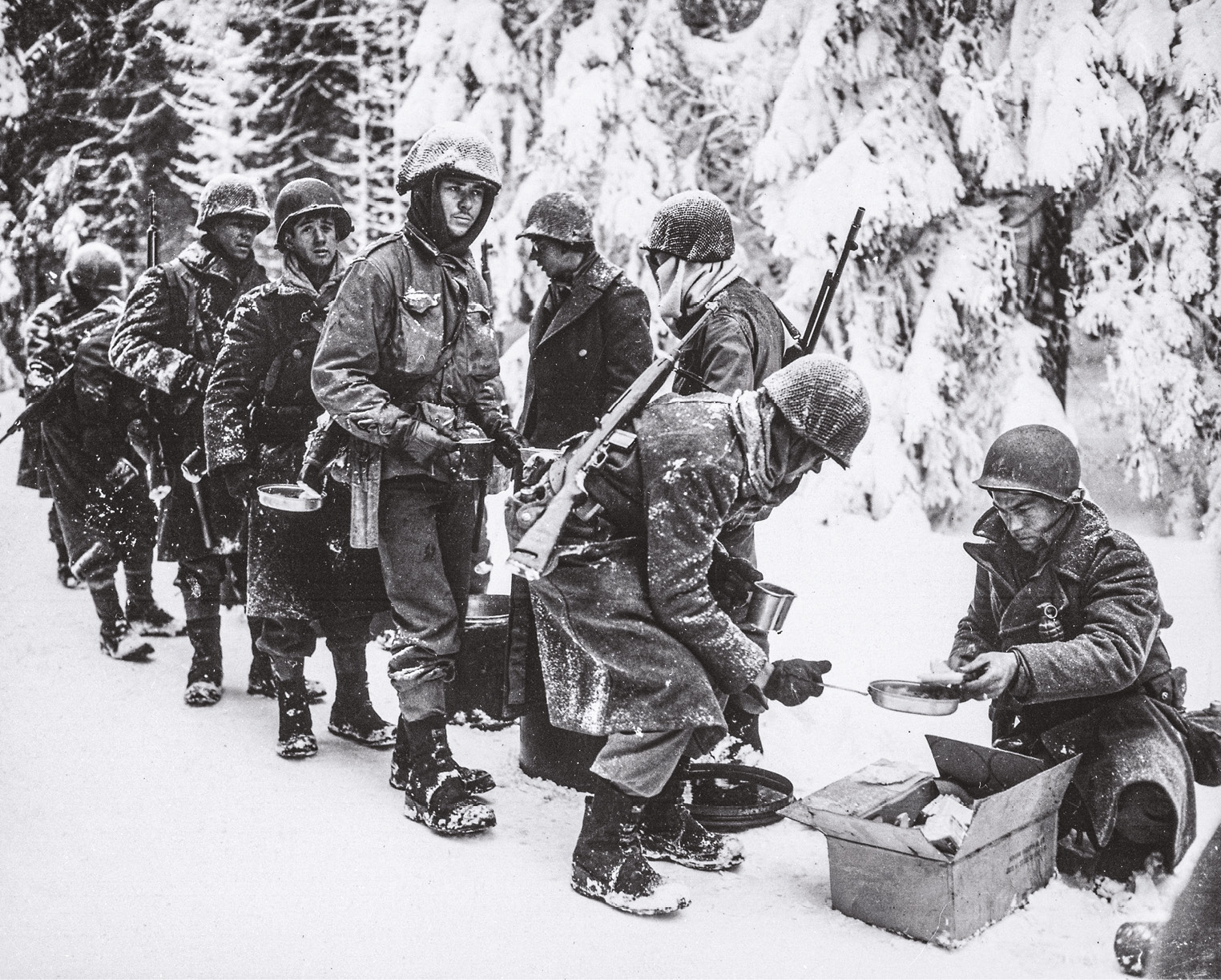
The Allies now had a front of nearly 500 miles from the Vosges to the Rhine, pushing towards the German border with 54 divisions all needing men and supplies. After a period of bad weather which had prevented Allied aerial reconnaissance flights, the German 5th and 6th SS Panzer Armies supported by the 7th Army – a total of 24 divisions – launched a major surprise attack in the Ardennes, intended to break the Allied forces apart and recapture Antwerp. It was Hitler’s last and desperate counter-offensive, and it hit a weak part of the American line where new troops were assembling and veteran units were resting up. An inexperienced US unit, the 106th Division, suffered badly. But US troops rallied quickly and held on at Bastogne in a furious battle that cost both sides dearly. When the bad weather lifted, overwhelming Allied airpower came into play. By early January, the German assault, known as the Battle of the Bulge, had run out of fuel. But the Allies faced four more bitter months of fighting before the war in Europe was over.
Final analysis
So, could the Allies have won the war by Christmas 1944? The decision to launch D-Day in Normandy was a good one from the point of view of a successful invasion but it shaped the fighting that followed. It would have needed a miracle for Allied troops to cross northern Europe and occupy Germany in just six months. Even if they had managed to break out rapidly through the bocage countryside, we can see now that it would have been near impossible to end the war in 1944.
The nearest they came was in the destruction of the German armies to the west of the Seine and the rapid advances across Belgium in early September. But with the failure of Monty’s daring Market Garden plan that month, the die was cast. The Scheldt should have been cleared earlier. And despite the heroic efforts of the drivers of the Red Ball Express, the lifeblood of supplying the advancing armies remained ‘our most acute difficulty’, as Eisenhower later wrote.
In the end, the first ships did not unload in Antwerp until 26 November. That delay alone meant the war would continue through the winter until spring 1945. Tens of thousands more would die in combat, or in the camps and amid the horrific, starvation conditions of Occupied Europe. It was a costly failure. MHM
In the next issue of MHM: Why was crossing the Rhine in 1945 so easy?
All images: Wikimedia Commons, unless otherwise stated