

Subscribe now for full access and no adverts
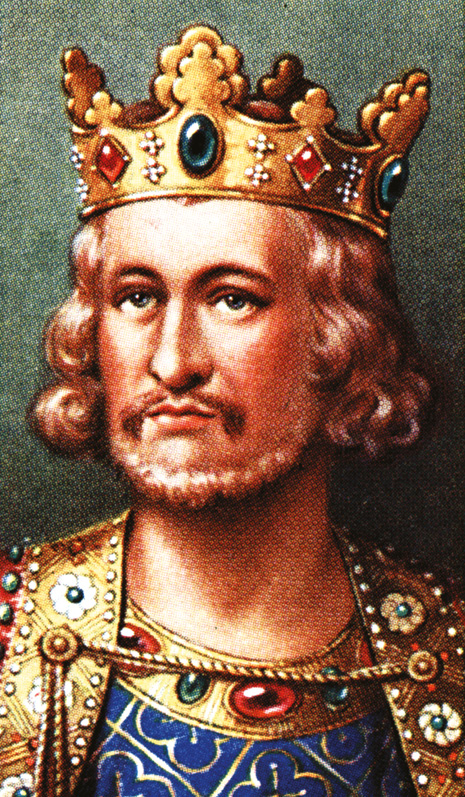
Cruel, mean, faithless, licentious, weak-willed and with no redeeming features – such was King John. No wonder there was a First Barons’ War.
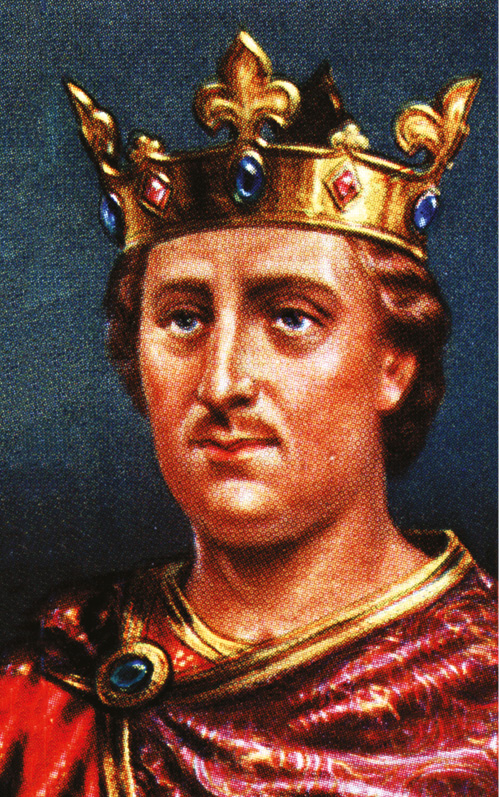
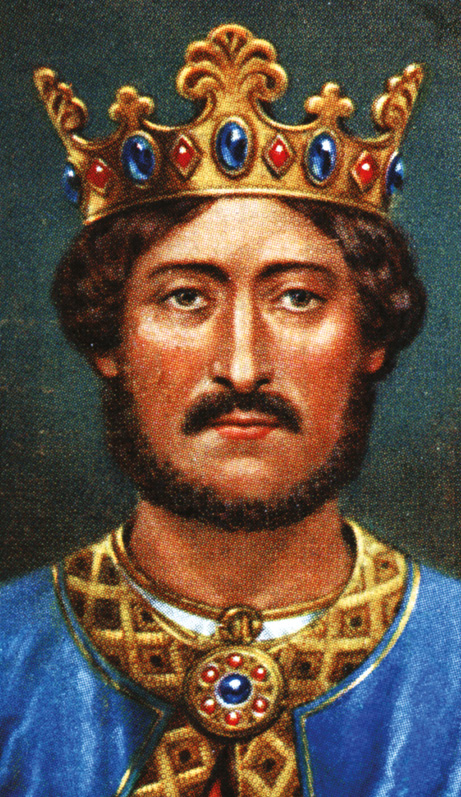
The favourite child of Henry II (see MHM 147, August/September 2025) and Eleanor of Aquitaine, John (1166-1216) was dubbed ‘Lackland’ because as the youngest son he possessed no lands. An early foray to Ireland as governor (1185) was inauspicious, and he was recalled for misconduct. He tried seizing the Crown when his elder brother (now King) Richard I was imprisoned in Austria (1192-1194) – but, despite such disloyalty, he had the support of the bulk of the English and Norman nobility, and was named successor at Richard’s deathbed and crowned on 27 May 1199 (even though Arthur, son of John’s elder brother Geoffrey, might have been considered the rightful heir by primogeniture).
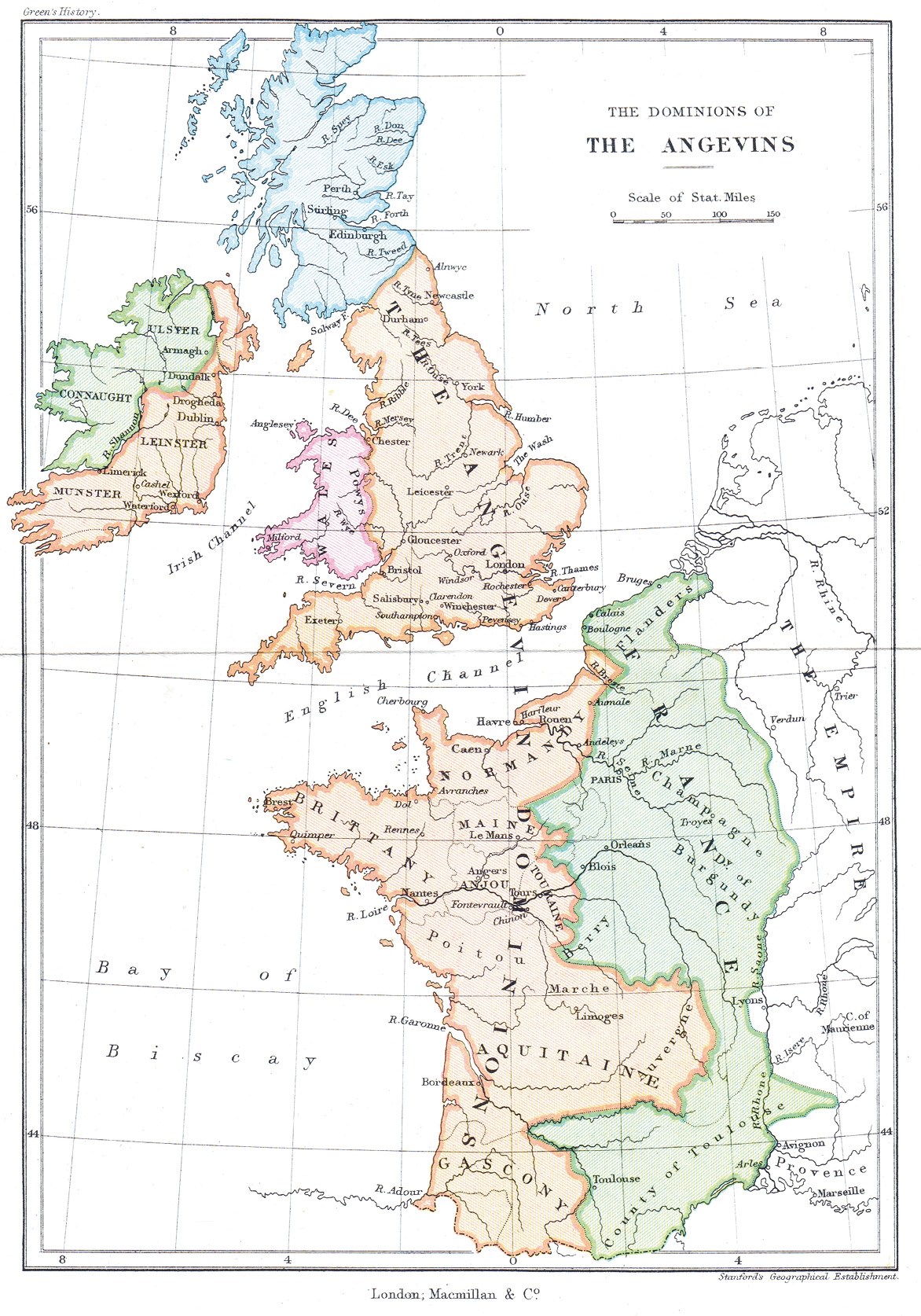
Having divorced his first wife, John married Isabella of Angoulême, the betrothed of the Count of La Marche, Hugh IX of Lusignan (c.1160s-1219), who in turn appealed to King Philip II Augustus of France as their common overlord. Finding his summons ignored by John, Philip declared John’s extensive French possessions forfeit in 1202 and waged war, causing John to lose much of his Angevin (Plantagenet) empire. During these wars, Arthur was captured, and by Easter 1203 he had been murdered, most likely at John’s behest – an act that cast a dark shadow, doing much to undermine John’s cause.
Philip continued to capture cities, until by March 1204 John retained only some of Aquitaine. He lost Normandy, his brother Richard’s stronghold of Château Gaillard, Poitou, and Touraine; Anjou, Maine, and Brittany followed. John’s vassals in southern France kept fighting, preferring an absentee landlord (John) to an encroaching one (Philip), and so resisted the advances of France’s Capetian royal house south of the Loire. North of the Loire, however, John’s losses were terminal, reducing the English monarchy’s prestige, severing Norman barons in England from French connections – and inevitably turning their attention back on England with disastrous consequences.

John confronted the church, too. After the Archbishop of Canterbury, Hubert Walter, died in 1205, John saw his nominee ignored in favour of English cardinal Stephen Langton, the candidate of Innocent III, who was consecrated by the Pope in 1207. John resisted, refusing Langton entry into England, resulting in the Pope placing England under an interdict in 1208. John retaliated, confiscating property from clergy obeying the interdict, and banishing the bishops. John’s excommunication followed in 1209, with a papal bull deposing John (1212) and tasking Philip with an invasion. The impasse ended in May 1213 when John conceded Langton’s appointment, with England and Ireland becoming papal fiefdoms and John agreeing an annual tribute of 1,000 marks. More positively, John had the Scots king, William the Lion, who’d joined the opposition, do him homage (1209); put down an Irish rebellion (1210); and subdued the independent prince of Wales, Llewellyn (1212).
Philip, frustrated over England, turned his fire on Flanders – but the French fleet was surprised at the Battle of Damme (30-31 May 1213), the English burning 100 ships and capturing 300. John finally showed resolve: mounting a serious offensive to regain lost territories north of the Loire; and allying with the Holy Roman Emperor (his nephew Otto IV), the Counts of Boulogne and Flanders, and much feudality in a great anti-Capetian alliance (1213-1214). In 1214, he campaigned in Poitou – but the attempt collapsed at Bouvines (27 July 1214), where the French king decisively bested the alliance. Defeat confirmed Philip’s acquisition of John’s Angevin possessions, brought Flanders under French control, and established the French monarchy at Europe’s top table. Adding insult to injury, the English king earned another moniker: the disrespectful ‘Softsword’.
Magna Carta
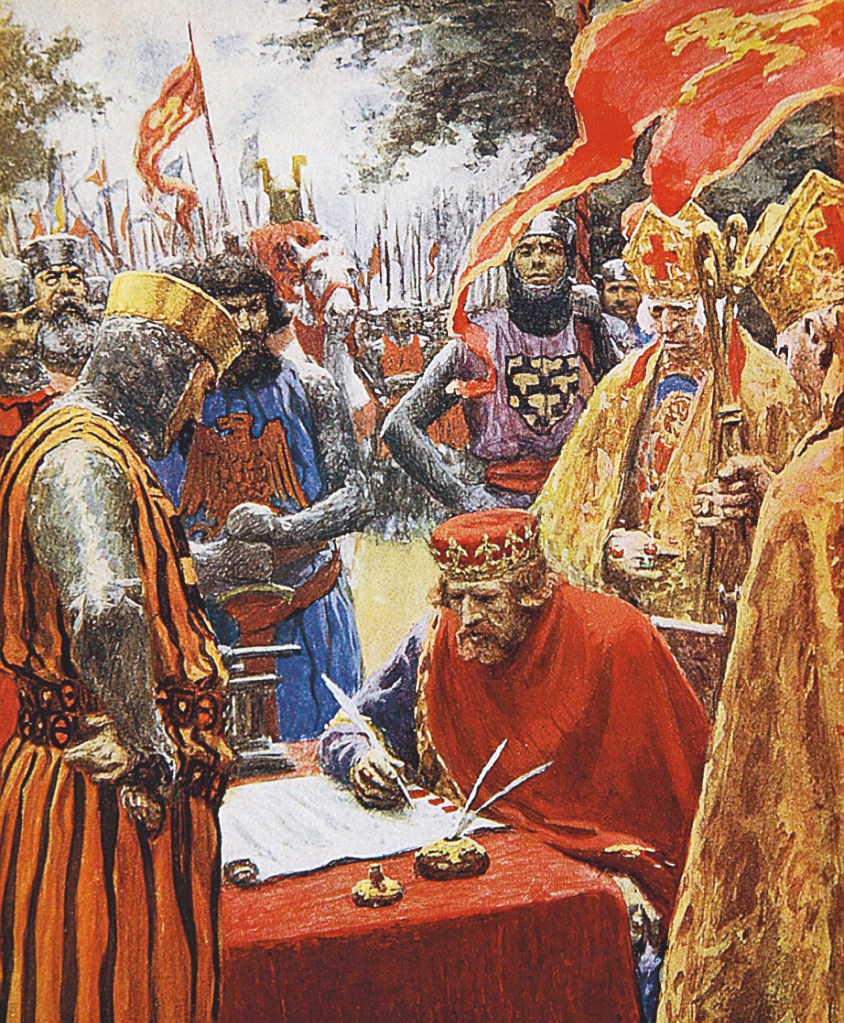
Some barons regarded John’s rule as despotic and arbitrary. They were angered by his extortions and disastrous foreign policy, resulting in Archbishop Langton leading demands for constitutional restraints on royal power. First (in 1213), there was a demand: that John, now bolstered by the Pope, should keep his oath, acknowledging the barons’ rights under feudal contract, while restoring Henry I’s laws. This was scornfully rejected. Military preparations were soon afoot, the baronial army assembling at Stamford, in Lincolnshire, and marching on London, which opposed John despite the liberal charter he’d given it. This led to one of English history’s landmark events: John’s sealing at Runnymede, near Windsor, on 15 June 1215 of the document known as Magna Carta – a preamble and 63 clauses to be enforced by a council of 25 barons. The consequences of any backtracking were manifest: these barons would declare war.
Born from England’s first politico-constitutional struggle (and later regarded as the basis of the nation’s constitution), Magna Carta was condemned in August 1215 by Pope Innocent III, who annulled it, with Langton also being suspended shortly afterwards for failing to excommunicate the barons. Regardless, Magna Carta’s imposition didn’t prevent the First Barons’ War.
As soon as the meeting was over on around 23 June, John headed west, stock- piling loot at Marlborough and Devizes while ordering Geoffrey de Martigny, one of the foreigners proscribed by Magna Carta, to join him with knights and equipment; the king’s comeback was being schemed. Some barons weren’t respecting Magna Carta either. They remained in arms, jumpy about the monarch’s intentions; royal messengers were attacked, while some of John’s manors and woods were wasted. Reconvening in Oxford in mid-July, there was no reconciliation, the meeting breaking up on 23 July, both sides preparing for war.
Barons fortified castles while John demanded those in the north surrender castles they’d seized, with the deadline of 15 August. He also began seeking foreign allies. Langton and the bishops tried getting the parties together on the deadline day, but John kept away. The Pope, meanwhile, excommunicated ‘all such disturbers of the king and the kingdom of England’. The barons debated, minus John, for three days, deciding to reconvene at Runnymede in a week’s time. Around 22 August, John left England for an unknown destination – a move viewed as his deposition by the barons, who began to search for a replacement. They were premature, however, as around 28 August John landed at Sandwich, transferring to Dover by the start of September along with some foreign troops. On 5 September, the excommunication went further, with the baronial leaders being named: this was the war’s effective declaration.

A country divided
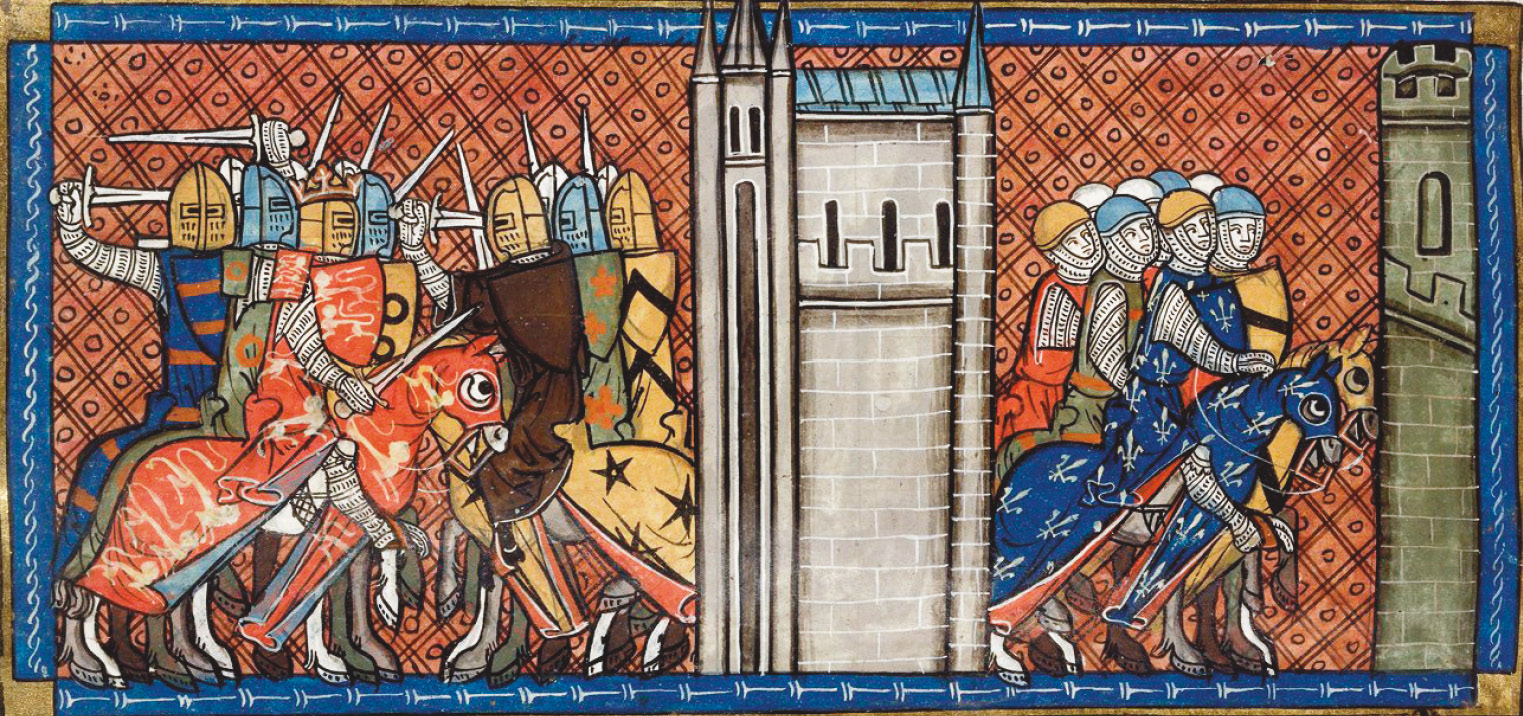
The First Barons’ War (1215-1217) erupted, with the early successes being John’s. The tide turned when the barons, or a Francophile section of them, offered the crown to Louis, son of Philip II Augustus (and future Louis VIII of France). While Louis was awaited, the barons had to keep the fight going and stop John’s march on London, with Rochester Castle (at the Medway River crossing on the road between Dover and the capital) being key. By early September 1215, the barons had the castle, courtesy of Robert Fitzwalter, who took possession with the keeper’s cooperation.
John attempted to burn the bridge, cutting off the garrison from its London support, but the barons resisted. Another setback occurred when storms destroyed ships bringing Flemish troops, though some did join John at Canterbury on 5 October. His augmented strength headed for Rochester. With Fitzwalter returned to London, the castle was commanded by William d’Albini, who had addressed supply deficiencies when he arrived on 11 October. On 13 October, John attacked, quickly forcing the city’s defenders back into the castle and destroying the bridge. Siege and bombardment ensued. On 26 October, Fitzwalter and 700 knights departed London to relieve the castle – but John’s army had grown significantly, so they withdrew again.
The defenders retreated into the keep, which had its south-east corner undermined by sappers. They finally surrendered on 25 November, after six weeks, having been reduced to eating horses. The compiler of the Crowland Chronicle said: ‘Living memory does not recall a siege so fiercely pressed and so staunchly resisted.’ When the castle fell, John executed only one defender, imprisoning the rest.
John split his forces, with one half keeping the barons holed up in London and ravaging baronial lands in East Anglia, the other striking north. William the Lion had died in December 1214, and his successor Alexander had sided with the rebels, hoping to gain in northern England; he would now also need sorting. John took the border town of Berwick-upon-Tweed in mid-January 1216, rampaging in Scotland for a week before retiring to England. His other army copycatted in East Anglia until shiploads of French soldiers arrived in early January, boosting the rebels, who hit back, raising the siege at Colchester. John reappeared in the south in March, quashing rumours that he’d died, and completed East Anglia’s subjugation; Colchester was taken plus Castle Hedingham and Framlingham.
The next target was London. John was 12 miles north at Enfield on 31 March, but the barons struck at an advance party and also beat off ships attempting a blockade. John retired to Reading (5 April) his chance missed; his best opportunity to take London was after Rochester fell. The harrying of the north and East Anglia may have satisfied, but it wouldn’t win the war. French troops reinforced London, while the northern rebels’ tail wagged, Alexander attacking Carlisle, the barons tilting at York. John sent a fruitless embassy to dissuade Philip Augustus from sanctioning an invasion, the Pope too. Instead, John focused on mustering a navy to defeat Louis at sea, writing to more than 20 coastal towns on 14 April demanding ships and crews. From the beginning of May, the king was watchful at Folkestone but was undone on 18 April when another storm wrecked his fleet.

After Louis landed with his advance party near Sandwich, in Kent, on 21 May 1216, the king lost most of south-east England. John arrived at Sandwich on 22 May with the rest of the French fleet in view – yet he didn’t dispute the landing, heading towards Winchester instead. At this low point, some quit the royal cause. Louis advanced on Canterbury, then Rochester, where the castle was retaken on 31 May. On 2 June, he marched into London in triumph, then the following day received the barons’ homage, assuring them he would restore ‘good laws and lost inheritances’. By 5 June, Louis was off again, heading for Winchester to find John.
Surrey castles fell (Reigate, Guildford, and Farnham) as Louis pressed on towards his quarry, approaching Winchester on the 14 June. John had already fled, yet Louis’s bombardment forced a surrender after ten days. Approaching the end of June, John was at Corfe, in Dorset, but found himself abandoned by many, including his half-brother, the Earl of Salisbury. Louis, however, gave up pursuing, instead focusing on more gains, taking the Hampshire castles of Portchester and Odiham (although the tiny garrison there resisted a week), before attacking the more formidable Windsor and Dover. Meanwhile, John slipped out of Corfe, heading to Hereford where he remained at July’s end, recruiting in the Welsh borderlands.
Louis struggled at Dover, where Hubert de Burgh, Earl of Kent, and a sizeable garrison held on as some of Louis’s followers vanished, the handiness of the Channel proving too tempting. John attacked again at the beginning of September, taking his remaining forces towards Windsor to relieve the siege; although he only got to Sonning, 17 miles west, he did dispatch some freshly recruited Welsh archers to harass the enemy camp. John next headed for East Anglia, knocking off the hundred miles to Cambridge in three days. He intended to ravage East Anglia again, the barons having returned since Louis’s arrival, and to nab Alexander, who was heading north having paid homage to Louis in Kent. When John learned that the rebels were at Cambridge, however, he abandoned East Anglian reprisals and bolted north to the Lincolnshire border. John missed Alexander, headed south again, arriving on 9 October at King’s Lynn, where he fell ill. Despite this, he was moving again on 11 October back towards Lincolnshire. It was now that much of the king’s baggage train – including, according to legend, the Crown Jewels – was famously lost in the Wash.

Magna Carta reissued
John’s fortunes were already desperate when, on 19 October 1216, he died at Newark of dysentery; nine days later, his nine-year-old son was crowned Henry III with the support of Anglophile barons. Dover Castle still held out courtesy of Hubert de Burgh, but the northern barons were causing trouble and Llewelyn the Great was making progress in Wales; it wasn’t a great legacy. The reissuing of Magna Carta helped turn the tide for a royal party which had three outstanding figures during the new king’s minority: William Marshal, 1st Earl of Pembroke (d. 1219), appointed Henry’s regent in 1216; Ranulf de Blondeville, 6th Earl of Chester (1170-1232); and de Burgh (d. 1243) himself. At a royal council meeting on 11 November, the papal legate Guala Bicchieri (c.1150-1227) declared Louis and his allies excommunicate, which gave the royal cause a religious sheen. Louis quit Dover and on the same day rocked up at Hertford to bombard the castle.
That reissue of Magna Carta with some key changes – principally the abandonment of the security clause (and panel of barons permitted to restrain the king) – occurred on 12 November and was a masterstroke, giving the barons enough to grasp while relaxing vexatious baronial control over the king. A few barons, known as reversi, returned to the fold. Marshal also set about restoring the machinery of government, enabling him to wage war. Louis still took castles though, with Hertford and Berkhamsted falling in December 1216 and others following. By early 1217 Louis had Norwich, Orford, Cambridge, Colchester, Pleshey, and Hedingham – but all these gains meant more garrisons, so he headed home for reinforcements. By the end of February, he’d left Dover. Perhaps Marshal was conceding pawns to stretch Louis’s resources while consolidating his own.
During Louis’s absence, the royalists themselves made gains – at Farnham, Marlborough, Portchester, Chichester, and the Isle of Ely. It was late April when Louis returned. Approaching Dover on 23 April to see his camp burned, he diverted to Sandwich, then headed for Winchester, arriving on 27 April to discover it had also fallen. Louis found himself back outside Dover’s walls on 12 May, ready to besiege it again. On the same day, rebels arrived at Lincoln to subdue the royalists there, the last garrison holding out for the king in that region. Marshal now resolved on a winner-takes-all battle at Lincoln, taking advantage of Louis splitting his forces, and gaining a victory before Louis’s greater resources prevailed.
Marshal duly mustered at Newark on 15 May. Come 19 May he was ready to leave and approached Lincoln via an arc to the north-west, where the castle, besieged for three months, stood against the city walls. The Second Battle of Lincoln (20 May 1217) began with Falkes de Bréauté getting a detachment of crossbowmen inside the castle through a postern gate in the city walls, while Ranulf attacked the city’s northern gate and Marshal focused on the north-west gate, which had been roughly blocked. While chaos reigned at the northern gate, besiegers caught between Ranulf’s attackers and Falkes’s crossbow bolts, Marshal cleared the north-west gate, entered the city, and assaulted the enemy. Ranulf, meanwhile, breached the northern gate. During close-quarter fighting, the leader of the French forces, the Count of Perche, was killed. The French tried regrouping but were routed. Although fatalities were relatively light, the royalist victory was total. Lincoln was sacked.
When Louis heard the news, he quit Dover, returning to London on 1 June to decide his next move. Having raided outside the city for supplies, Louis’s last hope came with reinforcements commanded by the mercenary Eustace the Monk, who arrived off Dover with some 80 ships on 24 August only to be scattered by a royalist fleet commanded by de Burgh, with just 15 French ships getting home. De Burgh’s greatest achievement of the war came despite being heavily outnumbered. This disaster and a royalist force outside London finally forced Louis to accept the Treaty of Kingston-upon-Thames (12 September 1217), which ended hostilities.
Shortly after, Louis was paid 10,000 marks to leave, so departed on 28 September. The treaty’s moderation helped unify the country again after John’s reign, and the restoration of order was Marshal’s achievement – even if it wasn’t to last.

A temporary peace
John’s reign, although much maligned, wasn’t all bad. It saw improvements in the civil administration, exchequer, and law courts, with towns receiving royal charters and the style of English local government introduced to Ireland. After Marshal’s death in 1219, de Burgh became the key figure until his fall from grace in 1232.
Magna Carta persisted and was reissued with modifications in 1216, 1217, and 1225. In 1259, Henry III (r. 1216-1272) faced the humiliation his father bestowed on him when formal renunciation of English claims north of the Loire was made under the Treaty of Paris. He would contest his own Barons’ War, the Second (1264-1267; see MHM 132, February/March 2023), when rebels led by Simon de Montfort had another stab at limiting royal power but would ultimately be defeated.
Further reading:
• Blood Cries Afar: The Magna Carta War and the Invasion of England (S McGlynn, The History Press, 2015).
• 1217: The Battles that Saved England (Dr C Hanley and T Ross, Osprey Publishing, 2024).
All images: Wikimedia Commons, unless otherwise stated