

Subscribe now for full access and no adverts
The revolutionary struggles that convulsed France from 1789 broke the fossilised class system that denied advancement to soldiers not born into the aristocracy. For the first time, the sons of humble innkeepers, ostlers, and coopers could become generals in their 20s, and, in some cases, end their careers as dukes and princes.
There were plenty of chances for ambitious young men to prove their battlefield skills, for from 1792 to Napoleon’s final downfall in 1815, France was almost permanently at war with her neighbours. But the revolution was a two-edged sword. While offering opportunities for glory, the close intertwining of politics with military matters meant the fate of commanders depended as much on the changing political scene in Paris as on their fortunes in the field.
Four leading French generals of the era switched sides during the revolutionary and Napoleonic wars for political and personal reasons, and found themselves fighting against their countrymen. Were they traitors and turncoats, or simply patriotic heroes wrong-footed by seismic political shifts?
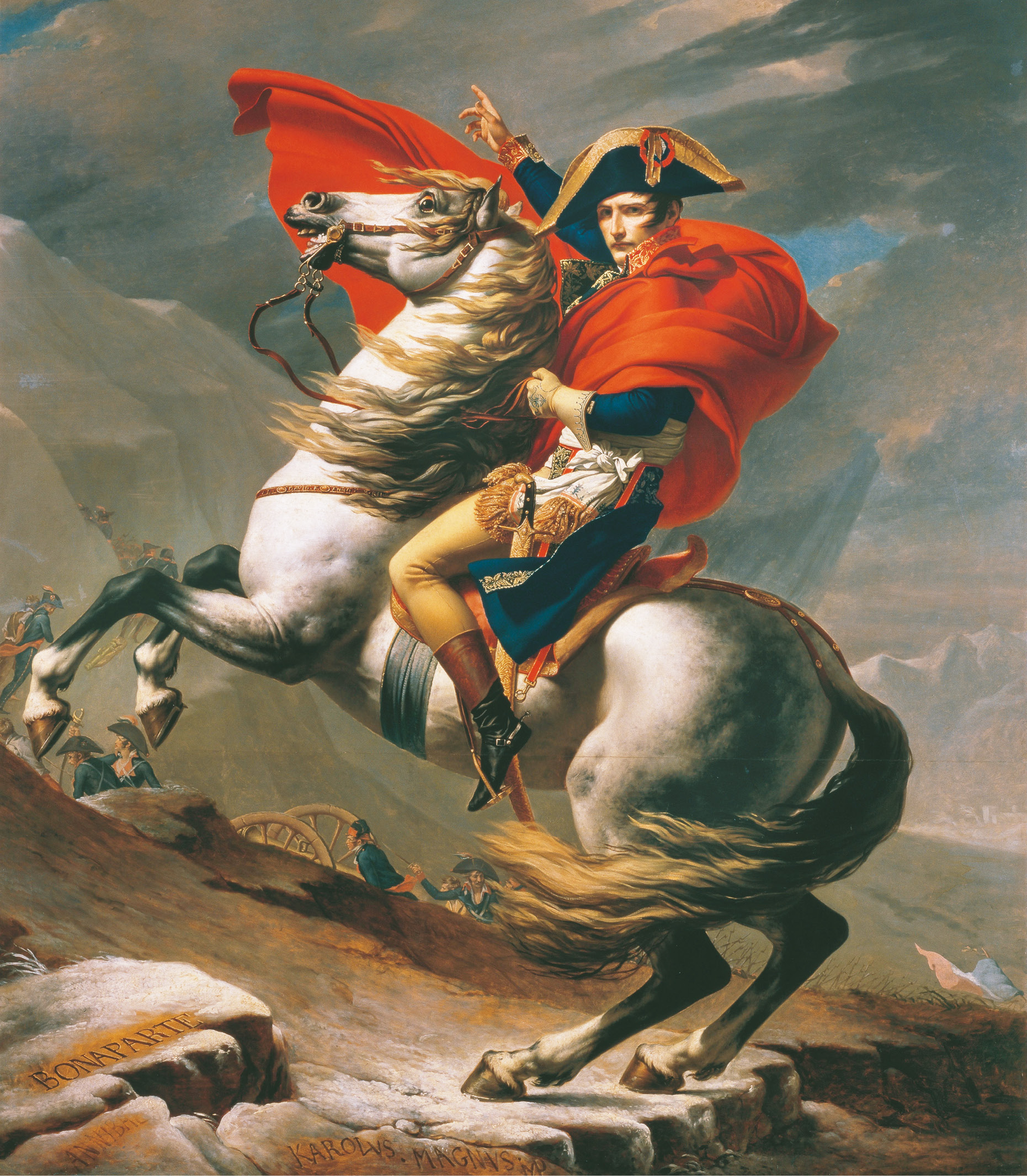
Charles-François Dumouriez (1739-1823)
Originally a scion of minor nobility, Dumouriez was the first of the quartet to defect to France’s enemies. He had an early career in the army of Louis XV, suffering 22 wounds in the Seven Years War (1756-1763). He then joined the king’s intelligence service, the Secret du Roi, undertaking diplomatic missions as ‘cover’.
On one such mission to Poland in 1770, Dumouriez was given command of a local militia raised to fight Russia during the War of the Bar Confederation. His force was heavily defeated by the legendary ‘invincible’ General Aleksandr Suvorov at the Battle of Lanckorona, and although (or because) he was not present in the field during Suvorov’s surprise assault, Dumouriez acquired a reputation for duplicity that he would never shake off.
Recalled to France, Dumouriez was jailed – spending six months in the Bastille – on charges of diverting secret service funds to pay his own debts. He was still in custody when Louis XVI ascended the throne in 1774, but was speedily released, spending the next decade in obscure provincial postings.
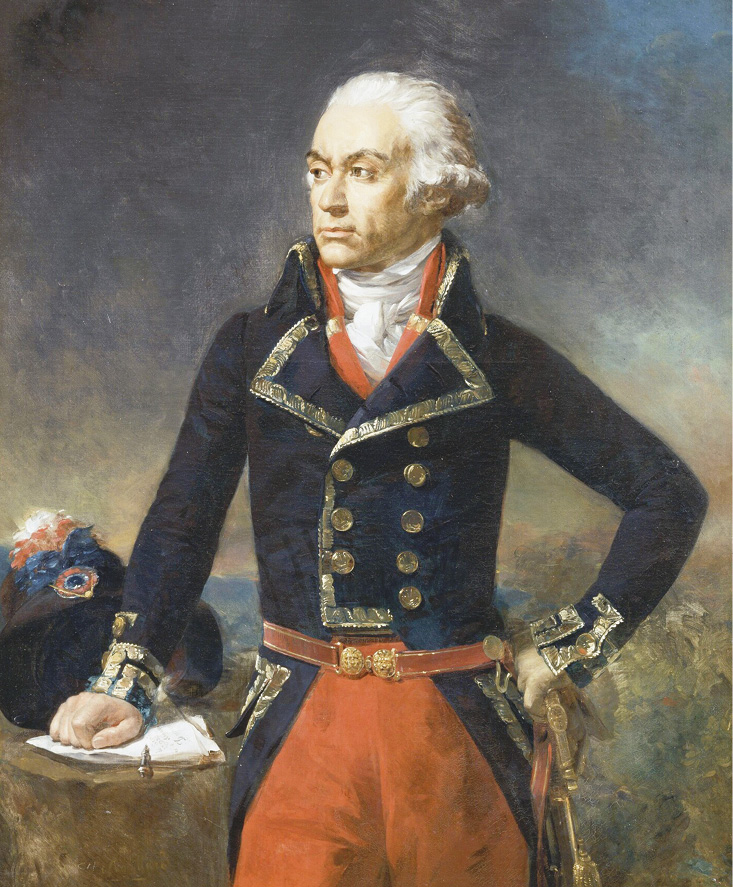
The outbreak of the revolution in 1789 came as a heaven-sent opportunity for the 50-year-old Dumouriez. Still fiercely ambitious, he ditched his aristocratic origins, forgot his royalist service, and dashed to Paris, joining the Jacobin Club, the most radical of the rival revolutionary factions. Dumouriez supported purging the army of his fellow aristocrats and successfully intrigued against the Marquis de Lafayette, hero of the American Revolutionary War and commander of the French National Guard, as a ‘traitor’ – forcing Lafayette to flee to Austria.
Ever the opportunist, Dumouriez then fell in with the moderate Girondin faction, who had temporarily gained the upper hand over their Jacobin rivals. In March 1792, the Girondins rewarded Dumouriez by briefly making him Foreign Minister. They then gave him command of the newly raised citizens’ army. Austria and Prussia, alarmed by the increasing extremism of the revolution, had crossed the French frontier to stop it in its tracks.
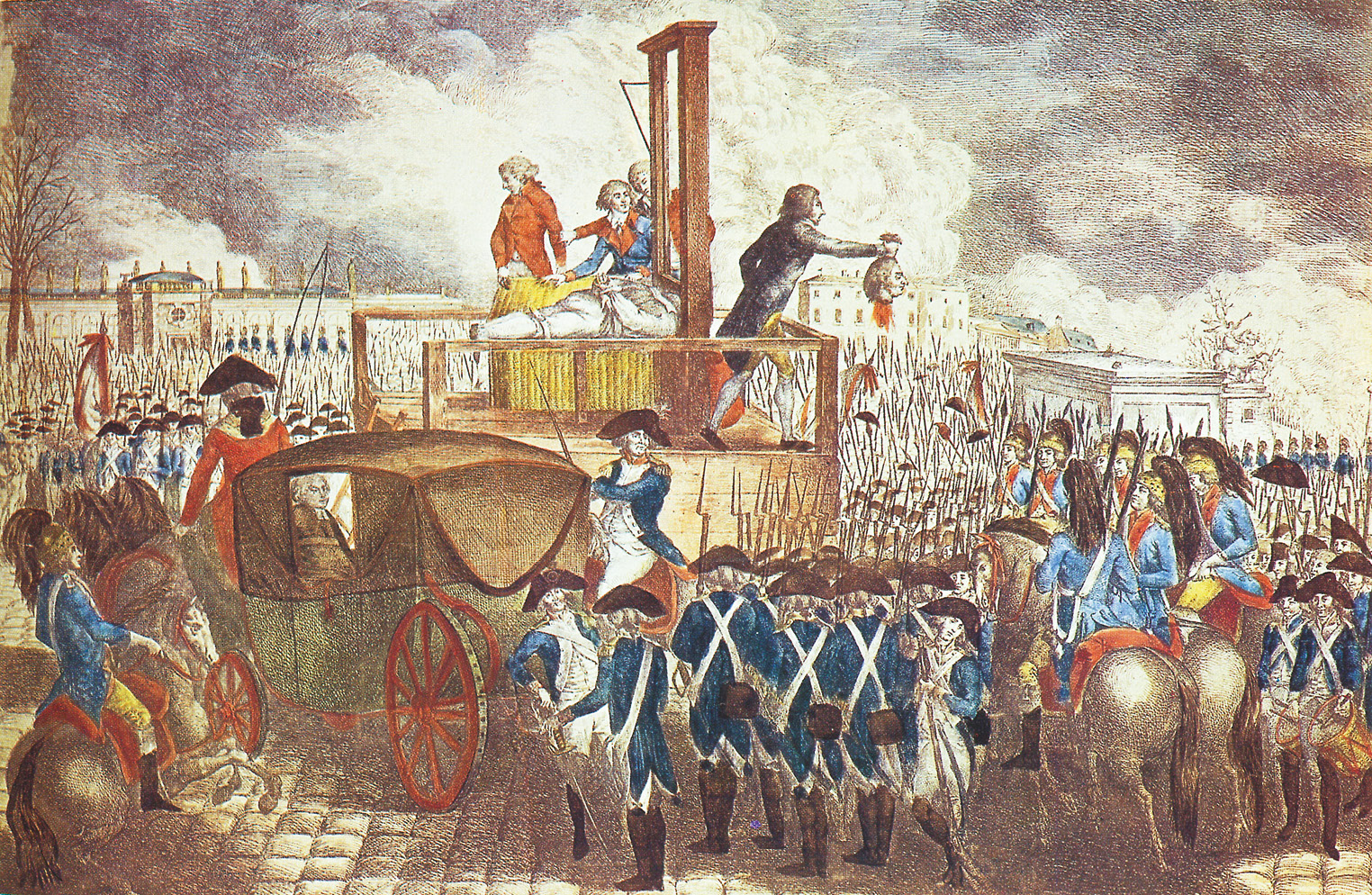
Dumouriez’s friend General Kellermann successfully turned back the invaders outside Paris with the famous Cannonade of Valmy, while Dumouriez invaded the Austrian-ruled Netherlands (today’s Belgium). Here, on 6 November 1792, he inflicted a signal defeat on the Austrians at Jemappes, overwhelming a much smaller army and capturing Brussels. His triumph was short-lived, however. His volunteer army began to desert en masse, while Dumouriez himself grew disillusioned with the revolution’s course in Paris – where the Jacobins were now in the ascendant, and in January 1793 had executed the king.
In March 1793, Dumouriez’s depleted army met a numerically more equal Austrian-Dutch force at Neerwinden, near Brussels, and was decisively defeated. Dumouriez lost many men in futile assaults on the enemy and withdrew from the field. More mass desertions followed, reducing the French army to half its original strength. Two days later, Dumouriez was defeated again at Pellenberg. A demoralised Dumouriez, retreating through Brussels, opened armistice negotiations on his own authority with the victorious Austrian commander, the Prince of Coburg. Word reached Paris, and a high-powered team of five commissioners was sent to investigate. It was then that Dumouriez made his fatal move into outright treason.
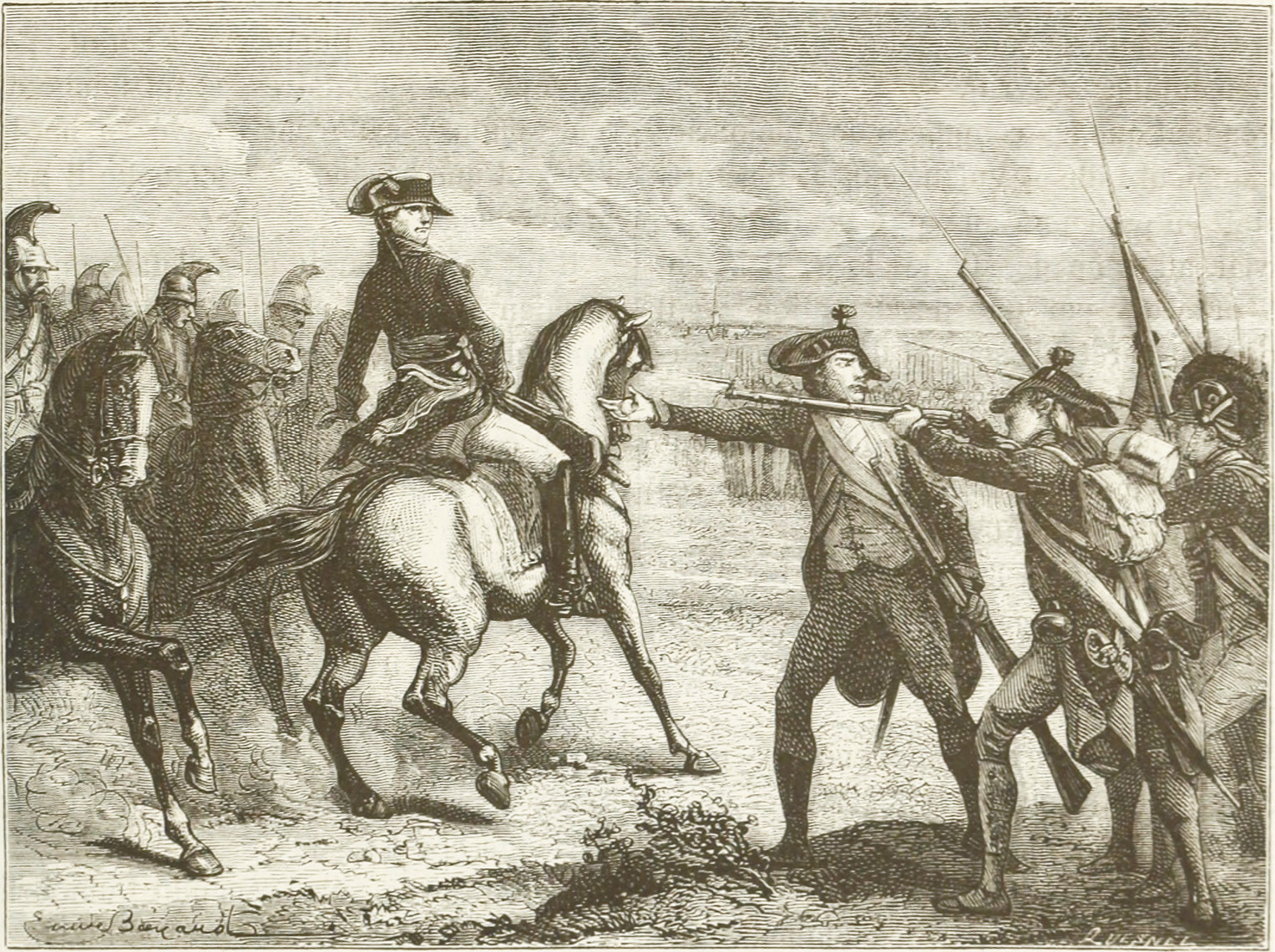
He ordered the arrest of the commissioners and handed them over to Austrian captivity. At the same time, he proposed to Coburg that they join forces and march on Paris to restore royal government. His plan was thwarted by his own men, however. Led by his artillery, Dumouriez’s soldiers mutinied against his treason and even fired on him when he was spotted in the company of Austrian officers. His coup having collapsed, Dumouriez defected to the Austrians in April 1793. He would never return to France.
The rest of Dumouriez’s long career is an inglorious story of failed plots against revolutionary and Napoleonic France. As if bearing out the old adage that treason never prospers, he wandered around Europe, engaging in failed royalist conspiracies, writing his memoirs, but finding no permanent welcome anywhere – until, in 1804, in the midst of Britain’s struggle with Napoleon, he arrived in London.
The government, delighted to find such a distinguished Frenchman offering his services, granted Dumouriez a pension, and enlisted his help as a paid military and espionage adviser. In 1814-1815, with the final downfall of Napoleon and the restoration of the Bourbons to the French throne, the old soldier attempted to secure a marshal’s baton from Louis XVIII, but was curtly refused. No one, it seems, loved a traitor. Dumouriez died in English exile in 1823, and has a handsome tomb in Turville parish church, near Henley-on-Thames.
Jean-Charles Pichegru (1761-1804)
Born of a peasant family in the Jura, Pichegru came from a very different social milieu to Dumouriez, but his destiny – moving from revolutionary enthusiasm to royalist conspiracy – was eerily similar. After a religious education, he became a maths instructor at the military academy at Brienne, where one of his students was a young Corsican named Napoleon Bonaparte.
An artillery specialist like Napoleon, Pichegru briefly saw action fighting for the Americans in the War of Independence. Returning to France, he was caught up in the turmoil of the 1789 revolution, and sided with the most radical revolutionaries, becoming head of the Jacobin Club in the city of Besançon. His rise in the revolutionary army was rapid, and he was made a Lieutenant Colonel and then a Brigadier General at 32.
In 1793, Pichegru became a protégé of Louis de Saint-Just, one of the most fanatical Jacobin revolutionaries, who made him a Divisional General commanding the Army of the Rhine, sending several senior officers to the guillotine to make room for him. Revolutionary justice was savage, and any commander who failed on the battlefield risked execution. A counter-revolutionary army of Austrians, Prussians and French royalist exiles had invaded Alsace, and Saint-Just gave Pichegru the task of pushing them back. In the month-long Battle of Haguenau, the young general did just that. By Christmas, the Austrians and Prussians had retreated to the Rhine’s eastern bank.
A year later, Pichegru was in action again as Commander of the Army of the North. The winter of 1794-1795 was exceptionally bitter, with temperatures plunging to −15°C. But, instead of sending the Army into winter quarters, the governing Convention in Paris ordered Pichegru to take the offensive into the Netherlands, which was being held by an Anglo-Hanoverian army. Turning the freakish weather to his advantage, Pichegru marched his troops across the frozen Maas and Waal rivers, seized the town of Utrecht, and finally arrived in Amsterdam where Dutch sympathisers proclaimed a revolutionary republic. One picturesque highlight saw Pichegru’s hussars gallop across the frozen Zuyderzee to seize the Dutch fleet, entombed in the ice at Den Helder.
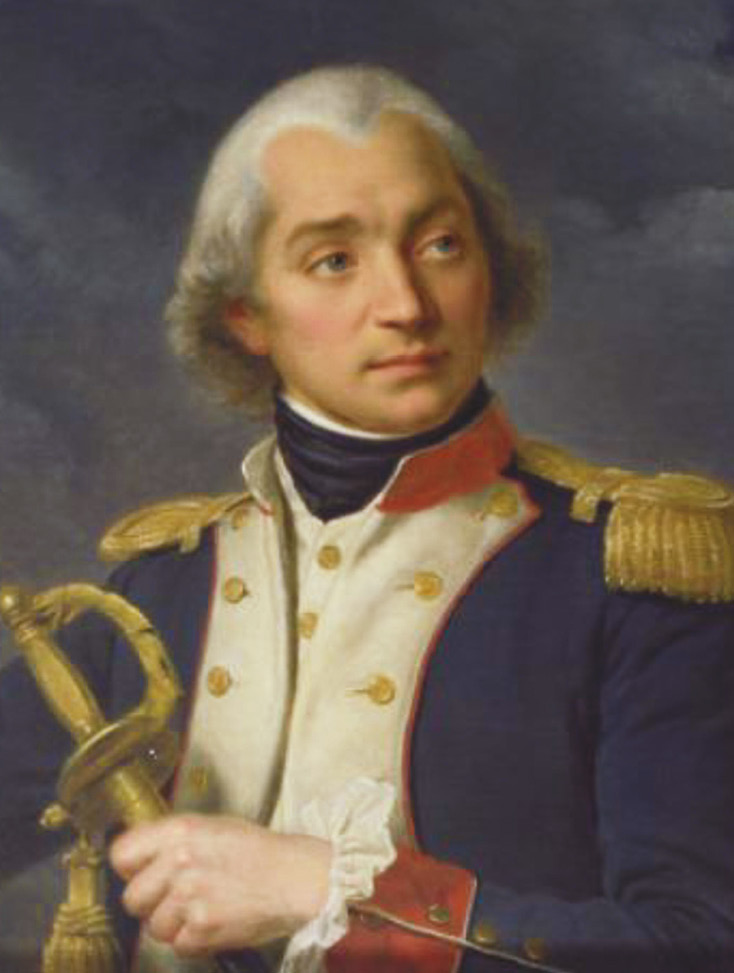
Returning to Paris in triumph, Pichegru was awarded the title ‘Saviour of the Nation’ by the Convention. However, the previous summer the political situation had drastically altered. The extreme Jacobins, led by Robespierre and Pichegru’s mentor Saint-Just, had been overthrown and guillotined, and the Reign of Terror ended. Pichegru had already changed his own politics, and had been in contact with exiled royalists through intermediaries, either because he had become disillusioned with the bloody excesses of the Terror, or because he was in financial difficulties with two expensive mistresses to support, or both. William Wickham, Britain’s spymaster in Switzerland, had offered huge bribes – including the fabulous Chateau of Chambord – if he agreed to stage a coup and restore the monarchy.
For the moment, Pichegru supported the new regime in Paris (known as the Thermidorian Reaction), and he put down a revolt by the city’s starving sans culottes on 1 April 1795 by declaring martial law and placing the city in a state of siege. He then moved into the underworld of royalist plots against the Republic he had so successfully served. He may even have betrayed the military plans of his colleague General Jean-Baptiste Jourdan to the enemy.

Whatever was going on behind the scenes, officially Pichegru continued his glorious career – combining the Armies of the North, the Rhine, and Sambre-et-Meuse to cross the Rhine and capture Mannheim in the spring of 1795. In October, hoping to provoke a political crisis, and at the height of his fame, Pichegru offered his resignation to the Convention, which, to his dismay, accepted it. The general then went for broke, openly declaring himself in favour of a royalist restoration, and securing election to the new ‘Parliament’, the Council of Five Hundred, as a royalist.
The aim of the plotters was to assassinate Napoleon.
Fearful for their own futures if the royalists returned to power, the old Jacobins who had overthrown Robespierre and Saint-Just, now forming a collective leadership calling themselves the ‘Directory’, organised a coup of their own. In September 1797, using troops supplied by Napoleon and commanded by the future Marshal Pierre Augereau, they purged the Council of its royalist members. Some were jailed but others, including Pichegru, were deported to the colony of Cayenne, in French Guiana, whose climate was so deadly it was known as the ‘dry Guillotine’. With seven companions, Pichegru managed to escape this hellhole and made his way to the United States.
Burning for revenge, Pichegru returned to Europe, and in 1799 joined the staff of the Russian general Aleksandr Rimsky-Korsakov, whose armies had joined the Austrian and Prussian coalition against France, and who was in Switzerland preparing to attack Pichegru’s homeland. The Russians waited too long, however, and were scattered in a surprise assault launched from Italy by another future Napoleonic marshal: André Masséna.
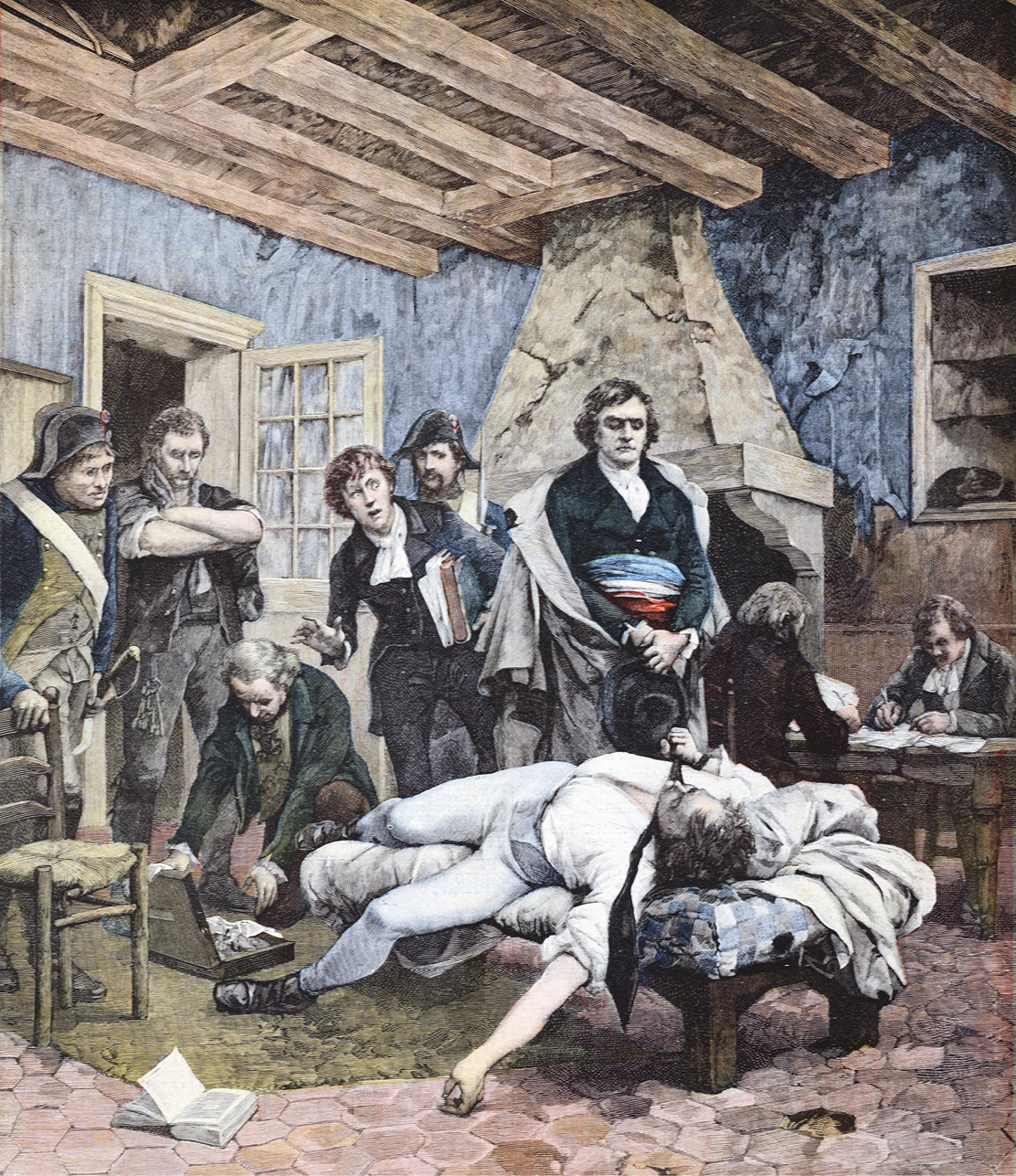
Pichegru got away to England and immersed himself in royalist conspiracies with fellow émigrés. In August 1803, he secretly landed near Dieppe, accompanied by the veteran counter-revolutionary Georges Cadoudal. The aim of the plotters was now to assassinate Napoleon, who had overthrown the Directory and assumed power as dictatorial ‘First Consul’.
Pichegru and Cadoudal hid out in royalist safe houses in Paris while they planned the killing – but it was to no avail. Napoleon had already established the makings of a police state, and, before their conspiracy could ripen, Cadoudal and Pichegru were betrayed and arrested. The fallen general was confined in the grim Temple prison, where, in April 1804, he was found strangled in his cell. It was given out that he had hanged himself, but many suspected the real culprit was Napoleon himself.
Jean-Victor Moreau (1763-1813)
Moreau was a friend and colleague of Pichegru’s, and their careers ran on curiously parallel lines: both backed the revolution and rose to military heights; both won glory by defeating foreign enemies; both then fell out with the politicians leading the revolution in Paris; and – crucially – both crossed Napoleon Bonaparte, the military strongman who emerged from the chaos. Both went into exile; both joined France’s foreign enemies; and both died violently.
Born into a bourgeois family in Brittany, Moreau was forced by his lawyer father to study law at university, though his ambition was to join the army. Handsome and charismatic, he became a student leader during the revolutionary ferment, joined the National Guard, and was elected a Lieutenant Colonel in the volunteer revolutionary army. He served under Dumouriez and distinguished himself at the Battle of Neerwinden. As a result, he was noticed by Lazare Carnot, the ‘organiser of victory’ who had raised the revolutionary armies, and promoted to Brigadier General.
In 1794, Moreau fought alongside Pichegru in the Army of the North. Together, they repelled the Austrian invasion of north-east France at the Battle of Tourcoing and stormed into Flanders. By now commanding a division, Moreau captured Ypres, Ostende, and Nieuport, and took command of the whole army when Pichegru fell ill. That same summer, however, Moreau’s father was guillotined for sending money to royalist émigrés. Though Moreau himself stayed loyal to the revolutionary regime, this incident may have sown the first seeds of distrust of the young general among the revolution’s leaders.
The following year, Moreau was named as commander of the Army of the Rhine and Moselle, and led his forces across the Rhine, where he met with mixed fortunes fighting the Austrians, but showed skill in conducting fighting retreats after defeats, returning to France with 5,000 prisoners. In 1797, he discovered correspondence proving Pichegru had been in touch with French royalist émigrés, and was contemplating switching sides. Torn between betraying his friend and loyalty to revolutionary France, Moreau hesitated before reporting Pichegru’s treason. Only after Pichegru’s flirtation with royalism became public knowledge, did Moreau hastily denounce him as a traitor.
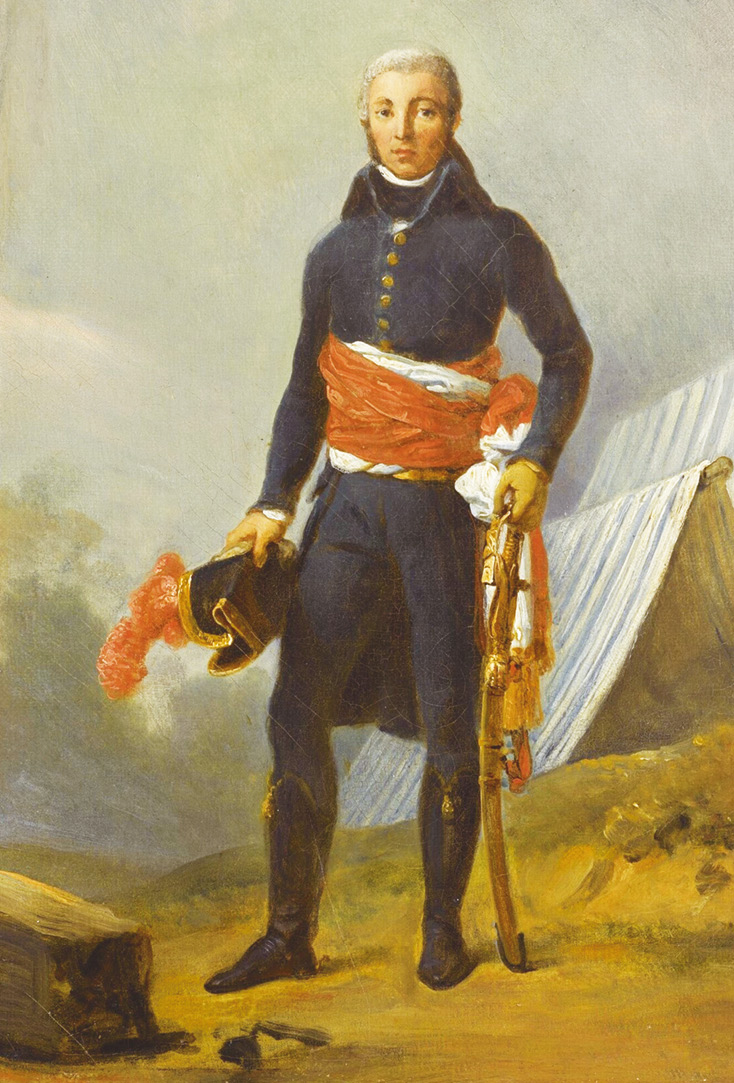
With this second black mark against him, Moreau was forced by the Directory into very premature retirement. He kicked his heels for a year, but was too talented to be ignored for long. In 1798-1799, he was called to save a deteriorating situation in Italy, where, with Napoleon absent in Egypt, French armies were hard-pressed. Once again, Moreau met with mixed fortunes, culminating in a major setback at the bloody Battle of Novi, where France faced a formidable Austro-Russian army under the brilliant Suvorov. Moreau took over command late in the day, when the French C-in-C was killed, and, together with another future Napoleonic marshal, Laurent de Gouvion Saint-Cyr, managed to prevent retreat from turning into a rout.
When Napoleon returned from Egypt, he summoned Moreau to Paris to help him stage his coup d’état overthrowing the Directory. Though distrusting his Corsican colleague, Moreau had no love for the Directory either, and agreed to assist the coup – seizing the Luxembourg Palace and arresting two of the Directors there.
As First Consul, Napoleon rewarded Moreau by giving him command of the combined Armies of the Rhine and Switzerland. He also flattered Moreau’s vanity by presenting him with a pair of pistols engraved with the names of Moreau’s victories as a token of esteem.

In 1800, Moreau mounted a campaign in Germany, winning a series of triumphs over the combined Austrian and Bavarian armies, culminating in the great battle of Hohenlinden, east of Munich, on 3 December. Here, Moreau ambushed a numerically superior enemy split into four columns as they emerged from a forest and put them to flight. He pursued them into Austria, taking 20,000 prisoners in a fortnight, and forced them to sue for an armistice on Christmas Day.
Triumphs can be treacherous, too, and Moreau’s victory earned him a powerful opponent. Napoleon, who had scored his own triumph over the Austrians at Marengo six months before Hohenlinden, now perceived Moreau as a possible rival. For his part, Moreau was not immune to professional jealousy and, as a steadfast Republican, disapproved of the First Consul’s autocratically imperial behaviour.
The Emperor now perceived Moreau as a possible rival.
In a break during his German campaign, Moreau had married 19-year-old Eugénie Hulot, from French-ruled Mauritius, a friend of Napoleon’s Creole wife Joséphine de Beauharnais. Eugénie was a powerful personality with political ambitions of her own. On Moreau’s return from Germany she established a salon, known as the ‘Club Moreau’, where opponents of the First Consul gathered and plotted. All this was observed by Napoleon’s spies, and Bonaparte decided to act before Moreau became a real threat.
Matters came to a head in 1804 with the clandestine return to Paris of Pichegru, bent on eliminating Napoleon. Pichegru held a secret meeting with Moreau, at which the two old comrades agreed to get rid of Bonaparte – but differed on how to replace him. While Pichegru was now a royalist actively conspiring to bring back the Bourbons, Moreau remained staunchly republican. As the plotters dithered, Bonaparte struck. Both Moreau and Pichegru were arrested and locked in the Temple prison, where Pichegru met his mysterious end. Moreau was put on trial and sentenced to two years’ imprisonment, which Napoleon ‘commuted’ to permanent exile.
Moreau and Eugénie made their way to the United States via Spain, and settled in Pennsylvania. The general seemed content with a leisurely life of hunting, shooting, and fishing, but his forceful wife had other ideas. In 1812, Eugénie persuaded her husband to return to Europe and take political advantage of Napoleon’s disastrous Russian campaign and his retreat from Moscow. Reluctantly declining President Madison’s offer to take command of the American army in the War of 1812 with Britain, Moreau set sail.
He arrived in Germany, where he was welcomed by Tsar Alexander I of Russia and invited to take up a position as military adviser to the Allied command fighting Napoleon. Moreau justified his decision to throw in his lot with France’s enemies by reasoning that he was not fighting France, but battling the usurper who had led the country to ruin.
He did not have long to struggle with his conscience: during the Battle of Dresden in August 1813, while Moreau was conferring with the Tsar, a French cannonball smashed his legs. The general calmly smoked a cigar as surgeons amputated both limbs below the knee. But a week later Moreau died of his injuries. His last words were stoical: ‘Calm yourselves, gentlemen – this is my fate.’ A grateful Tsar buried Moreau in St Petersburg and awarded Eugénie a widow’s pension.
Jean-Baptiste Bernadotte (1763-1844)
Bernadotte was a friend of Moreau, but his switch of allegiance and betrayal of Bonaparte had happier consequences: the descendants of the fiery Gascon marshal sit on the throne of Sweden to this day.
Bernadotte was a tailor’s son, born in Pau, in south-west France. He joined the army, becoming a sergeant and supporting the revolution when it broke out. He rose through the ranks, saw plenty of action during the Revolutionary Wars, and, after General Jourdan’s great victory over the Austrians at Fleurus in June 1794, was promoted to Brigadier General on the battlefield.
In 1797, he first crossed paths with the man with whom his life would be inextricably entwined, when he was sent with reinforcements from the Army of the Rhine to help Napoleon’s triumphant campaign in Italy. Bonaparte was evidently happy with Bernadotte’s performance, as he was given the honour of taking the captured Austrian standards back to Paris. The following year, his Republican credentials were cemented with a short stay in Vienna as Ambassador to Austria.
In 1799, Bernadotte met and married Désirée Clary, a former fiancée of Napoleon’s, whose elder sister Julie was married to Napoleon’s brother Joseph. Bernadotte thus became a member of the far-flung Bonaparte clan, though he was and remained a frequent and jealous critic of his brother-in-law – feelings returned with interest by Napoleon.
Bernadotte held himself aloof from the various coups and plots convulsing post-revolutionary Paris, and his career thrived as a result – including a brief stint as Minister for War under the Directory. When Napoleon returned from Egypt, Bernadotte neither supported nor opposed his brother-in-law’s own successful coup overthrowing the Directory. His ambiguous attitude led Napoleon to try to buy Bernadotte’s loyalty – first in an abortive attempt to exile him as Ambassador to the United States, and then by larding him with honours and rewards, including making him one of the generals promoted to Marshal of the Empire.

He was given command of a corps in the 1805 campaign that culminated in the Emperor’s greatest victory, over the Austrians and Prussians at Austerlitz, during which Bernadotte commanded the reserve. The marshal benefited from the baubles Napoleon was apt to grant his family members, when he was promoted to be Prince of Pontecorvo. The following year, he again took charge of the I Corps against Prussia, but played an inglorious and inactive part in the campaign, when he sat out the twin victories of Jena and Auerstädt in October 1806. His Corps was positioned between the Emperor battling at Jena, and the outnumbered forces of Marshal Davout holding off the main body of the enemy at Auerstädt, but he failed to march to help either of them, even though he could hear gunfire from both battles.
Napoleon, furious at Bernadotte’s ‘disgraceful’ inaction, considered court-martialling and shooting him, but family considerations came first, and he took no action. Bernadotte somewhat redeemed himself by pursuing the retreating enemy, defeating the redoubtable Marshal Blücher in actions in which he was twice wounded, forcing him to relinquish his command of the corps. Sent to govern the north German ports of Hamburg, Bremen, and Lübeck, Bernadotte met a group of captured Swedish officers in Lübeck. His considerate treatment of them made a favourable impression on the Swedes that would have momentous consequences for his future.
In 1809, Bernadotte took command of the Saxon corps allied with France against Austria. But he blotted his copybook once more in the Emperor’s eyes by his conduct in the bloody Battle of Wagram, when Napoleon saw him apparently galloping away from the action (in fact, he was trying to stop a retreat). He was stripped of his command and sent back to Paris in disgrace.
Now thoroughly suspicious of Bernadotte’s uncertain loyalty, Napoleon set spies to watch him in his next command – repelling the British Walcheren expedition to northern Flanders in August 1809. Although he was never put to the test – the British withdrawing without a fight as their force was ravaged by disease – Bernadotte, never slow to blow his own trumpet, again annoyed Napoleon by publicly boasting of the size of his army, thus giving away his order of battle.
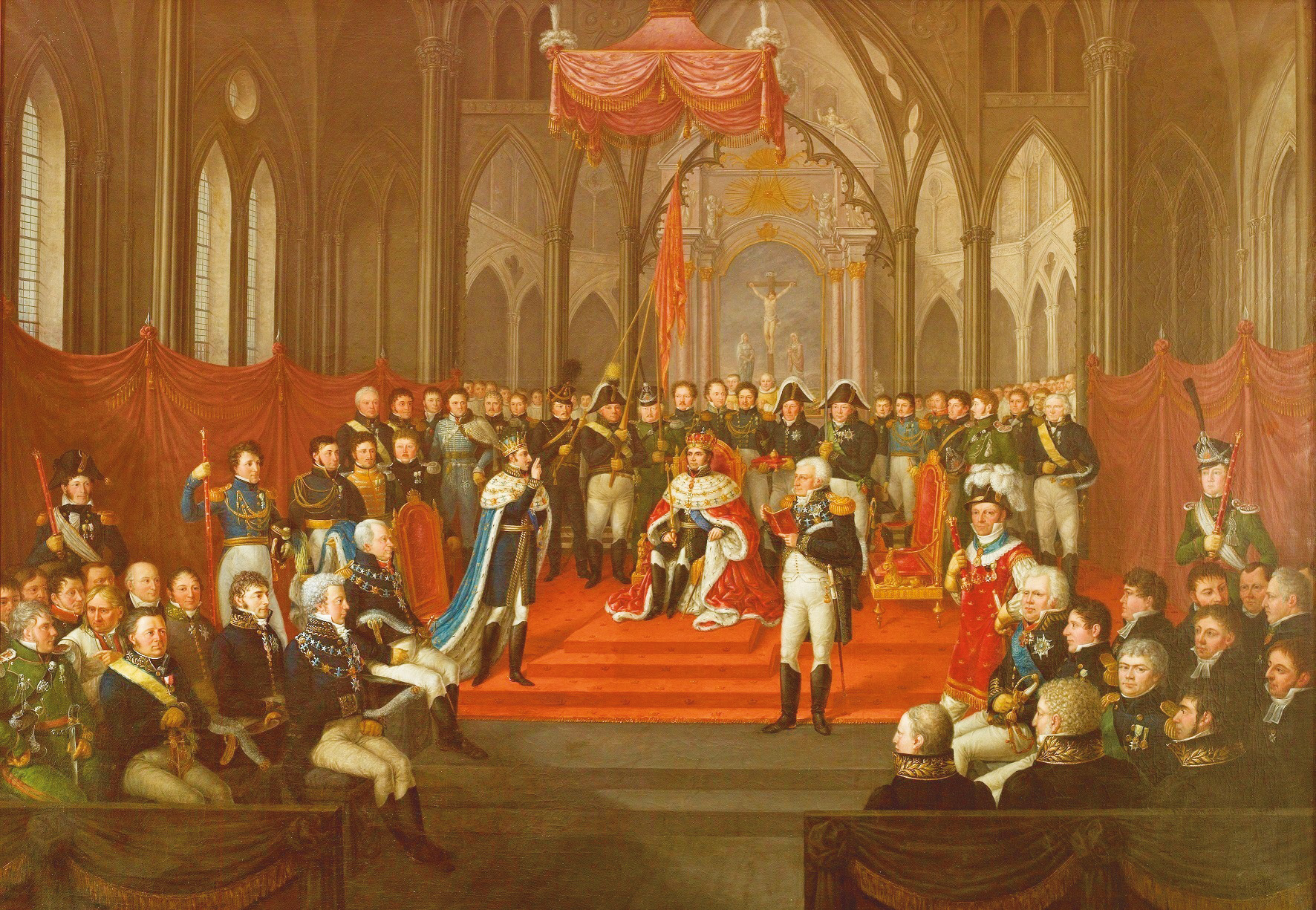
It was then that fate took a hand. The elderly and senile King Charles XIII of Sweden was childless. With no obvious heir to hand, and seeking to strengthen ties with Napoleon, the Swedish nobility offered the vacant throne to the officer who had so impressed them at Lübeck: Marshal Bernadotte. The offer was opportune for Napoleon, as well as for Bernadotte himself. With one fell swoop, Bonaparte believed he would rid himself of a troublesome relative and gain Sweden as an ally into the bargain. The ambitious Bernadotte was willing to convert to Sweden’s state religion of Lutheranism, and so the deed was done.
Bernadotte travelled to Stockholm, was adopted by King Charles as his heir, and proceeded to learn the language of his new homeland. Napoleon’s assumption that his brother-in-law would still stay primarily loyal to his family and to France was soon proved wrong, however. The new Crown Prince Bernadotte broke the Emperor’s ‘Continental System’ designed to shut Britain out of European markets by opening trade with her, and failed to join Napoleon’s grand design of invading Russia in 1812.
In 1813, as the famished and frozen remnants of Napoleon’s Grande Armée reeled back from Russia, Bernadotte took the final step of breaking the bonds with his native land. He allied himself with Tsar Alexander’s coalition against Napoleon, and led a Swedish army into Germany to take arms against his brother-in-law. He defeated his old comrades Marshals Oudinot and Ney, and, though he missed the great ‘Battle of the Nations’ at Leipzig by arriving too late to take part, was instrumental in persuading his former Saxon comrades to switch sides and join the Allies.
Typically, and perhaps ashamed of his treachery, Bernadotte dragged his feet when it came to actually joining the Allied invasion of France itself. He diverted to wrest Norway from Napoleon’s ally Denmark, and only arrived in Paris when the campaign of France was over and Napoleon had abdicated. Most Frenchmen of all persuasions felt only disgust for his acts, and his attempts to ingratiate himself with old comrades were rudely rebuffed. Paying a courtesy call on old Marshal Lefebvre, he was startled to be told by the marshal’s wife, a straight-talking former washerwoman: ‘I’m at home, Turncoat – but I don’t want to see you!’
Unrepentent, Bernadotte returned to Sweden, where he became king in 1818. He proved a more successful monarch than he had been a marshal, and secured his dynasty when he was succeeded by his only son, Oscar, after dying of a stroke in 1844. His Queen Désirée was less adaptable – spending as much time as possible in France, hating the frozen north, and never learning more than a few Swedish words. She long outlived her husband, and eventually her eccentricities endeared her to the people of her adopted new homeland.
Loyalty versus patriotism
As was the case in other conflicts covered in this series (see MHM 146, June/July 2025, and MHM 147, August/September 2025), loyalty seems sometimes to have been a flexible concept during the French Revolutionary and Napoleonic Wars – with only a minority of the marshals created by Napoleon rejoining their old chief for the Waterloo campaign after his return from Elba, for example. But, if loyalty was occasionally up for grabs, patriotism was not.
Of the four commanders examined here, two – Dumouriez and Bernadotte – were motivated to defect to France’s enemies on personal grounds of ambition and opportunism. The other two – Pichegru and Moreau – believed that their revolution had been corrupted by extremism and the rise of Napoleon. All four, however, would have argued they never betrayed what they saw as the true interests of their beloved France.
Nigel Jones is a historian, journalist, and broadcaster, who has published widely on topics ranging from the Tower of London to the Valkyrie Plot to assassinate Hitler.
All images: Wikimedia Commons, unless otherwise stated