Subscribe now for full access and no adverts
Spring is upon us in the northern hemisphere and people are venturing out into the open again: into their gardens, onto their balconies, into urban parks or the countryside to enjoy the miracle of spring and the verdant, flowering flora that accompanies it. Green spaces are ubiquitous in urban fabrics, and often among their most celebrated landmarks, from New York’s urban garden – the famous Central Park – to Tokyo’s Ueno Park. What fewer people think of, though, is that cultivated gardens and open spaces were an inherent – and necessary – part of urban life in the ancient world. Such areas in and around cities kept societies going – from the agriculture feeding sometimes large populations to the lush greenery and the shade it cast, making life in warm climates more bearable in the summer months.
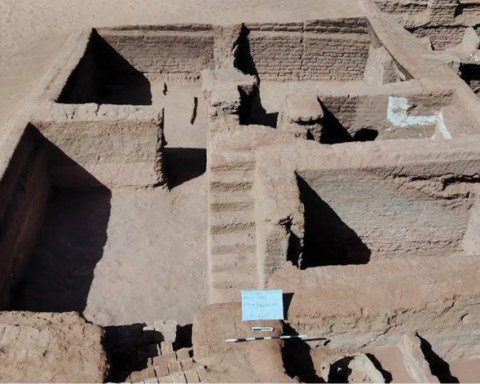
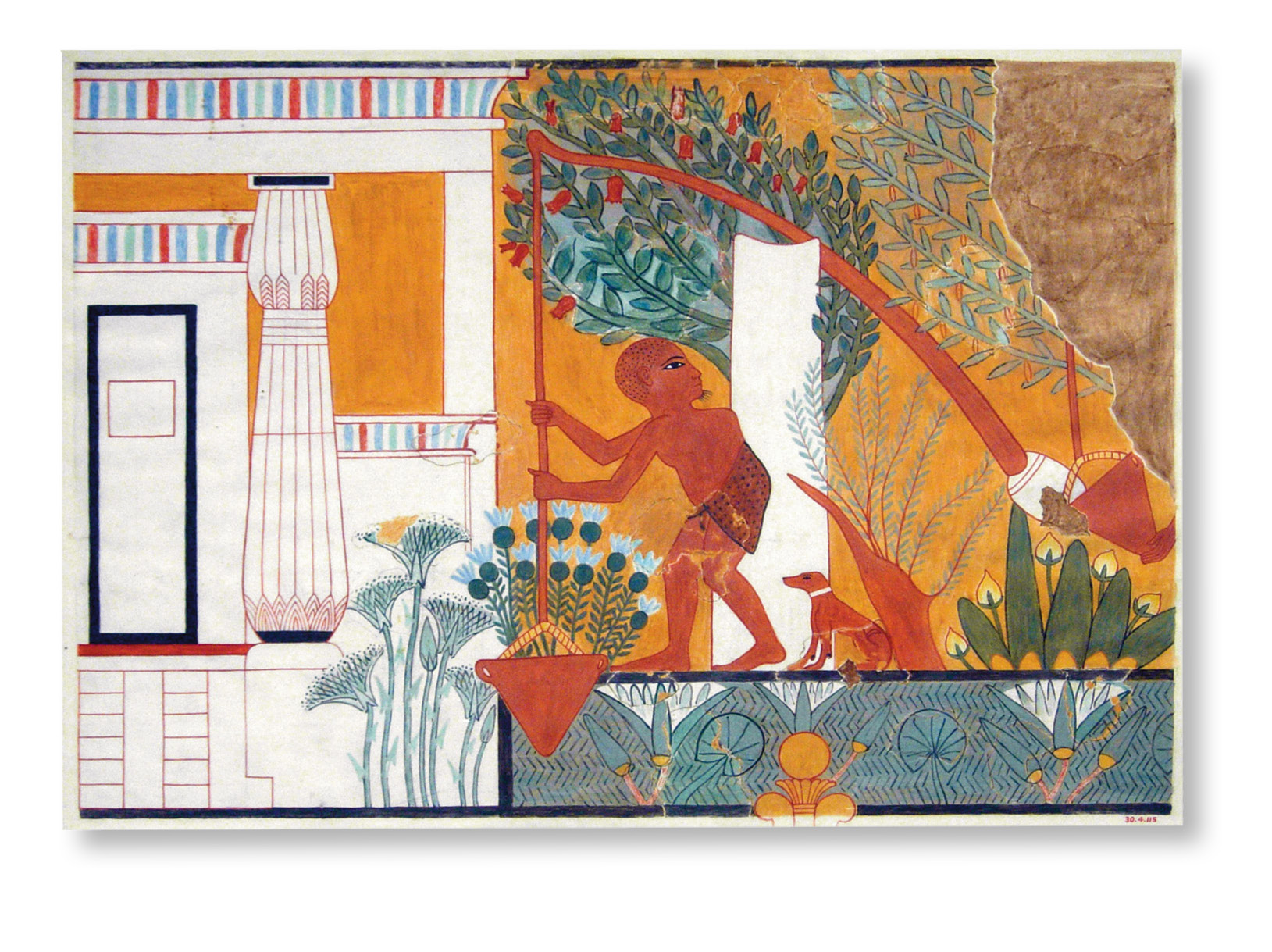
The Garden of Eden in the Bible is, of course, one of the most famous examples of thinking about green spaces and the temptations that can lurk there. The Hanging Gardens of Babylon offer another well-known case. Elsewhere, ancient Egyptians left vivid wall-paintings of their urban gardens in Thebes and Tell el-Amarna, and so did the Persians on often-monumental reliefs showing an abundance of flowers, shrubs, and trees. Other instances include the lush oases in places such as Dakhla and Palmyra; the large urban gardens – public and private – of ancient Rome, Athens, and beyond; as well as the intense cultivation of semi-arid zones in antiquity. All of these places, and many more besides, can convey vivid impressions of past life. While some never existed physically, others have vanished due to modern development, conflicts, and climate change. So the discovery and investigation of such spaces is today achieved through archaeology – though it is a kind of archaeology that demands a particular skillset. After all, garden archaeology can often be an archaeology of the invisible.
Urban oases
Gardens could even be found in the famously crowded and drab medieval and early modern cities. In 2010, Swedish archaeologists investigated urban gardens from the 17th century at the site of Gothenburg’s predecessor: the town of Nya Lödöse. Along with the remains of carefully planned raised beds, they found seeds from a range of plants with medicinal properties. These may have served a nearby hospital. Anaesthetics like henbane or the antihypertensive motherwort were supplied from backyards, thriving perhaps in the nutrient-rich soil created by that most abundant urban product: waste, especially of the human kind.
Some of the first urban gardens to be explored by archaeologists were those gracing the houses at Pompeii and Herculaneum. These cities in the Bay of Naples famously came to an abrupt end with the eruption of Vesuvius in AD 79. Previously, though, they had been home to wealthy communities and so contained numerous sizable urban residences, while suburban villas dotted the fertile territory in the hinterland. Some of our best knowledge of ancient private gardens comes from these complexes, which proved to have been furnished with rich and diverse flora – grown for both pleasure and consumption – alongside water basins and pools, as well as rich sculptural schemes matching the tastes of the wealthy and well-educated elites of the time. These bucolic settings were not open to all, with their wealthy owners deciding who could visit them. Even so, the uninvited may well have caught glimpses of these secluded spaces, when front doors were opened to let guests in and out, potentially eliciting the curiosity of strangers and jealousy of competitors.
A decidedly more public Roman-period urban garden has recently been published following a campaign of exploration: the Place of the Palms in Aphrodisias, modern Turkey (Türkiye). This ancient city has been rewarding intense archaeological research for decades under the directorship of R R R Smith, and has long been known to house several large, open public spaces. One of these was, until recently, called the South Agora. At its heart lay an open monumental oval pool, measuring 170m in length. Since 2012, this complex has been investigated in meticulous detail and produced evidence running from the Roman period through to the medieval era. The most striking result, though, was the discovery that this amenity was not an agora, but a large urban park – located centrally within the city and connecting the city’s bouleuterion (that is, its council house) with a large theatre. Later, a massive bath complex was added at one end, on the short axis of the complex, while a basilica was constructed on a long side, in the vicinity of the theatre.
This lavish complex was restored as late as the early 6th century AD, or thereabouts, by a local member of the urban elite: a man called Ampelios. We know this courtesy of a poem that was inscribed on the propylon (the entrance complex to the park). This verse takes the conceit of a message from the Nymphs, paying homage to a sponsor who gave ‘wonder and splendid beauty to the Place of the Palms’, and goes on to tell us that people sing his praises when they visit this space. Sure enough, the archaeological investigations proved that palms could be counted among the array of flora that grew in the park. It was not just the plants and water feature that visitors could enjoy, though. A range of gaming boards were engraved on the edge of the pool, giving us a vivid impression of the leisure activities taking place in this lush space.

Park life
While the gardens, both private and public, of the Vesuvian cities, of Aphrodisias, and of places such as Athens and Rome, are quite easily visible in the urban fabric – but still reveal surprising insights – other kinds of gardens in less monumentalised settings are harder to spot – often because either they were not architecturally defined or their borders have been dismantled over time. Archaeological work done in the Decapolis city of Gerasa, in northern Jordan, by a Danish-German team has shown that intense human activity, which included moving fertile soils (specifically, red Mediterranean soils) into the city, took place in the Roman and later periods. This, in turn, has been interpreted as a sign of inner-city gardening and cultivation within spaces that appear to be devoid of buildings.
All of this provides important context for the work of a late-19th-century pioneer of urban planning. Ebenezer Howard dreamt of creating future ‘garden cities’, which would capture and combine the benefits of life in both the countryside and the city. Ancient cities were a keen inspiration for him, as pointers to a world beyond the miseries that he felt the compact industrial cities of the steam-age had brought. Howard’s concept has been an inspiration for city planning across the world for generations, from the greenbelt suburb of Washington DC to Christchurch in New Zealand. Still, Howard might have been surprised to learn just how adeptly the ancients had anticipated his idea.
Rubina Raja is professor of classical archaeology and art and director of  the Centre for Urban Network Evolutions, Aarhus University, Denmark. Together with Søren, she is founding editor of the Journal of Urban Archaeology.
Søren M Sindbæk is professor of medieval archaeology at Aarhus University, Denmark, and co-director of the Centre for Urban Network Evolutions.